U.S. Secretary of Agriculture Sonny Perdue speaks at the Citrus Expo in 2017. He spoke with Clint Thompson with AgNet Media about CFAP.
By Clint Thompson
Coronavirus Food Assistance Program (CFAP) payments are already starting to be issued across the country to farmers impacted by COVID-19.
Some specialty crop growers in the Southeast have already started receiving funds.
As of June 8, in Florida, 95 specialty crop applications have been submitted with $11.5 million in payments issued by the USDA. In Georgia, 91 specialty crop applications have been submitted with $340,938.92 in payments. In Alabama, six specialty crop applications have been submitted with $40,102.30 in payments.
In North Carolina, 13 specialty crop applications have been submitted with $33,898.82 in payments. In South Carolina, nine specialty crop applications have been submitted with $27,780.48 in payments.
Farmers are currently submitting applications for the Coronavirus Food Assistance Program (CFAP). In some instances, checks have already been issued to producers impacted by COVID-19.
Sonny Perdue
U.S. Secretary of Agriculture Sonny Perdue talked about CFAP with Clint Thompson, multimedia journalist with AgNet Media. In particular, he discussed the cap placed on the payments issued to each eligible grower.
The University of Florida/IFAS will host a Produce Safety Alliance Grower Training on July 21 through July 23 via Zoom. The trainings will be held from 2:30 p.m. to 5:30 p.m. each day. The cost to attend is $25. Those interested can click here to register.
Per the Food Service Modernization Act, every farm must have at least one Produce Safety Alliance Grower Training certified individual.
Seats are limited. For general registration questions, email Sarah McCoy at sarahmccoy@ufl.edu.
This training is being offered temporarily via remote delivery amid the coronavirus pandemic. In order to participate, individuals must have video and audio capabilities and will be required to have both operating during the entire training.
United States Secretary of Agriculture Sonny Perdue was in Lakeland, Fla. on Monday. He attended a farmers to families food box event. It’s a new program that the United States Department of Agriculture launched to purchase $3 billion in excess food from farmers and distribute to families in need.
He talked about the program with Clint Thompson, multimedia journalist with AgNet Media.
Secretary Perdue talks about the Farmers to Families Food Box Program.
Photo by UGA/The pepper weevil is one of the most serious pests of peppers.
By Clint Thompson
Pepper weevils are once again a problem for pepper growers in the Southeast. Weevils are a problem wherever present, whether it is in high populations or low populations.
“Anytime you have pepper weevil it’s a problem and in very low populations because of the contamination. High populations can cause fruit abscission. It can hurt your yields considerably. But even low populations just because the potential contamination causes marketability problems,” University of Georgia Cooperative Extension vegetable entomologist Stormy Sparks said. “We’ve had some fields where we’ve had enough to collect populations which is pretty bad.”
Prevention Is Key
Sparks said there are a limited number of pesticides available that are relatively effective.
“Pepper weevil is difficult to control just because it’s a weevil, its biology. The only stage you can control is the adults. Once it lays an egg, you don’t get a shot at that particular insect until it’s an adult again,” Sparks said. “The egg is inside the fruit. The larvae is inside the fruit. It pupae inside the fruit. It emerges inside the fruit. Then when it comes out looking for a mate, you’ve got to try to kill it before it mates and starts laying eggs,” Sparks said. “With pepper weevil, it’s basically preventative. You try to prevent establishment in a field. Once they become established in a field, it’s almost impossible to spray your way out of it.”
According to a prior story on pepper weevils, they were out of control in Florida vegetable fields along the East Coast.
“Pepper weevil, which five years ago was not a consistent problem, but it’s been a consistent problem the last three years. We’re overwintering them,” Sparks said. “Pepper growers are fighting pepper weevils on a consistent basis.”
Hemp producers in the Southeast need to be mindful of fire ants. They will damage the stems of hemp plants if not treated, said Katelyn Kesheimer, Auburn University Assistant Professor and Extension Specialist.
“My phone has been ringing off the hook with fire ant problems the last seven days, really. A couple of weeks ago, we had all of those storms that came through; a lot of rain and temperatures are increasing. We started seeing fire ant swarms about two weeks ago. All of those swarms led to newly mated females that became queens that started mounds and now are chewing on the stems of hemp,” Kesheimer said. “It’s very quick because these seedlings are no more than 20 centimeters tall in some instances. They’re just a couple of inches, not that big. The fire ants make a mound at the base of the plant and start stripping the bark and tunneling through the stem.
“I don’t even know if I was onboard with hemp this time last year, but this just seems kind of early for fire ant problems in hemp. I was caught off guard with how many issues we were having.”
Growers have already started planting this year’s crop. Fortunately, there are management practices growers can implement to control fire ant issues. But they need to do them.
“I’ve been recommending people get out there and bait because that’s going to take at least a couple of weeks but also do individual mound treatments. We have some products approved for hemp by the Department of Ag. I think a lot of growers did not heed my warning to put out bait in the fall,” Kesheimer said.
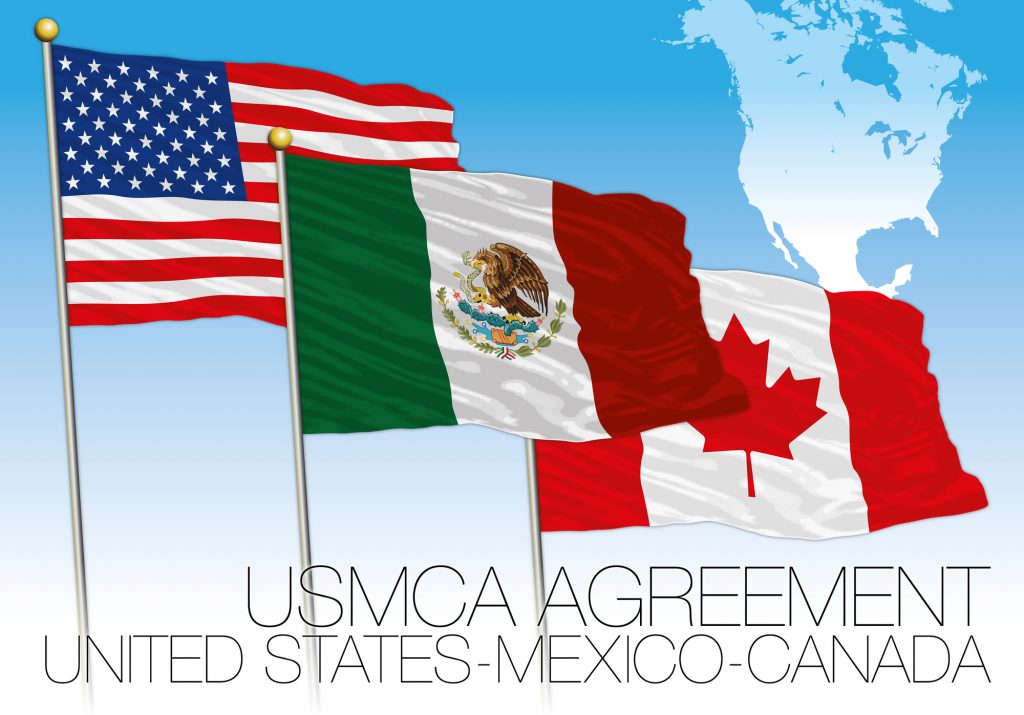
The United States-Mexico-Canada Agreement (USMCA) will enter into force July 1. Unfortunately, it’s still without much protection for vegetable and specialty crop producers, according to economists and industry leaders.
Joyner
Florida Fruit and Vegetable Association President Mike Joyner hopes that will change soon.
“When Congress passed USMCA, we unfortunately did not get the provisions we were hoping for in USMCA. The Florida delegation, to the person, hung together. Because they hung together, we were able to get a commitment from Ambassador (Robert) Lighthizer to come up with a plan as to how we’re going to address this issue,” Joyner said. “We felt like that was a strong commitment. It’s in writing. We trust Ambassador Lighthizer. Right now, all indications are USMCA will go into effect July 1.
“If you go back and look at the letter, the commitment that the delegation was able to get, that within 60 days of entry into force, Ambassador Lighthizer has to have a plan. Probably within the next few weeks, we’ll present some information to the U.S. trade Representatives Office that they need to consider. It’s data that clearly shows what’s happening with Mexican produce. We’re hoping that over the next two or three months, we can work with Ambassador Lighthizer and his team and come up with something that will help solve this issue.”
USMCA Background
According to the USMCA press release, the agreement marks the beginning of a historic new chapter for North American trade by supporting more balanced, reciprocal trade, leading to freer markets, fairer trade, and robust economic growth in North America. However, Southeast farmers still will compete against imports of Mexican produce.
“The concern with the USMCA, in terms of specialty crops, is that there are a lot of lower priced crops, low cost labor in Mexico that are coming into the U.S. and competing with southeast fruits and vegetables,” UGA Cooperative Extension Ag Economist Adam Rabinowitz said. “There was hope that there would be some restrictions or some assistance that would help with the ability to compete with those Mexican imports. But there was nothing within that. As a result, it’s looking like there’s going to be a challenge in terms of being able to compete on price with the southeast fruits and vegetables with the imports from Mexico.”
The influx of Mexican produce was especially discouraging this year for farmers. They had to deal with the aftermath of the coronavirus pandemic at a peak time of spring harvest.
In a prior VSCNews story, Charles Hall, executive director of the Georgia Fruit and Vegetable Association, said “it’s insulting to the specialty crop growers who are suffering with COVID-19. It’s taken away markets. Then on top of that, we’ve got Mexican products coming in on top of us to drive the prices even further down.”
The Coronavirus Food Assistance Program (CFAP) will bring much-needed relief to farmers impacted by COVID-19. Unfortunately, the funds allocated per farmer is not enough, says Florida Fruit and Vegetable Association (FFVA) President Mike Joyner.
Joyner
“Florida agriculture was just crushed by the pandemic. A lot of our members have had some really, really big losses. When that direct payment was first mentioned with that $250,000 cap, we were extremely disappointed. We are very appreciative that the cap has been raised,” Joyner said. “We’re grateful for the increase. But it still falls short because we did have members that lost millions. These are family farms.
“We still wish we could get a little bit more. We might try to do that as they begin to talk about a CARES (Act) 4 package. We’ll push to see if we can get that cap raised a little bit more and some more money into Florida.”
CFAP Background
According to https://www.farmers.gov/cfap, CFAP provides vital financial assistance to producers of agricultural commodities who have suffered a 5%-or-greater price decline or who had losses due to market supply chain disruptions due to COVID-19 and face additional significant market costs. Many of the fruits and vegetables, including tomatoes, watermelons and strawberries are covered under CFAP and were in production in Florida when the coronavirus struck in mid-March.
Much of the produce season for this year is completed in Florida, especially in the southern portion of the state. Many are already thinking about next season and need CFAP funds in place so they can proceed accordingly. Thankfully, CFAP payments are already being issued.
“We just hope they turn those checks around pretty quickly because these growers in south Florida are going to make decisions on inputs into July, first part of August.That’s when they’ll start ordering seed and fertilizer and all that kind of stuff,” Joyner said.
(Washington, D.C., June 4, 2020) – U.S. Secretary of Agriculture Sonny Perdue today announced the USDA Farm Service Agency (FSA) has already approved more than $545 million in payments to producers who have applied for the Coronavirus Food Assistance Program. FSA began taking applications May 26, and the agency has received over 86,000 applications for this important relief program.
“The coronavirus has hurt America’s farmers, ranchers, and producers, and these payments directed by President Trump will help this critical industry weather the current pandemic so they can continue to plant and harvest a safe, nutritious, and affordable crop for the American people,” said Secretary Perdue. “We have tools and resources available to help producers understand the program and enable them to work with Farm Service Agency staff to complete applications as smoothly and efficiently as possible and get payments into the pockets of our patriotic farmers.”
In the first six days of the application period, FSA has already made payments to more than 35,000 producers. Out of the gate, the top five states for CFAP payments are Illinois, Kansas, Wisconsin, Nebraska, and South Dakota. USDA has released data on application progress and program payments and will release further updates each Monday at 2 p.m. ET. The report can be viewed at farmers.gov/cfap.
FSA will accept applications through August 28, 2020. Through CFAP, USDA is making available $16 billion in financial assistance to producers of agricultural commodities who have suffered a 5%-or-greater price decline due to COVID-19 and face additional significant marketing costs as a result of lower demand, surplus production, and disruptions to shipping patterns and the orderly marketing of commodities.
In order to do this, producers will receive 80% of their maximum total payment upon approval of the application. The remaining portion of the payment, not to exceed the payment limit, will be paid at a later date nationwide, as funds remain available.
Getting Help from FSA
New customers seeking one-on-one support with the CFAP application process can call 877-508-8364 to speak directly with a USDA employee ready to offer general assistance. This is a recommended first step before a producer engages the team at the FSA county office at their local USDA Service Center.
Producers can download the CFAP application and other eligibility forms from farmers.gov/cfap. Also, on that webpage, producers can find a payment calculator to help producers identify sales and inventory records needed to apply and calculate potential payments. Producers self-certify their records when applying for CFAP and that documentation is not submitted with the application. However, producers may be asked for their documentation to support the certification of eligible commodities, so producers should retain the information used to complete their application.
Those who use the online calculator tool will be able to print a pre-filled CFAP application, sign it, and submit it to your local FSA office either electronically or via hand delivery through an office drop box. Please contact your local office to determine the preferred delivery method for your local office. Team members at FSA county offices will be able to answer detailed questions and help producers apply quickly and efficiently through phone and online tools. Find contact information for your local office at farmers.gov/cfap.
Policy Clarifications
FSA has been working with stakeholder groups to provide further clarification to producers on the CFAP program. For example, the agency has published a matrix of common marketing contracts that impact eligibility for non-specialty crops and has provided a table that crosswalks common livestock terms to CFAP cattle categories. Updated information can be found in the frequently asked questions section of the CFAP website.
More Information
To find the latest information on CFAP, visit farmers.gov/cfap or call 877-508-8364.
USDA Service Centers are open for business by phone appointment only, and field work will continue with appropriate social distancing. While program delivery staff will continue to come into the office, they will be working with producers by phone and using online tools whenever possible. All Service Center visitors wishing to conduct business with the FSA, Natural Resources Conservation Service, or any other Service Center agency are required to call their Service Center to schedule a phone appointment. More information can be found at farmers.gov/coronavirus.
Tropical Depression Cristobal’s expected movement into the Gulf of Mexico should bring much-needed rainfall to North Florida and South Alabama. Pam Knox, University of Georgia Cooperative Extension Agricultural Climatologist, says rains over the next week should alleviate some of those drought conditions.
Map from the National Hurricane Center and Central Pacific Hurricane Center shows Cristobal’s expected path this weekend.
“The whole Florida Panhandle and then stretching west into the Mobile (Ala.) area has been quite dry. So, they were missed by a lot of the storms that hit north Georgia and north Alabama. They’ve been fairly dry,” Knox said. “They’ve gotten a little bit more relief lately but it’s still dry there. I’ve seen some reports of fires in the area and continuing problems with the dry conditions.
“The latest seven-day forecast for rainfall, which includes the rainfall that’s coming from Cristobal, looks like the southern part of Georgia and Alabama and the whole panhandle of Florida and really all of north Florida is going to be affected by the rain from this.”
According to the U.S. Drought Monitor, all of north Florida is either in abnormally dry, moderately dry or severe dry conditions. It’s also the case for southwest parts of Alabama.
Cristobal is already the third named storm of the season. Knox said the average date for the first sea storm is Aug. 13 so it’s already a real active storm season. But she cautions weather enthusiasts that just because it’s active now doesn’t mean it will stay that way over the course of summer and into fall.
“All of the ingredients are there for it to be an active season. We’re in neutral conditions and looks like we’re going to go into a La Nina. That definitely correlates with an active season in the Atlantic. 2019 was active but we only had a couple of storms that affected the Southeast. Even though it’s active, it doesn’t necessarily mean it’s going to be big impact for the Southeast. It could,” Knox said.
While tropical storms and hurricanes can be intimidating with their heavy rains and fierce winds, Knox reassures that they are necessary to replenish dry soils.
“Tropical storms have an important role to play in the Georgia climate because maybe up to 30% of our summer rain comes from these tropical systems. If we don’t get tropical storms, we could easily go into a drought,” said Knox, who described how Cristobal works. “If you think about how a tropical storm spins, it’s counter-clockwise. It’s going to move west of us most likely. That means we’re going to be in strong flow of air coming up from the south. It’s very juicy air. It’s going to really help set off a lot of rain.
“Some of the forecasts for rain in the Florida Panhandle, we’re looking at 5 to 7 inches or more of rain over the next week. A lot of that’s going to come right ahead of Tropical Storm Cristobal.”
Knox said north Alabama and north Georgia aren’t expected to receive as much rain.