Category: Florida

  • Frustrated Florida Farmer Voices Mexican Imports Concerns

    By Clint Thompson

    COVID-19 was a challenge of pandemic proportions for farmers this spring. Adding insult to injury were the influx of Mexican produce that undercut American producers trying to sell their own product.

    Florida vegetable farmer Sam Accursio has a potential solution.
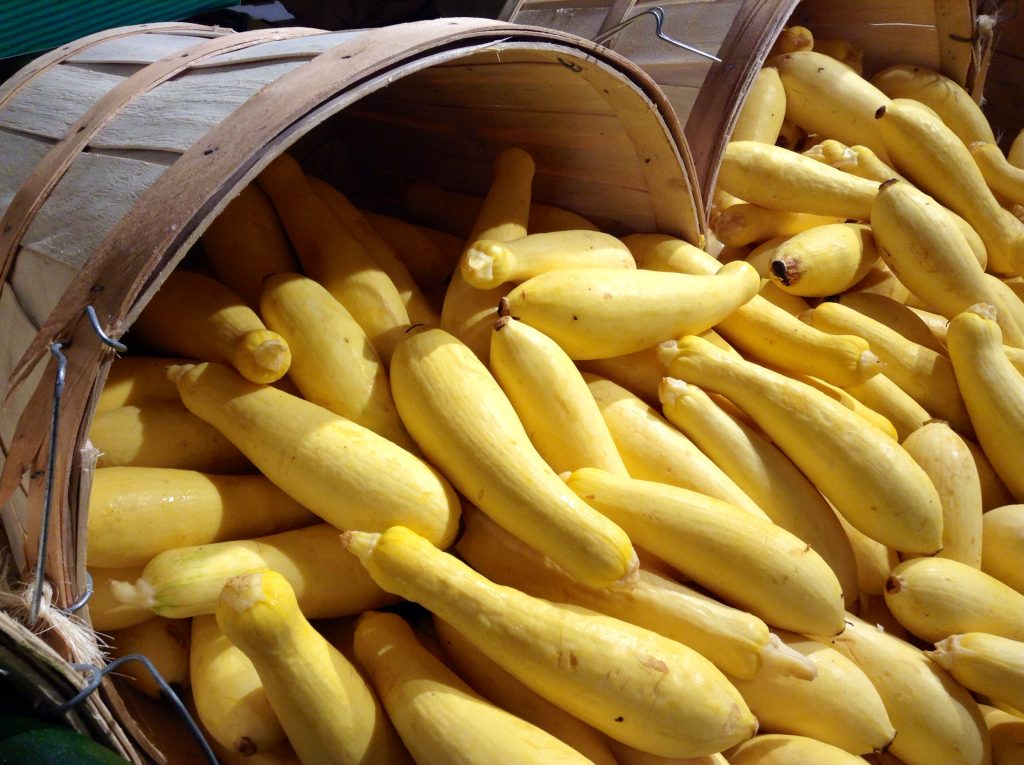
    Squash is a heavily imported commodity from Mexico.

    “The only solution I know is to vote, get the people that are like-minded and want to support our nation in office. That’s all we can do. I don’t have any other solution besides that at the moment. We have to keep lobbying,” Accursio said. “Growers, we’re very unique people. We work 100 hours per week, and that’s our problem. We’re working when all of these problems arise, and we don’t have time to go to Washington and sit down with these politicians. We have to talk to them one by one when they’re in our area coming around to us.”

    Tough Spring

    It was especially tough for Accursio this spring. Like other farmers in Florida, Accursio lost produce when the coronavirus pandemic struck in mid-March. In early April, he voiced frustrations about the impact of Mexican imports were having on American farms. He remains frustrated.

    “While we were dumping and stopping harvest, I was monitoring what they were shipping in the way of squash per day. It was 2 to 3 million pounds per day, closer to 2.7 to 3 million pounds per day coming across the Mexican-U.S. border of squashes, while I’m stopping harvest; harvesting and throwing on the ground; harvesting and sending to Farm Share,” Accursio said. “The cooler’s empty and we crank back up again. It was a trying time. Then to see Mexico still importing into our nation just seemed so wrong.”

    Things could potentially get worse as the United States-Mexico-Canada Agreement is set to enter into force on July 1.

    “While we are in season, we need some sort of protection. Right now they’re in the talking phases again. Hopefully, we’re going to have enough influence to make some changes,” Accursio said.

    According to the Florida Farm Bureau, Florida’s specialty crop producers will continue to experience loss of market share due to high volumes of dumped Mexican produce. Ag Commissioner Nikki Fried voiced her concerns, as did U.S. Secretary of Ag Sonny Perdue.

    Accursio encourages consumers to continue supporting American farmers. He can’t fathom the alternative.

    “If you take Florida and California away in the winter, what do you have? You have third-world countries feeding this great nation and I’m not going to eat it. I’m not going to do it,” Accursio said.
  • Pecan Industry Seeks to Establish a Research and Promotion Program

    georgia pecans
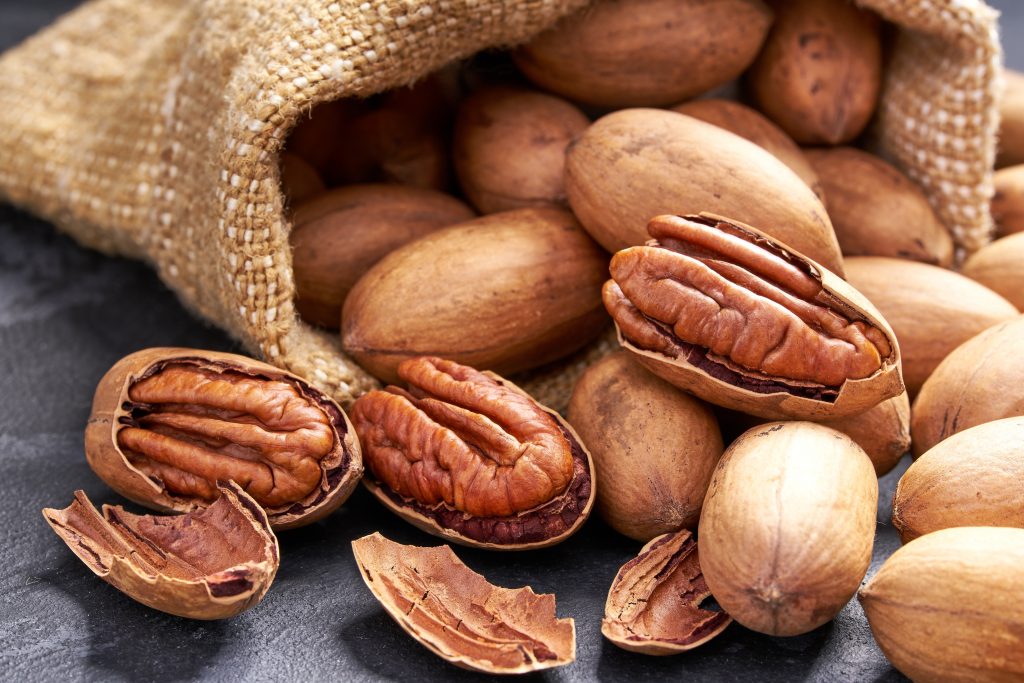
    File photo shows shelled pecans and those still in shells.

    USDA Agricultural Marketing Service

    The U.S. Department of Agriculture (USDA) received a proposal from the National Pecan Federation (NPF) requesting the establishment of a research and promotion program to strengthen the position of pecans in the marketplace, maintain and expand markets for pecans and develop new uses for pecans.

    USDA is currently analyzing the proposal. If USDA finds the request justified, the department will publish in the Federal Register a proposed rule with a public comment period seeking input from the industry and interested stakeholders. A copy of the NPF proposal can be found here.

    The proposed program would be established under the Commodity Promotion, Research and Information Act of 1996 and would be financed by an assessment on domestic producers and importers of pecans and administered by a board of industry members nominated by the industry and selected by the Secretary of Agriculture.

    The proposal by the NPF calls for an initial assessment rate of two cents per pound of inshell and four cents per pound of shelled domestic and imported pecans. Handlers would collect assessments from producers based on the pounds of pecans received and importers would pay assessments on pecans when they enter the U.S. for consumption. Domestic producers and importers of less than 50,000 pounds of inshell pecans (25,000 pounds of shelled pecans) on average for four fiscal periods would be exempt from paying assessments.

    NPF proposed that the board consist of 17 members to include producers representing different pecan-producing regions within the United States and importers of pecans.

  • Sweet Market for Melon Farmers

    UGA file photo/Shows watermelons being researched on the UGA Tifton Campus. 6–6-17

    By Clint Thompson

    Watermelon prices are holding strong for Southeast farmers, according to one South Georgia producer. Terrell Rutland believes extenuating circumstances could help extend the strong market, currently at 20 cents per pound, for growers an extra few weeks.

    “Anything north got frost bit about the first of May. Florida is through so that kind of puts us in the driver’s seat right now,” said Terrell Rutland, who grows 50 acres in Tift County, Georgia and Cook County, Georgia. “Every year, the very first people to pick in Georgia might get 20 cents, but generally, the majority of the crop is sold around 15 cents. It’s good in that respect.”

    It’s especially good for Southeast farmers since it appears their melons are the only game in town right now.

     “(The Carolinas and the Midwest) always plant three or four weeks behind us but this year they planted, go two or three weeks and the frost killed them, and they planted again. That threw them another three weeks behind. I really wouldn’t be surprised if we don’t get some imported melons to catch some slack up,” said Rutland.

    He began harvesting this year on June 4, the earliest he’s ever started.

    “When they put on, they grew. They made melons quick. It was kind of shocking, I’ve never had none to grow off that quick. About half of mine, I do put on bare ground and I put about half of them on plastic. The bare ground melons are not ready yet. The cold really affected them a lot worse than it did the ones that were on raised plastic,” Rutland said.

    Rutland expects to harvest three days per week through July 4.

    Decrease in Acreage

    Acreage is down in Georgia this year. According to Samantha Kilgore, executive director of the Georgia Watermelon Association, acreage is projected to decrease this year to 19,000 acres. It would mark a significant drop from previous years’ harvests.  According to the National Agricultural Statistics Service, from 2016-2018, Georgia averaged a harvest of just more than 23,000 acres.

    Rutland already projects additional acres next year, however.

    “It’ll probably be many folks who want to grow watermelons next year where you can’t sell them for a dime a pound. It’s the way that usually works,” Rutland said.

  • USDA Trade Mitigation Purchases to Feed People in Need and Aid American Farmers Surpass $2B

    WASHINGTON, D.C. – The U.S. Department of Agriculture (USDA) announced today that it has purchased more than $2.2 billion of meat, fruits, vegetables, specialty crops and dairy products in fiscal years 2019 and 2020 in its ongoing efforts to feed people in need and assist American farmers and ranchers suffering from damage due to unjustified trade retaliation by foreign nations.

    Perdue

    USDA is on target to reach its fiscal year goal of about $1.4 billion of trade mitigation purchases in the next phase of fiscal year purchasing, which ends Sept. 30. The purchases were made through the Food Purchase and Distribution Program (FDPD), one of USDA’s three programs in its Support Packages for Farmers. Most of the food purchased is provided to states for distribution to nutrition assistance programs such as The Emergency Food Assistance Program and child nutrition programs.

    “Over the past two years, USDA has issued more than $2 billion in payments to American farmers, ranchers and producers for U.S.-grown food that is used to help Americans in need,” said U.S. Secretary of Agriculture Sonny Perdue. “Early on, President Trump instructed USDA to make sure our farmers did not bear the brunt of unfair retailiatory tariffs. Our farmers work hard and the most productive in the world, and we crafted the FPDP to help protect them. The FPDP represents just one of the many ways USDA is working hard to fulfill its mission to do right and feed everyone.”

  • UF/IFAS Faculty to Host Webinar Series for Agriculture and Natural Resource Professionals

    By: Jarred Shellhouse, 352-273-2599, jshellhouse@ufl.edu

    GAINESVILLE, Fla. — A new webinar series, focused on professional development for agriculture and natural resources professionals during a global pandemic, is set to take place this summer.

    Megan Stein, agricultural education and communication lecturer at the University of Florida’s Institute of Food and Agricultural Sciences, will lead the series.

    Megan Stein

    “Our industry groups in agriculture and natural resources have adapted to a lot of change recently,” Stein said. “We are hoping to connect meaningful content about organizational change, resiliency and digital business meetings to help these groups continue to move forward.”

    Starting Thursday, June 18, the six-webinar series is set for every Thursday at 11 a.m. Eastern. The following topics will be presented:

    • June 18. Conducting Digital Business. Led by Anne Schwartz, leadership programs coordinator for the Wedgworth Leadership Institute for Agriculture and Natural Resources, this webinar will focus on technology, tools and tips to help transition formal business meetings into a digital space.
    • June 25. Leading Organizational Change. Conducted by Nicole Stedman, professor of agricultural leadership in the UF/IFAS department of agricultural education and communication, this webinar helps participants understand change concepts and learn to leverage them to create change from within the organization.
    • July 2. Developing Personal Resilience. Facilitated by Ed Osborne, professor of agricultural education in the UF/IFAS department of agricultural education and communication, this webinar will help participants identify elements of resilience and cultivate a growth mindset to develop levels of personal resilience.
    • July 9. Panel on Rural Mental Health. Through this webinar panel, participants will gain a better understanding of rural mental health disparities, strategies to recognize a person in crisis and resources to address mental health concerns. Heidi Radunovich, associate professor in the UF/IFAS department of family, youth, and community sciences; Angie Lindsey, assistant professor in the UF/IFAS department of family, youth, and community sciences; and Marshal Sewell, territory sales manager for Bayer, will lead the panel discussion.
    • July 16. Tolerating Ambiguity: Being Comfortable being Uncomfortable. Led by Cecilia Suarez, assistant professor of agricultural leadership and intercultural communication, this webinar will focus on how to lead despite ambiguity and leveraging personal attributes to increase effectiveness.
    • July 23. Navigating Generational Differences. Facilitated by Stein, this final session will help participants identify methods to better work with others between generations. Additionally, the session will explain some ways in which the pandemic has brought understanding in bridging the gap between generations’ preferred working styles.

    “These topics were selected because they are important for ANR industry professionals, but are sometimes avoided in conversation,” said Stein. “We want our industry to feel more comfortable working in digital spaces, while acknowledging mental health disparities, and work with others to lead their organization into the ‘new normal.’”

    All webinars will be delivered at no cost to participants using Zoom, a video conferencing software. Interested individuals should register online to receive the login information. For more information regarding this webinar series, contact Megan Stein at mstein17@ufl.edu.

  • UF/IFAS sees success

    Florida House Representative Randy Fine meets with UF/IFAS leaders, including Dean of Extension Nick Place, Director of Governmental Affairs Mary Ann Hooks and Associate Vice President Jeanna Mastrodicasa to discuss budget requests during the 2020 legislative session.

    By Mary Ann Hooks

    After several disappointing budget years, the 2020 legislative session will go on record as one of the most successful for the University of Florida Institute of Food and Agricultural Sciences (UF/IFAS). The UF/IFAS priority this year was to increase our base budget. We submitted an appropriation request for a workload increase to make up for losses over recent years and fill critical positions in research and Extension. 

    Budget conference negotiations were the traditional UF/IFAS rollercoaster as we were down, then up, then down and then up in a really big way.

    Negotiations were delayed as the struggle to make sure money was available to offset the expected economic impacts of COVID-19 was added to the other outstanding budget issues. 

    The late nights and lost weekend paid off. At midnight on Friday, March 13, the House offered a total of $2,586,078 for workload and the Senate accepted the offer. On Saturday afternoon, during the final Conference Committee meeting, an additional $1,213,922 was added to workload, meeting our initial request and bringing us a total of $3.8 million.

    In addition, a bill that regulates, conforms and adds new specialty licenses plates and deletes under-performing plates included a Florida 4-H tag. This will provide some additional funding for the 4-H program.

    Also, to our great relief, the House accepted the Senate position to maintain full funding for the quarantine facility that establishes biological controls for invasive species in Fort Pierce and for the statewide Lake Watch program. Both programs had been written out of the House budget bill.

    The Legislature included $300 million in the $93.2 billion budget to provide for the resulting economic losses due to the COVID-19 virus. In addition, given the state’s heavy reliance on tourism, it included $3.9 billion in reserve funding, in expectation of a loss of revenues. At this point, there is no way to know if that will be adequate to make up for losses, even with the addition of federal emergency funds.

    We don’t expect the budget to be finalized until June, as the impacts to the economy are still a moving target. Gov. DeSantis and the Legislature are waiting to see how things play out so state economic and budget experts will have more information to base revenue estimates.

    We are working closely with the governor’s staff to provide information on UF/IFAS statewide work and how through the pandemic, our service continues to support the agriculture and natural resources industry. Budget vetoes are going to be different than they would have been a month ago and are yet to be determined. We don’t know what that will mean to our budget, but what we do know is that everyone will be impacted. 

    These are interesting times indeed.

    Mary Ann Hooks is director of UF/IFAS governmental affairs

  • USDA Proposes Changes in Handling Requirements for Florida Tomatoes

    itc

    USDA AMS Produce
    June 15, 2020


    The U.S. Department of Agriculture (USDA) is proposing changes to the handling requirements under the federal marketing order for tomatoes grown in Florida. The Florida Tomato Committee recommended the changes to bring previously exempt Roma tomatoes under the marketing order’s handling regulations.

    The committee also recommended developing exemption language for greenhouse and hydroponic tomatoes by establishing a new definition for “controlled environment.” Changes to pack and container requirements are also proposed to reflect current industry practices.

    The proposed rule for this action was published in the Federal Register June 9, 2020. Written comments are due by July 9, 2020.

    Submit formal written comments concerning the proposed change at www.regulations.gov. You may also mail them to Docket Clerk, Marketing Order and Agreement Division, Specialty Crops Program, Agricultural Marketing Service, USDA, 1400 Independence Avenue SW, STOP 0237, Washington, DC 20250-0237 or fax them to (202) 720-8938.
    All comments to this proposed rule submitted by the deadline will be made available for public review and will be considered before a final rule is published.

    More information about the marketing order is available on the Agricultural Marketing Service (AMS) 966 Florida Tomatoes webpage, the AMS Marketing Orders and Agreements webpage or by contacting the Marketing Order and Agreement Division at (202) 720-2491.

    Authorized by the Agricultural Marketing Agreement Act of 1937, marketing orders are industry-driven programs that help producers and handlers achieve marketing success by leveraging their own funds to design and execute programs that they would not be able to do individually. The Agricultural Marketing Service provides oversight to 29 fruit vegetable and specialty crops marketing orders and agreements, which helps ensure fiscal accountability and program integrity.

  • UGA Pecan Team Emphasizes Scab Disease Management

    By Clint Thompson

    The University of Georgia (UGA) pecan team is emphasizing scab disease management, since June and July are critical times for disease control.

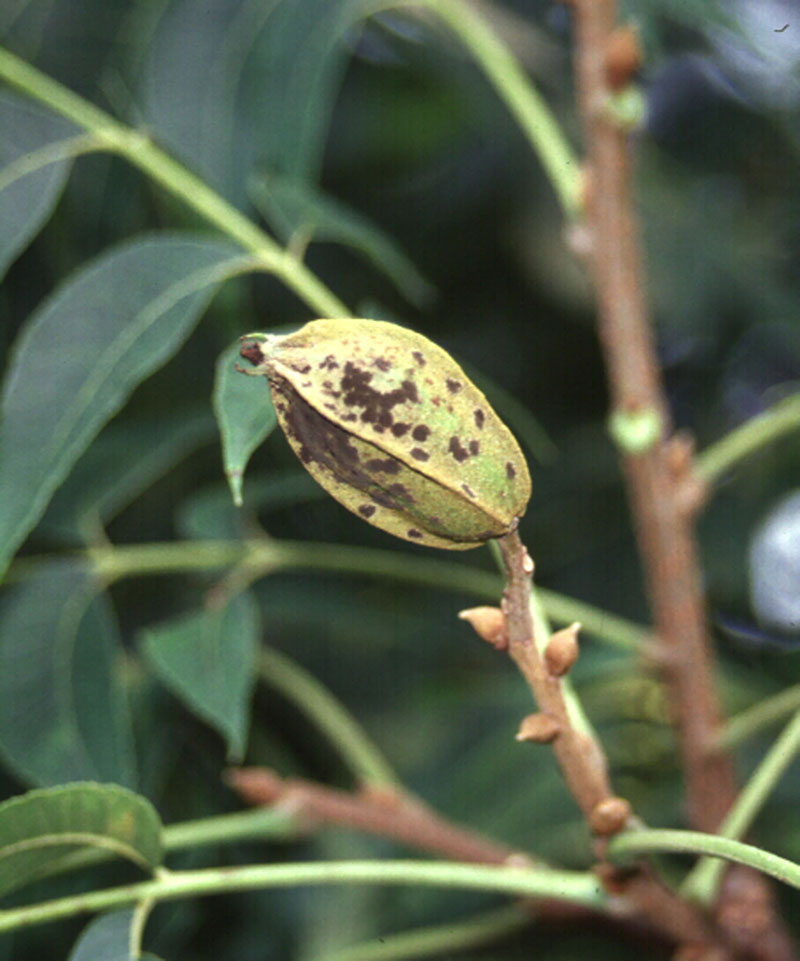
    UGA picture/Scab disease does not usually kill trees, but it can greatly reduce yields. The fungal pathogen that causes scab overwinters in the tree as lesions on stems and old nut shucks that remain in the tree after harvest. When temperatures begin to warm in the spring, the fungus becomes active and starts to produce new spores that are spread by rain and wind.

    According to UGA Extension pecan blog, plant pathologist Jason Brock’s recommendations are based on Extension plant pathologist Tim Brenneman’s research regarding scab disease:

    With Desirable or any variety with similar scab susceptibility, a rotation of Elast/Tin with Miravis Top is the strongest option. You could use consecutive applications of either, but keep in mind Miravis Top use restrictions include a 14-day minimum application interval and a maximum of 4 applications per year. In most cases, half rates for Elast/Tin are suitable. Research trials have shown that increasing the rate of Elast to 37 fl. oz. while mixed with Tin can provide better scab control, but only when disease pressure is high. Unless we get into a rainy summer, the half rates are the better option.

    Cultivars with relatively low scab susceptibility provide more options for fungicide selection. In addition to Miravis Top, Elast and Tin (either in a mix or used stand-alone), other fungicides are suitable for these cultivars. Another tank mix combination that has provided good nut scab control is a Group 3 (DMI) + Group 11 (strobilurin). This combination is available in a number of premixed products. A newer option that we have recommended is a 3-quart rate of a phosphite. While the phosphites’ strength is in foliar disease control, a high rate application is suitable for nut scab control of certain cultivars with low scab susceptibility.

    Aside from fungicide selection, important factors in scab control will be timely applications and good coverage. Pay close to attention to rain forecast and try to stay ahead of scab development; however, do not sacrifice good coverage by traveling too fast or trying to spray when weather conditions are detrimental to good coverage. Always remember to rotate chemistries regularly to manage fungicide resistance.

    Light Scab Disease

    In a previous VSCNews story, UGA Extension pecan specialist Lenny Wells said scab disease is currently light, but there has been “scabby weather” recently. The rainy weather because of Tropical Storm Cristobal last week could be a reason scab disease incidences begin to spike.  Wells said it usually takes a couple of weeks before growers start seeing scab because of excess rainfall.

    Scab is a fungal disease that infects the leaves or nuts of pecan trees. If it hits the nut early enough, scab can cause the pecan to blacken and fall from the tree. Some growers spray between 10 and 12 times during an average year to fight scab, Wells said. Scab thrives on trees that have received moisture. That is why a quick rain event is important and not prolonged rainy weather of several days in a row.

  • Blueberry Farmer: It Was Really Like Salt in the Wound

    Florida Producer Sounds Off on Lack of Category 1 Status in CFAP

    By Clint Thompson

    Blueberries were left out of Category 1 status in CFAP.

    While the blueberry industry was surprised as to how it was not eligible for Category 1 status in the Coronavirus Food Assistance Program (CFAP), one Florida grower remains equally as dumbfounded.

    “I was shocked when it came out. I was literally like, jaw on the ground, going how did we get left out of this deal?” said Ryan Atwood, who lives in Mount Dora, Florida and is one of the state’s blueberry leaders. “It wasn’t a great year for us. And then to get left out of Category 1, it was really like salt in the wound.”

    According to https://www.farmers.gov/cfap/specialty, eligible specialty crops in CFAP are broken down into three categories:

    1. Had crops that suffered a five percent-or-greater price decline between mid-January and mid-April as a result of the COVID-19 pandemic,
    2. Had produce shipped but subsequently spoiled due to loss of marketing channel, and
    3. Had shipments that did not leave the farm or mature crops that remained unharvested.

    Blueberries Not Included

    However, blueberry farmers were not included in Category 1 status, like many other specialty crop commodities, such as almonds, beans, broccoli and cabbage for example. Atwood insists that Category 1 is where most of the farmers were impacted when the coronavirus pandemic hit in mid-March.

    “For Florida blueberry growers, we got screwed man. We got left out of Category 1. What that was, they compared the average price of blueberry sales. But the problem is, the government, not knowing what they were doing, compared April 6 to the 10, to January 6 to the 10. Well, January 6 to 10 is the peak of the Chilean imports season. The whole United States is flooded with blueberries at that time. The Florida season, historically, we’re on the fringe edge of when North America starts. We’re in a good spot, usually,” Atwood said. “If you look at historically, we were off as much as 50% on the average price of our sales during a good part of our season. They blew it man, I don’t know how else to say it. We’re hoping that we get put back in it on Category 1.”

    Comment Period

    When the USDA issued CFAP on May 21, it allowed for a comment period. This could lead to amendments being made to the guidelines set forth for blueberry producers. That is what industry leaders are hoping for.

    Atwood farms 56 acres of blueberries, manages another 350 acres and is part-owner of the largest packing house in the Southeast United States. He said the market impact from the pandemic was where he suffered the most.

    “For me personally, I can’t speak for everyone in the industry, I picked all of my fruit, it was just that price was not good,” Atwood said. “It all stacked up in the coolers for 7 to 10 days until people started to figure out that life wasn’t ending, and they could go to work. By the time the world went back to normal, there was a surplus of everything out of there. Unfortunately, when that happens, that’s the only way to move that surplus from the marketer side of it, they just lower the price.”

    USDA is accepting applications through August 28, 2020. Learn more at farmers.gov/cfap.

  • Was Your Crop Not Eligible for the Coronavirus Food Assistance Program?

    United States Department of Agriculture

    town hall

    Was your crop not eligible for the Coronavirus Food Assistance Program (CFAP), or COVID-19? There is still a chance to try to get that crop on the list of eligible commodities. (Stephanie Ho and Latrice Hill, FSA Director of Outreach)