Category: Florida

  • New Format Planned for Educational Sessions During Virtual Citrus Expo

    While coronavirus will prevent the citrus industry from gathering this year at Citrus Expo, it will not stop growers from getting the education they need.

    The 2020 Citrus Expo educational program will be held live online Aug. 19–20 and will include door prizes. If you’re lucky, you could walk away with one of four $200 Bass Pro gift cards!

    The online virtual event will include three parts: 1) a general session for everyone, 2) a citrus program and 3) a vegetable and specialty crop program.

    In the general session, Florida Department of Agriculture and Consumer Services Director of Cannabis Holly Bell will give an update on the state’s hemp program. Bell made a big splash at last year’s Expo, and we are excited to welcome her back to the event. She’ll discuss how the Florida hemp program is becoming the role model for the country. The general session also is expected to cover trade and water issues, two major current concerns for Florida growers.

    Some of the topics University of Florida Institute of Food and Agricultural Sciences researchers are planning to speak about in the citrus program include:

    • Soil health and cover crops
    • Soil amendments and conditioners for root health
    • Tree care considerations for individual protective covers
    • Economics of grove management
    • Nutrition and irrigation practices for HLB management
    • Exotic viral diseases
    • Performance of rootstocks and varieties

    The seminars will remain available online after the live event, but there will be additional content available exclusively for those who attend the live two-day program. It is expected that continuing education units will be available toward the Florida restricted-use pesticide license as well as the Certified Crop Adviser designation for those viewing the seminars.

    Not to be missed in the virtual event will be a special vendor corner. This is where exhibitors and sponsors will share their industry expertise and connect with attendees.

    Registration is sponsored by Syngenta, and details will be provided soon on how to sign up for the event. For now, mark your calendar for virtual Citrus Expo on Aug. 19–20. Please note that this is one week later than Citrus Expo was originally planned for.

    For more information, stay tuned to CitrusExpo.net, email CitrusExpo@AgNetMedia.com or call 352-671-1909.

    About the Author

    Tacy Callies

    Tacy Callies

    Editor of Citrus Industry magazine

  • FFVA President: Pleased With Decisions USDA Made Regarding CFAP

    Florida’s fruit and vegetable (FFVA) growers were big winners in the United States Department of Agriculture’s (USDA) decision last week to amend certain commodities to the list covered under the Coronavirus Food Assistance Program (CFAP).

    FFVA President Mike Joyner said almost half of the commodities that his organization petitioned the USDA for were accepted.

    FFVA President Mike Joyner
    florida fruit
    Joyner

    “We’re pleased with the decisions that the USDA made. We submitted 29 additional crops for consideration in that NOFA (Notice of Funding Availability), 29 additional crops, working with our members and 13 were approved,” Joyner said. “But we understand that there’s going to be a second round of decisions that are going to be made. We don’t know if those that we didn’t get a decision on, we don’t know if they looked at those and rejected them. Our hope is that this will be in the second phase. I think as important as that, the decision that the USDA made to include blueberries in column one was a big decision.”

    According to the prior VSCNews story, blueberries were one of seven eligible commodities added to Category 1 of CFAP. According to the USDA press release, the USDA found these commodities had a 5% or greater price decline between mid-January and mid-April as a result of the COVID-19 pandemic. Originally, these commodities were only eligible for marketing adjustments, which Florida blueberry farmer Ryan Atwood believes would not have helped growers like himself at all.

    “Not many individuals qualified for 2 or 3. But everyone in Florida is going to qualify, just about for Category 1. That’s why it is a big deal,” Atwood said.

    According to https://www.farmers.gov/cfap/specialty, eligible specialty crops in CFAP are broken down into three categories:

    1. Had crops that suffered a five percent-or-greater price decline between mid-January and mid-April as a result of the COVID-19 pandemic,
    2. Had produce shipped but subsequently spoiled due to loss of marketing channel, and
    3. Had shipments that did not leave the farm or mature crops that remained unharvested.
  • Collins, Scott Urge Trump Administration to Protect American Farmers From Mexico’s Unfair Trade Practices

    Doug Collins

    ATLANTA, Ga. – Reps. Doug Collins (R-Ga.) and Austin Scott (R-Ga.) sent a letter to U.S. Trade Representative Robert Lighthizer urging the Administration to protect American farmers from Mexico’s unfair trade practices as it works to implement the United States-Mexico-Canada Agreement (USMCA).

    “As you may know, Mexico’s increased market share of produce and perishable goods at record-low prices in the United States negatively impacts Georgia’s seasonal and perishable produce farmers, as well as those throughout the Southeast,” they wrote. “Over the past several months, we have witnessed the damaging economic and production consequences the coronavirus pandemic has had on crops across the nation. In Georgia, blueberry and vegetable producers are facing not only a decreased market for their goods, but in recent years a market saturated with Mexican products as a result of that country’s unfair trade practices.”

    As they point out, the administration has committed to addressing concerns regarding Mexico’s practices within 60 days from the agreement’s implementation on July 1, 2020.

    “As the Administration works to implement the USMCA, we stand ready to partner with you to ensure trade officials, farmers, and producers find a solution that works for the Southeast’s agriculture industry,” they continued.

    Below is the full letter:

    Austin Scott

    July 14, 2020

    The Honorable Robert Lighthizer
    U.S. Trade Representative
    Office of the U.S. Trade Representative
    600 17th Street, N.W.
    Washington, D.C. 20508

    Ambassador Lighthizer,

    First and foremost, we want to express our appreciation to President Donald J. Trump, you and your office, and many others in the Administration for your hard work on behalf of our nation’s farmers in implementing the United States-Mexico-Canada Agreement (USMCA). This historic trade deal will increase our global competitiveness, strengthen our economy, and most importantly, support our farmers.

    While we are encouraged by the progress that has been made through the USMCA, we are writing today to urge the Administration to address the lack of protections for American farmers against Mexico’s unfair trade practices. As you may know, Mexico’s increased market share of produce and perishable goods at record-low prices in the United States negatively impacts Georgia’s seasonal and perishable produce farmers, as well as those throughout the Southeast. Over the past several months, we have witnessed the damaging economic and production consequences the coronavirus pandemic has had on crops across the nation. In Georgia, blueberry and vegetable producers are facing not only a decreased market for their goods, but in recent years a market saturated with Mexican products as a result of that country’s unfair trade practices.

    We understand the Administration is committed to implementing a timely remedy to address this serious trade issue within 60 days from the agreement’s implementation on July 1, 2020, and we look forward to the Administration’s hearings in Georgia to hear testimony from growers and farmers in our districts. As the Administration works to implement the USMCA, we stand ready to partner with you to ensure trade officials, farmers, and producers find a solution that works for the Southeast’s agriculture industry.

    Again, thank you for your work in creating and implementing an America-focused trade agreement with Canada and Mexico. We are hopeful that your office will work with us to ensure Mexico’s unfair trade practices do not go unaddressed. Please reach out to our offices if we can help facilitate future meetings or hearings with farmers in Georgia.

    Sincerely,

    Doug Collins
    Member of Congress


    Austin Scott
    Member of Congress

  • UF/IFAS Extension To Assist in FDACS Project Connecting Food-Insecure Families With Florida-Grown Produce

    By: Kirsten Romaguera, 352-294-3313, kromaguera@ufl.edu

    GAINESVILLE, Fla. — The UF/IFAS Extension Family Nutrition Program (FNP) is among the organizations partnering on a Florida Department of Agriculture and Consumer Services (FDACS)-led grant project to fight food insecurity in several rural Florida communities.

    commissioner
    Nikki Fried
    Florida Agriculture Commissioner

    In a virtual press conference last Thursday, Agriculture Commissioner Nikki Fried announced the project, funded by a $100,000 Walmart Foundation grant and benefiting selected food banks in Flagler, Highlands, Levy, Putnam, Walton and Palm Beach counties.

    “Despite Florida growing over 300 commodities and enough fresh produce to feed 150 million Americans, nearly 3 million Floridians suffer from food insecurity, including 850,000 children – and this was before the public health and economic crises of COVID-19,” Commissioner Fried said. “We’ve had to get creative to help fight chronic hunger, and that includes public-private partnerships, particularly in rural areas. That’s why we’re so grateful to the Walmart Foundation for their generous support, providing $100,000 to rural food banks and farmers that will help Florida’s families in need. This partnership is a great example of government, the private sector, and nonprofits coming together to serve our neighbors during a crisis.”

    Karla Shelnutt, UF/IFAS Extension state program leader for nutrition and principal investigator of FNP, spoke on the call in her capacity as vice president of the (UF-unaffiliated) Living Healthy in Florida board, which is a direct support organization of FDACS.

    Karla Shelnutt

    “This work aligns perfectly with the Living Healthy in Florida mission,” Shelnutt said. “COVID-19 has resulted in a significant increase in the unemployment rate in Florida, which has led to more and more families visiting food banks and pantries for assistance. Many of these programs have been unable to meet this increase in demand. This grant initiative is going to make a huge impact for several rural food banks and pantries to obtain the infrastructure needed to help meet this demand and increase their capacity to serve.”

    Shelnutt explained that the project merges her roles, as UF/IFAS Extension FNP public health specialists will partner with the recipient food banks to provide a consultation to determine infrastructure and nutrition education needs.

    “The Family Nutrition Program will lend the expertise of our public health specialists to provide one-on-one consultations to each participating organization to help them assess their space and identify ways to not only expand their infrastructure but also to encourage families to make healthier eating choices,” she said. “This work also aligns perfectly with UF/IFAS Extension priorities to increase access to healthy food for all Floridians.”

    Another way the project is accomplishing that access is by connecting Florida-fresh produce to food-insecure families. A nonprofit farmer network, the Center for Sustainable Agricultural Excellence and Conservation (CSAEC), will provide pre-made produce boxes to the selected food banks for distribution to families.

    “Partnering with these food pantries will make a difference in many lives, and we are honored to play a small role in it,” Shelnutt said. She also expressed gratitude to both the Walmart Foundation for supporting the “innovative solution that will help feed hungry Floridians, decrease commodity waste, and increase the operational capacity of rural food banks and pantries,” as well as Commissioner Fried for “her commitment to bringing more awareness to food security issues throughout our state.”

    Find more information on the program in FDACS’s press release at tinyurl.com/y73pdkby. Video of the press conference, courtesy of FDACS, is also available at tinyurl.com/yb3joul4.

  • FMC Launches Avaunt eVo Insect Control Formulation to Tackle Key Pests Affecting Fruit, Vegetable Growers

    Advanced formulation of the only Group 22 insecticide for agricultural use delivers improved control and performance consistency. 

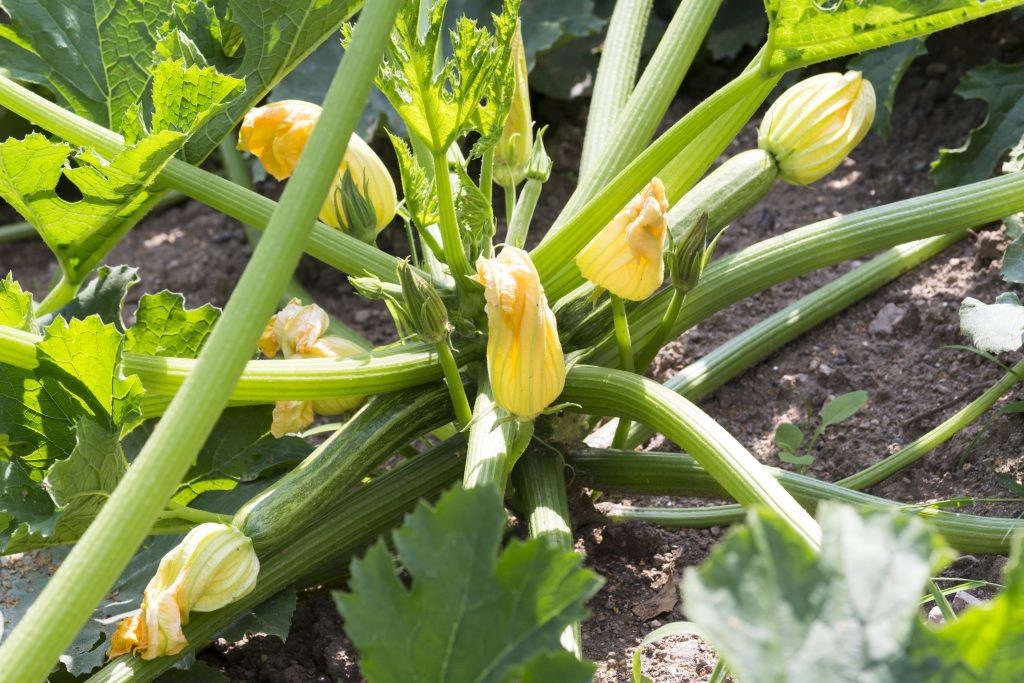
    Squash is one of the crops that respond well to Avaunt eVo insect control.

    PHILADELPHIA, July 14, 2020 – FMC has just released and made available for immediate use a new insecticide formulation, Avaunt eVo insect control, in a range of crops including brassicas, pome and stone fruits, cucurbits, leafy vegetables, low-growing berries and dried and succulent beans.

    Avaunt eVo insect control is an advanced formulation of Avaunt insecticide that provides improved mixability and rainfastness, an expanded label and an updated package size for easier handling.

    “This is the next evolution of our indoxacarb-based insecticides for specialty crop growers. Avaunt insecticide has been a proven tool, and now we’ve evolved the formulation to enhance its capabilities,” says John McCool, FMC insecticide product manager. “Strengthening existing technology is another way FMC is continuing to bring innovation to the market and advance agriculture.”

    Avaunt eVo insect control delivers effective control of labeled Lepidopteran pests, including several species of weevils, beetles and other chewing and sucking pests. Its expanded label also allows for higher application rates in certain crops, as well as new crop additions including dried and succulent beans, low-growing berries and small fruit vine climbing subgroups.

    The new formulation delivers significantly improved residual control, mixability and rainfastness. Avaunt eVo insect control is completely rainfast once it has dried on vegetation.

    “Enhancing these three attributes directly translates to better overall performance in the field,” explains Hector Portillo, insecticide product development manager for FMC. “For example, when we look at Avaunt eVo insect control trials nine days after the initial application, we’re still getting 80-90% control; a 10-20% improvement in control over the original Avaunt insecticide during the same post-application window.”   

    In addition to better performance, the improved mixability of Avaunt eVo insect control equates to less downtime and greater flexibility for growers. The product dissolves faster in the tank than the original Avaunt insecticide and other wettable granular insecticides. It also has a reduced mixing process, which alleviates the requirement for a set mixing cadence. 

    Strong, Resilient Rotational Tool

    Indoxacarb, the active ingredient in Avaunt eVo insect control, belongs to the unique and proven oxadiazine class of chemistry in IRAC Group 22. Indoxacarb is the only Group 22 insecticide labeled for this crop and pest spectrum, making Avaunt eVo insect control an ideal rotational partner for growers.

    “Being this is the only mode of action registered for use in this segment, it’s a strong fit in crops where growers make multiple insecticide applications per season. It provides rotational flexibility to help growers manage resistance and protect existing chemistries from resistance development,” Portillo states.

    Avaunt eVo insect control is a resilient option for growers operating under hot, intense environmental conditions since it is unaffected by pH, UV, high sunlight and temperature, which are the primary factors for insecticide breakdown and failure.

    For more information about Avaunt eVo insect control, visit your FMC Star Retailer or ag.fmc.com to learn more. 

  • Mental Health in Agriculture Industries

    Agriculture industries have had to adapt to a lot of change in recent months. The University of Florida Institute of Food and Agricultural Sciences (UF/IFAS) has created a series of professional development webinars to help these industries navigate the global pandemic.

    Mental health in rural communities was the focus of a webinar series put on by UF/IFAS.

    The most recent session of the six-part webinar series featured a panel focused on mental health in rural communities. The panelists discussed strategies to recognize a person in crisis and resources to address mental health concerns. According to Megan Stein, the host of the series, rural mental health was the most requested topic in the data that was collected to create this webinar series.

    Limited Health Care Access

    Oftentimes, when a grower’s livelihood is at stake, he or she may face the same mental health setbacks as those living in urban areas. However, many individuals work in agriculture live in rural areas where there is limited access to health care.

    “Actual incidents of mental health problems in rural areas are really not so different. You don’t necessarily see significant differences. It’s not like in rural areas things are way worse or anything like that. I think some of the stressors are different, but more importantly I think it’s just a lot harder to access help when you live in rural areas,” says Heidi Radunovich, associate professor in the UF/IFAS Department of Family, Youth and Community Sciences.

    Even though advancements have been made in remote health care, there are still setbacks in rural areas with limited cell service and Wi-Fi, which can make it difficult to receive remote care.

    Marshal Sewell, territory sales manager for Bayer and webinar panelist, believes that it’s important to create the right messaging connecting mental health and growers. According to Sewell, many farmers or individuals in rural communities find it difficult to open up to someone who doesn’t share a similar background or circumstances. He says finding that commonality or appropriate messaging could make a world of difference.

    Available Resources

    Let’s face it, farming is a stressful job — even in good times. The COVID-19 pandemic and resulting economic turmoil compounds the daily stressors. Farmers, ranchers and rural community members need appropriate resources to help manage their own stress and support their friends and neighbors.

    Luckily, resources are available. The American Farm Bureau Federation has launched the Farm State of Mind campaign, reducing the stigma surrounding the topic of mental health in rural communities. The campaign also provides helpful resources regarding mental health for farm families.

    In addition, the U.S. Department of Agriculture and National Alliance on Mental Illness are proactively working to provide relevant resources to rural communities.

    The panel participants also stressed the importance of managing day-to-day stress by taking time for yourself. This includes exercising, reading a book, meditating or any activity that allows you to take a step back from daily stressors.

    Isolation on the farm is real. We need to be aware of our neighbors. Practicing active listening and having a conversation with each other may be the only way to reach someone who is dealing with mental health issues. By listening and understanding, we can create change.

    Ashley Robinson, AgNet Media communications intern, wrote this article.

  • Potato Farmers Benefit From Latest CFAP Revisions

    File photo of potatoes.

    By Clint Thompson

    Florida potato farmers are one commodity group that benefited from last week’s USDA’s revision to the Coronavirus Food Assistance Program (CFAP).

    Potatoes were one of seven eligible commodities added to Category 1. The USDA found these commodities had a 5% or greater price decline between mid-January and mid-April because of the coronavirus pandemic. Originally, these commodities were only eligible for marketing adjustments.

    Kam Quarles, National Potato Council

    “We were cautiously optimistic that they were going to get to this point. Clearly (last week’s) announcement, they’re moving in the right direction. They made potatoes eligible for all of the categories under the relief program. Now, what we want to do is work with them to get the payment levels up across the board to a level that’s meaningful to any farmer who has suffered an injury due to the crisis,” said Kam Quarles, Chief Executive Officer of the National Potato Council. “Some of them are a little low. Others are where they need to be. We want to work with them going forward to see if we can’t get them all up to the right spot.

    “We basically canvased the whole industry and the conclusion that everyone came to was if a producer can get four cents a pound for whatever type of injury they suffered; the three categories spell out the types of injures; price loss, did you lose your customers after you shipped your product, did you lose your customers and your potatoes stayed on your farm; each one of those has a payment associated with it. If we can get each one of those to a minimum of four cents a pound, that will keep producers able to be solvent until next year. Hopefully, we’ll be out of this in another year from now.”

    Quarles expressed concern that funding may not be available to cover the expenses that accompany the additional commodities. “The money that they have is going to run out for this current CFAP. Congress is going to have to get involved, at a minimum to provide them with more money and then also extend the timeframes out at least through the end of this year. When they do that, we want to talk, both with USDA and with Congress about getting those payment levels up where they need to be,” Quarles said.

  • Additional Fruits, Vegetables Eligible for CFAP

    Washington, D.C., July 9, 2020 – U.S. Secretary of Agriculture Sonny Perdue announced an initial list of additional commodities that have been added to the Coronavirus Food Assistance Program (CFAP) on Thursday, and that the U.S. Department of Agriculture (USDA) made other adjustments to the program based on comments received from agricultural producers and organizations and review of market data. Producers will be able to submit applications that include these commodities on Monday, July 13, 2020. 

    USDA’s Farm Service Agency (FSA) is accepting through Aug. 28, 2020, applications for CFAP, which helps offset price declines and additional marketing costs because of the coronavirus pandemic. USDA expects additional eligible commodities to be announced in the coming weeks.

    “During this time of national crisis, President Trump and USDA have stood with our farmers, ranchers, and all citizens to make sure they are taken care of,” said Secretary Perdue. “When we announced this program earlier this year, we asked for public input and received a good response. After reviewing the comments received and analyzing our USDA Market News data, we are adding new commodities, as well as making updates to the program for existing eligible commodities. This is an example of government working for the people – we asked for input and we updated the program based on the comments we received.”

    Changes to CFAP include:

    Adding the following commodities: alfalfa sprouts, anise, arugula, basil, bean sprouts, beets, blackberries, Brussels sprouts, celeriac (celery root), chives, cilantro, coconuts, collard greens, dandelion greens, greens (others not listed separately), guava, kale greens, lettuce – including Boston, green leaf, Lolla Rossa, oak leaf green, oak leaf red and red leaf – marjoram, mint, mustard, okra, oregano, parsnips, passion fruit, peas (green), pineapple, pistachios, radicchio, rosemary, sage, savory, sorrel, fresh sugarcane, Swiss chard, thyme and turnip top greens.

    Kale is one of the commodities included in the CFAP revision.

    Expanding for seven currently eligible commodities – apples, blueberries, garlic, potatoes, raspberries, tangerines and taro – CARES Act funding for sales losses because USDA found these commodities had a 5% or greater price decline between mid-January and mid-April as a result of the COVID-19 pandemic. Originally, these commodities were only eligible for marketing adjustments.

    Determining that peaches and rhubarb no longer qualify for payment under the CARES Act sales loss category.

    Correcting payment rates for apples, artichokes, asparagus, blueberries, cantaloupes, cucumbers, garlic, kiwifruit, mushrooms, papaya, peaches, potatoes, raspberries, rhubarb, tangerines and taro.

  • USDA CFAP Revision “Big Deal” For Blueberry Growers

    Pictured are highbush blueberries.

    By Clint Thompson

    Thursday was a win for blueberry farmers, especially in Georgia. The crop was one of seven currently eligible commodities to be added to Category 1 of the Coronavirus Food Assistance Program by the United States Department of Agriculture.

    According to the USDA press release, the USDA found these commodities had a 5% or greater price decline between mid-January and mid-April as a result of the COVID-19 pandemic. Originally, these commodities were only eligible for marketing adjustments, which Florida blueberry farmer Ryan Atwood believes would not have helped growers like himself at all.

    “Not many individuals qualified for 2 or 3. But everyone in Florida is going to qualify, just about for Category 1. That’s why it is a big deal,” Atwood said.

    According to https://www.farmers.gov/cfap/specialty, eligible specialty crops in CFAP are broken down into three categories:

    1. Had crops that suffered a five percent-or-greater price decline between mid-January and mid-April as a result of the COVID-19 pandemic,
    2. Had produce shipped but subsequently spoiled due to loss of marketing channel, and
    3. Had shipments that did not leave the farm or mature crops that remained unharvested.

    Atwood, who lives in Mount Dora, Florida is one of the state’s blueberry leaders. He farms 56 acres of blueberries, manages another 350 acres and is part-owner of the largest packing house in the Southeast United States.

    Early Crop This Year

    Atwood’s and other farmers’ blueberry crops were early this year due to a mild winter, and high temperatures in January and February accelerated growth. However, when he started picking high volumes of blueberries, which was around March 18, that is when the pandemic shut down the country.

    Market prices reflected the pandemic’s impact. Atwood said in late April that the market was 50% of the historical average price, so half of the money of what you would typically get because of the coronavirus.

    That is why the USDA’s revision to include blueberries in Category 1 was a major win for the industry.

    “There’s a lot of people that are going to need that. It’s going to help them make it to next season. I know people that are getting loans and doing what they can and getting by, but every little bit helps get you there,” Atwood said.

    USDA is accepting CFAP applications through August 28, 2020. Learn more at farmers.gov/cfap.

  • Supplemental Fumigation Strategies for Soilborne Pests, Diseases

    By Ashley Robinson

    The phaseout of methyl bromide continues to stimulate research into the use of other soil fumigants for controlling soilborne pathogens, nematodes and weeds to an acceptable level for production.

    Gary Vallad

    Researchers at the University of Florida Institute of Food and Agricultural Sciences (UF/IFAS) are looking at ways to modify the current fumigation system to better reflect the distribution growers once saw with methyl bromide.

    “The phaseout from the loss of methyl bromide from where we are now, was not a short one. It’s been going on for decades and I think we’re still in that process,” says Gary Vallad, professor of plant pathology at UF/IFAS. “And of course, this has been kind of a costly process, it’s been a hard process for a number of growers throughout the state and throughout the southeast United States.”

    Improving Current Fumigation Systems

    In the absence of methyl bromide, tomato diseases have been on the rise, specifically fusarium wilt, caused by Fusarium oxysporum. Since then, growers have been looking to find alternatives to control the disease.

    According to Vallad, methyl bromide alternatives are limited in the way they move in the soil.

    The biggest weakness that researchers have found with the alternative fumigants is that the fumigant doesn’t reach the soil zones along the edge of the bed and under the tuck of the plastic.

    Researchers have developed strategies to improve current fumigation systems using Pic-Clor 60. With the additional of supplemental Pic, researchers saw a 77% decrease in fusarium wilt incidence and yield increase of approximately 21%.

    In addition to looking at how to control soilborne pathogens, they also wanted to evaluate strategies to control nematodes.

    “In a lot of cases where we run into pest problems, it’s not just one pathogen or nematode. Typically, it’s a mixture of the two,” Vallad says. “So really what we wanted to do is investigate what happens when we put both of these systems together.”

    After collecting results from research trials, it was discovered that deep shank Telone applications reduced nematode counts and gall ratings. Also, Pic-Clor 60 or 80 with supplemental Pic and deep shank Telone application was the most effective strategy to reduce fusarium wilt, which actually shocked researchers.

    Through further research, they found that Telone is fungicidal to fusarium oxysporum, and by combining both strategies researchers saw yield increases of 25% or more.