Category: Florida

  • Hemp growers: Be on the Lookout for Nematodes

    Figure 1. Stunted ‘starving’ strawberry plants (foreground) caused by sting nematodes in Florida.

    By Johan Desaeger

    Florida’s subtropical climate offers unique opportunities to grow crops outside of the typical growing season of other states. Such is the case for strawberries and many vegetables. There are high expectations that hemp could be another such crop, although nematodes may have something to say about that.

    Plant-parasitic nematodes, such as root-knot and sting nematodes, can cause severe damage to many of Florida’s crops, especially in sandy soils, which comprise much of the state (Figure 1). Nematodes are microscopic roundworms that live in the soil and are one of the least-known and most difficult-to-manage pests that growers can face. Because of nematodes’ small size, belowground nature and lack of easily recognizable symptoms, nematode damage is often not recognized as such. Symptoms typically occur randomly in a field and are easily confused with other pests and diseases, nutritional deficiencies, plugged drip tapes or too much or too little water.

    Figure 2. Swollen and galled roots caused by root-knot nematodes on tomato (left) and hemp (right).

    The most important nematodes in Florida are root-knot nematodes. They can cause damage to a wide variety of crops and are extremely widespread throughout the state (Figure 2).

    HEMP HAS SOME NEMATODE TOLERANCE

    With the considerable interest that hemp is gaining in Florida, the Gulf Coast Research and Education Center (GCREC) nematology lab started to investigate how root-knot and other nematodes may affect this new crop. The hemp-nematode research is the focus of Jackie Coburn, a master’s student in the nematology lab.

    Coburn screened several hemp cultivars in the greenhouse at the GCREC, including fiber, seed and CBD (cannabidiol) hemp types, originating from Europe, China and the United States. Initial data show that hemp is a good host for root-knot nematodes (Figure 2). However, the crop appears to be relatively tolerant, meaning the nematodes can feed and reproduce, but do not seem to negatively affect hemp growth.

    Figure 3. Hemp plots at the Gulf Coast Research and Education Center have strings with LED lights and hops in the background.

    Certain CBD varieties showed less nematode root damage than others, which will be useful for future breeding efforts. Currently, Coburn is screening hemp varieties for sting nematode, another important nematode in Florida, especially in strawberry fields (Figure 1).

    In addition to the greenhouse studies, hemp research was also initiated in the field at the University of Florida Institute of Food and Agricultural Sciences (UF/IFAS) farm in Balm. Here, hemp cultivars are planted throughout the year. In addition to nematode sampling, plants are being monitored for other pests and diseases.

    HEMP-HOPS INTERCROP

    An interesting feature in the field trials here is that hemp is grown with and without adding supplemental light, a practice that has worked well for hops in Florida (Figure 3 and Figure 4). It quickly became clear that adding supplemental light during the vegetative state makes a huge difference when growing hemp. In field trials, hemp was intercropped with hops, and both crops received the same light and fertilizer regimen.

    Figure 4. Hemp (left) and hops (right) at night at the Gulf Coast Research and Education Center.

    Hops and hemp belong to the same plant family, and in addition to both being daylength-sensitive plants, they also share many of the same flavor and aroma compounds. The field trials at the GCREC showed that with supplemental light, a hops-hemp intercrop can be an attractive option, as both crops will similarly benefit, allowing for two hop harvests per year and two to three hemp harvests per year.

    MORE RESEARCH RESULTS TO COME

    With increasing interest in hemp as an alternative crop, we will continue to provide updates on the hemp research at the GCREC. Future focus will be on CBD varieties and how to integrate hemp in the high-value cropping systems (vegetables and strawberries) in our area.

    Finally, in order to help researchers better understand the real importance of nematodes in commercial hemp fields, we invite any hemp grower in Florida to contact us if they notice abnormal plants in their field, or simply wish to have their fields analyzed for nematodes.

    This story was from the August edition of VSCNews Magazine. To subscribe, see http://vscnews.com/subscribe/.

  • Florida Farmer: Administration Needs to be Real Careful with Upcoming Hearings

    Paul Allen, president of R.C. Hatton Farms in Belle Glade, Florida and chairman of the Florida Fruit and Vegetable Association, believes the outcome of the upcoming virtual hearings about unfair trade practices with the U.S. Trade Representative’s Office could have significant ramifications come November.

    This file photo shows Florida Agriculture Commissioner Nikki Fried visiting with farmer Paul Allen, Palm Beach County Commissioner Melissa McKinlay and Tom MacVicar of MacVicar Consulting.

    “This administration better realize that the American people are very well aware of this Florida deal. They need to think hard about it. You’re in an election year, and it isn’t just the people in Florida, it’s people all over this country are aware of this deal,” said a frustrated Allen, referring to the competitive imbalance with Mexican imports. “They’ve been made aware of it through the pandemic. I think the administration needs to be real careful about what they’re doing here. They need to help the Florida farmer, and I think it could probably assure another term, to be honest with you. If not, I don’t know.”

    Hearings Scheduled

    The hearings, scheduled for Aug. 13 and Aug. 20, will allow the U.S. Department of Commerce and Trump Administration the chance to hear from seasonal produce growers in Florida and Georgia. Farmers such as Allen and Georgia producer Bill Brim are pleading for federal action to be taken regarding unfair trade, specifically with respect to Mexican imports.

    “I think we’ve got to challenge this administration to realize this is bigger than just push and pull. This is about national security. In World War II our country understood what that was about, they didn’t require farmers to go into the draft. They understood the importance of being able to feed our country. Our government needs to be reminded of that,” Allen said. “The fact that the Mexican administration is putting out such a big to-do about it, a big fight, shows you how important it is. They know it’s going to put the Florida farmers out of business. That’s why they’re really reacting strong to the fact that we’re even considering doing something different.”

    Unfair Trade

    The reality of unfair trade was especially harsh this year against the backdrop of the coronavirus pandemic. Farmers disposed of harvested produce just because there wasn’t a market, while Mexican produce was constantly being brought into the country.

    The idea of fair trade is a fantasy more than reality when it comes to Mexico says American farmers.

    “This pandemic when it came last March and April, we asked the government to pull a force majeure on the trade deal because of what was going on. We were destroying food. They wouldn’t do it. We begged them and begged them, had our representatives call but they wouldn’t close the border down, and we just kept destroying food,” Allen said. “We put a cry out to the American people, and the American people started supporting us and started doing what they could to buy American food and not food from other countries. It really bailed us out and helped us.”

    Real Change?

    Allen is hopeful and confident these hearings will lead to real change.

    “We’re farmers, we’re people of faith. We’ve got to believe, and we’ve got to think positive,” Allen said. “I’m not thinking we’re wasting our time.

    Additional information on USTR field hearing dates, deadlines, and submission instructions can be found in the Federal Register notice.

  • Bringing Technology to Specialty Crops

    United States Department of Agriculture

    Posted by Greg Astill, Markets and Trade Economics Division, Economic Research Service and Suzanne Thornsbury, Senior Advisor for Agricultural Economics and Rural Communities, Office of the Chief Scientist in Research and Science

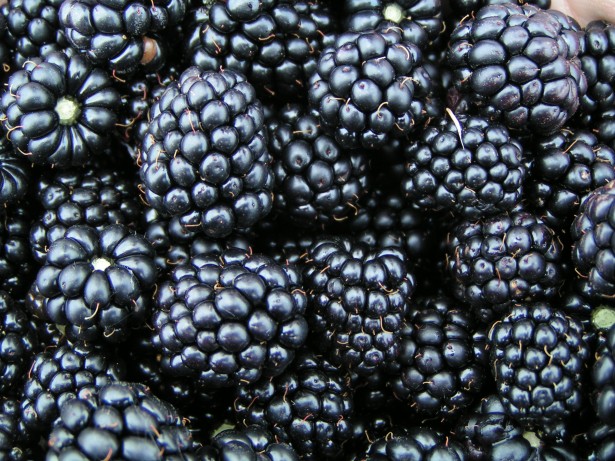
    File photo shows blackberries.

    Advances in technology, automation, and remote sensing is a cross-cutting, macro movement in science impacting agriculture outlined in the USDA Science Blueprint (PDF, 2.6 MB). The Science Blueprint guides USDA’s science priorities for the next 5 years, building from past success. Relative to other crops, many specialty crops are more dependent on agricultural labor for production, harvesting, and processing. This is part of a blog series that highlights research investments to advance automation and mechanization for specialty crops.

    Each day we use technologies to solve problems and accomplish tasks that once would have taken much longer. Whether facial recognition software, a smart thermostat, or a robotic vacuum, technology has changed the way we live and work. Farmers are also using technology to make production of specialty crops, such as fruits, vegetables, and tree nuts, more efficient. These crops make up one third of U.S. crop production sales and one sixth of U.S. agricultural sales.

    Between 2008 and 2018, USDA funded $287.7 million towards diverse research projects to develop and enhance the use of automation or mechanization in specialty crop production and processing. Most of these projects focused on precision agriculture, which includes a set of complex or “smart” technologies that tailor the needs of the plants to its specific environment or growing conditions, such as precise water, fertilizer, or pest or weed control. For example, a smart sprayer identifies individual trees in an orchard, their size, shape, and leaf density to adjust spray and reduce herbicide use. A smart irrigation system provides water only to the plants that need it, when they need it, continually adapting to crop conditions as the weather changes.

    Some USDA projects focus on development of specific components that will eventually be combined into more complex technologies. Sensors generate high-quality data on crops, weather and soil. Remote sensing data, gathered by satellites, includes information like crop growth, soil moisture, or weather conditions while drones gather more localized data on weed, pest, or disease prevalence. Machine learning algorithms convert the data into useful forms of information to help manage the farm.

    Other projects include development of job aids or automated machinery to help farm workers work more efficiently, such as an adjustable trellis system to make harvesting blackberries easier or mechanical thinners and pruners for vineyards and orchards. And some automation or mechanization technology helps with harvesting and processing, such as a flash freezing system or a mobile, in-field computerized apple sorter.

    USDA funded $287.7 million toward a diversity of research projects to develop or enhance the use of automation or mechanization in specialty crops between 2008 and 2018

    USDA funding for research into mechanization or automation for specialty crops, 2008-2018 chart
    Source: USDA, Economic Research Service, based on data provided by USDA’s Agricultural Marketing Service, Agricultural Research Service, and National Institute of Food and Agriculture.

    For more information, see the recent ERS report Developing Automation and Mechanization for Specialty Crops: A Review of U.S. Department of Agriculture Programs.

    This research supports the “value-added innovation” theme outlined in the USDA Science Blueprint and moves us closer to meeting the goals outlined in USDA’s Agriculture Innovation Agenda.

  • Georgia Farmer: What’s Right is to Help Support Us

    Brim

    Tifton, Georgia farmer Bill Brim is ready to voice his concerns about unfair trade practices during one of the two virtual hearings scheduled for Aug. 13 and Aug. 20 with the U.S. Trade Representative’s Office.

    The hearings will provide the U.S. Department of Commerce and Trump Administration an opportunity to hear from seasonal produce growers in Georgia and Florida on the urgent need for federal action regarding unfair trade.

    “I feel like if we don’t do it, we’re not going to get anywhere, so we might as well do what we can do even if we make them mad,” said Brim, co-owner of Lewis Taylor Farms. “They’re either going to do what they feel like they’re going to do or they’re going to do what’s right. What’s right is to help support us and our farming operations to allow us to be able to compete with the rest of the world.”

    Competition Against Mexico

    Competition against Mexican imports is tough, though, if not impossible, for specialty crop growers in the Southeast.

    “We can’t grow this product cheaper than they can grow it. Their wages are so much cheaper than ours. They’re making $8 or $9 a day, maybe, if they’re lucky. We’re paying $11.77 an hour for ours, plus all of our input costs are a lot more than theirs too,” Brim said. “They don’t have food safety to deal with like we do. They don’t have all the other items to have to deal with like we do, from FDA and EPA and everybody else.”

    He estimated that costs increase to $15 per hour per worker since Lewis Taylor Farms houses the workers as well. The high costs that specialty crop farmers already deal with was amplified this year because of the health and safety protocols needed for workers during the coronavirus pandemic.

    “This COVID-19 has cost us a fortune to keep them where they can work; spraying houses every day. We’re spraying buses every day, we’re spraying the kitchen every day, we’re spraying tractors every day, the trucks every day,” Brim said.

    Additional information on USTR field hearing dates, deadlines, and submission instructions can be found in the Federal Register notice.

  • Howler Fungicide Provides Vegetable Growers with Multiple Modes of Action

    File photo shows strawberries after harvest. Howler fungicide works well in strawberries.

    Howler fungicide from AgBiome Innovations is a product that harnesses the power of the plant microbiome to create a fungicide with multiple modes of action. It provides preventive, long-lasting activity on a broad spectrum of soilborne and foliar diseases and does the job for a number of specialty crops. For Florida and South Georgia growers specifically, it’s great for strawberries, onions, cucurbits and leafy greens. AgBiome Technical Service Manager Bond McInnes outlines some of the key diseases Howler works well on.

    From the greenhouse through harvest, Howler fungicide can be used effectively at every phase of production. Learn more at agbiome.com.

  • UF Researchers Expand Vanilla Project

    UF/IFAS photo shows Alan Chambers, tropical plant geneticist.

    By: Brad Buck, 813-757-2224 (office); 352-875-2641 (cell); bradbuck@ufl.edu

    You can taste it now. A refreshing scoop of vanilla ice cream or milkshake can be tasty and help cool you down in the sweltering Florida heat.

    To meet growing consumer demand for vanilla, Alan Chambers, a UF/IFAS tropical plant geneticist, is studying which beans to grow in Florida, and when and where to grow them. Chambers also wants to help Florida farmers diversify the crops they can grow. He’s been testing various vanilla species in his labs and fields at the UF/IFAS Tropical Research and Education Center in Homestead, Florida.

    Over the next year and a half, Chambers plans to deliver vanilla plants to much of southeast and southwest Florida, where residents, UF/IFAS scientists and Extension faculty will try to grow them.

    All those growing vanilla plants will monitor them for growth and survivability, Chambers said.

    “The coming winter will tell us a lot about how temperature impacts the vanilla vines,” he said. “Those participating in the study will be able to keep the plants. It’s bringing together some great people — from state Extension specialists to Extension agents to active members of our communities – for a common cause. We are also breeding new vanilla cultivars focusing on yield, bean length and flavor.”

    Another impetus for Chambers’ research? The United States relies on Madagascar for the bean. Over 80% of the world’s vanilla is produced in that country, off the east coast of Africa. America is the biggest importer of vanilla beans from Madagascar, and once in America, those beans are further processed into vanilla extract. As a spice, it is the second most expensive and is the world’s most popular flavor.

    Chambers is focusing the next step of his research in southern Florida. He and his research team plan to bring vanilla plants to the state’s southernmost counties – including Charlotte, Collier, Lee, Sarasota, Broward, Miami-Dade, Monroe, Martin, Palm Beach and St. Lucie.

    In addition to Extension agents in those counties trying to grow vanilla, scientists at the Southwest Florida, Indian River and Mid-Florida research and education centers will see if they can cultivate vanilla at on-site plots.

    Twyla Leigh, director of UF/IFAS Extension Collier County and two of her agents will help grow the vanilla at the Extension campus in Naples and in residential backyards.

    “This opportunity will test the possibility and conditions of growing a ‘value-added’ and potentially cost-effective/sustainable secondary crop for our small farmers in Collier County,” Leigh said.  

    “As a longtime orchid hobbyist and gardener, I am thrilled to be involved in this project that will benefit agriculture in Southwest Florida,” Leigh said. “I sent some cuttings to Dr. Chambers and, through DNA testing, learned the species of my vanilla plants was vanilla pompona. My first vanilla cuttings were gifted to me by my Master Gardener mother.”

    Like Leigh, David Outerbridge, director of UF/IFAS Extension Lee County is a hobbyist gardener, and he takes a personal interest in growing vanilla.

    “The potential to contribute to development and promotion of a new crop for Lee County and South Florida is phenomenal,” Outerbridge said.

    Chambers is counting on residents’ help, too.

    Some were selected to grow the vanilla plants based on their level of excitement and their support for his research. Some were picked based on their location, so UF/IFAS can spread out across counties.

    “These people will grow the plants and become part of our community network of citizen scientists,” he said. 

    Chambers acknowledged the help of the UF/IFAS Dean for Extension and Dean for Research offices. Combined, the two offices funded the vanilla outreach program through a grant from the Support for Emerging Enterprise Development Integration Teams (SEEDIT) program.

  • Vegetable and Specialty Crop Expo Seminar Schedule Now Available

    The Citrus Expo and Vegetable & Specialty Crop Expo is coming to you this year! The popular annual event will be virtual to present information to growers that they need in a safe way against the backdrop of COVID-19.

    On Aug. 19–20, the 2020 seminar program will debut online at VSCExpo.com at 9:30 a.m. Attendees will be able to enjoy videos of the research presentations from their computers or cell phones.

    Some of the topics University of Florida Institute of Food and Agricultural Sciences (UF/IFAS) researchers are planning to speak about in the vegetable and specialty crop program include:

    • Emerging technology for vegetables
    • New strawberry varieties for Florida
    • Cover crops and fumigants for weed control in vegetables
    • Mexican competition and the Florida fruit and vegetable industry
    • Fumigant alternatives for nematode management in vegetable and specialty crops
    • Tomato brown rugose fruit virus and resistance-breaking tospoviruses in tomatoes

    To view the complete seminar schedule, including speakers and topics, click here.

    Those who attend the seminars as they debut online will be eligible to win one of four $200 gift cards from Bass Pro Shops. Additionally, those who view the seminars will have the opportunity to earn continuing education units (CEUs) toward the Florida restricted-use pesticide license and the Certified Crop Adviser designation. Stay tuned to find out how many CEUs will be available for each.

    In addition to the vegetable and specialty crop seminar program, growers can take advantage of a full citrus seminar program. Both educational sessions contain a wealth of information relevant to all growers and industry members.

    Special Thanks

    Special thanks to the UF/IFAS researchers who have worked hard to plan and prepare the citrus, vegetable and specialty crop seminars.

    AgNet Media Inc. is also excited to offer the third annual general session at the virtual event. We invite all growers to attend the general session where topics of broad interest and impacting all types of growers will be addressed.

    During the general session, Florida Department of Agriculture and Consumer Services Director of Cannabis Holly Bell will update on the state’s hemp program. Bell’s hemp talk was a hit at last year’s Expo, and we are excited to welcome her back to the event. She’ll discuss how the Florida hemp program is becoming the role model for the country.

    Additionally, Florida Fruit & Vegetable Association President Mike Joyner will speak on the impacts of imports from Mexico.

    This year’s Citrus and Vegetable & Specialty Crop Expo offers plenty of flexibility since the seminar videos will remain online through the end of this year. It will be easier than ever to get the critical information you need. Those interested need to preregister to gain access to the programs. There is no cost to register.

    We’ll see you online Aug. 19–20!

    Written by Ashley Robinson

  • Flavorful Fruit Yields Sweet Results for Melon Farmers

    Southeast watermelon growers delivered a flavorful crop this year that yielded a sweet price at the market, said Mark Arney, executive director of the National Watermelon Promotion Board.

    Photo taken by Clint Thompson/Shows watermelons for sale at the Farmers Market in Cordele, Georgia.

     “We’re happy, we’re happy for the guys. Obviously, the guys that didn’t have a crop, it doesn’t matter how hot the market is, they’re not going to make money. We feel terrible for those guys,” Arney said. “The crop has been excellent quality, that’s helped.”

    High Prices

    Carr Hussey, a watermelon farmer in Florida and Alabama and chairman of the board of the Florida Watermelon Association, said in early July that prices were averaging 22 cents per pound. It was a huge increase from the 14 cents growers had grown accustomed to in previous seasons.

    Watermelons were in high demand due in large part to the short supply. Georgia acreage decreased almost 4,000 acres this year. Imports from Mexico were down 10% overall for the season, according to Arney. Because of weather-related issues, Georgia’s crop did not start until 7 to 10 days later than normal.

    Typically, Georgia and North Florida harvest watermelons at about the same time, which could lead to a surplus on Memorial Day weekend. That did not happen this year, however.

    There were even fears of a shortage at various times during the growing season.

    “You had a combination of the lateness of Georgia, of the Mexican crop being down around 10% overall for the season and the flavor being exceptional. All of those things brought a situation where you did have a shortage,” said Arney, who’s concerned about the current impact that Hurricane Isaias will have on watermelon production along the Atlantic Coast. “Who knows, there may even be more of a shortage (now) with the weather. Watermelons like rain, but too much rain means the guys can’t get into the fields if they’re using these school buses to harvest. They have to wait until things dry out. That could delay as well.”

    Little Impact From COVID-19

    While COVID-19 impacted the food service industry, as restaurants closed in response to the pandemic, watermelons were not one of commodities that felt the brunt of the impact.

    “The first couple of weeks it was panic time. We saw some pretty big slumps. Then all of a sudden, things started taking off. It was like, wow, what’s going on. Well, No. 1, flavor has been really good. I had one grower describe it as a vintage year. He’s been in the watermelon business forever and said, ‘I can’t remember a crop with this good of a flavor.’ That certainly helped,” Arney said. “I think produce in general is up because so many people are sheltered and can’t go to restaurants even though there’s been a little bit of openings. But because so many people are not eating in restaurants; they’ve got to eat, so they’re going to either order online or go to the grocery store. Watermelon’s a great bargain. It’s healthy.

    “Watermelon’s an excellent source of Vitamin C and it’s also probably one of the better bargains, if not the best bargain for fruits at costs per serving, which is around 17 cents.”

  • Actuality: One Reason not to Plant Unsolicited Seeds from Unknown Sources

    United States Department of Agriculture

    Jacob Barney, invasive plant expert at Virginia Tech University, giving one of several reasons why we should not plant seeds that show up at our door unsolicited from unknown sources.

  • UF/IFAS to Host Vegetable Growers Meeting

    The University of Florida/IFAS will host a vegetable growers meeting on Aug. 20 from 10 a.m. to noon. It will be a virtual meeting and feature talks from Extension agents and specialists.

    Extension agent Craig Fey will discuss fundamentals of weed management and focus on principles such as exclusion, prevention, cultural and chemical strategies.

    UF/IFAS weed scientist Ramdas Kanissery will talk about managing difficult weeds in vegetables. Nathan Boyd, UF/IFAS weed scientist, will talk about weed management programs for plasticulture vegetables, focusing on cover crops, fumigants and herbicides. Calvin Odero, UF/IFAS Associate Professor in agronomy with a specialty in weed science, will focus on weed management in sweet corn.

    Yiannis Amptazidis, UF/IFAS Assistant Professor in Precision Agriculture and Smart Machines, will present smart technologies for precision weed management in vegetables.

    There will also be time to for scientists to discuss upcoming research as well.

    Those interested in attending can RSVP by calling 239-658-3400 or email Zoe Watson at zshobert@ufl.edu.