Category: Florida

  • 2020-’21 UF/IFAS Citrus Production Guide Available

    UF Glow variety of citrus. Photo taken 11-17-17

    By: Ruth Borger, 517-803-7631, rborger@ufl.edu

    LAKE ALFRED, Fla. — While the coronavirus pandemic has changed much of the University of Florida citrus programming, one annual tradition continues, albeit with some changes. The 2020-2021 UF Institute of Food and Agricultural Sciences Citrus Production Guide is now available to growers, just as it has in years past.

    The difference is that growers usually would have the first chance to pick up their copy at the annual Citrus Expo held in Fort Myers. With that show going virtual because of the pandemic, distribution plans for the guide have been adjusted.

    What is the same is the publication which includes the latest technical advice on citrus greening disease, tree nutrition, grove management and other aspects of Florida citrus cultivation. The 264-page document is a comprehensive reference meant to assist growers in development and management of citrus groves in Florida, said Lauren Diepenbrock, a UF/IFAS entomology assistant professor and a member of the guide’s editorial team.

    Topics covered in the guide include planting, irrigation, fertilization, weed control, insect management and disease management, she said. It was previously known as the Florida Citrus Pest Management Guide, but the name was changed a few years ago, after the content was expanded, she said. About 50 UF/IFAS personnel contributed to the latest edition.

    “Each year, we update the guide with new information as it becomes available, so that we can continue to meet the needs of our growers as we learn about and/or develop new tools and strategies for citrus production,” Diepenbrock said.

    Hard copies of the guide are now available at local UF/IFAS Extension county offices (please see chart)

    Hillsborough, Polk Counties Polk Office in BartowChris Oswalt

    wcoswalt@ufl.edu (863) 519-1052
    Charlotte, Glades, Lee, Hendry, Collier Counties: Hendry Office in LaBelleMongi Zekri


    maz@ufl.edu (863) 674-4092
    Highlands County Office in SebringAjia Paolilloajiacunningham@ufl.edu 863-993-4846
    DeSoto, Hardee, Manatee Office in ArcadiaAjia Paolillo  ajiacunningham@ufl.edu 863-993-4846
    St. Lucie, Indian River Office in Ft. Pierce

    Amir Rezazadehamir2558@ufl.edu
    (772) 462-1628

    Orange, Lake, Marion Lake Office in TavaresJuanita Popenoe


    jpopenoe@ufl.edu
    (352) 343-4101 ext. 2727

    Sumter County Office in BushnellMatt Smith

     
     smith197@ufl.edu
     (352) 569-6862
    Jefferson County Office in MonticelloDanielle Sprague

    dsprague@ufl.edu
    (850) 342-0187

    Taylor County Office in PerryLisa Strangelstrange@ufl.edu (850) 838-3508  

    While Extension offices are open, it is always best to email or call the agent ahead of time to check that the office is open and ensure that they have the guides waiting for you. For a directory of citrus agents, visit  http://citrusagents.ifas.ufl.edu/locate/index.shtml.

    Another way to access the guide is on-line through the UF/IFAS Extension Electronic Data Information Source library at the EDIS website. It will also be available at the UF/IFAS Citrus Research and Education Center and the cirtrusresearch.ifas.ufl.edu websites.

  • Response Requested From Ag, Marine Industry Professionals for New Round of Surveys

    By: Kirsten Romaguera, 352-294-3313, kromaguera@ufl.edu

    GAINESVILLE, Fla. — University of Florida researchers have opened the second round of surveys on COVID-19’s impact on the state’s agriculture and marine industries, intended to capture changes in operations for the first half of the year.

    The Assessment of COVID-19 Impacts on Florida surveys were first deployed in mid-April and closed in mid-May, offering a glimpse at the changes and uncertainty that came with the early days of the pandemic. In total, more than 1,500 respondents across five sector-specific surveys shed light on how their businesses were faring just as statewide stay-at-home orders were in full effect. Reports on the findings are being finalized now and will soon be made available.

    Similar industry groups will be targeted for the second round of surveys, defined as follows:

    1. Agriculture and aquaculture production (broadly defined to include crop production, forestry/timber, nursery and greenhouse operations, agritourism, beekeeping, etc.); survey: tinyurl.com/uflsurvey-round2-agaquaculture
    2. Commercial fishing; survey: tinyurl.com/uflsurvey-round2-fishing
    3. Charter/For-hire operations; survey: tinyurl.com/uflsurvey-round2-charter
    4. Seafood wholesale dealers; survey: tinyurl.com/uflsurvey-round2-seafood
    5. Marine recreation support businesses; survey: tinyurl.com/uflsurvey-round2-recreation
    Christa Court

    “We were satisfied with the response rate of the first round of surveys, but I know there are experiences and impacts that we weren’t able to capture in the first round, especially when it came to specific commodities or sectors,” said Christa Court, assistant professor of regional economics in the UF/IFAS food and resource economics department. “Together, Florida’s agriculture and marine industries are a significant contributor to the state’s economy, but what makes our state unique is the diversity of activities and products that these industries engage in and produce. The more data we can collect from producers and operations of all types, the more insights we can provide on the variety of ways each of the sectors are being uniquely impacted by and adapting to the COVID-19 pandemic. It’s important that we find as many pieces of this puzzle as possible to understand implications for the broader food system and the economy.”

    Survey questions have been refined to make it as easy as possible for respondents to complete the survey while providing the information necessary for a detailed valuation of losses. Some questions might look familiar from the first round; however, in most cases, adjustments were made to account for the more nuanced impacts of the pandemic scenario.

    Court acknowledges that hurricane season is also a complicating factor for this second round of surveys. The UF/IFAS Economic Impact Analysis Program, which she directs, also conducts post-hurricane analyses.

    “Even though we saw in the first survey that the pandemic affects these sectors quite differently than natural disasters such as hurricanes, there’s a potential for compounding disasters in this next survey period,” she said. “We hope we don’t have to account for that, but we are prepared for the possibility.”

    As with the first round of pandemic-related surveys, Court is joined by fellow FRE faculty Andrew Ropicki and John Lai. Ropicki, an assistant professor of marine economics who also has a Florida Sea Grant appointment, will again lead the marine survey analysis. Lai, an assistant professor of agribusiness, focuses on the agriculture portion.

    In addition, based on responses from the first round of surveys, there is an ongoing collaboration between UF/IFAS, Florida Gulf Coast University, and Florida A&M University to conduct interviews with industry professionals. This effort spans across all segments of the food system, from input suppliers, to producers and processors, to restaurant owners, and everything in between. Previous survey respondents who expressed interest in sharing more about their experiences during this pandemic have been contacted and additional participation is welcomed. Industry professionals in agriculture or food-related sectors who are interested in sharing their stories and experiences should contact David Outerbridge, County Extension Director in Lee County, at douterbridge@ufl.edu or (239) 533-7512.

  • Auburn Economist: 301 Investigation Could Spark Retaliation From Mexico

    Adam Rabinowitz

    Georgia and Florida vegetable and specialty crop farmers are calling for a Section 301 investigation into unfair trade practices regarding Mexican imports.

    But Auburn University Assistant Professor and Extension economist Adam Rabinowitz is concerned about the potential ramifications that could loom as a result.

    Section 301

    According to the International Trade Administration, Section 301 of the Trade Act of 1974 provides the United States with the authority to enforce trade agreements, resolve trade disputes, and open foreign markets to U.S. goods and services.

    Rabinowitz said an investigation could lead to the U.S. imposing trade sanctions such as tariffs which would increase prices of inexpensive Mexican imports, in particular the fruit and vegetable crops. These are difficult for Southeast producers to compete against and were reasons that virtual hearings were necessary for the past two weeks with the U.S. Trade Representative’s Office.

    Adam Rabinowitz

    “We’ve seen the U.S. use this method against other countries for other industries. Representative (Robert) Lighthizer seems to be listening to the concerns. The one potential challenge may come from how Mexico may retaliate against any tariffs in that form,” Rabinowitz said. “There are concerns of other vegetable growers out west, there could be retaliation against some of their products that are flowing down into Mexico.

    “I think there will be further investigation in this. I think things will be heard. It’s just a question or not 301 will be used to actually apply some tariffs or if there could be some other type of resolution through a side agreement with the Mexican government that may address some of those concerns.”

    Virtual Hearings

    Georgia farmers and industry leaders voiced their concerns on Thursday, Aug. 20 and Florida producers testified on Aug. 13. The hearings were established to provide the U.S. Department of Commerce (DOC) and United States Department of Agriculture an opportunity to hear from growers in both states about the urgent need for federal action regarding unfair trade, specifically with Mexican imports.

    All who testified were consistent in their concerns about two main issues that are in Mexico’s advantage: government subsidies to Mexican producers and inexpensive labor.

    “If those could be addressed outside of tariffs, that could be a potential solution. Otherwise, you start getting into some of the trade disputes that raise some other issues,” Rabinowitz said.

  • Virtual Citrus Expo and VSC Expo See Great Success

    For nearly three decades, Citrus Expo has been the premier event that growers turn to for the latest information and products to run a successful operation. Although the annual in-person event took a hiatus this year to ensure safety during the COVID-19 pandemic, the virtual event saw tremendous success.

    “In these unprecedented times, it was important for us to find ways to still provide growers with the education they need,” says Robin Loftin, president of AgNet Media. “That’s what this industry is all about, continuing to adapt to challenges as they come and finding ways to overcome them.”  

    During the virtual two-day event that took place Aug. 19-20, over 1,100 participants logged into the Citrus Expo and Vegetable and Specialty Crop (VSC) Expo to view the educational seminar programs and interact with vendors and event sponsors.

    “We are extremely thrilled with this year’s turnout,” says Event Manager Josh McGill. “Despite the current situation, we were still able to provide a dynamic show packed with useful resources for the industry.”

    McGill notes that by holding the event virtually, it reached its broadest audience ever. Attendees logged into the Expos from 31 different countries.
    AgNet Media’s enthusiasm about the virtual event was also met by industry members.

    “Congratulations on a fantastic virtual Citrus/VSC Expo. Very well organized and executed! I sure did miss the opportunity to meet and network with others, but since that wasn’t possible, you made the most of it by offering an event that shared timely and valuable information,” said Debra Fitzgerald, market intelligence analyst for ISK Biosciences.

    Cacee Hilliard, Florida Farm Bureau’s CARES program coordinator, also offered words of gratitude regarding the event.

    “I just wanted to thank you for all the hard work putting on a virtual Citrus Expo! I am so pleased with how our sponsorship has been used. I feel attendees will easily see and access our information,” she says.

    For those who were not able to tune into the event, the general session, citrus, and VSC seminar programs and accompanying continuing education units will be available through the end of the year on CitrusExpo.net.
    The Citrus Expo and VSC Expo team sincerely appreciates the participation of attendees and seminar speakers. A big thank you also goes to the sponsors and exhibitors who invested in the Expos. The annual event cannot happen without their continued support.

    Furthermore, the Expo team appreciates the resiliency and passion found in Florida’s agriculture industry. Although it’s been a year unlike any other, growers continue to stand tall and provide for the world amid challenging times.

    The 2021 Citrus Expo and Vegetable & Specialty Crop Expo are set to take place Aug. 18–19 at the Lee Civic Center in North Fort Myers, Florida. We hope to see you there!

  • Florida Farmers Call for 301 Investigation Into Mexico Trade Practices

    rubio
    Unfair trade practices regarding Mexican imports is a key reason for hearings the last two weeks with Florida and Georgia farmers and industry leaders.

    Frustrated Florida vegetable and specialty crop farmers are calling for a 301 investigation into unfair trade practices concerning Mexican imports.

    Dustin Grooms, a fourth-generation farmer in Plant City, Florida, made his case while testifying in a virtual hearing with the U.S. Trade Representative’s Office on Aug. 13.

    “It goes back to what all the other growers are saying, at this time, I think we need to move forward with the 301 and start there and see where it leads to; see what happens and we can build upon that and get to a solution,” Grooms said.

    What is a 301 Investigation?

    Adam Rabinowitz, Auburn University as Assistant Professor and Extension Economist, explained that a 301 Investigation is part of the Trade Act of 1974 and allows the U.S. to engage in trade activity, whether it be trade agreements but also resolving trade disputes. The idea was that the U.S. could access foreign markets but also that domestic markets were not impacted.

    An investigation could lead to the U.S. imposing trade sanctions such as tariffs which would increase prices of inexpensive Mexican imports, in particular the fruit and vegetable crops, that are difficult for Southeast producers to compete against and were reasons that hearings were necessary with Florida agriculture leaders and Georgia leaders on Aug. 20.

    Grooms said the impact Mexico has had on his strawberry operation led to a significant drop in acreage of 125 acres, down from 235.

    “Mexican imports have crippled our strawberry prices in Florida as well as other crops. This issue has continued for far too long without a solution. The seriousness of the seasonality issue has been recognized by Congress and the U.S. Government dating back to 2002 trade promotion authority legislation which instructed the U.S. Government to fix the problem,” Grooms said. “The same instruction was repeated in a 2015 TPA law and every administration over the past two decades has acknowledged the pressing need to get a solution in place. Yet, nearly 20 years later, farmers are still left defenseless against unfair Mexican trade practices.”

    Grooms’ farming operation, ‘Fancy Farms,’ has had to sell off land to pay bills and have money to farm the following year. He made a passionate plea that change is needed and needed now.

    “The future of Florida agriculture is at a pivotal point in time. We need change to be able to continue our legacy of farming from one generation to another,” Grooms said. “We can grow all kinds of foods here in Florida if we’re given the chance. But with the Mexican imports looming over us, I’m afraid the future of Florida’s agriculture fate might be destined for failure.”

  • UF/IFAS scientist named fellow of American Phytopathological Society

    Natalia Peres

    By: Brad Buck, 813-757-2224 (office); 352-875-2641 (cell); bradbuck@ufl.edu

    Working at her lab and fields at the UF/IFAS Gulf Coast Research and Education Center, Natalia Peres diagnoses and helps manage diseases that might otherwise ruin strawberries, a $300 million per year crop in Florida.

    In her efforts to beat back diseases, Peres helped develop the Strawberry Advisory System, which tells farmers when to spray fungicides on their crop to help them control botrytis and prevent anthracnose. Additionally, she’s participating in a collaborative effort with Cornell University – another land-grant institution — to use UV light to suppress strawberry pathogens.

    Now, Peres has been named a fellow of the American Phytopathological Society (APS).

    The APS grants the fellow honor in recognition of distinguished contributions to plant pathology or to the society. Fellow recognition is based on significant contributions in one or more of the following areas: original research, teaching, administration, professional and public service, and/or Extension and outreach.

    “It is a tremendous honor to be among a select group of peers whom I greatly admire within the American Phytopathological Society,” said Peres, a UF/IFAS plant pathology professor. “I could not be happier with the recognition, and I am very thankful for the support I have always had from GCREC, the department of plant pathology and the strawberry growers.”

    Peres always liked biology, but she wanted to apply her knowledge to food production. In fact, she didn’t gravitate toward plant pathology until she was in college in Brazil.

    “During my doctoral program, I was working on a research project with a disease (post-bloom fruit drop) in citrus that was relatively new in Brazil, and there was not a lot of local information,” she said.

    Pete Timmer, then a professor at the UF/IFAS Citrus Research and Education Center, was then the expert on post-bloom fruit drop, so Peres came to UF to do part of her Ph.D. research with Timmer.

    “Working with him as a mentor completely changed my career and life path,” said Peres. “I am forever thankful for his mentorship and try to be the same model for my students as he was for me.”

    David Gadoury, a senior research associate at Cornell University, nominated Peres for the honor. She’s worked with Gadoury for many years. In fact, he urged Peres to participate in the UV light research project.

    “Peres is a superbly gifted and dedicated mentor of undergraduate, graduate, and postgraduate researchers,” Gadoury said in his nomination letter. “She has produced a generation of skilled and broadly trained researchers and crop advisors. Her commitment to mentor international students and postgraduate researchers is particularly notable.”

    Peres has advised 27 undergraduate and 10 graduate and postgraduate researchers in her program since 2010. During the same period, her students received 24 awards from the APS Foundation, the University of Florida, and others, in recognition of their research and Extension achievements.

    She earned all three of her degrees at Sao Paulo State University in Sao Paulo, Brazil. Peres’ bachelor’s degree is in agronomy and crop sciences, her master’s in horticultural sciences and her Ph.D. in plant pathology.

    Peres came to GCREC as an assistant professor in 2004. She was promoted to associate professor in 2010 and made full professor in 2016. In that time, she has published 140 peer-reviewed journal articles.

    Jack Rechcigl, director of the Gulf Coast Research and Education Center, and Peres’ on-site supervisor, said the center is fortunate and proud to have Peres as a faculty member.

    “Her passion, energy and enthusiasm for her vocation has led her to become a world-renown pathologist who is recognized for her outstanding scientific contributions to the strawberry industry,” Rechcigl said. “Her productivity is boundless.”

    Rose Loria, chair of the UF/IFAS plant pathology department and Peres’ supervisor in Gainesville, also lauded Peres.

    “Natalia is dedicated to the strawberry growers she serves. Her ability to find innovative solutions to new disease problems or improve production practices to reduce inputs is outstanding – and she does this over and over,” Loria said. “I credit her collaborative style and her inherent creativity.”

  • CFAP Expansion Doesn’t Include Hemp; Growers Respond

    File photo shows field of hemp plants.

    U.S. Hemp growers are disappointed the recent Coronavirus Food Assistance Program commodity expansion does not include hemp. Last week, the Department of Agriculture expanded the commodities covered under the program that provides COVID-19 relief to producers. CFAP includes commodities that USDA can prove saw losses of 5% or more in the first quarter of 2020.

    The U.S. Hemp Growers Association (USHGA) says, “We believe our farmers did present evidence of losses to our growers that were 5% or more in the first quarter of 2020.”

    Hemp is such a newly legal crop that it does not have the advantage of data gathered by USDA agencies. Currently, the data available to understand the market is gathered privately by several data companies. USHGA believes two datasets showed a 5% pricing decrease and more in hemp and hemp products in the first quarter of 2020.

    The statement says, “All hemp farmers are now wondering what kind of treatment they will receive should there be future problems.”

    (From the National Association of Farm Broadcasters)

  • Research Center in Live Oak, Florida Enrolls in BMPs

    By: Kelly Aue, Suwannee River Partnership Outreach Coordinator, 386-219-4257, kaue@ufl.edu

    LIVE OAK, Fla. — As the main research center serving farmers in the Suwannee River Valley, the mission of the UF/IFAS North Florida Research and Education Center – Suwannee Valley (UF/IFAS NFREC-SV) is to protect the area’s natural resources while helping farms succeed. In support of this goal, the center researches agricultural best management practices (BMPs), primarily focusing on nutrient and water management.

    Bob Hochmuth

    “Over the past six years, the center has become much more modernized from a technology standpoint,” said Bob Hochmuth, assistant center director and UF/IFAS Extension regional specialized agent for vegetable crops. “We are in the middle of the implementation phase on adopting technology that we can test to be utilized on farms.”

    “Through the commitment of Jack Payne, the former UF/IFAS senior vice president, to rebuild our center, along with the deans of Extension and Research, we were able to equip this center to be able to handle a variety of research projects,” Hochmuth continued. “In addition, we’ve been supported by the Suwannee River Water Management District (SRWMD), Florida Department of Agricultural and Consumer Services (FDACS) Office of Agricultural Water Policy, and Florida Department of Environmental Protection (FDEP). They have funded many contracts and grants that are the driving force behind the research, funding and implementation of BMPs.”

    “Research is an important part of developing and making sure BMPs work,” said Glenn Horvath, environmental consultant for FDACS. “For example, the center did some important research on soil moisture sensors and shared with farmers how this tool could be important in their efforts to reduce their loss of nitrogen and improve irrigation of their crops. Today, farmers tell me they don’t want to farm without them. The center’s efforts in research were really important to the widespread adoption of that BMP.”

    Beginning in February 2015, the center enrolled in the FDACS BMP program using the guidance of the 2008 Vegetable and Agronomic Crops (VAC) BMP manual. In March 2020, Hochmuth met with Horvath to re-enroll under the updated 2015 VAC BMP manual which updated BMPs, including BMPs on hay and silage production.

    To enroll in the BMP program, a farmer meets with a FDACS representative to identify all applicable BMPs on the BMP checklist. The farmer then signs a “Notice of Intent to Implement BMPs” (NOI), which indicates the farmer’s commitment to properly implement and maintain the applicable BMPs, and submits it to FDACS along with the checklist.

    “To sign something called a ‘Notice of Intent’ is in line with my strategical thinking on what we are trying to do here,” Hochmuth said of his center. “Number one, I want to make this place important to the community; and number two, I want to be a good steward to the natural resources of the property I’m responsible for. Those two align with a Notice of Intent because that is our collective intent here at this farm.”

    The center is located within the proposed Suwannee River Basin Management Action Plan (BMAP). The Suwannee BMAP requires stakeholders in the watershed to reduce nitrogen inputs, and agriculture is a focus of the effort. BMP manuals, such as the VAC BMP manual, are adopted by rule by FDACS. The law requires farmers located in a BMAP to either implement FDACS-adopted BMPs or monitor their water quality as prescribed by FDEP.

    While going through BMP enrollment process, Hochmuth was able to look at the NFREC-SV farm holistically to assess the applicability of all BMP categories – nutrient management, irrigation management and water resource management.

    “Overall, we did super well, but there are things such as the importance vegetative buffers around our lake and drainage ditches that I’m more cognizant about from the NOI visit,” Hochmuth said. “It was an opportunity to learn about things that are not immediately on your mind. We did talk a lot about nitrogen management, but it gives an opportunity to identify areas where we can improve strategies.”

    Overall, Hochmuth’s goal is to share with the community the research that is happening at UF/IFAS NFREC-SV and the importance of implementing BMPs: “I want to get people on the back 40 to be able to show them the things that we are doing here.”

  • Florida Strawberry Industry Members Speak out About Unfair Trade with Mexico

    florida
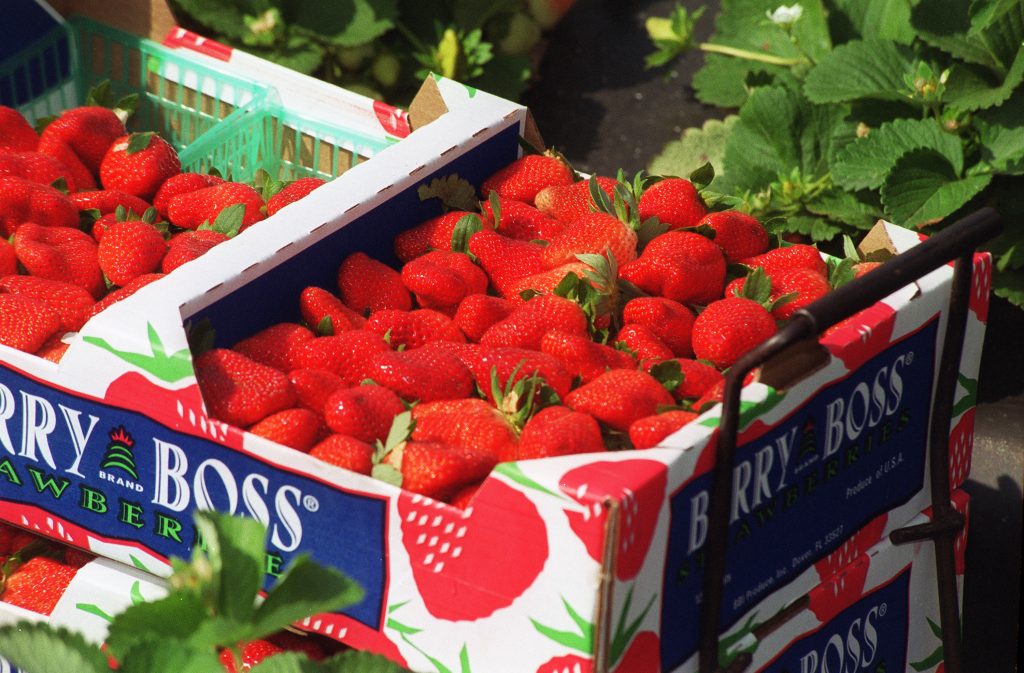
    File photo shows strawberries boxed up after harvest.

    Florida Strawberry Growers Association

    Dover, Fla. (August 18, 2020) – U.S. trade officials and federal agencies held the first of two virtual meetings on August 13 with the agriculture industry to hear testimonies on unfair trade practices with Mexico. More than 35 witnesses testified to a hearing committee consisting of representatives from the Office of the U.S. Trade Representative, U.S. Department of Agriculture, and the U.S. Department of Commerce.

    As Senator (Marco) Rubio, congressmen, Florida’s Commissioner of Agriculture and Consumer Services, economist Dr. Zengfei Guan, and producers from across the state and even the country testified, reoccurring concerns of unfair trade practices, government subsidies and loss of market share came up repeatedly.

    “We are not looking for a handout, just a fair chance in the fight,” said Executive Director of the Florida Strawberry Growers Association, Kenneth Parker.

    The concern of crisis is of the winter specialty crop market in Florida and now into Georgia and beyond.

    “In my 33 years of operating the farm, our greatest challenge has been increased Mexican competition…,” said John Sizemore of Sizemore Farms. Industry members pleaded for a Section 301 to be filed against Mexico to investigate the trade practices.

    The United States-Mexico-Canada Agreement (USMCA) that was passed and became effective on July 1, 2020, neglected to include seasonal and perishable crops. U.S. Trade Representative Robert Lighthizer made a commitment to the seasonal and perishable fruit and vegetable industry in Florida that he would address the issue of unfair trade practices with Mexico; therefore, these hearings are a result of that commitment. A second virtual hearing will take place on Thursday addressing the seasonal and perishable produce industry Georgia. The hearing will be streamed through the USTR website and transcripts will also be available from both hearings.

  • Hemp Scouting Important This Time of Year

    File photo shows a field of hemp.

    Heat and humidity in the Southeast means hemp producers face challenges this season with regards to pests and diseases.

    Matthew Brecht, cannabis grower, hemp expert and plant pathologist with Marrone Bio Innovations, said scouting is essential for growers especially since not much research has been done with this relatively new crop.

    “Right now (hemp) should be transitioning to flowers. You should be having some pre-flowers maybe or about to be there. This is a time when you could have anything come in the Southeast. The east coast, Southeast, specifically is hot and humid with lots of rain events or tropical depressions that come through. You have all kinds of bugs and diseases that show up because of the humidity and pressures you have,” Brecht said.

    Be on the Lookout for Worms

    He noted that the worst pests for hemp are worms, especially corn earworms.

    “The insects will get into the newly formed colas (cluster of buds) and basically start chewing on them. They kill the flower or parts of the flower. Once they start doing that, you could lose a good percentage of your crop. Farmers want to think about scouting for these little caterpillars and looking for either the moths or the eggs and try to time some of these applications, products that are for caterpillars during that time,” Brecht said. “Because of high humidity, you also get leaf spot. You could have hemp stem rot. You could have powdery mildew and (bud rot) towards the end.”

    Brect emphasized that there wasn’t great research done in hemp prior to 2019. Hemp farming is still in its early stages, especially in Alabama, Florida and Georgia. It’s still very new with not a lot of understanding of the different pests and diseases that can be of impact.

    Products are also sporadic from state to state in what growers can utilize, which could mean a challenging growing season for some farmers.

    “If you don’t have proper tools to control these pests and diseases, you could potentially lose a good portion of your crop,” Brecht said. “I would say growing hemp on the east coast or the Great Lakes, anywhere that has a more humid or rainy environment during the summer time is much more difficult than it is on the west coast, much more difficult.”