Category: Florida

  • Florida Fruit and Vegetable Association Commends USTR

    MAITLAND, FL (Sept. 1, 2020) – The Florida Fruit & Vegetable Association commended the Office of the U.S. Trade Representative, the Department of Agriculture and the Department of Commerce on Tuesday for their plan to begin remedying the immense harm to produce growers in Florida and elsewhere caused by unfair trade practices and harmful import volumes from Mexico and other foreign sources.

    “As (Tuesday’s) announcement makes clear, this plan will launch the first – but not the last – steps needed to solve this longstanding and growing threat to the produce industry in Florida and elsewhere,” said FFVA President Mike Joyner. “The unfair trading practices and harm to our industry, which are exhaustively documented in (Tuesday’s) report and on the record, demand a timely, effective and lasting solution.”

    August Hearings

    After listening during two August hearings to industry leaders and producers from Florida, Georgia and other states, the three agencies on Tuesday unveiled a report on the hearings and a plan to support producers of seasonal and perishable fruits and vegetables.The plan outlines the specific actions each agency will take. Among other things, the USTR will pursue “senior-level government-to-government discussions with Mexico over the next 90 days to address U.S. industry concerns regarding U.S. imports of Mexican strawberries, bell peppers and other seasonal and perishable products.”

    In addition, USTR will ask the International Trade Commission to initiate a Section 201 investigation into whether increased imports of blueberries have seriously harmed U.S. blueberry growers. During the hearings, industry leaders and producers pointed to a heavily subsidized Mexican produce industry and unfair pricing practices as primary causes of the decline in Florida’s market share and production during the past 20 years. Researchers from the Florida Department of Agriculture and Consumer Services and the University of Florida testified about data showing explosive growth in imports of Mexican fruit and vegetable crops to the United States since 2000.

    More Work to do

    FFVA will continue to coordinate closely with the Administration and elected officials during the negotiations and other proceedings announced (Tuesday) to deliver the trade relief that Florida specialty crop growers need and deserve.

    “Mexico and other foreign suppliers should be on notice that all of our affected fruit and vegetable sectors, working with the Administration and elected officials, are committed to ensuring that every trade remedy tool available is used to correct the unreasonable foreign trade practices that have caused persistent losses in market share and revenue, shuttered farms, and growing job losses throughout our state,” Joyner said. “We won’t allow our industry’s survival to continue hanging in the balance, and we intend to solve this longstanding problem once and for all.”

    Joyner expressed appreciation to Florida’s congressional delegation for its leadership and unanimous commitment.

    “The fact that every member of Florida’s congressional delegation – the third largest in the country – has remained united in strong support of Florida producers on this issue demonstrates the importance of agriculture to Florida. We are thankful for their unwavering support.”

  • Fried Issues Statement on USTR Announcement on Mexico’s Trade Practices

    commissioner
    Nikki Fried
    Florida Agriculture Commissioner

    Tallahassee, Fla. – After Tuesday’s announcement from the Office of the United States Trade Representative (USTR) on the administration’s plan to address the threat posed by unfair trade practices and increased foreign imports, Florida Agriculture Commissioner Nikki Fried issued the following statement:

    “I appreciate the USTR’s recognition of the decades-long suffering endured by both Florida and America’s seasonal producers due to unfair Mexican trade practices — this is another step towards making an impact on this major problem. After hearing testimony from farmers struggling every day to compete, the urgency of this issue cannot be denied.

    “We are hopeful that (Tuesday’s) announcement signals a commitment from the administration to stand with Florida farmers and hold Mexico accountable for their unfair trade practices. It’s clear there is still a lot of work needed to provide the relief our farmers desperately need — the Florida Department of Agriculture will continue pushing for solutions, and we look forward to working with the administration to enact timely and effective remedies.”

    Mexico’s growing market share: Last month, Commissioner Fried and FDACS released a report highlighting the up to $3.7 billion in Florida farm losses due to unfair trade from 2000-2019. The report can be viewed in full at FDACS.gov/USMCAReport, top findings include:

    • Mexico has expanded their share of the U.S. domestic market by 217% since 2000 — while Florida’s market share dropped by 40%
    • Mexico’s seasonal crop imports have increased by 551% from 2000 to 2019
    • An $11 billion gap exists between Mexican agricultural-exports and Florida’s total agricultural market value
    • Florida producers lost sales of up to 20% due to Mexico’s agricultural export expansion since 2000. This accounts for up to:
    • $3.7 billion in total economic losses for Florida’s economy
    • 37,180 lost jobs in Florida
    •  $205 million in lost indirect tax revenue for Florida’s economy
    • $2.2 billion in annual losses of Florida cash receipts to multiple agricultural sectors
    • 20 Florida commodities examined experienced declines in market share, while 13 Mexican commodities increased their share by 100% or more

    Background: Since taking office, Commissioner Fried has been a leading voice in opposition to USMCA’s failure to address the dire situation facing Florida’s seasonal crop growers. On August 13, Commissioner Fried testified at a virtual hearing held by the USTR regarding Mexico’s distorting trade policies. As the USMCA came into force, she released a report highlighting up to $3.7 billion in Florida farm losses from unfair trade. Commissioner Fried has visited Washington D.C. numerous times to request Congress include provisions to protect seasonal producers and was the nation’s only Agriculture Commissioner to vote against a resolution supporting the USMCA.

  • Brilliance Variety Popular Choice as Strawberry Planting Season Nears

    Photo submitted by Vance Whitaker/UF: Shows basket of Brilliance variety strawberries.

    Florida producers will soon be planting strawberries in a few weeks. The popular variety choice this year is expected to be Brilliance, says Vance Whitaker, strawberry breeder at the University of Florida Gulf Coast Research and Education Center, .

    Released in 2017, Brilliance provides growers fruit early in the season. It’s a desirable trait not all varieties are able to offer.

    “It produces fruit very rapidly and very high yields in November and December. That’s the most important thing for the industry in central Florida,” Whitaker said. “This variety quickly became a leader. It also doesn’t suffer from the problem Radiance has of having elongated fruit early in the season.

    “If you’ve grown Radiance, you’re definitely recommended to switch over to the Brilliance variety.”

    Brilliance’s Impact This Year

    Word has quickly spread about the effectiveness of Brilliance. Whitaker expects more than half of the estimated 10,000 acres in Florida to be comprised of the Brilliance variety. The main reason is its ability to produce fruit early in the growing season which is when the market is most profitable for Florida farmers.

    “As far as just a big picture of the breeding program, fruit quality always has to be right up there at the top. You can have high yields and poor fruit, and it won’t do anybody any good. That’s always right there at the top, but I would say early yield is right up there at the top; probably the second or first most important trait as well,” Whitaker said. “Again, you have can have good quality fruit but if you don’t have fruit at the right time in Florida, then you’re not making any money either.

    “In recent years with the market the way it is, getting good volume in late November or early December is just super important just because of how much fruit can be on the market. It feels like in recent years that the money has to be made by the end of January or at least before Valentine’s Day; that’s just the nature of the Florida strawberry deal. Early varieties are absolutely the key.”

    Whitaker said growers are bedding right now with planting estimated to begin around Sept. 25 and will continue through the middle of October.

  • Tomato Industry Expert: Inspections Running Smoothly

    new
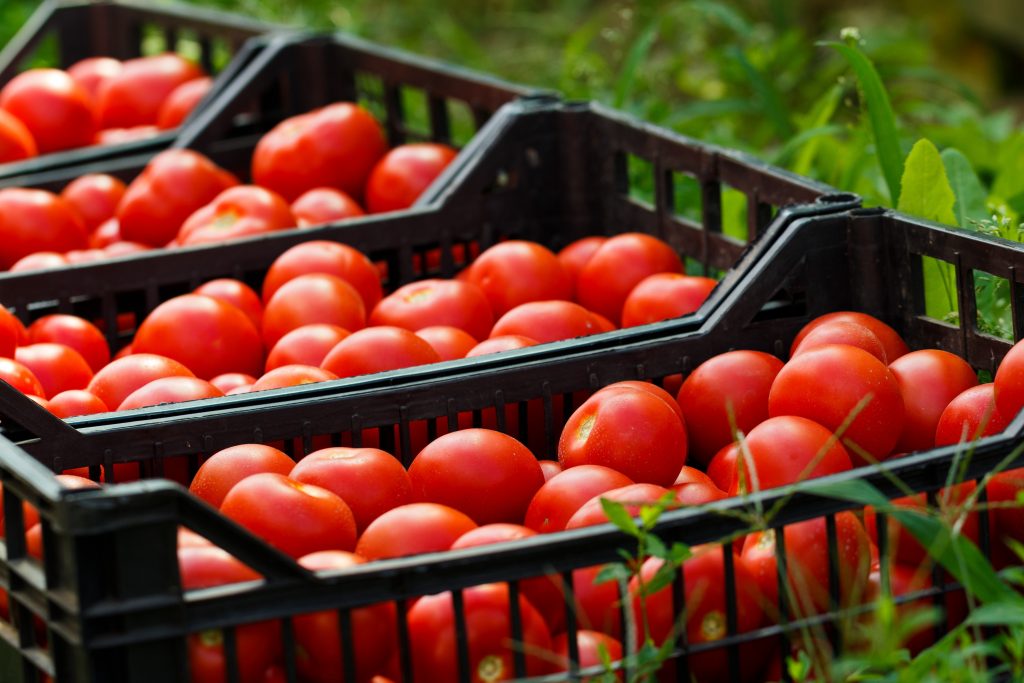
    Pictured are ripe tomatoes.

    Though Mexican exports of tomatoes have not reached the ‘peak’ season, inspections appear to be running smoothly and efficiently, says Michael Schadler, executive vice president of the Florida Tomato Exchange.

    The inspection provision, which was part of the Tomato Suspension Agreement established in September, 2019 between the U.S. Department of Commerce and Mexican tomato exporters, allows for the United States Department of Agriculture to inspect certain kinds of tomatoes being transported from Mexico to the United States. It started in early April but will be tested when higher volumes of tomatoes ramp up during the winter months.

    “The heaviest times of the season as far as imports from Mexico are January, February and March. The inspections haven’t been tested with the biggest volumes of the season,” Schadler said. “We’re bringing in Mexican tomatoes year-round. There’s very significant volumes every week of the year, every month of the year. But in those three months, that’s really the peak for the big production out of Mexico. That will be more of a test. By the time it’s January, they will have had a good eight months of practice, I think it’ll be fine.”

    Cause for Concern?

    Schadler believes there should not be cause for concern that inspections of tomatoes could create a bottleneck of shipments, especially during those months when more of the crop will cross the border.

    “Frankly, I don’t think it should be a worry for anyone. First of all, USDA (Agricultural Marketing Service) AMS, that’s what they do; they’re in the business of offering inspections services. They’ve ramped up employment and staff to the level they can handle the situation,” Schadler said. “I think people would have been a little nervous if their start had been Jan. 1 of 2020, right as the big volume was coming in. That would have been a little much.

    “I don’t think there is any worry. If you hear about importing companies expressing concern, I personally don’t think that’s justified. But I can understand it if I was an importer, how it’s an adjustment that they have to make. As far as we understand it, the process has been going fairly smoothly. Both sides have been working together well.”

    Purpose of Inspections

    According to the International Trade Administration, the purpose of the Suspension Agreement inspections is to prevent low-quality and poor-condition tomatoes from entering the U.S. market and injuring the U.S. domestic tomato industry through price suppression or undercutting.

    The tomatoes that are being inspected include Round tomatoes, Round meaning fresh tomatoes; Roma tomatoes, Roma meaning Roma or Plum fresh tomatoes; stem on tomatoes, stem meaning any type of fresh tomato, except specialty and tomatoes on the vine; and Grape tomatoes in bulk.

    “It’s a quality grade inspection. It makes it so that if you’ve got tomatoes that grade below U.S. No. 2, you can’t bring them into the country. You either have to cull them there on the spot or you have to return the shipment back to Mexico,” Schadler said. “It’s really good for the overall market. It’s good for the downstream market because you’re getting higher quality, but it’s good for the trade as well because you get some of that rough quality out of the system and prices will be helped for everyone.”

    Exempt Tomatoes

    Those tomatoes that are exempt from inspections include tomatoes on the vine, meaning any type of fresh tomatoes, except specialty, in which there are two or more tomatoes, normally in a cluster, with the vine attached; specialty tomatoes, meaning Grape, Cherry, Heirloom, Cocktail fresh tomatoes or any other tomato varietal, other than Round and Roma tomatoes, with or without the stem; and Grape tomatoes in retail packages of 2 pounds or less.

  • Sneak Peek: September 2020 VSCNews Magazine

    The September issue of VSCNews magazine is packed with information about breeding updates and new varieties. Readers can see what’s new in strawberries, blueberries, blackberries and cucurbits.

    Breeding new varieties is a vital component to push agriculture forward. The University of Florida (UF) is a leader in the breeding industry. Recently, blackberries have emerged as an alternative crop in Florida. Zhanao Deng, a professor at the UF Institute of Food and Agricultural Sciences (UF/IFAS) shares the work that UF has done trialing and developing cultivars for the Sunshine State. According to Deng, UF plans to produce the first blackberry production and spray guide by early 2022.

    Seonghee Lee, a research assistant professor and Vance Whitaker, an associate professor, both at the UF/IFAS Gulf Coast Research and Education Center in Wimauma, discuss a new strawberry variety that UF will soon commercialize. These white strawberries, actually found in nature, are expected to be the first white strawberries on the market in the U.S.

    Patricio Munoz, an assistant professor and Doug Phillips, UF/IFAS blueberry Extension coordinator, discusses the UF/IFAS blueberry breeding program. Get the latest details on the program in his article.

    The September issue also offers something for cucurbit growers. Cucurbit crops are some of the most widely grown vegetable crops in the Southeast. However, the hot and humid climate can present a number of challenges to growers when it comes to pests and diseases. Cecilia McGregor, an associate professor and George Boyhan, a professor and Extension specialist, both at the University of Georgia (UGA), share the work being done by the UGA cucurbit breeding programs, developing cultivars that are well adapted to the Southeast.

    Finally, the September issue includes a wrap-up of the recent virtual Vegetable & Specialty Crop (VSC) Expo. Readers can get some of the highlights from the Expo educational program inside the September issue. Also, be sure to mark your calendars for the 2021 VSC Expo, returning Aug. 18-19, 2021, to the Lee Civic Center in North Fort Myers, Florida.

    If you would like to receive future issues of VSCNews magazine, click here.

  • Florida Setting the Bar for Hemp Programs

    state hemp plan

    By Tacy Callies

    Holly Bell, director of cannabis for the Florida Department of Agriculture and Consumer Services (FDACS), gave an update on Florida’s hemp program as part of the Citrus Expo virtual general session.

    “Florida is becoming the leader in the country — if not the world —on how we’re getting our hemp program rolled out and the standards that we’re setting,” she said.

    On April 27, FDACS began issuing hemp cultivation permits. As of mid-August, 550 permits were issued and another 400 were being processed. The 550 permits encompass 18,000 acres of indoor- and outdoor-grown hemp. Bell said applying for a permit is a quick and easy process that can be done online. She noted that there is no fee for a hemp cultivation permit in 2020. Questions about the permit process can be sent to DPIhemp@FDACS.gov.

    Bell reported that FDACS has been inspecting hemp products for consumer safety and checking to ensure that what is listed on the labels is what is found in the products.

    “We found some alarming trends in samples that we pulled,” Bell said. “We have found high levels of lead in a lot of the tinctures that are in bottles (CBD oil) and sold across the state.”

    FDACS is working with the Food and Drug Administration to remove tainted CBD oil from Florida shelves and in other states where the products are sold.

    “We really are setting the bar in the United States for testing and quality control,” Bell said. “Several people with hemp businesses in other states now want to come to Florida to do business here. Florida is setting an example.” She added that several states have reached out to FDACS to help them get their hemp programs up and running.

    For help, questions or concerns regarding Florida’s hemp program, Bell encouraged reaching out to cannabis@FDACS.gov or directly to her at holly.bell@FDACS.gov. “We are eager and here to help you, and we’re looking forward to building this industry up,” she concluded.

    Watch Bell’s Citrus Expo video presentation here.

  • H-2A Applications Processed Effectively in Timely Manner Amid Coronavirus Pandemic

    state department
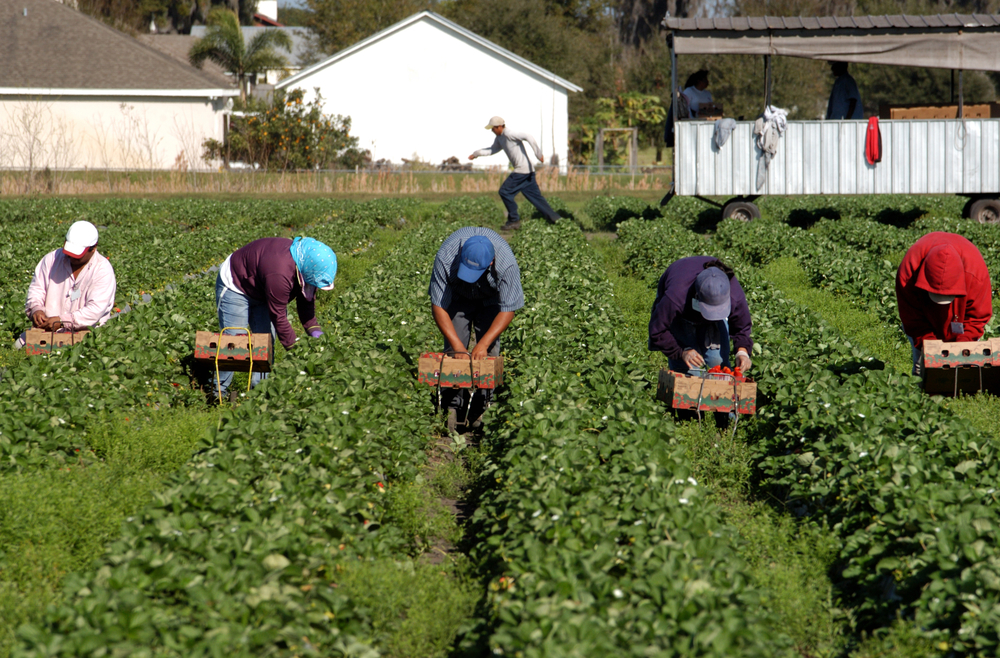
    File photo shows workers picking strawberries.

    Third quarter data from the Department of Labor (DOL) shows H-2A applications were processed effectively and in a timely manner even during the early onset of the coronavirus pandemic, according to Veronica Nigh, economist with American Farm Bureau.

     “With as much transition as there was for just the physical staff up here in D.C. and DOL, going from working in person to doing remote work, I think it would have been very much expected to see the percentage of applications fall off on that ‘timeliness’ percentage but it hung right in there,” Nigh said. “I think that certainly reflects the recognition of the importance of the program.”

    According to the U.S. Citizenship and Immigration Services, the H-2A program allows U.S. employers who meet specific regulatory requirements to bring foreign nationals to the United States to fill temporary agricultural jobs. Florida is the largest user of the H2A program during the first three quarters of the year. It listed 28,005 certified positions. Georgia, another user of the program, listed a little more than 23,000 certified positions.

    “Certainly, the Southeast is a big user of the program,” Nigh said.

    ‘Timely’ Processing

    One of the stats that Nigh was most encouraged with was the percentage of applications that were processed in a “timely” manner, which happens when an application is resolved 30 days before the needed start date. For the period from April 1 through June 30, 96% of applications were processed in a “timely” manner, compared to 86% in the third quarter in 2019 and 90% in 2018.

    “I think there was a lot of interest from us and all the other farm groups and certainly our farm members about whether or not some of the delays they saw and some of the concerns we had earlier in the year about H-2A, whether or not folks were actually able to get the workers that their farms needed,” Nigh said. “What that data showed was, my goodness, the demand for H-2A and the processing of applications certainly continued to be high and showed growth from last year. For the number of certified positions, it was up 4% compared to the third quarter of 2019, which is, I think, surprising given all the concerns there were.”

    Flexibilities

    Nigh said flexibilities were given to the processing of H-2A applications. Normally, an interview was required before a Visa was issued, but that was waived for H-2A workers. Also, if workers were already in the U.S. but had a Visa about to expire, the government allowed them to apply for a different position.

    “If you combine all of that, the deeming of them as essential workers; known applicants not having to do an in-person interview; making border travel easier for those folks; extending time in the U.S. for those who were already present; it really had the impact of making sure folks were able to continue to get to the U.S. to work and stay here. Therefore, the H-2A program was able to continue,” Nigh said.

    Nigh said more than 90% of H2A workers come from Mexico.

  • World Outreach Helps UF Strawberry Breeding Program

    Vance Whitaker in a strawberry grove at the Gulf Coast Research and Education Center. Photo taken on 01-17-17.

    By: Brad Buck, 813-757-2224, bradbuck@ufl.edu, 352-875-2641 (cell)

    BALM, Florida — UF/IFAS-bred strawberries are grown in over 70 countries across six continents. One of those countries, Egypt, ranks among the top strawberry-producing nations in the world.

    So, it seems fitting that an Egyptian-American scientist is leading an effort to facilitate the expansion of production of UF/IFAS-bred strawberries internationally.

    Behind the United States, which grew 1.6 billion pounds of strawberries in 2017, are Mexico, Egypt and Turkey. It’s a $300 million per year crop in Florida, primarily in the west-central part of the state.

    UF/IFAS strawberries are adapted to the unique conditions of central Florida. As a result, they include low chilling, high early yield, excellent shelf life and outstanding flavor, UF’s Vance Whitaker said. Those traits make these varieties useful outside of Florida, particularly in regions of the world where strawberries are grown in the winter and early spring.

    That’s where Fahiem Elsayeed Elborai comes into play. Elborai, an assistant research scientist of entomology and nematology at the Gulf Coast Research and Education Center, has been hired as director of international outreach for the UF/IFAS strawberry breeding program. He helps expand overseas markets for UF/IFAS-developed varieties.

    “My main focus starts in the Middle East region, because, as an Egyptian, I know the culture and can facilitate all UF/IFAS activities in the region,” Elborai said. “I urge all who utilize UF/IFAS strawberries to comply with intellectual property rights, among other activities.”

    Elborai led a Zoom webinar last week, during which researchers and growers from Africa and other continents learned the latest strawberry findings from UF/IFAS faculty. Those findings included the latest strawberry cultivars that have been released commercially – ‘Florida Brilliance’ and ‘Florida Beauty’ – as well as primers on diseases and pests that can plague the fruit.

    Vance Whitaker, associate professor of horticultural sciences and a strawberry breeder at GCREC, recently hired Elborai to his new position.

    “As an accomplished agricultural researcher from the region, Fahiem is unique in his ability to work with emerging markets in the Middle East,” Whitaker said. “He has made significant progress in increasing compliance with UF intellectual property rights.”

    For example, Elborai tries to make sure farmers are not growing UF/IFAS varieties without permission.

    “Fahiem has also done considerable work for people in developing countries,” Whitaker said. “Last year, we visited Egypt together, and it was great to see the jobs that have been created from the growth of the industry there.”

    Among many duties, Elborai communicates with officials, growers, exporters and other stakeholders who use UF/IFAS strawberry varieties.

    Elborai also connects researchers worldwide to introduce the UF/IFAS program to help open new markets and extend knowledge to strawberry growers in developing countries. “Lately we have supported emerging markets and even developed new markets around the world in places such as Costa Rica, Ethiopia, India and Malaysia,” he said. “Also, we are working to offer our cultivars this season to the growers in West African countries such as Gambia, Benin, Mali and Mauritania.”

  • Mexican Exports Eroding Florida Specialty Crop Markets

    rubio

    By Tacy Callies

    Florida fruit and vegetable growers are acutely aware of the negative impacts that Mexico’s exports have had on their ability to remain competitive. In a recent virtual presentation on the subject, Florida Fruit and Vegetable Association President Mike Joyner shared some shocking statistics from a Florida Department of Agriculture and Consumer Services (FDACS) report. Published in July, the report looked at 24 specialty crop commodities in Florida and found that 83% suffered market share loss due to competition from Mexico.

    Perhaps most alarming were the blueberry numbers. From 2000 to 2017, Mexican imports in the United States have increased from 150,000 pounds to 48 million pounds. The latest projections show 60 million pounds of blueberries coming to the United States from Mexico in 2020.

    The report shows that from 2000 to 2019, the value of Mexican produce shipments to the United States surged by 551 percent. “Between 2017 and 2019, the value of produce from Mexico jumped from $12.92 billion to $15.04 billion,” said Joyner.

    Joyner said Mexican government subsidies are a big reason for the country’s growth in produce market share. He added that Mexico is targeting eastern United States markets with lower prices than western markets, despite higher transportation costs to the eastern markets.

    Joyner explained that for a country to bring a trade case before the International Trade Commission, it first must prove it makes up 25 percent of the total market share for a product during a 365-day period. With many of Florida’s specialty crops being highly seasonal with short market windows, U.S. growers are not able to meet this requirement.

    Federal legislators and Florida agricultural associations are working closely together to draft legislation that would change the 365-day requirement to a shorter time period while considering regions instead of the whole country. Joyner said all 27 congressional members from Florida support changing the existing legislation. “Both senators have been extremely strong on this issue,” he said.

    In addition, Joyner said U.S. Trade Representative Robert Lighthizer made a commitment to help growers within 60 days of the United States-Mexico-Canada Agreement (USMCA) going into effect. The USMCA, a successor to the North American Free Trade Agreement, became effective July 1.

    Hear Joyner’s full presentation, which was part of the Citrus Expo/Vegetable & Specialty Crop Expo general session held virtually on Aug. 19–20.

  • Plan in Place?

    USTR Sets Sept. 1 Date for Response to Hearings

    Florida and Georgia seasonal produce farmers who testified in hearings regarding unfair trade practices the past two weeks should not have to wait long to see how the U.S. Trade Representative’s Office will respond to their concerns with Mexico.

    Charles Hall, executive director of the Georgia Fruit and Vegetable Growers Association and who testified in the virtual hearing on Aug. 20, said Ambassador (Robert) Lighthizer has provided Sept. 1 as the date he would have a plan available to begin implementing.

    “They are to announce a plan Sept. 1. I don’t know that we’ll have it on Sept. 1 or not but I think certainly within the next 2 to 4 weeks; we should have a plan based on what their recommendations are as far as how they plan to address the issues that were discussed during the hearings. We’ll wait to see what that plan is,” Hall said.

    Action Needed

    Florida farmers and Georgia farmers agree that action needs to be taken. The major concerns for seasonal producers are with the government-funded subsidies and cheaper labor that allow Mexican farmers to flood the U.S. market and drive down prices. U.S. growers can’t compete when Mexican farmers only have to pay less than a dollar per hour as a minimum wage.

    Producers who testified also agreed that a Section 301 Investigation needs to happen. This provides the United States with the authority to enforce trade agreements, resolve trade disputes and open foreign markets to U.S. goods and services.

    “That’s what we recommended although they may have other tools available through them through the USTR or Commerce or some other area. They may see some other areas which they could work in different than a 301 but would help us with a solution to the problem,” Hall said.

    “I think based on the hearings, they clearly understand what the problem is and what we feel like is causing the problem. Hopefully, they will have some tools available where they can look into and give us some relief.”