Category: Florida

  • UF Scientists Make Big Stride Toward Greening-Resistant Citrus Trees

    Fred Gmitter is seen at a research farm at the UF/IFAS Citrus Research and Education Center in Lake Alfred, Florida. He’s looking over a Flying Dragon trifoliate orange, a special trifoliate orange because of its curved stems and thorns. As a rootstock, it behaves a bit differently from other trifoliate oranges because it results in dwarfed trees.
     
    Photo credit: Brad Buck, UF/IFAS. Taken Oct. 7.

    By: Brad Buck, 813-757-2224, bradbuck@ufl.edu

    University of Florida scientists achieved a major milestone in their quest to develop a citrus greening-resistant tree by sequencing the genome of a fruit plant that’s a close cousin to citrus trees.

    You’d need to print 54,000 pages of copy paper to see the complete genome sequence. But within it, scientists believe they’ve found genes to lay the groundwork to make citrus more tolerant and even resistant to certain diseases, including citrus greening.

    UF/IFAS researchers sequenced the genome from trifoliate orange, in collaboration with scientists from the University of California at Berkeley, the U.S. Department of Energy’s Joint Genome Institute and UF’s Interdisciplinary Center for Biotechnology Research. The new genome will help those who breed new citrus trees that will survive under today’s challenging conditions, including invasive pests, viruses and changing climates. Their research provides a powerful new tool to control the deadly consequences of the greening disease, which has severely damaged the state’s multibillion dollar-a-year citrus industry.

    “Very importantly, trifoliate orange and its hybrids have genes that can confer high tolerance to citrus greening and resistance to the Asian citrus psyllid, the insect that transmits greening to citrus,” said Zhanao Deng, a senior author on the new UF/IFAS-led study. “This genome can be used as a reference template to sequence widely used trifoliate orange hybrid rootstock varieties.”

    “Most people – even citrus growers – rarely see trifoliate orange. This is because they usually are the rootstock part of the tree, mostly underground,” said Fred Gmitter, a UF/IFAS professor of citrus breeding genetics and a co-author on the study.

    Trifoliate oranges or their hybrids are grown at nurseries, and farmers use them as rootstock to grow the citrus that’s above ground. Trifoliate orange and its hybrids were used as the rootstock for more than three million citrus trees in Florida alone in 2018-2019, UF/IFAS researchers say.

    Trifoliate orange and its hybrid rootstocks accounted for 82% of the top 20 rootstocks used in the 2018-2019 citrus propagation cycle in Florida.

    “Our trifoliate orange genome will allow scientists to develop new tools that can more speedily transfer beneficial genes into sweet oranges, grapefruit and breeding of new scion cultivars, which grow above the ground,” Deng said.

    “Releasing the first trifoliate orange genome can be valuable for our citrus gene-editing efforts,” Gmitter said. Scientists are using gene editing to produce canker-resistant and greening-tolerant citrus.

    “Because of our high-quality genome, re-sequencing of trifoliate orange hybrid rootstock varieties will be much easier, much quicker and much more cost-efficient,” said Deng. “Re-sequencing will enable development of new breeding tools, such as DNA marker-based selection, genomic selection of new rootstock varieties with resistance and tolerance to citrus greening, citrus tristeza virus and citrus nematodes. The new varieties might give higher yield and fruit quality.”

    Citrus breeders want to introduce desirable genes from trifoliate orange into sweet orange, grapefruit and other varieties. It took decades to produce the first citrus scion variety (‘Sun Dragon’) from crossing trifoliate orange and transferring some of its genes across multiple generations into sweet orange. With this new information from genome sequencing, that timeline can be dramatically reduced.

    This project was funded by two grants from the Citrus Research and Development Foundation (CRDF) and a grant from the USDA/NIFA Citrus Disease Research and Extension (CDRE) program.

  • Florida Hops Show Potential

    By Shinsuke Agehara

    Hops are grown on various sized trellises at the Gulf Coast Research and Education Center in Wimauma, Florida.
    Photo by Shinsuke Agehara

    Craft beer brewed with Florida hops sounds very attractive. But can hops be grown in Florida? Will the crop produce high yields? The most important question is: Will it be profitable?

    There are lots of rumors, myths and hype about growing hops in the Sunshine State. That’s probably because hops have never been grown commercially in Florida and other subtropical regions — at least not on a large scale. There simply was not enough information. The profitability of Florida hops is still unknown, but a lot of information is now available from ongoing research conducted at the University of Florida Institute of Food and Agricultural Sciences (UF/IFAS) Gulf Coast Research and Education Center (GCREC).

    In 2016, a 1-acre hop yard with a trellis 19 feet high was built. In the first two years, yields were very low. The main reason was premature flowering that limited the vegetative growth. At that time, many plants grew only halfway up the trellis. This happened because the daylength in Florida is not long enough for hops. In general, the critical daylength for hops is 15 to 16 hours. Hops promote vegetative growth when daylength is above this threshold, and plants start flowering when daylength drops below this threshold. The optimal shift from vegetative to reproductive development is key to maximizing hop yields.

    UF/IFAS researchers experienced lots of trial and error. In 2018, LED lights were installed in the hop yard. The daylight extension with LED lights was effective in controlling the timing of flowering. In other words, it can trick hop plants into thinking they are in the Pacific Northwest.

    All trials were reestablished using tissue-cultured seedlings. Researchers have tested more than 20 varieties and various crop management practices, including fertilization, irrigation, plant spacing and pruning. The hop yard is also being monitored to identify pest issues, including diseases, insects and nematodes.

    TRELLIS TRIALS AND HIGH YIELDS

    Research continued in 2019, with another 1-acre hop yard built to test different trellis designs and heights. The straight trellis has only one cable per row, which is for installing both LED lights and twines. By contrast, the V-trellis has three cables per row: the middle cable is used to hang LED lights, and the other two are used to install twines. The most notable difference is that the straight trellis can have only two twines per hill, whereas the V-trellis can have four twines per hill.

    Supplemental lighting is used to extend daylength hours. Photo by Shinsuke Agehara

    In the spring of 2020, researchers started a new trial to evaluate the two trellis designs with three different heights: 12, 15 and 18 feet. A record high yield was achieved. Cascade hops grown on the 18-foot V-trellis produced 1,130 pounds of dry hops per acre, which is more than 60 percent of the commercial average yield of this variety. Alpha acid of these hops, which is an important quality attribute for bitterness of beer, was at the commercial level or even slightly higher.

    It’s important to note that 1,130 pounds per acre is just the first season yield. It normally takes a few years before hop plants can reach the full yield potential, so the yield is expected to go up over time. Furthermore, Florida can produce two crops a year because of the warm climate, whereas other production regions, including the Pacific Northwest, can harvest hops only once a year. Within the next few years, researchers will know if Florida can achieve above-average yields!

    In the meantime, the economics of this new crop need to be investigated. The total material cost for the GCREC hop yard establishment was $15,780 per acre for the straight trellis and $18,687 per acre for the V-trellis. Labor and crop management cost information is now being collected. Budget analysis is expected soon and will determine the breakeven price and yield for each trellis design.

    DEVELOPING A VIABLE INDUSTRY

    In 2019, Florida ranked fourth in the nation for craft beer production, with 329 breweries producing 42.6 million gallons of beer and generating an economic impact of more than $3 billion. The UF/IFAS hops research goal is to develop a viable industry for Florida growers and brewers.

    Florida’s hop industry is just forming. There are several growers producing and selling hops to local craft brewers, and the production is expanding. More than 15 craft breweries in Florida have brewed beer using Florida hops.

    The viability of this new crop in Florida is still unknown. The hope is that research information can support the development of the new industry and help local brewers make more beer with locally grown hops. The latest hops research updates are available at www.facebook.com/GCREC.Hops.

  • Jamie Ellis, Director of UF/IFAS Honey Bee Lab, Wins National Excellence in Extension Award

    Jamie Ellis tends to honey bees.

    By: Samantha Murray, grenrosa@ufl.edu, 949-735-1076

    Recognizing visionary leadership and diversity in educational programming, the U.S. Department of Agriculture’s (USDA) National Institute of Food and Agriculture (NIFA), Cooperative Extension, and the Association of Public and Land-grant Universities (APLU) announced that Jamie Ellis of the University of Florida will receive the 2020 Excellence in Extension Award.

    USDA-NIFA and Cooperative Extension have sponsored the awards since 1991. The awards will be presented virtually on Oct. 28.

    “Each year, these awards showcase the fundamental, transformative difference Cooperative Extension continues to make in our society,” said NIFA Acting Director Parag Chitnis. “Excellent programs like these are a testament to the true value of Cooperative Extension capacity funds more than a century after the Smith-Lever Act created this unparalleled system of outreach and education that enriches every community across the nation.”

    “This year’s National Cooperative Extension Award winners demonstrate educational excellence,” said Mark Latimore, Jr., associate dean and administrator for Extension, Fort Valley State University, and chair of the Extension Committee on Organization and Policy. “They stand as a powerful example of the impact of Cooperative Extension to address real-world problems in communities across the country.”

    The Excellence in Extension Award is given annually to one Cooperative Extension professional who excels at programming, provides visionary leadership and makes a positive impact on constituents served.

    Jamie Ellis is the director of the UF/IFAS Honey Bee Research and Extension Laboratory, as well as a professor and Extension specialist the UF/IFAS department of entomology and nematology.

    The laboratory’s mission is to advance the understanding of honey bees in Florida, the U.S. and globally, with the goal of improving the health and productivity of honey bee colonies everywhere. Ellis advances this mission through basic and applied research with managed and wild honey bees, communicating his findings to assorted clientele groups through diverse Extension programming, and training future generations of bee educators, researchers and conservationists. His work has contributed to a four-fold increase in the number of managed honey bee colonies and a five-fold increase in the number of beekeepers in Florida.

    “Dr. Ellis is a model for faculty, not just at our university, but within the land-grant system and across the world,” said Nick Place, dean of UF/IFAS Extension. “He is the go-to person for all things honey bees. Dr. Ellis has gained national and international recognition for his innovative Extension programming, which has allowed beekeepers and other stakeholders to adopt science-based practices that improve the health and productivity of honey bee colonies. Dr. Ellis’ program has also increased the public’s awareness about the importance of honey bees within the food system and how all of us can support pollinators.”

    Ellis said he was honored to receive the award.

    “Successful Extension programming is always the result of the investment of many people. I am grateful to my UF/IFAS colleagues, my collaborators, and the beekeepers we serve. I am excited that our efforts are making a lasting impact in the communities we support,” Ellis said.

  • Building Better Soil

    A cover crop mix of sorghum and sunn hemp produces positive results for Honeyside Farms.

    By Tiffany Bailey and Ida Vandamme

    It was about 18 months ago when we began planning our first crop to be planted on our newly certified organic field at Honeyside Farms in Parrish, Florida. The field was previously used for pastureland. It was easy to see that we would be starting from a soil structure that is common in our area: very sandy with low amounts of existing organic matter. We quickly learned that building these soils would need to become a priority.

    It can be common for issues to surface during the first few months of converting from perennial pastureland to vegetable production, and that is exactly what we experienced. Our first major problem was due to the microbe populations living in the soil. We were tilling the land for the first time in possibly decades, and we believe that practice turned the existing microbial ecosystem on its head.

    Without the introduction of good bacteria and fungi suited for vegetable farming, our organic crops were especially vulnerable to disease pathogens coming from infected seeds, neighboring farms and even on our equipment and shoes. It was a huge challenge! But, over time, we began to build up the proper microbe population for our farm. Planting cover crops proved to be an important part of building healthy soil.

    COVER CROPS OFFER BIG BENEFITS

    Cover crops are a very helpful tool in aiding and maintaining this transition. Unlike perennial pastureland, cover crops for vegetable farming are annual, covering the ground for a few months at a time (very convenient for your off season when it’s not practical to grow your main crop). Cover crops grow very fast, covering and protecting the soil from erosion.

    Root mass grows down, infiltrating, breaking up compaction, improving structure and excreting exudates that condition the soil and attract good bacteria. Above ground, leaf matter adds literally tons of biomass that contributes to organic matter when broken down and attracts all kinds of beneficial insects and wildlife. There are so many more benefits to cover crops; these are just the main ones.

    COVER CROP OPTIONS

    Honeyside Farms has grown sorghum-sudangrass, sunn hemp, buckwheat and cowpeas for cover crops. As an organic farm, we preferably use organic seed. However, organic cover crop seed is not always widely available. Most certifying agencies will make exceptions when certified organic seed is not available.

    Sunn hemp is probably our favorite cover crop. According to a Sustainable Agriculture Research and Education publication, sunn hemp can produce 5,000 pounds of dry matter per acre and 120 pounds of nitrogen per acre. That’s enough slowly available nitrogen to feed some crops from start to finish without needing to add any extra nitrogen.

    Sorghum is also very beneficial. The sorghum-sundangrass hybrid is more productive in biomass and leaf matter, which is more beneficial as a cover crop than grain sorghum. Sorghum-sudangrass has been recorded to produce up to 18,000 pounds of dry matter per acre. The roots are perfect for scavenging any leached nutrients from the previous crop and putting them within reach of the next crop, thus minimizing pollution and making effective use of nutrition. Sorghum is also known to suppress diseases and nematodes by breaking up their life cycle and producing compounds toxic to them.

    Cowpea is a legume. As a climber, it can be a nice addition to any tall cover crop mix like sunn hemp and sorghum. We have seen that cowpeas and buckwheat can provide significant sources of nectar and food for beneficial insects that we want to attract to the farm. Buckwheat acts as a great short-term cover and easily breaks down. It’s perfect for the 40- to 50-day gap between crops when other covers would take too long.

    COVER CROP MANAGEMENT

    When planting, it’s important to broadcast the proper amount of seed per acre. If the seed is planted too thin, one can miss out on biomass production. But there is no need to waste seed and money planting too thick. Before applying any fertilizer to the cover crops, we take samples and follow what the soil report recommends at planting.

    The best time to knock down the cover crop is when the biomass is optimized, but before the carbon-to-nitrogen ratio gets too high and before seed set to prevent weeds. We allow a few weeks to let the cover crop break down enough so that it is not tying up nitrogen that should be available for our main crop. Sometimes before planting a cover crop, we can tell that this timing will not match when we need the field ready to grow a crop. But we find it better to still plant cover crops and gain some of the benefits rather than let the land sit bare and gain nothing or possibly even lose valuable soil due to erosion. Allow a few weeks to let the cover crop break down enough that it is not tying up nitrogen that should be for your main crop.

    Most challenges come from what is limited by resources, time and practicality. Nothing will be gained if no time is taken to plan for cover crop management. But with proper intention and planning, planting cover crops will provide long-term benefits for many seasons to come.

  • Treadwell Farms Partners with Largest Independent Pharmacy in Lake County with CBD Hemp Extract Products

    UMATILLA, Fla. (October 5, 2020) – Treadwell Farms, a Florida family hemp company, has announced its hemp CBD extract product line can now be purchased in Bay and Lake Pharmacy, a 58-year family-owned independent pharmacy in Eustis, Fla. This marks the company’s first pharmacy partnership, which is offering the 1200mg bottles of the Treadwell Farms Essential Blend Hemp CBD Extract Oil and Treadwell Farms Citrus Spice Hemp CBD Extract Oil to its customers.

    “We are so excited to announce Bay and Lake Pharmacy as our first pharmacy partner,” stated Jammie Treadwell, co-owner of Treadwell Farms. “They truly care about the community and the people who live here. By carrying our Treadwell Farms hemp CBD extract product line, they will make a lasting impact on those who are looking for a more natural option for their body’s wellbeing.” 

    Treadwell Farms officially launched the first of its CBD product line in May 2020, in tandem with the announcement of receiving one of the first hemp cultivation licenses in Florida. After receiving its food permit in February 2020, the company was able to process the first of its high potency, artisanal CBD line – 1200mg bottles of Essential Blend Hemp CBD Extract Oil and Citrus Spice Hemp CBD Extract Oil. Both are infused with organic MCT oil and Sunflower Lecithin. The Citrus Spice Extract also contains organic Orange, Cinnamon, Turmeric and Ginger.

    “We are excited to be working with a locally-owned CBD company who’s embodies high quality and production of its products,” said Gordon Punt, registered pharmacist for Bay Pharmacy. “Treadwell Farms high potency CBD, combined with essential oils, provide a unique product to offer our patients. Supporting local businesses is important to us, especially supporting our local farmers. We’re looking forward to a successful future – together – with Treadwell Farms.”

    All the Treadwell Farms CBD Hemp Extract tincture droppers come with .25mL, .50mL, .75mL, and 1mL measurements to help manage dosage intake. “We approach our products with purposeful intent – especially for the clients of our trusted partners like Bay and Lake Pharmacy,” said Jammie Treadwell, co-owner of Treadwell Farms. “Each bottle contains 1200mg of CBD, and that’s a beautiful thing because it means you’re receiving high potency, high-quality CBD oil every time. It’s also by design because it makes dosing easy – 10mg per quarter dropper.”

    All Treadwell Farms products are produced in the company’s processing facility in Umatilla, Fla. The company’s ultimate plan is to be a cultivator of the hemp industry for the region by advising local farmers through the planting, harvesting, and processing of the plants, and then ultimately extracting the cannabinoids (CANNA-BIN-OIDS), including CBD, from Florida-grown hemp plants for packaging and sale. 

    For more information about Treadwell Farms, visit www.TreadwellFarms.com. Follow the Treadwell Farms blog, which provides insightful information about CBD and the hemp plant – amongst other details throughout the year. Follow on Facebook and Instagram at Treadwell Farms.

  • Establishing an Olive Industry in Florida

    Early results on low-chill varieties are expected next year from an olive research grove in Hardee County.

    By Michael O’Hara Garcia

    With weather and soils similar to the Mediterranean Basin, olives grow in Florida and throughout much of the southeastern United States.

    Currently, Florida has approximately 800 acres of olives under active cultivation by 60 to 80 individual farmers in 20 counties. The groves range from backyard hobby plots with several trees to high-density commercial operations of 100 or more acres.

    There are two modern olive mills, and several Florida nurseries propagate olive trees for fruit and ornamental purposes. A few miles over the Florida line, the Swiss agricultural management firm, Agrigrada, operates a 4,000-acre olive grove near Colquitt, Georgia, and a 300-acre olive grove and a modern olive mill serving growers near Valdosta, Georgia.

    PRODUCTION AND VALUE

    Thought to originate in the Fertile Crescent (Syria, Iraq and Iran), olive is the world’s oldest known continuously cultivated crop. For thousands of years, olives were gathered in the wild. The oil was crudely extracted by crushing fruit between stones and sieving or straining the pulp. Today, olive oil is a major commodity traded throughout the world and prized for its gastronomic and heart-healthy characteristics.

    Michael O’Hara Garcia (left) and Don Mueller show off freshly harvested olives at Greengate Olive Grove in the Florida Panhandle.

    Spain is by far the largest producer of olive oil, followed by Italy and Greece. In the United States, olives are commercially grown in California, Oregon, Washington, Texas, Arizona, Georgia and Florida. There are hobby and experimental olive plantings in Louisiana and Alabama.

    The United States consumes 80 to 90 million gallons of olive oil per year or about 1 liter per person. Domestic farmers, going at full throttle, produced less than 5 percent of total annual consumption.

    European Union market data from 2019 reveal 1 liter of olive oil sells for $5.56 or $21 per gallon. California Olive Ranch, the largest U.S. producer, retails 1 gallon of extra virgin olive oil (EVOO) for $67.36.

    Organic certification brings even higher prices. Braggs organic EVOO (imported from Greece), sells for $70 per gallon. Apollo, a top California producer, retails its Mistral and Sierra organic blends for the equivalent of around $200 per gallon. Mistral oil is based on the Ascolana, an olive variety currently producing at Greengate Olive Grove near Marianna in the Florida Panhandle.

    NEED FOR RESEARCH

    Although the olive grows in Florida, it has been considered more of a curiosity than a commercial crop. While the University of Florida/Institute of Food and Agricultural Sciences  (UF/IFAS) and Florida A&M University have olive observation plots, and agribusiness giants like Mosaic and Lykes Brothers have small experimental groves, little formal research on Florida olive cultivation is available to support industry development.

    Bill Lambert shows an olive graft in a Hardee County research plot that includes 45 olive varieties under trial.

    With the notable exception of work by the UF/IFAS Department of Entomology and Nematology, most information on the UF/IFAS Extension website dates from 2012 and is focused on California olive research and production. The Texas A&M University website provides significantly more information on growing olives in the Southeast.

    The Florida Olive Council, a non-profit grower organization, conducts some research, and the Hardee County Industrial Development Authority has several thousand olive trees at its research facility near Wauchula, Florida.

    Erroneously, some fear Florida’s humidity harms olive pollination, summer storms damage the olive crop, or disease prohibits profitable cultivation. While extreme weather impacts all crops, UF/IFAS researchers determined principal pests and diseases like olive fly, olive knot and peacock spot are not found in Florida.

    The main problem cultivating olives for commercial purposes in Florida is the availability of varieties adapted to lower latitudes where there is less winter chill. Olive varieties (Arbequina, Koroneiki, Manzanilla, etc.) commonly used in commercial operations are native to northern Mediterranean countries like Spain, Italy and Greece (38° to 41° north latitude), where 300 to 400 hours of winter chilling are common. Olives must accumulate enough chill hours between November and March to bloom. A chill hour is one hour between 32 and 45° F.

    While northern Mediterranean varieties grow throughout Florida and reliably produce in the Panhandle, they rarely bloom and fruit south of Interstate 4 (27° north latitude).

    As Florida searches for a solution to citrus greening, many acres below Interstate 4 are fallow, and farmers need an alternative crop to augment citrus. New crop ideas like industrial hemp are popular, but the U.S. Department of Agriculture (USDA) suggests returns on industrial hemp are between $116 to $475 per acre compared with Florida citrus at $2,800 per acre and California olives at $2,688 per acre.

    Responding to the need for olive research, the Hardee County Industrial Development Authority enlisted the support of the Florida Olive Council and UF/IFAS to begin research developing a market-viable, “low-chill” olive for southern Florida.

    After installing several thousand mature olive trees on an old citrus grove, the Hardee County researchers secured 45 olive varieties from the USDA olive germplasm in California. Varieties were selected based on geographic origin. The researchers wanted olives adapted to areas around 27° north latitude.

    100-year-old olive trees are growing in Ruskin, Florida.

    In June 2018, the Hardee research team grafted 45 varieties from Morocco, Tunisia, Algeria, Syria, Pakistan, Egypt, Israel and several countries in the southern hemisphere (Chile, Peru, Argentina and southern Australia) onto mature olive trees at the 20-acre Hardee County research farm near Wauchula, Florida.

    Bill Lambert, executive director of the Hardee County Economic Development Council, hopes to see some early results next year. “It takes at least three years for the grafts to mature enough to bloom, so we expect to start looking for our low-chill candidates next year,” Lambert said.

    In addition to the grafting experiment, Lambert is in discussions with UF/IFAS to explore developing a low-chill variety using a new gene-editing process called CRISPR-Cas9.

    Kevin Folta, a noted UF/IFAS genetic scientist, has begun basic research. He hopes to get the program fully funded soon. “The science is there, we just need to get to work,” he said.

  • Water War Arguments to be Held ‘In Due Course’

    arguments
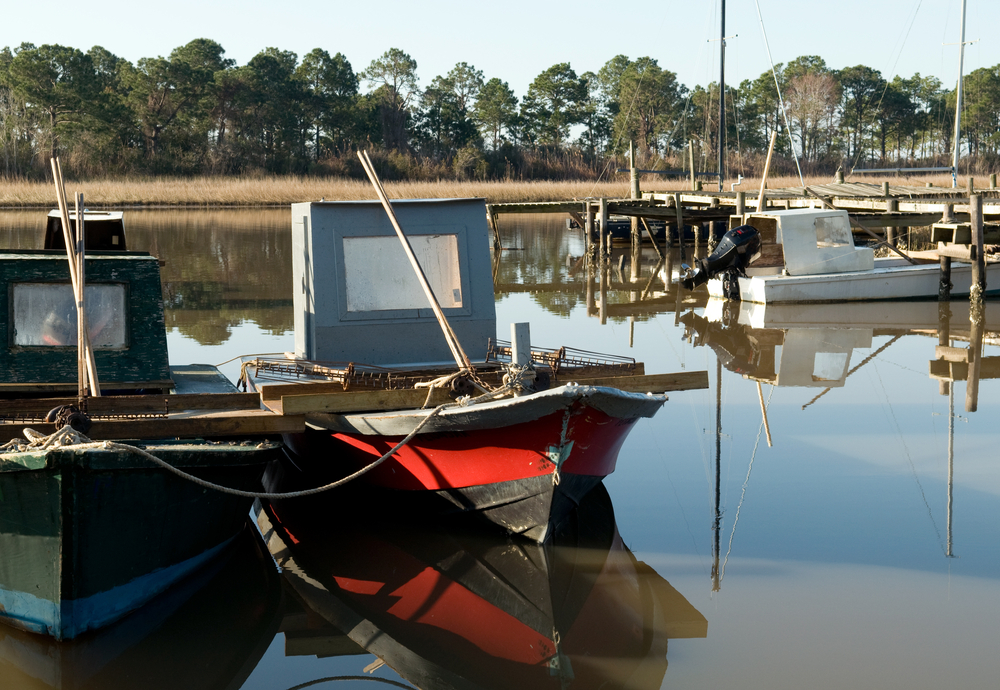
    Apalachicola Bay Oyster Boats

    The U.S. Supreme Court on Monday indicated it will hear oral arguments in the long-running water battle between Florida and Georgia but did not specify when. The court issued an order that said the dispute is “set for oral argument in due course.”

    The case involves divvying up water in the Apalachicola-Chattahoochee-Flint river system, which stretches from northern Georgia to Apalachicola Bay in Franklin County. Florida contends that Georgia uses too much water from the system, in part damaging a critical Apalachicola Bay oyster fishery.

    Florida is seeking an order that could lead to more water flowing south, but Georgia disputes that its water use has caused damage in Florida.

    A special master appointed by the Supreme Court sided with Georgia in December, but justices will have final say. Florida filed the lawsuit in 2013, though the two states have fought for decades about water in the river system.

    Source: News Service of Florida

  • Florida Fruit & Vegetable Association Names New Board Chair, Vice Chair

    MAITLAND, Fla. (Oct. 2, 2020) – The Florida Fruit & Vegetable Association has named Aaron Troyer, president of Troyer Brothers in Fort Myers, as its chair for 2020-22. David Hill, president of Southern Hill Farms in Clermont, was named vice chair.

    In addition, FFVA members voted to appoint three new directors to the board: Jon Esformes of Pacific Tomato Growers, Chris Moore of Alico Inc., and Ron Mahan of Tamiami Citrus. The appointments were made at the association’s board of directors and annual membership meetings on Sept. 29.

    Troyer, who served as the board vice chair for the past two years, said his mission will be to “protect and defend Florida specialty crop agriculture” and to continue work on pandemic-related issues as well as trade relief measures to remedy harm suffered by producers from unfair Mexican trade policies and practices. He praised outgoing Chair Paul Allen of R.C. Hatton in Belle Glade for his service and for presiding during the extreme challenges caused by the coronavirus pandemic.

    FFVA President Mike Joyner said, “Aaron Troyer is an outstanding leader and will do an excellent job guiding FFVA over the next two years as we continue our very important work on trade, workforce, legislation and other issues.”

    The Florida Fruit & Vegetable Association is a full-service organization serving Florida’s grower-shipper community since 1943. FFVA represents a broad range of crops: vegetables, citrus, tropical fruit, berries, sod, sugarcane, tree crops and more. Its mission is to enhance the business and competitive environment for producing and marketing fruits, vegetables and other crops. Follow FFVA on Facebook, Twitter and YouTube.

  • COVID-19 risk factors vary by farm workers’ legal status; shows need for tailored measures

    University of Florida/IFAS

    As laborers return to the fields this fall in Florida, both unauthorized workers and those authorized to plant and pick crops through a guest worker visa are vulnerable to the coronavirus. In fact, an estimated 75% of Florida crop workers have at least one underlying health issue that puts them at risk of developing COVID-19 complications, new UF/IFAS research shows.

    However, sources of risk for these two groups are different, according to the study.

    That is largely because domestic unauthorized workers are significantly older than H-2A workers, which increases their risk of developing COVID-19 complications, said Gulcan Onel, a UF/IFAS assistant professor of food and resource economics.

    Most of the members of both legal groups of workers do not speak English and have less than a high school education, Onel said.

    “These findings highlight the need for accessible and culturally-minded outreach efforts to educate workers about preventive measures for COVID-19,” she said.

    One example of UF/IFAS outreach is based at the Southwest Florida Research and Education Center in Immokalee. Faculty and experts there are hosting a series of workshops in September and October to help train farm supervisors to keep their employees as safe as possible from COVID.

    For her study, Onel used three different sources of data, including a citrus harvester’s survey her team conducted in several Florida counties. Onel also synthesized existing health and employment data from federal sources. She then compared the demographic differences of H-2A workers with those of unauthorized agricultural workers to draw conclusions about COVID-19 risks among these farm workers.

    Onel

    The federal H-2A guest workers program provides legal, temporary nonimmigrant visa classification to foreign-born workers, where able, willing and qualified U.S. workers are not available. That work typically lasts no longer than one year.

    Unauthorized workers are foreign-born workers who lack proper, legal documentation to work in the United States. Data show that unauthorized domestic workers, on average, have been in the United States for more than a decade.

    In addition to legal status groups, workers’ susceptibility to the virus varies by location across Florida counties, the study shows.

    Onel and her colleagues saw a high correlation between counties with the most COVID-19 cases and counties with the most agricultural workers. Among counties with the highest crop worker populations, Miami-Dade, Palm Beach and Hillsborough counties had the most COVID-19 cases. They were followed by Broward, Collier, Lee, Manatee and Polk counties.

    Among other findings:

    • H-2A workers live in employer-provided and controlled housing, which may make it easier to take measures to help mitigate COVID-19 for them, compared to domestic workers. On the other hand, H-2A workers spend more time traveling to their work sites than domestic workers, which may make transportation a higher risk factor for this group of workers.
    • Preventing or mitigating COVID-19 among unauthorized workers gets more complicated by today’s immigration environment. Contact tracing and encouraging workers to seek testing and/or care may be difficult because unauthorized domestic crop workers fear they will be deported. Ensuring privacy of workers and their contacts will be vital for effective mitigation strategies.
    • H-2A workers send more of their earnings back home compared to domestic unauthorized workers; therefore, H-2A workers likely have stronger ties with family in their countries of origin, the survey found.

    “This is important with the recent spikes in COVID-19 cases in Mexico and South America; higher remittances (back home) indicate that H-2A workers — who are mostly married and have minor-aged children – likely have stronger ties to their country of origin,” Onel said. “They might be more reluctant to return to U.S. farms amid the COVID-19 pandemic. On the other hand, existing workers in the fields may continue working, even when they are sick, to keep up with their support for family back home. Piece-rate payment schemes may further encourage risk-taking behavior among workers, posing a challenge for containing outbreaks.”

    While the study’s findings provide insights into COVID-19 risks for Florida crop workers, predicting when and a COVID-19 outbreak will occur is difficult and no trivial matter, Onel said.

    “This type of prediction requires tracking of data over time,” Onel said. “The county-level maps in our article — which layer farm worker populations and COVID-19 cases — can easily be updated periodically for more up-to-date information on higher-risk agricultural counties.”

  • Breeding Better Cucurbits

    University of Georgia breeders developed the Orange Bulldog pumpkin.

    By Cecilia McGregor and George Boyhan

    Cucurbit crops are some of the most widely grown vegetable crops in the Southeast. However, the hot and humid climate is conducive to pest and disease development, which presents a challenge to growers. Cucurbit breeding at the University of Georgia (UGA) is focused on breeding pumpkin, watermelon and squash with excellent fruit quality and enhanced disease resistance.

    PUMPKINS

    Pumpkins are an important crop in the United States, particularly as decorations during the fall. Unfortunately, pumpkins are difficult to grow in the Southeast because of diseases. There are several diseases (particularly viruses) that affect traditional pumpkins. These diseases are transmitted by aphids in a non-persistent way. This means that as soon as the insect probes the tissue, the virus is transmitted. Control is difficult, because even with 90 to 95 percent insect control, the remaining 5 to 10 percent can effectively infect the crop.

    UGA began a breeding program in 1996 with a collection of pumpkin seeds from Brazil. Seed from both elongated and flattened fruit of Cucurbita maxima were obtained and interplanted. Putative hybrids were collected. This began several years of selection for fruit with a round shape, pleasing color and open cavity. These pumpkins have a greater degree of virus resistance compared to traditional pumpkins (C. pepo), so they produce more consistently.

    The resulting variety, Orange Bulldog, was released in 2006. Since there was no interest among seed companies, UGA has been handling sales. The primary audience for this variety is pick-your-own and roadside marketers. The vines hold up particularly well into the fall for direct marketers that “reseed” their pumpkin patch with new fruit each day.

    Pumpkin research concentrated on developing disease resistance into commercially acceptable pumpkin lines has continued at UGA.

    WATERMELON

    UGA is also actively breeding for gummy stem blight and fusarium wilt resistance in watermelon. Resistance to gummy stem blight was first described in 1962 when it was discovered in a wild relative of watermelon, Citrullus amarus. This is the same species that was used to breed the fusarium-resistant, non-harvested SP pollinizer cultivars.

    Breeding disease resistance into commercial, edible cultivars from this wild germplasm has proven difficult since the wild relative has hard, inedible flesh. This is further complicated by the fact that there are different species of the Stagonosporopsis pathogen that cause gummy stem blight and different races of Fusarium oxysporum var. niveum that cause fusarium wilt. The resistances to these diseases are quantitative, meaning that a single resistance gene does not give field-level resistance to the diseases. All these factors have delayed the development of cultivars resistant to these diseases.

    Susceptible (left) and resistant (right) watermelon seedlings infected with gummy stem blight.

    The breeding effort at UGA focuses on using modern selection methods to accelerate selection for resistance genes to speed up breeding efforts. Currently, selection is in progress for fusarium race 2 resistance and gummy stem blight resistance.

    In addition to these disease-resistance breeding efforts, UGA breeds cultivars specifically for homeowners and farmers’ markets. The focus here is on novel traits like a variety of flesh colors and rind patterns and the egusi seed trait.

    Egusi watermelon is very popular as an oilseed crop in many parts of Africa. The seeds are very high in oil (40 to 50 percent) and protein (25 percent) and are eaten as snacks or as a thickener in soups and stews. Egusi seed is large and flat with a unique fleshy outer layer that dries into a very thin seed coat that can easily be shelled. Traditional egusi watermelon has hard inedible flesh, which goes to waste. UGA is breeding egusi watermelon with edible flesh. These plants will produce fruit that pack the health benefits associated with the antioxidants in red- and orange-fleshed watermelon while also being a source of high oil and protein seed.

    SUMMER SQUASH

    In 2019, UGA started a squash breeding program. This program was launched in response to the severe yield losses experienced by Georgia growers in recent years due to whiteflies and whitefly-transmitted viruses.

    The sweetpotato whitefly (Bemisia tabaci) can directly cause yield losses in many different crops due to feeding, but an even bigger cause of yield losses are the viruses it transmits. Sweetpotato whiteflies can transmit more than a hundred different viruses. Cucurbit leaf crumple virus (CuLCrV) and Cucurbit yellow stunting disorder virus (CYSDV) are some of the most important to squash growers.

    Commercial squash cultivars have proven to be very susceptible to these viruses, and sources of resistance have not been identified. UGA, in collaboration with the University of Florida, has started large-scale evaluations of squash germplasm from all over the world in search of resistance. Several genotypes with resistance to CuLCrV and CYSDV were identified in 2019 and are now being evaluated further for use in the breeding program.

    The UGA cucurbit breeding programs are committed to developing cultivars well adapted to the Southeast, with high disease resistance and exceptional fruit quality for both large- and small-scale growers in the region.