Category: Florida

  • Coming Soon: New University of Florida Strawberry Varieties

    A new University of Florida Institute of Food and Agricultural Sciences strawberry release has excellent shape and flavor.

    By Vance M. Whitaker

    Two new strawberry selections have been approved for release by the University of Florida Institute of Food and Agricultural Sciences (UF/IFAS) and are in the commercialization process. Trade names have not yet been finalized but should be chosen in the next six months. For both, larger-scale testing will be conducted this fall, and commercial quantities will be available to Florida growers for the 2021–22 season.

    The first release is an early short-day variety with excellent fruit shape and quality. It has slightly lower November and December yields than Florida Brilliance but has had high January yields. It has excellent flavor, with taste panels ranking it equal to or even better than Sweet Sensation® Florida127, depending on the harvest date. It also has high Brix through the season, similar to Sweet Sensation® Florida127. The push for better flavor is an important pursuit for the UF/IFAS strawberry breeding program, so the team is very excited about the sensory qualities of this new release.

    A new white-fruited release from the University of Florida Institute of Food and Agricultural Sciences has a unique appearance and flavor. Photo by Cristina Carrizosa, UF/IFAS Communications

    The second release is a white-fruited strawberry. White-fruited varieties have been popular in Japan for some time, but this is expected to be the first such variety on the market in the United States. It has white internal and external color, with a pink blush on the sun-side and red achenes. The appearance of the pink blush and the achenes turning from green to red are the visual cues signaling that the fruit is ripe and ready to eat. The fruit are a little bit smaller than the other current varieties and are more similar in size to the fruit of Festival. The yield of this variety is about 75 percent of the current varieties grown in Florida, which are primarily Florida Brilliance and Sweet Sensation® Florida127.

    It is important to mention that new strawberry variety releases from UF/IFAS are exclusive to Florida growers for the first three years, but trialing can be conducted during this period with permission from the Florida Strawberry Growers Association.

    Regarding current varieties, Sweet Sensation® Florida127 (released in 2013) is fully available throughout the United States, while Florida Brilliance (released in 2017) is still exclusive to Florida for one more season. However, with permission, Florida Brilliance can be trialed outside of Florida in 2020 and will be fully available in 2021.

  • Agricultural Acres Down Significantly Over Last 100 Years

    File photo shows a farmer spraying his field.

    Agricultural acres have dropped dramatically over the last 100 years throughout the Southeast. According to stacker.com, Georgia and Alabama were two of the top four states to see their farm land decrease the most.

    Based on numbers from the United States Department of Agriculture National Agricultural Statistics Service, Alabama, ranked No. 4 in decreased acres, had 256,099 farms in 1920 with 19.6 million farming acres. In 2019, the number of farms dropped to 38,800 with 8.3 million acres total.

     In Georgia, ranked No. 3, the number of farms was 310,732 in 1920 with 25.4 million total acres. The number of farms dropped to 41,500 in 2019 with 10.2 million total farming acres.

    In Florida, acres actually increased over the past 100 years. It had 54,005 farms in 1920 with 6 million total acres. In 2019, the number of farms dropped to 47,400 with 9.7 million total acres.

    Extension Economist Not Surprised

    Adam Rabinowitz, Auburn University Assistant Professor and Extension economist, is not surprised about the significant drop in agricultural acres but believes yields have improved with increased productivity and efficiency.

    “A combination of things have happened. Certainly, land has been taken out of agriculture and moved into housing developments or built up in terms of other commercial uses,” Rabinowitz said. “The fact that we’ve become more productive in the land that we do use, though, yields have increased considerably over that period of time. So while we may be farming less acres, the output has increased substantially on those areas that we are farming.

    “It would not surprise me to say that considerable amount of acres have been lost.”

    Buy American Grown

    Additional acres could be lost soon if consumers don’t respond to the American Grown initiative.

    Farmers like Bill Brim in Georgia contend that if consumers don’t realize the importance of buying Georgia Grown and American Grown, the constant imports from Mexico, for example, are going to put a lot of farmers out of business. That’s why trade hearings were held so farmers and industry leaders could voice their concerns about the urgent need for federal action regarding unfair trade.

    Rising Average Farmer Age

    The lack of farming land available throughout the Southeast may only be amplified when more farmers retire and no successor in line to take their place. According to USDA NASS, the average age of a farmer in 2017 was 57.5 years old, up 1.2 years from 2012.

    “Farm age continues to increase, the average age of the farmer. Succession planning is an issue in terms of transitioning to younger generations who now have more options than just staying on the farm. As a result, you do have a lot of folks who are leaving the farm for college, for other careers, going other places,” Rabinowitz said. “You have that shift there and there is a big concern of what’s going to happen when this older generation right now gets ready to move on. Is that going to further contract the number of acres that are in agriculture?”

    Challenging for Beginning Farmers

    According to USDA NASS, producers also tend to be experienced, having been on their farm an average of 21.3 years. Beginning farmers is extremely rare, considering how expensive it is to acquire land to farm on and equipment to use throughout the growing season

    “There are a lot of barriers to new farmers coming into agriculture. Acquiring land, whether it be ownership of land, buying the land or even renting the land can be very challenging for a new or beginning farmer. Even beyond land, when we talk about machinery, especially in southern Alabama and southern Georgia with cotton and peanuts as being one of the primary crops in this area, the machinery equipment needs are unique to those crops,” Rabinowitz said. “You need some stuff for your corn that you’re going to put into rotation with your other crops and you need for your cotton and peanuts, you have special pickers and planters and such. It provides again a significant barrier to new entry.

    “That said there are programs that do exist to help beginning farmers and new farmers. There are loans through FSA. There are farm credit programs that exist to help provide special terms and assistance. Certainly through the land grant institutions and Extension, there a number of beginning farmer programs in every state to help provide those resources and assistance from a technical standpoint of getting started in agriculture.”

  • University of Florida Awarded Key Federal Grants to Continue Fight Against Citrus Greening

    UF Glow variety of citrus. University of Florida photo taken 11-17-17

    By: Ruth Borger, 517-803-7631, rborger@ufl.edu

    LAKE ALFRED, Fla. — University of Florida (UF) researchers hope to discover new methods to help citrus growers fight the deadly citrus greening (or Huanglongbing) disease with cost effective, long-term sustainable treatments with the support of recently awarded federal grants. 

    Three teams of scientists from UF’s Institute of Food and Agricultural Sciences received nearly $4.5 million in U.S. Department of Agriculture funds to study new ways to manage the invasive insect causing millions of damage to Florida’s citrus crops.

    “These grants build on an existing portfolio of success in finding solutions to combat citrus greening throughout Florida’s citrus groves,” said Michael Rogers, director of UF/IFAS Citrus Research and Education Center and coordinator of the UF/IFAS statewide citrus program. “They will contribute to the solutions we are providing that support citrus growers in sustainably and profitably growing citrus throughout the state.”

    Managing the Asian Citrus Psyllid With Environment in Mind

    Bryony Bonning, eminent scholar and professor in entomology and nematology, leads a team from Gainesville and the UF/IFAS Citrus Research and Education Center in Lake Alfred, Florida in a project that uses a bacteria-derived pesticidal protein combined with gene silencing to manage the invasive Asian citrus psyllid (ACP) population. The long-term goal of the proposed work is to create an environmentally benign approach for citrus growers to control ACP that works within an integrated pest management (IPM) strategy. The project intends to identify the optimal components for an ACP control product for grower use.

    The grant project aims to: 1) optimize ACP-active proteins derived from the bacterium Bacillus thuringiensis (Bt) that suppress psyllid populations; 2) further develop genetic solutions that would disrupt ACP; and 3) screen for the best combination of these methods for use against ACP. On completion of this project, researchers will be well positioned to produce transgenic citrus and/or trap plants that will suppress ACP populations for use by citrus growers.

    This method of effective vector control, combined with other measures, will help the citrus industry in Florida rebound, and protect the industries in California and Texas. The results of this research are anticipated to reduce the need for tree removal and replanting as well as reduce insecticide applications and increase yields and fruit quality, contributing to the long-term profitability and sustainability of U.S. citrus production.

    Attacking Citrus Greening From Inside Out

    Amit Levy, assistant professor of plant pathology, received a NIFA grant to examine how the Candidatus Liberibacter asiaticus (CLas) bacteria interacts with a narrow tissue – known as the phloem – which is buried inside the stem of the citrus tree. CLas resides in and plugs the phloem in the stem of the citrus tree, leading to inhibition of sugar and nutrient transport into the tree’s sink tissues, including the fruit.

    Eliminating these plugs can presumably result in renewed sugar transport and increased fruit yields.

    However, there is a significant gap in understanding CLas-phloem interactions in citrus, which has been a major limiting factor for controlling the disease. Levy and a team of UF/IFAS researchers and Sainsbury lab and Cornell University scientists plan to address these challenges with a novel seed coat-based system that supports in-depth analyses of phloem dynamics and CLas-phloem interactions in HLB-affected citrus. The project will identify key players required for phloem plugging, host immune response and CLas colonization inside the phloem. These key players can later become novel targets for manipulation with gene editing techniques that can be translated into usable products, such as transgene-free CRISPR/Cas9 edited plants to block the disease propagation and movement, and increase sugar and nutrient translocation into fruit thus increasing tolerance or resistance to HLB.

    A Novel Therapeutic Strategy for HLB-Infected Trees

    Huanglongbing (HLB)-resistant or tolerant citrus trees are the long-term solution for citrus greening disease. Existing research has generated transgenic citrus lines that provide robust tolerance to HLB. These transgenic lines are already in field tests as a potential management possibility for HLB. However, these trees will have to go through an extensive approval process before being made available to growers.

    A research team led by UF/IFAS microbiology and cell science professor Zhonglin Mou and faculty from the UF/IFAS Citrus Research and Education Center and UF/IFAS Southwest Research and Education Center are working to speed up this process by reproducing the greening resistant or tolerant genetic makeup in non-transgenetically modified plants by gene editing using CRISPR/Cas9. This is a better long-term approach but will take time.

    The primary goal of this project is to develop an interim treatment for HLB. The project hopes to turn off the genes that negatively control the citrus immune system and result in disease symptoms in citrus when exposed to disease-causing pathogens. Coupled with other work to target the HLB-causing bacterium itself, the overall goal is to develop new management strategies making citrus varieties highly tolerant to this disease. The project will use a vector derived from citrus tristeza virus (CTV) to remove negative regulation of the citrus immune system, leading to improved immune response and HLB tolerance. The same CTV vector will also deliver antimicrobial peptides to reduce HLB pathogens.

    The synergism between the immune system-provided tolerance and the antimicrobial peptide-mediated pathogen reduction is expected to provide effective control of the HLB disease. Importantly, CTV naturally occurs in the field and does not make genetic changes to the citrus genome, and thus the employed strategy is a non-transgenic approach.

  • Alabama Extension Economist Tries to Clear Up Misconception about Hemp

    File photo shows field of hemp.

    A misconception between hemp and marijuana has Adam Rabinowitz concerned about how consumers view an up-and-coming agricultural commodity in the Southeast.

    Rabinowitz

    Rabinowitz worked as an Extension economist at the University of Georgia before he moved to Alabama this summer to become an Auburn University Assistant Professor and Extension economist. At UGA, Rabinowitz helped conduct a survey to gauge consumer knowledge of hemp. The results were staggering.

    “I feel like there really hasn’t been any education to really make that distinction. Hemp has gotten that stigma of being the same as marijuana because we haven’t had the production. We haven’t had the products that really have taken hold in our society. It’s resulted in a lack of knowledge of what the crop really is,” Rabinowitz said.

    Hemp Production Across the Southeast

    However, farmers in Alabama, Florida and Georgia farmers understand the significance of the hemp crop.

    The USDA approved Florida’s state hemp program in April, which paved the way for growers to cultivate hemp this year. According to the University of Florida/IFAS, the UF/IFAS Industrial Hemp Pilot Project is under way across the state at three production locations in Quincy, Hague and Homestead to examine variety selection, cropping system development, production economics and invasion risk assessment.

    According to Mike Evans, director of plant industries who oversees the hemp program at the Georgia Department of Agriculture, they received 166 applications from farmers who were interested in producing hemp this year.

    Hemp production in Alabama is in its second year. Katelyn Kesheimer, Auburn Assistant Professor & Extension Specialist in Entomology and Plant Pathology, there were 150 licensed growers with 10,000 acres approved last year. This year there are close to 500 official licensed growers throughout the state. 

    What Distinguishes Hemp From Marijuana?

    What distinguishes hemp from marijuana is the amount of THC or tetrahydrocannabinol present in the plant. It is the main compound in cannabis that produces the “high” sensation. Legal hemp must contain no more than 0.3 percent of THC. Otherwise, the THC is at an unacceptable level. When hemp contains more than 0.3 percent THC, the crop must be destroyed. THC levels must be tested within 15 days of anticipated harvest.

    According to healthline.com, marijuana refers to cannabis that has more than 0.3 percent THC by dry weight.

    Rabinowitz believes initially, the hemp awareness and education he’s trying to spread will not necessarily lead to more acreage in the future. In fact, he doesn’t expect hemp acres to increase in 2021.

    “The hope is that it leads to better informed consumers about what is actually happening. I think what’s going to really drive the acres discussion is the market for the product. If we talk about like fiber products and some of the other uses, the price of hemp to be produced for those products is very, very low,” Rabinowitz said. “It was really the CBD market that got the attention of some farmers but a lot of folks that are not even in agriculture to think about, ‘Hey, is it possible I could make tens of thousands of dollars per acre on this crop?

    “I think now we’re starting to get more towards the core of these are the farmers that are going to be engaged in the actual production. But we still need to see what the consumer side looks like.”

    Rabinowitz also said he is part of a recently funded USDA grant that will look at the marketing aspect for hemp-based products which will continue to focus on the consumer side.

  • Citrus Advisory System Alerts Growers So They can Stem Post-Bloom Fruit Drop

    Photo is of damage from postbloom fruit drop. Buttons are shown where the fruitlet fell off.
    Credit: “Courtesy, Megan Dewdney, UF/IFAS.”

    October 22, 2020

    By: Brad Buck, bradbuck@ufl.edu

    Beep. Beep. Beep. That’s the sound of the alert, telling a citrus grower it’s time to spray fungicide to help prevent fruit from falling off the tree.

    When the new fruit fall off a citrus tree, post-bloom fruit drop (PFD) can cause major losses for citrus growers. Infection of flowering citrus by the fungus that causes PFD can lead to crop loss of up to 80%, although losses are seldom that high, UF/IFAS researchers say.

    In the battle against PFD, UF/IFAS scientists have developed the Citrus Advisory System (CAS), which sends web-based alerts to citrus farmers via mobile devices. That way, growers can tell when to spray their trees with fungicide.

    “We believe that CAS represents an important contribution to help the citrus industry in Florida increase resource-use efficiency, reduce costs and increase profitability,” said Clyde Fraisse, a UF/IFAS professor of agricultural and biological engineering at the main campus in Gainesville, who led new research to develop and test the system.

    In newly published research, Fraisse, his lab members and faculty colleagues tested CAS over three years at farms in Polk County. Among those who helped Fraisse with the research were Megan Dewdney, an associate professor of plant pathology at the UF/IFAS Citrus Research and Education Center and Natalia Peres, a plant pathology professor at the Gulf Coast Research and Education Center.

    CAS, available at http://agroclimate.org/tools/cas, uses real-time weather data from stations with the Florida Automated Weather Network, which are scattered throughout the state. The data determine whether risk for PFD is low (green), moderate (yellow) or high (red). Specific fungicide spray recommendations are given according to the disease-risk conditions. If desired, notifications can be sent via SMS or e-mail for an alert to check the system.

    Prior to CAS, there were two forecasting models for post-bloom fruit drop, Dewdney said. The most recent was the PFD-Fungicide Application Decision (PFD-FAD), which was developed as part of Peres’ Ph.D. dissertation about 20 years ago. Growers found PFD-FAD too complicated to use regularly since the weather information was not automated and it required grower input to determine if the fungus was present. 

    “In the new CAS, we consider the fungus to be present at all times and the weather data input is automated, so the system is simpler to use,” Dewdney said. “We also have newer models for how leaf wetness and temperature affect spore germination. They’re incorporated into the system to help predict when infection is likely to happen or has occurred. Combined with a more modern, simple interface, this will hopefully allow growers to use CAS regularly. During our last outbreaks, many growers were applying weekly fungicide applications, whether they were needed or not.”

    CAS mirrors the Strawberry Advisory System (SAS), developed by Fraisse and Peres several years ago. SAS also sends web-based alerts to growers, so they know when to spray for diseases like anthracnose. Until scientists developed that system, strawberry growers sprayed for the fungus on a calendar-basis; for example, every other week, whether the fungus was there or not.

    Peres said it’s important to note that anthracnose and citrus post-bloom fruit drop are both caused by the same fungus, Colletotrichum acutatum.

    Just like the Strawberry Advisory System, “CAS aims to take the guesswork out of whether an infection occurred or not,” Dewdney said. “Some growers are already using CAS and have been happy with the outcomes.”

    “You can use the system now, and we encourage it,” she said. “We are still confirming the accuracy of the predictions, but it is still better than just a weekly application.”

    The system is already available in Brazil, where it’s been tested extensively.

  • Whiteflies Vary in Impact in Florida Vegetables This Fall

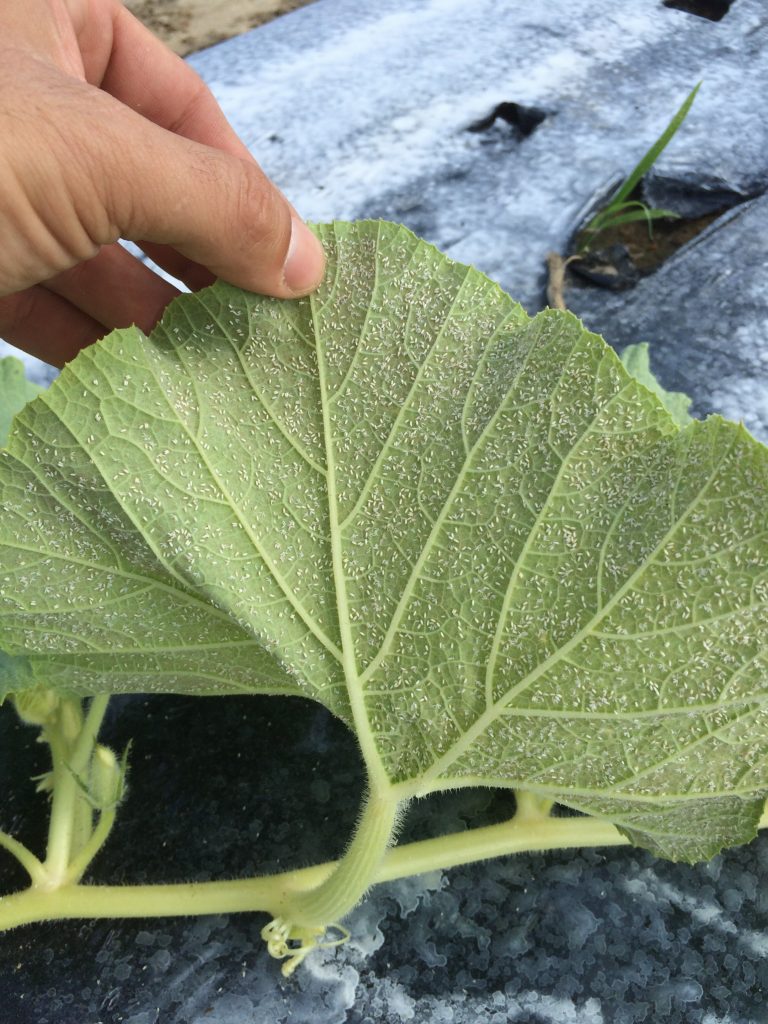
    Whiteflies infest fall cucurbits.

    According to the South Florida Pest and Disease Hotline, whiteflies are varying in impact in vegetables in South and Central Florida.

    Around the Central Florida area, respondents report that whiteflies remain active in tomato and melons at mostly low numbers. 

    Growers and scouts in Southwest Florida report that whitefly pressure has declined with recent rains. Scouts report finding mostly low numbers in cucurbits, eggplant and tomato. But there are flare-ups reported with higher numbers showing up in eggplant and squash.

    Scouts are reporting finding mostly low numbers of whitefly in eggplant on the east coast.

    Reports from Homestead indicate that whiteflies are present in oriental vegetables.

    Management

    Management of whiteflies later in the season depends on early suppression of whitefly populations. Growers need to be aggressive with the best systemic materials like Venom, Sivanto Prime and Verimark, early in the season. Growers who are on seepage and not drip are at a particular disadvantage if whiteflies and virus are high early in the season.

    Preventative soil applications of either imidacloprid, thiamethoxam, dinotefuran, flupyradifurone or cyanatraniliprole should be used preventatively in tomato and cucurbits.

    Proper scouting is essential to manage silverleaf whitefly. Over the years, University of Florida entomologists have developed usable action thresholds that have been successful for many tomato farmers. However, these thresholds are only guidelines. Farm managers may modify them to fit their situations and expectations.

    Thresholds

    Silverleaf whitefly thresholds

    0-3 true leaves 10 adults/plant

    3-7 true leaves 1 adult/leaflet

    Field hygiene should be a high priority and should be an integral part of the overall strategy for managing whitefly populations, whitefly-vectored viruses and insecticide resistance. Growers are advised to be alert for volunteer tomato or cucurbits that may be present in row middles and field margins as these may be a source of whiteflies and virus.

    For more whitefly management tips – see http://edis.ifas.ufl.edu/in695.

  • Tomato Juice with UF/IFAS-Bred Garden Gem Pleases Palates

    Sam Hutton in a greenhouse. Photo taken 01-17-17.

    October 21, 2020

    By: Brad Buck, bradbuck@ufl.edu

    Florida-grown tomatoes – particularly the UF/IFAS-bred Garden Gem – pack a tasty punch for tomato juice, new University of Florida research shows.

    By and large, the biggest market for Florida tomatoes remains food services. They’re not generally harvested for processed products, such as juice, paste and more. But they’re still fresh, whole tomatoes.

    For years, researchers have toiled to help breeders develop the genetic traits to give UF/IFAS-bred tomatoes more flavor.

    Now, for a newly published study, scientists used six UF/IFAS varieties to process into six different tomato juices. In three testing panels comprising a total of 255 consumers, researchers asked the testers at the UF Sensory Lab how they tasted and smelled. The verdict: two “thumbs-up.” While other varieties fared well in the tests, panelists consistently rated juice made from the Garden Gem significantly higher for aroma, flavor and texture.

    “I think this study shows that Florida tomatoes are viable for making processed tomato products,” said Paul Sarnoski, a UF/IFAS associate professor of food science and human nutrition. “Our juice exhibited better flavor – with more fresh and fruity attributes closer to that of a fresh-picked tomato.”

    Better Tasting Tomatoes Lead to Improved Tomato Juice Flavors

    Sarnoski, lead author of the new paper that summarizes the research, said better-tasting tomatoes lead to improved tomato juice flavors. So, it behooves tomato growers to produce tomatoes that go beyond the bland flavors of the past and deliver tasty products to consumers.

    Sam Hutton, a UF/IFAS associate professor of horticultural sciences and tomato breeder at the Gulf Coast Research and Education Center, believes the new data on tomato juice will help his efforts to develop tastier tomatoes for farmers to grow.

    “This research is interesting to me because the chemistry of better-tasting juice is very similar to the chemistry of better-tasting tomatoes,” Hutton said. “So, these results help to direct my program’s efforts to develop varieties with improved flavor, especially ones with more of these fruity attributes. Such varieties may then be more preferred by consumers and could help boost demand and consumption of Florida tomatoes.”

    Better Marketing Opportunity?

    Now that researchers know Florida-grown tomatoes are good for tomato juice, scientists want to know whether Florida tomatoes can be marketed at a cost-effective price. Once they clear those hurdles, scientists hope to help producers stock grocery stores with Florida-grown tomato products. Generally, processed tomatoes are sold for less money than fresh-market ones and need to be processed into a juice, sauce, paste and so forth, Sarnoski said.

    Toward that end, scientists need to find out whether — working with farmers — they can produce tomatoes at a cost that’s competitive with other regions. They also need to know whether Florida has the food-processing infrastructure in place. If not, does the industry need to adapt existing food processing infrastructure to produce processed tomato products?

    “I think these two questions relating to costs need to be answered before juice from Florida processed tomato products end up in a supermarket,” Sarnoski said. “Right now, in Florida, most of the juice processing is focused toward citrus. Perhaps some of that infrastructure can be modified to make tomato juice.”

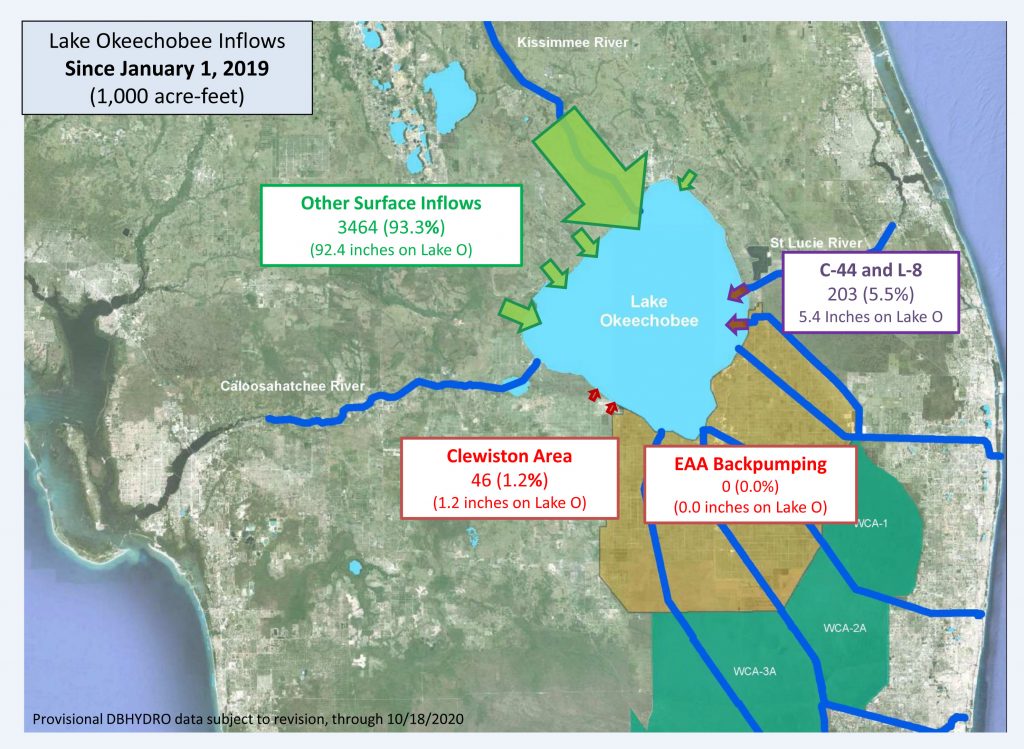
  • Facts of the Flow: Lake Okeechobee, 2020 Year-to-Date

    (SFWMD) — Here is the latest update on inflows into Lake Okeechobee for the calendar year to date. This data is provided by SFWMD’s DBHYDRO database.

    lake Okeechobee

    There has been no back-pumping into Lake Okeechobee from the Everglades Agricultural Area this year.

    Source: South Florida Water Management District

  • Extension Economist Doesn’t Expect Hemp Acres to Increase in Southeast in 2021

    File photo shows a field of hemp

    With hemp harvest beginning across the Southeast, predictions are already being made about what next year’s crop might look like. One Extension economist believes there will not be an acreage increase in 2021.

    Auburn University Assistant Professor and Extension economist Adam Rabinowitz does not expect acres in the Southeast to increase until the market shows significant recovery.

    Rabinowitz

    “I don’t think we’ll see more acres in the Southeast. We’re not seeing the price rebound back up to the point to where there was this huge interest of getting into that production,” Rabinowitz said. “I think we’re going to have to see a little bit more of the market really play out in terms of what the real consumer demand is and get a better understanding of that, and then potentially, try to find some efficiencies in the production practice before we’ll see an acreage increase.”

    Alabama Hemp Applications

    Hemp applications for the 2021 season are already being accepted in Alabama. They are available at agi.alabama.gov/hempapp.  The final day to apply for a hemp license is Nov. 30, 2020 by 5:00 pm (CST).

    It will be the third year that the Alabama Department of Agriculture and Industries has administered the program.

    Georgia Hemp

    According to Tim Coolong, University of Georgia Cooperative Extension specialist, he estimates that between 300 and 400 acres were planted this year with 108 licenses issued by the Georgia Department of Agriculture. Some of those, though, may be processors and others may be farmers who decided not to plant.

    Florida Hemp

    According to Holly Bell, director of cannabis for the Florida Department of Agriculture and Consumer Services (FDACS), “Florida is becoming the leader in the country – if not the world – on how we’re getting our hemp rolled out and the standards we’re setting.” On April 27, FDACS began issuing hemp cultivation permits for the 2020 growing season. As of mid-August, 550 permits were issued and another 400 were being processed. The 550 permits encompass 18,000 acres of indoor- and outdoor-grown hemp.

  • Florida Preps for Algae Blooms from Lake Releases

    (NSF) — Measures are in place to offset potential blue-green algae blooms after the U.S. Army Corps of Engineers started Wednesday to schedule water releases from lower Lake Okeechobee, according to the state Department of Environmental Protection.

    algae bloom

    A news release late Wednesday said the department and the South Florida Water Management District are prepared to use “innovative technology” if needed and noted that algae bloom conditions on the lake have improved in recent weeks. “Harmful algal blooms have a debilitating effect on our ecosystems and our communities,” Gov. Ron DeSantis said in a prepared statement. “That is why, for the first time, I made it a priority to secure dedicated funding to deploy innovative technology to mitigate blue-green algae blooms.”

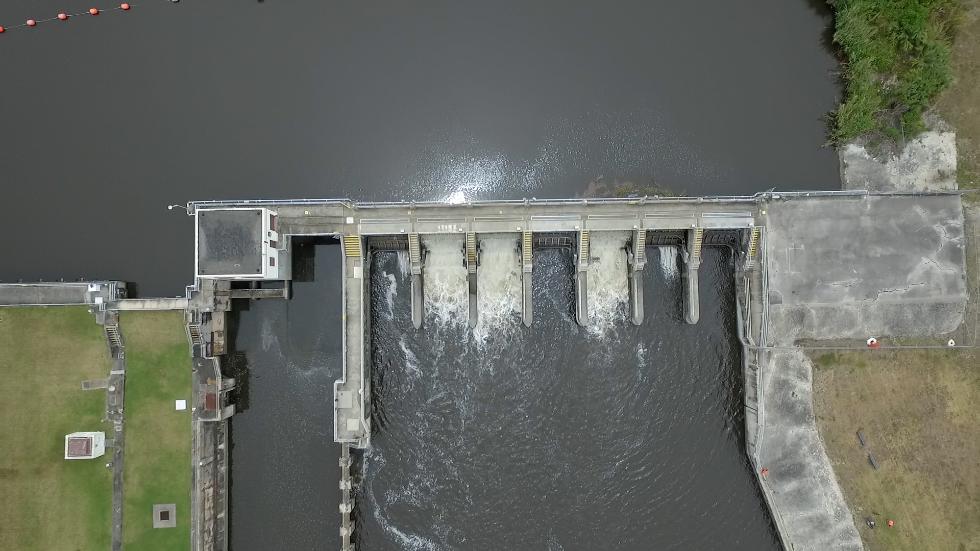
    On Wednesday, the U.S. Army Corps of Engineers Jacksonville District announced it would start releasing water from the lake as heavy inflows from Central Florida and rains across South Florida have caused the lake to reach 16.21 feet, a 1.33 foot increase over the past 30 days, while six weeks remain in hurricane season. The water releases will go through the Moore Haven Lock and Dam on the southwest part of the lake, and the St. Lucie Lock near Stuart. Such releases are closely watched because of harmful algae blooms that have occurred in the past in waterways to the east and west of the lake.

    The releases will be evaluated weekly and adjusted as conditions evolve, the Army Corps said. “We haven’t made large volume releases from Lake Okeechobee since March 2019, but the rapid rise in the lake level combined with an already active hurricane season that lasts until Nov. 30 has left us with no options in ensuring the safety of those living and working around the Herbert Hoover Dike,” Col. Andrew Kelly, Jacksonville District commander, said in a statement.

    The state allocated $10 million in both the current budget and in the 2019-2020 budget to invest in technologies to detect and combat algae blooms.

    Source: News Service of Florida