Category: Florida

  • La Nina a Concern for Fruit, Vegetable Producers

    Graphic from UGA Extension Blog.

    A La Nina weather pattern is expected to last through early spring and bring warm and dry conditions to the Southeast.

    According to the Climate and Agriculture in the Southeast blog, Pam Knox, University of Georgia Extension Agricultural Climatologist, said that the NOAA’s Climate Prediction Center predicts a 100% chance of a La Nina through the winter and better than 90% chance through early spring.

    This scenario could be gloomy news for vegetable fruit farmers, especially peach growers in Alabama, Florida and Georgia who need chill hours to make a crop for the following year. It also means pests could linger longer than desired since the lack of cold temperatures will alive them to survive longer.

    Pam Knox Comments

    Knox

    “In La Nina years, they’re much less likely to get the chill hours that they need. That’s going to be a problem for fruit producers,” Knox said.

    “Another thing is when you have warm temperatures, it’s not cold enough to kill the bugs very effectively. So you have more overwintering of bugs like whiteflies and other things that will bring disease to the plants next year. They could get an earlier start, but they’re also going to be more numerous because they’ve been able to survive the winter because of the warmer temperatures.”

    The lack of sufficient chill hours does not mean there will be zero cold weather. That’s still expected but will be overshadowed by the warmer temperatures to follow.

    “Even in La Nina years, we have some outbreaks of cold weather. It’s still winter, so we’re still going to see some of those cold outbreaks. There’s a lot of variability over time. I would definitely expect to see some colder weather. We could have some pretty big outbreaks,” Knox said.

    “It’s just that over the course of the whole winter, we’re likely to see those outbreaks punctuated by warmer spells. That’s not at all surprising. Winter is like that any way. It’s just that the whole average is a little higher. Those outbreaks come less frequently because the storm track is pushed to the north. The storm track is what controls whether we’re in the warmer air, because the warmer air is usually south of the storm track and also whether or not we’re getting rainfall because the rainfall usually happens along the storm track.”

    Prolonged Dry Spell?

    Winter is also a time when the soil moisture gets recharged due to rainfall. That’s not expected to happen this year amid La Nina, but it does appear the Southeast is in decent shape to withstand prolonged dry conditions.

    “Temperatures are lower and evaporation is lower, and plants are dormant so they’re not using a lot of water. I think from a water standpoint, at least right now, it doesn’t look too bad,” Knox said.

    According to the US Drought Monitor, southeastern counties in Georgia, as far south as Pierce and Ware, stretching as far north as Burke and Jefferson are classified as abnormally dry. The rest of Georgia, Alabama and Florida have sufficient moisture.

  • Decision-Support Tool Using HiPerGator May Help Manage Devastating Avocado Disease

    Jonathan Crane, professor of horticultural sciences, inspecting an avocado tree at the Tropical Research and Education Center.

    November 18, 2020

    By: Brad Buck, bradbuck@ufl.edu, 352-875-2641 (cell)

    UF/IFAS researchers are working on a decision-support app to help policy makers and growers decide the best regional treatment options for laurel wilt disease, which is challenging Florida’s $35 million-a-year avocado crop.

    Laurel wilt disease is spread by several ambrosia beetle vectors. People, whether they grow avocados or not, can spread the beetles when they move infested wood products – for example, firewood and wood-turner wood — UF/IFAS researchers say. UF/IFAS researchers are trying to get all of this spreading under control.

    To help develop the app, scientists are using the HiPerGator, a supercomputer on the main University of Florida campus in Gainesville, to analyze massive amounts of data.

    “This network analysis app will aid policy makers by providing input about how such things as subsidies or penalties for disease management are likely to affect growers’ management decisions and resulting disease spread,” said Berea Etherton, a doctoral student in plant pathology in the UF/IFAS College of Agricultural and Life Sciences. “Better regional management as a whole benefits individual growers.”

    Scientists hope to gain better regional control of laurel wilt through machine learning for analysis of satellite images. Those analyses train an artificial intelligence system to recognize patterns from remotely sensed images, said Etherton, who’s conducting the research under the supervision of her advisor, UF/IFAS Professor Karen Garrett.

    “In the next steps for the project, we plan to integrate satellite image analysis and disease recognition to support decision makers considering the best management strategies,” Garrett said. “The computational demands of the machine-learning tools in this project will benefit from the new HiPerGator resources.”

    The UF supercomputer will allow for rapid analysis of large data sets, Etherton said. This project is designed to pass the benefits of the HiPerGator on to the growers, as decision support will include input from satellite images and high-speed processing.

    Florida avocados are grown almost entirely in Miami-Dade County. Many consumers love to eat them in a variety of ways, including in guacamole dip. But even as laurel wilt disease damages avocado trees, demand for the fruit continues to rise in global markets. According to UF/IFAS economists, about 80% of Florida’s avocados are sold outside Florida and the industry has an economic impact of about $100 million to the state’s economy.

    Garrett and Etherton are working with researchers at the UF/IFAS Tropical Research and Education Center and the U.S. Department of Agriculture. They all hope the app will help control laurel wilt on a regional basis.

    “Any technology that is accessible, efficacious and economical and helps producers combat laurel wilt is welcome,” said Jonathan Crane, UF/IFAS professor of horticulture and a tropical fruit Extension specialist at TREC.

    “Managing crop diseases is challenging, because the success of one grower’s management strategies often depends on how well other growers are managing the disease.  We are working to contribute to regional management strategies,” Garrett said.

  • Neopestalotiopsis Fruit Rot Warning for Strawberry Producers

    florida
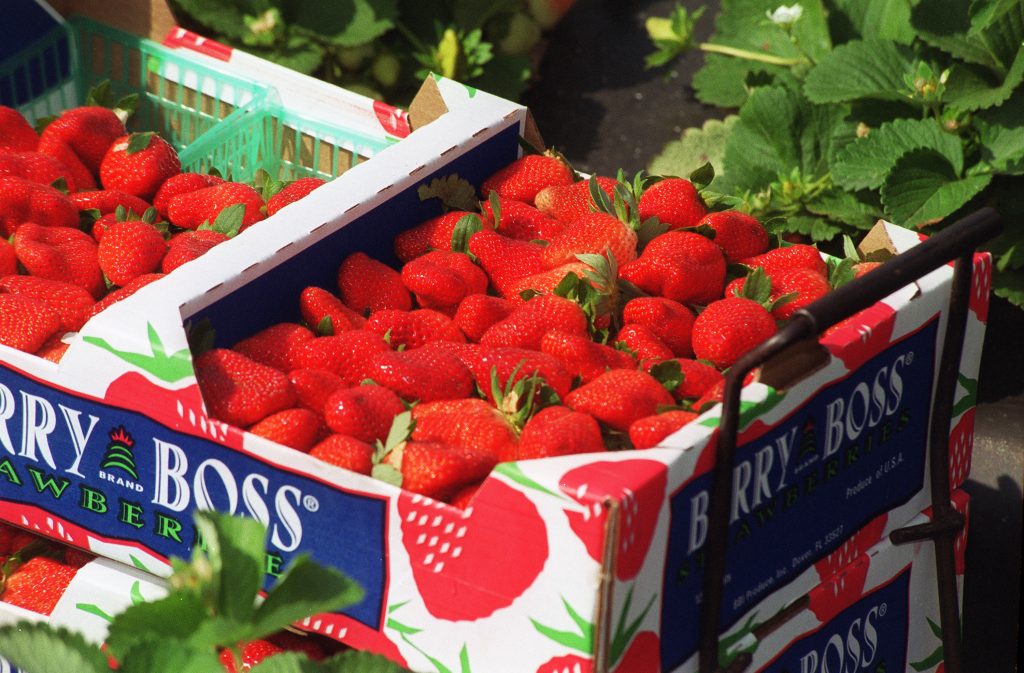
    File photo shows strawberries just harvested and packaged.

    Georgia strawberry producers need to monitor their plants for Neopestalotiopsis Fruit Rot. It has already caused problems for Florida farmers and nurseries in North Carolina where many Georgia farmers get their plugs from.

    “(Georgia producers) should be aware of it. We had a meeting on it again,” said University of Georgia plant pathologist Phil Brannen.

    “It has been found in Florida again. Some of the growers down there are ripping up a lot of strawberries and trying to replant with fresh plugs, because they got it in and don’t want to take a chance. It’s causing issues there. Even in the northeast, some people have gotten in plugs up there that have it and the same thing, they’re just destroying those plugs. They don’t want to take a chance.”

    Symptoms

    According to Strawberry News, Brannen referred strawberry farmers to research done by University of Florida scientist Natalia Peres. Symptoms below ground were darkening of the roots and orange-brown necrosis in the crowns, which leads to stunting or poor establishment after transplanting. There will be stunting, wilting and necrosis of older leaves above ground, which results in collapse and death of the plant.

    The common link of the outbreaks so far was the nursery source for the plants.

    Not Yet Found in Georgia

    “So far, we have not identified it in Georgia. We’re having other issues in our initial starting plants but it’s not that. Thankfully, everything where we have been looking for it we have not seen it or identified it yet in Georgia,” Brannen said. “I don’t know what that means. I don’t know if that means we’ve gotten lucky so far or what. But people that have been getting their plugs from certain sites in North Carolina are seeing problems.

    “We know we are getting plants that could have it. But these (nurseries) are huge. We may get a block that doesn’t have it at all.”

    Be Vigilant

    Brannen said growers should be vigilant when receiving and inspecting strawberry plants this year. They need to work with county agents to confirm diseases that show up on young and maturing plants throughout the season.

    “It’s costing the industry, even if it’s just a cleanup where it maybe an abundance of caution, people are not waiting to see what happens,” Brannen said.

    Switch and thiram products are the only fungicides that provide some suppression of the disease.

  • Eta Impacts Florida’s Sugar Industry

    essential
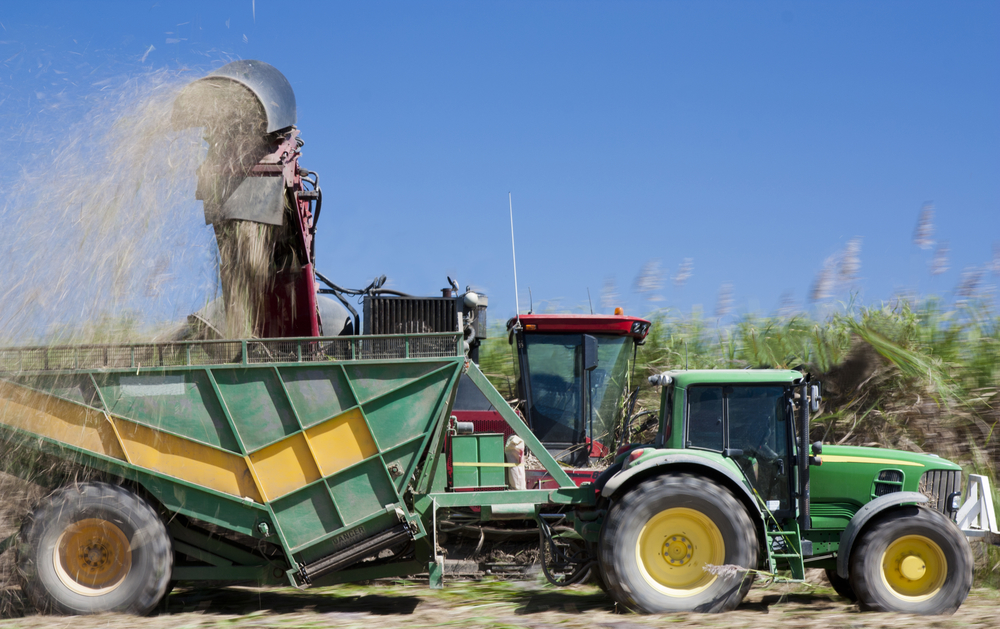
    File photo shows the harvest of sugarcane.

    The sugarcane industry in Florida was impacted by Hurricane-turned-Tropical Storm Eta last week. Farmers like Keith Wedgworth in Belle Glade, Florida continue to feel the effects of the rain-driven storm.

    As of earlier this week, Wedgworth still couldn’t get into fields to harvest his crop following Eta, which made landfall on the heels of an already wet fall.

    “We were already saturated to begin with. We probably got, in those couple of days, anywhere from 5 to 8 inches. The further south you went, down to say Homestead, they were getting over a foot in that short amount of time,” Wedgworth said.

    “I’m the president of our county Farm Bureau and I was talking to some growers and they’re trying to get some of their produce out now. They think they can save most of it but there’s a lot of damage done; mold, all the other disease that you get when it gets real wet, saturating rain like we received.

    “It was a rain event. I wouldn’t say it was a wind event. It was a tropical storm when it came and it went a lot further south. We got a lot of rain over those 24 to 48 hours.”

    Quiet Sugar Mill

    With the way the sugarcane operation operates, the sugar mill is normally running every day for 24 hours per day, 7 days a week this time of year. All of the harvested sugar needs to be processed. But with producers unable to get tractors in the field because of wet, muddy conditions, it’s delayed what is sent for processing.

    “Before this storm came across, we had only been back in the field for maybe 5 or 6 days. Before that we had other rain events that kept us out of the field for a week or two. When you have something like the sugar mill where we have a crop that you have to get in at a certain time, it just really delays everything,” Wedgworth said.

    “When you try to start up a month ago and right now they might have only run less than two weeks out of that month timeframe, you’re losing a lot of time to get that crop in the desired time you want to get it in.”

    Additional Comments from Wedgworth

    “When you have all this acreage and you delay it a few weeks already this early in the season, all it’s going to do is push it back further into the springtime. The later you go into the springtime and that heat starts returning, and it’s starting to want to grow again, your sugar content goes drastically down. You want to make sure you harvest it during these cooler months.”

    When sugar is not harvested in a timely fashion, it also delays the planting that producers can do with other crops they use to rotate with sugar, like corn, radishes and green beans. Not only are farmers being hurt now but also in the future.

  • U.S. Looking for Trade Action Against Fresh Produce Imports

    File photo shows strawberries ready to be picked.

    Fresh produce coming into the United States is receiving increased scrutiny from the Trump Administration. Imported strawberries are now on the list of imported items that the administration wants investigated for possibly harming U.S. fruit and vegetable growers. Strawberry imports, mainly from Mexico, represent about 16% of the U.S. market, valued at approximately $2.5 billion every year.

    Gro-Intelligence Dot Com says if the investigation proceeds, any potential trade action could result in higher strawberry prices in the U.S. market. Officials are also requesting a probe into the imports of fresh peppers, which is the second-largest vegetable import into America.

    U.S. imports of strawberries totaled 184 million tons last year, a four-fold jump since 2005. About 99% of the imports come from Mexico, where a weak peso has made exports much more competitive with domestic production. U.S. farmers, especially in the Southeastern states, say the low-priced imports are putting domestic growers at a significant disadvantage.

    A similar Section 201 investigation by the U.S. International Trade Commission was recently requested for blueberry imports into the U.S.  

    (From the National Association of Farm Broadcasters)

  • NIHC Receives USDA Market Access Program Funding for International Research and Promotion of Hemp

    NIHC Becomes First Hemp Organization Officially Recognized by USDA Foreign Agricultural Service as Market Access Program (MAP) Partner

    File photo shows hemp field.

    WASHINGTON – The National Industrial Hemp Council announced it received $200,000 in U.S. Department of Agricultural (USDA) Market Access Program (MAP) funding to support export market development of industrial hemp.  

    “We are grateful for USDA confidence and the recognition of NIHC as the industry leader in industrial hemp trade and marketing,” said Kevin Latner, NIHC’s Senior Vice President for Trade and Marketing who will be responsible for implementing the program.  “Today’s announcement makes NIHC a trusted partner to USDA for hemp fiber, feed, food and CBD companies looking to break down trade barriers in markets overseas.”

    MAP funds are administered through USDA’s Foreign Agricultural Service (FAS). Through the MAP program, FAS partners with U.S. agricultural trade associations, cooperatives, state regional trade groups and small businesses to share the costs of overseas marketing and promotional activities that help build commercial export markets for U.S. agricultural products and commodities. These funds can be used for facilitating trade missions and meeting with industry stakeholders and government regulators overseas. 

    NIHC programs will focus on Europe and China and include market research, trade policy and trade facilitation. The global industrial hemp and products market was estimated at $11.1 billion in retail sales in 2019.  With an annual growth rate of 52%, driven by continued strength in textiles, food and industrial uses and hemp-derived cannabidiol (CBD), the global market is forecast to be worth $89 billion by 2025.   

    Hemp for industrial use, textile and CBD market is expected to quickly expand and be the primary driver of global industry growth. By 2021, the global trade of hemp is forecast $8.1 billion across all markets, representing a three-year compound annual growth rate (CAGR) of 83%. Europe, China, and Canada are currently the primary sources of industrial hemp. With the passage of the 2018 Farm Bill, the U.S. has become the world’s third largest producer of industrial hemp.  

    Europe has rapidly developed a robust hemp and CBD market.  Europe is also a strong producer of industrial use hemp products with $424 million in industrial product sales. China has led global markets in textiles with almost 80% of the $1.7 billion hemp textile market in 2019.   

    In addition, National Industrial Hemp Council members will now have unprecedented access to United States trade negotiators; foreign government counterparts; and a network of international hemp industry association counterparts. Foreign governments understand that NIHC is now supported by the U.S. government and represents U.S. industry interests. 

    Market Access Program funds can be used by NIHC throughout the world to support market access and trade policy work, international trade promotion including supporting business-to-business facilitation and consumer and brand marketing.

    MAP funds for 2021 will be administered to NIHC through the Food Export Association of the Midwest USA.   

    “We’re extremely confident and trust that NIHC will represent the best interests of U.S. industrial hemp abroad. We’re excited to be working with them as part of the USDA cooperator community,” said Tim Hamilton, Executive Director of Food Export Association of the Midwest USA.

    About the National Industrial Hemp Council: The National Industrial Hemp Council provides high-quality networking and resources for its members, from farm to consumer. Its leadership is composed of leading international, federal, state, private industry, and government professionals throughout the sector. The organization is dedicated to furthering market development, assisting members in entering the industry, and educating consumers on industrial hemp and its applications. For more information please go to www.hempindustrial.com.

  • USDA Restricts PACA Violators in California, Florida and Texas

    November 13, 2020 – General News

    PRESS RELEASE: WASHINGTON, Nov. 13, 2020 – The U.S. Department of Agriculture (USDA) has imposed sanctions on three produce businesses for failing to meet contractual obligations to the sellers of produce they purchased and failing to pay reparation awards issued under the Perishable Agricultural Commodities Act (PACA).

    These sanctions include suspending the businesses’ PACA licenses and barring the principal operators of the businesses from engaging in PACA-licensed business or other activities without approval from USDA.

    The following businesses and individuals are currently restricted from operating in the produce industry:

    JRP Group, d/b/a Prime Produce BB #:365482, operating out of Los Angeles, Calif., for failing to pay an $11,984 award in favor of a California seller. As of the issuance date of the reparation order, Kay Persaud, Joshua C. Roach and Rajendra S. Persaud were listed as the officers, directors and/or major stockholders of the business.

    Natura Fresh LLC BB #:348926, operating out of Miami, Fla., for failing to pay an $3,168 award in favor of a Florida seller. As of the issuance date of the reparation order, Julia Espinal was listed as a member of the business.

    Talygap Produce Inc. BB #:328936, operating out of McAllen, Texas, for failing to pay a $3,510 award in favor of a Texas seller. As of the issuance date of the reparation order, Gustavo Adolfo Ponce Reyes was listed as the officer, director and major stockholder of the business.

    PACA provides an administrative forum to handle disputes involving produce transactions; this may result in USDA’s issuance of a reparation order that requires damages to be paid by those not meeting their contractual obligations in buying and selling fresh and frozen fruits and vegetables. USDA is required to suspend the license or impose sanctions on an unlicensed business that fails to pay PACA reparations awarded against it as well as impose restrictions against those principals determined to be responsibly connected to the business when the order is issued. Those individuals, including sole proprietors, partners, members, managers, officers, directors or major stockholders, may not be employed by or affiliated with any PACA licensee without USDA approval.

    By issuing these penalties, USDA continues to enforce the prompt and full payment for produce while protecting the rights of sellers and buyers in the marketplace.

    For more information, contact John Koller, Chief, Dispute Resolution Branch, at (202) 720-2890, by fax at (202) 690-2815, or PACAdispute@usda.gov.

  • UGA Researcher Part of Grant Studying Efficacy of Essential Oils in Organic Fruit Production

    File photo shows blueberries.

    Organic agricultural production is increasing in Georgia. Jonathan Oliver, University of Georgia (UGA) assistant professor and small fruits pathologist, wants to help producers be more efficient by researching ways to protect organic blueberries from diseases.

    According to UGA Extension, the U.S. Department of Agriculture National Institute of Food and Agriculture awarded a $2 million grant to the team of 15 scientists from 5 universities and the USDA Agricultural Research Study, including Oliver at UGA. While the group of researchers will focus on various fruits, including peaches, mangos and avocados, Oliver’s focus will be centered on blueberry production, the highest value fruit crop in Georgia. All will be seeing if essential oils can help suppress certain pathogens and pests.

    Oliver Comments

    Oliver

    “The essential oils organic grant is actually looking at a lot of different crops in the southeast and whether essential oils could have a role in a disease management program. There is data showing that essential oils can have antifungal properties and things like that if used in the laboratory or the greenhouse. But field studies are lacking,” Oliver said. “Since Georgia is one of the top producers of blueberries in the country and definitely in the Southeast, my role on this grant as the blueberry pathologist at UGA is to look at whether these products can be effective in the field and help our organic growers here that are growing blueberries.”

    Oliver will apply the essential oils in the field in a similar manner that producers apply other products. He’ll also be looking at diseases that affect blueberries after harvest. Will this treatment have a post-harvest impact if applied prior to harvest?

    “Cultural practices are really important in both conventional and organic, but in organic, they’re especially important. As far as chemical management in organic systems, you’re really limited on the types of products you can apply. No synthetic pesticides can be used. Typically, the synthetic pesticides are the ones that are going to be most effective. Usually, organic pesticides need to be applied more frequently to obtain control, if you can obtain control,” Oliver said. “We really need a lot more tools for our organic growers to help them manage diseases.”

    Grant Background

    The four-year project will support researchers who specialize in fruit crop management and physiology, plant pathology, entomology, post-harvest biology and organic production.

    In the research, scientists will:

    • Begin to test plant disease efficacy claims of essential oil products marketed for organic producers.
    • Evaluate organically certified plant essential oils on targeted pathogens such algal stem blotch, brown rot, scabs, gray mold and powdery mildew.
    • Determine the efficiency of essential oils on fruit shelf life through postharvest testing.
    • While arthropod pests are not the primary focus of this research, researchers also will test the efficacy of essential oils against insects including scales, thrips and mites.

    Organic food sales topped $50 billion in the United States in 2018. According to the Organic Trade Association, fruits, vegetables and specialty crops comprised of 36.3% of the total organic sales, which is up 5.6% from the previous year.

  • Hurricane Eta Soaks Already Saturated South Florida

    Graphic from National Weather Service/Shows Eta’s path for the next couple of days.

    An already saturated South Florida was inundated with rainfall from Hurricane Eta this week. The result were fruit that were either lost or will suffer from expected disease pressure, according to Gene McAvoy, University of Florida Regional Vegetable Extension Agent IV Emeritus.

    “We did have quite a lot of rain. We didn’t really need it. I’m sure we’ll see more disease as a result,” McAvoy said. “Some of the guys that had beans and corn direct seeded stuff, they’re going to experience some stand loss, some damping off. Sugarcane planting was delayed.

    “I’m sure we’ll see some increased calls in terms of cracked fruit in tomatoes and some scarring from wind scarring; disease. There’s a lot of bacteria around. I don’t know how much of that will show up on the fruit, it’s too early to tell yet.”

    Plant Disease

    Plant disease is not uncommon following excessive rainfall. It could really be an issue, though for plants in fields that have been completely saturated and having trouble drying out.

    “I’m sure we’re going to see things like melons; I’m hearing more gummy stem blight and gummy stem loves water; more phytophthora, bacteria. I’ve been out in some pepper fields; specialty peppers, non-resistant varieties, there’s a lot of leaf drop and defoliation going on,” McAvoy said.

    Weather Challenge

    Weather remains a year-round challenge for Florida vegetable growers. The region has experienced two months of excessive rainfall, following a relatively dry summer. McAvoy estimated that in the Fort Lauderdale area, it had received 26 inches over the past month. It’s twice as much as what his area has seen, and they’ve seen quite a bit.

    “We actually had a relatively dry summer. Until about the first week of September it was pretty dry. Then it really got wet,” said McAvoy, who is located in between Immokalee and LaBelle. “My personal property has been basically under water. I have a pasture, but it’s ankle deep across 39 or 40 acres.”

  • Florida Urban Tree Canopy Gives Oxygen, Shade – Saves $4 Billion a Year

    UF/IFAS photo/Urban forestry in Tampa Bay, Florida.

    November 12, 2020

    By: Brad Buck, 352-875-2641 (cell); bradbuck@ufl.edu

    Trees give us shade to cool off and oxygen to breathe – and they provide Florida cities with $4 billion in benefits a year, collectively, UF/IFAS researchers say.

    These include savings in air pollution removal, stormwater runoff and carbon sequestration and storage, said Andrew Koeser, UF/IFAS associate professor of environmental horticulture.

    To reach their findings, UF/IFAS researchers surveyed tree canopies in Florida’s metropolitan and micropolitan areas, defined as distinct economic regions having one or more core cities. Florida has 29 such regions, spread out over 51 of its 67 counties. Scientists define tree canopy cover as the percent of a land area covered by leaves and branches when viewed from above.

    “Florida is known for its natural resources and beauty, and its urban forests are the most direct connection to nature most of the state’s residents have,” Koeser said. “As such, this work is an important first step in monitoring and valuing some of the many things trees do to enhance our lives.”

    Koeser and several UF/IFAS colleagues put their assessment into a new UF/IFAS Extension document, in which they outline the many ways urban canopy gives back quantifiable benefits.

    To calculate these benefits, UF/IFAS researchers used software known as the iTree Canopy Model from the U.S. Forest Service. The iTree is a common model that governments worldwide use to put a value on their urban trees, said Koeser, a faculty member at the UF/IFAS Gulf Coast Research and Education Center in Balm (Hillsborough County), Florida.

    This report is part of a statewide urban canopy assessment funded by the Florida Forest Service and the UF/IFAS Center for Land Use Efficiency (CLUE), and this is the first time anyone has applied the iTree model to get a statewide assessment of the benefits of urban trees.

    In the past, UF/IFAS faculty have written similar documents for individual cities like Tampa, Orlando, Fort Lauderdale and one for Miami-Dade County.

    “These numbers are broad estimates meant to give folks an idea of the magnitude of the benefits,” Koeser said. “It is an attempt to quantify urban green infrastructure in a way that is comparable to roads, fire truck fleets and other things that cost money and produce benefits.”