Category: Florida

  • Commissioner Nikki Fried Comments on New Coronavirus Stimulus Package

    commissioner
    Nikki Fried
    Florida Agriculture Commissioner

    Tallahassee, Fla. – Late last night, Congressional leaders agreed upon a $900 billion coronavirus relief bill. As the COVID-19 pandemic continues setting new case records, the bill will provide some direct assistance to families and additional funding for food production and distribution, among other priorities.

    On the bill, Florida Agriculture Commissioner Nikki Fried offered the following statement:

    “For more than nine months, COVID-19 has upended the lives of Florida’s families, consumers, farmers, and ranchers. State agriculture departments like ours have worked hard to support our citizens through these difficulties, but it’s critical that Congress step up during these unprecedented challenges.

    With our growers facing more than half a billion dollars in losses from the pandemic, these payments will help Florida’s agriculture industry continue producing the nation’s food – especially during the winter when our seasonal growers feed 150 million Americans. With unemployment reaching record heights and nearly 1 in 5 Floridians facing food insecurity, ensuring food distribution to those in need, helping families afford food, and supporting child nutrition in schools are essential priorities.

    While Congress should pass this bill, this bipartisan legislation isn’t perfect – and it does far too little for struggling families. With Florida the second-worst state for paying unemployment benefits, our citizens need a stronger lifeline during this devastating, hundred-year pandemic. And while corporations make out like bandits with federal aid, we must ensure that our small farmers, small businesses and gig economy workers get the help they deserve.”

    The legislation includes estimated funding for the following agricultural and nutrition assistance priorities:

    Farmers & Rancher Payments: $5 billion for supplemental payments to row crop producers; up to $3 billion for supplemental payments to eligible cattle, livestock, poultry, and dairy producers; and $225 million for supplemental payments to eligible specialty crop producers;

    Other Agriculture Assistance: $100 million for Specialty Crop Block Grants to support seasonal growers; $100 million for the Local Agriculture Market Program to help producers, farmers markets, and food businesses adapt to supply chain issues; $75 million for the Farming Opportunities Training Outreach program to assist minority, tribal, veteran, and beginning farmers; and $28 million for state block grants to support farmer and rancher mental health initiatives

    Food Banks & Donations: Overall $1.5 billion for food purchases for distribution to those in need, including $400 million for food banks through The Emergency Food Assistance Program (TEFAP); $400 million for a Dairy Product Donation Program; $175 million for nutrition services for seniors; and $13 million for the Commodity Supplemental Food Program

    Help for Hungry Americans: 15% increase in SNAP benefits for six months; $75 million for SNAP participant fruit and vegetable incentives; provide college students access to SNAP; funding for additional online SNAP retailers and state SNAP expenses; expanding child eligibility for Pandemic-EBT; and emergency funding for meal programs in schools and daycares impacted by COVID-19

    Background: The Florida Department of Agriculture and Consumer Services oversees several nutrition programs in Florida, including the state’s $1.3 billion school lunch program, The Emergency Food Assistance Program for low-income families, and the Summer BreakSpot program that has served 74 million meals to Florida children since March. Commissioner Fried has made nutrition assistance a priority, including requesting the Governor use CARES Act money to support schools that have lost over $260 million in nutrition funding this year. With Florida farmers and ranchers suffering pandemic-related economic losses, FDACS undertook numerous efforts to support the state’s agriculture industry despite federal payments Commissioner Fried criticized as coming too slowly; these included a new online portal connecting farmers and consumers, and emergency orders to help keep eggs and other crops continue reaching consumers amid shortages. Numerous Members of Congress have been critical that that direct aid to families in the proposed relief bill is not enough given continued unemployment and economic difficulties.
  • DeSantis Calls Reservoir ‘A Top Environmental Priority’

    desantis

    (NSF) — Gov. Ron DeSantis backed a controversial reservoir being built in the Everglades while announcing the state will use a pool of environmental money to help Miami-Dade County protect Biscayne Bay from continued degradation.

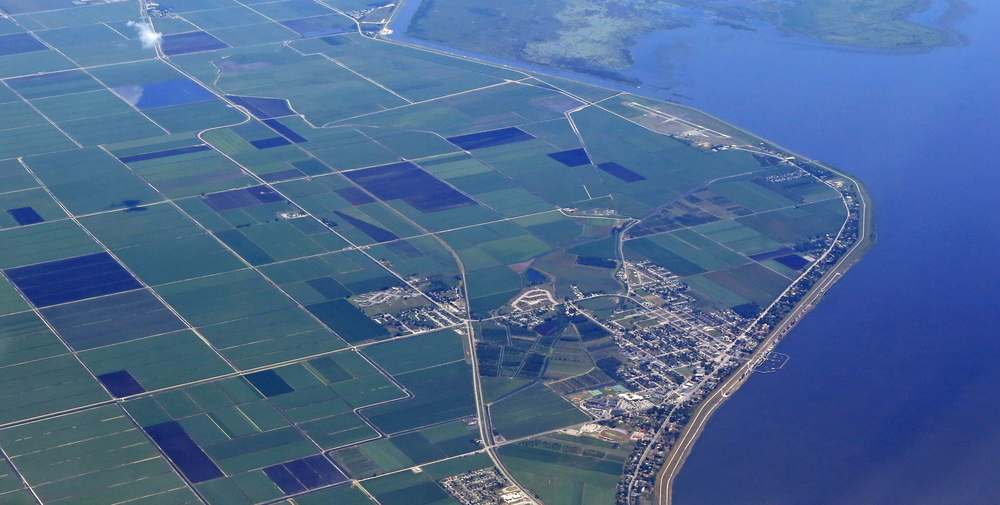
    DeSantis said his office will continue to support the $1.6 billion Everglades Agricultural Area reservoir, which was approved by the Legislature in 2017 but has recently been questioned by new Senate President Wilton Simpson, R-Trilby. DeSantis addressed the issue as he outlined plans to provide a $10 million match for local efforts to restore Biscayne Bay.

    “The EAA reservoir remains a top environmental priority for my administration, and we look forward to pressing ahead as quickly as possible,” DeSantis said while at Bill Baggs Cape Florida State Park in Key Biscayne.

    Simpson, during a Florida Chamber of Commerce event on Dec. 8, described the man-made lagoon — intended to redirect water south from Lake Okeechobee — as a “mistake.” 

    desantis

    Simpson, who became president last month, added that as lawmakers face a $3 billion to $4 billion shortfall in the next budget, the state “probably should stop building” the reservoir. 

    The 2017 law provides $64 million a year for the reservoir, requiring it to be built on state-owned land rather than private farmland in the Everglades Agricultural Area. The law also allows Florida to boost funding for the work by issuing up to $800 million in bonds.

    The state anticipates half the funding for the work to come from the federal government.

    Simpson said the state’s approach to improving water quality in South Florida should be through deep injection wells on the north side of Lake Okeechobee, where more water enters the lake. 

    Simpson’s comments have drawn blowback from several Treasure Coast lawmakers.

    The reservoir was pushed by former Senate President Joe Negron, R-Stuart, because water discharged from the lake into waterways to the west and east was causing algae problems.

    DeSantis on Monday called the reservoir “one of the most important Everglades restoration projects in history.”

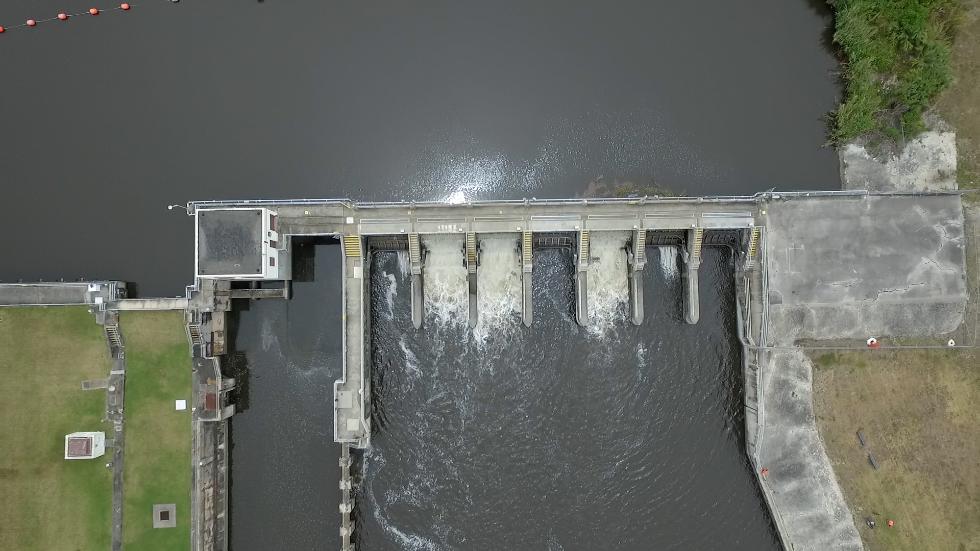
    “The project provides significant ecological benefits, reduces harmful discharges to the St. Lucie and Caloosahatchee estuaries, and importantly sends more clean water south to the Florida Everglades,” DeSantis said.

    DeSantis went to Biscayne Bay to highlight work that will be undertaken to protect the bay, with the state money matching funding by Miami-Dade County.

    “In the coming weeks, the county and state will work collaboratively to identify worthwhile projects and pursue them without delay,” DeSantis said.

    Money for the match is coming from $625 million in the current fiscal year budget for water projects and the Everglades.

    Miami-Dade County Mayor Daniella Levine Cava, a Democrat, said the bay, vital to the region’s tourism, has been in a near collapse for years. That stems from nutrient pollution, in part due to a historic over-reliance on septic systems rather than sewers, and the region’s aging water system infrastructure.

    “We’ve seen the impacts of this crisis firsthand, especially in recent months,” Levine Cava said. “Our seagrass meadows are in retreat. There are algae blooms that are plaguing the formerly crystal-clear waters, and the fish kills were literally bringing the crisis off our shores vividly to the surface, all too recently. And our beautiful coral reefs are in jeopardy as well.”

    Miami-Dade County has already proposed six projects that will cost about $5 million. Among those projects will be converting some homes and businesses from septic tanks to sewer systems and helping scientists understand Stony Coral Tissue Loss Disease, which has affected the region’s coral reef system.

    Source: Jim Turner, News Service of Florida

  • UF Hemp Program Overseer: Good Science Takes Time

    Industrial hemp. Photo taken 06-12-19.

    “Good science takes time.”

    That is the message Jerry Frankhauser is preaching. The assistant director of the Florida Agricultural Experiment Station who oversees the University of Florida hemp research program stresses that like other projects at other universities, the UF/IFAS Industrial Hemp Pilot Project will take between 3 and 5 years before they have a handle on how hemp will grow throughout the state.

    “Our UF-IFAS Pilot Project is actively working to get this information out on the street as soon as possible,” Frankhauser said.

    There is a lack of scientific data to provide to farmers interested in producing hemp, since the crop is still in its infancy stage of being produced in the Southeast region.

    The USDA approved Florida’s state hemp program this past year as growers started submitted applications to produce hemp on April 27. But UF advises interested producers that since hemp has not been available to grow for decades, there is a lack of research information available. Farmers need to proceed with caution.

    “We like other states, whether it is the University of Georgia or University of Kentucky are actively trying to play catch up scientifically to better understand how hemp grows and develops,” Frankhauser said. “For us it’s very important because we have a sub-tropical environment with shorter day lengths. There’s some unique challenges to research and to grow hemp in the state of Florida.”

    Early Observations

    He has already deduced that while hemp can grow in Florida, not all hemp varieties are adaptable to Florida’s climate.

    “Most hemp varieties are daylength sensitive. Our daylight here in the Sunshine State is less than in the northern states during the summertime. This was one of the reasons that our team lead, Dr. Zach Brim from our UF/IFAS Tropic and Education Center, he sought out diverse hemp genetics from all around the world. This included varieties bred for grain, fiber and of course, what people know as high cannabinoid type varieties like CBD or CBG,” Frankhauser said.

    “Another challenge and objective from our initial pilot project was to better understand how to grow grain, fiber and high cannabinoid type hemp. We’re looking at the management systems for these types of hemp and the importance of the data planting or transplanting into the field; looking at fertilization, irrigation, the use of other inputs and efforts in order for our stakeholders, our growers to produce a profitable crop. That’s indeed a challenge. We’re still learning on the go. Of course, we’re still working with our growers now who can get commercial licenses to grow industrial hemp.”

  • Plan Now to Keep Workers Safe During Next Harvest Season

    Growers take steps to protect farmworkers’ health so they can continue to ensure an abundant, safe food supply is available to U.S. consumers. Image source: The Pajaronian

    It is likely the coronavirus pandemic will be a threat for most of the country next year, even as vaccines have begun to be administered. Vegetable and specialty crop producers are encouraged to be prepared when planning for next season’s harvest, specifically for how to keep their H-2A workers healthy.

    Allison Crittenden, Director of Congressional Relations at the American Farm Bureau Federation, says the time is now to make those preparations.

    “I think now that employers and farmers realize what steps they need to be taking to provide a safe workplace that hopefully mitigates the spread of the COVID. It’s the last thing anybody wants is an outbreak on their operation. I think if I were a grower going into my next season I would certainly be trying to stock up on masks and sanitizer; taking this time in the offseason to come up with a plan,” Crittenden said.

    Knowing What to Expect

    Farmers at least now know what to expect. It is a much different feeling than last spring when producers had to adjust on the go to keep their workforce healthy.

    “I think when we all first heard about the pandemic, we thought this might be a short-term thing, but I think what we’ve learned is that it’s very long-term and likely will have long-term impacts on how businesses operate moving forward,” Crittenden said.

    “I think I would take this time to learn from last season and the quick adaptations that growers had to put in place and use this time to plan accordingly, knowing that we’re still not out of the woods.”

  • Food-Safety Concerns Sought for Produce Industry

    UF Glow variety of citrus. Photo taken 11-17-17

    The University of Florida (UF) and Rutgers University are teaming up to find out what food-safety issues are the biggest concerns across the produce industry. Members of the produce industry are invited to participate in an anonymous online survey that will take approximately 10 minutes to complete.

    UF Institute of Food and Agricultural Sciences researcher Michelle Danyluk said the survey is part of research funded by the U.S. Department of Agriculture’s Specialty Crop Research Initiative. “We want to make sure the things we spend our time researching are things that are … really meaningful for industry, things that can help bring clarity or find solutions to their biggest concerns,” Danyluk said.

    “To date there are no documented outbreaks of foodborne disease related to fresh citrus, and most fresh market citrus growers and packers do a good job with their food-safety programs,” Danyluk said. “But food safety is still something that requires constant attention, and no one knows better than the industry what the issues are. This survey is really designed to find out what the industry’s top concerns are. What food-safety issues keep you up at night?”

    The survey, which should be completed by the end of December, is available here.

    Those taking the survey will be asked to rank their top five risk-management areas that need improvement in the produce industry. The survey will provide research data that will be used to guide future industry surveys and resource development specific to food safety. 

    The first survey question, the informed consent, must be answered “yes” in order to proceed through the survey. The informed consent provides more details about the nature of the survey, the handling of any information collected, and contact information. Anyone involved in the produce industry who is at least 18 years of age may take the survey.

  • New UF Blueberry App First Phase in Two-Part Project

    File photo shows blueberries.

    A new University of Florida (UF) smartphone app will provide immediate help to the state’s blueberry producers who are gearing up for the upcoming season.

    It is the first phase of a two-part project that Patricio Munoz, the UF/IFAS blueberry breeder and an assistant professor of horticultural sciences, tackled in hopes of consolidating chunks of information into one place that is easily accessible.

    Munoz

     “We wanted to release it right away because the season is coming. We’ve been telling the growers we’re going to release this and we decided to release it by phase. The phase one is just this and the second phase is going to be the cultivars. At least they’re going to have something to help them as quick as possible,” Munoz said.

    He said the app tailored towards blueberry cultivars will be released later.

    App Background

    The UF/IFAS Blueberry Growers Guide phone app was released on Dec. 1. Growers can access information vital to blueberry production every year, specifically disease and insect management.

    “The university, my colleagues have done a very good job generating this information. It’s just that nobody has put it together the way that we did it right now. We didn’t put the content together, we just organized it,” Munoz said. “We did work a little bit in the content, too, of course but most of it was done by colleagues in entomology, plant pathology and production.”

    Valuable Crop in Florida

    According to a UF press release, blueberries are a $60 million-per-year crop in Florida. Munoz estimated there between 5,200 and 5,400 acres with between 60 and 80 producers in the state.

    A key advantage that smartphone apps provide producers is they do not have to carry a bulky growers guide into the field anymore. All the information they need is on their smartphones.

    “That’s the assumption is that every grower has a smartphone nowadays. That’s why we put it together for both android and also iPhone. It should work in both systems,” Munoz said.

    “Everybody has either one of them. It will make life a lot easier for a lot of people. Then if you’re in a place that doesn’t have a good signal you can download the whole thing and use offline as well.”

  • Heat Brings Out Antioxidants, Increases Red in Tomatoes

    Photo is “courtesy, UF/IFAS photography.” It’s a generic shot of tomatoes.

    December 17, 2020

    By: Brad Buck, bradbuck@ufl.edu, 352-875-2641 (cell)

    Turn up the heat, and get more nutrition from your tomato, University of Florida researchers say. Furthermore, when you buy a tomato, it will be about as red as it can be, thanks to the UF/IFAS methods deployed for the study.

    The findings are crucial to an industry in which Florida ranks second to California in tomato production in the United States.

    In new research led by horticultural sciences Professor Jeffrey Brecht, UF/IFAS scientists put tomatoes in hot water and found it increased the red ripe look we love in tomatoes. By doing this, they also increased phenolics and carotenoids. To be clear, packinghouses in many states already  treat tomatoes with hot water before shipping them to supermarkets – to clean them and prevent possible diseases — but the heat treatment for this study was a bit more extreme.

    “The idea is that tomatoes have a certain genetic potential for antioxidant production that isn’t always realized,” said Brecht, a postharvest biologist. “That’s because tomatoes — all plants actually — produce antioxidants to deal with stress, and they produce more antioxidants the more stress they experience. Because we basically coddle tomatoes, the fruit doesn’t always realize its genetic potential for antioxidant production.”

    “You could say that we found a way to make tomatoes get as red as they are able to get,” he said. “But the overall increase in antioxidants and the accompanying improvement in nutritional value is more important. Both the improved color and the improved nutritional value are benefits for consumers.”

    For the study, researchers with UF/IFAS and the Agricultural Research Service (part of the USDA) applied increased heat to stimulate tomatoes. The major types of antioxidants in tomatoes are carotenoids and phenolics, Brecht said. Carotenoids include pigments, one of which is the red pigment, lycopene, which makes tomatoes red. 

    “So, in encouraging the tomatoes to make more antioxidants, we gave them a more red pigment,” he said. “But the major response to the heat stress was the production of phenolics, which are powerful antioxidants, but they are usually colorless.”

    Researchers used an assay (test) that measures antioxidant capacity, but they also measured different types of antioxidant compounds to reach their conclusions.

    Brecht describes the concept as “basic tomato physiology,” so the study’s methods apply to tomatoes, not just in Florida, but across the United States. 

    Tomatoes in Florida are most commonly harvested at the mature green stage and ripened after packing. Here’s how tomato packinghouses in Florida treat tomatoes before they go to your supermarket. They heat the dump tank water into which the tomatoes are transferred from field bins or gondolas to about 10 degrees above the tomato pulp temperature.

    Packers use a water dump because it is the gentlest way to transfer fruit onto a packing line, and they use warm water because it reduces the chances of decay. Tomatoes are typically in the dump tank for a couple of minutes, Brecht said.

    “We think that process could be modified to duplicate our hot-water treatment and improve the tomato quality,” he said.

  • Fruit Drop Weighs Heavily on Florida Growers

    fruit drop

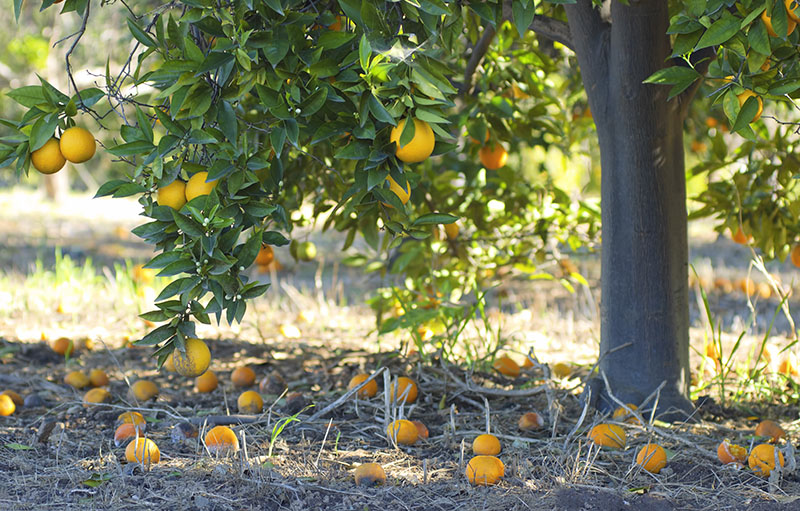
    Numerous Florida citrus growers are experiencing heavy fruit drop this fall. “For some growers, it’s the worst fruit drop they have experienced; 50%-plus,” says grower Lee Jones with Cross Covered Caretaking.

    Grower Jim Snively, with Southern Gardens Citrus, said he is hearing talk of around 30 to 50%-plus fruit drop. “I’m hearing pick-outs that are 20% to 70% below last year; the drop is the culprit in the areas with the greatest reduction,” says Snively.

    According to Snively, the drop in South Florida started in late August and has been continuing. “In other areas of the state, Polk County and the west side of the state, it seems that the drop has just started and is not as intense.”

    Jones reported seeing fruit drop across the state. “However, it appears that areas that had less rain and (groves that are) on a good root-health program are doing better,” he says.

    “Hamlin and Midsweet are the varieties that are experiencing the drop at this time,” says Snively. “We are starting to see some early drop in Valencia.”

    “Unfortunately, not only is the drop a concern, but the fruit quality is well below what we as an industry would like to see,” Snively, president of the Highlands County Citrus Growers Association, wrote in the recent association newsletter. “There are many areas that continue to have blocks that are not meeting the USDA minimum standards.”

    “The minimum Brix requirement for processed oranges is 8.00,” Snively explains. “We are seeing field tests that are showing Brix levels below 8.00. In most cases, you have to wait to let the Brix build before you harvest. But in the meantime, fruit continues to drop and it starts to lose juice weight, which equates to a loss in pounds solids per box.”

    Jones also weighs in on the failure of some fruit to meet USDA standards. “If the Brix/acid minimums are not met, then harvest is delayed,” he says. “However, the longer they (growers) wait, the worse the fruit drop.”

    “At this point, all a grower can do is get his or her fruit harvested as quickly as possible,” Snively adds.

    “But we all know we can’t send it all in at one time. I do feel that part of the reason for this phenomenon this year and last year is the multiple bloom that we experienced the last two years. Last year, we had bloom from November 2019 through March 2020. The warm weather that followed the moisture brought in by the cold fronts causes the tree to prematurely flush and bloom. This is even intensified on HLB-infected trees. There are researchers working on this issue, and I hope they figure it out soon. We know that HLB has a lot to do with this drop, but what is HLB doing that causes the tree to react in this way, and if we figure out what that is, is there anything we can do to prevent or offset this manifestation?”

    “Anything a grower can do to increase root health will help,” Jones adds. “Also, getting the bloom synchronized; the late/early bloom increases the fruit drop percentage and decreases fruit maturity.”

    Learn about University of Florida Institute of Food and Agricultural Sciences researchers’ efforts to reduce fruit drop here.

  • Growers’ Input on Pests Needed

    Entomologist Lauren Diepenbrock is seeking Florida citrus growers’ help in determining information gaps and future directions for her research on pests. To get that help, she’s asking growers to participate in a survey, which is available here.

    Diepenbrock

    Diepenbrock, a University of Florida Institute of Food and Agricultural Sciences researcher, would like to have growers take the survey by March 31, 2021. The survey should take 15 minutes or less to complete. The anonymous survey begins with questions about what counties growers farm in, what varieties they are growing, and the pests that have been problems for them during various times in the past. It also asks about insecticide and miticide use history with relation to Asian citrus psyllid establishment and frequency of sprays. In addition, the survey aims to determine what growers believe are the top five priorities for pest management research.

    “Since arriving at the CREC (Citrus Research and Education Center) in 2018, I have had the pleasure of interacting with many of you,” Diepenbrock states. “From these interactions and reading through my predecessors’ work, I’ve come to realize that we have some large gaps in information which we need to better understand changes over the past two decades of insect and mite management in citrus.”

    “I just hope that people will take the time to provide this information,” Diepenbrock says. “I want to both do research that is interesting to me and to meet the needs of our growers.”

    Asked what pests already concern her, Diepenbrock responds, “Well this is part of what I want to learn. Obviously ACP (Asian citrus psyllid), CLM (citrus leafminer) and lebbeck mealybugs come up a lot, but we’ve seen some pests popping up that haven’t been problematic for decades, like woolly whitefly. So I’m hoping to learn if these are a huge concern for growers or not.”  

    “Grower information is critical to identify the information gaps and help determine future directions of research in my program,” Diepenbrock adds. “My goal is to always provide useful, research-driven data to our growers, and their input enables this.”

    She plans to share the survey results in future webinars and industry publications.

  • Pandemic Fuels Some of ’20’s Most-Searched UF/IFAS Extension Information

    December 15, 2020

    By: Kirsten Romaguera, 352-294-3313, kromaguera@ufl.edu

    GAINESVILLE, Fla. — The coronavirus pandemic occupied space in everyone’s minds this year, prompting online searches about any variety of topics related to it. The year’s most popular UF/IFAS Extension EDIS publications were no exception, with two of the top 10 being brand-new documents related to food safety and the coronavirus.

    In all, the Electronic Data Information Source, which hosts peer-reviewed publications from UF/IFAS Extension professionals, saw 17.5 million pageviews this year across the nearly 6,500 publications hosted.

    Here are 2020’s 10 most-visited EDIS publications:

    1. The Florida Vegetable Gardening Guide” is a perennial favorite and again tops the list. Vegetable gardening offers fresh air, exercise, enjoyment, nutritious and fresh vegetables and economic benefits, among other advantages. This year took on a different angle, however, with many taking up home gardening amidst the pandemic. Get a few pointers on home-grown veggies: edis.ifas.ufl.edu/vh021 (129,393 visits)
    2. The 4-H Plant Connections curriculum, “What Makes Plants Grow?,” is also a popular how-to. Plants need many of the same things people do: light, water, air, nutrients and proper temperature. For more, visit: edis.ifas.ufl.edu/4h360 (103,833)
    3. Common Poultry Diseases” include respiratory and nonrespiratory viral and bacterial diseases. Learn how to tell the difference: edis.ifas.ufl.edu/ps044 (72,837)
    4. Perhaps related to renewed interest in hygienic practices, “Basic Elements of Equipment Cleaning and Sanitizing in Food Processing and Handling Operations” jumped 15 spots from last year’s ranking. Rinse, clean, rinse and sanitize those contact surfaces, and more tips at edis.ifas.ufl.edu/fs077 (68,808)
    5. Central Florida residents: Looking for what to plant and when? The “Central Florida Gardening Calendar” not only provides this info, but also explains specific concerns at certain times of the year, including irrigation, pests and pruning: edis.ifas.ufl.edu/ep450 (50,846)
    6. The document “COVID-19 and Food Safety FAQ: Is Coronavirus an Issue in Produce Production?” opens addressing a concern: The CDC, FDA and USDA have no reports of human illnesses that suggest coronavirus can be transmitted by food packaging. The document details best practices for facilities: edis.ifas.ufl.edu/fs351 (48,073)
    7. COVID-19 FAQ for Grocery Stores: Receiving and Food Packaging” addresses similar concerns and is available as a one-page guideline for grocery stores: edis.ifas.ufl.edu/fs331 (40,666)
    8. About 50 species of snakes live in the states along the Atlantic and Gulf coasts, from Louisiana to North Carolina. They are predators and prey, and thus form important links in natural food webs. “‘Black Snakes’: Identification and Ecology” helps distinguish the easily confused snakes of this region that share a primarily black coloration characteristic: edis.ifas.ufl.edu/uw251 (39,640)
    9. Although “Diversity in the Workplace: Benefits, Challenges, and the Required Managerial Tools” has appeared in the top 10 before, this year’s social justice movement could explain an increase in clicks this year. Managerial skills must adapt to a more diverse workplace: edis.ifas.ufl.edu/hr022 (37,467)
    10. North Florida residents can learn what ornamentals and vegetables grow well in the region, when to plant them and other important information with the “North Florida Gardening Calendar”: edis.ifas.ufl.edu/ep451 (36,365)

    EDIS, a free service of UF/IFAS Extension, celebrates its 25th anniversary in 2021. Find information at edis.ifas.ufl.edu on topics relevant to you: profitable and sustainable agriculture, the environment and natural resources, 4-H and other youth programs, Florida-friendly landscapes, communities that are vibrant and prosperous, economic well-being and quality of life for people and families.

    “In a year filled with uncertainty and unexpected changes, we see the value in the public services of UF/IFAS Extension, including EDIS,” said Nick Place, UF/IFAS Extension dean. “We hope the public continues to rely on the expertise of this top-notch, science-based research.”