The U.S. Department of Agriculture’s (USDA) National Agricultural Statistics Service (NASS) dropped another 2 million boxes from the January forecast for Florida’s orange crop but added 200,000 boxes to the state’s grapefruit projection.
ORANGES Florida’s total orange crop is now forecast at 54 million boxes, down 4 percent from 56 million boxes in December. The orange reduction was in the non-Valencia crop, down from 22 million boxes to 20 million boxes. NASS reported that final droppage of non-Valencia oranges (excluding navels) at 43 percent is above the maximum and the highest in a series dating back to the 1960-61 season. The Valencia projection was unchanged at 34 million boxes.
The projection of California’s orange crop increased 500,000 boxes to 51 million boxes. The Texas orange projection was unchanged at 1.5 million boxes.
GRAPEFRUIT Florida’s total grapefruit crop is now expected to be 4.6 million boxes, up 5 percent from December. The additional 200,000 boxes in January were in red grapefruit, now at 3.9 million boxes. White grapefruit is unchanged at 700,000 boxes. Projected fruit size at harvest and droppage of both reds and whites are projected to be above average.
California’s grapefruit crop forecast climbed 400,000 boxes to 4.2 million boxes. The Texas grapefruit projection rose 100,000 boxes to 5 million boxes.
TANGERINES AND TANGELOS The Florida tangerine and tangelo forecast was unchanged at 1.1 million boxes. California’s tangerine and tangelo projection was also unchanged at 23 million boxes.
LEMONS Lemon forecasts rose for both Arizona and California. The Arizona projection climbed 600,000 boxes to 1.9 million boxes. The California forecast jumped 2 million boxes to 24 million boxes.
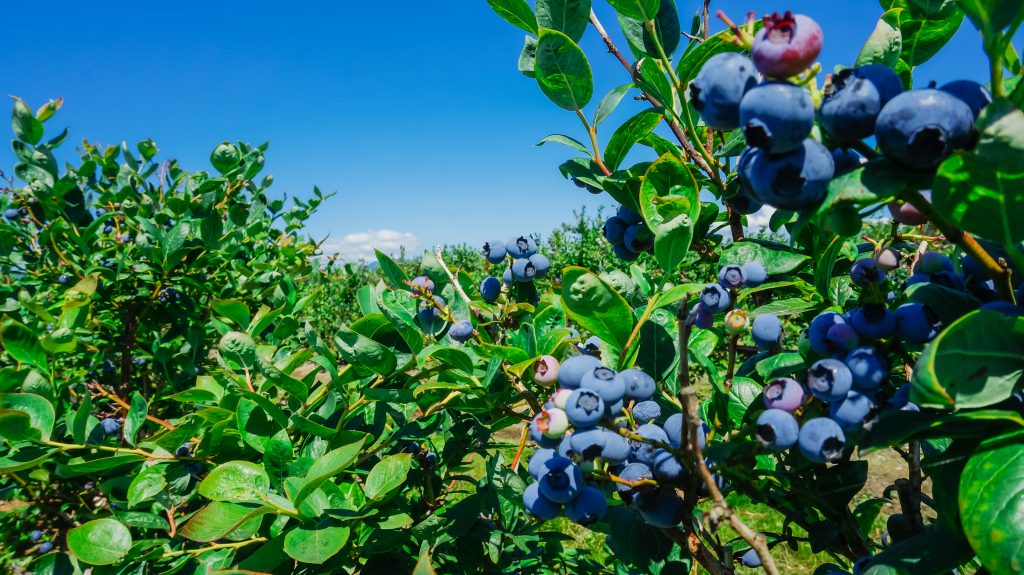
Blueberry growers and industry leaders in the Southeast had their say on Tuesday about unfair trade practices regarding imports from foreign countries, including Mexico.
They testified during a virtual hearing with the U.S. International Trade Commission (ITC) regarding a global safeguard investigation into fresh, chilled or frozen blueberries.
Jerome Crosby, Georgia blueberry grower and chairman of the American Blueberry Growers Alliance, testified about the importance of the Alliance’s formation and its role in protecting its domestic crop.
“We officially launched our Alliance in December for the same reasons we are before you today. The U.S. blueberry growers needed a new approach to protect and secure the future of their farms and to respond to the assault on the U.S. market by blueberry imports,” Crosby said. “We require a strong and unified voice for the U.S. blueberry grower without the influence of domestic or foreign marketer or retailers seeking lower and lower prices.”
Increased Imports
Crosby said imports of fresh blueberries have increased 75% over the past five years. It is only expected to worsen as prices and profits continue to plummet for U.S. producers.
“We fully expect a variable tidal wave of imported blueberries in the next several years,” Crosby said. “Substantial portions of the industry report losses on an operating and net income basis. Packing and freezing facilities have been shuttered. Blueberry acreage has declined.
“The injury to the domestic industry is serious, clear and wide spread. It’s caused by the flood of imports into the U.S. market.”
Blueberry farmers from across the United States are asking the ITC for temporary relief from a surge in imports that are harming the domestic industry
WASHINGTON, January 12, 2021 – Members of the American Blueberry Growers Alliance (ABGA), a group representing U.S. domestic blueberry farmers, today provided information to the U.S. International Trade Commission (ITC) during a hearing on the impact of rising imports during the U.S. growing and harvest seasons. American blueberry growers across the country – mostly small, family-run farms – have been devastated by an influx in blueberry imports by 75% in the past five years, according to U.S. import data.
“Because of booming domestic demand, we should be enjoying a market in which there is room for both domestic and foreign growers to profit,” said Jerome Crosby, Chairman of the ABGA Board of Directors and owner of Pineneedle Farms in Willacoochee, Georgia. “However, foreign government policies targeting the United States market and large corporate import interests have combined to bring massive volumes of blueberries into our market, increasingly during periods that in the past provided growers with the bulk of their revenues and often all of their profits for the year.”
“The massive increase in Mexican imports during our harvesting season has crippled the Florida blueberry industry and threatens its very existence,” said Brittany Lee, Executive Director of the Florida Blueberry Growers Association and owner of Florida Blue Farms. “Over the period 2009 to 2019, we saw imports from Mexico increase by 2,111%. We have experienced a significant decline in price per pound for fresh blueberries in Florida, and a huge loss of market share.”
Farmers said the U.S. blueberry industry has made extensive marketing efforts over many years to educate purchasers and consumers about blueberries, which has increased demand.
“Foreign producers are taking the benefit of those efforts, in some instances by creating industries out of nothing and exploiting cheap labor and poor environmental regulation overseas,” said Rex Schultz of Heritage Blueberries in Bangor, Michigan and President of the Michigan Blueberry Advisory Committee. “Producers in foreign countries are totally dependent on our market, and they have every incentive to keep shipping more and more product here. This is not a sustainable situation for the American blueberry farmer.”
Imports have also had a devastating effect on blueberry farmers in Western states.
“Ten years ago, imports filled an important role by ensuring supply of fresh berries in the few months is no longer the case,” said Jayson Scarborough, a blueberry farmer in Central California. “Imports from Mexico and Peru, in particular, now enter our market throughout our harvesting period in California. Prices for these imported berries are extremely low, which means that when we begin to sell our harvests, the price point has already deteriorated significantly due to the presence of large volumes of imported fruit in the market.”
Farmers said that massive amounts of fresh blueberries coming in from Mexico and South America often arrive without a buyer.
“Peruvian product can arrive in massive shipments, with hundreds of thousands and even millions of pounds of perishable fresh blueberries on one ocean-going vessel that has been in transit at least two weeks before being unloaded at U.S. ports,” said Shelly Hartmann, owner of True Blue Farms in Grand Junction, Michigan. “When these blueberries are released all at once onto the fresh market, they cause prices to crater. This pushes domestic production of blueberries grown for the fresh market into the frozen market.”
In addition, several members of Congress also testified before the ITC in support of American blueberry growers, including Reps. Austin Scott (R-Ga.), Bill Huizenga (R-Mich.), Earl L. “Buddy” Carter (R-Ga.), Gregory Steube (R-Fla.) and John Rutherford (R-Fla.).
The U.S. International Trade Commission (ITC) is conducting a global safeguard investigation into imported fresh, chilled or frozen blueberries under Section 201 of the Trade Act of 1974. The ITC will determine if the dramatic increase of foreign berries is “a substantial cause of serious injury, or the threat thereof” to American blueberry growers.
###
About American Blueberry Growers Alliance
American Blueberry Growers Alliance (ABGA) is a national association representing blueberry growers and farmers in the United States. ABGA provides a unified voice for blueberry growers in states across the country, including California, Florida, Georgia and Michigan, advocating on behalf of their interests and for the long-term viability of the domestic blueberry industry. For more information, visit: americanblueberrygrowers.com.
Nikki Fried, Florida Ag Commissioner, testified on Tuesday during a virtual hearing with the U.S. International Trade Commission (ITC) regarding a global safeguard investigation into fresh, chilled or frozen blueberries.
The investigation centers on unfair trade practices regarding blueberry imports from foreign countries, including Mexico.
Nikki Fried
Fried stated that Florida has a $62.3 million blueberry industry but its market share has declined by 38% since 2015. It has resulted in $67 million in potential production.
She added that Mexico’s market share has increased by 2,100% since 2009.
Bob Redding, who works for the Redding Firm and serves as a lobbyist for agricultural groups in Washington, D.C., believes the 117th Congress yields a positive outlook for vegetable and specialty crop producers in the Southeast.
Scott
Prominent Georgians are represented on the House Ag Committee. The committee is empowered with legislative oversight relating to the U.S. agriculture industry, forestry, nutrition and rural development, according to the press release announcing Congressman David Scott (GA-13) as the committee’s new chairman.
Scott has served in the House Ag Committee since 2003. Scott replaces Collin Peterson, who lost his seat in Minnesota’s 7th Congressional District to Michelle Fischbach.
Redding added that Georgia Congressmen Austin Scott (GA-08) and Rick Allen (GA-12) will remain on the House Committee.
Bishop
Congressman Sanford Bishop (GA-02) remains the Chairman of the House Appropriations Subcommittee on Agriculture.
“It’s historical in that one state controls both, in the House, the authorization committee, House Ag, as well as the funding committee or bank for USDA for Food and Drug Administration with House Ag and Appropriations. That’s a very good thing for us, particular Southeasterners and Georgians,” Redding said. “This is highly unusual, historical as far as our lifetime in the House. That should work well for Southeast specialty crop on a lot of the policy issues, dealing with the USDA and FDA.”
Photo submitted by Phil Brannen/Shows bacterial spot disease on a peach.
Susceptible peach varieties make bacterial spot disease a problem that continues to linger for growers in the Southeast.
That was a message that Phil Brannen, University of Georgia Cooperative Extension plant pathologist, presented during last week’s Southeast Regional Fruit and Vegetable Conference.
“A lot of the varieties that people really want the fruit from are susceptible. Unfortunately, that’s the reality. We do have some resistant varieties or at least some that are much more tolerant of this disease, but those are the ones that don’t have the color that you might want because they’re going to the market and stuff like that. That’s where we run into issues,” Brannen said.
Why are Varieties so Vulnerable?
He added that most of the varieties that producers in Florida, Georgia and Alabama are using originate out of the breeding program in California. But those varieties are grown and developed under much different environmental conditions than in the Southeast.
“They’ll have beautiful peaches. They’ll be very colorful and all the things that the market would demand. That’s great, but they breed these in a dry environment in California. They don’t have bacterial spot because they’re basically growing these things in the desert. They use irrigation under the trees in order to keep them alive,” Brannen said.
“For California, this is not an issue or not a major issue. But you take those same varieties from those breeding programs and say we want those because they produce a beautiful fruit and that’s what we want and you bring them here, they have never been developed in the presence of these diseases as far as their breeding program. Then all of a sudden you realize, ‘Wow, these are really susceptible to bacterial spot.’”
What is Bacterial Spot?
Bacterial spot is a sporadic leaf-spot disease that can cause defoliation in certain cultivars. Spots can also appear on the fruit, causing damage and leaving fruit unmarketable.
Producing peaches in the Southeast can be tricky for growers. They understand that consumers are used to buying certain peaches that exhibit certain traits. That’s why producers are content with growing varieties that are vulnerable to bacterial spot disease.
“There’s two things that sell peaches and neither one of them really have to deal with taste. Taste is variable based on the acidity and sweetness you have in the peach. People like taste based on what they like. The color is strictly a visual type of thing. A lot of people really love a red color or a lot of blush on a peach. You can take a peach that’s very yellow and it would taste maybe better than that red peach. But people are still going to seek that color,” Brannen added.
“The second thing is size. People want a large peach. A smaller peach will taste just as good, maybe better. But people want a large, red luscious peach. That’s what the market demands. That’s what we’re trying to provide.”
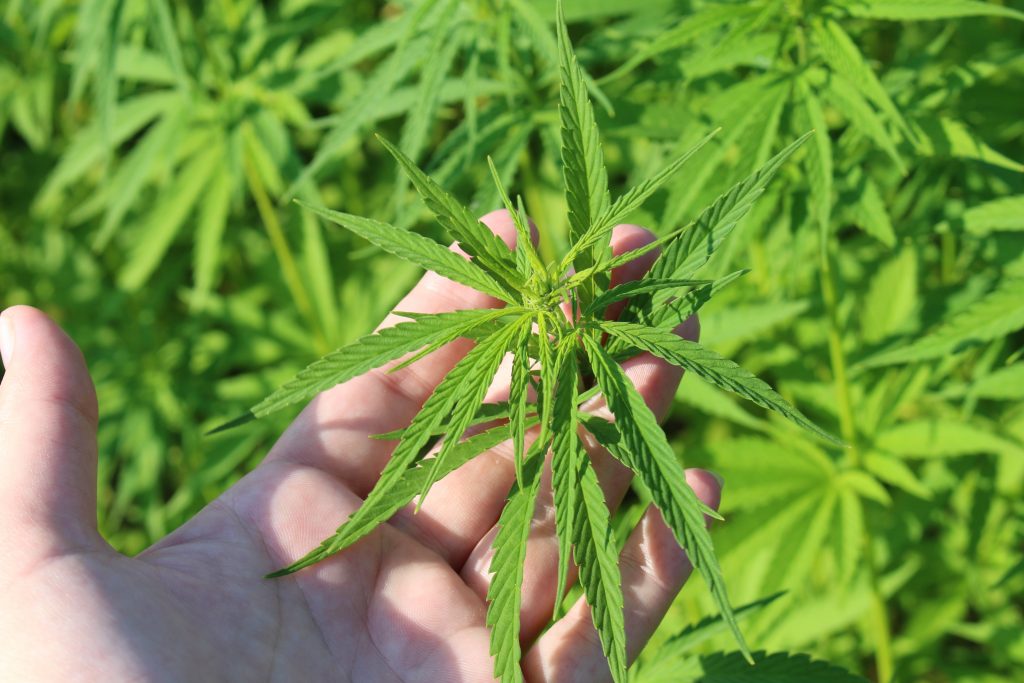
The UF/IFAS Industrial Hemp Pilot Program is launching a virtual workshop with research and program updates, available online beginning Jan. 11 for $40. The workshop consists of a collection of pre-recorded lectures and prepared documents available for on-demand viewing.
In addition to the virtual delivery, there are opportunities to engage with experts from UF/IFAS.
As the two-year pilot project ends and phases into the established research program, UF/IFAS faculty will share research outcomes, on-farm trial updates and more.
Sessions include:
From Pilot Project to Program, Zack Brym, assistant professor of agroecology, UF/IFAS Tropical Research and Education Center (TREC).
UF/IFAS Hemp Pilot Project Cultivar Approval Program, Jerry Fankhauser, assistant director of the UF/IFAS Florida Agricultural Experiment Station.
On-farm trial updates, featuring the UF/IFAS Hemp Extension Team.
Hemp physiology and management updates, featuring faculty from UF/IFAS Mid-Florida Research and Education Center and several graduate student researchers
Invasion risk updates, Susan Canavan, post-doctoral researcher and Luke Flory, associate professor, UF/IFAS agronomy.
Pest and disease updates, featuring Johan Desaeger, assistant professor of entomology and nematology, UF/IFAS Gulf Coast Research and Education Center and new website resources.
Insights into Building a Hemp Industry in Florida, Trent Blare, assistant professor of food and resource economics and statewide Extension specialist at the UF/IFAS TREC.
One agricultural lobbyist believes next Tuesday’s hearing with the International Trade Commission (ITC) regarding blueberry imports is a “story of David and Goliath.”
Bob Redding, who works for the Redding Firm and serves as a lobbyist for agricultural groups in Washington, D.C., believes the American Blueberry Growers Alliance (ABGA) has a strong case to make to the ITC against the imports of blueberries from other countries, including Mexico. But cases will also be made from groups who oppose ABGA’s position.
Redding Comments
Redding
“Once the administration initiated with the ITC the Section 201 investigation, most of these blueberry countries that are blueberry exporters that have been saturating the markets during our growing season, our marketing season, they hired attorneys here and formed organizations. At least one new organization was formed to stop the 201 or to influence the 201 fight or advocate against the position of U.S. blueberry growers,” Redding said.
“It is a story of David and Goliath. I don’t know any other way to put it. The U.S. growers have been impacted negatively. It’s become increasingly problematic as far as marketing and selling at a fair price that would allow these growers to make a profit. They don’t see how over the long run that they survive selling below what their cost of production is.”
Final Decision Rests with the President
Redding also cautions Southeast producers that the final decision will rest with President-Elect Joe Biden and his administration. He will make a decision based on the recommendations from the ITC.
“We do not know their position on this. I’m sure they don’t have one yet. We have a new U.S. Trade Representative. Ambassador (Robert) Lighthizer initiated this and the administration with the ITC. We know how they felt about it,” Redding said. “We will have a confirmation process in the Senate for the new U.S. Trade Rep. Soon thereafter, we’ll start talking with the political folks in the new administration about this issue. I would think that nomination would move through prior to this case finishing up with the ITC.”
Hearing is Necessary
From a blueberry producer’s standpoint, Tuesday’s hearing is necessary because of the disruption in the marketplace from foreign imports.
According to the American Blueberry Growers Alliance, the U.S. Department of Agriculture Marketing Service reported a 68% increase in imported fruit from Mexico from 2019 to 2020, amounting to more than 15 million pounds of fresh blueberries during a 14-week period. Mexico, along with Peru, Chile, Canada and Argentina account for more than 98% of total U.S. imports. Import values increased from $530 million in 2014 to $1.2 billion in 2019.
This drastically impacts the market for producers in blueberry-producing states, including Georgia and Florida.
ABGA’s Position
The ABGA’s position is that American blueberry producers need protection from rising imports from foreign markets, especially during the U.S. growing and harvest season.
“The numbers are very frightening. They just can’t continue to operate with the market being flooded like this. It just doesn’t work,” Redding said. “You look at the compliance variables that U.S. growers have to adhere to, wage rates. If you’re H-2A, you know what those rates are in the Southeast. That is an expensive program, expensive from an administrative position, running those programs and expensive from a wage rate and housing and all that’s being provided; transportation. These countries don’t have to do that.”
American producers also have to contend with environmental variables and food safety variables; much higher standards than the countries exporting to U.S.
“It’s about fairness. It’s about a level playing field. If our growers had the same variables, our growers know they can compete with these countries. But we’re dealing with a different set of rules. They don’t play by the same rules we do,” Redding said.
Photo by Clint Thompson/Shows Madeline Dowling, a Clemson student, makes a presentation about the MyIPM App.
This year’s virtual Southeast Regional Fruit and Vegetable Conference ends today with hopes of returning to an in-person format in 2022.
Charles Hall, Executive Director of the Georgia Fruit and Vegetable Growers Association, believes the educational sessions that were offered over the course of the three-day event are invaluable for producers this year and moving forward in upcoming growing seasons. More importantly, those educational sessions will be available for viewing even after the conference concludes.
“One of the keys of the Southeast Regional Conference is education. We still had over 100 hours of education that is being offered. The good thing about it is that education continues until April 30. If people missed a class, they want to go back and listen to that instruction again, it’s going to be there on the (virtual) platform,” Hall said.
“People can go back if they’ve registered for the conference, or if they wanted to register after the conference. Somebody that didn’t get to be on the conference this week, they can still register and go back and have the livestreaming of those sessions.”
This week’s conference was changed to a virtual format amid COVID-19 concerns.
Blueberry growers will soon have a chance to make their case against unfair trade practices from Mexico and other countries.
Jerome Crosby, Georgia blueberry grower and chairman of the American Blueberry Growers Alliance, confirmed on Tuesday during the Southeast Regional Fruit and Vegetable Conference that the group will present their case to the International Trade Commission (ITC) on Tuesday, Jan. 12.
“On Jan. 12, we will be providing physical testimony to the ITC Committee. All parties of leadership will be at the table. We will be speaking directly to the commissioners. We will be presenting our cases and our comments. Those of us who are making comments, we will be putting those comments in under a signed affidavit. This is where the rubber meets the road,” Crosby said.
Crosby said the blueberry group will have 60 minutes to make its case on Jan. 12, which will include testimony from legislative delegation from all states and featured speakers, including Crosby and Brittany Lee, Executive Director of the Florida Blueberry Growers Association.
However, Crosby also cautions that groups who oppose the 201 investigation will have the same amount of time to present their cases. So, it is not a slam dunk that the ITC will issue a remedy.
“It’s going to be one hour of us versus maybe five, six or seven hours of opposition. I still feel good about our case because the data and the facts are on our side. We’ve got good numbers. We’ve got a good team working with us. We’re doing all the right things,” Crosby said. “But to say it’s not a little bit intimidating would be misleading you. We’ve got a big mountain to climb.”
Crosby added that after the Jan. 12 meeting, the ITC will have 30 days to file a report.
Virtual Hearings
The meeting with the ITC stems from virtual hearings held last August. The two hearings provided the U.S. Department of Commerce and Trump Administration an opportunity to hear from seasonal produce growers in Georgia and Florida about the urgent need for federal action regarding unfair trade.
Southeast Regional Fruit and Vegetable Conference
The conference, which is normally held in January in Savannah, is being held virtually this year due to COVID-19 concerns. The three-day event will be held through Thursday, Jan. 7.
For more information, or to register for the event, click here.