The American Blueberry Growers Alliance’s (ABGA) stance on imports has not changed over the years: serious injury has been inflicted on American farmers, especially those in Florida and Georgia.
But where does President Biden stand on this issue? That’s the stance that will ultimately decide the Section 201 investigation regarding blueberry imports. Even if the International Trade Commission (ITC) decides in the ABGA’s favor with its vote on Thursday, the final decision rests with Biden and his administration.
“When people asked me about this from the get-go, I felt like we’re going to win in the ITC, but does the president sign it or not? That’s a 50-50 coin flip maybe, I don’t know. People smarter than me can figure that out,” said Ryan Atwood, who lives in Mount Dora, Florida and farms 56 acres of blueberries, manages another 350 acres and is part-owner of the largest packing house in the Southeast United States.
Virtual Hearing with ITC
The ITC’s decision on Thursday comes a month after ABGA members and industry and congressional leaders testified in a virtual hearing before the ITC about the negative impact blueberry imports from Mexico, Peru, Chile, Argentina and Canada have had on the domestic market.
If serious injury is found, the ITC will formulate a recommendation. But the president will make the final decision.
“The ultimate decision will come from the desk of the president. Regardless of what side of the aisle you sit on, we all like to eat. We all like to eat blueberries,” said Jerome Crosby, Georgia blueberry grower and chairman of the American Blueberry Growers Alliance. “Food is probably the most partisan issue in America when it comes down to it. No matter what walk of life you come from, you like to eat something. That makes the farmer a friend to every human being. I think anyone who fits that category of consuming food is going to have an interest in the American farmer staying in place.”
Photo submitted by Vance Whitaker/Shows Florida Medallion strawberries growing in a field.
The newest University of Florida-bred strawberry could become another option for growers looking to diversify their crop.
Vance Whitaker, strawberry breeder at the University of Florida Gulf Coast Research and Education Center, said the Florida Medallion is performing well and expects a substantial increase acreage next year.
“If it continues to perform well, we’ll see where it finds its niche with the current varieties; whether it’s a third of the industry, what proportion is really hard to say at this point,” Whitaker said. “It’s safe to say it’s performing well. We’ll definitely have a place for a couple of hundred acres of it next year.”
More Varieties the Better
The more strawberry varieties available for Florida producers the better. In just a couple of years, the industry moved from a Radiance-dominant industry to a Brilliance-dominant industry. Growers are quick to switch allegiances, depending on how successful the variety is on a commercial scale. Medallion provides producers another tool in the toolbox.
“It can move very fast. They need the best tools. If they find one that’s better than what they have, they’re going to replace it,” Whitaker said. “Ideally, they’d like to have at least three, hopefully four varieties that complement each other. Right now, we have two good varieties in Sensation and Brilliance that complement each other really well. I think the Medallion will slide in and hopefully become a good third option for them. They really want to diversify and spread their risks.”
Strawberry Traits
Finding the perfect strawberry is not an exact science. But there are qualities that make certain varieties stand out above the rest. Whitaker explains that early yield and flavor are the two most prominent traits farmers are looking to capitalize on.
“Early yield is obvious because of the timing of the market. It’s just critical. Then the flavor, it’s becoming more and more important in a competitive market,” Whitaker said. “Consumer’s expectations are going up for what their berries should taste like. I think that growers recognize that quality is the way that they can compete in a highly competitive international situation. If they can provide fresher, better tasting strawberries than Mexico can, then they can continue to compete well.
“People have to want to eat them, but you also have to have them at the right time.”
Sugarcane production forecasts are up 1% from last month and 13% from last year, according to the USDA National Agricultural Statistics Service. Production is projected at 36.0 million tons. Producers intend to harvest 948,800 acres for sugar and seed during the 2020 crop year, which is a 1% increase from the previous forecast and a 4% jump from last year. Yields for sugar and seed are expected to average 37.9 tons per acre, up 0.2 ton from last month and up 2.9 tons from 2019.
In Florida, expected production of sugarcane for sugar and seed is forecasted at 18.8 million tons, an increase of 3% from last month and a 6% jump from last year.
The American Blueberry Growers Alliance’s (ABGA) case has been made. The data supports its stance of serious injury regarding blueberry imports. It’s now up to the International Trade Committee (ITC) which will vote on Thursday to determine whether the domestic industry has been seriously injured.
“We feel like we presented a good case. The numbers do not lie,” said Jerome Crosby, Georgia blueberry grower and chairman of the American Blueberry Growers Alliance. “There’s a lot of people that have different opinions. I’m looking at the numbers and the pricing and the effects of what we see on the blueberry farmers. One of our strongest arguments is you’ve got to look at the net income of a blueberry farming operation. When you see the downward spiral we’ve experienced, then that is the sum total of the effects of the import markets. That is to us the defining factor.”
January Hearing
Thursday’s decision by the ITC will come a month after the ABGA and opposition groups testified during a virtual hearing regarding the impact of blueberry imports.
“Once they reach a decision, then we will move to the next step. If it’s affirmative, we’ll be into the remedy phase, and if it’s not affirmative, then there are other options we will be pursuing. We really won’t know until Thursday. It’s in their hands,” Crosby said.
Data Supports Their Case
Crosby and other blueberry growers who testified in January believe the data supports their claim of serious injury. Blueberry imports from countries like Mexico, Peru, Chile, Argentina and Canada have increased by 62% since 2015, according to the ABGA. The National Farmers Union submitted a letter to the ITC on Friday, Feb. 5, noting that growers’ operating returns fell 32.4% between 2015 and 2019.
Nikki Fried, Florida Ag Commissioner, testified during the January hearing. She stated that Florida has a $62.3 million blueberry industry, but its market share has declined by 38% since 2015. It has resulted in $67 million in lost potential production. She added that Mexico’s market share has increased by 2,100% since 2009.
Letters of Support
A coalition of industry groups, including the Florida Farm Bureau Federation, Georgia Farm Bureau and Georgia Fruit and Vegetable Growers Association, submitted letters to the ITC last week, spotlighting the consequences of blueberry imports.
“Not only do these imports threaten domestic businesses and livelihoods, they also expose U.S. consumers to products from countries with poor or inconsistent product safety records,” John Hoblick, president of the 136,000-member Florida Farm Bureau Federation, said in a ABGA press release.
Elected officials and state agricultural leaders are also in the ABGA’s corner. These include U.S. Sens. Debbie Stabenow (MI) and Gary Peters (MI). Both co-signed a letter of support that was submitted to the ITC on Feb. 3. Representatives and industry leaders also testified during the January hearing.
About the ABGA
According to its website, the American Blueberry Growers Alliance is a national association representing blueberry growers and farmers in the United States. ABGA provides a unified voice for blueberry growers in states across the country, including California, Florida, Georgia and Michigan. It advocates on behalf of their interests and for the long-term viability of the domestic blueberry industry.
It may be produced only in limited acreage this year, but the Florida Pearl strawberry is already a hot commodity. One of University of Florida (UF)/IFAS strawberry breeder Vance Whitaker’s newest releases is attracting attention from farmers due to its unique whiteish color and pineapple aroma.
UF photo shows white strawberries picked.
“There’s been a lot of media coverage of it. We’ve gotten a lot of calls from people wanting to figure out where they can get them. I would just say the sense from the response is that people are responding well to them,” Whitaker said. “The fact that growers are committing to grow and substantially increase their acreage next year tells me wherever they’re test-marketing them, they’re getting interest. They’re not interested in growing anything they don’t think they can sell.”
Also Known as Pineberry
Whitaker said the white strawberry is also known as the pineberry, since there is a hint of pineapple aroma sometimes when you bite into it. Pineberry is a name that’s been used for some white-fruited strawberries that have existed in small amounts over the years.
The white strawberry’s origin at UF dates to 2012 when strawberry seeds from Japan were sown at the University of Florida. A few small plants recovered. The plants’ pollen was crossed with a Florida variety, and the fruit’s seedlings ranged from white to pink to red.
Leveraging the Market
Whitaker said farmers are looking for a tool to leverage the market, something the other production regions don’t already have. The white strawberry qualifies.
“The 12 acres isn’t a lot, but early returns on the variety have been good. Grower commitments for next season are going way up as far as what they’re wanting to grow and market in the next year. I think it’s been really positive,” Whitaker said.
Photo taken by Jonathan Oliver/UGA: Shows bacterial wilt disease in a blueberry plant.
A blueberry disease that has impacted the Florida industry since 2016 was found in Georgia for the first time in 2020. While there is no cure for bacterial wilt, producers can apply preventative measures to slow down the disease’s progression.
“In Florida, they seem to be having increasing problems with it year after year, probably because the bacteria spreads so easily from farm to farm or even within a farm. It spreads by soil, water, anything that picks up soil or water can move the disease around,” said Jonathan Oliver, University of Georgia (UGA) assistant professor and small fruits pathologist.
Disease Background
Bacterial wilt was first identified in three separate locations in Florida in 2016. The disease was observed for the first time on Georgia blueberries last year at two locations in Clinch County.
Initial symptoms of the disease include marginal leaf necrosis, wilting and plant death, sometimes as quickly as three weeks after infection. Farmers need to be wary that symptoms can resemble bacterial leaf scorch or phytophthora root rot.
Certain Cultivars More Susceptible
Unfortunately, certain cultivars are more susceptible than others, including Arcadia, Indigocrisp and Keekrisp. Cultivars that are moderately susceptible include Emerald, Farthing and Meadowlark.
“It looks like based on what they’ve seen in Florida that certain cultivars have much bigger problems with it. Unfortunately, those are cultivars that are increasingly being grown in Florida and also in Georgia because they have other traits that are good,” Oliver said.
“The more we grow of those cultivars, we definitely will probably see more issues with bacteria wilt. But we may also see it just due to spread. We don’t really have a good handle on what it’s going to look like in Georgia. But in Florida, every year a few more farms are found. I think it’s fairly widespread in parts of Florida now.”
Management relies mainly on prevention; keeping the pathogen out or limiting the movement of infected plants, equipment and soil between farms. Infected plant materials need to be burned.
Less than ideal weather conditions this week severely impacted vegetables grown in the South Florida area. Sam Accursio, who’s harvesting green beans and yellow and green squash in Homestead, Florida area, confirmed damage to his crops following this week’s extreme wind speeds.
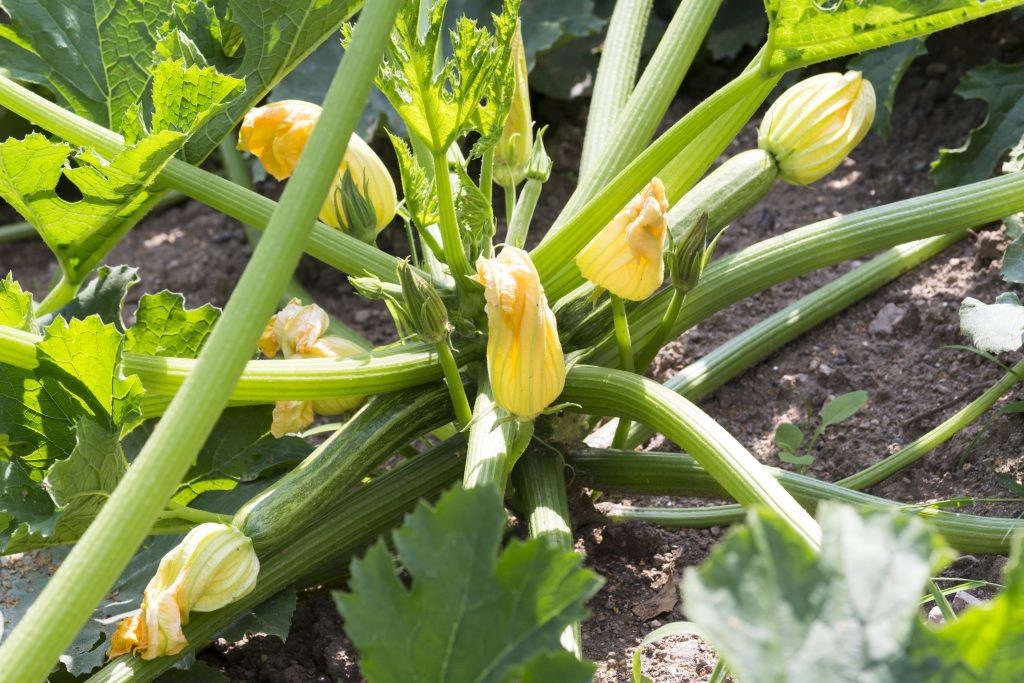
File photo shows squash. Squash, a crop produced in South Florida, was one of numerous crops impacted by high wind speeds this week.
“What we’ve had the last three days is 30 mile per hour winds,” said Accursio on Wednesday. “That’s what has really hurt us. It has burned the west side of the bean plant. The squash took it a little better, but the beans, the plant is burned.
“It’s just like me and you standing outside, and our faces will just get burned if we stand there long enough.”
Challenging Winter Weather
It continued a pattern of difficult weather conditions for South Floridians trying to produce a crop. Cooler than normal temperatures significantly slowed volumes of produce headed to the market, according to South Florida Pest and Disease Hotline.
The challenging weather conditions started in the fall with extreme rain events, including Hurricane Eta in early November.
“We’ve been behind on everything maturing,” Accursio added. “We have been unseasonably cool. This is the coolest we’ve been in 10 years for the last 45 days. It’s been crazy, because prior to that, the rain devastated us. We grew our crops in October, November and December with 30 inches of rain. When that finally stopped, we had beautiful weather in January, a little bit too cold but it was beautiful; not a drop of water.
“We have some outstanding crops, but now, this three days of wind, it has just devastated the actual squash; not the plant. The plant took it better. But with the beans, the plants took it worse and the beans still look pretty. It’s kind of opposite.”
Accursio said they still harvested the damaged fruit but either had to throw it away or package as a No. 3 for food service.
South Florida producers can take solace in knowing calmer and sunnier days are ahead.
“We are going to see 80 degrees by the weekend here. We’ll get things growing again pretty quick,” he added.
JASPER, Fla. — Green Point Research, an international phytocannabinoid-rich biomass originator and processor, celebrated the official opening of its Hamilton County headquarters and 32-acre Cannabis Center of Excellence (CCoE) with a ribbon-cutting event held in partnership with Hamilton County Board of Commissioners and Hamilton County Economic Development Authority (EDA), and North Florida Economic Development Partnership.
The event came just several weeks after the company announced its purchase of the property, located in an Opportunity Zone in an economic development agreement with the county.
David Hasenauer welcomed attendees and shared his vision for the future of the campus location that he expects will be a Southeast hub for innovation, sustainable agriculture and economic prosperity. Guest speakers included Deborah Tannenbaum, Florida’s Deputy Commissioner of Agriculture; Holly Bell, Florida Department of Agriculture and Consumer Services (FDACS) Director of Cannabis; Randy Ogburn, Hamilton County Board of Commissioners Chairman; and Chadd Mathis, Hamilton County Economic Development Authority Executive Director.
The campus is already serving as a logistics and drying hub for the company. In December 2020, more than 150,000 pounds of hemp biomass were shipped out of the facility to customers across the Southeast, primarily in Florida. The company’s hemp dryer has also been installed at the facility and provides unique large-scale capacity with its ability to dry greater than four input tons of hemp her hour. Extraction and laboratory equipment is being installed this week that will allow the company to extract and process cannabidiol (CBD), and other refined cannabinoid products.
“Our goal has always been to serve farmers by providing them with the hemp services they need to be successful,” said David Hasenauer, Green Point CEO. “The newly-installed dryer and infrastructure additions will help provide farmers with the scale, accessibility, and expertise needed to more productively and profitably farm hemp. We could not be more pleased to be Cultivating A Better Future in Hamilton County, one of the top producing agriculture counties in the country.”
“Florida’s reputation as an agricultural and economic powerhouse is driven by its superior environmental conditions such as abundant sunlight and rich soil, and a culture of growth and innovation, as demonstrated by this facility,” said Deborah Tannenbaum, Florida Deputy Commissioner of Agriculture. “Congratulations to Green Point Research and Hamilton County on the significant progress with this facility and for the agriculture industry.”
Florida’s Director of Cannabis, Holly Bell, provided context on the growth of the hemp industry and the opportunity that exists for the county.
“Florida has over 23,000 acres approved for cultivation, yet in 2020, only 293 acres were planted,” Bell stated. “Over a third of the acres successfully planted in the state in 2020 were in Hamilton County with Green Point Research and local farms. Hamilton County has demonstrated its capacity for agriculture excellence, and we look forward to continued progress with Green Point’s newly expanded capabilities.”
“Hamilton County’s friendly business climate and superior environmental conditions make it an ideal location for agriculture activity,” said Randy Ogburn, Hamilton County Board of Commissions Chair. “We are very excited to see the progress Green Point Research has already made in its infrastructure and facility build out.”
“We continue to be impressed with David Hasenauer’s vision for Green Point Research and the impact the company will bring to our region,” said Chadd Mathis, Hamilton County Economic Development Authority Executive Director. “As a result of this investment, we expect the agriculture and manufacturing interest in this area will continue for decades to come.”
The company successfully yielded two hemp harvests last year, including one that was deemed the largest legal hemp harvest in the state’s history. Green Point is gearing up for a busy hemp planting season this spring as many farmers will be looking for expertise and services as they prepare to expand current hemp farming acreage or add hemp to their existing crop rotations.
Green Point Research (GPR) is a vertically integrated hemp phytocannabinoid-rich biomass originator and processor founded in 2016. GPR controls its supply chain from seed to processing bulk cannabinoids for business-to-business sale. Satividol, a cannabidiol (CBD) softgel, is among the products the company produces. Contact Green Point Research at 954-500-HEMP to learn more about the Green Point Method® and how to purchase seeds, seed starts, and clones. For more information, please visit www.greenpointresearch.com.
Additional coverage provided by Riverbend News and others.
About Green Point Research
Green Point Research (GPR) is a vertically integrated hemp phytocannabinoid-rich biomass originator and processor founded in 2016. GPR controls its supply chain from seed to processing bulk cannabinoids for business to business sale. Satividol, a cannabidiol (CBD) softgel, is among the products the company produces. Contact Green Point Research at 954-500-HEMP to learn more about the Green Point Method and how to purchase seeds, seed starts, and clones. For more information, please visit www.greenpointresearch.com.
Citrus greening remains a focal point of research at the University of Florida/IFAS. Florida’s citrus producers are counting on research to help sustain what’s left of an industry decimated by Huanglongbing (also known as HLB or citrus greening).
Photo taken by UF/IFAS shows the small size-effect HLB can have on citrus.
Scott Angle, Vice President for Agriculture and Natural Resources at the UF/IFAS, understands the ramifications if improved management options aren’t available soon.
“Citrus greening has obviously devastated the industry in this state. We’re down to less than half of production. That’s despite having spent almost a billion dollars on this disease. To me, it’s hard to imagine, we spend a billion dollars, and we can’t solve a problem,” Angle said.
“It is so complex that it’s just been hard to find those tools that will allow us to manage the disease better. At this point, I don’t even know that we’re looking for a cure. We’re just looking to try to manage the citrus trees in a way that they can hang on longer. So when we do find that cure, that silver bullet that’s not obvious to us at this point; then we can keep those farmers in business.”
Disease Background
Click here for more information about the disease that is transmitted by the Asian citrus psyllid. Symptoms include asymmetrical yellowing of leaves and leaf veins. Later symptoms include twig dieback and decreased fruit production. What fruit a tree produces is often small, lopsided and unmarketable. Fruit will also drop prematurely from infected trees.
Examining the Problem at All Angles
UF/IFAS is examining the problem from multiple angles.
Led by Claudio Gonzalez, a UF/IFAS microbiology and cell science professor, a team of plant pathologists, horticulturists and citrus breeders have identified new management tactics that have slowed the spread of the bacterium.
Ute Albrecht, Ramdas Kanissery and Sarah Strauss, assistant professors at the UF/IFAS Southwest Florida Research and Education Center, are collaborating with University of California-Riverside on a $10 million grant to examine root decline associated with trees infected with citrus greening.
In another research focused on HLB, Lorenzo Rossi, an assistant professor at the UF/IFAS Indian River Research and Education Center (IRREC), and Jawwad Quershi, an assistant professor at UF/IFAS SWFREC, will collaborate with the U.S. Department of Agriculture Agricultural Research Service on a grant to examine different ways to deliver therapeutic growing methods to citrus growers.
“We’re going to continue to help citrus farmers stay in business until we can find longer term cures for this. We’ve got all kinds of things we’re looking at; proteins we might spray in the tree that might interact with the psyllid that can spread the organism. We’ve got other people looking at breeding efforts to try to find rootstocks that might be a little more resistant to it,” Angle said. “Then we’re especially looking at nutrition and irrigation as ways to help keep these plants alive for just a little longer, hoping for that day when the cure is here.”
Cool temperatures and wet conditions are impacting South Florida’s vegetable production. According to the South Florida Pest and Disease Hotline, yields are way below normal. As a result, prices have been good for various crops.
The most recent U.S. Drought Monitor shows South Florida is in good shape with having sufficient rainfall this winter.
“Volumes have been light with yields of many items 30% to 50% of normal or less,” the hotline reported.
South Florida vegetable production has numerous crops coming to market. These include celery, cucumbers, green beans, peppers, squash, sweet corn, tomatoes and watermelons.
According to weather.com, warmer temperatures and drier conditions are expected later this week, with high temperatures in Belle Glade, Florida expected at 82 degrees Fahrenheit on Friday.
South Florida has received sufficient rainfall this winter. According to the US Drought Monitor, the only areas of the state listed as abnormally dry include a portion of north-central Florida. It extends as far south as Orange County, Florida to as far north as Columbia County; along with areas in the Panhandle and on the Georgia-Florida line.