Category: Florida

  • $15 Minimum Wage? Potential Increase Would Impact Southeast Producers

    Image source: The Pajaronian

    The Biden Administration’s push for a $15 minimum wage would have significant ramifications for farmers who utilize the H-2A program.

    Veronica Nigh, economist with American Farm Bureau, discusses the financial impact a higher minimum wage would have on Southeast vegetable and specialty crop producers.

    “The H-2A program stipulates you have to pay the highest wage of (either) the state minimum wage, the federal minimum wage, the AEWR (Adverse Effect Wage Rate) or the prevailing wage, which is something that we see more often in the northwest corner of the U.S. If we were to see a federal minimum wage go to $15 per hour, currently the H-2A (rate) in the southeast is $11.81 and in Florida it’s $12.08; if you had to pay the higher of AEWR or the federal minimum wage, it’s going to go up,” Nigh said.

    Trickle-Down Effect

    An increased minimum wage would have a trickle-down effect on a farmer’s workforce.

    “If you’re paying your minimum wage employees a higher rate then all other wages for anyone more skilled than that are also going to go up. There is a concern that increasing minimum wage would be an inflation rate for all wages,” Nigh said. “It’s not unconnected to other wages.”

    Other Requirements

    This does not even consider producers’ other requirements. These include housing, transportation and meals that they must account for when utilizing the program.

    Florida has already approved legislation that would increase its minimum wage to $15. But that threshold won’t be met until 2026.

    What remains in question is whether the legislation regarding a $15 federal minimum wage will be passed at all? And in how quick of a timeframe?

    “Look back 10 years ago. The AEWR in 2012 was $9.39 in Alabama. Today, it’s $11.81. Over that 10-year period, it went up $2.42, which would be less than what it would go up if the minimum wage would go up to $15,” Nigh said. “If an increase in the minimum wage would be put forward, how quickly it would go into effect and reach its full level is really important. Currently, federal minimum wage is $7.25. If that were to go up to $15, it’s obviously more than twice as much what it is now. How many years it takes to phase that in would be important.”

    H-2A workers just received a bump in pay for the upcoming production season.

  • Asian Bean Thrips: Insect Infestations Increasing in South Florida

    South Florida continues to be a hot spot for Asian bean thrips (ABT). According to UF/IFAS, the insect that feeds on wild cowpea is increasing across the region. Charlotte County is the latest county in which the ABT has been identified.

    UF/IFAS photo.

    Populations have also been observed in West Palm Beach.

    Other species of thrips have increased as well. Multiple farms have thrips of other species. However, it’s ABT that seems to be the prevailing problem for many producers.

    “One scout noted that after a swarm of thrips moved into blooming plants, the grower sprayed and only ABT was left. This highlights the potential difficulty of managing ABT after the budding stage,” according to this week’s UF/IFAS scouting report.

    Click here for management recommendations.

    Prevention is an important foundation of an Integrated Pest Management program. These measures include cultural control, such as sanitation, utilizing resistant varieties and establishing crop free periods. One aspect of preventative measures that must be taken by growers to sufficiently reduce populations of an insect pest is eliminating its alternate hosts.

  • Wage Increase: H-2A Workers Receiving Bump in Hourly Rate

    usmca
    Workers pick potatoes in this 2019 photo.

    Southeast producers who utilize the H-2A program finally know what the minimum wage is they must pay in 2021. The USDA Farm Labor Survey revealed that wage rates for H-2A labor are increasing at an average rate of 4.5% or $0.63 per hour across the country. For the Southeast, though, those levels are much lower.

    Florida’s wages will increase by 3.2% from 2020 to 2021. Georgia and Alabama will go up by just 0.9%.

    “I think growers, no matter what part of the country you’re from, when you say on a day-to-day basis, what’s one of your biggest concerns, it’s finding labor,” said Veronica Nigh, economist with American Farm Bureau. “That’s been the case for several years. I think the fact that we keep seeing the wage rate go up is indicative of that strong demand for farm labor.”

    The average H-2A wage rate for Florida is $12.08 per hour. The rate is $11.81 for Georgia and Alabama. The rates are much lower than states like California ($16.05), Oregon ($16.34), Washington ($16.34) and Texas ($13.03). According to American Farm Bureau, the average wage rate for field and livestock workers was $14.62 in 2020, an increase of 4.5% from $13.99 in 2019.

    “When you need hands, you need hands. If you can squeeze out the money from the budget then that’s what folks seem to be doing. Overall, nationally, we’re up about 4.5% this year compared to last,” Nigh said. “In the Southeast, that wasn’t as big of an increase; only a 10 cents per hour increase, which is a little less than 1%. That’s good from a grower’s perspective for sure. Still, getting at around $12 per hour is still quite a hefty wage rate to be paying.”

    Expensive Five-Year Increase

    While the wage increase is relatively small for states in the Southeast, a look at the past five years paints a different picture. From 2016 to 2021, Georgia and Alabama have experienced an 11% hike in the wage rate, while Florida has increased 9%, according to the USDA Farm Labor Survey.

    Nigh said in August that Florida was the largest user of the program during the year’s first three quarters with 28,005 certified positions. Georgia had listed more than 23,000 certified positions.

    “Lets say conservatively 1.5 million workers are needed per year and we’re looking at 275,000 positions were certified in 2020. That’s only 18% of the workforce,” Nigh said. “You look at long-term trends and the number of workers that are employed in agriculture, it’s been somewhere between 1.5 and 2 million workers, despite the fact that we’ve seen quite a bit of mechanization over the last couple of decades. If H-2A is only less than 20% of the workforce right now, one would assume we’re just going to keep seeing that (rate) go up and up.”

  • Supersweet Success: UF Scientists Sequence Genome of Sweet Corn

    By Brad Buck/UF

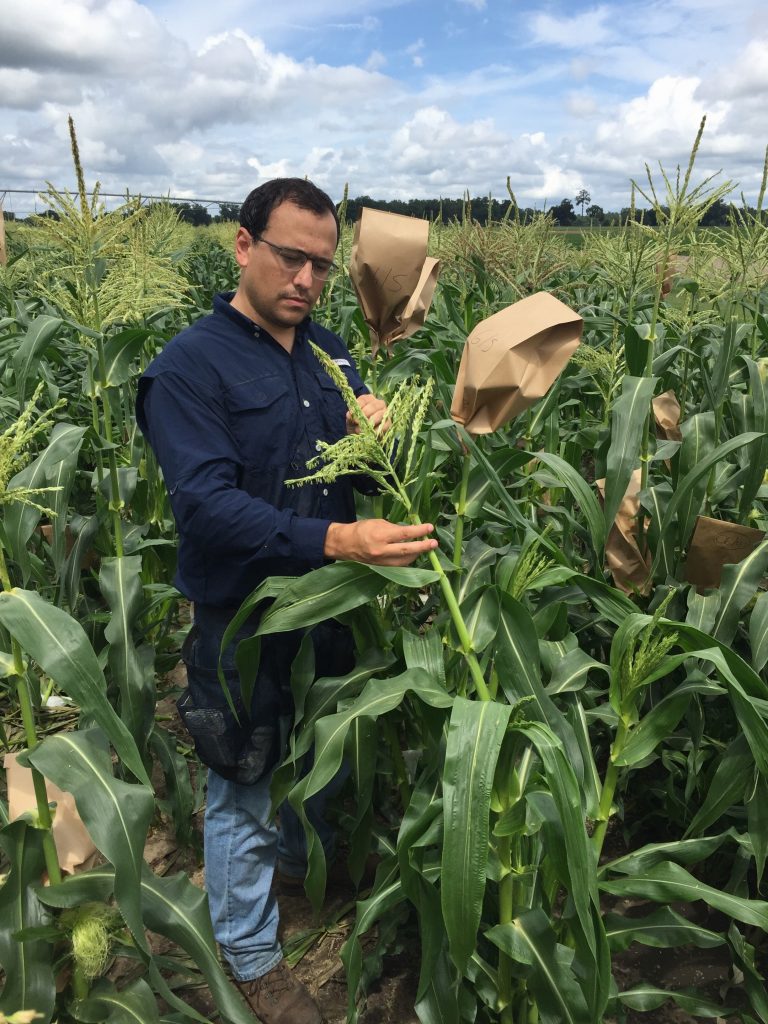
    University of Florida (UF)/IFAS research has yielded supersweet results that should lead to better sweet corn varieties for producers.

    scientists
    Marcio Resende
    UF/IFAS Assistant Professor of Horticultural Sciences
    UF/IFAS Photo 07.31.18

    Now, a University of Florida scientist is laying the genetic groundwork for better sweet corn varieties. Marcio Resende, a UF/IFAS sweet corn breeder, led a research team that sequenced the genome of a type of supersweet corn.

    Resende said scientists can use this information to improve the breeding methods.

    “This is expected to translate into better varieties for farmers and consumers,” said Resende, a UF/IFAS assistant professor of horticultural sciences.

    For the study, published in Nature Communications, Resende chose a variety that represents the foundation of supersweet corn in the United States.

    He and his colleagues used several technologies to reconstruct the sweet corn genome. By using these techniques, the scientists learned the exact structure of the natural mutation of the gene that creates supersweet corn, and therefore higher sugar content.

    “We were now able to sequence the genome of a supersweet corn, which will help us to accelerate the development process of novel varieties,” Resende said. “Moving forward, we will analyze the DNA of our current breeding lines and compare them against this genome to select which ones to move forward in the breeding process.”

    For full story, see the UF/IFAS website.

  • Defeating Disease: What Can be Done About Neopestalotiopsis Fruit Rot?

    Photo by Natalia Peres/UF: Shows the effect of Neopestalotiopsis Fruit Rot on strawberries.

    Neopestalotiopsis Fruit Rot has emerged as a significant disease of Florida strawberry production. Instances have increased over the last three years, to the point this year the disease was discovered in fields that had it the prior season.

    But what can producers do to manage this destructive disease? Natalia Peres, a Professor of Plant Pathology at the University of Florida/IFAS Gulf Coast Research and Education Center, offered a few suggestions during the Gulf Coast Research and Education Center Field Day, to growers who are struggling with the disease year after year.

    “Avoid harvesting and moving equipment through the fields when the plants are wet. That’s one of the ways the pathogen can move in the fields. I realize it is much easier to do early in the season when you don’t have a lot of fruit than once we get into the peak, which is coming soon,” Peres said.

    Other Suggestions

    Peres also advises producers to rotate fungicides that are found to be effective during periods of favorable conditions. Farmers also need to start planning strategies for crop inoculum termination and removal.

    “I do suspect that a lot of the inoculum is surviving in the crop residue that we are incorporating in our fields,” Peres said.

    Producers also have a better chance to manage the disease if they start with clean transplants.

    “We do need to continue to work with our nurseries so the ones that don’t have it can stay clean,” Peres said.

    Disease Instances Increasing

    The disease was first discovered during the 2018-19 season in five farms and was attributed to one nursery source in North Carolina. More than 20 farms experienced the disease during the 2019-20 season, and the disease was attributed to two nursery sources early in the season in North Carolina and Canada. More than 20 farms had the disease this year.

    Disease Symptoms

    Neopestalotiopsis causes leaf spots on strawberry plants. It develops quickly and produces spores on the leaves. It can cause severe leaf spotting and fruit rot under favorable weather conditions.

    Unfortunately, it can be hard to detect because of other similar leaf spot diseases that growers must contend with like leaf scorch, leaf blotch and Cercospora leaf spot.

  • Competitive Disadvantage: Why are Mexican Imports Increasing?

    Statistics show that fruit and vegetable imports have increased dramatically from Mexico in recent years. But why? University of Florida Associate Professor Zhengfei Guan explains why imports have gone up significantly over the last decade.

    Guan

    Mexico and Florida are in the same market window. They are direct competitors for such commodities as tomatoes, peppers, berries, cucumbers and squash.

    Reasons Why Imports are Surging

    It is due mainly to three main reasons: the depreciation of the peso, gaps in labor costs and Mexican subsidies.

    “When NAFTA took effect in 1994, one peso was 30 cents in U.S. dollars. But now in 2021, it’s less than five cents. Just look at the last 10 years, since 2011, the peso has lost 40% of its value. That makes Mexican products cheaper and more competitive,” Guan said.

    It is also well documented of the large gaps in labor costs between Mexico and the U.S.

    “Mexican minimum wage is less than one dollar per hour. But Florida minimum wage was over $8 per hour. Now, it’s getting to $15 per hour because of the new mandate,” he added.

    Government Subsidies

    The Mexican government also subsidizes its fruit and vegetable industry. From 2006 to 2016, the average annual budget for subsidies was 59.2 billion pesos or $4.5 billion dollars. Protected agriculture is one of the subsidy programs. The government subsidizes 50% of the costs of protected structures like macro-tunnels, shade houses, anti-hail mesh and greenhouses. In 2019, growers could get 4 million pesos or $200,000 per project.

    “With generous support from the government, protected agriculture has been the fastest growing sector in Mexican agriculture and now has about 130,000 acres,” he added.

    Approximately 95% of the protected acreage is for fruits and vegetables, with tomato being the largest crop in protected agriculture. It encompasses almost 40,000 acres in protected acres, compared to Florida’s total tomato production area of nearly 30,000 (almost all open fields).

    Protected agriculture allows Mexican farmers to produce crops with higher yields, better quality, improved market access, higher prices, better pest control and reduced risk.

    For example, Mexican-protected tomatoes yield about 130,000 pounds per acre, compared to Florida’s 30,000 pounds in an open field setting.

    Not many remedies exist for producers who hope to compete long term. One potential fix is with mechanization and automation.

    “The long-term solution for the industry is mechanization or automation. I would like to see a farm bill special funded program for mechanization or labor-saving technology. That is the future of the specialty crop industry,” Guan added.

  • Long Wait: Solution for Citrus Greening Will Take Years

    It may not be the news Florida citrus growers want to hear but it’s the reality of citrus greening. It is likely to be several years before a remedy is found and put in place to combat this destructive disease.

    Fred Gmitter

    Fred Gmitter, a University of Florida Professor in Horticultural Sciences, shared his assessment during a recent American Seed Trade Association webinar.

    “We learn a lot more every day that goes by. There are labs all around the world looking at different kinds of solutions for citrus greening,” Gmitter said. “Very recently there’s been talk about a peptide that’s produced by a kind of citrus called Microcitrus that seems to be able to kill the bacteria. It’s being tested right now and if it turns out to be reality, we may have a solution within the next two years.”

    Work with Peptides

    He warns, though, that researchers have worked with peptides over the last 15 years. Some that looked good in the beginning eventually failed. Gmitter doesn’t know if that will be the case with this latest potential solution, however.

    According to the UF/IFAS, citrus greening, or Huanglongbing (HLB) is a disease affecting citrus production throughout the world. The Asian citrus psyllid, which is found throughout Florida, transmits the bacterium Candidatus Liberibacter asiaticus. It causes HLB.

    Gene Editing

    Gene editing could also lead to a remedy.

    “It’s very likely that we’re going to find a gene editing solution within the next two to three years. That sounds like a long time. But citrus trees are difficult to work with. It’s a long process,” Gmitter said. “The bottlenecks are, once we find something and we test it in the lab and we test it in the greenhouse, again we have to go to the field and do some long-term field testing to confirm that it’s going to be durable; to confirm that we haven’t created any other changes in the performance of the plant that might be deleterious.

    “Assuming all of that goes as quickly as possible, we then need to look at ramping up the supply of plant material because we’re not collecting citrus seeds and planting them in the field and seeing a tree six weeks later like we would with a vegetable crop.”

    Between finding a solution in the lab, testing in groves, producing it in nurseries and getting the finished product to producers, a remedy for producers won’t be coming anytime soon.

    “Citrus trees unlike watermelon and pepper are in the ground for decades and not for a couple of weeks. We really need something that’s robust and long term,” Gmitter said. “This is a long, long haul for us in the world of citrus.”

  • Additional Despair: USITC Blueberry Verdict a Sign for Vegetable Producers?

    The U.S. International Trade Commission’s (USITC) decision regarding blueberry imports dealt a disheartening and devastating blow to Southeast producers claiming serious injury to the domestic industry.

    But does the verdict foreshadow additional despair for vegetable farmers who are also claiming imports have hurt their respective commodities; namely, squash, peppers and cucumbers?

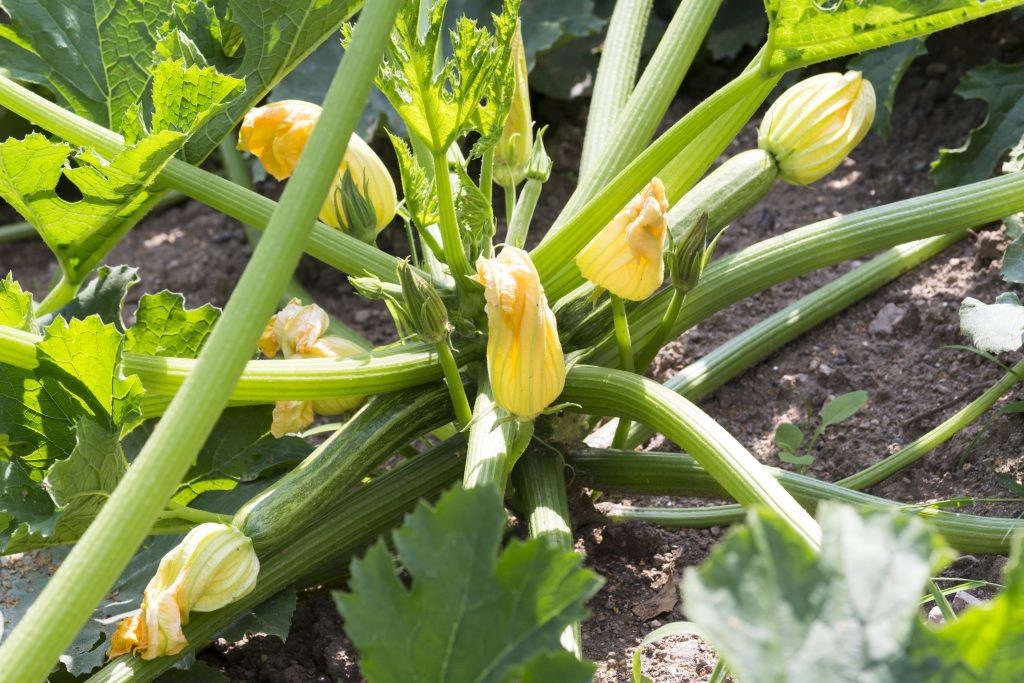
    File photo shows a squash plant.

    “There is concern. Each case is kind of held on its own. As I understand it, they look at the evidence presented and judgements are made at that point,” said Charles Hall, executive director of the Georgia Fruit and Vegetable Growers Association.

    “We felt like blueberries did have a very strong case and very strong data. We’re trying to evaluate how the others will be handled. It’s concerning but not discouraging.”

    Last Week’s Verdict

    The USITC voted unanimously last Thursday that imports of fresh, chilled or frozen blueberries are not a serious injury to the domestic industry. The decision was made despite staggering statistical evidence of how the rise of imports in previous years has driven down prices for such growers in Florida and Georgia.

    Additional Investigations

    The USITC is currently seeking input for two additional investigations regarding the impact of imported cucumbers and squashes on the U.S. seasonal markets. The U.S. Trade Representative (USTR) requested the investigations in a letter. The USITC will hold a public virtual hearing regarding the investigations on April 8 at 9:30 a.m.

    The USITC has also agreed to monitor the imports of fresh or chilled strawberries and bell peppers. The USTR requested those investigations in a letter.

    While the commodities are not the same, the premise behind the investigations are similar: Imports are devastating the futures of Southeastern farmers. For cucumber, squash and bell pepper farmers, the main culprit is Mexico.

    “When you start looking at the nature of the imports, where blueberries had heavy imports from multiple countries like Canada, Mexico, Chile, Peru; our (vegetable) imports are primarily from Mexico. The ITC will have to look at all the various imports,” Hall added. “I’m assuming if you look at the percent of imports in peppers and squash and cucumbers, Mexico is going to be your largest importer whereas they were not as large of an importer with blueberries as some of the other countries.”

  • Point Made: Financial Impact of Imports of Fruits and Vegetables

    Southeast fruit and vegetable farmers have had a point all along. Imports of fruits and vegetables, which have long been the source of producers’ ire in recent years, have significantly impacted the domestic industry.

    Produce coming in from countries like Mexico, Chile and Peru have driven down prices and put producers’ futures at risk.

    Blueberries were the source of a recent Section 201 investigation by the International Trade Commission.

    It was the source of the recent Section 201 investigation by the U.S. International Trade Commission into blueberries where producers claimed serious injury to the domestic industry.

    Statistically Speaking

    According to the USDA Economic Research Service, recent statistics show how much imports have increased over the past several years, especially in 2020.

    Imports of fresh or frozen fruits totaled $15.2 million, up from $15.06 million in 2019. Imports of prepared or preserved fruits totaled $3.28 million, up from $3.07 million in 2019.

    Mexico was the top exporter of fresh or frozen fruits, followed by Chile and Peru.

    The financial impact is significant considering that in 2015, the imports of fresh or frozen fruits totaled $11.3 million.

    Imports of fresh or frozen vegetables totaled $12.72 million, up from $11.38 million in 2019. Imports of prepared or preserved vegetables totaled $3.8 million, up from $3.46 million in 2019.

    Mexico was the top exporter of fresh or frozen vegetables, followed by Canada and the UK.

    Again, when compared to 2015, the financial impact of imports has been staggering. Imports of fresh or frozen vegetables totaled $8.81 million in 2015.

  • Chill Out: New UF/IFAS Study Shows Why Strawberries Must Keep (Their) Cool

    File photo shows strawberries harvested and ready for transport.

    It is strawberry season in Florida. Odds are any strawberries eaten right now taste oh-so-sweet. Those strawberries consumers see at the grocery store should be shipped and stocked at the right temperature, says a University of Florida (UF) scientist; should being the operative word.

    To ensure the fruit is at peak form, you’re not supposed to break what’s referred to as the “cold chain,” says Jeff Brecht, a UF/IFAS horticultural sciences professor and Extension specialist.

    The cold chain refers to the food supply chain — from farms to supermarkets — and applies to products that need to be refrigerated. Trucks transport strawberries around the state and across the country, and ensure the product remain cold, Brecht said.

    “We tell strawberry shippers and handlers not to break the cold chain because if you allow strawberries to warm up, there’s no practical way to cool them back down,” Brecht said.

    When strawberries warm, they lose some of their sugars, vitamins and antioxidants and can bruise and decay more easily, scientists say.

    Some grocery stores prefer to display room-temperature strawberries, but those warmer temperatures will often result in strawberries that don’t last as long in consumers’ homes, Brecht said.

    For more information, see the UF/IFAS website.