Washington, DC — The Office of the United States Trade Representative (USTR), the United States Department of Agriculture (USDA), and the United States Department of Commerce will convene virtual hearings next month to discuss foreign trade policies that may be harming American growers of seasonal and perishable produce. At the hearings, officials from the federal agencies will hear from interested persons on how the Trump Administration can support these producers and redress any unfair harm.
The hearings, which were originally scheduled to take place in Florida and Georgia in April, will take place virtually in light of the ongoing pandemic caused by COVID-19. USTR will continue to evaluate additional opportunities to engage directly with stakeholders in Florida, Georgia, and elsewhere on this important issue.
The virtual hearings are scheduled for the following dates:
(1) August 13, 2020 at 9:00 a.m. EDT
(2) August 20, 2020 at 9:00 a.m. EDT
The Federal Register notice with instructions on how to submit requests to participate in the hearings and written materials can be viewed here.
NOTE: The hearings will be made public and viewable online, and further details about viewing the hearings will be provided ahead of the hearing dates. Full transcripts of the hearings will also be posted online after the hearings.
We are now exporting more fruit from the United States than we were last year. According to a story from Gary Crawford, we are also importing much less fruit.
Rift in Relations Between U.S. and China Leads to Unpredictability in Initial Agreement
The Phase One Trade Deal between the U.S. and China was supposed to bolster the agriculture industry. According to a prior Southeast AgNet story, China was to increase its purchases of agricultural products by $32 billion over the next two years.
But according to Adam Rabinowitz, Assistant Professor and Extension Economist at Auburn University, it appears China will not reach those goals. Add in the current rift between the two countries because of the ongoing coronavirus pandemic, U.S. farmers are left with more uncertainty regarding a major player in the global export market.
“There’s been some positive components from the Phase One Deal, just that it has opened the door for commodities to move back into China and even some new commodities that had not been moving in that direction before have started to. But it doesn’t appear that they’re going to meet the goals of Phase One from a dollar perspective. Without a Phase Two Deal, it does lead to a question I guess of what the long-term impacts will be,” Rabinowitz said. “From a grower’s perspective, it’s just more uncertainty. There’s difficult financial times to begin with, that we’ve seen over the last few years and then add on top of that, uncertainty in terms of markets; the impacts from natural events and health-related now; it adds that risk and adds to the questions of how do we ensure that we’re going to be able to survive for the next season.”
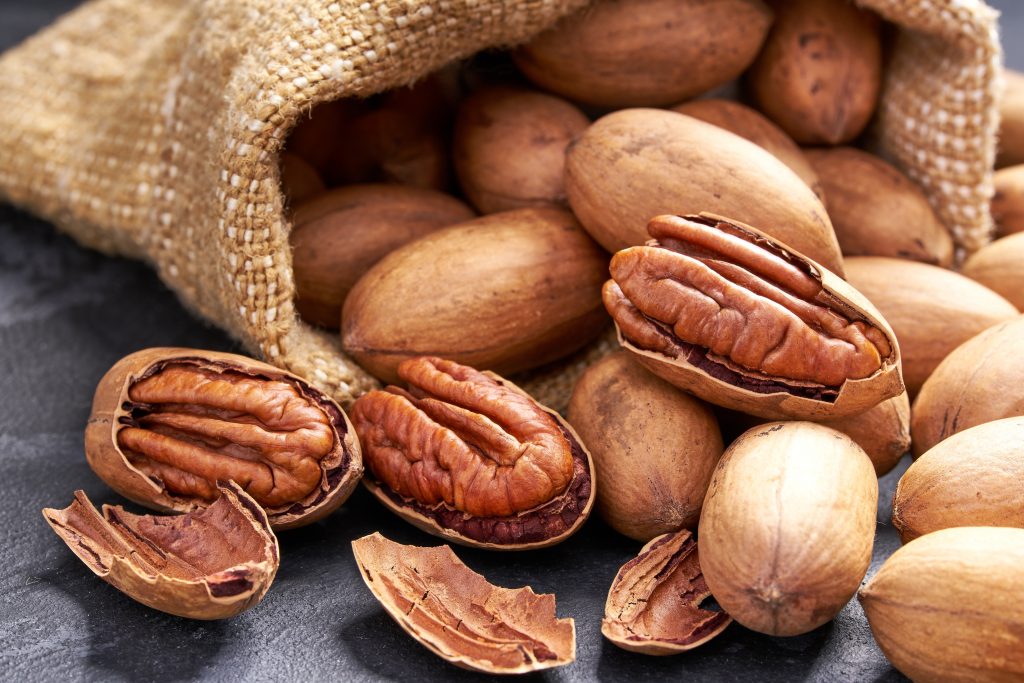
Georgia’s pecan industry is shaping up to have one of its most productive crops in recent years. But what that means for the industry come harvest time and how that will impact prices remains to be seen, according to South Georgia farmer Randy Hudson.
“We do feel like we have a really good crop. Now, what that actually means, I don’t know. In years past we’ve said a really good crop in Georgia was 100 million pounds. Last year, we thought we had a really good crop and we harvested significantly less than 100 million pounds, simply because of the amount of damage that Hurricane Michael had done (the year before) in regards to taking off fruiting limbs and trees,” said Hudson, who works with the American Pecan Council, serves on the Pecan Export Trade Committee and member of the Georgia Pecan Growers Association.
“When we harvested, we didn’t have quite the yield we thought we would make. We know we’ve got pecans on the trees but we really don’t know what the impact of all of the limbs that still have not grown back in trees that were lost from Hurricane Michael, what that impact’s going to be for the overall yield for the state as a whole.”
Scab Disease
Hudson said scab disease pressure is starting to become problematic in areas inundated with excess rainfall, like around Albany, Georgia in the southwestern part of the state and over in east Georgia around Blackshear, Georgia and Waycross, Georgia.
He added that areas of the mid-South are experiencing significant disease as well, particularly in Texas and Louisiana.
“I think in regard to where we stand as a nation, Georgia’s got a good crop. We don’t know exactly what that might mean. The nation as a whole has got a pretty good crop, but it does have some holes in some areas. I think it’s safe to say we probably have a really good, average crop,” Hudson said.
Prices?
So, the big question is what does an improved pecan crop this year mean for the financial market?
“I think the answer is not so much what goes on in the United States but what’s happening particularly in Mexico and in South Africa. Right now, there’s still inventory in Mexico. Mexico can produce pecans a lot cheaper than we can produce them in the United States. As a result, the growers are more willing to take a lower price,” Hudson said. “The currency values, which also enters in the pecan markets, particularly between the Mexican peso and the Chinese yuan, have also entered into a depression in our market. The value of the yuan has weakened somewhat and has made the U.S. pecans a little more attractive, I think in the neighborhood of 5% or 10% cheaper than they were six months ago when the yuan was very strong.
“With the Mexico supply, with the South African supply, with what pecans are being sold out of South Africa for right now into the China market, which is a very important player for the U.S. market, I think we’re going to see prices somewhere in the same range that we saw last year,” Hudson added.
He said stuart blends sold into China last year between $2 and $2.25 per pound and that desirable blends were sold into China for $2.25 and $2.50 per pound.
Not every leader in the agricultural community believes the United States-Mexico-Canada Agreement (USMCA) was the right move for American farmers.
Even after the USMCA entered into force on Wednesday, Nikki Fried, Florida Ag Commissioner, remained vocal to her opposition to the agreement, mainly due to its impact on specialty crop producers.
Nikki Fried Florida Agriculture Commissioner
“Florida’s farmers, who have always faced challenges like hurricanes, droughts and so much more, have always been able to be adaptable in the face of all of that adversity. Now, as they face COVID-19 with disruptive supply and market chain which caused major crop losses of over half a billion dollars, they’re also facing increased and unfair foreign competition,” said Fried during a virtual press conference on Thursday. “I’ve been outspoken on this, spoke out against NAFTA and fought against USMCA, which could cost Florida another 8,000 jobs and almost $400 million. For years NAFTA allowed Mexico to tilt the playing field with unfair advantages. Our growers cannot compete like that.”
New Study
Fried said the Florida Department of Agriculture and Consumer Services (FDACS) sent a new research study to the U.S. Trade Representatives to show how negatively seasonal producers have suffered from unfair trade.
Mexico has expanded its share of US domestic markets by 217% since 2000, while Florida lost market share by 40%.
There has been a 551% increase for seasonal crop imports from Mexico from 2000-2019. An $11 billion gap exists between Mexican Ag exports and Florida’s total Ag value.
Florida producers lost sales of up to 20% due to Mexican Ag export expansion since 2000. This resulted in $3.7 billion in total economic losses in Florida’s economy along with 37,180 lost jobs.
Florida farmers voiced their displeasure with Mexican imports this year, amid the coronavirus pandemic that already impacted a huge chunk of the market. Blueberry farmer Ryan Atwood said, “he is a fan of having his own domestic supply of food.”
Florida vegetable farmer Sam Accursio believes the only solution is for “people to vote and get people that are like-minded and want to support our nation in office.”
Lack of Support
Fried also expressed her displeasure with fellow Florida leaders for lack of support in opposition to USMCA.
“Of course, I’m disappointed that we couldn’t get some of the other members of the leadership in the Senate or the House as well as the governor to speak up united on this issue. The agriculture commissioners across the country meet on a pretty normal basis. We had a meeting probably about six months ago where USMCA was brought up. I was the only one who voted no. Because everyone has their own benefits that they’re seeing, the problem is these specialty crops are the ones who have been hit the most,” Fried said. “You’re starting to see it trickle it down (though). Bud (Chiles of Demand American Grown) hosted a meeting, felt like forever ago, last year with growers from Georgia, who are starting to experience it.
“It’s been hit heaviest by Florida. But now you’re starting to see expanding into Alabama, Georgia and the Southeast and a little bit in California. We were really kind of hopeful that we were going to get some more support on the opposition to USMCA and certainly would have loved some assistance from other statewide leaders. But unfortunately, we did not get them.”
According to the USMCA press release, the agreement marks the beginning of a historic new chapter for North American trade by supporting more balanced, reciprocal trade, leading to freer markets, fairer trade, and robust economic growth in North America. However, Southeast farmers still will compete against imports of Mexican produce.
(Washington, D.C., July 1, 2020) – Today, The United States-Mexico-Canada Agreement (USMCA) enters into force, replacing the decades-old NAFTA. USMCA is a better deal for America’s farmers, consumers and workers that will set them up for success for decades to come. U.S. Secretary of Agriculture Sonny Perdue penned an oped in the North Carolina Fayetteville Observer saying, “USMCA creates more market access for farmers from across our nation to sell their wholesome and nutritious products to our closest neighbors. This is a better deal for America that will grow our economy and put more money in the pockets of American families.”
“On my first day as Secretary of Agriculture, President Trump promised he’d fight for better deals for American farmers. That is why the president renegotiated the decades-old NAFTA and modernized it into a better deal for America’s farmers, consumers and workers that will set them up for success for decades to come…
“We are shown once again that President Trump has the backs of America’s farmers and thank him on the delivery of this much better deal…
“USMCA helps all of America’s diverse agricultural industries. This new and improved deal secures greater access to markets and lowers barriers for our agricultural products…
“USMCA eliminates Canada’s unfair Class 7 milk pricing scheme that was creatively developed to allow unfairly low-priced Canadian dairy products to undersell U.S. products in Canada and in third-country markets. United States poultry and egg producers will also see expanded access to Canada’s market, directly benefiting American producers in states like Iowa, Georgia, Arkansas and California…
“It includes rules to address all agricultural biotechnology, including gene editing, in support of 21st century innovations in agriculture. The agreement also improves the flow of trade with new and enforceable rules to ensure that sanitary and phytosanitary measures to protect human, animal, or plant life or health are science-based and transparent…
“USMCA also updates the rules of origin for processed fruits to ensure preferences benefit U.S. producers. Most importantly, the new agreement maintains the tariff-free access for nearly all U.S. agricultural commodities shipped into Mexico and Canada, providing America’s farmers and ranchers continued market access…
“The implementation of this deal sends a strong signal to other important export markets such as the United Kingdom and the European Union that President Trump and Congress are serious about pursuing and enacting future agreements that create better economic opportunities for all parties involved. The United States is open for business, and our farmers are ready to export more of their wholesome and nutritious products to consumers around the world…”
Additionally, Secretary Perdue joined FOX News’ Sandra Smith this morning on America’s Newsroom to talk about the USMCA. You may view their comments on the USMCA or on the image below to watch.
COVID-19 was a challenge of pandemic proportions for farmers this spring. Adding insult to injury were the influx of Mexican produce that undercut American producers trying to sell their own product.
Florida vegetable farmer Sam Accursio has a potential solution.
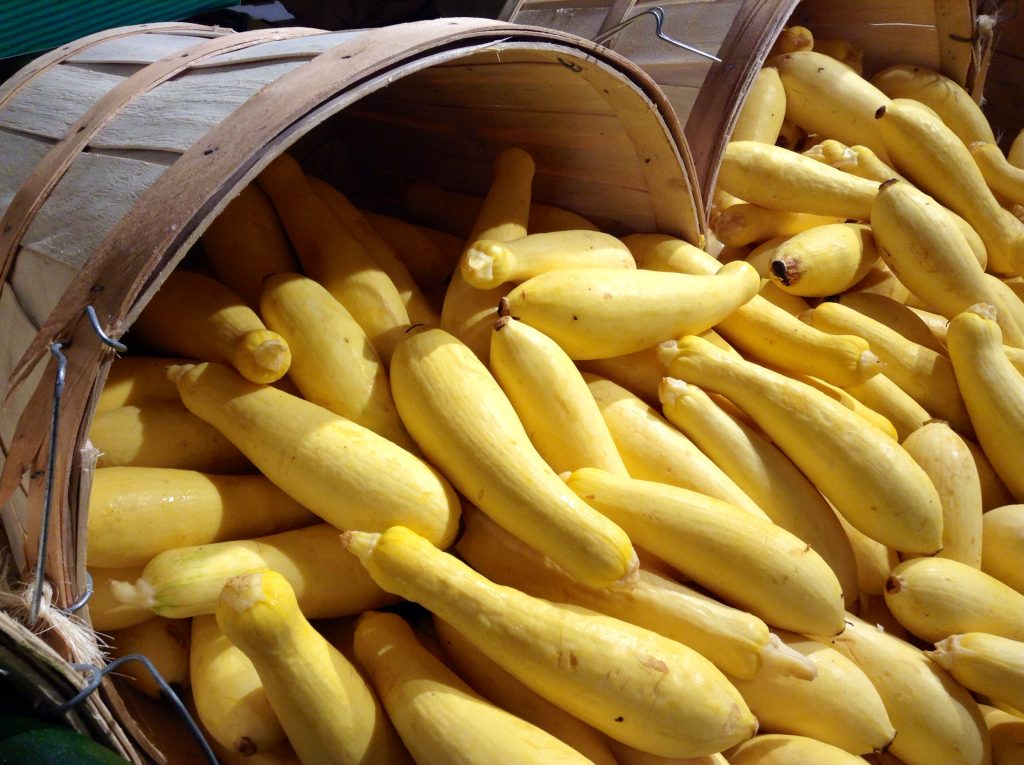
Squash is a heavily imported commodity from Mexico.
“The only solution I know is to vote, get the people that are like-minded and want to support our nation in office. That’s all we can do. I don’t have any other solution besides that at the moment. We have to keep lobbying,” Accursio said. “Growers, we’re very unique people. We work 100 hours per week, and that’s our problem. We’re working when all of these problems arise, and we don’t have time to go to Washington and sit down with these politicians. We have to talk to them one by one when they’re in our area coming around to us.”
Tough Spring
It was especially tough for Accursio this spring. Like other farmers in Florida, Accursio lost produce when the coronavirus pandemic struck in mid-March. In early April, he voiced frustrations about the impact of Mexican imports were having on American farms. He remains frustrated.
“While we were dumping and stopping harvest, I was monitoring what they were shipping in the way of squash per day. It was 2 to 3 million pounds per day, closer to 2.7 to 3 million pounds per day coming across the Mexican-U.S. border of squashes, while I’m stopping harvest; harvesting and throwing on the ground; harvesting and sending to Farm Share,” Accursio said. “The cooler’s empty and we crank back up again. It was a trying time. Then to see Mexico still importing into our nation just seemed so wrong.”
Things could potentially get worse as the United States-Mexico-Canada Agreement is set to enter into force on July 1.
“While we are in season, we need some sort of protection. Right now they’re in the talking phases again. Hopefully, we’re going to have enough influence to make some changes,” Accursio said.
Accursio encourages consumers to continue supporting American farmers. He can’t fathom the alternative.
“If you take Florida and California away in the winter, what do you have? You have third-world countries feeding this great nation and I’m not going to eat it. I’m not going to do it,” Accursio said.
Today’s talk with U.S. Secretary of Ag Sonny Perdue focuses on imports of Mexican produce. It’s been a concern for farmers who are trying to compete against Mexico.
It was especially concerning this year as growers, especially in the Southeast, also had to overcome challenges with the coronavirus pandemic.
For other testimonials of unfair competition with Mexico, click here.
The United States-Mexico-Canada Agreement (USMCA) will enter into force July 1. Unfortunately, it’s still without much protection for vegetable and specialty crop producers, according to economists and industry leaders.
Joyner
Florida Fruit and Vegetable Association President Mike Joyner hopes that will change soon.
“When Congress passed USMCA, we unfortunately did not get the provisions we were hoping for in USMCA. The Florida delegation, to the person, hung together. Because they hung together, we were able to get a commitment from Ambassador (Robert) Lighthizer to come up with a plan as to how we’re going to address this issue,” Joyner said. “We felt like that was a strong commitment. It’s in writing. We trust Ambassador Lighthizer. Right now, all indications are USMCA will go into effect July 1.
“If you go back and look at the letter, the commitment that the delegation was able to get, that within 60 days of entry into force, Ambassador Lighthizer has to have a plan. Probably within the next few weeks, we’ll present some information to the U.S. trade Representatives Office that they need to consider. It’s data that clearly shows what’s happening with Mexican produce. We’re hoping that over the next two or three months, we can work with Ambassador Lighthizer and his team and come up with something that will help solve this issue.”
USMCA Background
According to the USMCA press release, the agreement marks the beginning of a historic new chapter for North American trade by supporting more balanced, reciprocal trade, leading to freer markets, fairer trade, and robust economic growth in North America. However, Southeast farmers still will compete against imports of Mexican produce.
“The concern with the USMCA, in terms of specialty crops, is that there are a lot of lower priced crops, low cost labor in Mexico that are coming into the U.S. and competing with southeast fruits and vegetables,” UGA Cooperative Extension Ag Economist Adam Rabinowitz said. “There was hope that there would be some restrictions or some assistance that would help with the ability to compete with those Mexican imports. But there was nothing within that. As a result, it’s looking like there’s going to be a challenge in terms of being able to compete on price with the southeast fruits and vegetables with the imports from Mexico.”
The influx of Mexican produce was especially discouraging this year for farmers. They had to deal with the aftermath of the coronavirus pandemic at a peak time of spring harvest.
In a prior VSCNews story, Charles Hall, executive director of the Georgia Fruit and Vegetable Association, said “it’s insulting to the specialty crop growers who are suffering with COVID-19. It’s taken away markets. Then on top of that, we’ve got Mexican products coming in on top of us to drive the prices even further down.”