Category: Exports/Imports

  • Agricultural Trade: USDA Updates Outlook

    According to the USDA Economic Research Service, horticultural product exports for fiscal year (FY) 2021 remain the same from November’s forecast at $34.5 billion. Whole and processed tree nuts are unchanged at $9.0 billion. Most exports are bound for Europe and Asia.

    Fresh fruit and vegetables also remain the same at $6.9 billion on stable shipments to top markets like Canada and Mexico. Processed fruits and vegetables are unchanged at $6.5 billion on steady shipments to Canada.

    Imports

    The FY 2021 forecast for horticultural product imports also did not change. It’s still projected at $70.2 billion, which is $3.3 billion more than FY 2020. Fresh and processed fruit import values are unchanged from the November forecast.

    The forecast for fresh vegetable imports remains the same. The $200-million increase to the processed vegetable forecast offsets the $200-million decrease in for the forecast for whole and processed nuts based on a downward trend in nut imports since FY 2019.

    This forecast of increasing horticultural imports through FY 2021 continues a trend of yearly increases since 2009.

    It was also reported that U.S. imports of sugar and tropical products are forecast to reach $23.3 billion in FY 2021, a $100 million upward adjustment from the previous forecast and $300 million above FY 2020.

    Information taken from the USDA Economic Research Service.

  • Competitive Disadvantage: Why are Mexican Imports Increasing?

    Statistics show that fruit and vegetable imports have increased dramatically from Mexico in recent years. But why? University of Florida Associate Professor Zhengfei Guan explains why imports have gone up significantly over the last decade.

    Guan

    Mexico and Florida are in the same market window. They are direct competitors for such commodities as tomatoes, peppers, berries, cucumbers and squash.

    Reasons Why Imports are Surging

    It is due mainly to three main reasons: the depreciation of the peso, gaps in labor costs and Mexican subsidies.

    “When NAFTA took effect in 1994, one peso was 30 cents in U.S. dollars. But now in 2021, it’s less than five cents. Just look at the last 10 years, since 2011, the peso has lost 40% of its value. That makes Mexican products cheaper and more competitive,” Guan said.

    It is also well documented of the large gaps in labor costs between Mexico and the U.S.

    “Mexican minimum wage is less than one dollar per hour. But Florida minimum wage was over $8 per hour. Now, it’s getting to $15 per hour because of the new mandate,” he added.

    Government Subsidies

    The Mexican government also subsidizes its fruit and vegetable industry. From 2006 to 2016, the average annual budget for subsidies was 59.2 billion pesos or $4.5 billion dollars. Protected agriculture is one of the subsidy programs. The government subsidizes 50% of the costs of protected structures like macro-tunnels, shade houses, anti-hail mesh and greenhouses. In 2019, growers could get 4 million pesos or $200,000 per project.

    “With generous support from the government, protected agriculture has been the fastest growing sector in Mexican agriculture and now has about 130,000 acres,” he added.

    Approximately 95% of the protected acreage is for fruits and vegetables, with tomato being the largest crop in protected agriculture. It encompasses almost 40,000 acres in protected acres, compared to Florida’s total tomato production area of nearly 30,000 (almost all open fields).

    Protected agriculture allows Mexican farmers to produce crops with higher yields, better quality, improved market access, higher prices, better pest control and reduced risk.

    For example, Mexican-protected tomatoes yield about 130,000 pounds per acre, compared to Florida’s 30,000 pounds in an open field setting.

    Not many remedies exist for producers who hope to compete long term. One potential fix is with mechanization and automation.

    “The long-term solution for the industry is mechanization or automation. I would like to see a farm bill special funded program for mechanization or labor-saving technology. That is the future of the specialty crop industry,” Guan added.

  • Additional Despair: USITC Blueberry Verdict a Sign for Vegetable Producers?

    The U.S. International Trade Commission’s (USITC) decision regarding blueberry imports dealt a disheartening and devastating blow to Southeast producers claiming serious injury to the domestic industry.

    But does the verdict foreshadow additional despair for vegetable farmers who are also claiming imports have hurt their respective commodities; namely, squash, peppers and cucumbers?

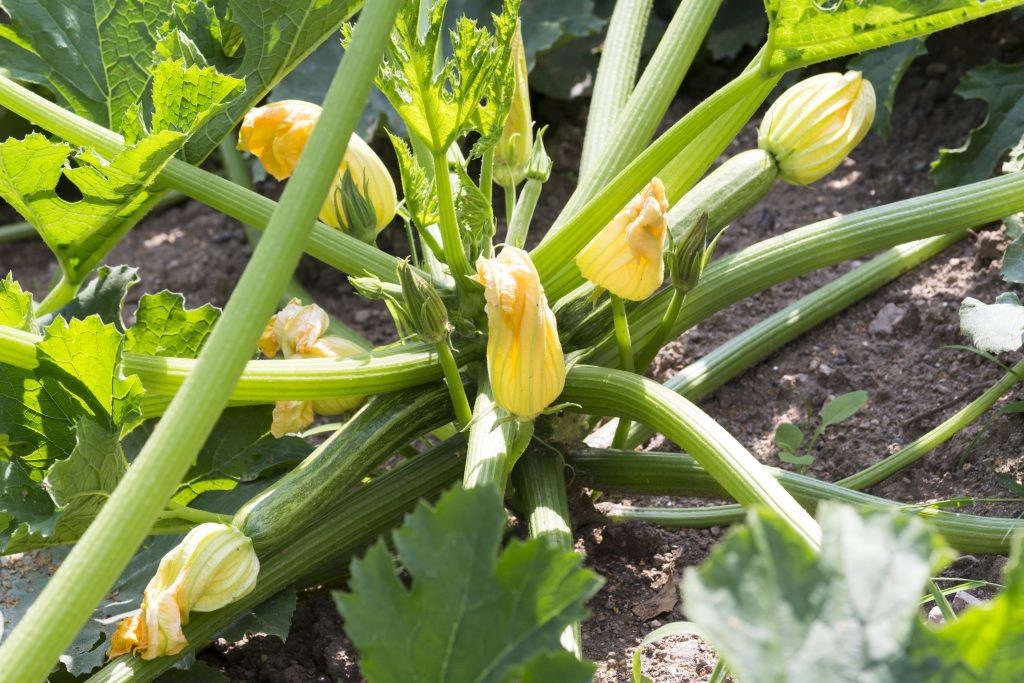
    File photo shows a squash plant.

    “There is concern. Each case is kind of held on its own. As I understand it, they look at the evidence presented and judgements are made at that point,” said Charles Hall, executive director of the Georgia Fruit and Vegetable Growers Association.

    “We felt like blueberries did have a very strong case and very strong data. We’re trying to evaluate how the others will be handled. It’s concerning but not discouraging.”

    Last Week’s Verdict

    The USITC voted unanimously last Thursday that imports of fresh, chilled or frozen blueberries are not a serious injury to the domestic industry. The decision was made despite staggering statistical evidence of how the rise of imports in previous years has driven down prices for such growers in Florida and Georgia.

    Additional Investigations

    The USITC is currently seeking input for two additional investigations regarding the impact of imported cucumbers and squashes on the U.S. seasonal markets. The U.S. Trade Representative (USTR) requested the investigations in a letter. The USITC will hold a public virtual hearing regarding the investigations on April 8 at 9:30 a.m.

    The USITC has also agreed to monitor the imports of fresh or chilled strawberries and bell peppers. The USTR requested those investigations in a letter.

    While the commodities are not the same, the premise behind the investigations are similar: Imports are devastating the futures of Southeastern farmers. For cucumber, squash and bell pepper farmers, the main culprit is Mexico.

    “When you start looking at the nature of the imports, where blueberries had heavy imports from multiple countries like Canada, Mexico, Chile, Peru; our (vegetable) imports are primarily from Mexico. The ITC will have to look at all the various imports,” Hall added. “I’m assuming if you look at the percent of imports in peppers and squash and cucumbers, Mexico is going to be your largest importer whereas they were not as large of an importer with blueberries as some of the other countries.”

  • Point Made: Financial Impact of Imports of Fruits and Vegetables

    Southeast fruit and vegetable farmers have had a point all along. Imports of fruits and vegetables, which have long been the source of producers’ ire in recent years, have significantly impacted the domestic industry.

    Produce coming in from countries like Mexico, Chile and Peru have driven down prices and put producers’ futures at risk.

    Blueberries were the source of a recent Section 201 investigation by the International Trade Commission.

    It was the source of the recent Section 201 investigation by the U.S. International Trade Commission into blueberries where producers claimed serious injury to the domestic industry.

    Statistically Speaking

    According to the USDA Economic Research Service, recent statistics show how much imports have increased over the past several years, especially in 2020.

    Imports of fresh or frozen fruits totaled $15.2 million, up from $15.06 million in 2019. Imports of prepared or preserved fruits totaled $3.28 million, up from $3.07 million in 2019.

    Mexico was the top exporter of fresh or frozen fruits, followed by Chile and Peru.

    The financial impact is significant considering that in 2015, the imports of fresh or frozen fruits totaled $11.3 million.

    Imports of fresh or frozen vegetables totaled $12.72 million, up from $11.38 million in 2019. Imports of prepared or preserved vegetables totaled $3.8 million, up from $3.46 million in 2019.

    Mexico was the top exporter of fresh or frozen vegetables, followed by Canada and the UK.

    Again, when compared to 2015, the financial impact of imports has been staggering. Imports of fresh or frozen vegetables totaled $8.81 million in 2015.

  • Victorious Verdict: Blueberry Coalition Applauds ITC Decision

    File photo shows blueberries.

    While blueberry farmers and industry leaders were disappointed and disheartened with Thursday’s vote by the International Trade Commission (ITC), the Blueberry Coalition for Progress and Health responded with applause for the ITC.

    The group issued a statement following the ITC’s unanimous vote in which it deemed that imports of fresh, chilled or frozen blueberries are not a serious injury to the domestic industry, ending the Section 201 investigation.

    “The Blueberry Coalition for Progress and Health applauds the U.S. International Trade Commission’s (ITC) determination that imported blueberries have not injured the domestic industry. The U.S. blueberry industry is healthy and thriving. 

    “Together with imports, the U.S. industry is working hard to keep up with the year-round and growing marketplace demand for this healthy and nutritious fruit. U.S. per capita consumption of blueberries has experienced a more than 300% since 2005 and is now at an all-time high of 1.79 pounds per person.

    “Restricting blueberry imports into the U.S. would have limited consumers’ access to these healthy, delicious and nutritional berries with no benefit to U.S. producers. 

    “We look forward to continuing to provide the American market with our healthy and delicious fruit.”

    The verdict was rendered in the coalition’s favor despite overwhelming evidence by the American Blueberry Growers Alliance against imports.

  • ITC Blueberry Vote Unanimous

    The U.S. International Trade Commission (USITC) determined on Thursday that fresh, chilled, or frozen blueberries are not being imported into the United States in such increased quantities as to be a substantial cause of serious injury, or the threat of serious injury, to the domestic industry producing an article like or directly competitive with the imported article.

    The Commission’s determination resulted from a 5-0 vote.  Chair Jason E. Kearns, Vice Chair Randolph J. Stayin, and Commissioners David S. Johanson, Rhonda K. Schmidtlein, and Amy A. Karpel voted in the negative.

    The determination was made in the context of an investigation initiated on Sept. 29, 2020, under section 202 of the Trade Act of 1974 (19 U.S.C. § 2252) at the request of the U.S. Trade Representative. Information about this investigation and global safeguard investigations in general can be found here:  https://usitc.gov/press_room/documents/blueberries_factsheet_finalassubmittedforposting.pdf

    As a result of today’s vote, the investigation will end, and the Commission will not recommend a remedy to the President.  The Commission will submit its report containing its injury determination and the basis for it to the President by March 29, 2021.

    A public report concerning the investigation will be available after the Commission submits its report to the President.

  • Very Disheartening: GFVGA Executive Director Reacts to ITC Blueberry Imports Verdict

    It wasn’t the verdict Charles Hall envisioned.

    File photo shows a pile of blueberries.

    “Very surprised and very, very disappointed,” he said following Thursday’s International Trade Commission (ITC) vote on the Section 201 investigation into serious injury surrounding blueberry imports.

    The ITC deemed that imports of fresh, chilled or frozen blueberries are not a serious injury to the domestic industry. It goes against what members of the American Blueberry Growers Alliance testified about during the virtual hearing with the ITC in January. Statistics say blueberry imports have increased exponentially, while the Southeast farmers have paid the price.

    “It’s very disappointing for the effort put into this and the data and personal experiences and the harm that’s been shown and they’ve decided there hasn’t been any harm shown,” said Hall, executive director of the Georgia Fruit and Vegetable Growers Association (GFVGA). “It’s very disheartening.”

    Staggering Statistics

    “The other side was trying to make the case that the imports of blueberries did not have an effect. Since 2009 to 2019, I think is the data that we’ve got, it was over 2,000% increase. It’s just amazing. They basically won the case, won the battle; their increasing in imports didn’t have an effect on prices dropping,” Hall added.

    “I don’t understand how you can have that many blueberries come into the market, prices dropping the way they were dropping and the imported berries don’t have an effect on that.”

    The investigation ends as a result and the commission will not recommend a remedy to the President. But it doesn’t end the fight of blueberry farmers in the Southeast. They’re imploring consumers to buy local.

    “We’ll be looking at whether there’s other ways to adjust the U.S. trade laws. The sad part about this is, they have shown they can produce and ship in product, whether it’s berries or whatever it might be, other vegetables with $10 a day labor. They can ship it in cheaper than we can produce it here,” Hall said. “It’s going to be up to the American consumer to support t he American farmer if we’re going to continue to produce fruits and vegetables in the U.S.”

  • Case Closed: ITC Finds No Serious Injury Regarding Blueberry Imports

    File photo shows blueberries.

    Southeast blueberry producers were dealt a blow today regarding the 201 Investigation into serious injury that imports have had on the domestic industry.

    The U.S. International Trade Commission determined on Thursday via vote that, “fresh, chilled or frozen blueberries are not being imported into the United States in such increased quantities as to be a substantial cause of serious injury, or threat of serious injury, to the domestic industry producing an article like or directly competitive with the imported article in the United States.”

    The investigation ends as a result and the commission will not recommend a remedy to the President.

  • Presidential Authority: Final Decision Regarding Blueberry Imports Rests with Biden Administration

    File photo shows blueberries.

    The American Blueberry Growers Alliance’s (ABGA) stance on imports has not changed over the years: serious injury has been inflicted on American farmers, especially those in Florida and Georgia.

    But where does President Biden stand on this issue? That’s the stance that will ultimately decide the Section 201 investigation regarding blueberry imports. Even if the International Trade Commission (ITC) decides in the ABGA’s favor with its vote on Thursday, the final decision rests with Biden and his administration.

    “When people asked me about this from the get-go, I felt like we’re going to win in the ITC, but does the president sign it or not? That’s a 50-50 coin flip maybe, I don’t know. People smarter than me can figure that out,” said Ryan Atwood, who lives in Mount Dora, Florida and farms 56 acres of blueberries, manages another 350 acres and is part-owner of the largest packing house in the Southeast United States.

    Virtual Hearing with ITC

    The ITC’s decision on Thursday comes a month after ABGA members and industry and congressional leaders testified in a virtual hearing before the ITC about the negative impact blueberry imports from Mexico, Peru, Chile, Argentina and Canada have had on the domestic market.

    If serious injury is found, the ITC will formulate a recommendation. But the president will make the final decision.

    “The ultimate decision will come from the desk of the president. Regardless of what side of the aisle you sit on, we all like to eat. We all like to eat blueberries,” said Jerome Crosby, Georgia blueberry grower and chairman of the American Blueberry Growers Alliance. “Food is probably the most partisan issue in America when it comes down to it. No matter what walk of life you come from, you like to eat something. That makes the farmer a friend to every human being. I think anyone who fits that category of consuming food is going to have an interest in the American farmer staying in place.”

  • Bell Pepper Imports Continue to Increase

    Data shared by UGA’s Greg Fonsah shows how much bell pepper imports have increased since 2000.

    One vegetable commodity at the center of an investigation pertaining to its imports from other countries was highlighted during Georgia’s Ag Forecast meeting last Friday.

    Greg Fonsah, University of Georgia Agribusiness Extension economist, pointed out how significantly bell pepper imports have increased over the past two decades.

    Statistically Speaking

    In 2019, 68% of bell peppers that were consumed in the U.S. were imported, amounting to 1.61 million pounds. Bell pepper imports have increased by 5% annually for the past five years. Most of the imports originate from Mexico, 75% in fact, with Canada contributing 18%.

    “You can see how the fresh imports started growing from the year 2000 and has been growing steadily. It’s doubled, it’s tripled all the way to 2020. We think by 2021, it’s going to go all the way up here, it’s still going to increase, the same as the import share for the availability,” Fonsah said. “You can see how it’s increasing, increasing, increasing, and it keeps increasing. We expect to see the same thing in 2021.”

    Encouraged by Congressional support, the U.S. Trade Representative requested a Section 332 investigation last November to the U.S. International Trade Commission into the imports of strawberry and bell pepper.