Category: Environment

  • Treading the Produce Safety Rule Agricultural Water Requirements

    By Taylor Langford, Matt Krug and Michelle Danyluk

    The Food Safety Modernization Act’s Produce Safety Rule (PSR) highlights the need to reduce risks associated with agricultural water (e.g., irrigation, fertigation, foliar sprays, frost protection, etc.) that will contact fresh produce. The PSR requires some growers to monitor the quality of their agricultural water by analyzing generic E. coli populations through sampling frequently enough to establish a microbial water-quality profile. This testing is applicable to growers who use agricultural water from surface or ground water sources that contacts the harvestable portion of produce covered by the PSR.

    As of January 2020, the compliance dates for all operations covered under the PSR have passed, excluding the requirements on agricultural water. In March of 2019, the Food and Drug Administration (FDA) announced new compliance dates for agricultural water. Compliance is currently scheduled to begin in January of 2022, 2023 and 2024 for large, small and very small farms, respectively.

    The delay in compliance for water was based on feedback from the industry that the written standards are too complex to implement. In response, FDA is currently exploring alternatives to simplify microbial quality and testing standards while still protecting public health.

    OUTBREAK OUTCOMES

    However, not long after FDA’s announcement to delay compliance dates and review requirements, a multistate outbreak of E. coli O157:H7 involving romaine lettuce was announced by the FDA and Centers for Disease Control and Prevention. This outbreak came on the heels of two other outbreaks related to romaine in April and November of 2018.

    An executive summary published by the FDA on May 21, 2020, announced the findings of the outbreak investigation. The findings pointed toward contamination of surface water used for irrigation combined with close proximity to cattle feeding operations and unusual weather events (frost and wind) as the most likely culprits.

    The investigation also revealed that the surface water implicated in the outbreak was tested by growers and met the water quality criteria in the PSR. This has added another layer of complexity to the process of identifying suitable strategies and realistic expectations for ensuring the safety of water used during crop production.

    The revelations that the agricultural water provisions of the PSR were being delayed and that there was a produce outbreak related to pre-harvest water that met the current PSR requirements resulted in various efforts to identify appropriate risk reduction strategies. In response, FDA developed the Leafy Greens STEC (Shiga toxin-producing E. coli) Action Plan that included public and private stakeholders. The plan is designed to expedite actions to prevent future outbreaks associated with leafy greens.

    One of the goals of the 2020 Leafy Greens STEC Action Plan is to “advance agricultural water safety.” Recognizing the diversity among agricultural production systems, the plan is focused on identifying standards that are workable across a variety of farms, water sources and uses. One of the actions identified by the plan is to advance a proposed rule for agricultural water for covered produce other than sprouts.

    Following the outbreaks involving romaine in 2018, the United Fresh Produce Association and the Produce Marketing Association developed a diverse Romaine Task Force that consisted of over 100 industry, academic and regulatory stakeholders. Some recommendations were developed specific to romaine, and others were broader recommendations. The task force recommended adoption of the new California/Arizona Leafy Greens Marketing Agreement (LGMA) water treatment metrics, which require surface water applied via overhead to leafy greens plants within 21 days of harvest to be treated.

    California has recently approved the new LGMA water metrics, which included over 50 changes to strengthen food safety requirements in areas of farm water use and field/equipment sanitation. The new requirements for water are focused on ensuring the safety of water used in overhead crop sprays, enhancing water-monitoring requirements, and minimizing the risk of water applied with furrow irrigation from coming into contact with the edible portion of the crop. These newly adopted changes are in addition to the metric that was added last year.

    As previously seen, food safety standards adopted by, or developed for, certain commodities or segments of the produce industry often shape broader market-driven and regulatory standards that apply across the board. It is still unknown how newly adopted standards and decisions made by agreements and task forces will shape FDA’s thinking on revisions to the PSR.

    GROWER GUIDANCE

    The Florida produce industry should remain engaged in the process to identify and adopt strategies that satisfy general concerns around use of agricultural water. Although the compliance dates of the PSR water-testing provisions have been delayed, growers who have not previously tested their agricultural water should consider implementing testing now to better understand the microbial quality of their water sources.

    Produce Safety Rule inspections, conducted by the Florida Department of Agriculture and Consumer Services (FDACS), after a pause at the beginning of the COVID-19 pandemic, have resumed and are continuing throughout the state. Scheduling of inspections generally follow the patterns of produce production across the state. The initial round of inspections is intended to be educational in nature, but inspectors are obligated to take measures to protect public health if serious issues are observed.

    To prepare for inspections, growers, harvesters and packers should, at a minimum, follow Good Agricultural Practices and attend a Produce Safety Alliance (PSA) grower training. The PSA grower trainings continue to be offered at the highly subsidized price of $25 through collaborations with the University of Florida Institute of Food and Agricultural Sciences (UF/IFAS) and FDACS. Due to the COVID-19 pandemic, PSA trainings are being offered remotely and capacity is limited. See crec.ifas.ufl.edu/extension/events/ for the list of upcoming PSA grower training events.

    The On-Farm Readiness Review (OFRR) program is another way to help growers prepare for a PSR inspection. The OFRR is a personalized site visit in which UF/IFAS and FDACS representatives can address questions about practices or conditions at a specific farm or packinghouse, including discussions related to agricultural water use. There is no cost associated with an OFRR. Sign up at fdacs.gov/FSMA for an OFRR.
  • DeSantis Calls Reservoir ‘A Top Environmental Priority’

    desantis

    (NSF) — Gov. Ron DeSantis backed a controversial reservoir being built in the Everglades while announcing the state will use a pool of environmental money to help Miami-Dade County protect Biscayne Bay from continued degradation.

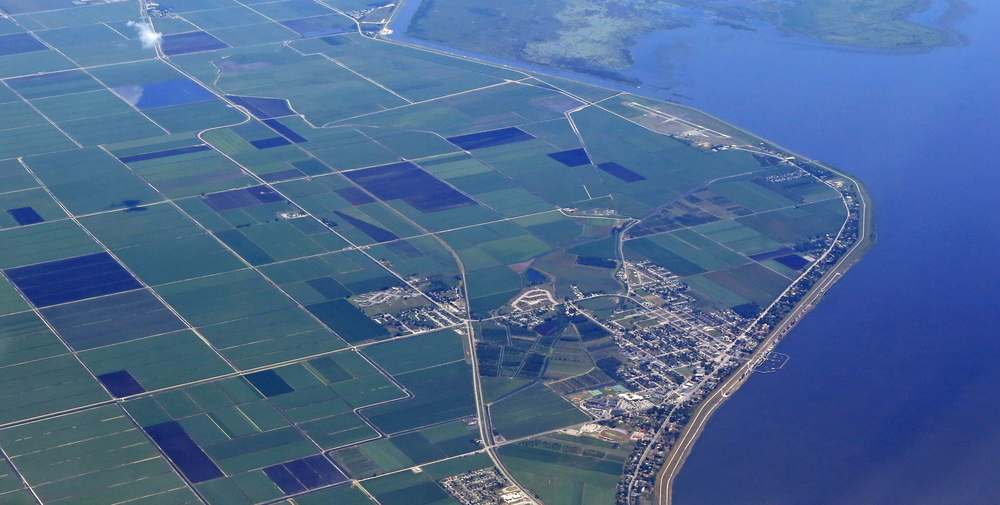
    DeSantis said his office will continue to support the $1.6 billion Everglades Agricultural Area reservoir, which was approved by the Legislature in 2017 but has recently been questioned by new Senate President Wilton Simpson, R-Trilby. DeSantis addressed the issue as he outlined plans to provide a $10 million match for local efforts to restore Biscayne Bay.

    “The EAA reservoir remains a top environmental priority for my administration, and we look forward to pressing ahead as quickly as possible,” DeSantis said while at Bill Baggs Cape Florida State Park in Key Biscayne.

    Simpson, during a Florida Chamber of Commerce event on Dec. 8, described the man-made lagoon — intended to redirect water south from Lake Okeechobee — as a “mistake.” 

    desantis

    Simpson, who became president last month, added that as lawmakers face a $3 billion to $4 billion shortfall in the next budget, the state “probably should stop building” the reservoir. 

    The 2017 law provides $64 million a year for the reservoir, requiring it to be built on state-owned land rather than private farmland in the Everglades Agricultural Area. The law also allows Florida to boost funding for the work by issuing up to $800 million in bonds.

    The state anticipates half the funding for the work to come from the federal government.

    Simpson said the state’s approach to improving water quality in South Florida should be through deep injection wells on the north side of Lake Okeechobee, where more water enters the lake. 

    Simpson’s comments have drawn blowback from several Treasure Coast lawmakers.

    The reservoir was pushed by former Senate President Joe Negron, R-Stuart, because water discharged from the lake into waterways to the west and east was causing algae problems.

    DeSantis on Monday called the reservoir “one of the most important Everglades restoration projects in history.”

    “The project provides significant ecological benefits, reduces harmful discharges to the St. Lucie and Caloosahatchee estuaries, and importantly sends more clean water south to the Florida Everglades,” DeSantis said.

    DeSantis went to Biscayne Bay to highlight work that will be undertaken to protect the bay, with the state money matching funding by Miami-Dade County.

    “In the coming weeks, the county and state will work collaboratively to identify worthwhile projects and pursue them without delay,” DeSantis said.

    Money for the match is coming from $625 million in the current fiscal year budget for water projects and the Everglades.

    Miami-Dade County Mayor Daniella Levine Cava, a Democrat, said the bay, vital to the region’s tourism, has been in a near collapse for years. That stems from nutrient pollution, in part due to a historic over-reliance on septic systems rather than sewers, and the region’s aging water system infrastructure.

    “We’ve seen the impacts of this crisis firsthand, especially in recent months,” Levine Cava said. “Our seagrass meadows are in retreat. There are algae blooms that are plaguing the formerly crystal-clear waters, and the fish kills were literally bringing the crisis off our shores vividly to the surface, all too recently. And our beautiful coral reefs are in jeopardy as well.”

    Miami-Dade County has already proposed six projects that will cost about $5 million. Among those projects will be converting some homes and businesses from septic tanks to sewer systems and helping scientists understand Stony Coral Tissue Loss Disease, which has affected the region’s coral reef system.

    Source: Jim Turner, News Service of Florida

  • Florida Preps for Algae Blooms from Lake Releases

    (NSF) — Measures are in place to offset potential blue-green algae blooms after the U.S. Army Corps of Engineers started Wednesday to schedule water releases from lower Lake Okeechobee, according to the state Department of Environmental Protection.

    algae bloom

    A news release late Wednesday said the department and the South Florida Water Management District are prepared to use “innovative technology” if needed and noted that algae bloom conditions on the lake have improved in recent weeks. “Harmful algal blooms have a debilitating effect on our ecosystems and our communities,” Gov. Ron DeSantis said in a prepared statement. “That is why, for the first time, I made it a priority to secure dedicated funding to deploy innovative technology to mitigate blue-green algae blooms.”

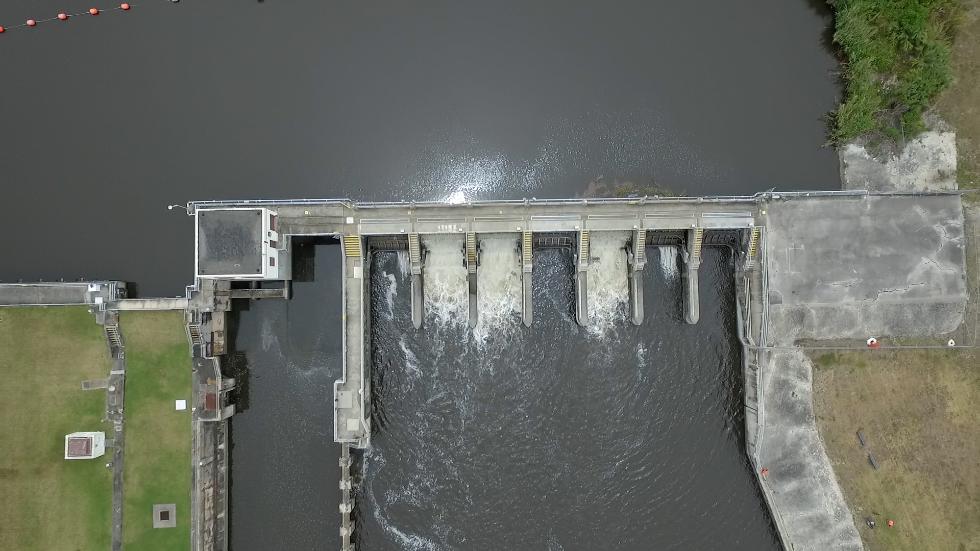
    On Wednesday, the U.S. Army Corps of Engineers Jacksonville District announced it would start releasing water from the lake as heavy inflows from Central Florida and rains across South Florida have caused the lake to reach 16.21 feet, a 1.33 foot increase over the past 30 days, while six weeks remain in hurricane season. The water releases will go through the Moore Haven Lock and Dam on the southwest part of the lake, and the St. Lucie Lock near Stuart. Such releases are closely watched because of harmful algae blooms that have occurred in the past in waterways to the east and west of the lake.

    The releases will be evaluated weekly and adjusted as conditions evolve, the Army Corps said. “We haven’t made large volume releases from Lake Okeechobee since March 2019, but the rapid rise in the lake level combined with an already active hurricane season that lasts until Nov. 30 has left us with no options in ensuring the safety of those living and working around the Herbert Hoover Dike,” Col. Andrew Kelly, Jacksonville District commander, said in a statement.

    The state allocated $10 million in both the current budget and in the 2019-2020 budget to invest in technologies to detect and combat algae blooms.

    Source: News Service of Florida

  • Dry Temperatures Not Bad Thing for Georgia Hemp Producers

    File photo shows hemp growing in a field.

    Hot and dry temperatures are not necessarily a bad thing for Georgia’s hemp producers, according to Tim Coolong, University of Georgia Cooperative Extension specialist. What the crop will not do well in is when the soil is wet.

    Tim Coolong

    “Every single grower that I’ve met with is irrigating their hemp anyway. Actually, a little bit drier is probably fine, because if they do need some water, they will irrigate,” Coolong said. “The only negative thing is some people are planting pretty late because they’re just getting their licenses. Some of the heat we’re having may make it a little bit harder to establish plants. Just like planting fall vegetables, if you’re planting and it’s 95 degrees out, sometimes it helps to have a little bit of a shower to cool things down.”

    According to the US Drought Monitor, various parts of the state include areas that are classified as abnormally dry. It is especially concerning for middle Georgia and east Georgia along the coast.

    It is a critical point for hemp producers since hemp is expected to begin flowering in early August. Coolong said the handful of growers that are still planting are in danger of producing a crop with reduced yields.

    “Hemp for the most part, when you get below 14 hours of day length will start to flower. That’s right about now when we start getting below that threshold. Most of the plants will start flowering around the first week of August,” Coolong said. “The idea is if you plant too late, you’ll have this relatively small plant that could start flowering. Your yield would be lower than if you planted in late May or June when you can build a larger frame on a plant.”

  • Clemson Extension Agents Provide Crop Updates

    Clemson Extension agents provided updates in The South Carolina Grower this week about the status of various crops being produced throughout the state.

    Statewide

    Dr. Matt Cutulle reports, “It is always good to control goosegrass even if it is past the critical period for competition with the crop. Lack of late-season control made hand-harvesting tomatoes difficult. Also, there will be a huge deposit of goosegrass seeds into the soil seed bank for next year unless the seeds are destroyed after the harvest.”

    Coastal

    Wilting of hemp is very common and often sporadic throughout fields. Photo from Zack Snipes

    Zack Snipes reports, “We experienced a nice hot week of weather in the Lowcountry.  Most crops are finishing up with the heat and recent rains.  On later season tomato I have seen bacterial leaf spot on the fruit which makes fruit unmarketable. I am seeing this on the second cluster of fruit set and not on the first or third clusters. Hemp seems to be off to the races and looking pretty good so far. There are within every hemp field occasional wilted, stunted and yellowed plants. These plants always have a weak root system and most of the time have girdling and interveinal discoloration.  Peppers and eggplants are loving this heat and are producing in high volumes.”

    Midlands

    Justin Ballew reports, “Last week was hot and mostly dry, though we did have some scattered thunderstorms come through over the weekend. Field prep for fall crops continues. We’ve had some fall tomatoes, peppers, and brassicas transplanted already and more to come this week. Everything is growing pretty fast right now and we’re still picking spring crops. Keep an eye out for spider mites, as they love the hot, dry weather we’ve had lately.”

    Sarah Scott reports, “We are still ahead of schedule on peach varieties being harvested. Early August Prince and August Prince are being picked now which is over a week earlier than usual. The fruit quality is still good with slightly smaller than ideal fruit. With the extreme heat and lack of rain in the past week, summer crops like tomatoes and cucumbers are looking rough. Bell peppers are doing well.”

    Pee Dee

    Bruce McLean reports, “Sweet potatoes are looking good. Establishment seems to be very good for the most part. Long green cucumbers, yellow squash, zucchini, cantaloupe, peas, okra, and sweet corn are harvesting well. Condition is good to very good. Sweet corn will be wrapping up shortly. Blueberries are pretty much finished, with only a few remaining fruit on Powderblue. Fruit condition is fair to good. Muscadines are coming along nicely and appear to have an excellent crop. Fresh muscadines should be beginning harvest soon, with wine/juice grapes still a few weeks from harvest. Be on the lookout for Grape root borer moths. They are starting to emerge. They were being caught in traps placed in vineyards in Marion and Horry counties.”

    Tony Melton reports, “Harvested first crop of processing peppers. Continuing to pick and plant pickles. Processing greens are over for the spring crop. Harvesting the first crop of processing and seed peas and planting fall crop. Getting processing tomatoes out of the field as quickly as the plant can take them.  Things are drying out, hope we don’t go into drought with the heat.”

    Upstate

    Kerrie Roach reports, “Spotty rain and high temperatures have left many small growers scrambling for irrigation options throughout the Upstate. Peaches and nectarines are still being harvested. Blueberries are just about finished, and farmers’ market produce is starting to wind down with the heat. Apples should begin next week with early varieties like ‘Ginger Gold’  and ‘Golden Supreme’.”

    Andy Rollins reports, “Plenty of early blight, bacterial spot/speck on tomatoes this season, but some of the more troublesome problems have been various tomato virus problems. When diagnosing virus problems it is important to get lab verification because herbicide injury can look very similar when just going by visual symptoms. If you suspect herbicide drift from a neighboring farm. Look for damage to other broadleaf plants in the area in between the suspected source and the damaged plants. Follow the wind direction.  You should have more severe damage on the leading edge. Also, herbicide residual from a previous crop like sunflowers can also give you herbicide damage that you did to yourself. Read and follow all pesticide label directions. There are plant back restrictions on some herbicides so be careful. If this is the case the damage should be fairly consistent/uniform throughout the area that was planted in the other crop.

    Unlike both of these other situations, virus problems may come from your seed source, the greenhouse where plants were grown or from weeds in the field. Pokeweed is commonly a source, as are many other broadleaf weeds. Thrips, aphids, and whiteflies are all known to vector viruses into plants. Symptoms are what you see below with “shoestring” looking leaves, leaves with distorted veins, and mosaic yellow and green coloration. There are many viruses that infect plants. Each of them can show different symptoms and also they can each look different on other plants as well. It’s even possible for a healthy-looking plant with no symptoms to be infected with several viruses.”

  • Florida: Funding and policy progress

    In preparation for the 2020 legislative session, more than 200 Florida Farm Bureau members traveled to Tallahassee in December to advocate on behalf of Farm Bureau’s legislative agenda.

    By Adam Basford

    On March 19, the Florida Legislature wrapped up the 2020 legislative session after a six-day extension caused by a delay in budget negotiations. Clearly, the COVID-19 outbreak has created significant uncertainty about Florida’s economy and there may be a need for the Legislature to meet again to revise the budget based on updated revenue forecasts. However, for now, Farm Bureau has had a successful session both with funding agricultural priorities as well as in the policy arena.

    Over the course of the session, two policy priorities emerged as being vitally important. Because of recent blue-green algae outbreaks and Governor DeSantis’ focus on environmental issues, water quality was a key issue. The governor also sought to fulfill a campaign promise to pass a bill that would ensure that employers were hiring legal workers using the E-Verify system.

    WATER QUALITY

    SB 712 was the comprehensive water quality bill that largely incorporated the recommendations from the governor’s Blue-Green Algae Taskforce. It passed both chambers unanimously and was sponsored by Sen. Debbie Mayfield. The House companion was sponsored by Rep. Bobby Payne and Rep. Blaise Ingoglia.

    The bill transfers the regulation of septic tanks from the Florida Department of Health to the Florida Department of Environmental Protection, creates a water-quality grant program to assist in the transition from septic tanks to central sewer and requires water management districts to update stormwater permit requirements. It also reinforces the Florida Department of Agriculture and Consumer Services’ (FDACS) authority to conduct best management practices (BMPs) implementation verification.

    For Farm Bureau, the most important aspects of the bill add credibility to the agricultural BMP program through the two-year verification process and support additional research by FDACS and the University of Florida Institute of Food and Agricultural Sciences to develop new BMPs.

    SB 712 passed by unanimous votes in both chambers and received broad, bipartisan praise.

    “It is a fantastic beginning and a giant step forward for our state, for our environment, for our water quality,” said Rep. Toby Overdorf, a republican from Palm City.

    “This bill actually advances water quality in Florida in a real, substantive way,” said Rep. Margaret Good, a democrat from Sarasota.

    “This is going to be a piece of legislation that we’re going to talk about decades from now as the starting point where we shifted gears and proved to people that we, as a state, are prepared to take on these big environmental issues,” said Rep. Ingoglia, a republican from Spring Hill. “Make no mistake about it, this is an historic piece of legislation.”

    RIGHTS OF NATURE

    Recently, activist groups around the state have been pushing petitions for so called “rights of nature” county charter amendments. These amendments would grant legal rights to specific rivers, water bodies and other natural features. These amendments would give citizens a broad standing to sue governments or businesses who “interfere or infringe” on those rights. The organization leading this charge is the Community Environmental Legal Defense Fund, which so far has proposals in Alachua, Brevard, Lee, Orange and Osceola counties.

    Rep. Ingoglia and Sen. Ben Albritton sponsored bills that contained language ultimately passed in SB 712 that preempts these types of initiatives. This provision will prevent frivolous lawsuits that could harm businesses and hamper the ability of local governments to issue permits.

    E-VERIFY

    The E-Verify bill (SB 664) sponsored by Sen. Tom Lee passed both chambers and is headed to the governor’s desk. However, the Senate bill was amended during the last days of session by the House and was passed including the provisions in HB 1265 by Rep. Cord Byrd.

    Throughout the session, the chambers took different approaches to the issue. Generally, the Senate’s approach was to mandate the use of E-Verify for both public and private employers with certain exemptions for private employers. The House approach allowed all private employers to verify the employment eligibility of their workers by using E-Verify or by utilizing the federal I-9 verification process.

    Farm Bureau believes that any immigration legislation should be done at the federal level. But during the session, we strongly preferred the House position because it allows employers to continue using the federally authorized system and because it does not create an additional regulatory burden.

    FDACS BUDGET

    The FDACS budget ended up much better than where it started. The Fresh from Florida program will be fully funded at $5.9 million. The initial House proposal included a $3.7 million cut. The Rural and Family Lands Protection Program will receive $8.7 million this year after being zeroed out in 2019. The Office of Agricultural Water Policy also received funding for eight additional staff that will be integral to implementing provisions of SB 712 that call for BMP verifications.

    SUCCESSFUL SESSION

    At the close of the 2020 session, it was clear that it was a successful one for Florida Farm Bureau and its partners in the agricultural community. Successful outcomes for top priorities this year were essential, and Farm Bureau appreciates its members and the Legislature for their hard work.

    Adam Basford is director of state legislative affairs for Florida Farm Bureau Federation.

  • Challenging Season for South Georgia Agriculture

    By Ashley Robinson

    South Georgia farmers have been on edge as weather and impacts from the coronavirus pandemic (COVID-19) have taken a toll on their crops.

    “2020 has been a tough year overall for our growers,” says Andre da Silva, University of Georgia (UGA) Cooperative Extension vegetable specialist.

    COVID-19 Impacts

    South Georgia farmers have had their fair share of difficulties over the last few years. Hurricane Michael hit Georgia in 2018 causing $2.5 billion in crop damage, and 2019 brought Chinese tariffs that damaged trade and prices. Now, farmers are facing even more devastating impacts with COVID-19.

    According to da Silva, some growers have had to leave their ready-to-harvest produce sitting in the field.

    “Farmers weren’t able to get enough labor to harvest their crop or they weren’t able to sell their produce because there wasn’t a market to sell to. A lot of our farmers sell to restaurants and schools, so they saw the greatest impact once everything shut down. Our sweet corn growers’ biggest markets were schools, so when schools completely shut down due to COVID-19, they were greatly affected,” da Silva says.

    watermelon
    Watermelons have been a crop impacted by the cooler temperatures in May.

    Unusual Weather Impacting Crops

    In addition to seeing impacts from COVID-19, Georgia has endured unusual weather this Spring.

    “We had very warm conditions in March, but the past three or four weeks we have had some impacts from the cold front. We’ve had nighttime temperatures of 47 to 49 degrees F, which isn’t good, especially for our watermelon growers,” da Silva says.

    According to da Silva, watermelon growers planted their crop at the end of March or early April, thinking the crop would do fine because of the higher temperatures. However, when the cold front arrived, the cool nighttime temperatures didn’t allow plants to bloom. While plants should be blooming and fruit should be setting right now to target the 4th of July market, this isn’t the case.

    “Watermelons are tough plants though. With warmer temperatures ahead, they will make a comeback. But I do predict that watermelon harvest will be delayed about a week or two this year because of the cold temperatures we received,” da Silva says.

    In addition to uncommon temperatures, South Georgia has experienced other unfavorable weather events.

    South Georgia has endured two tornadoes this spring. One of which crossed through the middle of a UGA Extension trial evaluating cabbage varieties. It caused significant damage. Additionally, they’ve also experienced a lot of rain accompanied by wind that has damaged crops.

    “We’ve also seen a lot of damage from sand blasting, cracking the plant’s leaf, leaving openings for diseases to enter. Also, the rainfall accumulation induced nutrient leaching, so growers have had to bump up their fertility program to reduce the impact on yield,” says da Silva.

  • What if Someone Has COVID-19 on the Farm?

    Workers work out in a field picking produce.

    Article written by Mark Hoffmann (mark.hoffmann@ncsu.edu) and Chip Simmons (odsimmon@ncsu.edu); NC State University

    The following describes actions a grower should take if there is a positive COVID-19 case is on the farm:

    Preparation and Prevention:

    Have an emergency plan for how you will (1) care and (2) isolate COVID-19 infected workers. Identify the nearest healthcare facility that provides free or low-cost care to uninsured people.

    Promote Social Distancing, Protection and Hygiene

    Educate yourself and workers about hand hygiene, respiratory etiquette and emergency responses (Spanish and English).

    Social distancing between farm workers can encompass differences in work flow as well as potentially impacting worker responsibilities. All of this information should be captured in an emergency plan. To protect your work force as well as yourself, the implementation of social distancing and other safety measures is highly recommended.

    Provide weekly supplies to each farmworker to fight COVID-19, such as alcohol-based hand sanitizer (if available), disinfectants and lined trash cans. Hand washing is a key to preventing the spread of COVID-19, and growers should always provide adequate hand wash facilities, stocked with soap and disposable towels for hand drying.

    Active Prevention

    Screen arriving workers for symptoms of COVID-19 such as fever, cough, or shortness of breath.

    Clean and Sanitize your farm: COVID-19 and small produce farms. In addition to routine cleaning and sanitation, it is recommended that if there is a COVID-19 positive on the farm, all common touch surfaces, such as door knobs, bathrooms, touchscreens, etc. be disinfected with a dilute bleach solution (1,000 ppm – 5 tablespoons / gal water) or a disinfectant listed in the EPA List N: Disinfectants for Use against SARS-COV-2. (SARS-COV-2 is the virus that causes COVID-19.)

    If a worker has symptoms or is confirmed COVID-19

    This worker should stop working immediately.

    If there is an onsite room designated for ill workers, suspect COVID-19 cases should be directed to that room at the time of symptom onset until appropriate isolation plans can be carried out.

    Contact your local health department as required by OSHA.

    Arrange for ill workers to be evaluated by a medical provider.

    Make sure every worker has enough food and water as they will be quarantined and unable to leave the farm.

    Frequently check on the ill worker in isolation to monitor for worsening symptoms. About 20% of infected people will develop severe respiratory symptoms that may require hospitalization.

    Instruct workers who have had close contact with a COVID-19 patient to self-monitor for symptoms of COVID-19 (fever, cough, or shortness of breath) for 14 days. Those exposed should be separated from non-exposed workers for 14 days (e.g. sleep in a separate room, work in a separate area, use a separate bathroom and cooking facility). Workers can continue to work unless they have tested positive for COVID-19 or are exhibiting any symptoms (fever, cough, shortness of breath, etc.) according to the FDA – see these guidelines. If they develop symptoms of COVID-19, they should immediately be quarantined and you should contact your local health department.

    Additional steps such as deep cleaning of facilities or complete closure of the business are not mandatory, but can be taken if the business owner believes it is safer for all workers and customers.

    Failure to provide separate housing for infected workers could reasonably be expected to cause death or serious harm to the uninfected workers, which violates the Migrant Housing Act of North Carolina that requires housing providers to immediately provide safe housing.

    It is unlawful for employers and migrant housing providers to retaliate/take any adverse employment action against any worker who files a complaint or otherwise asserts their right to safe working and/or migrant housing conditions in NC under the NC Retaliation Employment Discrimination Act.

  • High Rainfall Probabilities Look Promising for Florida Agriculture

    By Ashley Robinson

    There may be light at the end of a dark and dry tunnel for Florida farmers with increased chances of rainfall over the upcoming week.

    According to the U.S. Drought Monitor, the majority of Florida is classified as moderately dry.

    According to Gary England, RSA/Director for the Hastings Ag Extension Center in Hastings, Florida, the same weather system currently ushering severe weather into the Southeast will elevate rainfall chances in the Hastings area beginning today.

    “The one system moving through right now is supposed to go stationary, meaning it will hang around, keeping things mixed up. So, we’ll have a pretty good chance of rain from that through Wednesday.”

    The front is expected to move south down the peninsula Thursday and stall once again, somewhere near the Big Lake, thus keeping a chance of some showers in northeast Florida through Friday. In addition, a second front is expected to pass through the region on Saturday, stalling in central Florida. This will keep rainfall chances moderate to high through the weekend. 

    According to the National Weather Service’s Weather Prediction Center, the Hastings area can expect to see 1.0 to 2.0 inches of rainfall through next Monday.

    “It seems like the regions who are experiencing the worst of the drought are in the areas we’re expecting some rainfall,” England says. “However, that still has to materialize. These stationary fronts may be predicted to be in one place but could remain 50 miles south or north. Rain chances can dramatically change so we’ll have to see how it plays out over the next week.”

    Lack of rainfall for the months of March and April have caused concerns for Florida farmers.

    According to the U.S. Drought Monitor, the state of Florida is experiencing abnormally dry or moderate drought conditions. Most of Wakulla County, Florida and parts of Liberty and Franklin County, Florida are deemed ‘D2’ status which is a severe drought.

    GROWERS CONCERNS

    Florida’s growers are no strangers to dry spells and having to utilize irrigation systems during periods of less than average rainfall. However, applying more irrigation than normal can create additional issues for growers on top of the high costs to operate the irrigation systems. 

    “Generally, we’re pumping water out of the Florida Aquifer. The chemistry of the water in the Hastings area tends to be a little more saline. So, with extended periods of irrigation you could see some harmful effects from that,” England says.

    In addition, increasing temperatures could be troublesome for growers.

    “It’s not always uncommon for March or April to be fairly dry. However, what we’re seeing in this situation is very warm temperatures,” England says. “We’ve had dry March’s and April’s, but the high temperatures were in the 70’s and low 80’s. These warm temperatures that we’re seeing during this dry period can move the crop ahead, possibly maturing a week or so ahead of time.”