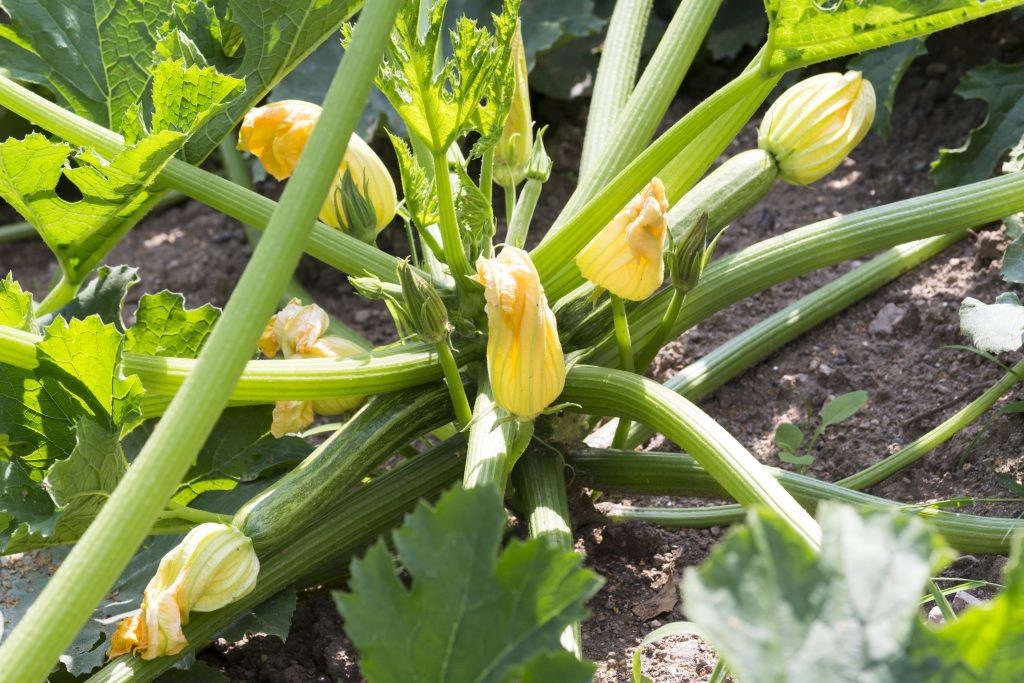
File photo shows downy mildew disease on watermelon.
According to the The South Carolina Grower, downy mildew disease was found Wednesday in one watermelon field in Bamberg County, South Carolina.
Justin Ballew, Clemson Extension commercial horticulture agent, said all growers should immediately spray watermelon with Ranman, Revus, or Gavel to protect their crops from the disease. In addition to direct yield loss, loss of vine cover can expose fruit to sunburn. Growers who find downy mildew in a field should apply Orondis Ultra or Orondis Opti in a weekly rotation with Ranman or Gavel.
According to a previous UGA news release, the downy mildew pathogen thrives in wet, humid conditions and needs moisture on the surface of the plant for successful spore germination and further infection.
Cucurbit crops — like cucumbers, melons, squashes and pumpkins — are susceptible to the disease.
Was your crop not eligible for the Coronavirus Food Assistance Program (CFAP), or COVID-19? There is still a chance to try to get that crop on the list of eligible commodities. (Stephanie Ho and Latrice Hill, FSA Director of Outreach)
Photo by Phil Brannen-UGA/Shows powdery mildew disease.
According to UGA Extension Viticulture blog, University of Georgia Cooperative Extension Fruit Disease Specialist Phil Brannen says powdery mildew is just starting to show up on untreated plants in the research grape vineyard at Blairsville, Georgia.
“I hope you will not see it yet in well managed vineyards, but recent rains and other difficulties may have hampered spray programs,” Brannen said.
Spray programs need to be applied on a 7-to-10 day interval when rain events occur as often as they are. Growers also need to use the more efficacious materials at critical infection periods such as bloom and early cover sprays.
It’s important to scout your vineyards and make sure to contact your local county agent should you have questions concerning this disease or others. The 2020 Southeast Regional Bunch Grape Integrated Management Guide can be found at small fruits. It contains valuable information related to the timing and efficacy of fungicides for powdery mildew.
Pictured is downy mildew disease’s impact on vegetables.
By Clint Thompson
One Clemson Extension vegetable pathologist has observed downy mildew disease and fusarium oxysporum f. sp. niveneum disease on his research plots and cautions vegetable growers in South Carolina to be on the lookout for both.
“This is strictly based on observations from my research plots here in Charleston. I have not been out to any commercial fields,” Tony Keinath said.
Keinath reported downy mildew, a cool-season pathogen, on brassicas and can especially impact kale and collard.
“For downy mildew on collard, the pathogen prefers to grow in cool temperatures. Once the temperature reaches 85 degrees F, the pathogen basically goes dormant until late fall. And it probably survives in crop debris. It’s dormant, it’s not active at all,” Keinath said.
South Carolina has experienced cooler temperatures this spring, especially the timeframe between the end of April and first two weeks in May. Downy mildew mainly affects the lower leaves but will sometimes move to the larger leaves in the middle of the plant.
“Because it causes leaf spots on the leaves and the leaves are what the growers are harvesting … even a small amount of downy mildew means the leaves can not be harvested,” Keinath said.
Fusarium’s Impact
Fusarium is also active in cool soil temperatures. It infects roots when the soil temperatures are below 82 degrees F. Unfortunately, if growers observe fusarium damage, there isn’t anything they can do to treat the disease. Fungicides need to be applied during transplanting.
“If you spray them at this stage it’s too late because all the fungicides do is prevent infection. Once the fungus has gotten into the plant, then the fungicide does not work anymore,” Keinath said. “If they want to use grafted plants because the rootstocks are resistant to fusarium, that’s obviously something that has to be done at transplanting.
“They should make note of how widespread it is in a given field this year. Then if it’s (bad) enough to cause yield loss, they need to plan to use a control measure the next time they plant watermelons in that same field.”
There are different control measures available. One could be the watermelon variety and if it’s tolerant to the disease. Growers can also utilize varieties that produce medium to large size fruit. If you plant a variety that was bred to produce small fruit and you plant that in a fusarium-infested field, then a lot of those fruit will not reach marketable size.
Growers can also utilize hairy vetch as a winter cover. It will provide some suppressive effect on fusarium. Producers can also apply fungicides to the row bed before they lay plastic. Or they can do it through drip irrigation the same day as transplant.
Vegetable farmers are reminded they need to practice proper sanitation once harvest season ends. Doing so will protect against future pests and diseases.
According to the South Florida Vegetable Pest and Disease Hotline, one of the best tactics that growers can do for themselves and their neighbors is to clean up crop residues promptly after harvest. Sanitation involves any practice that eliminates or reduces the amount of pathogen inoculum, pests, or weed seeds that are still present in the field.
One of the biggest problems associated with lack of sanitation is with whiteflies. They overwinter and can survive on multiple hosts. This is especially true for those hosts that are not eliminated thoroughly after harvest. They are already a problem for Georgia vegetable farmers.
If farmers will destroy tomato vines promptly, they will kill off whitefly populations. They’ll also eliminate the transmission of the tomato yellow leaf curl (TYLCV) and other viruses to subsequent crops. It also will eliminate inoculum from late blight and other fungal diseases. This is particularly important in the case of TYLCV and other viruses. Sanitation, a crop-free period, and whitefly/thrips control are the only tools currently available for the management of this disease.
Downy and powdery mildew on melons can spread via wind from older, diseased plants to plants in surrounding fields that are still maturing. If farmers will plow or disk under infected plant debris, this will help cover up the inoculum and speed up the disintegration of plant tissue. It kills the pathogen.
Cull Piles
Cull piles should also not be neglected. Several scouts have reported over the past few years that they have found both insects and diseases such as TYLCV, late blight, whiteflies and others in volunteer plants springing up around cull piles.
Soil tillage can destroy insects and expose them to birds and other predators. It can also speed the breakdown of plant residues that harbor insects and plant pathogens. By either allowing the organic matter in a field to decompose completely before planting the next crop or allowing a fallow period between crops, you can enhance the control of numerous insects and diseases.
Powdery mildew disease is present on older squash in various vegetable fields across South Florida. According to the South Florida Vegetable Pest and Disease Hotline, respondents report that the disease has also started to show up on watermelon crops across the region as well.
File photo shows squash growing on a plant. Powdery mildew disease is present on some squash plants in South Florida.
It’s also reported that powdery mildew is showing up on squash and cantaloupe in the Manatee Ruskin area.
The disease thrives in high humidity, making the Southeast region a prime target for powdery mildew. Places in Georgia, Florida and Alabama are especially vulnerable the next two weeks. Temperatures in Tifton, Georgia are expected to go back up into the 80s this week and 90s next week. And there’s little to no chance of rainfall. It’s the same forecast for Mobile, Alabama, whose best chance of rain is a 40% chance on Monday, May 18 and Saturday, May 23. Temperatures in Tampa, Florida are going to be in the high 80s the next two weeks.
The disease can develop rapidly under these favorable conditions.
Disease Symptoms
Symptoms on watermelon plants appear as yellow blotches on the oldest leaves first. If the disease is left untreated, the fungus spreads to the entire leaf. These blotches become bronzed and turn dark brown or purplish as the disease progresses during the season. Eventually the leaf dies and has a crisp texture.
Powdery mildew normally appears in the middle of the production season. Preventive treatments can help maximize the crop’s yield potential and prevent plant damage. Growers need to scout fields regularly to know if the disease is a factor in their fields.
There are some vegetables that can tolerate or are resistant to the disease. Most commercial cucumber varieties grown in Florida have acceptable levels of resistance.
Podosphaera xanthii and Erysiphe cichoracerarum, are the two pathogens that cause powdery mildew disease on cucurbits, particularly cucumbers, year-round. P. xanthii is an aggressive pathogen that attacks during warmer months. E. cichiracearum strikes during cool spring and early summer.
Downy mildew disease is present in cucurbits like squash and cucumber around South Florida and is getting worse.
University of Georgia/Downy mildew disease can destroy plant foliage and cause the leaves to curl and die. Without healthy leaves and vines, a plant is vulnerable to blisters and sunscald during hot days.
According to the South Florida Vegetable Pest and Disease Hotline, respondents report that the disease is showing up in most watermelons and infections have increased in areas hit hard by rainfall.
“Around Manatee County, respondents report that downy mildew really kicked into high gear after the last rains and has been quite aggressive in some situations,” the hotline report stated.
Downy mildew also remains active on cucumber and some squash on the East Coast.
According to University of Georgia Cooperative Extension plant pathologist Bhabesh Dutta, downy mildew can destroy plant foliage and cause the leaves to curl and die. Without healthy leaves and vines, a plant is vulnerable to blisters and sunscald during hot days. The pathogen thrives in wet, humid conditions and needs moisture on the surface of the plant for successful spore germination and further infection.
Cucurbit crops — like cucumbers, melons, squashes and pumpkins — are susceptible to the disease. Dutta ranks downy mildew among the top diseases in cucurbit crops, along with Fusarium wilt and Phytophthora fruit rot.
How to Recognize Downy Mildew
For those vegetable farmers unfamiliar with what symptoms look like, focus on the leaves themselves. On cucurbits besides watermelon, small yellowish spots appear on the upper leaf surface away from the leaf margin. A yellow coloration later occurs with the internal part of the lesion turning brown. Lesions are usually angular as leaf veins restrict their expansion.
On watermelons, yellow leaf spots may or may not be angular and will later turn brown to black in color.
To control downy mildew, fungicide sprays are recommended for all cucurbits. Spray programs for downy mildew are most effective when initiated prior to the first sign of the disease. Once a plant becomes infected, it becomes more and more difficult to control with fungicides.
GAINESVILLE, Fla. — University of Florida researchers have discovered another possible solution to the plague of citrus greening that is impacting Florida’s citrus groves. This new information adds to the growing portfolio of knowledge that UF scientists are amassing to fight the disease.
Led by UF Institute of Food and Agricultural Sciences microbiology and cell science professor Claudio Gonzalez, a team of plant pathologists, horticulturists and citrus breeders identified new management practices that slowed the spread of the damaging bacterium and supported increased fruit yield.
“Our findings present another solid block of information in the foundation of finding solutions to citrus greening,” said Christopher Gardner, a biological scientist who was a member of the research team.
The three-year project funded by the United States Department of Agriculture’s National Institute of Food and Agriculture division included greenhouse and commercial field trials. Researchers injected solutions of benzbromarone (benz), tolfenamic acid (tolf) and a combination of both benzbromarone and tolfenamic acid into trees of varying ages in both environments. Results showed that the treatment decreased infection in the roots of citrus trees compared to the control trees and increased fruit production (15%) following twelve months of treatment with benzbromarone and tolfenamic acid.
Two field trials were conducted in Florida, where benz, tolf and the combination of benz and tolf were evaluated for effectiveness against the greening bacterium in sweet orange and white grapefruit trees, ranging from 8 to 12 years old. Treatments were delivered by trunk injections.
The amount of C. paradise fruit classified in categories of higher marketable value significantly increased after the treatments; the combined benzbromarone and tolfenamic treatment was the most effective. Trees that received injections formulated with the combined treatment (Benz and Tolf) were found to produce 15% more fruit (by fresh fruit weight), when compared to the control group. C. paradisi trees that received tolfenamic acid trunk injections had seven percent more fruit at the time of harvest, when compared to controls that received buffer only.
“Considering that treatments were only administered for one season, we found these results to be remarkable, as reduced fruit size is one of the primary adverse effects of citrus greening disease,” said Gardner.
The treatments did not compromise tree viability or the soil surrounding the trees. Nor did the treatment create any negative long-term effects that would inhibit the safety of the fruit. The chemical treatments included in the project have not been assessed or approved by the FDA or USDA for use in agriculture. Researchers will continue testing compounds with similarities to those we have already identified (Benz and Tolf), to find chemicals with higher efficacy against Liberibacter asiaticus. While more research is needed, the findings contributed to the growing portfolio of knowledge on fighting citrus greening.
The research was recently published in Nature Scientific Reports.
The mission of the University of Florida Institute of Food and Agricultural Sciences (UF/IFAS) is to develop knowledge relevant to agricultural, human and natural resources and to make that knowledge available to sustain and enhance the quality of human life. With more than a dozen research facilities, 67 county Extension offices, and award-winning students and faculty in the UF College of Agricultural and Life Sciences, UF/IFAS brings science-based solutions to the state’s agricultural and natural resources industries, and all Florida residents.
Clemson Cooperative Extension released some diseases that cole crop growers need to be on the look out for this spring.
Black rot is one of the most serious diseases for cabbage growers.
Cole crops, such as broccoli, Brussels sprouts, cabbage and cauliflower, are easily grown in South Carolina. Tips for growing healthy cole crops in the garden are available in HGIC 1301, Broccoli, HGIC 1326, Cauliflowerand HGIC 1303, Cabbage & Chinese Cabbage. Several disease problems commonly affect these plants, especially when resistant varieties are not planted. Some of the more common problems are covered here, including root and stem rots of young plants, black rot, downy mildew and viruses.
Pythium Damping-Off
This disease commonly affects seeds and young transplants and is caused by the soil-borne fungus Pythium species. Infected seeds decay in the soil. Seedlings and young transplants will “damp-off” or rot at the soil line, before they eventually collapse and die.
Prevention & Treatment: Cultural controls include planting on raised beds and providing good drainage. Start seeds in commercial potting soil, not in garden soil. Use new potting soil and new or thoroughly cleaned and dis-infested containers and trays. Wash used containers with soapy water to remove all traces of old soil mix, and then briefly submerse containers in a 10% bleach solution. Allow to dry before planting in containers.
If disease has been severe enough in the past to warrant control, the biocontrol fungicide, Bacillus subtilis QST 713, can be used before or at the time of seeding. It can be used for treatment of seedlings in trays or young transplants in the garden.
Downy Mildew
This disease is caused by the fungus Peronospora parasitica and can attack both seedlings and mature vegetable plants. Infected plants develop a gray mold on the lower leaf surface. The upper leaf surface of infected plants first turns yellow and then may turn brown or necrotic. Leaves wither and die. Symptoms differ from powdery mildew in that the downy mildew fungus grows only on the lower surface of the leaf. Development of the disease is favored by moist conditions.
Prevention & Treatment: Use varieties with resistance or tolerance to this disease. Rotate with crops other than cole crops or greens. Remove plant debris immediately after harvest. Use wide plant spacing to promote drying of leaves. Avoid wetting the leaves when watering.
If disease becomes severe enough to warrant chemical control, chlorothalonil will give good control and copper fungicides will give fair control. Spray every 7 to 10 days after transplants are set. Make sure that the lower leaf surface is covered with fungicide. Do not apply copper when temperatures are above 90 °F. Wait 7 days after spraying before harvesting if using chlorothalonil or mancozeb.
Alternaria Leaf Spot
This disease is caused by the fungus, Alternaria species, and occurs during warm, moist conditions. On seedlings, the symptoms are small dark spots on the stem that can cause damping-off or stunting of the plant. On older plants, the bottom leaves are infected first with brown circular spots on the leaves. Spots have characteristic concentric rings (target spots). Infected leaves soon turn yellow and drop. Bright sunshine, frequent dews or showers, and temperatures between 60 and 90 °F favor disease development.
Prevention & Treatment: Remove and destroy all crop debris immediately after harvest, since this disease overwinters on plant residue. It is easily spread by tools, wind, splashing water or insects. Seed treatment and rotation with crops other than cole crops or greens will also reduce disease. If disease is severe enough to warrant chemical control, chlorothalonil will give good control and copper fungicides will give fair to poor control. Spray every seven to 10 days after transplants are set. Wait 7 days after spraying before harvest if using chlorothalonil.
Article written by Mark Hoffmann (mark.hoffmann@ncsu.edu) and Chip Simmons (odsimmon@ncsu.edu); NC State University
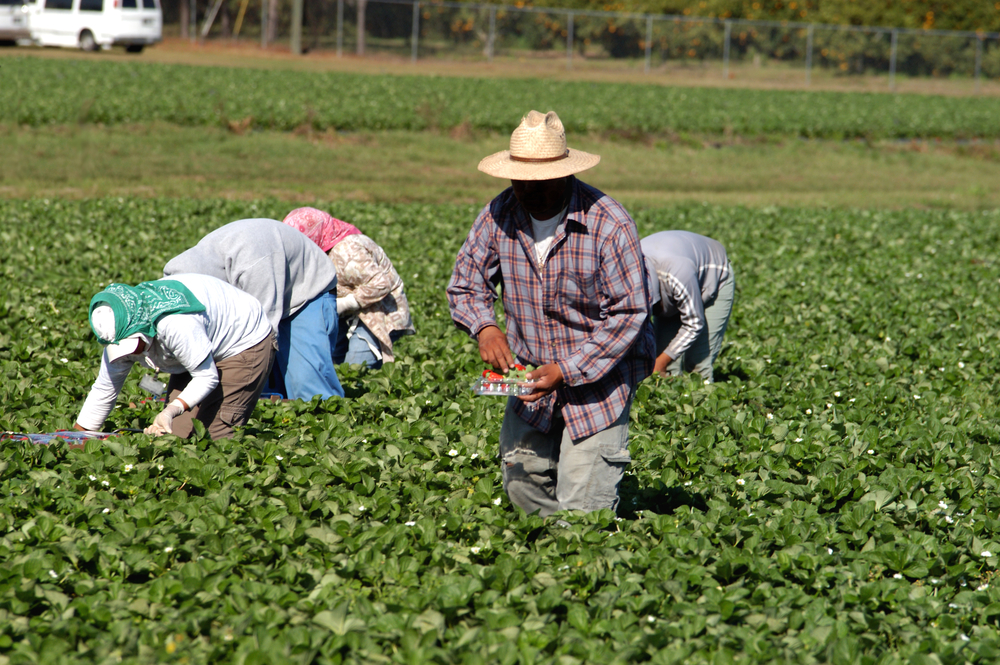
The following describes actions a grower should take if there is a positive COVID-19 case is on the farm:
Preparation and Prevention:
Have an emergency plan for how you will (1) care and (2) isolate COVID-19 infected workers. Identify the nearest healthcare facility that provides free or low-cost care to uninsured people.
Promote Social Distancing, Protection and Hygiene
Educate yourself and workers about hand hygiene, respiratory etiquette and emergency responses (Spanish and English).
Social distancing between farm workers can encompass differences in work flow as well as potentially impacting worker responsibilities. All of this information should be captured in an emergency plan. To protect your work force as well as yourself, the implementation of social distancing and other safety measures is highly recommended.
Provide weekly supplies to each farmworker to fight COVID-19, such as alcohol-based hand sanitizer (if available), disinfectants and lined trash cans. Hand washing is a key to preventing the spread of COVID-19, and growers should always provide adequate hand wash facilities, stocked with soap and disposable towels for hand drying.
Active Prevention
Screen arriving workers for symptoms of COVID-19 such as fever, cough, or shortness of breath.
Clean and Sanitize your farm: COVID-19 and small produce farms. In addition to routine cleaning and sanitation, it is recommended that if there is a COVID-19 positive on the farm, all common touch surfaces, such as door knobs, bathrooms, touchscreens, etc. be disinfected with a dilute bleach solution (1,000 ppm – 5 tablespoons / gal water) or a disinfectant listed in the EPA List N: Disinfectants for Use against SARS-COV-2. (SARS-COV-2 is the virus that causes COVID-19.)
If a worker has symptoms or is confirmed COVID-19
This worker should stop working immediately.
If there is an onsite room designated for ill workers, suspect COVID-19 cases should be directed to that room at the time of symptom onset until appropriate isolation plans can be carried out.
Contact your local health department as required by OSHA.
Arrange for ill workers to be evaluated by a medical provider.
Make sure every worker has enough food and water as they will be quarantined and unable to leave the farm.
Frequently check on the ill worker in isolation to monitor for worsening symptoms. About 20% of infected people will develop severe respiratory symptoms that may require hospitalization.
Instruct workers who have had close contact with a COVID-19 patient to self-monitor for symptoms of COVID-19 (fever, cough, or shortness of breath) for 14 days. Those exposed should be separated from non-exposed workers for 14 days (e.g. sleep in a separate room, work in a separate area, use a separate bathroom and cooking facility). Workers can continue to work unless they have tested positive for COVID-19 or are exhibiting any symptoms (fever, cough, shortness of breath, etc.) according to the FDA – see these guidelines. If they develop symptoms of COVID-19, they should immediately be quarantined and you should contact your local health department.
Additional steps such as deep cleaning of facilities or complete closure of the business are not mandatory, but can be taken if the business owner believes it is safer for all workers and customers.
Failure to provide separate housing for infected workers could reasonably be expected to cause death or serious harm to the uninfected workers, which violates the Migrant Housing Act of North Carolina that requires housing providers to immediately provide safe housing.
It is unlawful for employers and migrant housing providers to retaliate/take any adverse employment action against any worker who files a complaint or otherwise asserts their right to safe working and/or migrant housing conditions in NC under the NC Retaliation Employment Discrimination Act.