University of Georgia photo shows effect of downy mildew disease.
A wet 2020 has had Alabama vegetable and specialty crop producers fending off plant diseases. Even before the state encountered a couple of hurricanes, including Sally in mid-September and Zeta in late October, it had already received its share of rainfall.
Not surprisingly, the excess moisture led to numerous plant diseases, according to Ed Sikora, professor and Extension plant pathologist in the Department of Entomology and Plant Pathology at Auburn University.
Sikora Comments
“We saw quite a bit of gummy stem blight on watermelons. We also saw downy (mildew) and anthracnose on things like cucumbers as well as pumpkins,” Sikora said.
“I think most of the established growers realize that when it’s wet conditions like we had this summer, that they’re going to see more disease problems. Or they see the disease problems and realize it’s so wet, and sometimes they can’t get out to spray. Sometimes it’s too wet to spray after a storm and they can’t into the fields.”
It can be challenging for farmers to get back in the field to apply much-needed fungicides to manage any potential plant diseases following a storm.
Be Prepared
Sikora encourages producers to monitor upcoming weather conditions and apply fungicide sprays. Do this before a storm hits or before conditions become favorable for disease development.
“Don’t wait until the third of the canopy is gone due to disease before you start spraying because it’s usually a lost cause by then. Growers need to anticipate the weather conditions and what diseases they’ve historically had in their fields,” Sikora said.
“Newer growers, though, are sideswiped by these diseases because they just haven’t seen them. They get a year like this year where they’ve had adequate moisture and they’re happy. Suddenly some of these plant diseases take off on them. They don’t know what it is before they even think about spraying for them.”
File photo shows downy mildew disease on melon leaf.
Weather conditions in Alabama this year were conducive to plant diseases impacting the state’s vegetable crops. One disease, downy mildew, has been especially prevalent in fields across the state, according Ed Sikora, Alabama Extension Specialist and Professor in Entomology and Plant Pathology at Auburn University.
“I put out about eight cucurbit downy mildew sentinel plots around the state. Most of these are at research stations, but I will monitor commercial fields occasionally. We were seeing it all year, from June up until, I was just in a field in the Dothan area and downy mildew was just hammering those crops. That disease probably pushed back yield on unprotected crops quite a bit,” Sikora said.
He added that the mild and wet year, starting in the spring and continuing through the summer, contributed to a rise in downy mildew, as well as other diseases.
“We’ve had adequate amounts of rainfall right throughout. We’ve seen a lot of disease pressure on a number of different crops; if it’s soybeans or corn or diseases of vegetables. About 85% of all plant diseases are caused by fungi, and about 99% of those like it warm and like it wet,” Sikora said. “Downy has just been a problem all year.”
What is Downy Mildew?
Cucurbit crops — like cucumbers, melons, squashes and pumpkins — are susceptible to downy mildew disease. It can destroy plant foliage and cause the leaves to curl and die. Without healthy leaves and vines, a plant is vulnerable to blisters and sunscald during hot days.
“In the fall, we saw it mainly on pumpkins, probably winter gourds like butternut squash, it was very effective on. That disease will defoliate the plants and cut down on the photosynthetic area that helps build up those fruit,” Sikora said. “You lose foliage, too. You get sunscald on those fruit as well, which doesn’t help the marketability.”
Alabama growers need to be aware of what downy mildew symptoms look like and the damage it can inflict on vegetable crops. The pathogen thrives in wet, humid conditions. It needs moisture on the surface of the plant for successful spore germination and further infection.
Doug Chapman, Alabama Extension agent for Commercial Horticulture in North Alabama, says the ramifications of having scab disease in your pecan orchards can’t be understated.
“It’s the difference between having pecans and not having them,” Chapman said.
Even as pecan harvest is under way across Alabama, soon it will be time to plant new pecan trees. Pecan planting is usually done during December and January when the trees are dormant.
However, before commercial growers and homeowners begin putting trees in the ground, they must consider their fungicide spray options to manage scab disease. If they don’t have a management strategy, they shouldn’t expect pecans to start falling in 8 to 10 years.
“Scab is My First Suspect”
“Scab can wipe you out. I’ve seen it to where, even if you were to make a few nuts, if there was a scab problem, they tend not to fill out,” Chapman said. “We get a lot of questions like, okay I’ve got pecans and they’re not filling. Here again, scab is my first suspect and until you can eliminate that, there’s not much point in talking about the rest of it.”
Unpredictable Weather
Weather was unpredictable this year for pecan growers. Chapman said it was really wet in the spring, but then it turned off dry. He doesn’t think scab was nearly as bad as it has been in other years. But the dry weather has also affected the nut size. If you didn’t have irrigation, the nuts didn’t size up when they should have.
Scab Disease
Scab disease does not usually kill trees, but it can greatly reduce yields. The fungal pathogen that causes scab overwinters in the tree as lesions on stems and old nut shucks that remain in the tree after harvest. When temperatures begin to warm in the spring, the fungus becomes active and starts to produce new spores that are spread by rain and wind.
Pestalotia fruit rot lesions on ripe fruit; symptoms are very similar to those of anthracnose fruit rot caused by Colletotrichum accutatum. Photo by UF/IFAS GCREC
Pestalotiopsis is not necessarily new to strawberry. A strawberry fruit rot caused by Pestalotia longisetula (or Pestalotiopsis) was reported for the first timein Florida in 1972. However, the fungus has always been considered a secondary pathogen. But this was not the case during the past two strawberry seasons (2018–19 and 2019–20), when severe outbreaks were reported in Florida commercial fields. Root, crown, petiole, fruit and leaf symptoms were observed. Yield was severely affected, and several acres of strawberry fields were destroyed before the end of the season.
University of Florida Institute of Food and Agricultural Sciences (UF/IFAS) studies indicate that isolates from the recent outbreaks are more aggressive and may belong to a new species of the genus Neopestalotiopsis.
Many growers consider the disease a new threat to strawberry production. Several questions are being asked: Where did this come from? Why is it so aggressive? How does it spread? What are the conditions for the spread? Will it survive in Florida fields? How can it be controlled? UF/IFAS researchers are working hard on trials to understand the new disease and develop best management practices to control it.
SUSCEPTIBILITY AND SPREAD
UF/IFAS studies found the disease apparently originated from other hosts around strawberry nursery fields. Thus, strawberry cultivars do not seem to have any immunity to it, and all cultivars that are currently grown commercially in Florida (Florida Beauty, Florida Brilliance, Florida Radiance and FL127 SensationTM) are susceptible.
The fungus is favored by high temperatures (77 to 86º F) and produces spores on the surface of infected tissues that are spread by water. Extended rainy periods or overcast conditions with prolonged leaf wetness during the strawberry season, such as those that occurred last December, are problematic. To minimize dispersal from field to field, growers are advised to limit their operations (such as harvesting or moving equipment through fields) when plants are wet. Current studies are focusing on sampling other hosts and weeds around Florida strawberry fields during the off-season to determine whether the fungus could become endemic in Florida.
MANAGEMENT METHODS
Growers want to know how to manage the disease, and many different fungicide products have been screened in the laboratory and evaluated in field trials at the UF/IFAS Gulf Coast Research and Education Center (GCREC). In the field trials, the fungicide pre-mix of fludioxonil + cyprodinil (Switch® 62.5 WG) and thiram (Thiram® SC) significantly reduced disease incidence.
Only a few other fungicides that are not currently labeled for strawberry use were somewhat effective. Since the overuse of fungicide products can lead to increased selection for fungicide resistance, applications need to be limited to the maximum the label recommends, and research needs to continue to seek alternatives.
For the upcoming season, growers should closely scout plants arriving from nurseries for leaf spot symptoms. Unfortunately, there are many leaf spot diseases that look alike, so it is important to get the correct diagnosis. If caught early and at low levels, removing the symptomatic plants from the fields is advisable.
The current seasonal forecast is for La Niña, which is known to bring a warmer than normal and dry climate pattern to Florida and the Southeast. The dry weather during La Niña years is usually not conducive to fungal diseases such as pestalotia leaf spot as well as anthracnose and botrytis.
Citrus production in Georgia is rapidly increasing each year. There are citrus plantings in backyards, production, and plant nurseries within at least 32 GA counties. The growth of citrus in Georgia is only expected to increase over time. However, there are some threats to expansion.
Citrus has many viroids, a tiny virus-like pathogen, that harm the plants throughout the world, but few have been found on citrus within Georgia. Hop stunt viroid (HSVd) is one of several viroids known to infect citrus. This viroid has been reported within Arizona, California, Florida, Texas, Washington state, and throughout the world. HSVd is typically transferred from plant to plant on contaminated grafting and pruning tools. HSVd can infect many different plants, including hops, grapevines and citrus. A large host range helps the pathogen spread.
In the United States, HSVd has been found on many different grapefruit, orange and tangelo varieties. Symptoms include discolored and gumming inner bark, pitting (small holes) in stems, bark splitting (coming apart) and stunted growth. There are typically not leaf or fruit symptoms. Some citrus varieties are resistant to HSVd, but others, including tangerines and their hybrids will show damage. There are also different types of HSVd, called cachexia and non-cachexia variants. “Cachexia” means severe chronic illness, so the cachexia variants are much more dangerous and the noncachexia variants typically do not cause damage.
In May and June of 2020, leaf samples were collected and tested for HSVd. The samples were collected from 12 different citrus plants from two nurseries located in southern Georgia. The cultivars sampled included Citrus reticulata ‘Dekopon’ and ‘Owari’ as well as Citrus unshiu ‘Miho Wase’ and ‘Brown Select’. The sampled trees looked relatively healthy with little or no signs of damage, but were selected for routine screening. Three to five leaves were taken per plant from throughout the leaf canopy.
Small pieces of leaves were cut and used for RNA extraction. Reverse transcription-polymerase chain reaction (RT-PCR) and sequencing was used to verify infection with HSVd. Recombinase-polymerase-amplification (RPA) technology was also used to further confirm positive samples as HSVd. Nine samples were negative for HSVd, but the other three were positive. The positive samples were all taken from Citrus reticulata ‘Dekopon’. The sequencing results revealed that the positive samples were non-cachexia HSVd variants.
This is the first time HSVd has been found in Georgia. This and other viroids could pose a threat to the growing citrus industry within Georgia in susceptible varieties.
Currently, only noncachexia variants have been found, but nursery stock infected with this viroid should still be destroyed to prevent spread. Georgia nursery producers and citrus growers should take appropriate precautions to prevent the spread of this viroid disease. Ensure that proper sanitization is used on citrus grafting and pruning tools. Further research is needed to determine the distribution of HSVd and its potential to impact commercial citrus production in Georgia.
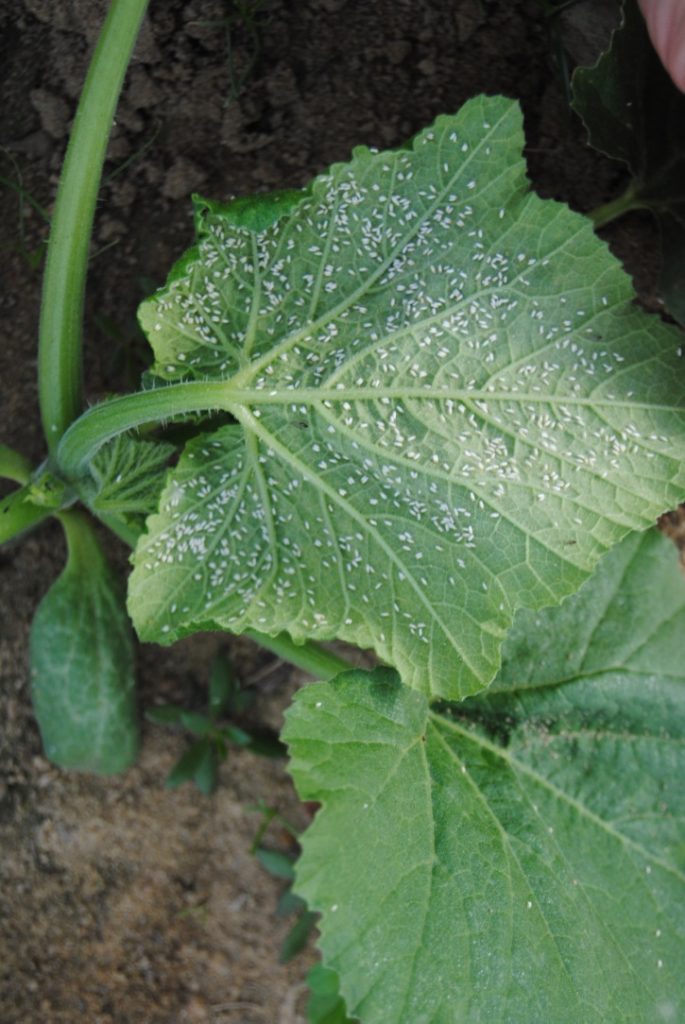
University of Georgia Cooperative Extension vegetable entomologist Stormy Sparks paints an ominous picture of the potential devastation whiteflies will have on this year’s fall vegetable crop.
“We’re probably a month ahead of the last two years. This is going to be challenging fall for whiteflies,” Sparks said.
Vegetable producers across the Southeast have either planted or are currently planting their fall crop. Sparks insists that farmers use resistant varieties when possible to protect against whiteflies and the diseases they spread. Unfortunately, there is not many that are commercially available, except in tomatoes.
“Really, when you’re dealing with viruses, particularly the whitefly-transmitted viruses, the solution to the problem is resistant varieties. The problem is in many cases we don’t have that. The one where we do have it is Tomato Yellow Leaf Curl (virus),” Sparks said. “Fortunately, we have resistant varieties in tomatoes that are commercially available. In the fall you’ve got to have a resistant variety.”
In most cases, whitefly-transmitted viruses are just as devastating as the whiteflies themselves. There is no resistance in yellow squash. In snap beans, there are severe problems with Cucurbit Leaf Crumple Virus and Sida Golden Mosaic Virus.
“With leaf crumple virus right now, in squash; I’ve been planting squash for two months, the most recent planting I’ve probably got about 20% virus right now. If you look at it historically, you go from very low to about 20%. Once you get about 20%, give it about another week or two weeks, you’re typically looking at close to 100%,” Sparks said. “As far as viruses are concerned, at this point, it’s not as bad as I thought it would already be, but I still suspect it’s going to get very ugly in the near future. We did have virus detected in the spring crops late in the season; more than normal. Dr. (Josh) Freeman down in Quincy (Fla.), said in some of his tomato trials in the spring, at the end of the season he had as much as 30% Yellow Leaf Curl Virus. Normally, it’s going to be 5% or less.”
Proper Sanitation
Sparks insists growers practice proper sanitation to protect against future whitefly infestations. Once farmers are through harvesting their crop, they need to get rid of it. If plants are left in the field, they could potentially serve as hosts for whiteflies.
Problem This Year
This is the worst year for whiteflies since 2017. They are a greater problem this year due in large part to the mild winter. While colder temperatures do not eliminate whiteflies, they do kill off many of their wild hosts and slow population development in cultivated hosts. Warmer temperatures allowed for larger whitefly populations to overwinter and become mobile earlier this summer.
Whiteflies migrate from winter vegetables to spring vegetables to agronomic crops, like cotton, to fall vegetables and back to winter vegetables. Whiteflies cause feeding injury issues in vegetables and transmit two new viruses: cucurbit leaf crumple virus and cucurbit yellow stunting disorder virus.
Peach producers need to be mindful of Phony peach disease. According to the UGA Peach Blog, Phil Brannen, University of Georgia Cooperative Extension plant pathologist, cautions growers that if a tree is diagnosed with the disease, they need to destroy the tree immediately. They also need to remove it from the orchard to prevent further spread of the Xylella fastidiosa bacterium by sharpshooter insects, the predominant vector of the pathogen in the Southeast.
Infected trees are initially stunted due to shortened internodes between the leaves and limited growth. Less fruit are produced over time, and the fruit size diminishes as well. Given enough time, the tree will die as a result of the pathogen or indirectly due to stress and other factors.
UGA Extension photo/Stubby root-knot nematode on onion plants in 2017.
The time is now to soil sample for nematodes, says Pablo Navia, Adama Technical Development Leader for East Region.
“This is the best time since populations of nematodes are really high right now in the soil. There’s still some roots that they are feeding on. This is the best time to sample,” Navia said. “It’s a good way to know what enemy you’re dealing with next season.”
Navia said growers need to coordinate with the Extension agents in their county to take samples and arrange to take their samples to the appropriate lab.
“Each state’s Extension agent will know where to send the sample. Each university will have their lab and you can send the sample to their lab,” Navia said.
Navia recommends that producers take between 4 and 8 samples in a field, which will provide growers a good representation of the entire field.
There are different types of nematodes that impact vegetables, with root-knot nematodes being the most widespread and can cause the most damage. Nematodes are especially troubling because of the wide range of potential hosts. In addition to vegetables, nematodes cause problems in cotton, peanut and tobacco plants.
“It’s one of the most damaging pests out there,” Navia said. “It’s as important as a soil-borne disease or a foliar disease. There are many diseases that can affect a particular crop. But nematodes will make everything worse. If you have nematodes, then you have high chances of losing your crop.”
Soil sampling better prepares growers for the following season and will help them know if numbers are beyond threshold and if further action is warranted.
“If you have root-knot nematode and you find one nematode in your sample, that means you may be in trouble next season. Nematodes, like stubby root for example, the threshold is 200. Depending on the crop, like the citrus nematode, the threshold is 1,000,” Navia said. “It really depends on the species.”
By Phil Brannen, Md Emran Ali, Jeff Cook, Sumyya Waliullah and Owen Hudson
Anthracnose fruit rot disease, caused by fungal Colletotrichum species, is one of the most significant disease problems of commercial strawberry production in the Southeast.
Dark, sunken lesions on fruit are the main disease symptoms (Figure 1). Hot, humid weather and significant rainfall make Colletotrichum-induced fruit rot a widespread problem in strawberry production.
For disease control, growers mainly rely on preventive fungicide applications from flower bud emergence to harvest. The most used single-site fungicides are quinone outside inhibitors (QoIs). The QoI active ingredients azoxystrobin (e.g., Abound) and pyraclostrobin (e.g., Pristine) are often utilized to manage anthracnose fruit rot. If appropriate resistance-management strategies are not implemented, QoIs are at increased risk of resistance development and subsequent control failure.
The QoIs have been marketed since 1996, and resistance development is expected with long-term use, but limited surveys and in vitro efficacy tests conducted in 2004 and 2008 did not confirm QoI resistance in Georgia. However, more recently, producers have complained of control failure when using QoI fungicides, and resistance has been confirmed.
RESISTANCE CONFIRMATION
In 2019, county agents submitted numerous samples to the Plant Molecular Diagnostic Lab in Tifton, GA. Md Emran Ali, the lab director, collected 108 strawberry fruits with visible rot symptoms to test for fungicide resistance. These samples were from seven different strawberry farms scattered throughout Georgia. The farms had received multiple applications of QoI fungicides during the 2019 growing season, as well as in previous seasons.
Ali identified all isolates as Colletotrichum acutatum. For further confirmation of QoI resistance, he tested all 108 isolates for the presence of the G143A mutation using the PCR-Restriction Fragment Length Polymorphism assay. His results showed the presence of the G143A mutation in all QoI-resistant C. acutatum isolates, 87 percent of isolates with moderate resistance, but none with reduced sensitivity or sensitive isolates (Table 1). These findings suggest that there is a high risk that resistance has developed in C. acutatum populations wherever QoIs have been utilized over time for control of anthracnose fruit rot in Georgia – and likely elsewhere.
GROWER RECOMMENDATIONS
For effective control of this disease, growers need to focus on using multi-site fungicides, such as Captan products, and alternation with classes other than QoIs. The Southeast Regional Strawberry Integrated Pest Management Guide for Plasticulture Production (www.smallfruits.org), edited by Rebecca Melanson of Mississippi State University, provides excellent information on fungicide selection under various conditions of resistance to anthracnose and/or botrytis fruit rots.
Moving forward, growers should have their anthracnose populations tested for QoI resistance. Use of QoIs may be limited in future management strategies as a result of widespread resistance development. The Plant Molecular Diagnostic Laboratory, a lab service of the University of Georgia Department of Plant Pathology, is now providing fungicide resistance testing support for several plant pathogens like anthracnose of strawberry. The clinic can accept symptomatic fruit samples (generally 10 per site) to test for resistance.
In 2019, funds were provided by the Southern Region Small Fruit Consortium for resistance testing of both anthracnose and botrytis — free of charge to producers from member states until the funds ran out. Check with your local county agent on the status of resistance testing funds. If funds are not available, you are still encouraged to have both anthracnose and/or botrytis profiled for your location. The tests currently available, their pricing, a submission form and submission information are available at the Plant Molecular Diagnostic Lab web page at https://site.caes.uga.edu/alimdl/fungicide-resistance-testing/. See the form at https://site.caes.uga.edu/alimdl/files/2019/02/resistant-profile-form-003.pdf.
Samples can be shipped to:Plant Molecular Diagnostic Lab
Department of Plant Pathology
Tifton, CAES Campus
Plant Science Building
115 Coastal Way
Tifton, GA 31794
For more information of questions, contact Ali at emran.ali@uga.edu, 229-386-7230 or 229-386-7285.
Growers are highly encouraged to take advantage of this service. It is very important to know the resistance profile for anthracnose at your location — fungicides that should work and those that will not. If you have questions or need help, contact your local county agent for additional information. It is recommended to overnight samples to the Plant Molecular Diagnostic Lab and to communicate with the lab so it can expect the samples on the day of arrival.
Fungicide resistance can be devastating, so use these services to ensure that the fungicides you are utilizing are active. Spraying inactive fungicides is the equivalent of spraying water on your strawberry plants. If a fungicide is not active, you waste money on the fungicide, and you can lose your entire crop to disease as well — adding insult to injury.
Anthracnose lesions can occur on leaves and stems, but infections on the fruit have the largest economic impact.
By Pam Roberts
Anthracnose is a serious disease problem that can occur throughout pepper-growing regions worldwide. Extensive outbreaks of the disease have developed on bell and other specialty peppers types, such as hot peppers.
The disease is more common when both the inoculum and warm weather combined with frequent rains occur. Fruit infections cause significant losses of either mature (red, yellow or orange) or immature (green) fruit due to non-marketability.
The causal agents of anthracnose are fungi within the genus Colletotrichum. Species of Colletotrichum cause many common plant diseases on a wide variety of different hosts worldwide. Colletotrichum gloeosporioides and Colletotrichum acutatum are the two species found on pepper in Florida, but they have a host range beyond pepper.
SYMPTOMS AND SPREAD C. gloeosporioides is mainly associated with infecting ripe fruit, whereas C. acutatum produces lesions on immature fruit. Anthracnose lesions can occur on leaves and stems, but infections on the fruit have the largest economic impact.
Fruit symptoms begin as water-soaked lesions that are soft and slightly sunken. As the lesions age, they appear concentric and become covered with a wet, gelatinous spore mass. Fruit infected with C. acutatum will have lesions that are salmon-colored from their spore mass. C. gloeosporioides lesions will generally be darker in appearance.
Peppers that are grown in fields with a history of anthracnose are at higher risk. Rainy weather, occurring with temperatures around 80°F or higher, enhances disease spread and increases disease severity due to the spread of spores via splashing onto fruit. In addition to rain splashing, spores may be moved mechanically by workers or equipment that come into contact with infected plants.
The pathogen is seedborne. Anthracnose may be introduced into the field on infected transplants or it can survive between growing seasons in plant debris or on alternate weed hosts.
MANAGEMENT MEASURES An integrated approach to disease management is required to control anthracnose.
Select seed sources that are certified or known to be pathogen-free.
Transplants should be protected from the disease by eliminating weeds and solanaceous volunteers around the transplant facility.
Fields should have good drainage and be free from infected plant debris. If the disease was previously present, crops should be rotated away from solanaceous plants for at least two years. Field sanitation practices include control of weeds and volunteer peppers plants.
Resistance is available in some varieties of specialty peppers, such as chile, but not in bell peppers. For bell pepper production, a cultivar that bears fruit with a shorter ripening period may allow the fruit to escape infection by the fungus through an earlier harvest.
Wounds are sites of entry for the fungus, so any measures that reduce wounding fruit, such as managing insects and mechanical damage, should help decrease fruit infections. Wounds that can be entry points for Colletotrichum spp. also make the fruit susceptible to other pathogens, such as bacterial soft rot. All crop debris should be destroyed at the end of the season to reduce inoculum survival for infecting subsequent crops.
Organic growers will need to consider crop rotation, scouting to detect and remove infected fruits, and applications of copper and/or biopesticides approved by the Organic Materials Review Institute.
For conventional farms, fungicides are effective in managing anthracnose on pepper, but applications need to begin as soon as fruit is set and continue a weekly schedule thereafter. According to several studies, fungicides that are labeled for anthracnose on pepper were effective when used in rotation with chlorothalonil or mancozeb.
Pam Roberts is a professor at the University of Florida Institute of Food and Agricultural Sciences Southwest Florida Research and Education Center in Immokalee.