Category: Disease

  • Phony Peach Prevalence in Southeast

    A tree (left) with phony peach disease has shortened internodes, a flattened top and darker green foliage compared to a healthy tree (right).

    By Ashley Robinson

    Peach trees are plagued by several different diseases throughout the growing season. But one disease is causing noticeable losses within orchards in Georgia.

    Phony peach disease, caused by the bacterium Xylella fastidiosa, has been challenging for growers ever since its first detection in 1885 near Marshallville, Georgia.

    Recently, growers across the southeast have reported an increase in disease prevalence, which is a threat to production. The disease results in stunted tree growth and reduced fruit size and quality.

    Kendall Johnson, a graduate research assistant at the University of Georgia (UGA), discussed phony peach disease during the 2021 virtual Southeast Regional Fruit and Vegetable Conference. According to Johnson, warmer winters may be to blame for increased disease pressure. Phony peach disease is vectored by sharpshooter insects, which are widespread in warm southeastern climates.

    Through on-site surveying, Johnson confirmed phony peach disease is very much prevalent in the central and southern parts of Georgia, Alabama and Florida. However, the disease was not found in north Georgia or South Carolina, likely due to higher altitudes and cooler temperatures.

    Johnson reported that phony peach incidence in sample orchards ranged from 12.12% to 30.5%.

    Since phony peach is not a curable disease, control is directed toward prevention and minimizing the spread. To date, the most often used detection method is visual assessment. However, according to Johnson’s research, this method may not be an effective form of management as experts can’t accurately identify symptomatic trees. Non-symptomatic trees are often infected.

    Visual detection is highly dependent on an isothermal DNA amplification and detection system, which through field trials, proved to be 95.5% accurate in detecting the disease. 

    Although a 4.5% error rate may not seem devastating, infected trees that are not detected and left in the orchard could serve as inoculum sources for additional disease spread throughout the orchard, disrupting production.

    Currently, Johnson is working with UGA to utilize hyperspectral imaging for early detection of the disease. She is also working to develop a phony peach disease identification training session for growers, scouts and Extension agents in hopes of better controlling disease spread.

  • Winter Weather Conditions Challenging for Alabama Vegetable Producers

    A cold and rainy winter has been challenging so far for Alabama vegetable producers. Joe Kemble, Alabama Extension vegetable specialist, cautions growers that though it may be chillier, that does not eliminate certain diseases that can be problematic.

    “I will say on the vegetable side, things are a bit slow. Weather’s been not exactly ideal. The rainfall we’ve been having, I would be concerned about things like Anthracnose, leaf blights; things that cause leaf blights on greens,” Kemble said. “I’d say be diligent and keep an eye out because the weather, unfortunately, yeah it’s cold but the afternoons warming up and still in these 45, 50, 60-degree days, that is warm enough for some of these diseases to keep moving around.

    “The cold weather does not eliminate that problem, unfortunately.”

    Yellowmargined Leaf Beetle

    Farmers also need to be wary of potential insect problems even during cold weather conditions, specifically with the yellowmargined leaf beetle. Unlike some insects that prefer summer, or warm conditions, the yellowmargined leaf beetle likes cooler weather and will impact brassica crops.

    “It’s fairly new to our area the last few years. They’re incredibly hard to kill. If you’re growing cabbage, they can hide very well in the heads,” Kemble said.

    “It’s really hard to get sprays sometimes on them. You’d be harvesting and start finding all of these holes in leaves and things. Unfortunately, the yellow margined leaf beetle is pretty good at what it does in terms of holes and things like that.”

  • Neopestalotiopsis Fruit Rot Survives in Florida Strawberry Fields

    Photo submitted by Natalia Peres/University of Florida: Shows the impact of Neopestalotiopsis Fruit Rot on Florida strawberries.

    Neopestalotiopsis Fruit Rot has impacted Florida strawberry production the last three seasons. The disease has taken a discouraging development for Florida producers this year, however, says Natalia Peres, Professor of Plant Pathology at the University of Florida/IFAS Gulf Coast Research and Education Center.

    “What we’ve seen this season is different than what we’ve seen the past two seasons. We can’t really see that link with the nursery source as much anymore. What we see is that fields that mostly had the disease last season have it again this season, which indicates that, unfortunately, the pathogen survived in our fields between seasons,” Peres said.

    Samples Taken

    During the 2018-19 crop year, 12 samples of the disease were detected from five farms. They were attributed to the same nursery source in North Carolina. In 2019-20, 48 samples were detected from 20 farms with two nursery sources, though the disease quickly spread to other fields after severe weather.

    Photo submitted by Natalia Peres/University of Florida: Shows the impact of Neopestalotiopsis Fruit Rot on Florida strawberries.

    There have been over 60 samples from 20 farms detected thus far this growing season, mostly from fields that had the disease the prior year.

    “What is really new is the aggressiveness of the disease we’re seeing in Florida. In general, this group of fungi is considered a weak pathogen. It’s more likely to be secondary and attack plants that are under some stress. But that’s definitely not the case of what we’ve seen in Florida,” Peres said.

    The disease is spread by water and can explode during prolonged periods of wetness. This is especially evident early in the season when farmers apply irrigation to get the plants established. It was also true this season when Tropical Storm Eta impacted Florida in early November.

    Disease Symptoms

    Neopestalotiopsis causes leaf spots on strawberry plants. It develops quickly and produces spores on the leaves. It can cause severe leaf spotting and fruit rot under favorable weather conditions.

    Unfortunately, it can be hard to detect because of other similar leaf spot diseases that growers must contend with like leaf scorch, leaf blotch and Cercospora leaf spot.

    “There are other leaf spots that may be confused with this one. We were getting a lot of samples in the clinic at the time and right now this season. Every leaf spot, growers are worried it could be this one. Usually, our growers are not really concerned about common leaf spots they see in the spring just because they’re much more easily controlled and not as aggressive,” Peres said.

  • Georgia Blueberry Disease Management Update

    Orange-colored blueberry leaf rust pustules can be seen on leaf undersides. Photo by Jonathan Oliver.

    By Jonathan Oliver

    In 2020, mild winter conditions followed by a wet spring contributed to the development of significant disease issues on Georgia blueberries. Among other issues, growers faced difficulties with preharvest and postharvest fruit rots and continuing problems with spring blueberry leaf rust epidemics.

    The fruit pathology program at the University of Georgia (UGA) in Tifton conducts trials to determine fungicide efficacy and optimal application timings. Disease management information is provided to blueberry growers through the UGA Cooperative Extension Service, the Southeast Regional Blueberry Integrated Management Guide (smallfruits.org/ipm-production-guides/) and the free MyIPM smartphone app.

    FUNGICIDE-RESISTANT RIPE ROT

    During the 2020 growing season, Georgia blueberry growers faced challenges from fruit rots including ripe rot caused by the fungi Colletotrichum gloeosporioides and C. acutatum. Development of ripe rot (also called anthracnose fruit rot) is favored by warm, wet conditions. Fungal infection can occur from bloom up until harvest, though symptoms do not typically appear until fruit begin to ripen.

    The spores of the fungus that cause ripe rot can easily spread from berry to berry via rain splash, in packing lines or in clamshells. Typically, field applications of QoI (strobilurin) fungicides such as Abound (azoxystrobin), Pristine (pryaclostrobin + boscalid) and Quilt Xcel (azoxystrobin + propiconazole) provide excellent ripe rot control. However, in recent years, C. gloeosporioides isolates from blueberry with resistance to QoI fungicides have been identified in Georgia and elsewhere in the southeastern United States.

    Blueberry leaf rust damage is visible on the top of the fruit. Photo by Jonathan Oliver.

    To provide growers with needed information regarding alternative fungicides for ripe rot management, the UGA-Tifton Fruit Pathology Laboratory and UGA Cooperative Extension personnel conducted trials during 2020 to evaluate fungicidal spray programs for control of ripe rot and other fruit rot disease issues. In these trials, spray programs which incorporated applications of Switch (cyprodinil + fludioxonil), Captan (captan), Miravis Prime (pydiflumetofen + fludioxonil), Omega (fluazinam) and Ziram (ziram) were the most effective at reducing fruit rots in general and ripe rot in particular.

    To manage ripe rot, applications of effective fungicides beginning at early bloom and continuing every seven to 14 days through preharvest are recommended. Growers are reminded that rotations of the available modes of action (and/or tank mixes with multi-site products such as captan) are encouraged to reduce the chances of continued fungicide resistance development in the pathogen population.

    Ripe rot is also known as anthracnose fruit rot. Photo by Jonathan Oliver.

    In addition, when developing a spray program for fruit rots, growers should be aware of the preharvest interval (PHI) of these products, including Ziram (which should not be used more than three weeks after full bloom), Omega (which should not be used within 30 days of harvest) and Quilt Xcel (also a 30-day PHI). Consult the various labels for rates, recommendations and precautions.

    BLUEBERRY LEAF RUST

    Blueberry leaf rust (caused by the fungus Pucciniastrum vaccinii) is most frequently associated with causing leaf spots and premature defoliation after harvest. However, Georgia blueberry growers have also experienced significant spring epidemics of leaf rust in recent years that can directly impact developing fruit. These spring epidemics are likely the result of increasingly mild winters that allow blueberry leaves infected during the previous season to persist through the winter and serve as sources for disease spread early in the subsequent season.

    Recent trial work carried out by the UGA-Tifton Fruit Pathology Laboratory reinforces the importance of spring fungicide applications for leaf rust management. Applications of effective demethylation inhibitor (DMI) fungicides during the spring were found to significantly decrease the development of leaf rust throughout the growing season. Two spring applications of Proline (prothioconazole) were capable of controlling leaf rust and measurably reduced disease throughout the full season, regardless of whether effective fungicides were used after harvest.

    While postharvest applications are still recommended to prevent premature defoliation due to blueberry leaf rust, this trial work highlighted the particular importance of spring fungicide applications for leaf rust management in conditions of high disease pressure. Growers should be aware that leaf rust epidemics can start early following mild winter conditions and consider early-season applications with DMI fungicides for rust management. DMI fungicides with very good to excellent efficacy against rust include Proline, Quash (metconazole) and Quilt Xcel. Consult the various labels for rates, recommendations and precautions.

  • Peach Varieties Susceptible to Bacterial Spot Disease

    Photo submitted by Phil Brannen/Shows bacterial spot disease on a peach.

    Susceptible peach varieties make bacterial spot disease a problem that continues to linger for growers in the Southeast.

    That was a message that Phil Brannen, University of Georgia Cooperative Extension plant pathologist, presented during last week’s Southeast Regional Fruit and Vegetable Conference.

    “A lot of the varieties that people really want the fruit from are susceptible. Unfortunately, that’s the reality. We do have some resistant varieties or at least some that are much more tolerant of this disease, but those are the ones that don’t have the color that you might want because they’re going to the market and stuff like that. That’s where we run into issues,” Brannen said.

    Why are Varieties so Vulnerable?

    He added that most of the varieties that producers in Florida, Georgia and Alabama are using originate out of the breeding program in California. But those varieties are grown and developed under much different environmental conditions than in the Southeast.

    “They’ll have beautiful peaches. They’ll be very colorful and all the things that the market would demand. That’s great, but they breed these in a dry environment in California. They don’t have bacterial spot because they’re basically growing these things in the desert. They use irrigation under the trees in order to keep them alive,” Brannen said.

    “For California, this is not an issue or not a major issue. But you take those same varieties from those breeding programs and say we want those because they produce a beautiful fruit and that’s what we want and you bring them here, they have never been developed in the presence of these diseases as far as their breeding program. Then all of a sudden you realize, ‘Wow, these are really susceptible to bacterial spot.’”

    What is Bacterial Spot?

    Bacterial spot is a sporadic leaf-spot disease that can cause defoliation in certain cultivars. Spots can also appear on the fruit, causing damage and leaving fruit unmarketable.

    Producing peaches in the Southeast can be tricky for growers. They understand that consumers are used to buying certain peaches that exhibit certain traits. That’s why producers are content with growing varieties that are vulnerable to bacterial spot disease.

    “There’s two things that sell peaches and neither one of them really have to deal with taste. Taste is variable based on the acidity and sweetness you have in the peach. People like taste based on what they like. The color is strictly a visual type of thing. A lot of people really love a red color or a lot of blush on a peach. You can take a peach that’s very yellow and it would taste maybe better than that red peach. But people are still going to seek that color,” Brannen added.

    “The second thing is size. People want a large peach. A smaller peach will taste just as good, maybe better. But people want a large, red luscious peach. That’s what the market demands. That’s what we’re trying to provide.”

  • USDA Provides More Than $70 Million to Protect Agriculture and Natural Resources from Plant Pests and Diseases

    WASHINGTON — The U.S. Department of Agriculture (USDA) is allocating more than $70 million to support 383 projects under the Plant Protection Act’s Section 7721 program to strengthen the nation’s infrastructure for pest detection and surveillance, identification, threat mitigation, to safeguard the nursery production system and to respond to plant pest emergencies. Universities, states, federal agencies, nongovernmental organizations, nonprofits, and Tribal organizations will carry out selected projects in 49 states, the District of Columbia, Guam, and Puerto Rico. 

    “State governments, academic institutions, and other essential cooperators across the country use these USDA funds to protect American crops and natural resources and ensure the marketability of our agricultural products across the globe,” said Greg Ibach, Under Secretary for USDA’s Marketing and Regulatory Programs. 

    The fiscal year 2021 project list includes 29 projects funded through the National Clean Plant Network (NCPN). The NCPN helps our country maintain the infrastructure necessary to ensure that pathogen-free, disease-free and pest-free certified planting materials for fruit trees, grapes, berries, citrus, hops, sweet potatoes, and roses are available to U.S. specialty crop producers. 

    Since 2009, USDA has supported more than 4,400 projects and provided nearly $670 million in funding through the Plant Pest and Disease Management and Disaster Prevention Program. Collectively, these projects allow USDA and its partners to quickly detect and rapidly respond to invasive plant pests and diseases. 

    In FY 2021, funded projects include, among others: 

    • Asian giant hornet research and eradication efforts: $944,116 in Washington and other states;
    • Exotic fruit fly survey and detection: $5,575,000 in Florida and California;
    • Agriculture detector dog teams: $4,287,097 to programs in California, Florida, and nationally to support detector dog teams;
    • Honey bee and pollinator health: $1,337,819 to protect honey bees, bumble bees and other important pollinators from harmful pests;
    • Biosecurity: $1,339,183 to Texas to monitor for pests in agricultural shipments at ports of entry;
    • Stone fruit and orchard commodities: $1,158,000 to support pest detection surveys in 10 states including New York and Pennsylvania;
    • Forest pests: $876,485 for various detection tools, control methods development, or outreach to protect forests from harmful pests in 16 states, including Arkansas, Indiana, South Carolina, and New Hampshire;
    • Phytophthora ramorum (sudden oak death pathogen) and related species: $513,497 in 14 states and nationally for survey, diagnostics, mitigation, probability modeling, genetic analysis, and outreach;
    • Solanaceous plants (including the tomato commodity): $434,000 to support surveys in 13 states including Texas, Mississippi, and South Carolina. 

    USDA will use $14 million to rapidly respond to invasive pest emergencies should a pest of high economic consequence be found in the United States. In the past, USDA has used these funds to rapidly respond to pests such as grasshoppers, Mormon crickets, the Asian giant hornet, coconut rhinoceros beetle, exotic fruit flies, and the spotted lanternfly. 

    As the United States and the world recognize the International Year of Plant Health through June 2021, this funding highlights USDA’s continued commitment to safeguarding our agricultural resources for current and future generations. 

    Learn more about the Plant Protection Act, Section 7721 on the USDA Animal and Plant Health Inspection Service (APHIS) website: www.aphis.usda.gov/ppa-projects.

  • Alabama Producers Watch Out for Alternaria Disease

    Alternaria disease is alive and well in Alabama vegetables and needs to be monitored, especially as temperatures remain unseasonably mild this winter.

    Photo submitted by Joe Kemble/Shows Alternaria disease on a vegetable.

    Joe Kemble, Alabama Extension vegetable specialist, said growers need to be vigilant in monitoring their crops.

    “Despite the temperature, disease is still an issue right now. Last week I saw some pretty impressive Alternaria on several brassicas,” Kemble said.

    “Unfortunately, temperature range wise, Alternaria is still going to be active with our fairly mild winters. It’s the kind of thing that can take off surprisingly quickly. I encourage growers to especially look on the edge of fields, row ends and things like that. It’s pretty characteristic and the nice thing is, there are very good controls out there for conventional producers.”

    What is Alternaria?

    Alternaria is a fungal disease that can cause a leaf spot. This will make impacted vegetables unmarketable. Greens like cabbage, broccoli and cauliflower are especially vulnerable.

    This winter is expected to be especially mild since a La Nina weather pattern is predicted to move through. Warm temperatures are a characteristic of a La Nina, which means disease pressure could remain high.

    “Unfortunately, the weather we’ve got, it’s still pretty conducive to development in Alabama. We never have prolonged freezing temperatures. That means that, unfortunately, diseases can be problematic especially when we have a mild winter like we’re supposed to have,” Kemble said.

    “Unless we’re going to have weeks of temperatures below 30 degrees, 35, below 40 degrees basically, it’s always going to be an issue.”

  • Getting to the Bottom of Blossom-End Rot

    Blossom-end rot, which manifests in the first few weeks of growth after tomato flowers are pollinated, causes black, rotted areas on the blossom end of the fruit, opposite the stem.

    By Maria M. Lameiras for UGA CAES News

    Home gardeners and commercial farmers alike can attest to the disappointment of seeing a beautiful tomato ripening on a vine, only to discover that the fruit has dark, sunken pits at the blossom end of the fruit. Called blossom-end rot (BER), this physiological disorder is prevalent in fruit and vegetable crops, including tomatoes, and can cause severe economic losses.

    Through a $475,000 grant from the U.S. Department of Agriculture’s National Institute of Food and Agriculture (USDA-NIFA), University of Georgia researchers are looking for the genetic and developmental factors of BER with goals of investigating causal mechanisms and developing prevention and mitigation strategies for the disorder.

    Research Specifics

    Led by Savithri Nambeesan, an assistant research scientist specializing in ripening and postharvest physiology in the UGA Department of Horticulture at the College of Agricultural and Environmental Sciences (CAES), the study will compare the genetic traits of tomato lines that are susceptible and resistant to BER through genetic mapping to try to identify the regions in the genome that cause BER. It will also examine developmental and molecular contributors to the disorder.

    “If we can find the factors that lead to BER, we can use that information to tailor management practices to minimize the disorder,” said Nambeesan, who is working on the project with horticulture professor and plant geneticist Esther van der Knaap, who has done extensive work on tracing tomato genomes.

    Tomato Crop’s Value

    The U.S. tomato crop was valued at more than $1.6 billion in 2019. In severe cases, BER can cause crop losses of up to 50% of the total yield in affected fields, resulting in a significant economic loss.

    Nambeesan said the disorder, which manifests in the first few weeks of growth after tomato flowers are pollinated, is influenced by genetic, developmental and environmental factors. The study will combine molecular and developmental approaches to understand potential causes.

    “Currently, the underlying cause of BER is thought to be due to calcium deficiency, but current field management strategies to correct that via irrigation and calcium fertigation have met with limited success. Generating more basic information on this disorder will help with breeding cultivars that are BER-resistant or provide more tailored management strategies to minimize this disorder,” she said.

    “We will determine if BER can occur in fruits that grow relatively fast during their development and therefore have higher demand for calcium. Fruit receive their calcium through vascular tissues such as xylem, and therefore investigating how the xylem develops during fruit development may be critical in understanding calcium translocation into the fruit.”

    MultiModel Approach

    The multimodel approach to finding the underlying cause of BER in tomatoes will be useful in translating the information to other crops including vegetables and fruits such as pepper, watermelon, squash and eggplant. Because there are greater genetic and genomic resources available in tomatoes, it is the best model system for research that can translate into knowledge applicable to other crops.

    “If we can tackle the problem using two approaches in molecular physiology — how fruit growth rates and xylem development tie into subcellular calcium localization — we can find the causative factors for it and we can address it more effectively,” she said. “We also are taking a two-pronged genetic approach, identifying certain loci that are involved in blossom end rot and finding genes in the genome to develop lines that are resistant.”

    To read more about BER, see UGA Cooperative Extension Circular 938, “Blossom-End Rot and Calcium Nutrition of Pepper and Tomato.” For more information on research being conducted at CAES, visit caes.uga.edu/research

  • UF/IFAS-Developed Blueberry App to Help Growers Battle Diseases, Pests

    UF/IFAS photography

    By: Brad Buck, bradbuck@ufl.edu, 352-875-2641 (cell)

    A new University of Florida app will help the state’s blueberry growers identify and manage disease and insect injuries commonly encountered in Florida before their crop is ruined.

    Collectively, blueberries are a $60 million-per-year crop in Florida.

    Patricio Munoz, the UF/IFAS blueberry breeder and an assistant professor of horticultural sciences, came up with the vision for, and supervised the development of, the UF/IFAS Blueberry Growers Guide phone app, released on Dec. 1.

    “Dr. Munoz saw the need for a field scouting guide for southern highbush blueberries that growers could use on their phones,” said Doug Phillips, statewide blueberry Extension coordinator. “Previously, the only blueberry scouting guide available was a paper guide for northern highbush blueberries, covering diseases and insects typically seen in more northern states.”

    The new UF/IFAS app (type in “UF/IFAS Blueberry Growers Guide”) is available for both iOS and Android operating systems at the Apple Store and the Google Play Store, and it should help farmers who grow blueberries in the Sunshine State.

    Phillips, who works at the UF/IFAS Gulf Coast Research and Education Center in Balm, led this project. He prepared the content and layout for the guide in collaboration with other UF/IFAS scientists: plant pathology Professor Phil Harmon, entomology Professor Oscar Liburd, horticultural sciences Associate Professor Peter Dittmar, and horticultural sciences Professor Jeff Williamson.

    Phillips got help from Jose Delgado, a UF undergraduate who conducted early software development on the app. Delgado earned his bachelor’s degree in engineering in 2019.

    The guide, which will ultimately be divided into multiple modules, is designed to help blueberry growers with various production issues on southern highbush blueberries. Currently, the app serves as a blueberry scouting guide to help farmers scout for diseases, insect pests, nutrient deficiencies and other damage, Phillips said.

    Guide Resources

    Resources in the guide include a diagnostic key, descriptions of symptoms, disease/insect life cycles, recommended management practices, an image gallery and links to UF/IFAS blueberry Extension publications. Users can access this information by using the diagnostic key to help identify symptom or injury causes and the image gallery to compare pictures of symptoms to observed symptoms.

    They also can use a reference listing of diseases, insect injuries, nutrient deficiencies and other symptoms or injuries.

    More functions will be added in the near future, Phillips said. They include a module with detailed information on all UF southern highbush blueberry cultivars.

    “The UF/IFAS Blueberry Growers Guide will help Florida’s growers more easily manage damage from disease, insects, and other causes, and in the future will be a valuable resource for other production issues, including choosing which UF varieties are likely to perform well on their farms,” Phillips said.

  • Neopestalotiopsis Fruit Rot Warning for Strawberry Producers

    florida
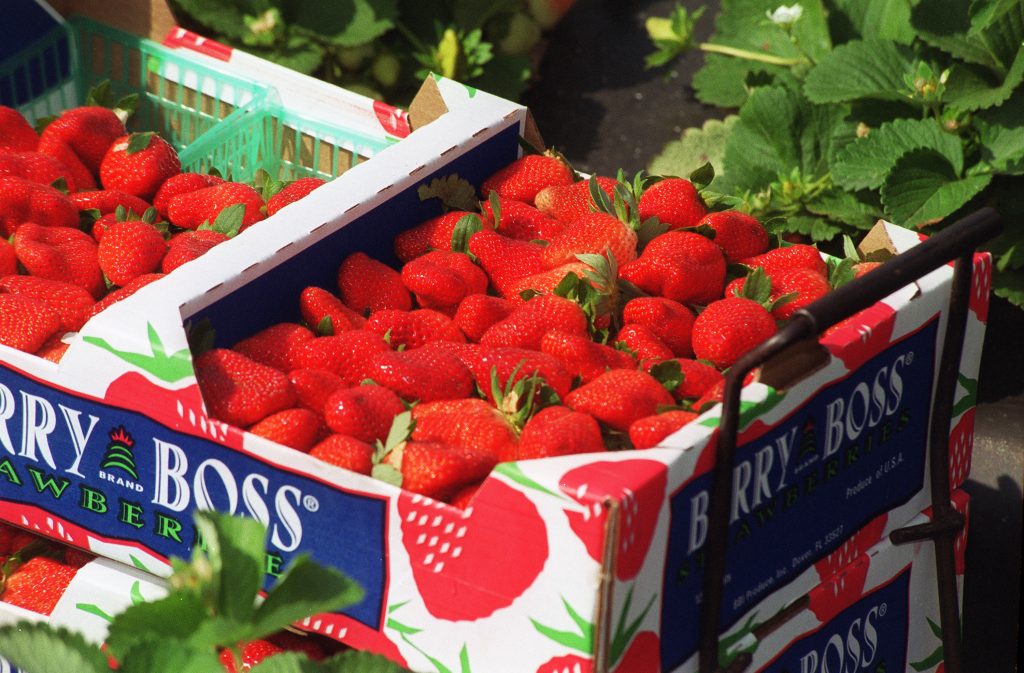
    File photo shows strawberries just harvested and packaged.

    Georgia strawberry producers need to monitor their plants for Neopestalotiopsis Fruit Rot. It has already caused problems for Florida farmers and nurseries in North Carolina where many Georgia farmers get their plugs from.

    “(Georgia producers) should be aware of it. We had a meeting on it again,” said University of Georgia plant pathologist Phil Brannen.

    “It has been found in Florida again. Some of the growers down there are ripping up a lot of strawberries and trying to replant with fresh plugs, because they got it in and don’t want to take a chance. It’s causing issues there. Even in the northeast, some people have gotten in plugs up there that have it and the same thing, they’re just destroying those plugs. They don’t want to take a chance.”

    Symptoms

    According to Strawberry News, Brannen referred strawberry farmers to research done by University of Florida scientist Natalia Peres. Symptoms below ground were darkening of the roots and orange-brown necrosis in the crowns, which leads to stunting or poor establishment after transplanting. There will be stunting, wilting and necrosis of older leaves above ground, which results in collapse and death of the plant.

    The common link of the outbreaks so far was the nursery source for the plants.

    Not Yet Found in Georgia

    “So far, we have not identified it in Georgia. We’re having other issues in our initial starting plants but it’s not that. Thankfully, everything where we have been looking for it we have not seen it or identified it yet in Georgia,” Brannen said. “I don’t know what that means. I don’t know if that means we’ve gotten lucky so far or what. But people that have been getting their plugs from certain sites in North Carolina are seeing problems.

    “We know we are getting plants that could have it. But these (nurseries) are huge. We may get a block that doesn’t have it at all.”

    Be Vigilant

    Brannen said growers should be vigilant when receiving and inspecting strawberry plants this year. They need to work with county agents to confirm diseases that show up on young and maturing plants throughout the season.

    “It’s costing the industry, even if it’s just a cleanup where it maybe an abundance of caution, people are not waiting to see what happens,” Brannen said.

    Switch and thiram products are the only fungicides that provide some suppression of the disease.