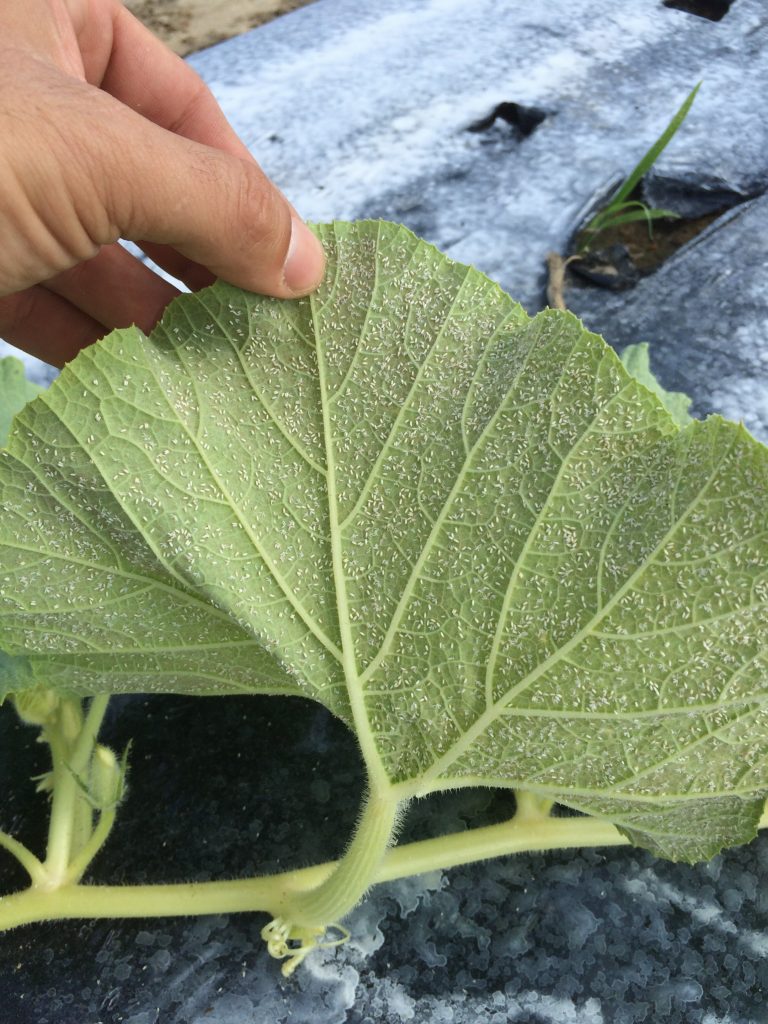
Valent U.S.A. continues to tout Senstar Insecticide as another effective tool in the toolbox for vegetable growers trying to manage whiteflies.
It offers fast and long-lasting control of soft-bodied insects of vegetable and citrus crops. These pests include whiteflies, aphids, thrips and pysillids.
Whiteflies were widespread this year and led to the worst outbreak for Southeast growers since 2017. They continue to pose risks for fall producers, according to Craig Campbell, regional Valent Field Market Development Specialist.
“With these fall crops and brassicas coming in and tomatoes and peppers, (whiteflies are) bad again and getting worse,” Campbell said. “Growers are talking about it and using sprays to try to manage them. They’re bringing in viruses again as well. They’re a real problem again this year.”
Why is Senstar so Effective?
Senstar has two modes of action and provides both translaminar and systemic activity in the plant. This allows Senstar Insecticide to control all stages of the insect’s life cycle.
It is very effective at reaching pests on the underside of the leaves, which are hard to reach with a spray. Its translaminar action means it can move up and down the leaves and manage those pests that feed on the underside.
Craig Campbell talks about how Senstar is another option for growers.
“Growers need options and they can’t make mistakes. They’ve got to be on their management program, they’ve got to be spot on,” Campbell said. “When Valent released Senstar for Southeast growers this year, vegetable growers and citrus growers, we gave them a new option.
Craig Campbell talks about why Senstar is so effective.
“What we’ve done is we’ve taken two state-of-the-art products and used a very special formulation technology that allows them to be put in the bottle together. When a grower uses them with a good adjuvant for penetration, the products get in the plant; they move up and down the plant through the leaves. They provide consistent control. That’s super important and long lasting control, what a grower really needs.”
Availability Important in 2021
Senstar’s availability all of next season is crucial since whiteflies’ impact in 2021 could be sooner and even more widespread. According to Pam Knox, University of Georgia Extension Agricultural Climatologist, a La Nina weather pattern is expected to last through the winter and early spring. The lack of colder temperatures this winter could allow whiteflies to overwinter on host plants.
Whiteflies can also transmit cucurbit leaf crumple virus and cucurbit yellow stunting disorder virus. According to UGA crop loss estimates for fall 2017, these viruses caused between 30% and 50% of crop loss in squash and cucumbers and nearly 80% of crop loss in snap beans.
Campbell talked about why Senstar is a great tool to use in a rotation.
University of Georgia breeders developed the Orange Bulldog pumpkin.
By Cecilia McGregor and George Boyhan
Cucurbit crops are some of the most widely grown vegetable crops in the Southeast. However, the hot and humid climate is conducive to pest and disease development, which presents a challenge to growers. Cucurbit breeding at the University of Georgia (UGA) is focused on breeding pumpkin, watermelon and squash with excellent fruit quality and enhanced disease resistance.
PUMPKINS
Pumpkins are an important crop in the United States, particularly as decorations during the fall. Unfortunately, pumpkins are difficult to grow in the Southeast because of diseases. There are several diseases (particularly viruses) that affect traditional pumpkins. These diseases are transmitted by aphids in a non-persistent way. This means that as soon as the insect probes the tissue, the virus is transmitted. Control is difficult, because even with 90 to 95 percent insect control, the remaining 5 to 10 percent can effectively infect the crop.
UGA began a breeding program in 1996 with a collection of pumpkin seeds from Brazil. Seed from both elongated and flattened fruit of Cucurbita maxima were obtained and interplanted. Putative hybrids were collected. This began several years of selection for fruit with a round shape, pleasing color and open cavity. These pumpkins have a greater degree of virus resistance compared to traditional pumpkins (C. pepo), so they produce more consistently.
The resulting variety, Orange Bulldog, was released in 2006. Since there was no interest among seed companies, UGA has been handling sales. The primary audience for this variety is pick-your-own and roadside marketers. The vines hold up particularly well into the fall for direct marketers that “reseed” their pumpkin patch with new fruit each day.
Pumpkin research concentrated on developing disease resistance into commercially acceptable pumpkin lines has continued at UGA.
WATERMELON
UGA is also actively breeding for gummy stem blight and fusarium wilt resistance in watermelon. Resistance to gummy stem blight was first described in 1962 when it was discovered in a wild relative of watermelon, Citrullus amarus. This is the same species that was used to breed the fusarium-resistant, non-harvested SP pollinizer cultivars.
Breeding disease resistance into commercial, edible cultivars from this wild germplasm has proven difficult since the wild relative has hard, inedible flesh. This is further complicated by the fact that there are different species of the Stagonosporopsis pathogen that cause gummy stem blight and different races of Fusarium oxysporum var. niveum that cause fusarium wilt. The resistances to these diseases are quantitative, meaning that a single resistance gene does not give field-level resistance to the diseases. All these factors have delayed the development of cultivars resistant to these diseases.
Susceptible (left) and resistant (right) watermelon seedlings infected with gummy stem blight.
The breeding effort at UGA focuses on using modern selection methods to accelerate selection for resistance genes to speed up breeding efforts. Currently, selection is in progress for fusarium race 2 resistance and gummy stem blight resistance.
In addition to these disease-resistance breeding efforts, UGA breeds cultivars specifically for homeowners and farmers’ markets. The focus here is on novel traits like a variety of flesh colors and rind patterns and the egusi seed trait.
Egusi watermelon is very popular as an oilseed crop in many parts of Africa. The seeds are very high in oil (40 to 50 percent) and protein (25 percent) and are eaten as snacks or as a thickener in soups and stews. Egusi seed is large and flat with a unique fleshy outer layer that dries into a very thin seed coat that can easily be shelled. Traditional egusi watermelon has hard inedible flesh, which goes to waste. UGA is breeding egusi watermelon with edible flesh. These plants will produce fruit that pack the health benefits associated with the antioxidants in red- and orange-fleshed watermelon while also being a source of high oil and protein seed.
SUMMER SQUASH
In 2019, UGA started a squash breeding program. This program was launched in response to the severe yield losses experienced by Georgia growers in recent years due to whiteflies and whitefly-transmitted viruses.
The sweetpotato whitefly (Bemisia tabaci) can directly cause yield losses in many different crops due to feeding, but an even bigger cause of yield losses are the viruses it transmits. Sweetpotato whiteflies can transmit more than a hundred different viruses. Cucurbit leaf crumple virus (CuLCrV) and Cucurbit yellow stunting disorder virus (CYSDV) are some of the most important to squash growers.
Commercial squash cultivars have proven to be very susceptible to these viruses, and sources of resistance have not been identified. UGA, in collaboration with the University of Florida, has started large-scale evaluations of squash germplasm from all over the world in search of resistance. Several genotypes with resistance to CuLCrV and CYSDV were identified in 2019 and are now being evaluated further for use in the breeding program.
The UGA cucurbit breeding programs are committed to developing cultivars well adapted to the Southeast, with high disease resistance and exceptional fruit quality for both large- and small-scale growers in the region.
File photo shows how whiteflies infest fall cucurbits.
Unless more rain in the upcoming weeks can knock back populations, whiteflies are a huge concern for fall vegetable growers, according to Stormy Sparks, University of Georgia (UGA) Extension vegetable entomologist.
“Right now, it’s looking pretty bad. It could be devastating. The populations are really high, and we’re just now getting started,” Sparks said. “I’ve got squash where the adult counts are 200-plus per leaf. We’re just starting to see some virus. It’s pretty low, but that can increase rapidly.”
According to the most recent release of the US Drought Monitor, about half of Georgia’s counties are classified as ‘abnormally dry,’ including Tift County where Sparks is based at the UGA Tifton campus.
“They love hot, dry weather. I saw some cotton the other day. I haven’t seen cotton that looked that bad since I was in Rio Grande Valley of Texas,” Sparks said. “Those bad spots are very spotty right now, but if we stay hot and dry, it can get ugly in a hurry. It’s already ugly in some spots.”
Rainfall is needed to, not only help the crops grow, but knock back some of the whitefly populations.
Whiteflies Everywhere
Alabama Extension cotton entomologist Ron Smith said they’re finding whiteflies as far north as Quitman County (Georgia), which is just across from Eufala, Alabama. There’s also some in the Panhandle of Florida and in some fields in the corner of Alabama down in the extreme tip between Georgia and Florida. For more information about whiteflies’ impact in cotton, click here.
Crop Devastation
Whiteflies are especially dangerous since they can also transmit cucurbit leaf crumple virus and cucurbit yellow stunting disorder virus. According to UGA crop loss estimates for fall 2017, these viruses caused between 30% and 50% of crop loss in squash and cucumbers and nearly 80% of crop loss in snap beans. While this year’s whitefly infestation does not rival 2017 yet, the numbers are still bad and a concern for growers in the middle of planting this fall’s crop.
“We can battle the whitefly, it gets real ugly and real expensive but we can battle the whitefly in most crops. It’s those crops where we have virus problems where we don’t have resistance to that are the greatest concern,” Sparks said. “The yellow squash is extremely sensitive. Zucchini is tolerant but not really resistant. Cucumbers, you can produce a crop despite the virus. Tomatoes, we’ve got tomato yellow leaf curl, if you’re not growing a leaf curl resistant variety, you have the potential to losing the crop. But most people now are growing leaf curl resistant varieties in the fall.”
Lack of Cold Winter Temperatures
While colder temperatures do not eliminate whiteflies, they do kill many of their wild hosts. They also slow population development in cultivated hosts. Warmer temperatures this winter allowed for larger whitefly populations to overwinter and become mobile earlier.
File photo shows strawberries after harvest. Howler fungicide works well in strawberries.
Howler fungicide from AgBiome Innovations is a product that harnesses the power of the plant microbiome to create a fungicide with multiple modes of action. It provides preventive, long-lasting activity on a broad spectrum of soilborne and foliar diseases and does the job for a number of specialty crops. For Florida and South Georgia growers specifically, it’s great for strawberries, onions, cucurbits and leafy greens. AgBiome Technical Service Manager Bond McInnes outlines some of the key diseases Howler works well on.
From the greenhouse through harvest, Howler fungicide can be used effectively at every phase of production. Learn more at agbiome.com.
By Ayanava Majumdar, Rammohan Balusu and Neil Kelly
Many pests feed on squash from seedling to harvest. They are generally broken down into two groups: the chewing insects and the sucking insects. Chewing insects of squash consist of common pests like cucumber beetle, squash vine borer larva and pickleworm. Sucking insect pests consist of aphids, squash bugs and whiteflies. The pests a squash grower experiences may depend on location.
PREVENTION STRATEGIES
Remember that prevention of pests is the No. 1 goal of organic integrated pest management (IPM) systems. Rapid control after pest establishment becomes a difficult aim later in the production season. Cultural control tactics that include selecting virus-resistant varieties, timely planting and harvest (reduces pickleworm buildup), crop rotation and timely removal of crop debris after harvest (reduces squash vine borer buildup), consistent irrigation and trap cropping are some basic preventive approaches, also called Level 1 control.
Perimeter trap cropping with Baby Blue and New England Hubbard squash in a mixed system is effective in reducing cucumber beetle and squash bug damage to yellow squash (main crop).
PEST EXCLUSION FABRIC
For Level 2 control, growers should use temporary or permanent pest exclusion fabric to create a barrier between insect pests and the main crop. Two lightweight materials tested in Alabama include the Super-Lite Insect Barrier (Gardens Alive, Inc.) and AgroFabric Pro 19 (Seven Springs Farm, Inc.). Both these materials look like lighter versions of the common row cover used for frost protection, but these materials are much lighter with 85 to 95 percent light and rain penetration.
The trick is to put these light fabrics on low hoops (inverted loops) almost immediately after transplanting or after the seeds have germinated. These materials deflect much of the aphids and squash vine borers that fly early in the season. Squash plants can be grown inside the fabric for several weeks and removed or partially opened when flowering begins. Growers can also release beneficial insects like lacewings and lady beetles under the fabric for controlling accidental pest infestations.
Growers also have a wide range of organic insecticides to choose from (Level 3 control). See the Organic Materials Review Institute website (www.omri.org) to find hundreds of approved organic products.
Remember to scout squash crops for timely pest detection and identification, then use insecticides per the label with equipment that gives good coverage. For example, highly mobile squash bug adults are difficult to control with natural pyrethrin and spinosad, but the flightless small nymphs are far better targets for organic spray applications.
Several premix insecticides are available commercially today in a variety of packaging, making them affordable for farmers. Squash vine borer and pickleworm larvae are internal pests, which are difficult to manage with topical spray applications. Initiate timely sprays with targeted placement where insect pests are hidden.
Don’t quit spraying too soon since weather patterns can reduce insecticide persistence. Always spray in the evening hours when bees are not around and so that the solution can dry out overnight. Stop spray applications of organic materials when pests become inactive. You can save on the cost of insecticides and protect natural enemies this way.
Finally, it is recommended that growers get in touch with Extension personnel in their state to develop an IPM strategy suitable for their farm. Producers in Alabama can download the Farming Basics mobile app to keep in touch with Alabama Extension. Subscribe to the Alabama IPM Communicator e-newsletter (www.aces.edu/ipmcommunicator) to stay informed throughout the season.
Advanced formulation of the only Group 22 insecticide for agricultural use delivers improved control and performance consistency.
Squash is one of the crops that respond well to Avaunt eVo insect control.
PHILADELPHIA, July 14, 2020 – FMC has just released and made available for immediate use a new insecticide formulation, Avaunt eVo insect control, in a range of crops including brassicas, pome and stone fruits, cucurbits, leafy vegetables, low-growing berries and dried and succulent beans.
Avaunt eVo insect control is an advanced formulation of Avaunt insecticide that provides improved mixability and rainfastness, an expanded label and an updated package size for easier handling.
“This is the next evolution of our indoxacarb-based insecticides for specialty crop growers. Avaunt insecticide has been a proven tool, and now we’ve evolved the formulation to enhance its capabilities,” says John McCool, FMC insecticide product manager. “Strengthening existing technology is another way FMC is continuing to bring innovation to the market and advance agriculture.”
Avaunt eVo insect control delivers effective control of labeled Lepidopteran pests, including several species of weevils, beetles and other chewing and sucking pests. Its expanded label also allows for higher application rates in certain crops, as well as new crop additions including dried and succulent beans, low-growing berries and small fruit vine climbing subgroups.
The new formulation delivers significantly improved residual control, mixability and rainfastness. Avaunt eVo insect control is completely rainfast once it has dried on vegetation.
“Enhancing these three attributes directly translates to better overall performance in the field,” explains Hector Portillo, insecticide product development manager for FMC. “For example, when we look at Avaunt eVo insect control trials nine days after the initial application, we’re still getting 80-90% control; a 10-20% improvement in control over the original Avaunt insecticide during the same post-application window.”
In addition to better performance, the improved mixability of Avaunt eVo insect control equates to less downtime and greater flexibility for growers. The product dissolves faster in the tank than the original Avaunt insecticide and other wettable granular insecticides. It also has a reduced mixing process, which alleviates the requirement for a set mixing cadence.
Strong, Resilient Rotational Tool
Indoxacarb, the active ingredient in Avaunt eVo insect control, belongs to the unique and proven oxadiazine class of chemistry in IRAC Group 22. Indoxacarb is the only Group 22 insecticide labeled for this crop and pest spectrum, making Avaunt eVo insect control an ideal rotational partner for growers.
“Being this is the only mode of action registered for use in this segment, it’s a strong fit in crops where growers make multiple insecticide applications per season. It provides rotational flexibility to help growers manage resistance and protect existing chemistries from resistance development,” Portillo states.
Avaunt eVo insect control is a resilient option for growers operating under hot, intense environmental conditions since it is unaffected by pH, UV, high sunlight and temperature, which are the primary factors for insecticide breakdown and failure.
For more information about Avaunt eVo insect control, visit your FMC Star Retailer or ag.fmc.com to learn more.
File photo shows downy mildew disease on watermelon.
According to the The South Carolina Grower, downy mildew disease was found Wednesday in one watermelon field in Bamberg County, South Carolina.
Justin Ballew, Clemson Extension commercial horticulture agent, said all growers should immediately spray watermelon with Ranman, Revus, or Gavel to protect their crops from the disease. In addition to direct yield loss, loss of vine cover can expose fruit to sunburn. Growers who find downy mildew in a field should apply Orondis Ultra or Orondis Opti in a weekly rotation with Ranman or Gavel.
According to a previous UGA news release, the downy mildew pathogen thrives in wet, humid conditions and needs moisture on the surface of the plant for successful spore germination and further infection.
Cucurbit crops — like cucumbers, melons, squashes and pumpkins — are susceptible to the disease.
Posted by: Joseph Kemble, Edward Sikora, and Gary Gray/Alabama Extension
According to a recent post, over the past several weeks, lower than average temperatures have been common across Alabama. Cucurbit crops (squash, watermelons, cucumbers, cantaloupes, and other small melons) are warm season vegetable crops that can suffer damage when temperatures fall below 60 degrees F. Cold damage is cumulative and can be a challenge to evaluate as cucurbits range in their response to low temperatures. With cold damage, several days at 50 degrees F to 60 degrees F can be just as damaging as a few hours at 40 degrees F.
Damage is generally worse on newly transplanted or poorly established transplants.
Stem Splitting in Squash
Stem splitting in squash.
Stem splitting is a common symptom of cold damage on cucurbit crops and has manifested all around the state, especially in central and north Alabama. The stem of an affected plant splits at or near the soil line. The length of the split can vary but generally only appears on one side of a stem. Stem splitting is not a disease but can lead to infections.
These split areas usually heal over quickly, developing a corky appearance. Unfortunately, windy conditions have been common during this spring as well. Windy conditions combined with stem splitting can cause the plants to snap off or twist at the soil line. In addition to twisting damage, spring winds can pick up sand on lighter soils and cause a sand blasting effect on tender young plants.
Aside from cold temperatures, stem splitting can also be caused in transplants when there is a period of rapid growth resulting from high temperatures, increased irrigation or high fertility.
Growers should carefully evaluate their plants to determine the extent of any cold damage their crop might have suffered. Wilted, snapped, broken, or severely “wind burnt” plants may need to be replaced. Growers should also consider applying protectant fungicides/bactericides to reduce possible infections by opportunistic disease organisms on damaged tissues.
Downy mildew disease is present in cucurbits like squash and cucumber around South Florida and is getting worse.
University of Georgia/Downy mildew disease can destroy plant foliage and cause the leaves to curl and die. Without healthy leaves and vines, a plant is vulnerable to blisters and sunscald during hot days.
According to the South Florida Vegetable Pest and Disease Hotline, respondents report that the disease is showing up in most watermelons and infections have increased in areas hit hard by rainfall.
“Around Manatee County, respondents report that downy mildew really kicked into high gear after the last rains and has been quite aggressive in some situations,” the hotline report stated.
Downy mildew also remains active on cucumber and some squash on the East Coast.
According to University of Georgia Cooperative Extension plant pathologist Bhabesh Dutta, downy mildew can destroy plant foliage and cause the leaves to curl and die. Without healthy leaves and vines, a plant is vulnerable to blisters and sunscald during hot days. The pathogen thrives in wet, humid conditions and needs moisture on the surface of the plant for successful spore germination and further infection.
Cucurbit crops — like cucumbers, melons, squashes and pumpkins — are susceptible to the disease. Dutta ranks downy mildew among the top diseases in cucurbit crops, along with Fusarium wilt and Phytophthora fruit rot.
How to Recognize Downy Mildew
For those vegetable farmers unfamiliar with what symptoms look like, focus on the leaves themselves. On cucurbits besides watermelon, small yellowish spots appear on the upper leaf surface away from the leaf margin. A yellow coloration later occurs with the internal part of the lesion turning brown. Lesions are usually angular as leaf veins restrict their expansion.
On watermelons, yellow leaf spots may or may not be angular and will later turn brown to black in color.
To control downy mildew, fungicide sprays are recommended for all cucurbits. Spray programs for downy mildew are most effective when initiated prior to the first sign of the disease. Once a plant becomes infected, it becomes more and more difficult to control with fungicides.
Submitted by Gene McAvoy, Regional Vegetable Extension Agent IV Emeritus with UF/IFAS
“Up to the end of Feb our growers were having a banner year and it looked like this season would be one of those homeruns that come around every 5-6 years.”
Here is a report that I prepared on the state of S Florida ag and shared with officials. (Long read but may shed some light on how COVID-19 is impacting agriculture in our area.)
Markets
On Tuesday, March 24, a local broker says, everything changed. From brokers, orders stopped and everything got quiet. On Wednesday, March 25, it got super quiet.
Since then tomato volumes are down 85%, green beans are like 50% and cabbage is like 50%.
R.C. Hatton has plowed under 100 acres of green beans, around 2 million pounds, and 60 acres of cabbage, or 5 million pounds.
Florida’s tomato growers target 80% of their production to restaurants and other food service companies, rather than to supermarkets. In this sector, growers are walking away from big portions of their crop.
Tony DiMare estimates that by the end of the growing season, about 10 million pounds of his tomatoes will go unpicked.
Some crops like potatoes and oranges are faring well, whileother produce isn’t selling like it used to.
With a lot of people staying home and buying mostly comfort foods, products like peppers, tomatoes and cucumbers have actually slowed down incrementally,” said Chuck Weisinger, president of Weis-Buy Farms, Inc.
“The biggest challenge we have right now is getting the stores to start buying,” said John Stanford, farm manager at Frey Farms.
As you know. produce is highly perishable and three weeks into this, many companies around Immokalee, Florida have already had to empty their coolers and dump produce. One dumped 20,000 pounds a day last week, let that sink in… 20,000 pounds of tomatoes a day. They dumped a total of 100,000 pounds so far. This is from one farm.
Three weeks in, most farms have exercised triage dumping and emptying coolers and are terminating fields for which they have no foreseeable markets. They are concentrating on maintaining fields that they still have demand for, unfortunately, depending on the crop – this is only 20-50% of the total planted.
Impacts on Ranchers
The cash market and futures prices are lower than anyone can remember. One local rancher sold calves this week and averaged $250 per head at the Arcadia auction barn. A few weeks ago he would have received $450 per head average, and that constitutes below breakeven.
In normal times, strategy would be to hold calves until the crisis is over, and hope prices will take an upswing. But there is huge uncertainty about how long this will last. A major compounding problem is the dry conditions, and lack of reserve forage. These weather patterns would normally dictate early weaning of calves. Hay costs, when available, and low market prices are a formula for hardship.
The extended impact on ranchers will be the cows not breeding back on schedule. Holding calves longer in hot and dry conditions puts a strain on a cow’s reproductive system. This has been well-documented by University of Florida researchers.
Many growers are exploring alternative methods of moving product.
Sam S. Accursio and Sons Farms’ in Homestead packing house opened direct sales to consumers, selling boxes at $10 in each of the past two weekends. They had cars stretched for half a mile in front of the packing house and were able to move 120,000 pounds of Redland-raised squash, tomatoes, beans and cukes. They also partnered with a farmer out of Mount Dora, Florida who had 30,000 flats of unsold blueberries and sold these at 12 pints for $20. Similar efforts were conducted by Alderman Farms in Bonita Beach, Florida, Farmers Alliance in Immokalee and others.
Martin County, Florida opened a pop-up drive-thru market that saw 500 cars in one day. Traditional commercial farms in South Florida have been overwhelmed by the support for the sales at their packinghouses – all fruit that would have otherwise gone unsold if waiting on traditional markets to purchase.
Growers are still concerned that a large amount of produce seen in the supermarket comes from Mexico.
According to Bill Braswell, since March 1, the start of the Florida blueberry season, Florida has produced 6.1 million pounds through last Thursday April 2. In that same time period, Mexico has imported 17.4 million pounds into the U.S., according to a USDA report. Mexico market price is $12 for a 6-ounce flat delivered to Chicago which translates to $2.60 per pound.
Labor
Growers are taking aggressive steps to protect workers from COVID-19, including keeping truckers separate from on-farm labor.
They have been taking advantage of training resources and posters supplied by IFAS Extension and others.
Agents have also shared information on essential services exemption and supplying growers with template essential services exemption letters to facilitate movement of their essential staff and labor.
Labor shortages – reports indicate that COVID-19 has delayed the U.S. government’s processing of H-2A work visas. This will impact growers in central and north Florida and up the coast.
Food banks
Last week, growers in Immokalee alone donated more than 3 million pounds of vegetables to Harry Chapin food bank, overwhelming their ability to store, transport and distribute the produce – they had to call a halt.
Farm Share, which partners with more than 2,000 food pantries, churches, schools and other nonprofits throughout Florida, is running at maximum capacity, despite having 25 refrigerated trucks, six warehouses of between 10,000 to 35,000 square feet and 40 to 50 drop sites from Jacksonville, Florida to Florida City, Florida. They usually help more than seven million pounds of food reach the hungry and now are faced with moving a lot more.
Over the past two weeks, Wish Farms has donated 220,000 pounds of fresh strawberries — equivalent to 241 pallets or nine semi-trailer loads — to feeding Tampa Bay.
Growers are having a tough time adapting because everything is happening so quick. Faced with a highly perishable product, growers are struggling to survive right now, with picking, packing and shipping everything that they can. Because of the coronavirus, things have changed. Buyers are demanding tight security, heavier sanitation, distancing and more.
We have heard many ideas and suggestions from the public and even local officials – what many people fail to realize is that picking, packing, cooling, storing and transporting vegetables costs money, and growers who have already lost millions of dollars are understandably reluctant to throw good money after bad. It also costs money to maintain fields with no hope of sales in sight. Growers are disking up fields and maintaining just what they feel they have markets for. Unfortunately, this is only about 20% to 30% of the total acreage. Each acre of tomatoes costs $10,000 to $12,000 to grow and $5,000 to $6,000 to pick and pack. Unmaintained fields rapidly succumb to pests and diseases and soon become a breeding ground threatening the health of nearby fields that growers are trying to save for their remaining markets.
It is not only veggies, as of yesterday about 7.7 pounds of milk has been dumped by one Central Florida co-op (there are a few in Florida). Milk is sold by the pound so that is 900,000 gallons.
While I don’t have the exact amount from the other co-op I would expect their numbers to match ours in north Central Florida and South Georgia. Unfortunately, we can easily say that 10 million pounds of milk has been dumped throughout Florida.
There are efforts to help farmers all over our state. In the dairy industry, there is a grassroots group of passionate producers, processors, promotion people, school representatives and Extension agents trying to get more milk moving. This group includes people from Florida and Georgia, that in normal times might view each other as the competition (different co-ops and different promotion boards). These efforts range from delivering school lunches, buying and delivering milk to food banks and those in need; contacting schools to increase their milk in each meal, contacting legislators to allow whole milk in school lunches (we need help with this), and asking stores to stop limiting the purchase of milk.
People really have no concept of the amount of food we are taking about – Immokalee alone ships approximately 400 to 500 semis of vegetables a day from March through mid-May. This is 15,750,000 pounds of vegetables headed to market every day. Add to this Belle Glade, Palm Beach Co, Homestead and the amounts are staggering. I know of one grower in Belle Glade who is disking up 1 million pounds of green beans every three days.
South Florida vegetable growers supply more than 150 million people in the eastern U.S., from Miami to Chicago, from late October to mid-May.
Here is a resource a producer may be interested in sharing – this is a clearing house for finding food – donating food etc.