Category: Coronavirus

  • Sunbelt Ag Expo Cancelled

    Contact: Becca Turner; (229) 985-1968 x2228; Email: becca@sunbeltexpo.com

    The Sunbelt Agricultural Exposition Board of Directors voted to cancel the 43rd Annual show scheduled for October 20-22, 2020.

    North America’s Premier Farm Show, the Sunbelt Ag Expo, has provided a venue for the agricultural industry to conduct business for 42 years. For the first time, since it began in 1978, the gates at Spence Field will not open the third week in October to welcome farmers, their families and loyal exhibitors.

    While the Expo staff has worked diligently over the past several months to put together an action plan that would enable a safe and successful show, it has become abundantly clear that we must change course. Unfortunately, we simply cannot safely blend networking, commerce and education while representing the rich history of the Sunbelt Ag Expo. Additionally, the board’s decision to cancel the 2020 Sunbelt Ag Expo was greatly impacted by its concern for valued attendees’ and exhibitors’ expenses, and their need to plan.

    Plans for the selection of the 2020 Swisher Sweets/Sunbelt Ag Expo Southeastern Farmer of the Year Winner and the Southeastern Hay Contest Award Winners are still being finalized. As these plans are confirmed, information will be released on our web site and social media channels. In addition, the Holiday Arts and Crafts Show, hosted by the Sunbelt Ag Expo, is still scheduled at this time for November 14-15, 2020.

    The Sunbelt Ag Expo looks forward to greeting visitors again in 2021 as it showcases the latest in farming technology, October 19-21. The show will go on! Visit www.sunbeltexpo.com for more information.

  • Not Enough Funds for CFAP?

    The recent revisions to the Coronavirus Food Assistance Program (CFAP) was a step in the right direction in the United States Department of Agriculture expanding the scope of what commodities are covered. But it also may lead to a shortage in funds being in place for producers, according to Adam Rabinowitz,

    Adam Rabinowitz

    “I think it’s going to be challenging for there to be enough funds. I think there will be some additional allocation that’s there, as well as recognition that there’s other commodities that need to be included,” said Adam Rabinowitz, who recently joined Auburn University as Assistant Professor and Extension Economist. “We may not see, for instance, some of the row crops that’ll be harvested this fall, we may not see the true impact on some of those commodities until after harvest season. Until it’s harvested, we don’t really know what’s going to happen to the markets. Clearly things have not gotten better as of yet from a health perspective, where everything’s back to normal.”

    Next Stimulus Package

    Farmers and industry leaders are highly invested in what’s talked about on Capitol Hill. Additional monetary aid for agriculture is part of the discussion on the next stimulus package.

    “They’ve started discussing the next stimulus package, and part of that discussion may be, whether or not there needs to be some additional funds available for agriculture,” Rabinowitz said. “Everything’s kind of up in the air with that in terms where the Senate proposal might be and how the Senate and the House might ultimately compromise.”

    Additional Commodities

    In a USDA press release issued on July 9, U.S. Secretary of Agriculture Sonny Perdue announced an initial list of additional commodities that were added to CFAP. Also adjustments were made by the USDA to the program based on comments from producers and organizations and review of market data during the Notice of Funding Availability period.

    “I think it’s positive, certainly expanding the scope and it kind of goes a little bit with what we found in a survey that we did with Alabama producers. A good portion of those that responded to our survey just felt that CFAP didn’t even apply to them,” Rabinowitz said. “I think broadening the scope is certainly important.”

    Producers were able to submit applications that included these commodities on Monday, July 13. The USDA Farm Service Agency is accepting applications for CFAP through Aug. 28. The program helps offset price declines and additional marketing costs due to the coronavirus pandemic.

  • North Carolina Announces Delivery of Personal Protection Equipment for Agricultural Workers

    The North Carolina Department of Health and Human Services (NCDHHS) is taking further action to prevent and respond to COVID-19 outbreaks among the agricultural workforce, delivering critical personal protection equipment for use by agricultural workers across the state.

    Roy Cooper

    “Agriculture is vital to our economy and food supply and it is critical that we protect farmworkers and their families from this virus,” said Governor Roy Cooper.

    Farmworkers are deemed an essential workforce and it is imperative that people who cultivate and harvest North Carolina’s wide variety of crops are protected. To support prevention efforts that are proven to help reduce the spread of COVID-19, NCDHHS is implementing its plan this week to deliver over 900,000 masks and other infection control supplies to North Carolina Cooperative Extension county centers across the state for distribution to farms and agricultural operations. In addition to masks, the deliveries included hand sanitizer and cloth face coverings for workers to take home.

    Thirty-one counties have been selected to receive the first delivery, including: Alamance, Alleghany, Ashe, Avery, Bladen, Columbus, Cumberland, Duplin, Durham, Edgecombe, Forsyth, Franklin, Granville, Greene, Guilford, Harnett, Henderson, Johnston, Lee, Lenoir, Lincoln, Martin, Mecklenburg, Nash, Pender, Pitt, Robeson, Sampson, Wake, Wayne, Wilson.

    “Many of our farmworkers live in group housing, putting them at higher risk of exposure to COVID-19. Providing masks is one way we are helping to protect workers,” said NCDHHS Secretary Mandy Cohen.

    NCDHHS is partnering with N.C. Cooperative Extension, the N.C. Department of Agriculture and Consumer Services (NCDA&CS), the N.C. Department of Labor (NCDOL) and the N.C. Agromedicine Institute to expedite a delivery plan and raise awareness about this resource among the farming community.

    “Some of these supplies have been difficult for farmers to source as demand has exceeded supply. I am grateful that farmworkers and farmers have been prioritized for these much-needed materials,” said Agriculture Commissioner Steve Troxler. “The health of our farmers and farmworkers is very important because we all rely on them every day.”

  • Sweet Grown Alabama Day Produces Sweet Results

    Picture submitted by Ellie Watson/Gov. Kay Ivey declared July 22, 2020 as Sweet Grown Alabama (SGA) Day. The proclaimation recognizes the state’s new branding program and honors farmers who grow food across the state. Gov. Ivey was joined by SWG Director Ellie Watson, Alabama Farmers Federation President Jimmy Parnell, Alabama Agriculture Commissioner Rick Pate, PowerSouth’s Horace Horn, and Montgomery Mayor Steven Reed.

    Sweet Grown Alabama Day will forever be July 22.

    Kay Ivey, Alabama Governor; Rick Pate, Commissioner of the Alabama Department of Agriculture and Industries; and other agriculture leaders and farmers joined forces at the Alabama State Capitol on Wednesday to celebrate the launch of a new online searchable database, which connects Alabama farmers and families.

    The celebration was highlighted by a special farmers market and Gov. Ivey issuing a proclamation that declared July 22, 2020, Sweet Grown Alabama Day.

    “Alabama’s farmers have a significant impact on our great state with over 580,000 Alabamians working in agriculture and related industries,” said Ivey in a press release. “Connecting with local farmers through Sweet Grown Alabama is a great opportunity to show your support for our neighbors and enjoy the wonderful products grown right here at home.”

    Picture submitted by Ellie Watson/Alabama Agriculture Commissioner Rick Pate speaks during Sweet Grown Alabama Day.

    Membership Database

    Originally launched in September 2019, Sweet Grown Alabama’s online membership database includes more than 150 farmers and businesses that sell Alabama-grown products directly to consumers.

    Nearly 30 vendors and Sweet Grown Alabama members joined the celebration on Wednesday with a farmers market on Bainbridge Street. They sold produce, meat, honey, pecans and other locally produced items.

    “We feel like we had a great morning. We just wanted to serve those farmers and do everything we can to make sure they had a good morning. That was the whole goal,” Sweet Grown Alabama Director Ellie Watson said. “We were glad to have them all in Montgomery today.”

    Industry leaders continue to preach the importance of buying locally grown produce and supporting Alabama farmers.

    “People are asking different kinds of questions about their food. They want more information about where it’s grown; who grew it; how it’s grown. We knew that’s what people wanted,” Pate said. “You don’t talk to anybody that doesn’t say, they want to know that the tomatoes that they’re buying at the grocery stores or the tomato they’re buying at the road-side stands are actually from Alabama.”

    Consumers can go to the Sweet Grown Alabama website and find local farms in their area. It also lists a harvest calendar so consumers can know when specific fruits and vegetables are ready to be picked. Anything from satsumas and watermelons on the fruit side to bell peppers and kale on the vegetable side are listed.

  • GFGVA Conducting COVID-19 Expense Survey

    The Georgia Fruit and Vegetable Growers Association (GFGVA) is conducting a survey with growers to gather data on expenses incurred in response to COVID-19 from Jan. 1 through June 30. The anonymous survey is designed for GFVGA to gather information to share with officials who will propose legislation aimed at protecting the growers who produce the crops that feed our nation.

    town hall

    “Our aim is to ensure growers receive adequate financial support for COVID-19-related expenses. Your responses at this time need only be good faith estimates of costs related to COVID-19 and your information will only be used to gauge the financial impact of COVID-19 to southeastern fruit and vegetable growers in 2020,” executive director Charles Hall said.

    The survey includes generic questions like what state the farmer operates in, how many workers they employ, financial expenses incurred for items like masks, gloves, handwash stations, employee screening, testing kits, disinfecting equipment and chemicals, etc.

    Growers who have any questions are asked to contact the GFGVA staff at 706-845-8200.

  • Mental Health in Agriculture Industries

    Agriculture industries have had to adapt to a lot of change in recent months. The University of Florida Institute of Food and Agricultural Sciences (UF/IFAS) has created a series of professional development webinars to help these industries navigate the global pandemic.

    Mental health in rural communities was the focus of a webinar series put on by UF/IFAS.

    The most recent session of the six-part webinar series featured a panel focused on mental health in rural communities. The panelists discussed strategies to recognize a person in crisis and resources to address mental health concerns. According to Megan Stein, the host of the series, rural mental health was the most requested topic in the data that was collected to create this webinar series.

    Limited Health Care Access

    Oftentimes, when a grower’s livelihood is at stake, he or she may face the same mental health setbacks as those living in urban areas. However, many individuals work in agriculture live in rural areas where there is limited access to health care.

    “Actual incidents of mental health problems in rural areas are really not so different. You don’t necessarily see significant differences. It’s not like in rural areas things are way worse or anything like that. I think some of the stressors are different, but more importantly I think it’s just a lot harder to access help when you live in rural areas,” says Heidi Radunovich, associate professor in the UF/IFAS Department of Family, Youth and Community Sciences.

    Even though advancements have been made in remote health care, there are still setbacks in rural areas with limited cell service and Wi-Fi, which can make it difficult to receive remote care.

    Marshal Sewell, territory sales manager for Bayer and webinar panelist, believes that it’s important to create the right messaging connecting mental health and growers. According to Sewell, many farmers or individuals in rural communities find it difficult to open up to someone who doesn’t share a similar background or circumstances. He says finding that commonality or appropriate messaging could make a world of difference.

    Available Resources

    Let’s face it, farming is a stressful job — even in good times. The COVID-19 pandemic and resulting economic turmoil compounds the daily stressors. Farmers, ranchers and rural community members need appropriate resources to help manage their own stress and support their friends and neighbors.

    Luckily, resources are available. The American Farm Bureau Federation has launched the Farm State of Mind campaign, reducing the stigma surrounding the topic of mental health in rural communities. The campaign also provides helpful resources regarding mental health for farm families.

    In addition, the U.S. Department of Agriculture and National Alliance on Mental Illness are proactively working to provide relevant resources to rural communities.

    The panel participants also stressed the importance of managing day-to-day stress by taking time for yourself. This includes exercising, reading a book, meditating or any activity that allows you to take a step back from daily stressors.

    Isolation on the farm is real. We need to be aware of our neighbors. Practicing active listening and having a conversation with each other may be the only way to reach someone who is dealing with mental health issues. By listening and understanding, we can create change.

    Ashley Robinson, AgNet Media communications intern, wrote this article.

  • Additional Fruits, Vegetables Eligible for CFAP

    Washington, D.C., July 9, 2020 – U.S. Secretary of Agriculture Sonny Perdue announced an initial list of additional commodities that have been added to the Coronavirus Food Assistance Program (CFAP) on Thursday, and that the U.S. Department of Agriculture (USDA) made other adjustments to the program based on comments received from agricultural producers and organizations and review of market data. Producers will be able to submit applications that include these commodities on Monday, July 13, 2020. 

    USDA’s Farm Service Agency (FSA) is accepting through Aug. 28, 2020, applications for CFAP, which helps offset price declines and additional marketing costs because of the coronavirus pandemic. USDA expects additional eligible commodities to be announced in the coming weeks.

    “During this time of national crisis, President Trump and USDA have stood with our farmers, ranchers, and all citizens to make sure they are taken care of,” said Secretary Perdue. “When we announced this program earlier this year, we asked for public input and received a good response. After reviewing the comments received and analyzing our USDA Market News data, we are adding new commodities, as well as making updates to the program for existing eligible commodities. This is an example of government working for the people – we asked for input and we updated the program based on the comments we received.”

    Changes to CFAP include:

    Adding the following commodities: alfalfa sprouts, anise, arugula, basil, bean sprouts, beets, blackberries, Brussels sprouts, celeriac (celery root), chives, cilantro, coconuts, collard greens, dandelion greens, greens (others not listed separately), guava, kale greens, lettuce – including Boston, green leaf, Lolla Rossa, oak leaf green, oak leaf red and red leaf – marjoram, mint, mustard, okra, oregano, parsnips, passion fruit, peas (green), pineapple, pistachios, radicchio, rosemary, sage, savory, sorrel, fresh sugarcane, Swiss chard, thyme and turnip top greens.

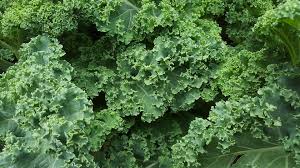
    Kale is one of the commodities included in the CFAP revision.

    Expanding for seven currently eligible commodities – apples, blueberries, garlic, potatoes, raspberries, tangerines and taro – CARES Act funding for sales losses because USDA found these commodities had a 5% or greater price decline between mid-January and mid-April as a result of the COVID-19 pandemic. Originally, these commodities were only eligible for marketing adjustments.

    Determining that peaches and rhubarb no longer qualify for payment under the CARES Act sales loss category.

    Correcting payment rates for apples, artichokes, asparagus, blueberries, cantaloupes, cucumbers, garlic, kiwifruit, mushrooms, papaya, peaches, potatoes, raspberries, rhubarb, tangerines and taro.

  • USDA CFAP Revision “Big Deal” For Blueberry Growers

    Pictured are highbush blueberries.

    By Clint Thompson

    Thursday was a win for blueberry farmers, especially in Georgia. The crop was one of seven currently eligible commodities to be added to Category 1 of the Coronavirus Food Assistance Program by the United States Department of Agriculture.

    According to the USDA press release, the USDA found these commodities had a 5% or greater price decline between mid-January and mid-April as a result of the COVID-19 pandemic. Originally, these commodities were only eligible for marketing adjustments, which Florida blueberry farmer Ryan Atwood believes would not have helped growers like himself at all.

    “Not many individuals qualified for 2 or 3. But everyone in Florida is going to qualify, just about for Category 1. That’s why it is a big deal,” Atwood said.

    According to https://www.farmers.gov/cfap/specialty, eligible specialty crops in CFAP are broken down into three categories:

    1. Had crops that suffered a five percent-or-greater price decline between mid-January and mid-April as a result of the COVID-19 pandemic,
    2. Had produce shipped but subsequently spoiled due to loss of marketing channel, and
    3. Had shipments that did not leave the farm or mature crops that remained unharvested.

    Atwood, who lives in Mount Dora, Florida is one of the state’s blueberry leaders. He farms 56 acres of blueberries, manages another 350 acres and is part-owner of the largest packing house in the Southeast United States.

    Early Crop This Year

    Atwood’s and other farmers’ blueberry crops were early this year due to a mild winter, and high temperatures in January and February accelerated growth. However, when he started picking high volumes of blueberries, which was around March 18, that is when the pandemic shut down the country.

    Market prices reflected the pandemic’s impact. Atwood said in late April that the market was 50% of the historical average price, so half of the money of what you would typically get because of the coronavirus.

    That is why the USDA’s revision to include blueberries in Category 1 was a major win for the industry.

    “There’s a lot of people that are going to need that. It’s going to help them make it to next season. I know people that are getting loans and doing what they can and getting by, but every little bit helps get you there,” Atwood said.

    USDA is accepting CFAP applications through August 28, 2020. Learn more at farmers.gov/cfap.

  • Nikki Fried: Consumer Conscience Awakening Result of COVID-19

    By Clint Thompson

    A biproduct of the ongoing coronavirus pandemic was the positive response consumers had to supporting American farmers. Nikki Fried, Florida Ag Commissioner, calls it a “consumer conscience awakening.”

    File photo shows Florida Agriculture Commissioner Nikki Fried visits with farmer Paul Allen, Palm Beach County Commissioner Melissa McKinlay and Tom MacVicar of MacVicar Consulting.

    “When people go to the food stores, they were seeing on one point, you’ve got Mexican strawberries inside of our food stores and then you’re seeing all of the reports of our crops in Florida being plowed under and milk being poured out. They couldn’t understand what was happening,” Fried said. “People started to wake up. People are going to their local farmers, to the farmers markets and to the U-picks. We also kicked off our online marketplace, Farm To You, which allowed about 380 different commodities; we had about 500,000 hits on the webpage. You’re hearing these success stories across the state of Florida and really across the entire country where more and more consumers are going directly to the farmer and building that personal relationship, wanting more domestic grown.”

    It is a sentiment that was shared by Paul Allen, president of R.C. Hatton Farms in Belle Glade, Florida and chairman of the Florida Fruit and Vegetable Association. He said in May that the point of supporting American farmers was received loud and clear amid the pandemic and the constant influx of imports from Mexico.

    “The American people have heard everything that’s been on the national media all about Mexico. They’ve stopped buying Mexican produce. They’re buying American produce,” Allen said.

    Tough Start to Season

    Unfortunately, it was not always this way this season. In a previous interview in early April, Allen said he left about 2 million pounds of green beans in the field and about 5 million pounds of cabbage. All because of the coronavirus pandemic that shut restaurants down and closed off a major supply chain to foodservice industries.

  • Three Georgia Farmers Market Locations Could Be Spared

    UGA picture/Watermelons being researched on the UGA Tifton Campus. 6–6-17

    By Clint Thompson

    The revised budget cut requirements from the Georgia Governor’s Office of Planning and Budget and the State Legislature may have spared the state farmers market locations in Cordele, Thomasville and Savannah.

    Julie McPeake, Georgia Department of Agriculture Chief Communications officer, confirmed that as a result of the budget cut requirement from 14% to 10%, the State Legislature provided funds to support the transition of ownership of the Cordele, Thomasville and Savannah farmers markets to their respective local governments.

    “In May, the Governor’s Office of Planning and Budget (OPB) requested that state agencies present a plan to cut 14% of their budgets for fiscal year 2021. The Georgia Department of Agriculture (GDA) operates with a very efficient budget, forcing very difficult decisions to reach the requested budget cuts, including a proposal to close multiple state farmers markets,” McPeake said. “However, following a revision of revenue estimates, OPB and the State Legislature reduced budget cut requirements from 14% to 10%. As a result, the Legislature provided funds to support the transition of ownership of the Cordele, Thomasville, and Savannah farmers markets to local governments effective April 1, 2021.” 

    Impact From Coronavirus Pandemic

    Locations in Augusta, Cordele, Macon, Savannah and Thomasville were on an initial list to be cut. McPeake said the locations in August and Macon are still scheduled to be off the GDA’s books for 2021, but she didn’t have a timeline for any transition.

    It is unfortunately a necessary evil that had to be considered during this recession which is a result of the coronavirus pandemic.

    “With the 14% budget cuts that were requested, you’ve got to make some decisions. Unfortunately, some of those tough decisions require looking at hard numbers. When you have some markets that are having trouble to turn a profit, that’s one of the first places you’ve got to turn to, to save that money,” said Paul Thompson, marketing director for the Georgia Department of Ag, in early June.

    The different farmers market locations vary in what commodities are sold there. In Cordele, the self-proclaimed “Watermelon Capital of the World,” it is known for watermelons and cantaloupes being bought and sold this time of year.

    July 1 began the new fiscal year.