Category: Coronavirus

  • Deadline Approaching for USDA’s Coronavirus Food Assistance Program

    Application Deadline is Sept. 11

    Fordyce

    WASHINGTON, Aug. 28, 2020–U.S. Department of Agriculture (USDA) Farm Service Agency (FSA) reminds farmers and ranchers that the deadline to apply for the Coronavirus Food Assistance Program (CFAP) is Sept. 11, 2020. This program provides direct relief to producers who faced price declines and additional marketing costs due to COVID-19.

    “FSA offers several options for farmers and ranchers to apply for CFAP, including a call center where employees can answer your questions and help you get started on your application,” said Richard Fordyce, Farm Service Agency administrator. “With only two weeks before the deadline, now is the time to check out the resources on our website and contact the call center or your local office for your last-minute questions.” 

    More than 160 commodities are eligible for CFAP, including certain non-specialty crops, livestock, dairy, wool, specialty crops, eggs, aquaculture, and nursery crops and cut flowers. All eligible commodities, payment rates, and calculations can be found on farmers.gov/cfap.

    Customers seeking one-on-one support with the CFAP application process can call 877-508-8364 to speak directly with a USDA employee ready to offer general assistance. This is a recommended first step before a producer engages the team at the FSA county office at their local USDA Service Center.

    Producers have several options for applying to the CFAP program by the Sept. 11 deadline:

    • Using an online portal, accessible at farmers.gov/cfap. This allows producers with secure USDA login credentials, known as eAuthentication, to certify eligible commodities online, digitally sign applications, and submit directly to the local USDA Service Center.  
    • Completing the application form using our CFAP Application Generator and Payment Calculator found at farmers.gov/cfap. This Excel workbook allows customers to input information specific to their operation to determine estimated payments and populate the application form, which can be printed, then signed, and submitted to their local USDA Service Center. 
    • Downloading the AD-3114 application form from farmers.gov/cfap and manually completing the form to submit to the local USDA Service Center by mail, electronically, or by hand delivery to an office drop box. In some limited cases, the office may be open for in-person business by appointment. Visit farmers.gov/coronavirus/service-center-status to check the status of your local office. 

    USDA Service Centers can also work with producers to complete and securely transmit digitally signed applications through two commercially available tools: Box and OneSpan. Producers who are interested in digitally signing their applications should notify their local service centers when calling to discuss the CFAP application process. You can learn more about these solutions at farmers.gov/mydocs

    All other eligibility forms, such as those related to adjusted gross income and payment information, can be downloaded from farmers.gov/cfap/apply. For existing FSA customers, these documents are likely already on file.

    All USDA Service Centers are open for business, including some that are open to visitors to conduct business in person by appointment only. All Service Center visitors wishing to conduct business with FSA, Natural Resources Conservation Service or any other Service Center agency should call ahead and schedule an appointment. Service Centers that are open for appointments will pre-screen visitors based on health concerns or recent travel, and visitors must adhere to social distancing guidelines. Visitors are also required to wear a face covering during their appointment. Our program delivery staff will be in the office, and they will be working with our producers in the office, by phone and using online tools. More information can be found at farmers.gov/coronavirus.
  • H-2A Applications Processed Effectively in Timely Manner Amid Coronavirus Pandemic

    state department
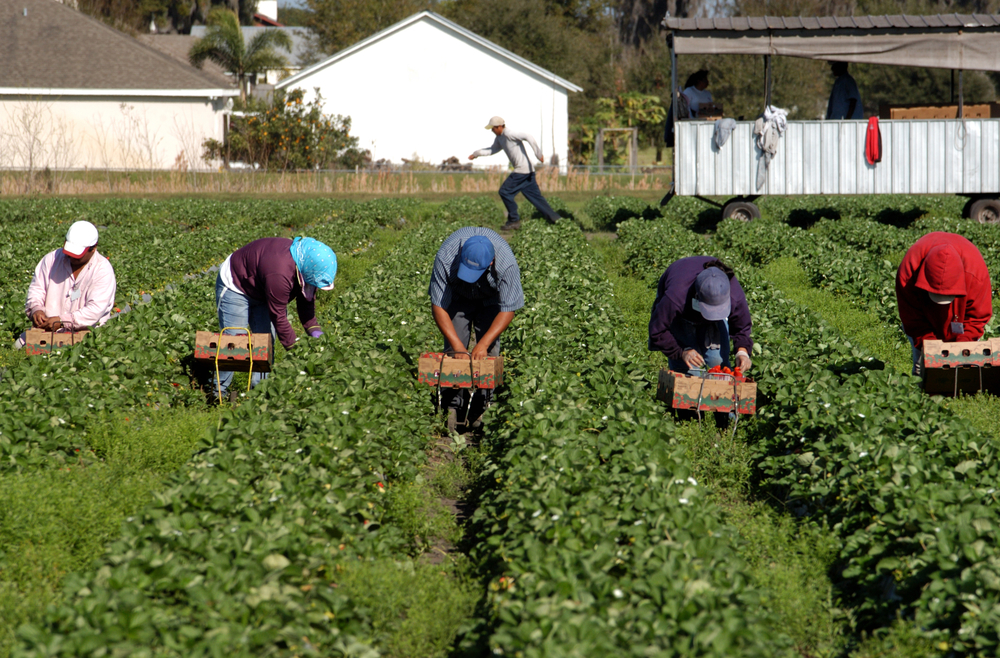
    File photo shows workers picking strawberries.

    Third quarter data from the Department of Labor (DOL) shows H-2A applications were processed effectively and in a timely manner even during the early onset of the coronavirus pandemic, according to Veronica Nigh, economist with American Farm Bureau.

     “With as much transition as there was for just the physical staff up here in D.C. and DOL, going from working in person to doing remote work, I think it would have been very much expected to see the percentage of applications fall off on that ‘timeliness’ percentage but it hung right in there,” Nigh said. “I think that certainly reflects the recognition of the importance of the program.”

    According to the U.S. Citizenship and Immigration Services, the H-2A program allows U.S. employers who meet specific regulatory requirements to bring foreign nationals to the United States to fill temporary agricultural jobs. Florida is the largest user of the H2A program during the first three quarters of the year. It listed 28,005 certified positions. Georgia, another user of the program, listed a little more than 23,000 certified positions.

    “Certainly, the Southeast is a big user of the program,” Nigh said.

    ‘Timely’ Processing

    One of the stats that Nigh was most encouraged with was the percentage of applications that were processed in a “timely” manner, which happens when an application is resolved 30 days before the needed start date. For the period from April 1 through June 30, 96% of applications were processed in a “timely” manner, compared to 86% in the third quarter in 2019 and 90% in 2018.

    “I think there was a lot of interest from us and all the other farm groups and certainly our farm members about whether or not some of the delays they saw and some of the concerns we had earlier in the year about H-2A, whether or not folks were actually able to get the workers that their farms needed,” Nigh said. “What that data showed was, my goodness, the demand for H-2A and the processing of applications certainly continued to be high and showed growth from last year. For the number of certified positions, it was up 4% compared to the third quarter of 2019, which is, I think, surprising given all the concerns there were.”

    Flexibilities

    Nigh said flexibilities were given to the processing of H-2A applications. Normally, an interview was required before a Visa was issued, but that was waived for H-2A workers. Also, if workers were already in the U.S. but had a Visa about to expire, the government allowed them to apply for a different position.

    “If you combine all of that, the deeming of them as essential workers; known applicants not having to do an in-person interview; making border travel easier for those folks; extending time in the U.S. for those who were already present; it really had the impact of making sure folks were able to continue to get to the U.S. to work and stay here. Therefore, the H-2A program was able to continue,” Nigh said.

    Nigh said more than 90% of H2A workers come from Mexico.

  • Alabama Growers Be Mindful of Deadline Extension for CFAP

    lettuce
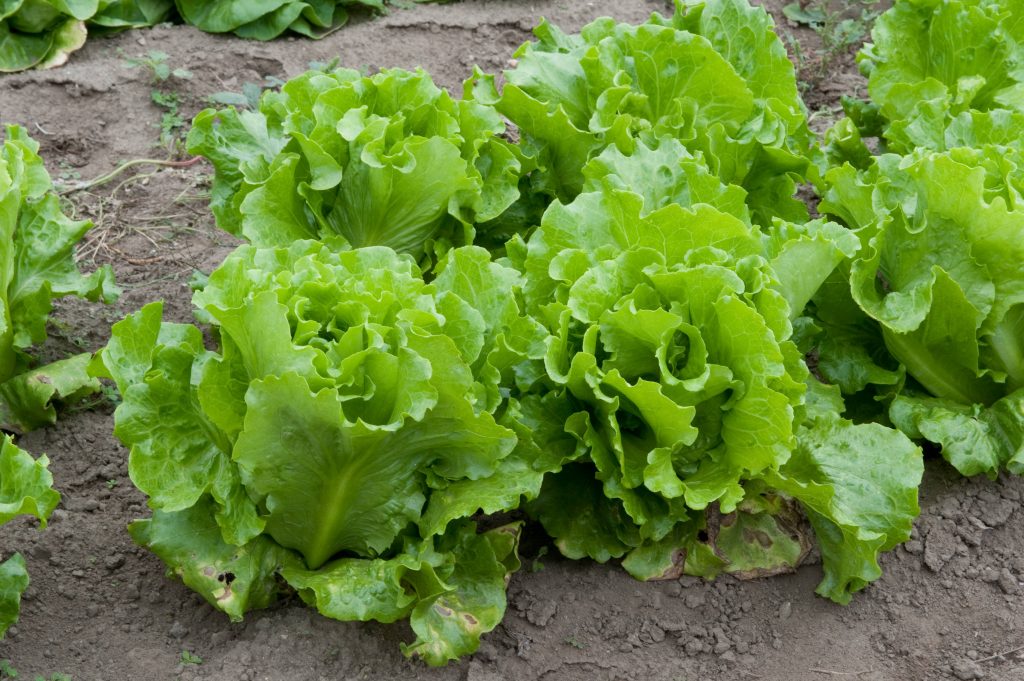
    File photo shows lettuce being grown in a field.

    Auburn University Assistant Professor and Extension economist Adam Rabinowitz wants Alabama non-specialty crop and specialty crop producers to be aware of the deadline being extended for the Coronavirus Food Assistance Program (CFAP) and what crops in the state are most impacted.

    In the Alabama Extension blog, Rabinowitz reminded producers that CFAP provides financial assistance to growers of selected agricultural products. Initial payments of 80% of eligibility were made to producers who filed claims by the initial sign-up deadline. The USDA has since announced an extension of the deadline to Sept. 11.

    The USDA also announced that payments for the additional 20% of eligibility will be processed automatically for those who have already enrolled. Farmers producing eligible crops should visit their FSA office to enroll in this program. More information is available on the USDA website.

    Adam Rabinowitz

    Alabama Impact

    CFAP assistance is available to specialty crop producers, including selected fruits, vegetables, nursery crops, and cut flowers. Those crops that are most relevant to Alabama producers that are harvested before April 15 include but are not limited to:

    • Broccoli
    • Cabbage
    • Greens, collard, kale, mustard, and turnip
    • Lettuce
    • Peas
    • Potatoes, fresh and other
    • Squash, including zucchini
    • Strawberries

    As of Aug. 17, 33 specialty crop applications in Alabama were approved by the USDA Farm Service Agency, resulting in payments of just over $800,000 to Alabama producers.

  • Response Requested From Ag, Marine Industry Professionals for New Round of Surveys

    By: Kirsten Romaguera, 352-294-3313, kromaguera@ufl.edu

    GAINESVILLE, Fla. — University of Florida researchers have opened the second round of surveys on COVID-19’s impact on the state’s agriculture and marine industries, intended to capture changes in operations for the first half of the year.

    The Assessment of COVID-19 Impacts on Florida surveys were first deployed in mid-April and closed in mid-May, offering a glimpse at the changes and uncertainty that came with the early days of the pandemic. In total, more than 1,500 respondents across five sector-specific surveys shed light on how their businesses were faring just as statewide stay-at-home orders were in full effect. Reports on the findings are being finalized now and will soon be made available.

    Similar industry groups will be targeted for the second round of surveys, defined as follows:

    1. Agriculture and aquaculture production (broadly defined to include crop production, forestry/timber, nursery and greenhouse operations, agritourism, beekeeping, etc.); survey: tinyurl.com/uflsurvey-round2-agaquaculture
    2. Commercial fishing; survey: tinyurl.com/uflsurvey-round2-fishing
    3. Charter/For-hire operations; survey: tinyurl.com/uflsurvey-round2-charter
    4. Seafood wholesale dealers; survey: tinyurl.com/uflsurvey-round2-seafood
    5. Marine recreation support businesses; survey: tinyurl.com/uflsurvey-round2-recreation
    Christa Court

    “We were satisfied with the response rate of the first round of surveys, but I know there are experiences and impacts that we weren’t able to capture in the first round, especially when it came to specific commodities or sectors,” said Christa Court, assistant professor of regional economics in the UF/IFAS food and resource economics department. “Together, Florida’s agriculture and marine industries are a significant contributor to the state’s economy, but what makes our state unique is the diversity of activities and products that these industries engage in and produce. The more data we can collect from producers and operations of all types, the more insights we can provide on the variety of ways each of the sectors are being uniquely impacted by and adapting to the COVID-19 pandemic. It’s important that we find as many pieces of this puzzle as possible to understand implications for the broader food system and the economy.”

    Survey questions have been refined to make it as easy as possible for respondents to complete the survey while providing the information necessary for a detailed valuation of losses. Some questions might look familiar from the first round; however, in most cases, adjustments were made to account for the more nuanced impacts of the pandemic scenario.

    Court acknowledges that hurricane season is also a complicating factor for this second round of surveys. The UF/IFAS Economic Impact Analysis Program, which she directs, also conducts post-hurricane analyses.

    “Even though we saw in the first survey that the pandemic affects these sectors quite differently than natural disasters such as hurricanes, there’s a potential for compounding disasters in this next survey period,” she said. “We hope we don’t have to account for that, but we are prepared for the possibility.”

    As with the first round of pandemic-related surveys, Court is joined by fellow FRE faculty Andrew Ropicki and John Lai. Ropicki, an assistant professor of marine economics who also has a Florida Sea Grant appointment, will again lead the marine survey analysis. Lai, an assistant professor of agribusiness, focuses on the agriculture portion.

    In addition, based on responses from the first round of surveys, there is an ongoing collaboration between UF/IFAS, Florida Gulf Coast University, and Florida A&M University to conduct interviews with industry professionals. This effort spans across all segments of the food system, from input suppliers, to producers and processors, to restaurant owners, and everything in between. Previous survey respondents who expressed interest in sharing more about their experiences during this pandemic have been contacted and additional participation is welcomed. Industry professionals in agriculture or food-related sectors who are interested in sharing their stories and experiences should contact David Outerbridge, County Extension Director in Lee County, at douterbridge@ufl.edu or (239) 533-7512.

  • CFAP Expansion Doesn’t Include Hemp; Growers Respond

    File photo shows field of hemp plants.

    U.S. Hemp growers are disappointed the recent Coronavirus Food Assistance Program commodity expansion does not include hemp. Last week, the Department of Agriculture expanded the commodities covered under the program that provides COVID-19 relief to producers. CFAP includes commodities that USDA can prove saw losses of 5% or more in the first quarter of 2020.

    The U.S. Hemp Growers Association (USHGA) says, “We believe our farmers did present evidence of losses to our growers that were 5% or more in the first quarter of 2020.”

    Hemp is such a newly legal crop that it does not have the advantage of data gathered by USDA agencies. Currently, the data available to understand the market is gathered privately by several data companies. USHGA believes two datasets showed a 5% pricing decrease and more in hemp and hemp products in the first quarter of 2020.

    The statement says, “All hemp farmers are now wondering what kind of treatment they will receive should there be future problems.”

    (From the National Association of Farm Broadcasters)

  • USDA Announces More Eligible Commodities for CFAP

    Application Deadline Extended to Sept. 11

    (Washington, D.C., Aug. 11, 2020) – U.S. Secretary of Agriculture Sonny Perdue announced today that additional commodities are covered by the Coronavirus Food Assistance Program (CFAP) in response to public comments and data. Additionally, the U.S. Department of Agriculture (USDA) is extending the deadline to apply for the program to Sept. 11, and producers with approved applications will receive their final payment. After reviewing over 1,700 responses, even more farmers and ranchers will have the opportunity for assistance to help keep operations afloat during these tough times.  

    Perdue

    “President Trump is standing with America’s farmers and ranchers to ensure they get through this pandemic and continue to produce enough food and fiber to feed America and the world. That is why he authorized this $16 billion of direct support in the CFAP program, and today we are pleased to add additional commodities eligible to receive much needed assistance,” said Secretary Perdue. “CFAP is just one of the many ways USDA is helping producers weather the impacts of the pandemic. From deferring payments on loans to adding flexibilities to crop insurance and reporting deadlines, USDA has been leveraging many tools to help producers.”  

    Background

    Background: USDA collected comments and supporting data for consideration of additional commodities through June 22, 2020. The following additional commodities are now eligible for CFAP:

    Specialty Crops – aloe leaves, bananas, batatas, bok choy, carambola (star fruit), cherimoya, chervil (french parsley), citron, curry leaves, daikon, dates, dill, donqua (winter melon), dragon fruit (red pitaya), endive, escarole, filberts, frisee, horseradish, kohlrabi, kumquats, leeks, mamey sapote, maple sap (for maple syrup), mesculin mix, microgreens, nectarines, parsley, persimmons, plantains, pomegranates, pummelos, pumpkins, rutabagas, shallots, tangelos, turnips/celeriac, turmeric, upland/winter cress, water cress, yautia/malanga, and yuca/cassava.

    Non-Specialty Crops and Livestock – liquid eggs, frozen eggs and all sheep. Only lambs and yearlings (sheep less than two years old) were previously eligible.

    Aquaculture – catfish, crawfish, largemouth bass and carp sold live as foodfish, hybrid striped bass, red drum, salmon, sturgeon, tilapia, trout, ornamental/tropical fish, and recreational sportfish.

    Nursery Crops and Flowers – nursery crops and cut flowers.   Other changes to CFAP include: Seven commodities – onions (green), pistachios, peppermint, spearmint, walnuts and watermelons – are now eligible for Coronavirus Aid, Relief, and Economic Stability (CARES) Act funding for sales losses. Originally, these commodities were only eligible for payments on marketing adjustments.

    Correcting payment rates for onions (green), pistachios, peppermint, spearmint, walnuts, and watermelons.  

    Additional details can be found in the Federal Register in the Notice of Funding Availability and Final Rule Correction and at www.farmers.gov/cfap.  

    Producers Who Have Applied: To ensure availability of funding, producers with approved applications initially received 80% of their payments. The Farm Service Agency (FSA) will automatically issue the remaining 20 percent of the calculated payment to eligible producers. Going forward, producers who apply for CFAP will receive 100% of their total payment, not to exceed the payment limit, when their applications are approved.  

    Applying for CFAP: Producers, especially those who have not worked with FSA previously, are recommended to call 877-508-8364 to begin the application process. An FSA staff member can help producers start their application during the phone call.  

    On farmers.gov/cfap, producers can: Download the AD-3114 application form and manually complete the form to submit to their local USDA Service Center by mail, electronically or by hand delivery to their local office or office drop box. Complete the application form using the CFAP Application Generator and Payment Calculator. This Excel workbook allows customers to input information specific to their operation to determine estimated payments and populate the application form, which can be printed, then signed and submitted to their local USDA Service Center.  If producers have login credentials known as eAuthentication, they can use the online CFAP Application Portal to certify eligible commodities online, digitally sign applications and submit directly to the local USDA Service Center.  
    All other eligibility forms, such as those related to adjusted gross income and payment information, can be downloaded from farmers.gov/cfap. For existing FSA customers, these documents are likely already on file.  

    All USDA Service Centers are open for business, including some that are open to visitors to conduct business in person by appointment only. All Service Center visitors wishing to conduct business with FSA, Natural Resources Conservation Service or any other Service Center agency should call ahead and schedule an appointment. Service Centers that are open for appointments will pre-screen visitors based on health concerns or recent travel, and visitors must adhere to social distancing guidelines. Visitors are also required to wear a face covering during their appointment. Our program delivery staff will be in the office, and they will be working with our producers in the office, by phone and using online tools. More information can be found at farmers.gov/coronavirus.  
  • House Ag Committee Seeks Specialty Crop Relief

    House Agriculture Committee members seek more Coronavirus Food Assistance Program relief for specialty crop growers. The group recently sent a letter to Agriculture Secretary Sonny Perdue with the request.

    Led by Congresswoman Stacey Plaskett, a Democrat from the U.S. Virgin Islands, the lawmakers say, “The direct payment program under CFAP has failed to provide equitable relief to the specialty crop sector.”

    Plaskett

    The lawmakers say the funds have been particularly difficult to access for specialty crop farmers who are young, socially disadvantaged or rely on local markets with diversified production practices.

    As of August 3, 2020, USDA had provided more than $6.8 billion in direct payments to domestic farmers and ranchers. Out of that total, only $270 million has been provided to specialty crop producers, representing less than 4% of overall assistance.

    To remedy the issue, the lawmakers requested, “USDA must do more to assist the specialty crop sector, particularly those farmers who are young, socially disadvantaged, or sell into local markets.”

    (From the National Association of Farm Broadcasters)

  • Commissioner Fried Pleads for Secretary Perdue Expand CFAP to Include More Commodities

    Tallahassee, Fla.Florida Agriculture Commissioner Nikki Fried wrote to U.S. Secretary of Agriculture Sonny Perdue on Tuesday, once again asking the USDA to expand eligibility for the Coronavirus Food Assistance Program (CFAP) to include additional agricultural commodities.

    commissioner
    Nikki Fried
    Florida Agriculture Commissioner

    On July 9, the USDA announced expanded CFAP eligibility that included many impacted Florida crops, but aquaculture and horticulture commodities were not included at that time. With the August 28 CFAP enrollment deadline approaching, Commissioner Fried again asked Secretary Perdue to include aquaculturists and nursery growers in CFAP, and to extend the enrollment deadline for these additional industries.

    Florida ranks second in the U.S. for nursery crops, valued at $574 million, and is among the top U.S. states for seafood production at $730 million in value, with over 400 commercial aquaculture operations. Both industries faced significant losses due to COVID-19 market disruptions.

    Fried’s letter to Perdue may be downloaded here or viewed here on social media.

    Commissioner Fried has been a vocal advocate of USDA assistance during COVID-19 for Florida’s agriculture industry, which has suffered over $522 million in losses since March for seasonal crops alone. In March, she asked the USDA to speed up billions in assistance to farmers and purchase additional crops through federal programs, and has encouraged producers to sign up for USDA purchase programs including CFAP.

    Florida Department of Agriculture and Consumer Services

  • CFAP Deadline is Aug. 28

    Farmers impacted by COVID-19 and hoping to take advantage of the Coronavirus Food Assistance Program have a little more than three weeks left before the Aug. 28 deadline. That is when the United States Department of Agriculture will stop accepting applications from producers.

    Runge

    Through CFAP, USDA made available $16 billion in financial assistance to producers of agricultural commodities who have suffered a 5%-or-greater price decline due to COVID-19 and face additional significant marketing costs as a result of lower demand, surplus production, and disruptions to shipping patterns and the orderly marketing of commodities.

    Max Runge, Extension specialist in agricultural economics at Auburn University, believes CFAP has been a success for growers.

    “Overall, I think it has been a success. It provided some much-needed funding and hopefully some cash flow for some producers that needed it. It wasn’t a perfect program. I know some people feel like they were left out or they didn’t get enough, or it should have been done differently. But overall, I think it was very helpful to our producers.”

    In mid-July, the USDA, amended the original crop list covered under CFAP to include additional commodities, including the addition of blueberries to Category 1.

    According to https://www.farmers.gov/cfap/specialty, eligible specialty crops in CFAP are broken down into three categories:

    1. Had crops that suffered a five percent-or-greater price decline between mid-January and mid-April as a result of the COVID-19 pandemic,
    2. Had produce shipped but subsequently spoiled due to loss of marketing channel, and
    3. Had shipments that did not leave the farm or mature crops that remained unharvested.

    Resources for farmers regarding the payments are available at www.farmers.gov/cfap.

  • Farmer Feedback Essential for Adequate Analysis

    Feedback during the Notice of Funding Availability comment period for the Coronavirus Food Assistance Program yielded positive results for certain commodities added in coverage by the United States Department of Agriculture.

    It also pointed to the importance of farmers and industry leaders responding to surveys and requests for information. In this case, it allowed the USDA to make appropriate decisions regarding the allocation of funds.

    Adam Rabinowitz

    “I think there was some good feedback listened to and I think that open communication is important. I think it also stresses the need for producers to respond to requests for information where there’s these surveys or the USDA is collecting data. Because without that data, we can’t do adequate analysis that really tells their story,” said Adam Rabinowitz. He’s an Assistant Professor and Extension Economist at Auburn University.

    “From a research and Extension perspective, making sure the growers are answering these surveys that they’re providing the USDA with that data, that’s vitally important.”

    CFAP Coverage

    According to a USDA press release, commodities like blackberries, collard greens, kale greens and pineapple were added to coverage. Seven eligible commodities were provided expanded coverage under Category 1. These included apples, blueberries, garlic, potatoes, raspberries, tangerines and taro.

    “When we announced this program earlier this year, we asked for public input and received a good response. After reviewing the comments received and analyzing our USDA Market News data, we are adding new commodities, as well as making updates to the program for existing eligible commodities. This is an example of government working for the people – we asked for input and we updated the program based on the comments we received,” said Ag Secretary Sonny Perdue in the USDA press release.

    According to https://www.farmers.gov/cfap/specialty, eligible specialty crops in CFAP are broken down into three categories:

    1. Had crops that suffered a five percent-or-greater price decline between mid-January and mid-April as a result of the COVID-19 pandemic,
    2. Had produce shipped but subsequently spoiled due to loss of marketing channel, and
    3. Had shipments that did not leave the farm or mature crops that remained unharvested.

    USDA collected comments and supporting data for consideration of additional commodities through June 22, 2020.