Category: Citrus

  • Florida Citrus Growers Have New Tool to Fight Greening

    University of Florida photo.

    By: Ruth Borger, 517-803-7631, rborger@ufl.edu

    LAKE ALFRED, Fla. — If information is power, Florida citrus growers have a new asset in their fight against citrus greening disease which has been impacting the state’s multi-billion dollar citrus industry.

    The University of Florida Institute of Food and Agricultural Sciences statewide citrus program launched a major revision of a website, providing instant access to a portfolio of information valuable to growers.

    The citrusresearch.ifas.ufl.edu website underwent a major revision, making it easier to navigate, adding new access to research trials, publications and presentations.

    “We know growers are busy and don’t have time to search multiple sites for information,” said Michael Rogers, professor and director of the UF/IFAS Citrus Research and Education Center in Lake Alfred, Florida.  “We put the most current research in one website where growers can search for and find what they need to be successful in today’s challenging growing situation.”

    The new site includes special features of interest to growers including:

    • Data from over 20 rootstock trials conducted by the UF/IFAS plant improvement team. Growers can review the data collected from the trials and compare data from sites across the state.
    • UF/IFAS researchers share their ongoing research priorities in citrus economics, grove management, new varieties, nutrition/water management, psyllid management and root health.
    • A resources section includes current production and nutrition guides and Extension documents (edis.ifas.ufl.edu) on citrus-related topics from 2016 to the present that are easily linked to from the website and are also presented by researcher for easy searching.

    “This website is just one of the ways that the UF/IFAS citrus team is working to support growers with the latest science to best battle citrus greening. We are working to get this information directly to growers as soon as it is available so that they may be able to put it into action as soon as possible,” Rogers said.


  • Do You Use Carbaryl on Citrus or Blueberries?

    The Environmental Protection Agency is re-evaluating the risks of Carbaryl for continued registration of this chemical. In order to protect Carbaryl for use, the Florida Fruit and Vegetable Association is surveying growers on its use. Your data is critically important. Even if you do not use Carbaryl, input is needed.

    The Cabaryl case study will be presented as part of a national workshop later this year or early next year. Be aware that some products use the name “Sevin” but do not contain Carbaryl. Please take the survey and send it to Mike.aerts@ffva.com.

  • New Format Planned for Educational Sessions During Virtual Citrus Expo

    While coronavirus will prevent the citrus industry from gathering this year at Citrus Expo, it will not stop growers from getting the education they need.

    The 2020 Citrus Expo educational program will be held live online Aug. 19–20 and will include door prizes. If you’re lucky, you could walk away with one of four $200 Bass Pro gift cards!

    The online virtual event will include three parts: 1) a general session for everyone, 2) a citrus program and 3) a vegetable and specialty crop program.

    In the general session, Florida Department of Agriculture and Consumer Services Director of Cannabis Holly Bell will give an update on the state’s hemp program. Bell made a big splash at last year’s Expo, and we are excited to welcome her back to the event. She’ll discuss how the Florida hemp program is becoming the role model for the country. The general session also is expected to cover trade and water issues, two major current concerns for Florida growers.

    Some of the topics University of Florida Institute of Food and Agricultural Sciences researchers are planning to speak about in the citrus program include:

    • Soil health and cover crops
    • Soil amendments and conditioners for root health
    • Tree care considerations for individual protective covers
    • Economics of grove management
    • Nutrition and irrigation practices for HLB management
    • Exotic viral diseases
    • Performance of rootstocks and varieties

    The seminars will remain available online after the live event, but there will be additional content available exclusively for those who attend the live two-day program. It is expected that continuing education units will be available toward the Florida restricted-use pesticide license as well as the Certified Crop Adviser designation for those viewing the seminars.

    Not to be missed in the virtual event will be a special vendor corner. This is where exhibitors and sponsors will share their industry expertise and connect with attendees.

    Registration is sponsored by Syngenta, and details will be provided soon on how to sign up for the event. For now, mark your calendar for virtual Citrus Expo on Aug. 19–20. Please note that this is one week later than Citrus Expo was originally planned for.

    For more information, stay tuned to CitrusExpo.net, email CitrusExpo@AgNetMedia.com or call 352-671-1909.

    About the Author

    Tacy Callies

    Tacy Callies

    Editor of Citrus Industry magazine

  • Expos Canceled Due to Changing COVID-19 Conditions

    Although grower and exhibitor interest remains high, AgNet Media has canceled the 2020 Citrus Expo and Vegetable & Specialty Crop Expo in the interest of public safety.

    For nearly three decades, Citrus Expo has been a tradition that growers look forward to each year. Unfortunately, that tradition will be on hiatus this year, due to the recent rapid escalation of COVID-19 cases in Florida.

    Robin Loftin, president of AgNet Media, the host of Citrus Expo, made the difficult decision on Monday to cancel this year’s event citing safety and health concerns associated with the increasing coronavirus pandemic. While AgNet Media had every intention of producing the event, a public health advisory issued by Florida State Surgeon General Scott Rivkees prompted the company to change its decision. The advisory, which recommends wearing masks in public places, advises all individuals to refrain from gatherings of more than 50 people.

    “When we made the decision to move forward with the Citrus Expo event, Florida had just entered phase two of reopening, COVID-19 cases were down, and the decision to continue with the event made sense,” Loftin said. “Unfortunately, though, as we have seen with this pandemic over the past three and a half months, there are new developments almost daily. Cases have been spiking recently in Florida. Our top priority will always be the health and well-being of our Citrus Expo attendees, exhibitors, sponsors and the AgNet Media team. Therefore, we feel it is prudent to cancel the event amid the uncertainty with COVID-19.”

    AgNet Media, in conjunction with the University of Florida Institute of Food and Agricultural Sciences, is planning to host virtual seminar programs for citrus, vegetable and specialty crop growers. This will include seminars that would have been presented at Expo. The details are still being finalized, but it will take place in August.

    “We understand the value that Citrus Expo brings to growers and industry leaders and we are working to provide a virtual resource that will continue to benefit the industry,” said Event Manager Josh McGill. “Please stay tuned for more information.”

  • Florida Orange Production and Latest U.S. Estimates

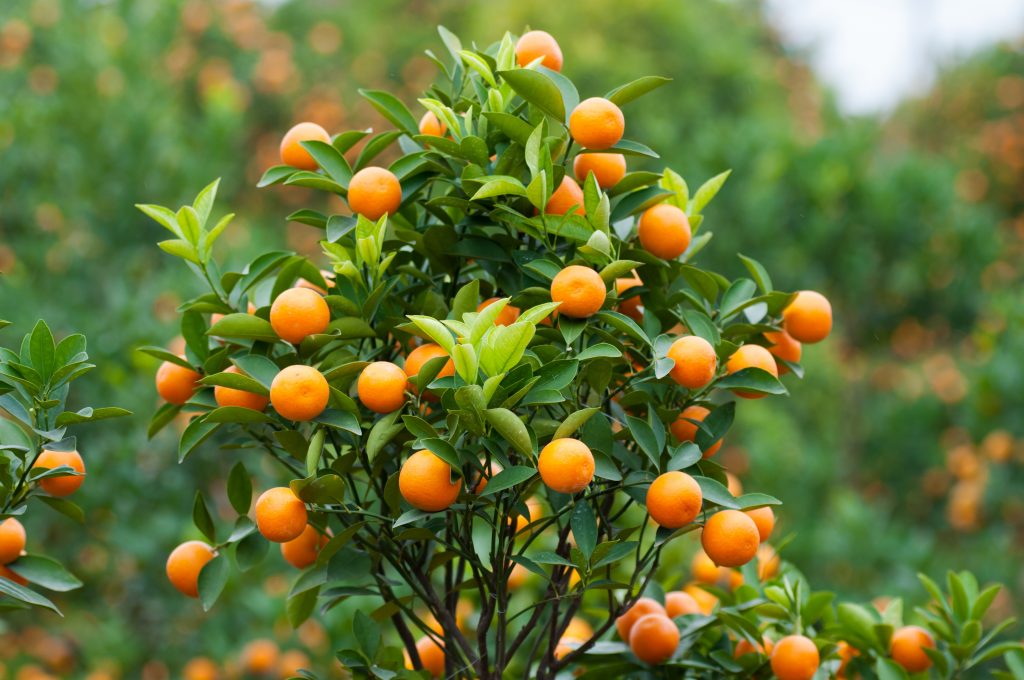
    Pictured are satsuma oranges.

    The nation’s orange production season is winding down and Florida’s production is almost finished. Thursday, the U.S. Department of Agriculture’s National Agricultural Statistics Service (NASS) issued its June forecast, which showed a decrease in the Florida citrus crop. Rod Bain has a story looking at the production estimates for the crop nearing the final totals for the marketing year.

    Click here to get more numbers form the latest citrus crop forecast.

  • Cloud-Based Technology Helps Farmers Count Citrus Trees

    UF/IFAS/Dr. Ampatzidis in his lab at the UF/IFAS Southwest Florida Research and Education Center in Immokalee, Florida.
     

    By: Brad Buck, 813-757-2224 (office); 352-875-2641 (cell); bradbuck@ufl.edu

    In his quest to find the right drone and other artificial intelligence to help ensure citrus growers get an accurate count of their crop, Yiannis Ampatzidis and his research team have developed a system known as Agroview.

    The technology saves farmers time and money and helps them accurately count their trees, which is important for insurance purposes.

    The latest results of the University of Florida scientist’s research show a computerized method that counted 175,977 citrus trees on a commercial citrus farm in Hendry County at nearly 98% accuracy.

    Ampatzidis also found that the combination of unmanned aerial vehicles (UAV) and Agroview — a novel type of cloud-based technology — counts trees and measures their canopy, which is important for farmers to maintain their insurance policies. Insurance companies need to know how many trees a farmer has – and how dense they are – so they can decide whether to renew the growers’ policies and at what price.

    “This is critical for breeders and farmers to evaluate the productivity of their plants,” said Ampatzidis, a UF/IFAS assistant professor of agricultural and biological engineering.

    For the new research, Ampatzidis and his colleagues attached an imaging mechanism to a UAV, and it accurately detected citrus trees and gaps between trees in a commercial grove. Because many citrus trees are damaged or die from citrus greening disease, farmers must remove the plants from their groves. That tree removal causes gaps between trees.

    His latest research, published in the journal Computers and Electronics in Agriculture, builds on a study he published last year. In the prior study, conducted on a commercial farm in Highlands County, Ampatzidis also used Agroview. For the current study, UF/IFAS researchers used Agroview again, but they utilized a less-costly camera.

    Since Hurricane Irma, the U.S. Department of Agriculture requires growers to submit accurate tree inventories for all perennial tree policies if a grower suffers a significant increase or decrease in insurance policy coverage each year.

    Until now, growers had to manually count citrus trees. That’s extremely time-consuming, labor-intensive and costly, Ampatzidis said.

    Growers count trees and submit their inventories to their insurance companies. To do this, farmers or consultants utilize at least two full-time workers equipped with a truck or ATV and counting devices, and they drive throughout the groves to manually count trees.

    The new techniques save time and money, said Ampatzidis.

    “We estimate the traditional tree-count procedure can cost around $14 per acre and take up to four weeks to cover 1,000 acres,” he said. “The Agroview application can be used to save the Florida citrus industry — among other industries all over the world — at least 60% of the data collection cost, and 90% of the data collection time.”

    The next steps for Ampatzidis and his research team are to develop:

    • Yield prediction models for citrus and vegetables.
    • Disease detection models for vegetables.
    • Nutrient prediction models and application maps for variable rate technologies, for example, fertilizers and sprayers.
  • UF/IFAS Extension Agents Working Together to Better Serve Citrus Growers

    A new newsletter will help UF/IFAS Extension agents work better to serve citrus growers.

    By: Ruth Borger, 517-803-7631, rborger@ufl.edu

    LAKE ALFRED, FL — Florida’s citrus growers have long benefited from productive relationships with UF/IFAS Extension commercial citrus agents who work in central and Southwest Florida.

    And it’s about to get better.

    UF/IFAS Extension commercial citrus agents operating in Hillsborough, Polk, Highlands, DeSoto, Hardee, and Manatee counties are launching a new newsletter. They hope to use the platform to streamline important communications with growers, share critical information in a timely way, and enhance already strong working relationships.

    “Our goal is always to improve service to commercial growers, “said Chris Oswalt, commercial citrus Extension agent serving growers’ needs in Hillsborough and Polk Counties. “We will be delivering more relevant and timely citrus information without sending multiple emails containing the same or similar information.”

    Calling themselves Central Florida Citrus Extension, the group includes long-time Extension agent Chris Oswalt, Highlands County County Extension Director Laurie Hurner and the newest agent, Ajia Paolillo. Together they bring more than 60 years of citrus growing experience to the region.

    “We are still serving our local citrus growers; nothing changes on that front,” Hurner said.

    The team hopes to improve communication about programs that happen in neighboring counties that growers may be interested in.

    “Growers will travel across county lines for good programming,” Paolillo explained. “Now, we can actively promote those educational sessions that are happening in a neighboring county to a larger audience.” The newsletter rolled out its first issue on May 29 and will be published monthly except in July/August, typically lighter months for commercial citrus operations. If you already receive a newsletter from one of these agents, you automatically will receive the new newsletter. If you would like to subscribe to the newsletter, please email your UF/IFAS Extension citrus agent. You may find the agent for your  location at https://citrusagents.ifas.ufl.edu/locate/index.shtml .

  • UF/IFAS Researchers Try to Reduce Fruit Drop, Increase Yield in Valencia, Hamlin Oranges

    UF/IFAS photo/Dr. Tripti Vashisth examining citrus fruit in a lab at the Citrus Research and Education Center in Lake Alfred. Photo taken 03/08/16.

    By: Brad Buck 813-757-2224 (office); 352-875-2641 (cell); bradbuck@ufl.edu

    UF/IFAS citrus scientists Tripti Vashisth and Fernando Alferez are trying to reduce the amount of fruit that drops from Hamlin and Valencia trees prior to harvest. If fruit drops, growers can’t harvest it, and that leads to losses for farmers and less fruit at the market for consumers.

    Normally, about 10% to 15% of citrus fruit drops from a healthy tree, said Alferez. With citrus greening now prevalent throughout Florida’s citrus growing regions, scientists and growers have seen pre-harvest fruit drop increase in the last decade, he said. In the 2012-2013 season, researchers and citrus farmers noticed about 25% of their crop lost because of greening-associated pre-harvest fruit drop. Now, depending on the citrus variety, growers may see a pre-harvest drop, and it could be up to 50%.

    Fruit-Drop Issues

    The two UF/IFAS scientists are studying many fruit-drop issues. For example, they’re looking into the effect of removing “fruitlets’’ – fruit that’s less than 2 centimeters in diameter – from so-called “off-blooms.” 

    “Typically, healthy citrus trees bloom early in spring, and they may have another wave of flowers later in the spring, but it is atypical for the tree to bloom in late summer,” said Alferez. Those would be an example of “off-bloom” fruit.

    Preliminary experiments from the two UF/IFAS researchers show that removing “fruitlets” from off-blooms when Hamlin oranges are mature results in more mature fruit hanging onto citrus trees – as opposed to dropping — Alferez said. This may increase yield because the mature fruit drops less.

    Valencia oranges are more complex, as several blooms occur during the last part of fruit maturation, he said.

    “Also, we have found that fruit drop is associated with fruit development,” said Alferez, an assistant professor at the UF/IFAS Southwest Florida Research and Education Center in Immokalee, Florida. “Small fruit are more likely to drop.”

    Another Finding

    Another preliminary finding? Insufficient carbohydrates do not cause fruit drop. Therefore, the researchers recommend growers use good irrigation and nutrition practices during the fruit-development period. Vashisth and Alferez also say if growers apply gibberellic acid during the fruit-development period, it can help reduce fruit drop.

    “Our preliminary findings are important because they show that the fruit drop related to HLB is not a simple process,” said Vashisth, an assistant professor at the UF/IFAS Citrus Research and Education Center in Lake Alfred, Florida. “There is no single cause for the fruit to drop. There have to be more causes, and that is what we are trying to understand now.”

    In healthy trees, competition for resources between mature and “fruitlets” causes some ready-to-harvest fruit to drop.

    Citrus Greening Disease

    Citrus greening disease – known to scientist as huanglongbing (HLB) — may contribute to fruit dropping from trees. HLB has caused tremendous damage to citrus in Florida.

    “In general, trees displaying fewer HLB symptoms or that are relatively healthy tend to have less pre-harvest fruit drop and can hold on to fruit for a longer time,” said Vashisth.

    Usually, these  “off-blooms” are not abundant; they’re only on a few branches, but it may affect tree performance if it is sick with HLB.

    “In Hamlin and Valencia oranges, we have observed several off-blooms resulting in new fruit as the current crop is already developing,” Vashisth said. “This is normal in healthy trees growing in tropical or subtropical regions, such as Florida. However, in an HLB-affected tree, this may compromise the tree’s ability to keep fruit. It may also reduce yield, because the new fruitlets and mature citrus compete for carbohydrates.”

    Funding for this research is possible by state legislative funding for the UF/IFAS Citrus Initiative and UF/IFAS new faculty funding.

  • Coming Soon to a Store Near You: Florida Finger Limes

    Photo courtesy of UF/IFAS. Shows a Florida finger lime.

    LAKE ALFRED, Fla. — Sweet oranges. Ruby red grapefruit. Sugar Belle mandarins. When one thinks of Florida citrus, these fruits immediately come to mind.

    But finger limes?

    A University of Florida Institute of Food and Agricultural Sciences researcher believes that finger limes maybe the next food trend that will continue to fortify Florida’s role as a citrus producer for the world.

    Manjul Dutt, a research scientist with the UF/IFAS Citrus Research and Education Center, has received funding to explore how finger limes could be grown and marketed by Florida citrus growers.

    It is a project that brings both opportunity and the potential to diversify the Florida citrus portfolio.

    Finger limes are an oblong, finger-shaped fruit about 4 inches long with red, pink or green-yellow pulp filled with tangy juice. They are a culinary delicacy used as garnishes for sushi, vegetables, salads and pasta. Finger limes grow mostly in Australia, California and Hawaii. Dutt believes Florida’s climate, agricultural expertise and soils are perfect to develop an emerging agricultural enterprise.

    “An added benefit is that finger limes have the potential to tolerate Huanglongbing (HLB), use less fertilizer and require less pesticide than other forms of citrus,” said Dutt. 

    What is HLB?

    HLB is the cause of the deadly citrus greening disease that has impacted most groves across Florida.

    In the project, scientists will plant several finger lime plots across the state at UF/IFAS and stakeholder facilities to measure how successful the plants are in different conditions. Researchers will also assess the best production methods to grow finger lime under Florida conditions. 

    UF/IFAS citrus breeders will help with the research. They will evaluate the fruit’s tolerance to HLB, which will include sequencing the finger lime’s DNA to identify disease-resistance genes. This in turn may provide insights to enhance existing research underway to breed a citrus-greening resistant tree.

    Researchers will also look at market opportunities for finger limes in Florida and potential for distribution both in institutional and consumer markets. Tasting sessions will evaluate if consumers find the finger limes flavorful, appealing to taste and smell, and whether it looks good on a grocery shelf.

    Research History

    Dutt has been studying finger limes since 2012 and established a finger lime trial in 2017 with funding support from the Florida Department of Agriculture and Consumer Services’ Specialty Crop Block Grant Program.  That pilot study attracted the interests of several citrus and specialty crop growers who are enthusiastic about the project. 

    “We are excited about the possibility that a new citrus variety might be available to Florida growers,” said Anna Jameson of Brite Leaf Citrus Nursery. 

    “We envision a steady growth of the market and there has been increased demand for this crop in the last few years,” Dutt said.  “The UF/IFAS citrus breeding program has some improved cultivars that are potentially superior to currently available varieties.”

    The current 18-month project is funded by the UF/IFAS Support for Emerging Enterprise Development Integration Teams (SEEDIT) program.  The program is designed to fund integrated research, Extension and economics faculty team science to alleviate barriers in developing emerging enterprises for the state of Florida. 

    Given the issues Florida agriculture faces, the time is right for us to take a scientific and systematic approach in developing more options for profitable and sustainable industries in the state. Dutt has also received financial support from the UF/IFAS Plant Breeding Graduate Initiative to fully support a doctoral student who will be researching the HLB tolerance characteristics of the finger limes.

  • UF Researchers Find Promising New Treatment in Fight to Beat Citrus Greening

    UF picture/Cut pieces of red grapefruit. Photo taken 11-29-17

    By: Ruth Borger, (517) 803-7631, rborger@ufl.edu

    GAINESVILLE, Fla. — University of Florida researchers have discovered another possible solution to the plague of citrus greening that is impacting Florida’s citrus groves.  This new information adds to the growing portfolio of knowledge that UF scientists are amassing to fight the disease.

    Led by UF Institute of Food and Agricultural Sciences microbiology and cell science professor Claudio Gonzalez, a team of plant pathologists, horticulturists and citrus breeders identified new management practices that slowed the spread of the damaging bacterium and supported increased fruit yield.

    “Our findings present another solid block of information in the foundation of finding solutions to citrus greening,” said Christopher Gardner, a biological scientist who was a member of the research team.

    The three-year project funded by the United States Department of Agriculture’s National Institute of Food and Agriculture division included greenhouse and commercial field trials. Researchers injected solutions of benzbromarone (benz), tolfenamic acid (tolf) and a combination of both benzbromarone and tolfenamic acid into trees of varying ages in both environments. Results showed that the treatment decreased infection in the roots of citrus trees compared to the control trees and increased fruit production (15%) following twelve months of treatment with benzbromarone and tolfenamic acid.

    Two field trials were conducted in Florida, where benz, tolf and the combination of benz and tolf were evaluated for effectiveness against the greening bacterium in sweet orange and white grapefruit trees, ranging from 8 to 12 years old. Treatments were delivered by trunk injections.

    The amount of C. paradise fruit classified in categories of higher marketable value significantly increased after the treatments; the combined benzbromarone and tolfenamic treatment was the most effective.  Trees that received injections formulated with the combined treatment (Benz and Tolf) were found to produce 15% more fruit (by fresh fruit weight), when compared to the control group. C. paradisi trees that received tolfenamic acid trunk injections had seven percent more fruit at the time of harvest, when compared to controls that received buffer only.

    “Considering that treatments were only administered for one season, we found these results to be remarkable, as reduced fruit size is one of the primary adverse effects of citrus greening disease,” said Gardner.

    The treatments did not compromise tree viability or the soil surrounding the trees. Nor did the treatment create any negative long-term effects that would inhibit the safety of the fruit. The chemical treatments included in the project have not been assessed or approved by the FDA or USDA for use in agriculture.  Researchers will continue testing compounds with similarities to those we have already identified (Benz and Tolf), to find chemicals with higher efficacy against Liberibacter asiaticus. While more research is needed, the findings contributed to the growing portfolio of knowledge on fighting citrus greening.

    The research was recently published in Nature Scientific Reports.

    The mission of the University of Florida Institute of Food and Agricultural Sciences (UF/IFAS) is to develop knowledge relevant to agricultural, human and natural resources and to make that knowledge available to sustain and enhance the quality of human life. With more than
    a dozen research facilities, 67 county Extension offices, and award-winning students and faculty in the UF College of Agricultural and Life Sciences, UF/IFAS brings science-based solutions to the state’s agricultural and natural resources industries, and all Florida residents.