Category: Citrus

  • Citrus Interest Growing in North Florida, South Georgia

    Interest in citrus continues to spike in North Florida and South Georgia. Georgia acres have doubled over the past year. North Florida has increased by another 300 to 400 this spring, says farmer Kim Jones, who owns a citrus packing facility in Monticello, Florida.

    “We’re seeing a whole lot of acres being planted. It’s hard to get trees. We’ve had some difficulties getting trees for Georgia growers and Florida growers,” Jones said. But there’s still a lot of demand and a lot of interest in planting them; a lot of cleaning up being done and wells put in and irrigation put in.

    “I’ve got 2,000 trees I can’t get. They won’t be here until next April. I ordered them in 2019 and won’t get them until next year.”

    Acreage

    Jones estimates North Florida acreage is up to around 1,200 to 1,300 acres. South Georgia’s acreage is around 2,000 acres. The acreage is increasing amid the Citrus Greening era that has devastated the crop in the rest of Florida.

    “We’re worried about it, but hopefully counting on there being a solution or a remedy to that before long. We’re just hoping and praying that’s the case,” Jones said. “It is a factor. We got it in Perry. We got it all along the Gulf Coast in East Point and Apalachicola and Panama City; those areas through there that have homeowner trees. No commercial groves yet.”

    Jones believes that since most of the citrus groves are isolated and spaced out, they should be able to fight the disease pretty good. Everybody is watching out for Asian citrus psyllids, which vectors Citrus Greening.

    “There’s not much that won’t kill a psyllid,” Jones added. “We’re not doing preventative sprays, but we’re already having to spray for the other insects; it helps keep them at bay.”

  • Impact: UF Study Focuses on How Soil Health Impacts Citrus, Other Tree Crops

    How can changes in soil health impact citrus and other sub-tropical tree crops? That’s a question UF/IFAS researchers hope to answer in a four-year, $500,000 project funded by the U.S. Department of Agriculture National Institute of Food and Agriculture.

    Specifically, they will examine how quickly soil health can change in Florida’s sub-tropical sandy soils and how changes in the soil’s health might impact yield.

    “Our goal is to help producers by finding out what cover crops do to soil health in Florida groves,” said Sarah Strauss, assistant professor of soil microbiology in the UF/IFAS soil and water sciences department and the lead investigator on the grant project. “While there’s a lot of interest in soil health right now, much of the research and metrics for assessing it are not based on sub-tropical sandy soils like we have in Florida. In order to determine if soil health is improving, growers need to know what the best parameters are to measure. That includes determining which indicators are the most useful for monitoring the soil health of tree crops.”

    Sometimes, though, impacts may not be observed for several years. Strauss and her team want to know what indicators can be measured only once a year or more frequently that might show progress even if yield hasn’t changed yet. This would provide grove management information to producers in a more timely fashion.

    Research Specifics

    The team will first measure soil physical, biochemical and microbial parameters involved in carbon, nitrogen and phosphorus cycling at two Florida citrus groves. This provides a detailed assessment of the changes to the soil environment and microbial groups with cover crops. After measuring cover crop impacts on soil in the groves, scientists will see which soil health indicators can carry over to the non-citrus setting. They will also share Florida-specific information with producers.

    “In vegetable or row crop systems, cover crops are planted during the fallow season for a few months and then the cash crop will be planted in the same field. That’s not the case for a tree crop, and in Florida, we can keep cover crops growing in the middle of rows between the trees all year,” said Strauss, a faculty member at the UF/IFAS Southwest Florida Research and Education Center in Immokalee. “So, metrics for how quickly things change in the soils for a tree with cover crops may be very different than in a vegetable or cotton field.”

    Strauss said they will also compare results with some commercial soil tests to see how indicators relate to what is currently available on the commercial level. Many commercial tests may not provide suggestions or recommendations specific to tree crops.

    “Ultimately, this study will provide a list of meaningful soil health indicators that Florida producers can use to meet their unique needs in sub-tropical tree fruit systems,” she said.

    Source: UF/IFAS

  • Ripening Industry: Georgia Citrus Continues to Grow

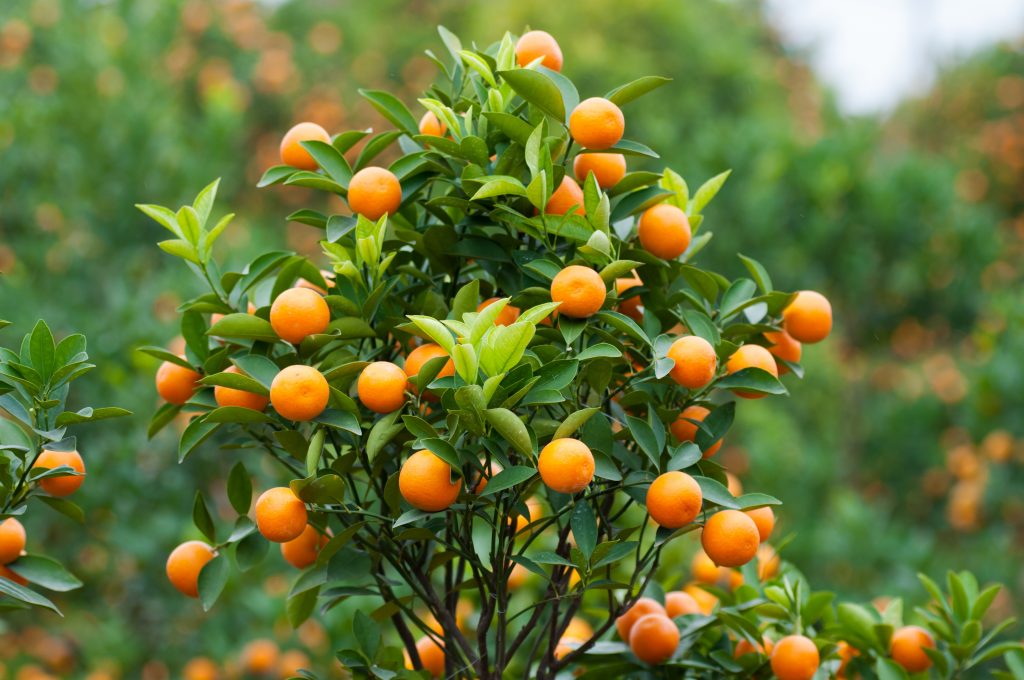
    Photo shows satsuma oranges.

    One Georgia farmer sees citrus as an emerging industry in Georgia with huge potential. Justin Corbett even compares it to another popular crop that’s dominated the state’s fruit landscape.

    “I think it has the potential to be a big industry. I compare it to blueberries 10 or 15 years ago, I just hope we don’t follow the same path they followed with imports affecting them now,” Corbett said.

    Corbett is one of many farmers in Georgia who are trying their hand in the citrus sector with satsumas. Satsumas are the most grown citrus in Georgia. Between 80% and 90% of Georgia citrus is satsuma oranges, according to Lindy Savelle, President of the Georgia Citrus Association.

    They are a cold-tolerant citrus, and once established, can withstand temperatures as low as 15 degrees. This makes them an effective crop for Georgia producers. They’re also seedless and easy to peel.

    “It’s definitely an emerging industry. We’re trying to build a brand with it and trying to get consumers aware of what a satsuma is. Once the consumer tries it, they love it,” said Corbett, whose trees have produced fruit for almost six years. “It’s a challenge to get them in to retail locations and different places just to get them out there. Where we’ve got them in, they’ve been real pleased with how they’ve turned out.”

    Along with marketing, another challenge that Corbett and other Georgia citrus producers face are late-season freeze events.

    “We have been hit in the past where we would get a mid-March freeze and wind up with losing some bloom, losing some yields,” Corbett said.

  • Another Tool in the Toolbox for Citrus Producers?

    UF Glow variety of citrus. Photo taken 11-17-17

    LAKE ALFRED, FLA — University of Florida researchers continue to study ways to combat Huanglongbing (HLB), or citrus greening disease.

    One discovery brings the potential of another tool for citrus growers to control Asian citrus psyllid, the insect that transmits the disease-causing bacterium, and protect infected trees from further damage.

    Kirsten Pelz-Stelinski, an associate professor of entomology and nematology at the UF Institute of Food and Agricultural Sciences Citrus Research and Education Center, discovered that 2’-deoxy-2’-flouro-d-arabinonucleic acid antisense oligonucleotides (FANA ASO) (small-sized single-stranded nucleic acids) can be used to silence essential genes within the psyllids and in the bacterial pathogen that causes citrus greening.

    Pelz-Stelinski and her team reduced the citrus greening disease pathogen in the psyllid and in citrus. This led to less transmission and a potential reduction in disease severity.   

    “The intent of this research was to find alternative, environmentally-friendly tools for psyllid management as current pest management strategies have led to the development of resistance among Asian citrus psyllid populations,” said Pelz-Stelinski. “Understanding the relationships of essential bacteria needed for insect survival provides potentially important targets for control strategies that use bactericides. By disrupting how the psyllid acquires and processes the pathogen while impacting the nutrition and fitness of the psyllid may provide an alternative management tool in controlling transmission of the HLB pathogen”

    The research was recently published in the online Nature Scientific Reports.

    For more information see UF/IFAS News.

  • Industry in Decline: Citrus Greening, Irma Impacting Florida Citrus Production

    Citrus greening has contributed to the industry’s decline in Florida.

    Florida citrus production has decreased for almost two decades. According to Marisa Zansler, director of economic and market research at the Florida Department of Citrus, the two main factors for the state’s steady decline are citrus greening (huanglongbing, known as HLB) and Hurricane Irma.

    Staggering Statistics

    Zansler presented staggering statistics during the Florida Agricultural Policy Outlook Conference on Feb. 26 that showed how production has decreased since 2003–04. It was the season before citrus greening emerged as a threat to the state’s citrus industry.

    Florida is projected to produce 56 million boxes of oranges this season, which would be the state’s second smallest citrus output in the last 20 years.

    “Florida citrus production is projected to decrease 18.5% compared to last season. That’s largely due to an increase in fruit drop this season. This could very well be a lingering effect from Hurricane Irma back in September 2017 just as harvesting of the crop was set to commence,” Zansler said.

    Fruit Drop

    According to the University of Florida Institute of Food and Agricultural Sciences, postbloom fruit drop affects all cultivars of citrus but cases can be severe depending on bloom emergence in relation to rainfall. Navel and Valencia oranges experience the most damage because they can have multiple blooms.

    Due to Hurricane Irma’s impact, Florida’s 2017–2018 citrus season yielded the smallest orange output at around 45 million boxes. To put that into context, the season before HLB took a stranglehold on the state’s citrus industry, Florida produced 242 million boxes of oranges.

    “Orange production right now, which accounts for 91% of Florida’s certified citrus production or is projected to exceed 90% this season, is estimated to decline nearly 20%,” Zansler said. “Florida production of oranges today at 56 million boxes (the USDA forecast for February) is actually less than a quarter of what it was back in the 2003–04 season.”

  • Long Wait: Solution for Citrus Greening Will Take Years

    It may not be the news Florida citrus growers want to hear but it’s the reality of citrus greening. It is likely to be several years before a remedy is found and put in place to combat this destructive disease.

    Fred Gmitter

    Fred Gmitter, a University of Florida Professor in Horticultural Sciences, shared his assessment during a recent American Seed Trade Association webinar.

    “We learn a lot more every day that goes by. There are labs all around the world looking at different kinds of solutions for citrus greening,” Gmitter said. “Very recently there’s been talk about a peptide that’s produced by a kind of citrus called Microcitrus that seems to be able to kill the bacteria. It’s being tested right now and if it turns out to be reality, we may have a solution within the next two years.”

    Work with Peptides

    He warns, though, that researchers have worked with peptides over the last 15 years. Some that looked good in the beginning eventually failed. Gmitter doesn’t know if that will be the case with this latest potential solution, however.

    According to the UF/IFAS, citrus greening, or Huanglongbing (HLB) is a disease affecting citrus production throughout the world. The Asian citrus psyllid, which is found throughout Florida, transmits the bacterium Candidatus Liberibacter asiaticus. It causes HLB.

    Gene Editing

    Gene editing could also lead to a remedy.

    “It’s very likely that we’re going to find a gene editing solution within the next two to three years. That sounds like a long time. But citrus trees are difficult to work with. It’s a long process,” Gmitter said. “The bottlenecks are, once we find something and we test it in the lab and we test it in the greenhouse, again we have to go to the field and do some long-term field testing to confirm that it’s going to be durable; to confirm that we haven’t created any other changes in the performance of the plant that might be deleterious.

    “Assuming all of that goes as quickly as possible, we then need to look at ramping up the supply of plant material because we’re not collecting citrus seeds and planting them in the field and seeing a tree six weeks later like we would with a vegetable crop.”

    Between finding a solution in the lab, testing in groves, producing it in nurseries and getting the finished product to producers, a remedy for producers won’t be coming anytime soon.

    “Citrus trees unlike watermelon and pepper are in the ground for decades and not for a couple of weeks. We really need something that’s robust and long term,” Gmitter said. “This is a long, long haul for us in the world of citrus.”

  • Citrus Greening: UF/IFAS Continues Focus on HLB Research

    Citrus greening remains a focal point of research at the University of Florida/IFAS. Florida’s citrus producers are counting on research to help sustain what’s left of an industry decimated by Huanglongbing (also known as HLB or citrus greening).

    Photo taken by UF/IFAS shows the small size-effect HLB can have on citrus.

    Scott Angle, Vice President for Agriculture and Natural Resources at the UF/IFAS, understands the ramifications if improved management options aren’t available soon.

    “Citrus greening has obviously devastated the industry in this state. We’re down to less than half of production. That’s despite having spent almost a billion dollars on this disease. To me, it’s hard to imagine, we spend a billion dollars, and we can’t solve a problem,” Angle said.

    “It is so complex that it’s just been hard to find those tools that will allow us to manage the disease better. At this point, I don’t even know that we’re looking for a cure. We’re just looking to try to manage the citrus trees in a way that they can hang on longer. So when we do find that cure, that silver bullet that’s not obvious to us at this point; then we can keep those farmers in business.”

    Disease Background

    Click here for more information about the disease that is transmitted by the Asian citrus psyllid. Symptoms include asymmetrical yellowing of leaves and leaf veins. Later symptoms include twig dieback and decreased fruit production. What fruit a tree produces is often small, lopsided and unmarketable. Fruit will also drop prematurely from infected trees.

    Examining the Problem at All Angles

    UF/IFAS is examining the problem from multiple angles.

    Led by Claudio Gonzalez, a UF/IFAS microbiology and cell science professor, a team of plant pathologists, horticulturists and citrus breeders have identified new management tactics that have slowed the spread of the bacterium.

    Ute Albrecht, Ramdas Kanissery and Sarah Strauss, assistant professors at the UF/IFAS Southwest Florida Research and Education Center, are collaborating with University of California-Riverside on a $10 million grant to examine root decline associated with trees infected with citrus greening.

    In another research focused on HLB, Lorenzo Rossi, an assistant professor at the UF/IFAS Indian River Research and Education Center (IRREC), and Jawwad Quershi, an assistant professor at UF/IFAS SWFREC, will collaborate with the U.S. Department of Agriculture Agricultural Research Service on a grant to examine different ways to deliver therapeutic growing methods to citrus growers.

    “We’re going to continue to help citrus farmers stay in business until we can find longer term cures for this. We’ve got all kinds of things we’re looking at; proteins we might spray in the tree that might interact with the psyllid that can spread the organism. We’ve got other people looking at breeding efforts to try to find rootstocks that might be a little more resistant to it,” Angle said. “Then we’re especially looking at nutrition and irrigation as ways to help keep these plants alive for just a little longer, hoping for that day when the cure is here.”

  • States See Changes in U.S. Citrus Forecast

    UF Glow variety of citrus. Photo taken 11-17-17

    The U.S. Department of Agriculture’s (USDA) National Agricultural Statistics Service (NASS) dropped another 2 million boxes from the January forecast for Florida’s orange crop but added 200,000 boxes to the state’s grapefruit projection.

    ORANGES
    Florida’s total orange crop is now forecast at 54 million boxes, down 4 percent from 56 million boxes in December. The orange reduction was in the non-Valencia crop, down from 22 million boxes to 20 million boxes. NASS reported that final droppage of non-Valencia oranges (excluding navels) at 43 percent is above the maximum and the highest in a series dating back to the 1960-61 season. The Valencia projection was unchanged at 34 million boxes.

    The projection of California’s orange crop increased 500,000 boxes to 51 million boxes. The Texas orange projection was unchanged at 1.5 million boxes.

    GRAPEFRUIT
    Florida’s total grapefruit crop is now expected to be 4.6 million boxes, up 5 percent from December. The additional 200,000 boxes in January were in red grapefruit, now at 3.9 million boxes. White grapefruit is unchanged at 700,000 boxes. Projected fruit size at harvest and droppage of both reds and whites are projected to be above average.  

    California’s grapefruit crop forecast climbed 400,000 boxes to 4.2 million boxes. The Texas grapefruit projection rose 100,000 boxes to 5 million boxes.

    TANGERINES AND TANGELOS
    The Florida tangerine and tangelo forecast was unchanged at 1.1 million boxes. California’s tangerine and tangelo projection was also unchanged at 23 million boxes.

    LEMONS
    Lemon forecasts rose for both Arizona and California. The Arizona projection climbed 600,000 boxes to 1.9 million boxes. The California forecast jumped 2 million boxes to 24 million boxes.

    See the full January forecast here.

    Listen to the forecast report from Mark Hudson with NASS:

    The next citrus crop forecast is scheduled for Feb. 9. You can listen to it here.

    Thank you to the 2020-21 citrus crop forecast sponsors: Aerobotics, Farm Credit of Florida, Labor Solutions, OrangeRX and TradeMark Nitrogen Corp.

    Source: USDA’s National Agricultural Statistics Service

  • Food-Safety Concerns Sought for Produce Industry

    UF Glow variety of citrus. Photo taken 11-17-17

    The University of Florida (UF) and Rutgers University are teaming up to find out what food-safety issues are the biggest concerns across the produce industry. Members of the produce industry are invited to participate in an anonymous online survey that will take approximately 10 minutes to complete.

    UF Institute of Food and Agricultural Sciences researcher Michelle Danyluk said the survey is part of research funded by the U.S. Department of Agriculture’s Specialty Crop Research Initiative. “We want to make sure the things we spend our time researching are things that are … really meaningful for industry, things that can help bring clarity or find solutions to their biggest concerns,” Danyluk said.

    “To date there are no documented outbreaks of foodborne disease related to fresh citrus, and most fresh market citrus growers and packers do a good job with their food-safety programs,” Danyluk said. “But food safety is still something that requires constant attention, and no one knows better than the industry what the issues are. This survey is really designed to find out what the industry’s top concerns are. What food-safety issues keep you up at night?”

    The survey, which should be completed by the end of December, is available here.

    Those taking the survey will be asked to rank their top five risk-management areas that need improvement in the produce industry. The survey will provide research data that will be used to guide future industry surveys and resource development specific to food safety. 

    The first survey question, the informed consent, must be answered “yes” in order to proceed through the survey. The informed consent provides more details about the nature of the survey, the handling of any information collected, and contact information. Anyone involved in the produce industry who is at least 18 years of age may take the survey.

  • Fruit Drop Weighs Heavily on Florida Growers

    fruit drop

    Numerous Florida citrus growers are experiencing heavy fruit drop this fall. “For some growers, it’s the worst fruit drop they have experienced; 50%-plus,” says grower Lee Jones with Cross Covered Caretaking.

    Grower Jim Snively, with Southern Gardens Citrus, said he is hearing talk of around 30 to 50%-plus fruit drop. “I’m hearing pick-outs that are 20% to 70% below last year; the drop is the culprit in the areas with the greatest reduction,” says Snively.

    According to Snively, the drop in South Florida started in late August and has been continuing. “In other areas of the state, Polk County and the west side of the state, it seems that the drop has just started and is not as intense.”

    Jones reported seeing fruit drop across the state. “However, it appears that areas that had less rain and (groves that are) on a good root-health program are doing better,” he says.

    “Hamlin and Midsweet are the varieties that are experiencing the drop at this time,” says Snively. “We are starting to see some early drop in Valencia.”

    “Unfortunately, not only is the drop a concern, but the fruit quality is well below what we as an industry would like to see,” Snively, president of the Highlands County Citrus Growers Association, wrote in the recent association newsletter. “There are many areas that continue to have blocks that are not meeting the USDA minimum standards.”

    “The minimum Brix requirement for processed oranges is 8.00,” Snively explains. “We are seeing field tests that are showing Brix levels below 8.00. In most cases, you have to wait to let the Brix build before you harvest. But in the meantime, fruit continues to drop and it starts to lose juice weight, which equates to a loss in pounds solids per box.”

    Jones also weighs in on the failure of some fruit to meet USDA standards. “If the Brix/acid minimums are not met, then harvest is delayed,” he says. “However, the longer they (growers) wait, the worse the fruit drop.”

    “At this point, all a grower can do is get his or her fruit harvested as quickly as possible,” Snively adds.

    “But we all know we can’t send it all in at one time. I do feel that part of the reason for this phenomenon this year and last year is the multiple bloom that we experienced the last two years. Last year, we had bloom from November 2019 through March 2020. The warm weather that followed the moisture brought in by the cold fronts causes the tree to prematurely flush and bloom. This is even intensified on HLB-infected trees. There are researchers working on this issue, and I hope they figure it out soon. We know that HLB has a lot to do with this drop, but what is HLB doing that causes the tree to react in this way, and if we figure out what that is, is there anything we can do to prevent or offset this manifestation?”

    “Anything a grower can do to increase root health will help,” Jones adds. “Also, getting the bloom synchronized; the late/early bloom increases the fruit drop percentage and decreases fruit maturity.”

    Learn about University of Florida Institute of Food and Agricultural Sciences researchers’ efforts to reduce fruit drop here.