Category: Berries

  • Extend the Growing Season of Blueberries, Other Summer Fruits

    blueberry
    File photo of blueberry production.

    By Mary Leigh Oliver

    AUBURN UNIVERSITY, Ala. – As blueberries and other summer fruits begin to grow out of season, gardeners may be looking for ways to extend the growing season. While there are many factors that affect the output of fruit crops, there are several things people can do to put their plants in the best situation possible for a long, bountiful growing season.

    Proper Growing Conditions

    Chip East, an Alabama Extension commercial horticulture regional agent, said a key component that can potentially extend the growing season is making sure the plant is subjected to the proper growing conditions.

    “For the success of the plant, ensure that proper planting, weed management, disease management, insect management as well as adequate irrigation is in place,” East said.

    The first step to extending the growing season happens before the season even starts. Planting blueberries and other fruits in the proper environments is crucial to overall success. While it is too late to perform this now, East said people can always plan ahead for next year’s fruit crops.

    “The best way to help extend the season is by first choosing a planting location that is in full sun and where the soil is well drained,” he said.

    During the growing season, management practices, such as proper irrigation and insect and disease management, comes into play. For proper irrigation, most crops require 1 to 1.5 inches of rain per week during the growing season. Drip irrigation is recommended for summer blueberries and many other crops. This method is affordable and can make a huge difference in production for the plant.

    When it comes to managing insects, one of the first steps is scouting the crop. Knowing and identifying which insects are common on the particular fruiting plant helps to know how to manage the insects.

    “It is much easier to manage insects earlier before they do damage to the plant or fruit,” East said. “This same concept applies to diseases and weeds as well.”

    Recommended chemicals to manage these pests is in the 2020 Integrated Orchard Management Guide for Commercial Apples in the Southeast.

    Know When to Harvest

    Knowing when to harvest a particular fruit is also an important factor in extending the growing season. Picking a fruit too early can not only affect the taste, but will affect the timeline of the growing season. The longer the fruit hangs on the plant, the sweeter the taste. However, the shelf life of the fruit will be shortened.

    Different blueberries ripen at different times, depending on the species. This is the case for peaches, apples, blackberries and other fruits as well. In order to measure the ripeness of the fruit and know when they’re ready to harvest, some farmers invest in a refractometer. This instrument measures the sugar content of the fruit. East said another way to determine if the fruit is ready to harvest is by looking at the color of the fruit as well as eating the fruit to see how it tastes.

    Mix it Up

    East said by planning ahead, people can make it where as one fruit is going out of season, they have another one coming in season.

    “I like the idea of extending the picking season by adding different crops,” East said. “If one fruiting season is about to end, I can look forward to another fruit about to begin.”

    As the blueberry season comes to an end, people can begin to transition to harvesting muscadines. Some of the other common fall fruit crops include apples, pears, figs and persimmons. Kiwi and citrus fruits are less common but can also be grown during the fall season.

    More Information

    There are many fruit-related resources available on the Fruit and Nut section of the Alabama Extension website. For more information on fruit crops, contact the commercial horticulture regional agent serving your area.

  • Georgia Ag Commissioner: One of the Vulnerabilities This Year Was Blueberries

    Gary Black

    Georgia Agriculture Commissioner Gary Black testified last week in a hearing with the U.S. Trade Representative’s Office that his state’s fruit and vegetable producers had a decent spring of production amid the coronavirus pandemic. However, one commodity group had its challenges especially when competing against Mexican imports.

    “I think one of the vulnerabilities this year was blueberries. We had some good weeks, but then we had an enormous influx of blueberries from Mexico. It was a little disheartening. You go to the middle of the blueberry belt and see in the big box stores, you see blueberries from Mexico right in the middle of our season,” said Black.

    Georgia Grown

    He also admits, though, more work can be done by his team to promote the value of Georgia Grown.

    “We can still do a better job of working with some of the retailers to enhance our brand; a lot of work to do still on consumer demand because consumers are going to drive what happens at the retail level,” Black said.

    Marketing was a key part of the Georgia Department of Agriculture’s (GDA) “Buy Georgia Grown, Now More Than Ever” campaign, which was launched during the early months of the initial pandemic. Georgia Grown partners with local governments to connect produce farmers directly to consumers in highly populated areas throughout the state.

    Georgia Grown To-Go was a series of pop-up markets, primarily in metro Atlanta, that provided customers an opportunity to purchase fresh produce directly from farmers with limited contact, drive-through service.

    Hearings

    Georgia producers and agricultural industry leaders testified in a virtual hearing last Thursday, Aug. 20. The hearings provided the U.S. Department of Commerce (DOC) and United States Department of Agriculture an opportunity to hear from growers in Georgia about the urgent need for federal action regarding unfair trade, specifically with Mexican imports.

    This was the second of two virtual hearings to be held. The first involved Florida growers and industry leaders on Aug. 13.

  • U.S. Representative Soto Testifies at Virtual Hearing

    U.S. Representative Darren Soto of Florida’s 9th District testified on Thursday during a virtual hearing with the U.S. Trade Representative’s Office.

    Soto focused much of his talk on blueberries and how Mexican imports have impacted Florida farmers.

    The hearing, which will continue throughout the day, provides the U.S. Department of Commerce and Trump Administration an opportunity to hear from seasonal produce growers in Florida on the urgent need for federal action regarding unfair trade.

  • Bringing Technology to Specialty Crops

    United States Department of Agriculture

    Posted by Greg Astill, Markets and Trade Economics Division, Economic Research Service and Suzanne Thornsbury, Senior Advisor for Agricultural Economics and Rural Communities, Office of the Chief Scientist in Research and Science

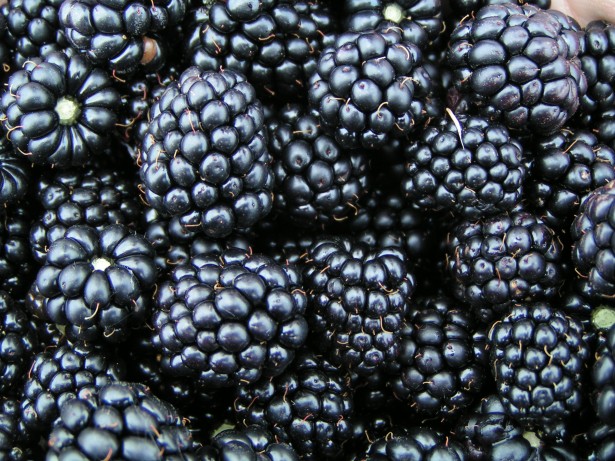
    File photo shows blackberries.

    Advances in technology, automation, and remote sensing is a cross-cutting, macro movement in science impacting agriculture outlined in the USDA Science Blueprint (PDF, 2.6 MB). The Science Blueprint guides USDA’s science priorities for the next 5 years, building from past success. Relative to other crops, many specialty crops are more dependent on agricultural labor for production, harvesting, and processing. This is part of a blog series that highlights research investments to advance automation and mechanization for specialty crops.

    Each day we use technologies to solve problems and accomplish tasks that once would have taken much longer. Whether facial recognition software, a smart thermostat, or a robotic vacuum, technology has changed the way we live and work. Farmers are also using technology to make production of specialty crops, such as fruits, vegetables, and tree nuts, more efficient. These crops make up one third of U.S. crop production sales and one sixth of U.S. agricultural sales.

    Between 2008 and 2018, USDA funded $287.7 million towards diverse research projects to develop and enhance the use of automation or mechanization in specialty crop production and processing. Most of these projects focused on precision agriculture, which includes a set of complex or “smart” technologies that tailor the needs of the plants to its specific environment or growing conditions, such as precise water, fertilizer, or pest or weed control. For example, a smart sprayer identifies individual trees in an orchard, their size, shape, and leaf density to adjust spray and reduce herbicide use. A smart irrigation system provides water only to the plants that need it, when they need it, continually adapting to crop conditions as the weather changes.

    Some USDA projects focus on development of specific components that will eventually be combined into more complex technologies. Sensors generate high-quality data on crops, weather and soil. Remote sensing data, gathered by satellites, includes information like crop growth, soil moisture, or weather conditions while drones gather more localized data on weed, pest, or disease prevalence. Machine learning algorithms convert the data into useful forms of information to help manage the farm.

    Other projects include development of job aids or automated machinery to help farm workers work more efficiently, such as an adjustable trellis system to make harvesting blackberries easier or mechanical thinners and pruners for vineyards and orchards. And some automation or mechanization technology helps with harvesting and processing, such as a flash freezing system or a mobile, in-field computerized apple sorter.

    USDA funded $287.7 million toward a diversity of research projects to develop or enhance the use of automation or mechanization in specialty crops between 2008 and 2018

    USDA funding for research into mechanization or automation for specialty crops, 2008-2018 chart
    Source: USDA, Economic Research Service, based on data provided by USDA’s Agricultural Marketing Service, Agricultural Research Service, and National Institute of Food and Agriculture.

    For more information, see the recent ERS report Developing Automation and Mechanization for Specialty Crops: A Review of U.S. Department of Agriculture Programs.

    This research supports the “value-added innovation” theme outlined in the USDA Science Blueprint and moves us closer to meeting the goals outlined in USDA’s Agriculture Innovation Agenda.

  • Howler Fungicide Provides Vegetable Growers with Multiple Modes of Action

    File photo shows strawberries after harvest. Howler fungicide works well in strawberries.

    Howler fungicide from AgBiome Innovations is a product that harnesses the power of the plant microbiome to create a fungicide with multiple modes of action. It provides preventive, long-lasting activity on a broad spectrum of soilborne and foliar diseases and does the job for a number of specialty crops. For Florida and South Georgia growers specifically, it’s great for strawberries, onions, cucurbits and leafy greens. AgBiome Technical Service Manager Bond McInnes outlines some of the key diseases Howler works well on.

    From the greenhouse through harvest, Howler fungicide can be used effectively at every phase of production. Learn more at agbiome.com.

  • Senate Passes Resolution Declaring July “National Blueberry Month”

    July 31, 2020, Washington, D.C. – The U.S. Senate has passed a resolution designating July 2020 as National Blueberry Month, recognizing the contributions of the U.S. blueberry industry and acknowledging that purchasing blueberries supports farmers, jobs and the economy. The resolution echoes a proclamation from U.S. Secretary of Agriculture Sonny Perdue in March. 

    Senate resolution (S.Res. 656) was sponsored by Sen. Debbie Stabenow (D-MI) and co-sponsored by senators Patty Murray (D-WA), Maria Cantwell (D-WA), David Perdue (R-GA)  Angus King Jr. (I-ME), Susan Collins (R-ME) and Kelly Loeffler (R-GA). The resolution recognizes that highbush and wild blueberries have an annual economic impact of $4,700,000,000; a harvested area estimated at over 140,000 acres; are produced in 48 states by more than 15,000 farms and their families; and that highbush blueberry production in the U.S. has continually increased, with particular growth in the past two decades, to reach a harvest of 700,000,000 pounds in 2019. It also points to the research-based health benefits of blueberries. 

    NABC members met with lawmakers in Washington, D.C., in March.

    Last spring, members of the North American Blueberry Council (NABC) traveled to Washington, D.C., to encourage lawmakers to support blueberries by signing onto the resolution that reflects the incredible growth, value and impact the blueberry industry has on the economy and communities.

    Over 130 participants met with their senators and representatives to share NABC’s policy priorities and help raise the profile of the health benefits blueberries provide, as well as the economic impact blueberry growers have in their communities and the U.S. economy. These efforts influenced the Senate resolution passed yesterday .

    “Blueberry growers and others connected to the industry are very appreciative to have their life’s work recognized and celebrated during National Blueberry Month,” said NABC Chair Ken Patterson. “July continues to be our peak season, and this resolution helps draw attention to the important economic and health benefits of blueberries. We’re grateful to the senators who are helping us highlight our industry with this timely resolution.”

  • Do You Use Carbaryl on Citrus or Blueberries?

    The Environmental Protection Agency is re-evaluating the risks of Carbaryl for continued registration of this chemical. In order to protect Carbaryl for use, the Florida Fruit and Vegetable Association is surveying growers on its use. Your data is critically important. Even if you do not use Carbaryl, input is needed.

    The Cabaryl case study will be presented as part of a national workshop later this year or early next year. Be aware that some products use the name “Sevin” but do not contain Carbaryl. Please take the survey and send it to Mike.aerts@ffva.com.

  • USDA CFAP Revision “Big Deal” For Blueberry Growers

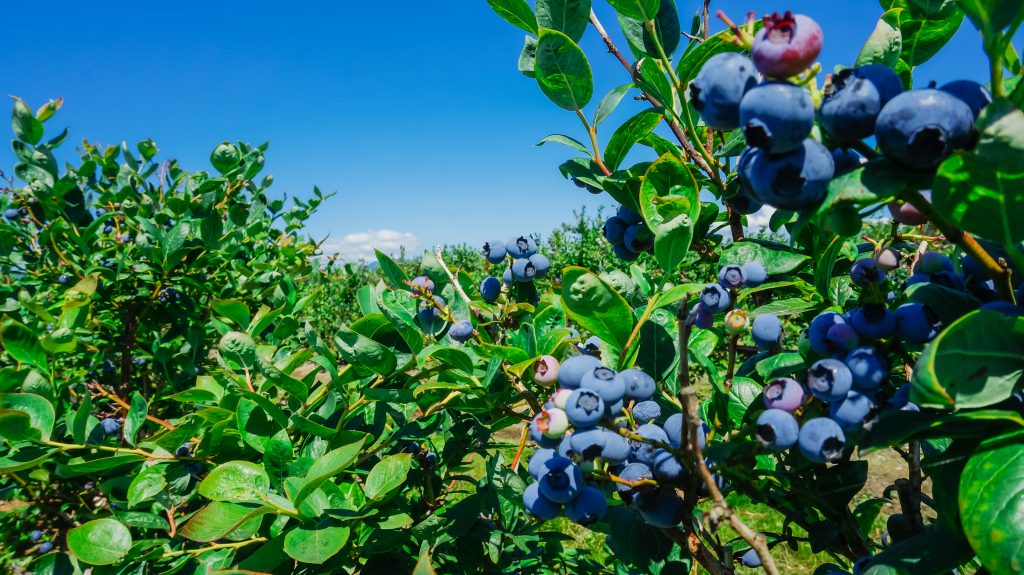
    Pictured are highbush blueberries.

    By Clint Thompson

    Thursday was a win for blueberry farmers, especially in Georgia. The crop was one of seven currently eligible commodities to be added to Category 1 of the Coronavirus Food Assistance Program by the United States Department of Agriculture.

    According to the USDA press release, the USDA found these commodities had a 5% or greater price decline between mid-January and mid-April as a result of the COVID-19 pandemic. Originally, these commodities were only eligible for marketing adjustments, which Florida blueberry farmer Ryan Atwood believes would not have helped growers like himself at all.

    “Not many individuals qualified for 2 or 3. But everyone in Florida is going to qualify, just about for Category 1. That’s why it is a big deal,” Atwood said.

    According to https://www.farmers.gov/cfap/specialty, eligible specialty crops in CFAP are broken down into three categories:

    1. Had crops that suffered a five percent-or-greater price decline between mid-January and mid-April as a result of the COVID-19 pandemic,
    2. Had produce shipped but subsequently spoiled due to loss of marketing channel, and
    3. Had shipments that did not leave the farm or mature crops that remained unharvested.

    Atwood, who lives in Mount Dora, Florida is one of the state’s blueberry leaders. He farms 56 acres of blueberries, manages another 350 acres and is part-owner of the largest packing house in the Southeast United States.

    Early Crop This Year

    Atwood’s and other farmers’ blueberry crops were early this year due to a mild winter, and high temperatures in January and February accelerated growth. However, when he started picking high volumes of blueberries, which was around March 18, that is when the pandemic shut down the country.

    Market prices reflected the pandemic’s impact. Atwood said in late April that the market was 50% of the historical average price, so half of the money of what you would typically get because of the coronavirus.

    That is why the USDA’s revision to include blueberries in Category 1 was a major win for the industry.

    “There’s a lot of people that are going to need that. It’s going to help them make it to next season. I know people that are getting loans and doing what they can and getting by, but every little bit helps get you there,” Atwood said.

    USDA is accepting CFAP applications through August 28, 2020. Learn more at farmers.gov/cfap.

  • Blueberry Growers Qualify for CFAP Category 1 Payments

    The USDA announced today that blueberry growers are now eligible for Category 1 Coronavirus Food Assistance Program (CFAP) payments. 

    Based on the USDA’s original assessment of the impact of coronavirus on the industry, blueberries were eligible only for Categories  2 and 3 for CFAP relief payments. USDA’s original market analysis had determined that blueberries did not demonstrate a 5% decline in price between January 15 and April 15. However, in response, the North American Blueberry Council (NABC) worked collaboratively with industry leadership to advocate for inclusion and provided the USDA with the data and analysis necessary to reverse the original eligibility assessment. 

    As a result, blueberry growers that qualify are now eligible for Category 1 CFAP payments.

    Take Action

    Growers that believe they qualify for Category 1 are encouraged to contact their local FSA office immediately to begin the application process. 

    The program is based on self-certification; growers should retain documentation for future claim substantiation.

    To learn more about the CFAP program and Category 1 eligibility requirements, visit farmers.gov/cfap/specialty.

  • Clemson Extension Agents Provide Updates on Various Crops

    Clemson Extension agents provided updates in The South Carolina Grower this week about the status of various crops being produced throughout the state.

    Coastal

    Spider mites have been reported on beans, tomato and melon in the Coastal Region.

    Zack Snipes reports, “It was a warm week with some sprinkled in showers along the coast. All crops are coming in right now with heavy watermelon volume. What’s left of the tomato crop is ripening fast. As far as pests go, I have seen a good amount of bacterial leaf spot in pepper, squash bugs and cucumber beetles in squash, and spider mites on beans, tomato, and melon.”

    Midlands

    Justin Ballew reports, “We got a little more rain last week and the temperatures were a little warmer than previous weeks. We’re still harvesting tomatoes, sweet corn, peppers, eggplant, peaches, squash, zucchini, beans, etc. Since the environment has been warm and wet, we’re starting to see diseases pick up. Seeing lots of powdery mildew and anthracnose on cucurbits and bacterial spot on tomatoes. Stay on your fungicide programs and rotate modes of action as much as possible. I’ve also been getting some reports of heavy spider mite activity on tomatoes.”

    Sarah Scott reports, “We’ve had hot and, for the most part, somewhat dry conditions in the past week. Some areas received an inch of rain, but it was very spotty. Tomatoes, peppers, squash, corn, cucumbers, and melons are all being harvested now.  Plums, peaches, and nectarines are also still being picked. The peach crop is about 10 days ahead of schedule.”

    Pee Dee

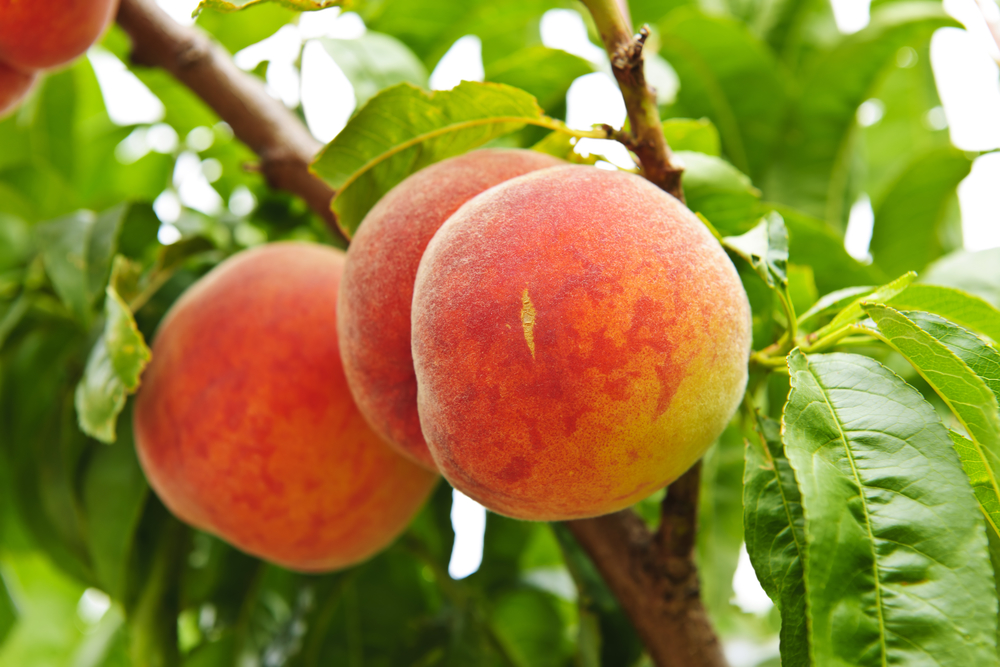
    File photo shows ripe peaches ready to pick on tree branches.

    Bruce McLean reports, “Vegetable crops are maturing nicely, even though some are exhibiting heat stress from the recent hot weather. Cucurbit Downy Mildew (on cucumbers) has been reported throughout the Pee Dee Region. Powdery Mildew is widespread on zucchini and yellow squash. Sweet corn is looking good, with good volumes being produced. Tomatoes, other than being stressed from the heat and the humidity, look pretty good and are bearing well. Sweet potatoes are still being planted. Muscadines are beginning to size and look to be a very good crop. Blueberries are winding down, with only the latest varieties being harvested now.”

    Tony Melton reports, “Processing peppers and tomatoes are beginning to be harvested and they look good.  With all the early winds and excessive rain, it was difficult but as my daddy would say ‘we made a silk purse out of a sow’s ear.’ Second and third crop pickles are yielding much better than the weather-beaten first crop. Processing peas will begin harvest this next week, so we badly need some dry weather, but the forecast is not favorable.  Also, the amount of cowpea curculio is increasing rapidly, and an intense/timely spray program is needed to prevent what most call “stings (maggots) in the peas.” One grower got slack on his spray program and this week had to discard $6,000 worth of peas. Spray with a pyrethroid at or before the first flower, then every week until flowering is finished. The first spray is the most important because if you wait too late, the curculios are already in the field. Curculios are very hard to kill. When disturbed they ball up inside their protective coat, and your spray is repelled. My program repels them and attempts to keep them out of the field. Also, rotation is very important to keep down the population of curculios surrounding your fields.”

    File photo shows a muscadine vineyard. Muscadines are beginning to size in the Pee Dee Region.

    Upstate

    Kerrie Roach reports, “Upstate peaches are beginning to ripen! While exciting, we have seen some physiological issues with sizing and softening that we attribute back to a late-season cold spell. While the peaches originally appeared to pull through without damage, we are now seeing peaches that are not sizing and those that do size up, only ripen on the very outer portion. It is a waiting game to see how each variety ends the season. In the meantime, market vegetable production is in full swing and the apple crop is looking fabulous.”