Alabama farmers interested in producing blueberries or any other containerized plant are encouraged to plant now, says Gary Gray. The Alabama Regional Extension Agent emphasizes the importance of keeping them watered, however.
Gray
“I do prefer now. If you’ve got containerized plants, plant them now and they’ll have a head start on spring. They’ll be ahead of the game, as opposed to, lets say you’re planting them in February or March,” said Gray, who also emphasizes the importance of plants being watered consistently, especially if there are prolonged dry conditions.
“In October, if we’re dry and we are right now, you’re going to need to keep them watered because we’re still hot and dry. Hopefully, it won’t be long and that’ll be a different situation.”
Current Weather Situation
According to the US Drought Monitor, parts of Alabama are classified as “D0” or abnormally dry, including Choctaw County, Sumter County and Pickens County in the western part of the state; and Tuscaloosa County, Jefferson County and Walker County in the central part.
Gray said if growers wait until the spring to plant, they risk the plant succumbing to the hot temperatures when the young plants are in the early stage of production. He estimates that growers have a little more than a month left to plant this fall.
“Our soil temperatures are still warm. We’re not in the heat of summer, although we’ve got some pretty warm days right now. But getting into November for example, we’re usually past all that heat, but we still have warm soil temperatures,” Gray said.
“So, over the next six weeks, we will have some good planting time. Now, if I was planting blueberries, whether you plant them in the fall or spring for example, you definitely want to irrigate those especially in the first year, because they will die on you. A blueberry plant will dry out and die pretty quick. It’s very important to make sure you’ve got those irrigated, especially in that year of establishment.”
There is currently little to no science-based information on the efficacy and safety of most essential oils in pest management of fruit crops like blueberries, so a multistate team is working together to learn more.
By Josh Paine for UGA CAES News
Organic fruit and vegetable growers want to meet the recent uptick in national consumer demand, but they need additional tools to battle pests and diseases that often accompany organic crop growth.
One such tool may be the use of essential oils. That’s why the U.S. Department of Agriculture National Institute of Food and Agriculture awarded a nearly $2 million grant to a team of scientists for an Organic Agriculture Research and Extension Initiative project to study the degree to which essential oils can help suppress certain pathogens and pests.
Jonathan Oliver, assistant professor in the University of Georgia College of Agricultural and Environmental Sciences at the UGA Tifton campus, is part of the team of 15 scientists who will work on this project nationwide. Researchers from the University of Florida, Clemson University, the University of California, Riverside, the University of Hawai’i at Manoa and the USDA Agricultural Research Service will collaborate on the project.
In his role as a small fruit pathologist in the Department of Plant Pathology, Oliver will investigate the use of essential oils in organic blueberry production, the state’s top fruit crop.
“Blueberries are the highest value fruit crop in Georgia, and organic blueberry production represents a growing proportion of our total acreage,” said Oliver. “Nonetheless, organic production of blueberries in Georgia faces many challenges, because our hot, humid climate is ideal for many disease issues including fruit rots and leaf spots. Our growers need better tools to help them manage these disease problems.”
Funding for the four-year research program will support scientists with expertise in fruit crop management and physiology, plant pathology, entomology, postharvest biology and organic production.
To carry out the project, scientists will:
Evaluate the plant safety and horticultural impact of essential oils in managing diseases in fruits including blueberries, peaches, mangos and avocados.
Begin to test plant disease efficacy claims of essential oil products marketed for organic producers.
Evaluate organically certified plant essential oils on targeted pathogens such as algal stem blotch, brown rot, scabs, gray mold and powdery mildew.
Determine the efficiency of essential oils on fruit shelf life through postharvest testing.
Test the efficacy of essential oils against insects including scales, thrips and mites, although arthropod pests are not the primary focus of this research.
After they gather their new data, participating scientists will communicate the results of their research to organic fruit farmers and those who grow conventional crops, so that those producers can rapidly adopt any new practices. Scientists will also evaluate the effectiveness of the project through continuous feedback from stakeholders.
“Through this research project, we hope to provide Georgia growers with the information they need to make decisions regarding the use of essential oils as a part of their organic fruit disease management program,” said Oliver. “Since Georgia is the largest producer of blueberries in the Southeastern U.S. and one of the top producers in the nation, providing Georgia growers with information and tools for safe and effective organic disease management has the potential to have a broad impact in Georgia and on the Southeastern organic blueberry production industry as a whole.”
Organic food sales topped $50 billion in the U.S. in 2018. Statistics from the Organic Trade Association tell part of the story of this growing market: fruits, vegetables and other specialty crops combined to make up 36.3% of total organic sales, up 5.6% from the previous year.
Today, the Office of the U.S. Trade Representative (“USTR”) formally requested that the U.S. International Trade Commission (“ITC”) initiate a Section 201 global safeguard investigation regarding imports of blueberries into the United States.
The American Blueberry Growers Alliance (“ABGA”) applauds USTR’s request and expects that the investigation will result in a remedy that allows the domestic industry to recover from the harmful effects of surging blueberry imports.
The ABGA is an ad hoc association of blueberry growers from across the United States. Over the past few years, ABGA’s members have lost market share and sales to massive increases in imports and have been forced to accept unreasonably low prices due to the competing prices of foreign blueberries. Imports of fresh and frozen blueberries have increased from 423 million pounds in 2015 to over 684 million pounds in 2019. Recognizing the harm that American blueberry growers have faced and will continue to face, USTR previously committed to request a Section 201 investigation on blueberries as part of the plan of multiple federal agencies announced on September 1, 2020 to help U.S. farmers of seasonal and perishable fruits and vegetables.
“On behalf of U.S. blueberry growers, I want to thank the Administration for taking this critical action. The flood of foreign imports of blueberries has caused significant damage to growers from coast-to-coast and across the heartland of this country,” stated Jerome Crosby, Chair of the American Blueberry Growers Alliance. “At a time when domestic food security is especially critical, this action is essential to preserve American farms, our families’ way of life, and our communities, and we look forward to working with the ITC in conducting its investigation.”
The ITC will immediately commence its investigation to determine whether the U.S. blueberry industry is seriously injured or threatened with serious injury by increased imports. The ITC must make this determination within 120 days of receiving USTR’s request, and this period may be extended to 150 days in extraordinarily complicated cases. The ITC will issue a report with its findings to the President of the United States within 180 days of receiving USTR’s request.
If the ITC’s injury determination is affirmative, the ITC will recommend one or more remedies to the President. Available temporary remedies include tariffs, quotas, and a combination of tariffs and quotas, among other options. The President will then decide whether to grant relief and what the remedy will entail.
The Florida Fruit and Vegetable Association (FFVA) is pleased with the USTR’s decision to implement a Section 201 investigation into blueberries. Mike Joyner, president of FFVA, said the investigation was best for blueberry producers, mainly because of its global approach.
Joyner
“When you watched the testimony of the two hearings, there were a number of blueberry growers. We knew this already but when you look at blueberries and the impacts that they’re seeing, yes Mexico is having an impact on them, but other countries are probably having a bigger impact; Peru, Chile,” Joyner said. “It became very apparent that a Section 201 was probably going to be best for blueberries. The thing about Section 201 is it’s a global approach. It looks at all the countries.”
Hearings
Florida and Georgia blueberry producers were able to state their concerns about imports from other countries and the impact they have had domestic production, especially market prices, during two days of hearings in August. Joyner said the government’s decision to initiate a 201 investigation speaks to the magnitude of how it perceives the concerns brought forth by farmers.
“When the government self-initiates, when they bring it to the International Trade Commission, it sends a signal that this is an important issue. The blueberry growers still have to put on the case. But just the fact that the U.S. Trade Reps Office said we’ve seen enough here that we’re going to self-initiate a 201, it just speaks volumes,” Joyner said. “I do think the 201 is the right trade tool for blueberries.”
Section 201
A Section 201 investigation is part of the Trade Act of 1974. It allows the International Trade Commission to investigate where domestic producers have been harmed by imports. They must be seriously injured, meaning that level of injury to their marketing opportunities. Typically, it must be completed within 120 days after filing.
Colossus has a later blooming time and very large fruit.
By Patricio Munoz and Doug Phillips
The University of Florida (UF) blueberry breeding program has a long history of developing superior southern highbush cultivars for the commercial blueberry industry. Beginning in 1949, the program has produced more than 40 cultivars, all of which exhibit a lower chilling hour requirement and adaptation to the higher temperatures and disease pressure experienced in Florida’s climate.
There are several desirable traits that are the focus of blueberry breeding efforts, including fruit quality (firmness, flavor, size, color, scar size, etc.), plant vigor, disease resistance and machine harvestability (fruit firmness, detachment force, plant architecture, concentrated ripening, etc.).
ADVANCEMENTS ACHIEVED
Blueberry breeding programs have historically used the recurrent phenotypic selection method, which is still used today. Selection of superior candidates is based on the cross-pollination of plants with favorable traits, the progeny of which are grown out and go through a series of successive selection, with favorable plants both advancing to the next stage and being used as parents for the next breeding cycle.
From an initial planting of 20,000 seedlings, each cycle’s population is narrowed to 10 to 15 percent, of which only a few may ultimately be released. With this method, the development of a new cultivar from cross-pollination to release can take between 10 and 12 years.
However, since the original selections from the wild at the beginning of the program until today, significant improvement has been achieved. In 2018 the UF blueberry breeding lab demonstrated by an extensive review of the literature (Cappai et al., 2018) that firmness has been steadily improved, reaching levels that make almost all new cultivars acceptable for machine harvest, and that, in general, southern highbush cultivars are firmer than northern highbush.
More recently, advanced methods including quantitative genetics and molecular information have been introduced, which have the potential to shorten the breeding cycle. These methods include using statistical methods to model molecular markers linked to genes associated with favorable traits. This can be done much earlier in the breeding cycle, instead of waiting until a plant becomes mature to observe whether certain traits will be present.
Optimus is an excellent choice for machine harvesting and exhibits good production in both deciduous and evergreen systems.
In 2019, the UF blueberry breeding lab performed a proof of concept experiment of these methods and demonstrated their feasibility (Oliveira et al., 2019). The focus during 2020 has been on optimizing these methods, which will be reported in studies to be published in the near future.
Other areas of research in the UF breeding program include flavor perception, container production and alternative season production.
FLAVOR PERCEPTION
The UF breeding program recently finished performing studies to demonstrate that consumer “liking” perception can be predicted when using the unique chemical makeup of each new cultivar. The idea is to avoid bias in the selection process associated with the breeder in charge of creating and releasing new cultivars.
In this area, discoveries have been made regarding which chemicals are favorable to the flavor perception and which ones are detrimental. This work started many years ago, and now with more information some of the findings can be validated.
CONTAINER PRODUCTION
Production in containers has become a global trend, primarily to produce high yields on marginal land because these soilless systems do not depend on native soil. The UF breeding program has been performing experiments as a proof of concept of this system for conditions in Florida. Results of second-year experiments show that, while these systems require high investment, they could become an attractive alternative for some Florida growers. The lab is in the process of refining the results to deliver some recommendations to growers.
In addition, the breeding program supports and collaborates in blueberry-related research in pathology, entomology, management and pollination.
RECENTLY RELEASED CULTIVARS
As always, the UF breeding program is closely watching elite selections to release new cultivars. A major focus has been placed on consistency across locations and years, as well as on precociousness (the capacity to produce harvestable fruit the first year after planting).
The most recently released cultivars from the UF program, Colossus and Optimus, have started to gain traction with growers.
Colossus was released in 2019. It has exhibited a later blooming time with a short bloom to ripening period, and has better performance with low doses of hydrogen cyanamide. The fruit is very large to jumbo sized, is very firm, has good color and bloom and a small picking scar. Colossus has performed well in both North Central and Central Florida trial sites. The best fruit is obtained by allowing it to hang on the bush until the preferred sweet and acid balance is achieved. In 2019, the yield in North Central Florida was approximately 12 pounds per bush. Colossus can be machine harvested if needed.
Optimus was released in 2018 as an excellent choice for machine harvesting. It has good timing for the Florida market window, with high yields and natural early leafing. Optimus has firm, medium-sized, high-quality berries. It has performed well in machine-harvesting trials and exhibited good production across Florida in both deciduous and evergreen systems. Optimus yielded 14 pounds of fruit per bush in 2019 in North Central Florida.
Other recent releases, heavily used in the evergreen system, include Arcadia and Avanti, which were released in 2015.
Arcadia has high yield and vigor, very low chilling requirements and disease-tolerant foliage. Several growers have reported good fruit production in the first year after planting. Arcadia has shown susceptibility to bacterial wilt (Ralstonia solanacearum), with severity varying significantly from farm to farm.
Avanti has potential for above-average yields, with early fruit maturity, very low chilling requirements and very sweet fruit. It has shown some susceptibility to mite damage and algal stem blotch, which require good management programs.
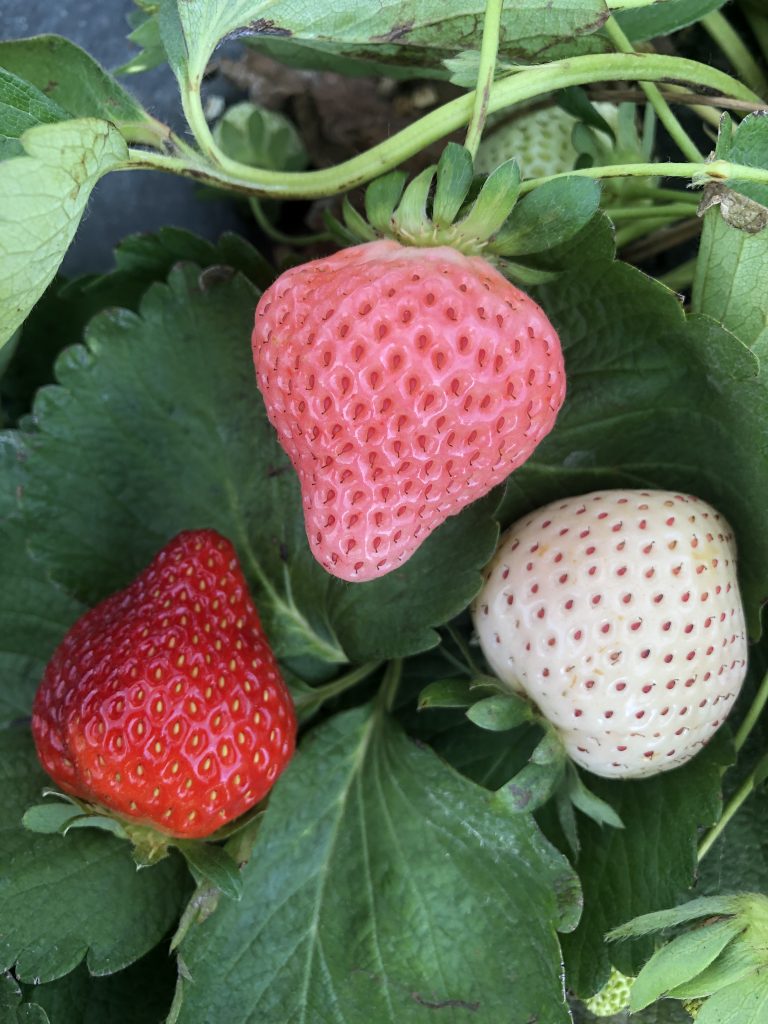
Figure 1. A new University of Florida strawberry variety is white with a slight pink blush and red seeds when fully ripe.
Photo credit: Cristina Carrizosa, UF/IFAS Communications
The University of Florida will soon commercialize a new strawberry variety. It doesn’t have a name yet, but it is already drawing attention for a very unusual characteristic. When it is ripe and ready to eat, it is white inside and out, with a slight pink blush on the exterior and red seeds. The flavor is very different from a typical strawberry, sweet but with a pineapple-like aroma. White strawberries have been popular for some time in Japan, but this is expected to be the first white strawberry on the market in the United States.
These unusual strawberries were not made in a lab. White strawberries are actually found in nature. Breeders have harnessed this naturally occurring trait, crossing white strawberries from the wild with modern strawberries to create something different in both appearance and taste.
WHY IT’S WHITE
The red color of the typical strawberry comes from pigments called anthocyanins. White strawberries produce much lower amounts of these compounds in their flesh than red strawberries. Recent research has shown that white strawberries of various types all have DNA sequence changes in a single gene called MYB10, which is involved in the synthesis of anthocyanins. These changes keep the gene from carrying out its normal function, essentially halting the chemical process in the fruit that produces red pigments.
HOW IT WAS DEVELOPED
In 2012, some strawberry seeds from fruit purchased in Japan were brought to the University of Florida. The seeds were sown, and a few small plants were recovered. The pollen from these plants were crossed with a Florida variety. The seedlings from this cross produced fruit that ranged from white to pink to red.
Further crosses with Florida varieties were made, ultimately resulting in a strawberry with similar hardiness and fruit characteristics to modern varieties but with white color. Commercial trials have been promising so far. Pickers can tell when the fruit is ripe when a slight pink blush develops on the sun-side of the fruit, and when most of the seeds turn red. By 2022, these new white strawberries should be available in U.S. grocery stores.
Figure 2. Florida strawberry varieties can be red, pink or white. Photo credit: Seonghee Lee
STRAWBERRY SPECIES
There are many different species of strawberry throughout the world, and white strawberries are naturally found within several of them.
Alpine Strawberry (Fragariavesca) Alpine strawberries are in the species F. vesca, which is an ancient ancestor of the modern strawberry. In Europe, this strawberry is referred to as “fraises des bois” and is prized among food connoisseurs for its aroma. While most members of the species have red fruits about the size of a fingernail, the fruits of some Alpine strawberries are yellow to white in color. More information is available from the University of Florida at edis.ifas.ufl.edu/hs1326 on how to grow Alpine strawberries.
Beach Strawberry (F. chiloensis) The beach strawberry is found in the wild along the Pacific coasts of North and South America. F. chiloensis is one of the most recent ancestors of the modern strawberry. Some of the beach strawberries found in South America are naturally white or pink. The fruit only grow about as large as a thumbnail and are very soft compared to modern strawberries. Some varieties of this species that are crossed between F. chiloensis and the modern strawberry (F. × ananassa) have been called “pineberries.” Some varieties of pineberries are available for home gardeners, but they are not large enough or firm enough to be produced and sold on a large scale.
Cultivated Strawberry (F. × ananassa) A white beach strawberry from Chile and another wild species from North America called F. virginiana with bright red fruits were collected by explorers and brought to Europe about 300 years ago. There they accidentally hybridized to produce the cultivated strawberry or “modern” strawberry, F. × ananassa, that we know today. Almost all the strawberries currently grown and produced in the United States are F. × ananassa. White cultivated strawberries have been bred for some time in Japan and sold at high prices as novelty items. However, white strawberries have not yet caught on as much in other areas of the world.
See programs.ifas.ufl.edu/plant-breeding/strawberry for more information on University of Florida strawberry breeding and genetics.
A central point of the federal agencies’ plan to investigate unfair trade practices is the focus on blueberries. The crop has been widely impacted by Mexican imports, which growers attest drove prices down this year amid the coronavirus pandemic.
The plan’s highlights include, the USTR (Office of the U.S. Trade Representative) will request the International Trade Commission to initiate a Section 201 global safeguard investigation into the extent to which increased imports of blueberries have caused serious injury to domestic blueberry growers. But the question is, what defines serious injury?
“That is going to be an interesting question, what the International Trade Commission views as serious injury,” said Adam Rabinowitz, Auburn University Assistant Professor and Extension economist.
He cautions Southeast blueberry growers that Section 201 will look at the blueberry industry as a whole, meaning across the country.
“They’re going to be looking at the entire industry, not just Southeast blueberry growers, but also those that are in Maine, Washington and other states where there is significant production. The question is, to what extent has the U.S. market for blueberries been harmed by imports? You start talking about Peru and Canada and other areas where there is significant blueberry imports coming into the U.S. Has any of that harmed domestic producers?”
The USTR will work with domestic producers to commence an investigation by the International Trade Commission to monitor and investigate imports of strawberries and bell peppers, which could enable an expedited Section 201 global safeguard investigation later this year.
“I think to really tell right now what’s going to happen on the strawberry and bell pepper side, we really need to see what happens on the blueberry side and what kind of response occurs,” Rabinowitz said. “That response from the International Trade Commission is a combination of how they look at those markets and determine and really define that serious injury and then what kind of remedies they can come up with.”
Section 201 allows the International Trade Commission to look at where domestic producers have been harmed by imports. They have to be seriously injured, meaning that level of injury to their marketing opportunities. It must be completed within 120 days after filing.
Whiteflies are not just impacting vegetables and cotton this year. According to the University of Georgia Integrated Pest Management blog, whitefly populations are impacting blueberries in Georgia. Since harvest season ended, University of Georgia blueberry entomologist Ash Sial has fielded calls of whitefly infestations in major blueberry-producing counties in Georgia.
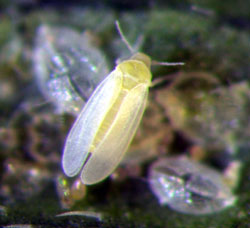
Photo by Lance Osborne/Associate Center Director Professor, IPM-Biological Control of Insects and Mites Mid-Florida Research and Education Center UF/IFAS
In the past, UGA blueberry experts have identified heavy infestations of Tetraleurodes ursorum Cockerell (Aleyrodidae: Hemiptera). Also referred to as the “bearberry whitefly,” it was first reported on the common bearberry (Arctostaphylos uva-ursi) on Flagstaff Mountain in Boulder, Colorado.
Bearberry whiteflies are primarily postharvest feeders, and the prevalence of whitefly infestation in Georgia blueberries has significantly increased over the past couple of years. In most instances, infestations occur in small patches and do not seem to cause economic damage. However, if high level of infestations is observed throughout the field, insecticide treatment may be needed to control this pest.
Treatment Options
An application of Admire Pro (via drip irrigation), Assail (foliar spray application) or Movento (foliar spray application) will help with control. When using insecticides, always read and follow the label instructions. Because whiteflies are small and feed on underside of the leaves, spray coverage is extremely important to control them. Thus, using high spray volumes (~80-100 gallons per acre) is highly recommended to achieve the desired level of spray coverage to control whiteflies.
Bearberry whitefly pupae are oval, shiny black, about 0.7 mm (0.03 inch) long and 0.5 mm (0.02 inch) broad. Adults are about 1 mm (0.04 inch) long. The body from the above is blackish and covered with white mealy wax. The base and sides of the abdomen are white, the extreme base of wings yellow, and lower surface of the abdomen is light yellow with the last two segments gray. The eyes are black and completely divided, and the wings are white.
Eggs hatch to a mobile first instar, commonly known as crawlers. Once crawlers find a suitable location to feed and settle, they mature through a few stationary nymphal stages that feed to a final non-feeding nymphal instar, often called a pupa. The term pupa is a misnomer, a loose use of entomological nomenclature, because whiteflies do not truly develop through complete metamorphosis. Bearberry whiteflies colonize the underside of the blueberry leaves; the adults and eggs are commonly found on the lower surface of younger leaves whereas nymphal stages on somewhat older and mature leaves. Whiteflies have piercing-sucking (needle-like) mouthparts.
They feed by inserting mouthparts into plant tissue and sucking the flowing sap or phloem. While feeding, they excrete a sweet, sticky liquid referred to as “honeydew”. Sometimes, they reach such high populations that cover the lower surface of the leaves with nymphs, pupae, and their associated honeydew. The honeydew excreted by nymphs can collect dust, lead to growth of sooty mold, and attract ants.
Blackberries are grown as a commercial crop in North Carolina.
By Zhanao Deng
Blackberry has emerged as an alternative crop in Florida. More and more Florida growers are growing or trialing blackberries for commercial production. They have indicated a dire need for suitable blackberry cultivars that can yield well and produce berries of good quality.
PAST CULTIVARS AND RESEARCH
In the 1950s, University of Florida (UF) released two blackberry cultivars, Flordagrand and Oklawaha. Both produced high yields of large, attractive berries, but their trailing growth habit and thorny canes made them unsuitable for commercial production.
The University of Arkansas has maintained an active blackberry breeding program for more than five decades and has released dozens of new cultivars. Essentially all the blackberry cultivars currently grown in Florida and other Southeast states are from this breeding program.
Some of the popular floricane-fruiting cultivars include Apache, Navaho, Natchez, Osage and Ouachita. They produce berries on second-year canes (floricanes). In 2005, the program released the first primocane-fruiting cultivars that can produce berries on the current-year canes (primocanes) as well as floricanes. Prime-Ark® 45, Prime-Ark® Freedom and Prime-Ark® Traveler have this new type of fruiting habit.
Flowers are pollinated for blackberry breeding.
With funding from the Florida Department of Agriculture and Consumer Services Specialty Crop Block Grant program, UF researchers began trialing these cultivars in 2017 in a blackberry orchard at the Gulf Coast Research and Education Center (GCREC). Prior to this, Shinsuke Agehara trialed Navaho, Natchez and Ouachita in wooden boxes and large containers. In his trials, Natchez outperformed Ouachita and Navaho. In the orchard trial, Osage had the highest yield among the five floricane-fruiting cultivars, with an average of 3.9 pounds of berries per plant. Among the three primocane-fruiting cultivars, Prime-Ark® Freedom had the highest yield, producing an average of 6.3 pounds of berries per plant.
Researchers used in-row spacing of 3 feet and between-row spacing of 10 feet in the trials. With this spacing, 1,452 plants could be grown per acre. The estimated per-acre yield would be 5,663 pounds for Osage and 9,148 pounds for PrimeArk® Freedom. Natchez showed significant variability in berry yield from year to year or site to site.
CURRENT CULTIVARS
In recent years, the University of Arkansas blackberry breeding program has released two new floricane-fruiting cultivars, Caddo and Ponca. Based on release documents, both cultivars are high yielding, thornless, erect and produce medium to large fruit. Ponca is the sweetest cultivar released to date and has good shipping and handling traits. Both cultivars have been introduced to Florida, and a new trial is being set at GCREC to test their performance. Stay tuned for trial data in the next two years.
In small trials conducted in Arkansas, these cultivars had the potential to produce 10,000 to more than 20,000 pounds of berries an acre. Why do these cultivars yield much less in Florida? Researchers think the primary reason is that chilling requirements were not met in Florida, especially in Central Florida. Very much like blueberries, blackberries need a period of chilling (temperature below 45° F) to break sufficient numbers of buds and develop enough flowers so that growers can have a decent crop.
The current blackberry cultivars grown in Florida were bred and initially selected in Arkansas, and they need 300 to 900 hours of chilling. On average, Central Florida only has about 100 to 300 hours of chilling. Without enough chilling, blackberry plants break much fewer buds, have much fewer fruiting laterals and flowers, and yield poorly with berries ripening over an extended period.
BUILDING A BREEDING PROGRAM
UF trials and growers’ experiences indicate a strong need for new blackberry cultivars that are better adapted to a low-chill environment. This need prompted UF researchers to breed blackberries. The breeding program received private funding and technical support from Coastal Varieties Management. The GCREC and the UF Institute of Food and Agricultural Sciences (IFAS) Dean for Research Office provided funding to cover expenses associated with facilities.
In spring 2015, UF researchers made the first batch of crosses to produce blackberry seeds. Newly produced seeds were treated with a strong acid to burn part of the seed coat and then they were kept cold for several months before they were germinated. The seedlings were then grown and selected in Florida. Researchers repeated this process each year since then.
So far, more than 10,000 blackberry seedlings or young plants have been screened in Florida. Dozens of plants were selected for further trials. Shoot tips have been collected from some of the most promising plants and cultured in test tubes for rapid propagation. The first batch of tissue culture-propagated blackberry young plants from one of the selected lines was sent to growers this past June for trialing.
Blackberry cultivar trials are underway at the Gulf Coast Research and Education Center in Wimauma, Florida.
In the meantime, researchers have set up the first replicated trials to test the new line’s berry yield and quality. Effort is being made to expand the blackberry orchard and produce additional liners for more field trials, which is warranted to select the best adapted cultivars for Florida growers.
As more Florida growers begin growing blackberries, they have more questions needing practical solutions. To better address growers’ needs, a UF/IFAS research and Extension team has been formed. It consists of six specialists from the GCREC and the Horticultural Sciences Department and two Extension faculty from Orange, Marion and Hillsborough counties. Team members are well experienced with berry breeding; variety selection and trials; plant management and manipulation; fertilization; disease, insect pest, nematode and weed identification and control, etc. The team has received great support from Florida growers and some seed funding from the UF/IFAS Support for Emerging Enterprise Development Integration Teams program and the GCREC.
UF plans to produce the first blackberry production and spray guide by early 2022 and provide growers and Extension agents with more training. The goal of the team and these efforts is to facilitate the development of the Florida blackberry industry and help growers produce profitable crops sustainably.
One commodity that’s been at the center of unfair trade disputes by producers in Georgia and Florida was at the forefront of the federal agencies’ plan of action issued this week.
Georgia Agriculture Commissioner Gary Black
Georgia Ag Commissioner Gary Black was pleased to see the Office of the United States Trade Representative (USTR) requesting the International Trade Commission to initiate a Section 201 global safeguard investigation into the extent to which increased imports of blueberries have caused serious injury to domestic blueberry growers.
“I was really encouraged by singling out some action on behalf of blueberry. We’ve had some real pressure from Mexico on blueberry. I think the awareness of that is shown through this plan, and I think policing and enforcing and guarding against illegal trade practices, particularly on blueberry, I think is a win for us,” Black said.
In a prior VSCNews story, Florida blueberry farmer Ryan Atwood believed Mexican imports this year contributed to a price drop for Southeast producers. The market dropped almost overnight, he said.
“I think it went from about $5.50 a pound, which is a really great price to you couldn’t hardly move the fruit; you would be lucky to sell it at all, like within two days,” said Atwood in late April.
Section 201
A Section 201 investigation is part of the Trade Act of 1974. It allows the International Trade Commission to investigate where domestic producers have been harmed by imports. They have to be seriously injured, meaning that level of injury to their marketing opportunities. Typically, it must be completed within 120 days after filing.