Category: Berries

  • Preparing for Success: Blueberry Site Preparation Takes Time

    crop insurance
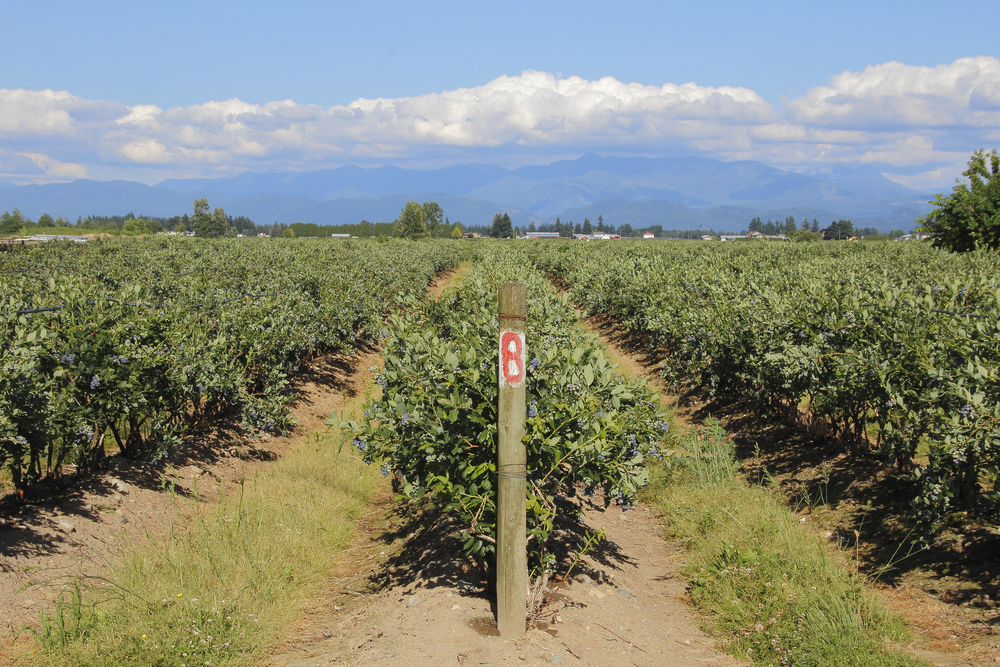
    File photo shows a blueberry farm.

    Preparations need to be done well in advance for producers interested in producing blueberry plants, said Elina Coneva, an Extension specialist in the Horticulture Department at Auburn University, during a webinar on the Alabama Extension Commercial Horticulture Facebook page.

    “For those who are considering becoming blueberry growers, I would let you know that you need start preparation for your blueberry field at least one year in advance,” Coneva said. “The good soil types for growing blueberries are characterized by light, sandy and well-drained soils. In addition to all the nutrients that you need to check in your soil, you need to be aware of the pH in your soil. Unlike almost all other fruit crops, the optimal soil pH for blueberry production is between 4.2 and 5.5.”

    She also added that it is important that farmers add organic matter to their soil. This can be achieved through cover crops or through peat moss, though it is a more expensive option. The most popular option is the use of pine bark.

    “This (organic matter) adjustment will improve the chemical, physical and mechanical properties of the soil in which the blueberries are going to be grown,” Coneva said.

    She added that each 1% of soil organic matter releases about 15 pounds of nitrogen each year.

  • Pruning Practices: Blueberry Growers Reminded of Important Management Tactic

    Pruning of southern highbush blueberries is required to open the middles of the plants for machine harvesting from the top.

    The time is now for some blueberry producers to prune their crop. Pruning is the process by which farmers selectively cut parts of their plant. This will sustain the overall health of the plant while enhancing its fruit quality.

    In a webinar on the Alabama Extension Commercial Horticulture Facebook page on Monday, Eric Schavey, Regional Extension agent in Northeast Alabama, said pruning limits the height of the plants. Shorter plants are easier to harvest. New vigorous shoots also produce larger fruit.

    “We want to develop a good plant structure. This is going to help you in production,” Schavey said. “We’re going to help you control that plant size. We don’t want to pick anything off of a ladder. If you’re a home-owner, small, U-pick, you don’t want all of your production eight or nine foot off the ground. We’re going to control the fruit number and size by pruning.”

    Schavey said pruning now will aid in disease and insect control. An open canopy will allow more air to move through. If growers need to apply pesticides, they can also get good coverage.

    Growers can also prune during the summer right after harvest to achieve height control. Schavey emphasizes that research indicates producers only do this every other year, however.

    For producers who refuse to prune, they are likely to meet significant challenges come harvest season. The blueberries are a lot smaller and out of reach. There is more interior shedding, increased pest issues and water needs go up because of the increased size of the plant.

  • Harvesting Issues: Blueberry Harvesters Remain Challenge for Industry

    An inside view of an over-the-row mechanical blueberry harvester.

    Two issues facing University of Florida (UF)/IFAS scientists regarding the future of blueberry production are machine harvesters and blueberry flavor. Patricio Munoz, UF blueberry breeder, spoke about both issues during the recent American Seed Trade Association webinar last week.

    “The major issue that I see for us is the machines that we are using nowadays, they are not to the standards that we need them to be. That’s the issue. We’re still able to harvest. We can harvest our very best cultivars for firmness characteristics,” Munoz said. “However, we need the technology, the machine robotic technology to improve. That’s something we can now work on. We can work on improving the plants. Then we have other people that work on improving the machines. That’s what is needed nowadays.

    “The second one is flavor and aroma; our capacity to select new flavors and aroma and I believe they’re going to be well accepted by your consumers.”

    According to Jeff Williamson, UF Professor, hand harvesting is the greatest expense for Florida blueberry producers. The lack of labor availability can also limit harvest operations. Mechanical harvesters can also lead to reduced yields by fruit dropping on the ground during harvest or immature fruit being harvested. Fruit can also be bruised from the harvester.

    Munoz said there are between 50 and 60 blueberry farms in the state. Florida is the earliest producer of blueberries in the country every year.

  • Victorious Verdict: Blueberry Coalition Applauds ITC Decision

    File photo shows blueberries.

    While blueberry farmers and industry leaders were disappointed and disheartened with Thursday’s vote by the International Trade Commission (ITC), the Blueberry Coalition for Progress and Health responded with applause for the ITC.

    The group issued a statement following the ITC’s unanimous vote in which it deemed that imports of fresh, chilled or frozen blueberries are not a serious injury to the domestic industry, ending the Section 201 investigation.

    “The Blueberry Coalition for Progress and Health applauds the U.S. International Trade Commission’s (ITC) determination that imported blueberries have not injured the domestic industry. The U.S. blueberry industry is healthy and thriving. 

    “Together with imports, the U.S. industry is working hard to keep up with the year-round and growing marketplace demand for this healthy and nutritious fruit. U.S. per capita consumption of blueberries has experienced a more than 300% since 2005 and is now at an all-time high of 1.79 pounds per person.

    “Restricting blueberry imports into the U.S. would have limited consumers’ access to these healthy, delicious and nutritional berries with no benefit to U.S. producers. 

    “We look forward to continuing to provide the American market with our healthy and delicious fruit.”

    The verdict was rendered in the coalition’s favor despite overwhelming evidence by the American Blueberry Growers Alliance against imports.

  • ITC Blueberry Vote Unanimous

    The U.S. International Trade Commission (USITC) determined on Thursday that fresh, chilled, or frozen blueberries are not being imported into the United States in such increased quantities as to be a substantial cause of serious injury, or the threat of serious injury, to the domestic industry producing an article like or directly competitive with the imported article.

    The Commission’s determination resulted from a 5-0 vote.  Chair Jason E. Kearns, Vice Chair Randolph J. Stayin, and Commissioners David S. Johanson, Rhonda K. Schmidtlein, and Amy A. Karpel voted in the negative.

    The determination was made in the context of an investigation initiated on Sept. 29, 2020, under section 202 of the Trade Act of 1974 (19 U.S.C. § 2252) at the request of the U.S. Trade Representative. Information about this investigation and global safeguard investigations in general can be found here:  https://usitc.gov/press_room/documents/blueberries_factsheet_finalassubmittedforposting.pdf

    As a result of today’s vote, the investigation will end, and the Commission will not recommend a remedy to the President.  The Commission will submit its report containing its injury determination and the basis for it to the President by March 29, 2021.

    A public report concerning the investigation will be available after the Commission submits its report to the President.

  • American Blueberry Growers Alliance Statement on ITC Decision

    WASHINGTON, February 11, 2021 – The American Blueberry Growers Alliance (ABGA) released the following statement regarding the outcome of Thursday’s International Trade Commission (ITC) verdict regarding the global safeguard investigation into imports of fresh, chilled or frozen blueberries: 

    “The American Blueberry Growers Alliance (ABGA) is disappointed with the decision today by the U.S. International Trade Commission (ITC) to find that rising imports of foreign-grown blueberries are not a substantial cause of serious injury, or threat of serious injury, to domestic farmers. We disagree with the outcome of the Commissioner’s investigation.

    “Throughout this case, blueberry growers across the United States provided the ITC with extensive data and personal experiences about the significant harm caused by surging imports on the supply and pricing of blueberries in the U.S. market, especially during our critical growing and harvest seasons. We believed this data and testimony made a compelling case that safeguard measures were critical to the survival of our domestic farmers, and we are disappointed by the Commission’s decision.

    “We actively participated in this investigation because we believe U.S. trade laws must support a level playing field for American farmers – one in which lower labor costs and more lax environmental standards in other countries does not drive our domestic growers out of business. The outcome of this investigation reveals deficiencies in U.S. trade laws, which unfortunately will put the long-term viability of the domestic blueberry industry in jeopardy.

    “We have received strong support from members of Congress, state elected officials, agricultural associations and other farm interests throughout this investigation, and we plan to work with these groups on other remedies to ensure that American consumers continue to have access to fresh, high-quality, safe, domestically grown blueberries.

    “Meanwhile, our domestic growers will face another year of economic uncertainty as they grow and harvest their 2021 blueberry crop. No doubt, imports will now accelerate to overwhelm our domestic market this year. This will cause even greater hardship on family-owned farm operations, as well as on providers of packing and freezing services, and damage to local communities and tax bases.”

    About American Blueberry Growers Alliance

    American Blueberry Growers Alliance (ABGA) is a national association representing blueberry growers and farmers in the United States. ABGA provides a unified voice for blueberry growers in states across the country, including California, Florida, Georgia, Michigan, Oregon and Washington, advocating on behalf of their interests and for the long-term viability of the domestic blueberry industry. For more information, visit: americanblueberrygrowers.com.

    Read here how Georgia Fruit and Vegetable Growers Association Executive Director Charles Hall is disheartened following the ITC decision today.
  • Very Disheartening: GFVGA Executive Director Reacts to ITC Blueberry Imports Verdict

    It wasn’t the verdict Charles Hall envisioned.

    File photo shows a pile of blueberries.

    “Very surprised and very, very disappointed,” he said following Thursday’s International Trade Commission (ITC) vote on the Section 201 investigation into serious injury surrounding blueberry imports.

    The ITC deemed that imports of fresh, chilled or frozen blueberries are not a serious injury to the domestic industry. It goes against what members of the American Blueberry Growers Alliance testified about during the virtual hearing with the ITC in January. Statistics say blueberry imports have increased exponentially, while the Southeast farmers have paid the price.

    “It’s very disappointing for the effort put into this and the data and personal experiences and the harm that’s been shown and they’ve decided there hasn’t been any harm shown,” said Hall, executive director of the Georgia Fruit and Vegetable Growers Association (GFVGA). “It’s very disheartening.”

    Staggering Statistics

    “The other side was trying to make the case that the imports of blueberries did not have an effect. Since 2009 to 2019, I think is the data that we’ve got, it was over 2,000% increase. It’s just amazing. They basically won the case, won the battle; their increasing in imports didn’t have an effect on prices dropping,” Hall added.

    “I don’t understand how you can have that many blueberries come into the market, prices dropping the way they were dropping and the imported berries don’t have an effect on that.”

    The investigation ends as a result and the commission will not recommend a remedy to the President. But it doesn’t end the fight of blueberry farmers in the Southeast. They’re imploring consumers to buy local.

    “We’ll be looking at whether there’s other ways to adjust the U.S. trade laws. The sad part about this is, they have shown they can produce and ship in product, whether it’s berries or whatever it might be, other vegetables with $10 a day labor. They can ship it in cheaper than we can produce it here,” Hall said. “It’s going to be up to the American consumer to support t he American farmer if we’re going to continue to produce fruits and vegetables in the U.S.”

  • Case Closed: ITC Finds No Serious Injury Regarding Blueberry Imports

    File photo shows blueberries.

    Southeast blueberry producers were dealt a blow today regarding the 201 Investigation into serious injury that imports have had on the domestic industry.

    The U.S. International Trade Commission determined on Thursday via vote that, “fresh, chilled or frozen blueberries are not being imported into the United States in such increased quantities as to be a substantial cause of serious injury, or threat of serious injury, to the domestic industry producing an article like or directly competitive with the imported article in the United States.”

    The investigation ends as a result and the commission will not recommend a remedy to the President.

  • Presidential Authority: Final Decision Regarding Blueberry Imports Rests with Biden Administration

    File photo shows blueberries.

    The American Blueberry Growers Alliance’s (ABGA) stance on imports has not changed over the years: serious injury has been inflicted on American farmers, especially those in Florida and Georgia.

    But where does President Biden stand on this issue? That’s the stance that will ultimately decide the Section 201 investigation regarding blueberry imports. Even if the International Trade Commission (ITC) decides in the ABGA’s favor with its vote on Thursday, the final decision rests with Biden and his administration.

    “When people asked me about this from the get-go, I felt like we’re going to win in the ITC, but does the president sign it or not? That’s a 50-50 coin flip maybe, I don’t know. People smarter than me can figure that out,” said Ryan Atwood, who lives in Mount Dora, Florida and farms 56 acres of blueberries, manages another 350 acres and is part-owner of the largest packing house in the Southeast United States.

    Virtual Hearing with ITC

    The ITC’s decision on Thursday comes a month after ABGA members and industry and congressional leaders testified in a virtual hearing before the ITC about the negative impact blueberry imports from Mexico, Peru, Chile, Argentina and Canada have had on the domestic market.

    If serious injury is found, the ITC will formulate a recommendation. But the president will make the final decision.

    “The ultimate decision will come from the desk of the president. Regardless of what side of the aisle you sit on, we all like to eat. We all like to eat blueberries,” said Jerome Crosby, Georgia blueberry grower and chairman of the American Blueberry Growers Alliance. “Food is probably the most partisan issue in America when it comes down to it. No matter what walk of life you come from, you like to eat something. That makes the farmer a friend to every human being. I think anyone who fits that category of consuming food is going to have an interest in the American farmer staying in place.”

  • Florida Medallion: Another Strawberry Option for Producers

    Photo submitted by Vance Whitaker/Shows Florida Medallion strawberries growing in a field.

    The newest University of Florida-bred strawberry could become another option for growers looking to diversify their crop.

    Vance Whitaker, strawberry breeder at the University of Florida Gulf Coast Research and Education Center, said the Florida Medallion is performing well and expects a substantial increase acreage next year.

    “If it continues to perform well, we’ll see where it finds its niche with the current varieties; whether it’s a third of the industry, what proportion is really hard to say at this point,” Whitaker said. “It’s safe to say it’s performing well. We’ll definitely have a place for a couple of hundred acres of it next year.”

    More Varieties the Better

    The more strawberry varieties available for Florida producers the better. In just a couple of years, the industry moved from a Radiance-dominant industry to a Brilliance-dominant industry. Growers are quick to switch allegiances, depending on how successful the variety is on a commercial scale. Medallion provides producers another tool in the toolbox.

    “It can move very fast. They need the best tools. If they find one that’s better than what they have, they’re going to replace it,” Whitaker said. “Ideally, they’d like to have at least three, hopefully four varieties that complement each other. Right now, we have two good varieties in Sensation and Brilliance that complement each other really well. I think the Medallion will slide in and hopefully become a good third option for them. They really want to diversify and spread their risks.”

    Strawberry Traits

    Finding the perfect strawberry is not an exact science. But there are qualities that make certain varieties stand out above the rest. Whitaker explains that early yield and flavor are the two most prominent traits farmers are looking to capitalize on.

    “Early yield is obvious because of the timing of the market. It’s just critical. Then the flavor, it’s becoming more and more important in a competitive market,” Whitaker said. “Consumer’s expectations are going up for what their berries should taste like. I think that growers recognize that quality is the way that they can compete in a highly competitive international situation. If they can provide fresher, better tasting strawberries than Mexico can, then they can continue to compete well.

    “People have to want to eat them, but you also have to have them at the right time.”