Category: Alabama

  • Whitefly Management: Sanitation Key Especially for Watermelon Producers

    Stormy Sparks’ message regarding whitefly management remains the same: If you’re done with the crop, get rid of that crop.

    Sanitation remains the best defense against whitefly buildup in Southeast vegetable and cotton crops. Even watermelon producers, who don’t have to contend with whiteflies as much as cantaloupe and cucumber farmers, are encouraged to do their part in preventing potential infestations in other fields.

    “Watermelons present a unique challenge because we’re dealing with so many more growers,” said Sparks, a University of Georgia Cooperative Extension vegetable specialist.

    “If you look at it from strictly a financial standpoint this season, in many cases there’s no emphasis on whitefly management in watermelons. But if we don’t get rid of the crop, we can distribute them on watermelons and then they can build up in those crops that are left standing and move into cotton. That’s basically what happens.”

    Sanitation is a key management strategy all farmers can implement when managing whiteflies. Once farmers are done harvesting their spring vegetables, they need to get rid of them.

    Watermelons Left in the Field

    But in many watermelon fields, watermelons are sometimes left in the field long after the final harvest. This can be largely attributed to “pinhookers” or people who buy the remaining watermelons in a field with the purpose of reselling them. However, this leaves a watermelon field susceptible to whitefly infestations since so much of the crop is left in a field for weeks, if not months.

    “You can find fields in the fall that were planted in the spring,” Sparks said.

    Whitefly Impact

    Whiteflies migrate from winter vegetables to spring vegetables to agronomic crops, like cotton, to fall vegetables and back to winter vegetables. Whiteflies cause feeding injury issues in vegetables and transmit two viruses: cucurbit leaf crumple virus and cucurbit yellow stunting disorder virus.

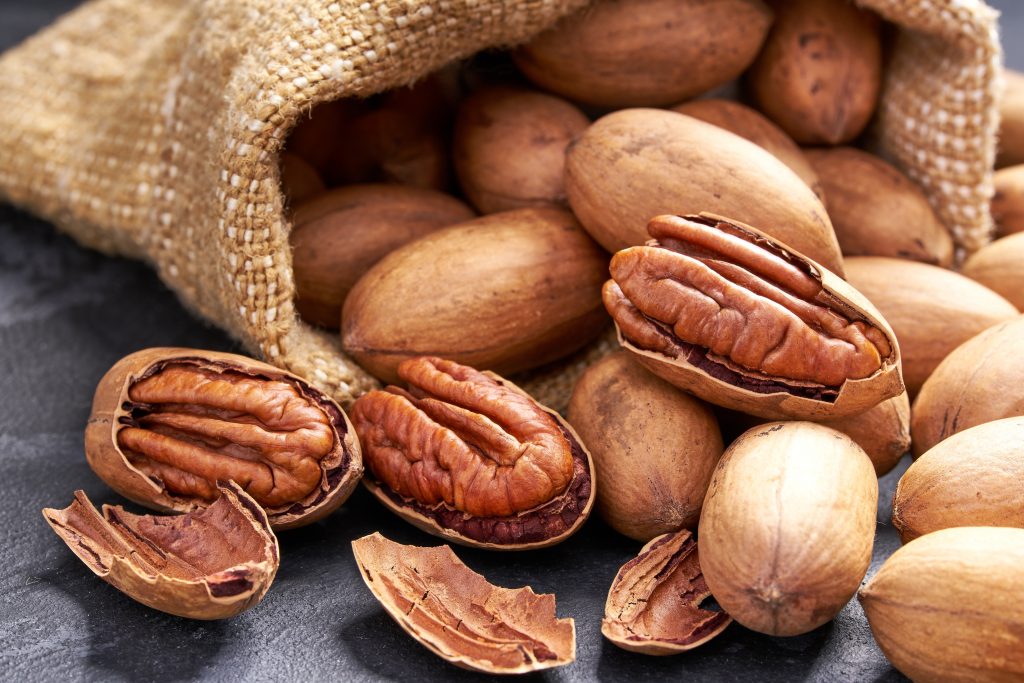
  • Export Markets Remain Key for Southeast Pecan Producers

    With the 2020 pecan season in the books, growers in the Southeast are looking to write a new chapter in 2021, one they hope will have a better ending.

    The story of this past season’s crop centered on devastatingly low prices and low morale among farmers still trying to recover from Hurricane Michael in 2018. The biggest question remains, what can be done to improve market prices? It starts with the potential export markets that need to be explored, especially since China currently remains a non-buyer.

    UGA Extension Pecan Specialist

    “Southeastern growers should be able to see now what their markets look like if we don’t have a large in-shell export market in play. It’s not a pretty sight,” University of Georgia Cooperative Extension pecan specialist Lenny Wells said. “I hope that we will see more efforts from some of the grower organizations in the state to take on and actively get involved in some of this export marketing work for in-shell nuts.

    “I think whether we’re talking about China or South Korea or India, Turkey, even Egypt’s being talked about now; there’s a lot of places we need to be working on for in-shell export markets. That’s really where southeastern growers are going to benefit.”

    Domestic Market Competition

    Additional export options are needed considering the domestic market has increased competition from Mexico.

    “I just really don’t see anything on the horizon that’s going to affect the volume of nuts coming in from Mexico. That competition for the domestic market is here to stay. There’s no question that Southeastern growers are at a disadvantage in that market,” Wells said.

    According to the final Georgia Pecan Price Report released last week, growers are cleaning up orchards and preparing for the 2021 season. Growers are still bringing pecans onto the market. But the volume has dropped, and there is a wide range of quality.

  • COVID Forces Farmers to Consider Alternate Marketing Opportunities

    Photo by Clint Thompson/Shows boxed produce being sold direct to consumers.

    COVID-19 altered the marketing plans of Southeast vegetable and specialty crop producers in 2020. Restaurants closed, which crippled certain sectors of the fruit and vegetable industry.  

    Farmers must continue to adjust as a new season approaches while the pandemic continues. Jessie Boswell, Alabama Regional Extension agent, who specializes in commercial horticulture and farm and agribusiness management, believes the pandemic’s impact has forced farmers to realize their marketing options needed to expand and could expand in 2021.

    “I think it made a lot of farmers realize how flexible they have to be and actually noticing these other marketing channels that they have, they may not have even noticed it before,” Boswell said.

    “A lot of them may not even have realized how to do those different channels. Maybe they’ve been meaning to look into it later, and this just kind of made them realize they’d have to be more flexible in kind of looking ahead more so than they were in the past.”

    Boxed Produce/CSA

    Farmers like Bill Brim in Georgia boxed their produce and sold direct to consumers to offset decreased demand. Community Supported Agriculture (CSA) was another option that paid off for some producers.

    “I know of a farm and they were planning on transitioning to a CSA last spring, spring of 2020, and they were already planning that before the pandemic even happened. They had a way better year than they even could have imagined,” Boswell added. “They had already started setting up for direct to consumer or a CSA box. They sold an astronomical amount. They sold out, actually.

    “That’s probably what I have seen most people do is switch to more of an online (option) or CSA. Even some of the ones that aren’t technology savvy started selling stuff on Facebook, trying to sell their greens or whatever they had because their other marketing channels were not open.”

    Of course, encouraging some farmers to consider alternate marketing strategies is easier said than done.

    “I know a lot of farmers that like to do things the way they’ve been doing it for the past decade. They’re not always the biggest fans of change,” Boswell said.

  • Auburn Extension Specialist Encouraged by Chill Hours Accumulation

    Cooler temperatures so far in 2021 should be an encouraging sign for Alabama fruit producers who need chilling hours to make a crop this year.

    “I’m a little more encouraged,” said Edgar Vinson, assistant research professor and Extension specialist in the Department of Horticulture at Auburn University. “We did accumulate more and more than we originally thought by the end of December. It was still a little bit short. It could be made up in January or later this month and into February. It’s not the problem it was shaping up to be.”

    Vinson said in mid-December that chill hour accumulation was a concern. He added that peach producers needed to have between 450 and 500 chill hours by the end of 2020. Vinson said last week that chill hours in Central Alabama were around 400. While he is encouraged, Vinson believes there is still more to catch up before producers don’t have to worry about chill hour accumulation.

    “We’re still a little concerned. We’d like to see a little more towards the end,” Vinson said. “What we’re looking for are warming trends. We didn’t see very many of those, so that’s good. Especially those warming trends of short duration, those tend to be a little more costly when it comes to chill accumulation, like those 24-hour warming cycles.”

    Peaches need chill hours to mature. The required chill hours depend on the peach variety, but most growers hope to get around 1,000 chill hours before spring.

    Temperatures do not need to reach below freezing for chill accumulation to occur. Optimal chilling is at 42 degrees Fahrenheit.

  • Friday Deadline for Alabama Farmers Following Zeta

    Photo shows Hurricane Zeta.

    The deadline is Friday for Alabama vegetable and specialty crop farmers seeking financial assistance from Hurricane Zeta.

    Producers who suffered losses related to Hurricane Zeta need to submit an application to the Alabama Farmers Agriculture Foundation for assistance from a Hurricane Relief Fund by this week.

    According to the alfafarmers.org, the relief fund is designed to help offset farmer losses not covered by a farmowner policy, crop insurance or disaster relief programs. An independent committee will evaluate the applications based on need and award grants in February.

    The application for Hurricane Zeta assistance and a link for contributions to the fund are available at AlabamaFarmersFoundation.org.

    Hurricane Zeta made landfall in Louisiana as a strong Category 2 storm on Oct. 28 and maintained tropical storm winds as it raced across Alabama. 

  • Southeast Agriculture Well Represented on House Ag Committee

    Bob Redding, who works for the Redding Firm and serves as a lobbyist for agricultural groups in Washington, D.C., believes the 117th Congress yields a positive outlook for vegetable and specialty crop producers in the Southeast.

    Scott

    Prominent Georgians are represented on the House Ag Committee. The committee is empowered with legislative oversight relating to the U.S. agriculture industry, forestry, nutrition and rural development, according to the press release announcing Congressman David Scott (GA-13) as the committee’s new chairman.

    Scott has served in the House Ag Committee since 2003. Scott replaces Collin Peterson, who lost his seat in Minnesota’s 7th Congressional District to Michelle Fischbach.

    Redding added that Georgia Congressmen Austin Scott (GA-08) and Rick Allen (GA-12) will remain on the House Committee.

    Bishop

    Congressman Sanford Bishop (GA-02) remains the Chairman of the House Appropriations Subcommittee on Agriculture.

    “It’s historical in that one state controls both, in the House, the authorization committee, House Ag, as well as the funding committee or bank for USDA for Food and Drug Administration with House Ag and Appropriations. That’s a very good thing for us, particular Southeasterners and Georgians,” Redding said. “This is highly unusual, historical as far as our lifetime in the House. That should work well for Southeast specialty crop on a lot of the policy issues, dealing with the USDA and FDA.”

  • Peach Varieties Susceptible to Bacterial Spot Disease

    Photo submitted by Phil Brannen/Shows bacterial spot disease on a peach.

    Susceptible peach varieties make bacterial spot disease a problem that continues to linger for growers in the Southeast.

    That was a message that Phil Brannen, University of Georgia Cooperative Extension plant pathologist, presented during last week’s Southeast Regional Fruit and Vegetable Conference.

    “A lot of the varieties that people really want the fruit from are susceptible. Unfortunately, that’s the reality. We do have some resistant varieties or at least some that are much more tolerant of this disease, but those are the ones that don’t have the color that you might want because they’re going to the market and stuff like that. That’s where we run into issues,” Brannen said.

    Why are Varieties so Vulnerable?

    He added that most of the varieties that producers in Florida, Georgia and Alabama are using originate out of the breeding program in California. But those varieties are grown and developed under much different environmental conditions than in the Southeast.

    “They’ll have beautiful peaches. They’ll be very colorful and all the things that the market would demand. That’s great, but they breed these in a dry environment in California. They don’t have bacterial spot because they’re basically growing these things in the desert. They use irrigation under the trees in order to keep them alive,” Brannen said.

    “For California, this is not an issue or not a major issue. But you take those same varieties from those breeding programs and say we want those because they produce a beautiful fruit and that’s what we want and you bring them here, they have never been developed in the presence of these diseases as far as their breeding program. Then all of a sudden you realize, ‘Wow, these are really susceptible to bacterial spot.’”

    What is Bacterial Spot?

    Bacterial spot is a sporadic leaf-spot disease that can cause defoliation in certain cultivars. Spots can also appear on the fruit, causing damage and leaving fruit unmarketable.

    Producing peaches in the Southeast can be tricky for growers. They understand that consumers are used to buying certain peaches that exhibit certain traits. That’s why producers are content with growing varieties that are vulnerable to bacterial spot disease.

    “There’s two things that sell peaches and neither one of them really have to deal with taste. Taste is variable based on the acidity and sweetness you have in the peach. People like taste based on what they like. The color is strictly a visual type of thing. A lot of people really love a red color or a lot of blush on a peach. You can take a peach that’s very yellow and it would taste maybe better than that red peach. But people are still going to seek that color,” Brannen added.

    “The second thing is size. People want a large peach. A smaller peach will taste just as good, maybe better. But people want a large, red luscious peach. That’s what the market demands. That’s what we’re trying to provide.”

  • Latest Pecan Prices

    According to the USDA Federal-State Market News Service, pecan prices remain low throughout Georgia. Growers are picking up what is left in the orchards and bringing in what they have not put into cold storage. Rain and wet orchards have left some areas with excess moisture and damage from rot.

    Growers are working those lots harder to clean them out and have them ready for testing and sampling. Prices remain about steady with a moderate interest from domestic buyers. Retail and gift pack purchasers are still looking for top quality pecans, while the export business to Asia has been virtually non-existent and slow as compared to previous years past. The season is rapidly winding down in Georgia. Most lots are blended varieties.

    Blends with (nut count 50-65) meat yield 48% to 50% are selling for about $2.50-2.65 per point; meat yield 45% to 47% sold for about $2.40-2.50 per point; and Blends with meat yield 41% to 43% sold in a range of about $2.00-2.25 per point.

    Prices paid to growers (late afternoon Tuesday, December 22, 2020 through late afternoon Tuesday, January 5, 2021) at buyers delivery point or F.O.B. the orchard including direct sales to end users, cents per pound in-shell of generally good quality in lots of 20,000 pounds or less unless otherwise stated:

    Cape Fear (deliveries insufficient to establish market)

    Desirables (deliveries light) yard tree lots, 80-100

    Elliott (deliveries very light) yard tree lots, 90-100

    Farley (deliveries very light) yard tree lots, 70-80

    Moneymakers (deliveries very light) yard tree lots, 40, occasional higher

    Native/Seedlings (deliveries light) yard tree lots, 40-50, occasional lower

    Schley (deliveries light) yard tree lots, 70-85

    Stuarts (deliveries light) yard tree lots, 50-75, mostly 70-75, few high as 90

    Sumner (deliveries light) yard tree lots, 70-80

    Lots over 20,000 pounds including truckloads:

    Cape Fear, Desirables and Sumner (most lots are Blends, see prices above)

  • Alabama Irrigation Questionnaires Due Jan. 31

    The Alabama Department of Agriculture & Industries (ADAI) continues to encourage producers who performed agriculture irrigation upgrades in the 2020 calendar year to complete the required irrigation questionnaire.

    While ADAI is responsible for collecting completed irrigation questionnaires from producers seeking a tax credit in 2020, the Alabama Department of Revenue (ADOR) will issue any irrigation tax credits to eligible applicants.

    The deadline for producers to submit a completed questionnaire is Jan. 31, 2021. It can be accessed on the ADAI website.

  • UGA Pecan Specialist: Morale is Really Low Right Now

    georgia pecans

    The pecan harvest season is in the books. When farmers and industry experts reflect on the 2020 season, what will be the story?

    Will it be an overwhelming crop that produced record yields for some farmers? Or will it be the low market prices that discouraged producers and forced many to store this year’s crop?

    University of Georgia Cooperative Extension pecan specialist Lenny Wells offers insight into a season unlike any other.

    “I think it’ll be the prices. Even though it was a huge crop, just the morale out there is really low right now. They didn’t get a lot for the crop,” Wells said.

    “The volume was there enough to where I think most of them are going to be okay. My concern is, if we’re seeing low prices again like this next year and we don’t have that volume, that’s when we’ll really start to feel the pain. But we’ve got a long time to go between now and then. Who knows what will happen with China and all that in the meantime?

    “There are a lot of nuts that are stored out there. That’s certainly going to play into whatever the price turns out to be next year.”

    Low Prices All Season

    Pecan prices were shockingly low all season. South Georgia farmer Randy Hudson said prices were anywhere from 30% to 50% less than what they’ve experienced the previous three years. All while fixed and variable costs continue to be extremely high.

    During the middle of harvest season in early November, Stuart varieties sold for 75 cents per pound. Sumners were selling for $1.30 to $1.41 per pound. Even with minimal scab disease pressure, Desirable varieties sold for just $1.35 to $1.40 per pound.

    Massive Yields

    Wells said the latest USDA numbers estimate that Georgia pecan farmers produced about 135 million pounds. It’s an astounding number considering the state is recovering from Hurricane Michael in 2018. Trees and acres of production were lost during the October storm. Who knows how high this year’s production would have been if not for the storm?

    “If we still had the acreage before we had the hurricane, this would have been a record crop, no doubt. A lot of growers had a record crop for their farm. But just because there was so much acreage lost, I think that brought it down some,” Wells said.

    Alabama farmers were hurt by hurricanes that destroyed acreage and greatly reduced their crop this year.