Category: Alabama

  • Frozen: Peach Producers Have Limited Options Against Late Freeze

    Some things are inevitable every year for Southeast peach producers. That late-season frost event that could damage peach production for the upcoming season unfortunately tops the list.

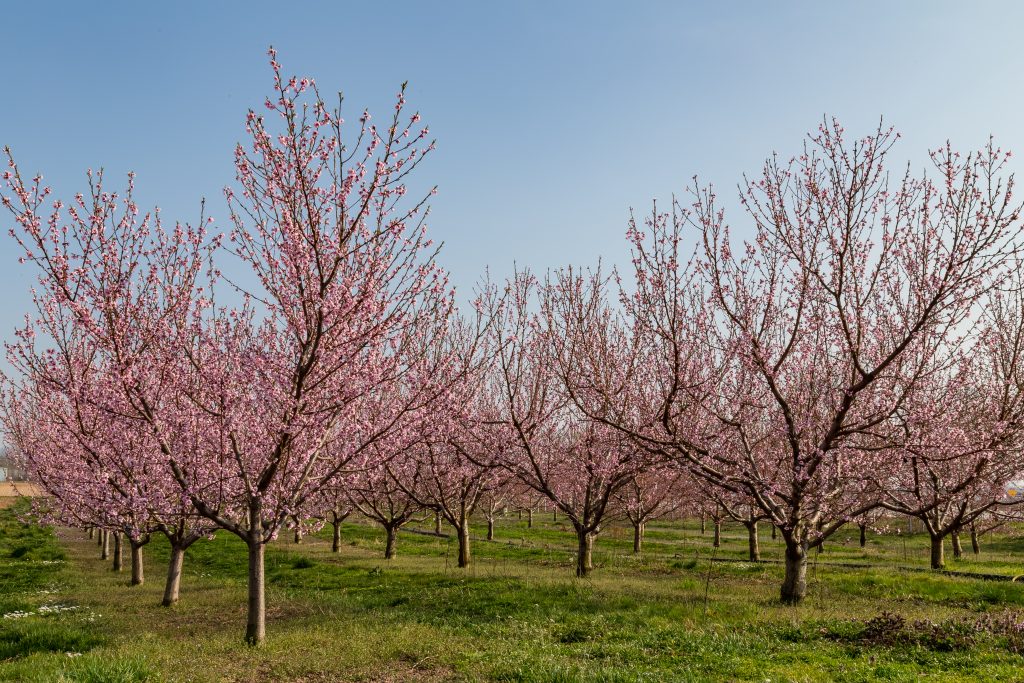
    Pictured are peach blossoms.

    Even though chill hours are no longer a concern, peach farmers are worried that if temperatures warm up in the next several weeks their crop would be vulnerable to a late freeze.

    “Unfortunately, that’s exactly what happens every year to a different extent. How bad it’s going to be is going to depend on two major factors. What exact temperatures we’re going to experience and what is going to be the phenological stage of flower and development at this point of time,” said Elina Coneva, an Extension specialist in the Horticulture Department at Auburn University.

    Management Options

    Producers have limited options if they encounter a late-season freeze. Coneva said the best protection against high wind speeds is to establish barriers. When establishing orchards, try to plant near wooded species like pine trees. These serve as wind breaks against high winds.

    If a freeze event occurs and temperatures are higher during the day and diminish during the evening, heaters can be used. Producers can also utilize wind machines that provide air inversion, taking warm air from higher elevations and pushing it down to the trees.

    Growers can also protect against future frost events by planting orchards near water sources, like a pond or lake. Water retains higher temperatures longer. During such events, it can radiate some of those temperatures, added Coneva.

    “If the trees are dormant, we can expect some damage, if it’s 5 to 20 degrees Fahrenheit. But if they’re in the next stage of calyx green or calyx red, temperatures of 21 to 23 degrees Fahrenheit can cause some damage,” she said. “If the trees have already experienced some temperature fluctuation, like cold temperatures followed by warming periods of time and then experiencing some cold again and then warm-up events, this is pre-disposing the trees to advancing their development… we can expect more damage to occur.”

  • Sweet Grown Alabama Receives Grant to Increase Locally Grown Grocery Purchases

    MONTGOMERY, Ala. — Sweet Grown Alabama has been awarded a grant to track locally grown products purchased by five grocery store and distribution partners.

    This specialty crop block grant, awarded by the United States Department of Agriculture in partnership with the Alabama Department of Agriculture and Industries, provides financial incentives to the stores in exchange for local procurement data. Sweet Grown Alabama’s goal is to motivate stores and distributors to boost the amount of locally grown products purchased, which in turn will make Alabama grown products more readily available for consumers. 

    “We are so grateful to local grocery stores and distributors who value Alabama grown products and already support so many of our local farmers,” said Sweet Grown Alabama Director Ellie Watson. “Through this grant program, we hope to make buying local products even easier for our grocery members. We know buying local takes a bit more money and e ffort, but the economic benefit it brings to our state outweighs the challenges.”

    Grant partners include Greer’s Markets in South Alabama with 17 Alabama stores; Piggly Wiggly Birmingham Group with 13 stores; Renfroe’s Markets in Central Alabama with six stores; WM Grocery in East Alabama with four stores; and Mitchell Grocery Corporation in North Alabama with 30 corporate stores and nearly 200 distribution partners.

    “Mitchell Grocery strives to supply the freshest top-quality produce available. We also want to support the families in our communities across the state,” said Robin Hayes of Mitchell Grocery. “We are grateful for the grant program and hope by forming this partnership with Sweet Grown Alabama we can connect with more local farmers. Really what can be fresher than local grown?”

    In addition to data tracking, these stores also joined the Sweet Grown Alabama branding program. Stores are listed in Sweet Grown Alabama’s online searchable database where consumers can find locally grown products. Members also receive the rights to use the Sweet Grown Alabama logo on point-of-sale materials and advertisements.

    To learn more about Sweet Grown Alabama and find locally grown products near you, visit SweetGrownAlabama.org.

  • Freeze Effect: Peach Producers Wary of Late-Season Frost

    File photo shows a peach bloom blossoming.

    Chill hours are no longer a concern for peach growers in Alabama and Georgia. So, what is their biggest worry heading into the spring?

    “March 28, the full moon in March. We always tend to have some cold in that full moon in March. But with it being later, maybe we’ll be out of the woods and in the clear. You just never know. March can be so up and down. Even the last few years, February has gotten pretty warm,” said Jeff Cook, University of Georgia Cooperative Extension Agriculture and Natural Resources agent for Peach and Taylor counties.

    Cook said there are early varieties that begin to bloom towards the end of the third week in February.

    Growers in both states are cautiously optimistic about the state of the peach crop. The cold winter temperatures provided enough chilling hours for the trees to make a crop this year. But what will happen if temperatures warm up? Trees will be vulnerable to a late-season freeze.

    “We’ve got some peach producers around. They’re not all in one area, they’re kind of spread out. When I talked to them, they’ve done some pruning,” said Eric Schavey, Alabama Regional Extension agent in Northeast Alabama. “They’re just hoping we don’t get one of those late freezes. Their early varieties, they’re not blooming but they’re swelling. Those buds are swelling. That’s because we had those 68 and 70-degree days.

    “I guess that early crop is always kind of a gamble here in our area.”

    That makes what happened on Feb. 2 so important for farmers eyeing the upcoming weather forecast. Punxsutawney Phil saw his shadow and predicted six more weeks of winter.

    “When the groundhog saw his shadow, it was like, ‘Okay, that’s good. Stay cool,’” Cook said.

  • Chill Out: Alabama Peaches Looking Good Amid Cold Winter

    File photo shows peach trees in bloom.

    Chill hours are no longer a concern for one Alabama peach farmer. The biggest worry that Jeremy Calvert has is that his trees will bloom early and be impacted by a late freeze.

    “We get a week of 60, 70-degree weather and then go back down in the 20s, that’s just not what you want to see,” said Calvert, whose J Calvert Farms is in Cullman, an hour north of Birmingham, Ala. “Everything we’ve got in north Alabama, we’ve got a good amount of chilling in. Everything looks good. I think we have a good bud set on most everything. They definitely have got all of their chilling in. It’s been good quality chilling. When we do get a warm streak, they’re going to take off like a racehorse. That’s my opinion.”

    According to Alabama Extension, chill hours are up across the state. As of Tuesday morning, the Auburn University Turf Unit had received 716 standard chill hours, compared to 617 last year. There was 919 hours recorded at the Chilton County REC in Thorsby, Ala., compared to 778 a year ago. At the EV Smith Research Center HQ in Shorter, Ala., there were 824 chill hours compared to 645 last season.

    “Chilling is not going to be an issue for us this year. I think South Alabama could still have a little bit of a deficiency but still probably not going to be a big issue for them,” Calvert said.

    Calvert said cold temperatures started around mid-December and have not let up. He is hopeful warm temperatures will hold off as long as possible.

    “I would love it if we don’t have any bloom until the first of March, but that doesn’t always happen,” Calvert said.

  • Winter Weather Impact: Alabama Strawberries Progressing

    Strawberries in north Alabama are progressing despite sporadic temperatures and high wind speeds.

    florida
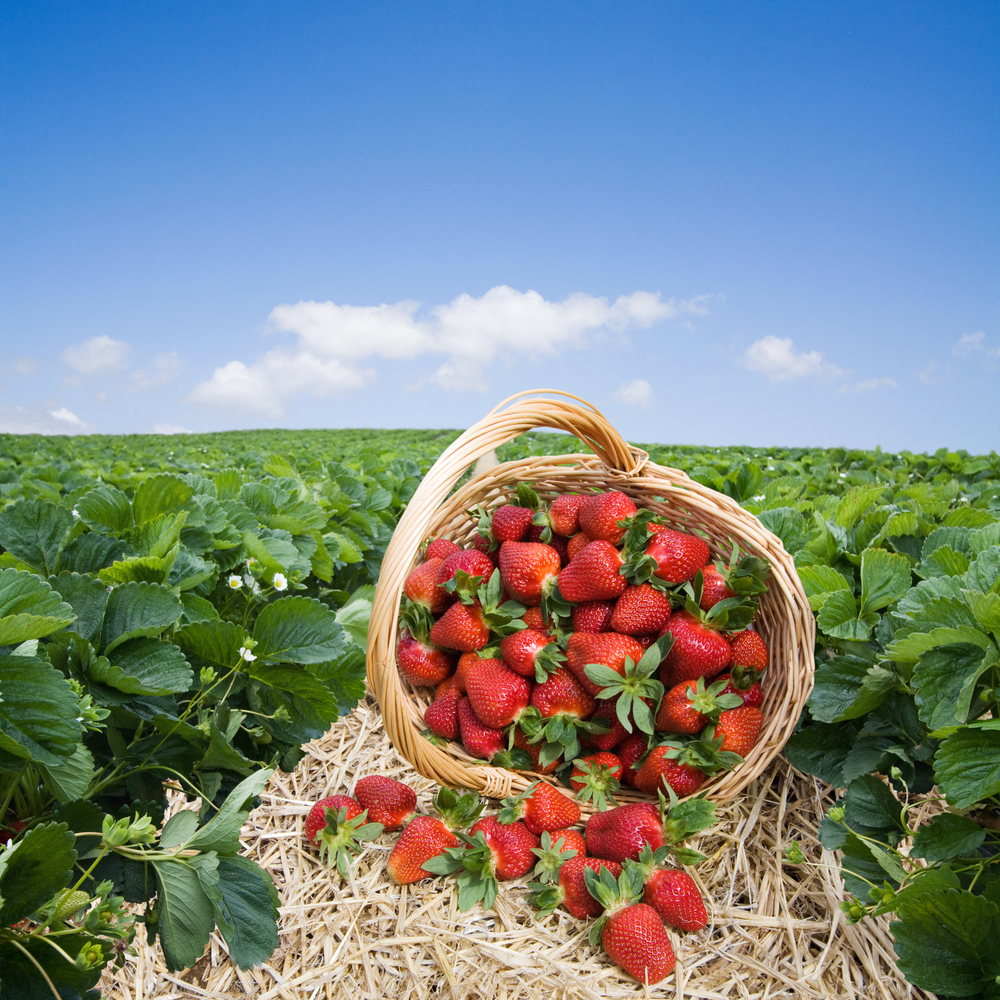
    File photo shows strawberries picked in a field in a prior season.

    “Our cold weather hasn’t been like a constant. It’s been more of a, we’ll have three or four days, maybe seven or eight days of colder weather, and then we’re back up in the 50s and 60s,” said Eric Schavey, Alabama Regional Extension agent in Northeast Alabama. He admits the plants are almost confused when growing through the different spikes or drops in temperature.

    “It’s like, I want to work but no I don’t need to. I feel like a plant burns a lot of energy when that happens. We’ve had wet weather. We’ve had wind. We’ve had a lot of days here in the past month or so where the wind has blown 12, 15 miles per hour. You’re just keeping frost cloth on and trying not to damage plants. It doesn’t help the situation.”

    Moving Forward

    The biggest challenge producers face moving forward is the uncertainty of what February will hold. According to weather.com, temperatures in Gadsden, Alabama are expected to climb as high as 63 degrees on Tuesday before dropping steadily over the next several days to highs that are only in the low to mid 30s next weekend.

    “For the most part, strawberries are on track to be good this year; depends on what February brings. You never know about February here in north Alabama,” Schavey said. “February has always been one of the coldest months. It seems like in my lifetime growing up here in north Alabama, February has always been one of the coldest months.”

  • Looking Ahead: How to Compensate for Low Pecan Prices?

    File photo shows pecans in a bag.

    As disappointing and disheartening last year’s pecan season was for Southeast producers, 2021 has the potential to be worse – if producers don’t take action or if prices don’t improve.

    It was a bountiful crop for Georgia with yields projected at 135 million pounds. But considering that pecan trees are alternate bearing (if they produce a good crop one year, they are less likely to produce a similar result the following year), a decreased crop next season will not compensate for the market, if low prices linger.

    “If our prices are as bad as they were last year, and we don’t have the volume there, growers are really going to feel the pain then. This year, the prices were low, but it was a really good crop and most growers had enough volume to offset some of the low prices. It may have hurt their feelings but most of them would have gotten enough to pay their bills and keep going,” University of Georgia Cooperative Extension pecan specialist Lenny Wells said.

    “If we have a similar situation this year and have a lighter crop as we would expect after such a big year, it could get ugly in that situation.”

    Trimming Expenses

    Wells is encouraging producers to trim expenses when possible.

    “Certainly in the situation that our market is in right now and just not knowing, it may be better than it was last year or it may be the same or it may be worse; we have no way of knowing. In that situation, it would really help to watch your inputs closely,” Wells said.

    The two main areas are in fertility and with fungicide sprays. Fertility, which includes lime, potassium, nitrogen, phosphorous and zinc, account for a little more than 10% of variable costs. Fungicides, which include sprays for scab disease, account for about 12%.

    “Between those two, if you can find some savings, you can really make a dent in your costs of production,” Wells said.

    Soil and Leaf Samples

    Soil and leaf samples are crucial in helping producers understand the conditions of nutrients in their orchards. In many instances, nutrient levels in the soil in older orchards don’t need to be replenished every year. That will save producer additional input costs.

    “We did a survey back in 2007 that showed for a lot of these nutrients like phosphorus, potassium, zinc, a lot of the older mature orchards, the soil levels are good. There’s going to be some variation based on soil type and location. But some of these nutrients, like phosphorus and zinc especially when you get them to the point they need to be, they’re going to be there for a while. You don’t necessarily have to apply them every single year,” Wells said.

    While fungicide sprays for scab disease are essential, especially in production seasons with a lot of rainfall, one alternative is to plant varieties that are much more scab resistant, like Avalon.

  • Chill Hours Continue to Increase for Alabama Peaches

    Alabama peach trees continue to receive high chill hours to help make a crop this upcoming spring.

    File photo shows peaches growing.

    According to the Alabama Extension, chill hours remain high at various locations throughout Alabama.

    As of early Friday morning, there were 678 standard chill hours at the Auburn University Turf Unit in Auburn, Alabama, compared to 617 last year. There were 860 chill hours at the Chilton County REC in Thorsby, Alabama, compared to 778 last season. There was 781 chill hours at the EV Smith Research Center HQ in Shorter, Alabama, compared to 645 last year. There was 1,182 chill hours at the Upper Coastal Plain Substation in Winfield, Alabama, compared to 1,084 last year.

    Cool temperatures are expected to continue through next week. According to weather.com, temperatures are expected to drop in the 20s next Friday (Feb. 12) through Sunday (Feb. 14).  

    Peaches need chill hours to mature. The required chill hours depend on the peach variety.

    Chill hours increased considerably in January. Edgar Vinson, assistant research professor and Extension specialist at Auburn University feared chill hours were lagging behind in December.

  • Alarming Ant Issue: Pest Impacted Hemp in 2020

    File photo shows fire ants.

    Commercial hemp production has taken off in the Southeast. A key takeaway from the different production sites in Georgia and Alabama in 2020 was the alarming number of ant problems reported on production.

    “A lot of times it was fire ants, but it wasn’t exclusively fire ants. There were some other types of ants as well,” said Tim Coolong, associate professor in the University of Georgia College of Agricultural and Environmental Sciences.

    “It was actually a significant issue. It was somewhat sporadic because some people didn’t have any problems with it. But in other fields, people were losing 10% to 15% of their plants, if not more.”

    Problem in Alabama As Well

    It was a similar problem that was reported in Alabama hemp. Katelyn Kesheimer, Auburn University Assistant Professor and Extension Specialist, said last June, “What I’m seeing now is they’ll kill a plant and just move to the next one pretty quickly. You can see this pattern as they move their mounds. They make these mounds around the base of the plant as they’re feeding.”

    The ants were especially detrimental to plants that were young and vulnerable.

    Ant Feeding

    “They actually feed on the plant. I don’t know if they’re actually consuming that or chewing part of the stem off to use for material in the anthill or ant colony, rather,” Coolong said. “They’ll actually chew into the stem and girdle it and actually put little holes into the stem.

    “Because there’s many insecticides labeled for hemp, when we are growing other crops that may have received insecticide applications at planting or prior to planting, ants aren’t an issue in many cases. Either that plant or the land around it is treated already. But in hemp that’s not an option in many cases. Therefore, it’s certainly more noteworthy.”

    Baits may be the best source of management for producers gearing up for the 2021 season.

    “While the baits themselves are not labeled for hemp production, if those baits are placed outside your production area and then therefore that crop is not coming in contact with them, that would not be an off-labeled use,” Coolong said. “That’s probably the best bet for growers.”

  • 2021 IPM Guides: Information Critical to Production Success

    Posted by Victoria Dee

    AUBURN UNIVERSITY, Ala. – Whether you’re an amateur gardener or seasoned agriculturalist, there is no denying that pests can sometimes sneak in and ruin a crop. These pests may appear in the form of insects, weeds or plant diseases — and all can be detrimental. Current and former Alabama Cooperative Extension System entomologists, weed scientists, plant pathologists and a pesticide education specialist have compiled an updated list of 2021 integrated pest management guides to keep these pests out of your crop.

    Sikora

    What Are IPM Guides?

    IPM guides, or integrated pest management guides, are updated annually with information usually pertaining to herbicides, insecticides and fungicides that can be used to manage pests on plants.

    “They may also include other pest management techniques such as cultural practices and disease resistant varieties that may be appropriate for certain insect pests and plant diseases,” said Alabama Extension plant pathologist and alumni professor Ed Sikora.

    The 2021 IPM guides are available for access and download on the Alabama Extension website. The guides include recommendations for commercial horticultural crops; commercial turfgrass; homeowners’ lawns and ornamental and garden crops; houses, buildings and grounds; major row crops; noncropland, commercial trees and ornamental crops; pastures and forage crops and small and stored grains.

    Why Are They Important?

    The availability of pesticides, as well as application recommendations, are constantly changing, ensuring the need for these annual IPM guides and their up-to-date information. Each guide contains information about the selection, rates, application and proper use.

    The 2021 IPM guides allow for the best management decisions to be made for crops or gardens. They are there to help avoid what Sikora warns are “unnecessary and sometimes expensive mistakes.”

    “These guides are an excellent resource, and anybody that uses pesticides should have a copy in their truck or have the website easily accessible on their phone or computer,” Sikora said.

    Anyone applying these pesticides should make sure to read the manufacturer’s label for directions on proper use and product restrictions. Reading labels ensures the safest application of the product in combination with recommendations included in the IPM guides.

    More Information

    For more information and access to the integrated pest management guides, visit the IPM page on the Alabama Extension website.

    Information from Alabama Extension News

  • Back-to-Back Bountiful Watermelon Seasons?

    Watermelons being researched on the UGA Tifton Campus. By Clint Thompson 6–6-17

    It is never too early to start thinking about watermelon season in the Southeast. After all, south Florida’s crop has been in the ground for about a month. Central Florida producers will plant in mid-February. North Florida, Alabama and Georgia are slated to start around mid-March.

    It is never too early to start thinking about another dream season to follow last year’s bountiful season.

    “I’ve been at this 40-some odd years. Could you have two bountiful years back to back? Yes, indeed. Is it likely? Probably not,” said Carr Hussey, a watermelon farmer in Florida and Alabama, chairman of the board of the Florida Watermelon Association and co-founder of Sweet Mama Produce. “That’s a very difficult question because weather is such a big deterrent. I think it’s going to be an okay year, but I don’t know if it’ll be as bountiful as last year.”

    Short Supply, High Demand in 2020

    Watermelons were in short supply last year that contributed to higher prices for Southeast farmers. Hussey predicted in May there could be a watermelon shortage by Memorial Day. Prices in mid-May were around 20 cents per pound. Florida’s watermelon supply diminished due to three straight weekends of rain events. Heavy rains on mature vines lead to a quick harvest season.

    But those farmers that had a crop were able to sell and sell at high prices for most of the season.

    “In my 40-something years I’ve seen about three of those. I hate to say it, but I think COVID had a little bit to do with it last year. People were staying home, doing more Bar-B-Quing. I really think it helped the pricing. The bountifulness was already there, but the demand was higher which kept the price good,” Hussey said. “Will that happen again this year? I hope so. I don’t hope for COVID, of course.”

    Prices also could be impacted by an increase in acres. Georgia’s acreage dropped to around 19,000 last year. It was a significant decline from the 23,000-acre average from it had from 2016 to 2018. But with word of higher prices in 2020, it should entice farmers to plant more acres this year.

    “Anytime there’s a really good year, everybody and their brother want to get on it next year. That’s what will probably deter the price from being as good,” Hussey said. “But that being said, if they don’t increase it dramatically, it’ll still be a good year; if they don’t increase acreage dramatically.”