Category: Alabama

  • Flash Drought: Potentially Devastating to Crops

    Latest US Drought Monitor shows dry conditions in Alabama.

    Parts of the Southeast have experienced excessive rainfall this year. But periods of prolonged dry spells could be just around the corner and be detrimental to the growth of vegetables and specialty crops.

    What is really concerning to Pam Knox, University of Georgia Extension Agricultural Climatologist, are those flash droughts. She spoke about the impact flash droughts can have on farmers’ crops during a discussion with the U.S. House Agriculture Committee.

    “Flash drought, if you don’t know, is a drought that comes on very rapidly. Because it’s coming on rapidly, often with high temperatures or complete lack of rainfall or maybe some of both, it really accelerates stress on a plant,” Knox said.

    “Plants need to have regular amounts of rainfall or irrigation water to survive. When we have flash droughts, the plants can go from healthy and thriving to very stressed and sick plants in a very short time, sometime even in as much as week. Our ability to identify those flash droughts is important because it will tell the farmers they need to do something about it.”

    According to the US Drought Monitor, much of the central to southwestern part of Alabama is either abnormally dry or in a moderate drought. A few areas in central and southern Florida are abnormally dry as well.

    Research Needed

    Farmers can utilize irrigation and cover crops to protect against flash droughts. But Knox insists more research is needed to help farmers.

    “All of those are things that need to be looked at. One of the projects we’re working on right now looks at soil moisture. That’s an important piece of information that farmers need to have. There’s not a lot of inexpensive pieces of equipment that people can use to do that,” Knox said.

    “Some of the projects I’m working on right now are to identify some of these less expensive ways to monitor soil moisture and provide that information to the farmers in a way that they can use it to put on just the right amount of water. They don’t need to over-water, but they need to put on enough water to keep the plants alive.”

  • Plastic Makes Perfect: Vegetable System Producers More, Cleaner Fruit

    File photo shows tomatoes growing in plasticulture.

    Planting season is nearing for Alabama vegetable producers. One system that all farmers need to consider is plasticulture. Plastic mulches can lead to cleaner fruit with much more yields.

    Joe Kemble, Alabama Extension vegetable specialist, discussed the benefits of producing tomatoes in a plasticulture system during a webinar on Tuesday.

    It starts with yields.

    “Using these plastic mulches just by themselves can result in yields 1.5 to 3 times over average of what you would normally produce,” Kemble said.

    Plastic mulches also allow farmers to apply nutrients and water more efficiently, since they would be applied underground.

    “It allows you to precisely apply fertilizer and water because you have drip irrigation tape underneath. There’s no other way to get water under there because these are raised beds, so you’ve got to use drip irrigation along with it,” Kemble said.

    The use of drip irrigation also leads to cleaner fruit. There is less water splashing on the bottom of the fruit and subsequent splashing up into the plant canopy.

    One of its most important features, though, is it allows farmers to reach the market earlier.

    “Earliness in the fresh market is typically when you make more money. If I’m a commercial grower and I’m earlier than my neighbor, chances are I’m going to make a little bit more money than they would,” Kemble said.

    A plasticulture system can be utilized on various scales, from large-scale farmers to homeowners’ gardens.

    “There’s lots of options for people wanting to try something like this,” Kemble said.

  • Wacky Weather: Alabama Planting Season Nears Amid Excessive Rainfall, Drought

    The most recent US Drought Monitor shows parts of Alabama in a moderate drought.

    Planting season nears for Alabama vegetable producers. Once again, weather will play a key role as farmers prepare to plant this spring’s crops.

    Joe Kemble, Alabama Extension vegetable specialist, implores producers to wait until soil temperatures increase above a certain level and stay that way for several days straight. That will be a better environment for seed to germinate and transplants to grow.

    “We like to plant by the calendar but unfortunately that just doesn’t work out really well sometimes. So, the best way to do that is to measure your soil temperature. For small and large growers, you want your soil temperature to be above 60, 65 degrees Fahrenheit for several days in a row,” Kemble said. “That’s actually a better indicator of when it’s time to put in your squash planting or your tomatoes. Anything below that, it can hamper seed germination and stand establishment. It can also knock back some of the warm season crops that go in as transplants.”

    Excessive Moisture

    Some growers may not have much choice than to wait for soil temperatures to warm. Parts of the state have experienced excessive rainfall this month. Some growers are still waiting for fields to dry out.

    “Between Alabama and South Georgia, we’ve gotten a lot of rain over the last couple of weeks. That’s hampering a lot of growers getting in the field and getting things prepared,” Kemble said.

    Moderate Drought

    But then there is a portion of southwest Alabama that could use some rainfall. According to the US Drought Monitor, Dallas County, Lowndes County, Marengo County, Monroe County, Wilcox County are classified in a moderate drought why surrounding counties are abnormally dry.

    “They’re definitely drier than the rest of Alabama. Most of Alabama got a lot of rain over the last couple of weeks. A little dry is okay,” Kemble said. “You still need a little bit of moisture though to plow effectively. If it’s too dry, you end up plowing and you create soil clots. You can sort of create a real mess for yourself.”

  • $15 Minimum Wage? Potential Increase Would Impact Southeast Producers

    Image source: The Pajaronian

    The Biden Administration’s push for a $15 minimum wage would have significant ramifications for farmers who utilize the H-2A program.

    Veronica Nigh, economist with American Farm Bureau, discusses the financial impact a higher minimum wage would have on Southeast vegetable and specialty crop producers.

    “The H-2A program stipulates you have to pay the highest wage of (either) the state minimum wage, the federal minimum wage, the AEWR (Adverse Effect Wage Rate) or the prevailing wage, which is something that we see more often in the northwest corner of the U.S. If we were to see a federal minimum wage go to $15 per hour, currently the H-2A (rate) in the southeast is $11.81 and in Florida it’s $12.08; if you had to pay the higher of AEWR or the federal minimum wage, it’s going to go up,” Nigh said.

    Trickle-Down Effect

    An increased minimum wage would have a trickle-down effect on a farmer’s workforce.

    “If you’re paying your minimum wage employees a higher rate then all other wages for anyone more skilled than that are also going to go up. There is a concern that increasing minimum wage would be an inflation rate for all wages,” Nigh said. “It’s not unconnected to other wages.”

    Other Requirements

    This does not even consider producers’ other requirements. These include housing, transportation and meals that they must account for when utilizing the program.

    Florida has already approved legislation that would increase its minimum wage to $15. But that threshold won’t be met until 2026.

    What remains in question is whether the legislation regarding a $15 federal minimum wage will be passed at all? And in how quick of a timeframe?

    “Look back 10 years ago. The AEWR in 2012 was $9.39 in Alabama. Today, it’s $11.81. Over that 10-year period, it went up $2.42, which would be less than what it would go up if the minimum wage would go up to $15,” Nigh said. “If an increase in the minimum wage would be put forward, how quickly it would go into effect and reach its full level is really important. Currently, federal minimum wage is $7.25. If that were to go up to $15, it’s obviously more than twice as much what it is now. How many years it takes to phase that in would be important.”

    H-2A workers just received a bump in pay for the upcoming production season.

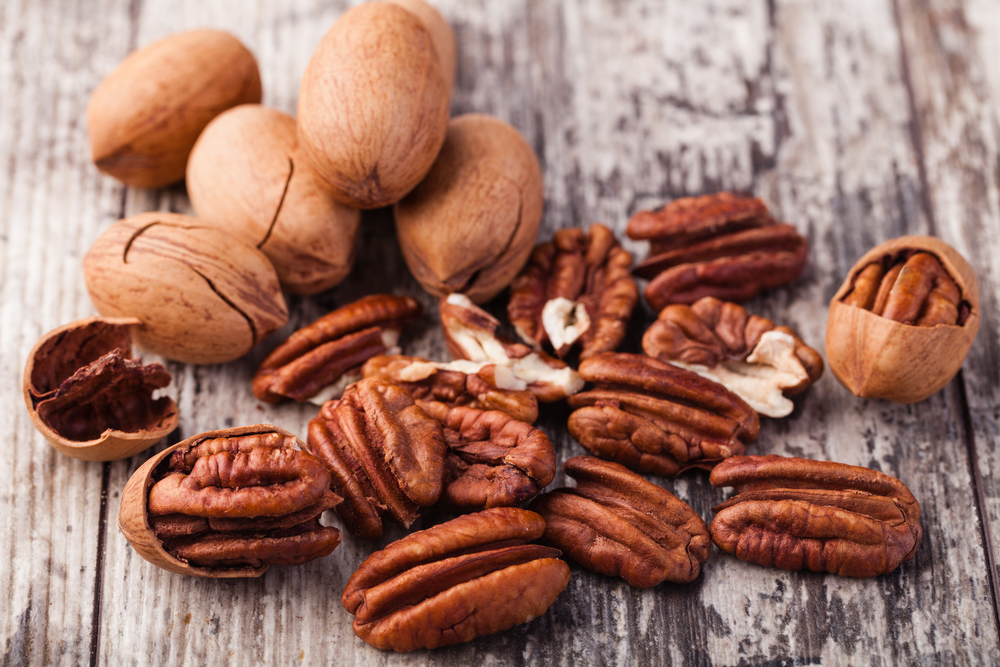
  • Pecan Promotions: USDA Seeks Nominees for Board

    georgia pecan

    Southeast pecan producers interested in serving on the American Pecan Promotion Board can submit a nomination no later than March 26.

    The U.S. Department of Agriculture (USDA) Agricultural Marketing Service (AMS) is seeking nominations for the board under the Pecan Promotion, Research, and Information Order.

    The board will be comprised of 17 members; 10 producers and seven importers. The producers will be divided between three regions: three from the Eastern Region; three from the Central Region; and four from the Western Region. 

    Each member’s term will begin when USDA approves the nominations.

    A producer or importer who has produced or imported more than 50,000 pounds of in-shell pecans (25,000 pounds of shelled pecans) on average for four fiscal periods is eligible to serve. Producers who produce pecans in more than one region may seek nomination only in the region in which they produce the majority of their crop.

    Nominations for producer member seats will be submitted to the Secretary of Agriculture by the American Pecan Council, the 17-member federal marketing order governing body. If you are interested in serving as a producer member, please submit your nominations to info@americanpecan.com. You may also contact Jeff Smutny at (817) 916-0020.   

    For more information about the program, visit the AMS American Pecan Promotion Board webpage or contact USDA Promotion and Economics Division Deputy Director, Patricia Petrella, at (301) 337-5295 or Patricia.Petrella@usda.gov.

  • Wage Increase: H-2A Workers Receiving Bump in Hourly Rate

    usmca
    Workers pick potatoes in this 2019 photo.

    Southeast producers who utilize the H-2A program finally know what the minimum wage is they must pay in 2021. The USDA Farm Labor Survey revealed that wage rates for H-2A labor are increasing at an average rate of 4.5% or $0.63 per hour across the country. For the Southeast, though, those levels are much lower.

    Florida’s wages will increase by 3.2% from 2020 to 2021. Georgia and Alabama will go up by just 0.9%.

    “I think growers, no matter what part of the country you’re from, when you say on a day-to-day basis, what’s one of your biggest concerns, it’s finding labor,” said Veronica Nigh, economist with American Farm Bureau. “That’s been the case for several years. I think the fact that we keep seeing the wage rate go up is indicative of that strong demand for farm labor.”

    The average H-2A wage rate for Florida is $12.08 per hour. The rate is $11.81 for Georgia and Alabama. The rates are much lower than states like California ($16.05), Oregon ($16.34), Washington ($16.34) and Texas ($13.03). According to American Farm Bureau, the average wage rate for field and livestock workers was $14.62 in 2020, an increase of 4.5% from $13.99 in 2019.

    “When you need hands, you need hands. If you can squeeze out the money from the budget then that’s what folks seem to be doing. Overall, nationally, we’re up about 4.5% this year compared to last,” Nigh said. “In the Southeast, that wasn’t as big of an increase; only a 10 cents per hour increase, which is a little less than 1%. That’s good from a grower’s perspective for sure. Still, getting at around $12 per hour is still quite a hefty wage rate to be paying.”

    Expensive Five-Year Increase

    While the wage increase is relatively small for states in the Southeast, a look at the past five years paints a different picture. From 2016 to 2021, Georgia and Alabama have experienced an 11% hike in the wage rate, while Florida has increased 9%, according to the USDA Farm Labor Survey.

    Nigh said in August that Florida was the largest user of the program during the year’s first three quarters with 28,005 certified positions. Georgia had listed more than 23,000 certified positions.

    “Lets say conservatively 1.5 million workers are needed per year and we’re looking at 275,000 positions were certified in 2020. That’s only 18% of the workforce,” Nigh said. “You look at long-term trends and the number of workers that are employed in agriculture, it’s been somewhere between 1.5 and 2 million workers, despite the fact that we’ve seen quite a bit of mechanization over the last couple of decades. If H-2A is only less than 20% of the workforce right now, one would assume we’re just going to keep seeing that (rate) go up and up.”

  • Gray Mold Alert: Hemp Disease Discovered in Alabama Seedlings

    According to the Alabama Extension Commercial Horticulture Facebook page, recent samples of hemp seedlings sent to the Auburn University Plant Diagnostic Lab yielded discouraging results.

    Photo from Alabama Extension Commercial Horticulture Facebook page/Shows gray mold on hemp.

    The seedlings and clones were infected with gray mold or Botrytis cinerea. The fungus favors a cloudy and cool environment. Hemp that is produced in greenhouses in conditions that are high in humidity are at risk to be infected by the fungus.

    Gray mold develops primarily in flower buds and plant parts that are tightly-packed. The fungus is commonly found in and between buds where microclimates are humid and air flow is restricted. Bud blight is the most common symptom of gray mold observed.

    Botrytis cinerea is dependent on a wound or opening in the plant tissue for infection to occur.

    Proper sanitation is essential in controlling gray mold. It is especially important to start with clean plant materials.

    Scouting on a regular basis will help identify potential problem areas in the greenhouse early before the disease is firmly established. If symptoms of gray mold are observed, producers need to prune and discard any tissue that is dead, dying or diseased.

    Use adequate plant spacing to ensure air is properly circulated. Maintain humidity levels near 50%. Avoid irrigating the leaves and canopy, and do not over-fertilize, especially with  nitrogen. Monitor and manage insects that can create wounds for the fungus to enter the plant.

    A list of fungicides registered in Alabama for use on hemp can be found at: https://www.aces.edu/…/hemp-pest-management-in-alabama/.

    If you need to submit a sample for disease diagnosis, please refer to: https://offices.aces.edu/plantlabauburn/.

  • Preparing for Success: Blueberry Site Preparation Takes Time

    crop insurance
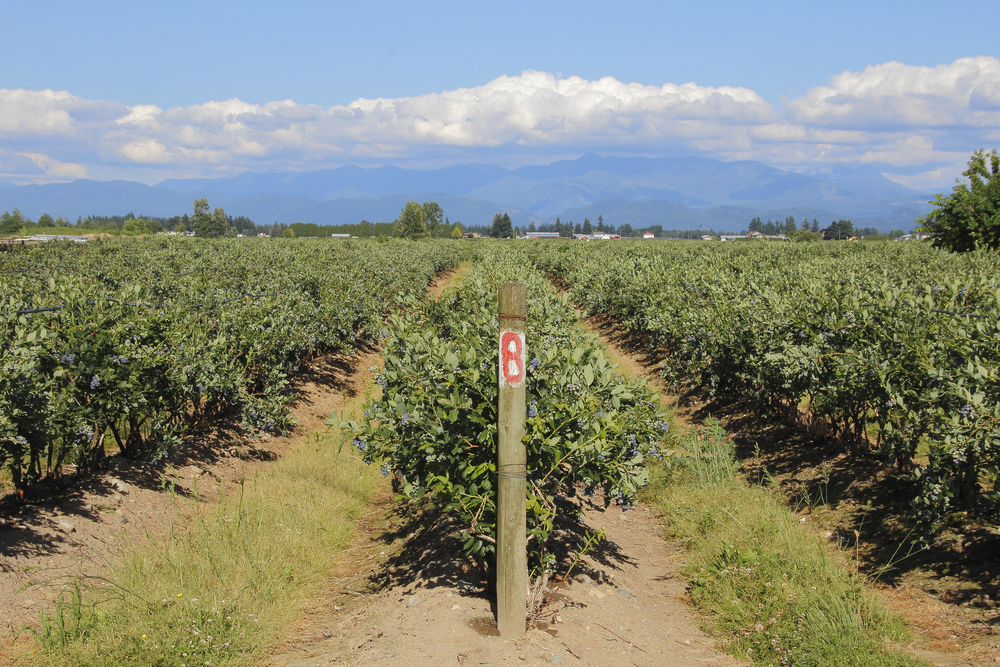
    File photo shows a blueberry farm.

    Preparations need to be done well in advance for producers interested in producing blueberry plants, said Elina Coneva, an Extension specialist in the Horticulture Department at Auburn University, during a webinar on the Alabama Extension Commercial Horticulture Facebook page.

    “For those who are considering becoming blueberry growers, I would let you know that you need start preparation for your blueberry field at least one year in advance,” Coneva said. “The good soil types for growing blueberries are characterized by light, sandy and well-drained soils. In addition to all the nutrients that you need to check in your soil, you need to be aware of the pH in your soil. Unlike almost all other fruit crops, the optimal soil pH for blueberry production is between 4.2 and 5.5.”

    She also added that it is important that farmers add organic matter to their soil. This can be achieved through cover crops or through peat moss, though it is a more expensive option. The most popular option is the use of pine bark.

    “This (organic matter) adjustment will improve the chemical, physical and mechanical properties of the soil in which the blueberries are going to be grown,” Coneva said.

    She added that each 1% of soil organic matter releases about 15 pounds of nitrogen each year.

  • Pruning Practices: Blueberry Growers Reminded of Important Management Tactic

    Pruning of southern highbush blueberries is required to open the middles of the plants for machine harvesting from the top.

    The time is now for some blueberry producers to prune their crop. Pruning is the process by which farmers selectively cut parts of their plant. This will sustain the overall health of the plant while enhancing its fruit quality.

    In a webinar on the Alabama Extension Commercial Horticulture Facebook page on Monday, Eric Schavey, Regional Extension agent in Northeast Alabama, said pruning limits the height of the plants. Shorter plants are easier to harvest. New vigorous shoots also produce larger fruit.

    “We want to develop a good plant structure. This is going to help you in production,” Schavey said. “We’re going to help you control that plant size. We don’t want to pick anything off of a ladder. If you’re a home-owner, small, U-pick, you don’t want all of your production eight or nine foot off the ground. We’re going to control the fruit number and size by pruning.”

    Schavey said pruning now will aid in disease and insect control. An open canopy will allow more air to move through. If growers need to apply pesticides, they can also get good coverage.

    Growers can also prune during the summer right after harvest to achieve height control. Schavey emphasizes that research indicates producers only do this every other year, however.

    For producers who refuse to prune, they are likely to meet significant challenges come harvest season. The blueberries are a lot smaller and out of reach. There is more interior shedding, increased pest issues and water needs go up because of the increased size of the plant.

  • Need to Know: Alabama Hemp Production Facts

    hemp program
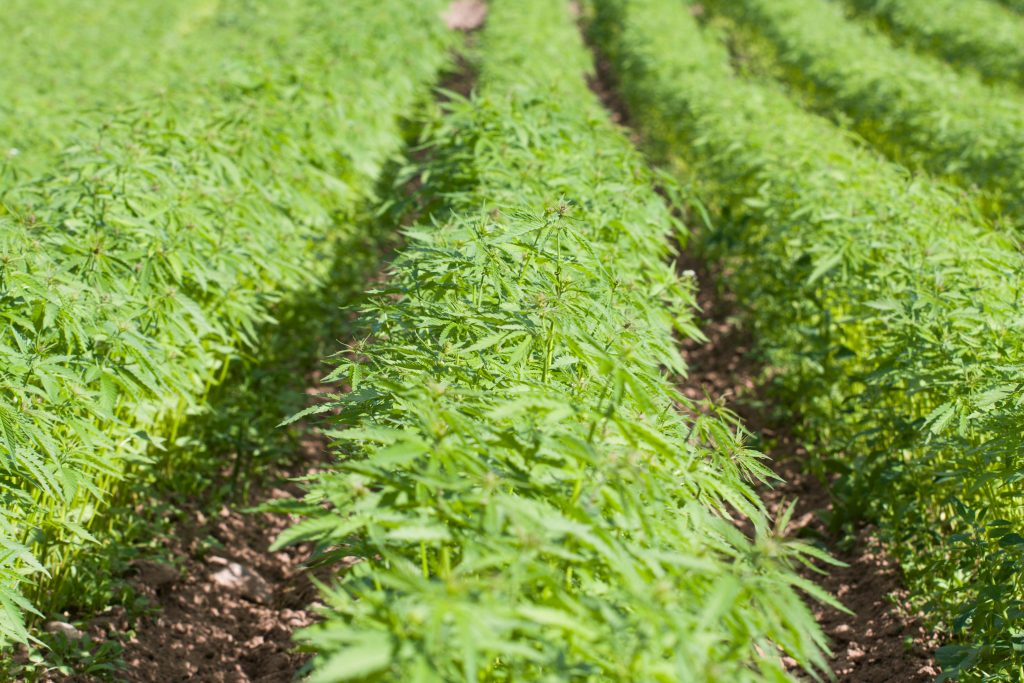
    File photo of a hemp field.

    Alabama producers who plan to produce hemp in the future need to have a clue about what their production is intended for, says Gail Ellis, hemp program manager at the Alabama Department of Agriculture and Industries (ADAI).

    “What I’ve tried to tell everybody that gets in hemp, the more you know about what you want to do in hemp is better known before you put in a license application. A lot of people get in here and just want to grow hemp. They don’t even know if they want to grow for any of the oils or fiber, grain; they have no idea,” Ellis said. “They’re at a disadvantage immediately upon getting their application approved.”

    She said that growers should have already researched a seed source or a plant source, whether they’re from Alabama or out-of-state, before applying for a license.

    “That’s not something that we tell you. We don’t give you a list of seed dealers or plant nursery growers. That’s stuff you guys, unfortunately, have to find out from yourself, other growers or maybe Katelyn (Kesheimer) with the Extension Service; maybe they know of people in those counties that they deal with,” Ellis said. “That’s just information that you guys have to glean yourself.”

    ADAI Approval

    Each grower must also wait until they receive an ADAI approval email for the sources and varieties they intend to purchase.

    “The reason we do this is we first make sure that source is a licensed hemp person in whatever state they’re operating in. They also have to have a seed dealer permit in Alabama if they’re selling seeds,” Ellis said.

    Growers are also required to submit an online seed acquisition form for each source they intend to purchase from. A new source and/or variety requires submission of another form.