Category: Alabama

  • Alabama Farmer: If I Had 10 Acres of Strawberries Today, I Wouldn’t Have Enough

    There appears to be not enough strawberries to satisfy local demand in Alabama.

    Strong demand for locally-owned strawberries

    By Clint Thompson

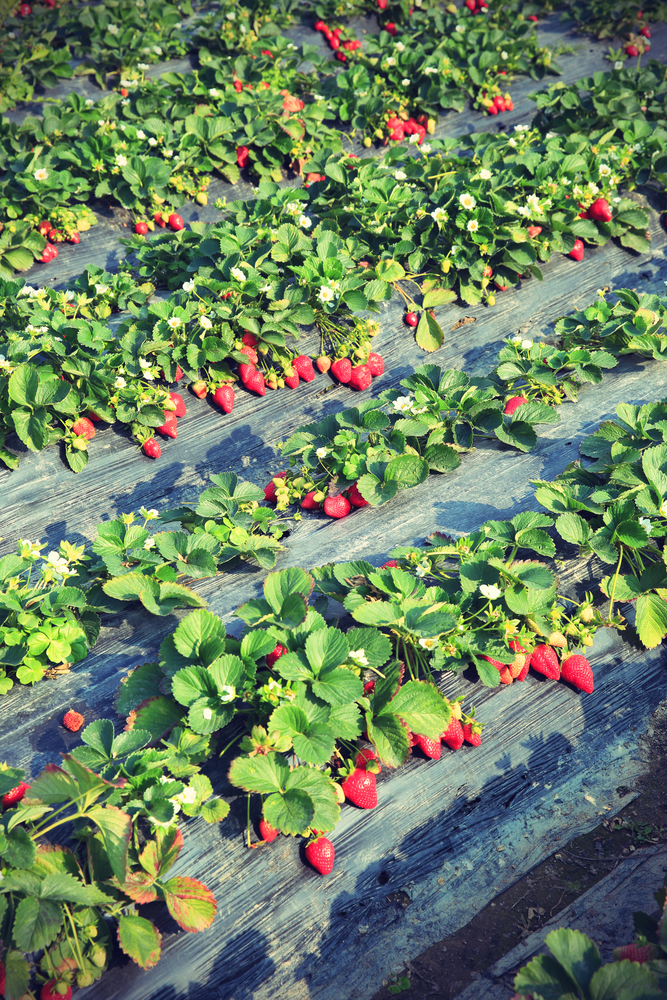
    Strawberry season is in full swing in Alabama. Unfortunately, for farmers, they don’t have enough product to satisfy local demand.

    “If I had 10 acres of strawberries today, I wouldn’t have enough. Saturday morning, about 10 o’clock, I had 82 phone calls and I just unplugged my telephone,” said Bobby Ray Holmes, part-owner of Holmestead Farm in Talladega, Alabama.

    Holmes usually doesn’t have any problem selling strawberries. But this year the demand has been overwhelming. This is due to the coronavirus pandemic. U-pick strawberry operations provide families an outlet to escape the new norm of social isolation.

    “All of the strawberry farmers have run out of product because all of these people are home and can’t go anywhere. So, they go and pick strawberries,” said Holmes. “(Families) say, we can go to the farm. People are pinned in. They want somewhere to go. The kids are all out of school. They want somewhere to take the kids.”

    John Aplin, owner of Aplin Farms in Slocomb, Alabama, echoes Holmes’ sentiments.

    “I’ve never seen anything like it. It’s been crazy. Every year we increase our strawberries to meet demand,” said. “We doubled our strawberries this past year. When I opened the U-pick strawberries, we can’t stay open over four hours. Then we have to close for three days and let them ripen back up.”

    Holmes estimates that he has 1.5 acres of strawberries or approximately 30,000 plants. He said the three or four other farmers are facing the same scenario this year; they don’t have enough strawberries.  “They’ve got the same problem,” Holmes admits.

    “Anytime it’s a problem if you’ve got folks that want to spend money with you, and you don’t have something to sell them. You’ve got a problem,” Holmes said.

  • UGA Specialist: Pecan Crop Fine Following Cold Snaps

    Pecan trees will not be impacted by recent cold snaps.

    By Clint Thompson

    Recent cold temperatures will not have any impact on the development of this year’s pecan crop, says Lenny Wells, University of Georgia Cooperative Extension pecan specialist.

    Wells estimates that pecan farmers saw budbreak at least two weeks early this year. With that early budbreak back in March, temperatures were still warm. Pecan trees put their foliage on from the bottom of the tree up. All that early foliage that came out on the bottom part of the tree and started growing well. Then rains and cold fronts came soon after.

    “We had some cooler temperatures and some nights down in the low 40s, which is nowhere near anything that would hurt us. But it did slow this growth down, especially the buds that were breaking in the top of the tree. That has slowed the growth in the top of the trees a little bit,” Wells said. “When you look at some trees from a distance, it looks like the bottom leafed out good, but the top is real thin. That’s just because those little cool snaps we had slowed things down. I don’t think it’s going to be an issue.”

    He reassured pecan producers in his blog that as temperatures and the soil warm up, the problem will correct itself.  

    However, cool soil temperatures can lead to Zinc and Boron deficiencies. The trees can’t take these nutrients up from the soil as easily when soil temperatures drop. So, Wells advises growers to stay up to date with their foliar sprays.

    “Every spring, your soil temperatures warm up a little slower than the air temps do. Spring is the critical time for the tree to get that zinc and boron. When those soil temperatures are cool, they’re not able to take it up there well from the soil,” Wells said. “That’s why we usually will put on Zinc and Boron foliar sprays early in the season. Regardless of what your soil levels are, we do it for that reason because they can’t pick it up from the soil early in the season when they need it the most.”

    Symptoms of such temporary deficiencies include bare limbs, small, yellow leaves, rosette and mouse ear.

    To see how Wells is confident in this year’s pecan crop, see vscnews.com.

  • Sulfur Applications Help Protect Grapes Against Powdery Mildew

    A tour of the research vineyard at the Clanton Research and Extension Center in Chilton County at the Alabama WIneries and Grape Growers Association meeting in September 2019. Grapes are grown by Elina Coneva and the staff at the CREC. Grape varieties are developed by Dr. Andy Walker, a grape breeder at UC Davis.

    By Clint Thompson

    University of Georgia Cooperative Extension Fruit Disease Specialist Phil Brannen believes grape producers can better protect their crop against powdery mildew disease and preserve essential fungicides with sulfur applications.

    Brannen believes sulfur is a viable alternative that growers need to utilize, especially since resistance has developed in two different classes of chemicals. Those classes are the quinone outside inhibitor (QoI) class and the demethylation inhibitor (DMI) class. Growers risk disease resistance developing in the succinate dehydrogenase inhibitors (SDHI) class of fungicides as well.

    “That’s one reason I’m encouraging people to incorporate more sulfur in their programs. It’s just to try to take less pressure off this one remaining chemical that works really well. We can save it for the more critical time we need a really active powdery mildew material,” Brannen said.

    He said growers need to be smart when applying sulfur and be mindful of its ability to burn the plants.

    “The main issue we have with it is not to humans or the environment, it’s actually to the plant itself,” Brannen said. “If you put out sulfur on a really hot day, especially if there’s a lot of high humidity or the foliage is wet, it will burn the grapes severely. It can actually cause significant damage to the plant itself. That’s one reason people have avoided using it on vinifora grapes.”

    Brannen recommends that producers apply sulfur either later in the evening or at night when temperatures are lower. That’s when there’s little risk to the plant.

    But growers should also be mindful of sulfur’s harmful potential to themselves.

    “It’s not dangerous in the sense that it won’t kill you. You do have to realize it will burn your eyes. You go into a vineyard and if you’re doing tying operations and things like that, and if you spray sulfur and rub your eyes, your eyes are going to burn,” Brannen said. “It’s not going to put your eye out. But it’s going to be something that you have to be aware of. It’s not as user friendly as some of these other materials.”

    Powdery mildew’s impact

    Powdery mildew disease is problematic for grape producers because of its ability to infect almost any part of the plant. It can cause leaves to desiccate, become dry and fall off.

    The major concern is when powdery mildew infects the fruit itself. A limited amount on fruit will not allow sugars to come up to the fruit. If there’s no sugars in the berries, it leads to an inability to make good wine.

    “It essentially renders the fruit into something you can not use. You can’t allow powdery mildew on the fruit at all,” Brannen said.

  • Promoting Health Benefits of Blueberries Could Boost Sales

    Pictured is a file photo of blueberries.

    By Clint Thompson

    Produce industry experts believe consumers are, and will continue to be more health conscious, which is good news for blueberry producers.

    “It’s very apparent to me that consumers are getting the message because when you look at things like the blueberry category, the strawberry category, the citrus category, we’re seeing great movement in those types of items,” said Melissa Byland, senior buyer in produce at Walmart. “I think consumers are definitely connecting fresh produce and specific items within fresh produce in the aspect that they contribute to better health. We’re definitely seeing the impacts of that in our business.”

    Health Benefits

    According to UGA Extension’s blueberry site, blueberries are a good source of vitamin C, iron and fiber. They’re cholesterol-free, sodium-free and possess an important source of potassium.

    Research concludes that the antioxidants in blueberries help protect the body against chronic diseases associated with aging.

    “We talked to one scientist who said there are seven things you should be eating to boost your immune system to protect you from any virus. Blueberries were on the list. We need to take advantage of that in this current situation to educate consumers,” said Cathy Burns, CEO of the Produce Marketing Association. “I don’t think it’s going away anytime soon. People are going to continue to be concerned about health. Obviously, what Melissa is seeing in her sales is very consistent with what we’re hearing with retailers across the board. It’s our time to shine and really focus on eating fresh fruits and vegetables, and blueberries fits squarely in that.”

    According to the U.S. Highbush Blueberry Council, Georgia and Florida, along with eight other states, help produce more than 98% of the country’s blueberry crop.

    Blueberry producers should really profit in the upcoming months. Byland said the latter part of spring and into summer, berries are under the spotlight at Wal-Mart. And it’s not changing.

    “For us, we look at May, June and July as the Super Bowl of berries. We’re really planning to execute business the same way we have in the past. I know that quality and availability is at its best during this time. We’re able to offer customers larger pack sizes,” Byland said. “We’re really gearing down and looking toward running our summer business the same way we always have. It’s a great opportunity also for us to feature locally grown products, which we try to do as often as we possibly can. We know that it definitely resonates with customers. It gives them a great feeling about being able to support their local farmers.”

  • Deadline Nearing for Specialty Crop Block Grant Applications in Alabama

    The Alabama Department of Agriculture and Industries (ADAI) is accepting grant applications for projects that enhance the competitiveness of U.S. specialty crops in foreign and domestic markets. The application deadline for these specialty crop block grants through the U.S. Department of Agriculture (USDA) is Monday, April 27, 5 p.m. CST. Specialty crops are defined by the USDA as fruits and vegetables, dried fruit, tree nuts, horticulture (including maple syrup and honey) and nursery crops (including floriculture).

    Commodity groups, agricultural organizations, colleges and universities, municipalities, state agencies and agricultural nonprofits are all eligible for this grant program. However, their proposals must meet all of the program specifications. ADAI and a review committee of industry representatives will make application evaluation reviews and award recommendations to the USDA. USDA has final approval for projects submitted.

    The specialty crop block grant is a competitive grant process, with the minimum amount awarded being $5,000. The maximum award to commodity groups, agriculture organizations, municipalities and agriculture nonprofits applicants is $25,000. The maximum amount for colleges and universities is $40,000.

    Projects cannot begin until official agreements are signed, which is expected in October, 2020. For more information, visit http://www.agi.alabama.gov/scbgp or contact Johnny Blackmon at 334/240-7257.

  • N.C. State Economist: Second Quarter Should Be Horrible Amid Coronavirus Pandemic

    Pictured is a farmer in his field.

    By Clint Thompson

    The ongoing coronavirus pandemic has dealt a devastating blow to the U.S. economy and especially the American farmer. North Carolina State Extension Economist Mike Walden believes the country needs to do what it can to help those farmers rebound from the current recession.

    “We do need to worry about keeping our farmers afloat. Fortunately, in the stimulus plan, there was about $50 billion that was allocated for various programs that would help farmers,” Walden said. “We certainly need to watch our farmers.”

    Fruit and vegetable producers are struggling because of the lack of the food service market. Restaurants have either closed or reduced their business traffic to try to limit the spread of COVID-19. However, that has caused a problem for producers, especially in Florida.

    “If you look at where people get their food, we’re almost split 50-50 between people eating their food in their homes in home-prepared meals versus eating them in restaurants,” Walden said. “The restaurant industry is essentially shut down. There is some pick-up and take-home but that’s a small fraction of what they do. The problem for the farmer is that their supply chain is geared towards that 50-50 split. People don’t understand that farmers just can’t take the produce that they were sending to restaurants and just ship them over the grocery stores. There are different regulations and different packaging.

    “That’s creating a real headache for farmers.”

    On Friday night, the United States Department of Agriculture announced the Coronavirus Food Assistance Program (CFAP). According to the USDA press release, President Trump directed USDA to craft this $19 billion immediate relief program to provide critical support to farmers and ranchers, maintain the integrity of our food supply chain and ensure every American continues to receive and have access to the food they need.

    Walden still warns that the economy will likely get worse before it gets better.

    “The second quarter, which is how most economic data are calibrated, is going to be horrible. It’s going to probably be a record in terms of drop of GDP (Gross Domestic Product). But we should start to see growth come back in the third quarter and fourth quarter,” Walden said. “But it’s likely not going to be until, I would say, at the earliest, mid-2021 before we’re back to where we were before this started.”

    Walden said he’s been an economist for more than 40 years. This is his sixth recession but admits this one is much different than the others.

    “Most recessions are caused by imbalances in the economy, particularly over-indulgence in debt. Businesses and consumers taking too much risk,” Walden said. “This is a recession that has actually been mandated by the government. The government has said we have a problem with the coronavirus. It is easily spread. In order to contain it, in order to limit deaths, in order to not overwhelm our hospital system, we have to essentially shut down a large part of the economy.

    “All of the bad numbers we’re getting now should not be surprising because we have to do this in order to control the virus. Apparently we are getting good numbers on that. We will likely see the economy contract by somewhere between 25% and 30% in the second quarter, that is April, May and June. The unemployment rate may very well get over 15%. But the good news is this should be short-lived. We should probably see some return to growth in the third quarter and then forward.”

  • Drought Still a Problem for Florida

    The latest map from the U.S. Drought Monitor shows how dry conditions are in Florida and in parts of southern Alabama and Georgia.

    By Clint Thompson

    Even with much-needed rainfall this week and more expected this weekend, Florida remains in a drought; severe in some cases. The southern portions of the state and along the peninsula will remain drier than normal for the foreseeable future, according to Pam Knox, University of Georgia Cooperative Extension state climatologist, .

    “I’ve been watching the drought in Florida because we’ve had issues along the south border in Georgia. I know things have been worse in Florida. I heard David Zierden (state climatologist for the Florida State University Center for Ocean-Atmospheric Prediction Studies) give a talk about it this week. He thinks it’s probably going to get worse before it gets better,” Knox said. “I have a friend in Miami, and they’ve been setting records for the number of days in the 90s. I don’t see for most of the peninsula of Florida that they’re going to have big relief soon.”

    Much of the central part of the state, including Polk County and Hillsborough County, is classified in a severe drought or ‘D2’ status, according to the U.S. Drought Monitor, The majority of Florida is in ‘D1’ status or classified in a moderate drought.

    “Eventually the rainy season will come, and they’ll get some relief at that point. But in the meantime, it’s going to be pretty hard on producers, especially those who are growing forage or who need fairly moist conditions,” Knox said. “I don’t think there’s going to be short-term relief from the drought in the Florida peninsula.”

    In the northern part of Florida, as far west as Escambia County, across the state to Nassau County, conditions are a little better but still classified as abnormally dry, which is also the case for the southern part of Georgia.

    “It looks like to me the next couple of weeks are going to be fairly wet, not continuously wet, but I think we’re going to get two or three storms that will go through and bring us some rain,” Knox said. “For those areas, I think there will be some relief. But I think farther south in Florida, the front may not get that far and so they may be stuck in the warm and fairly dry air for at least the next couple of weeks until we switch into more of a summertime pattern.”

    The northern parts of Georgia and Alabama remain fairly wet as vegetable producers, especially those in Alabama, try to get their plants in the ground.

    According to the U.S. Drought Monitor, Mobile County and Baldwin County remain in moderate-to-severe drought status along the Gulf Coast.

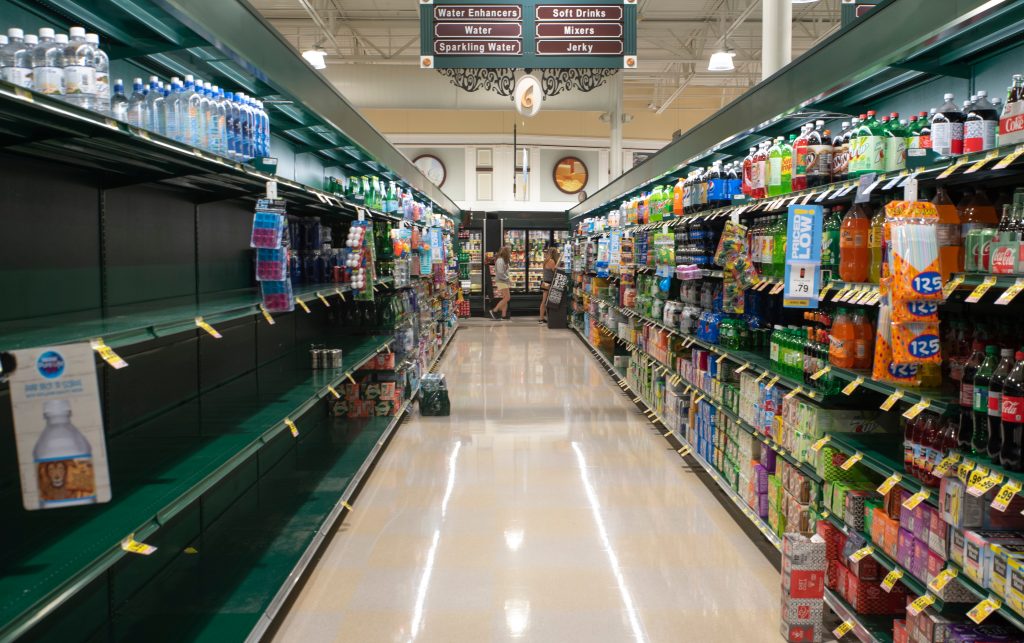
  • Why Are the Grocery Store Shelves Empty?

    coronavirus
    Courtesy: Sharkshock/Sutterstock.com

    By Gopinath (Gopi) Munisamy for UGA CAES News

    While all industries have been seriously affected by the COVID-19 pandemic, food and agriculture have been among the hardest hit segments of the U.S. economy. The primary reason lies in the composition of household food expenditures.

    The impacts of the pandemic appear to vary by commodity based on two critical issues: perishability and labor use. Perishables like fruits, vegetables and milk are among the hardest hit. Many of these industries also depend on labor for growing and harvesting.

    There is no immediate shortage of food in the U.S., according to the U.S. Department of Agriculture (USDA). However, the current demand for items such as grocery-size products and on-demand delivery is greater than what is in abundant supply – bulk, large-sized products and processed shipments to restaurants that remain open.

    This demand-supply mismatch appears to mimic anecdotal evidence of price spikes and empty store shelves on the consumer side and the collapse of demand and dumping of food on the farm side, with a range of linked effects in the middle.

    Wholesale food demand reduced, supply chain shifts

    Households spent $1.7 trillion on food in 2018, 54% of which was spent on food away from the home at restaurants, bars, sports venues and other establishments, according to the USDA Economic Research Service. A dramatic drop in foot traffic at all types of restaurants began in the second week of March.

    Supermarkets and grocery outlets have also experienced a significant reduction in foot traffic. But delivery and on-demand services have been strained by the sudden surge in demand from people under stay-at-home orders and social distancing guidelines, which includes nearly 90% of the U.S. population.

    With the drastic fall in food demand away from home, multiple forces were unleashed rapidly, causing ripples that stretched farther into every food and agricultural commodity.

    First, the supply chain serving food service industries did not have many buyers. A case in point is cheese, where the major supplier, Wisconsin, found two-thirds of its demand fall to near zero within a week or two.

    Second, social distancing guidelines and shuttered non-essential businesses affected supply chains serving both food services and retail grocers.

    The results include a significant slowdown in the operations of processing and distribution, shortage of workers at farm, processing and distribution (trucking) facilities, and a shortage of cleaning and sanitizing supplies. Compounding these effects are the resources spent in contact tracing and quarantine if and when a worker tested positive for COVID-19.

    Third, is the urgent need to transition products run through food services into those that consumers need at the grocery store. For example, restaurants usually buy diced vegetables, like onions, in 60-pound bags, but consumers at grocery stores usually buy 3- to 5-pound bags of unpeeled onions. Also, large cheese blocks sold to food services, which generally have sizable storage space, cannot be chopped overnight into packs of ounces and pounds to sell at grocery stores.

    (The author is a professor of agricultural and applied economics in the University of Georgia’s College of Agricultural and Environmental Sciences. Chen Zhen, associate professor in the department of agricultural and applied economics, contributed to this story.)

    To read the rest of the story, see UGA CAES Newswire.

  • Peach Crew Safety a Concern for Farmers During COVID-19

    By Clint Thompson

    Pictured is a file photo of peaches on a tree.

    Jeff Cook, University of Georgia Cooperative Extension Agriculture and Natural Resources agent for Peach and Taylor counties, says the ongoing coronavirus pandemic has forced peach producers and farming operations to take extra precautions when protecting their crews from becoming sick.

    “They have separate crews so they’re trying to keep the crews a little more separated this year. But the biggest thing that they’ve all said to me is they’re trying to keep the crews away from the outside world,” Cook said.

    Farmers limit the workers to the amount of time they’re exposed to other people that are not part of their specific crew.

    “They’re trying to help reduce the amount of time they’re having to spend at the store or at the bank. Once a week they carry them to the bank and once a week they carry them to the grocery store,” Cook said. “To the farmer, if their crews get sick and they can’t pick peaches, then we’re in big trouble.”

    Cook said some peach workers have been in place since February when farms started the peach pruning peach process. The second crews are now in place to help thin the peaches since a lot more people and hands are required. These peach crews also include those who’ll work in the packing sheds and help harvest once trees are ready.

    Cook estimates that there are 10 to 12 workers in one crew, though, multiple crews may ride the same bus to a particular orchard. The workers are not close together out in the fields. Each one has a specific tree they work on, and trees are normally spaced 16 feet apart.

     “When they are thinning, the ride there is as close as they are going to get to each other. When they’re out in the field, they’re not really near each other,” Cook said.

  • Pecan Farmers Need to Watch out for Budmoths

    By Clint Thompson

    Budbreak in pecan trees is under way in orchards across the Southeast, and farmers need to be wary of one particular pest – budmoths.

    Budmoths were a nuisance last year on pecan trees and have already showed signs of infesting young trees during the first week in April.

    A bag of shelled pecans in this file photo.

    University of Georgia Cooperative Extension pecan entomologist Angelita Acebes offered tips on her blog on how to identify a budmoth and what management options are available at this point in the growing season.

    Pecan growers can recognize budmoth damage by the webbing around newly-developed leaves and small dark spots on the tips of those leaves.

    During the spring, adult moths start laying eggs and can lay eggs in about six days. Unfortunately, the young larvae will feed on the leaves. Then they spin a web to roll the leaves where they’ll bore into the shoot. Once in the shoot, an insecticide will be ineffective because it can’t reach them.

    Whether to spray your trees at budbreak is a question that can go either way. Spraying at budbreak is an option since there’s a small window to effectively apply an insecticide. If farmers have time to scout, treating when the infestation is first noticed is also an option.

    When considering what insecticide to apply, worm materials are more ideal if you can catch budmoth outbreaks early. If budmoth damage is severe and the initial outbreak was missed, Lorsban is the only option for quick control.

    For more information, see Acebes’ blog.