Category: Alabama

  • USDA Issues First Coronavirus Food Assistance Program Payments

    United States Department of Agriculture

    Perdue

    (Washington, D.C., June 4, 2020) – U.S. Secretary of Agriculture Sonny Perdue today announced the USDA Farm Service Agency (FSA) has already approved more than $545 million in payments to producers who have applied for the Coronavirus Food Assistance Program. FSA began taking applications May 26, and the agency has received over 86,000 applications for this important relief program.

    “The coronavirus has hurt America’s farmers, ranchers, and producers, and these payments directed by President Trump will help this critical industry weather the current pandemic so they can continue to plant and harvest a safe, nutritious, and affordable crop for the American people,” said Secretary Perdue. “We have tools and resources available to help producers understand the program and enable them to work with Farm Service Agency staff to complete applications as smoothly and efficiently as possible and get payments into the pockets of our patriotic farmers.”

    In the first six days of the application period, FSA has already made payments to more than 35,000 producers. Out of the gate, the top five states for CFAP payments are Illinois, Kansas, Wisconsin, Nebraska, and South Dakota. USDA has released data on application progress and program payments and will release further updates each Monday at 2 p.m. ET. The report can be viewed at farmers.gov/cfap.

    FSA will accept applications through August 28, 2020. Through CFAP, USDA is making available $16 billion in financial assistance to producers of agricultural commodities who have suffered a 5%-or-greater price decline due to COVID-19 and face additional significant marketing costs as a result of lower demand, surplus production, and disruptions to shipping patterns and the orderly marketing of commodities.

    In order to do this, producers will receive 80% of their maximum total payment upon approval of the application. The remaining portion of the payment, not to exceed the payment limit, will be paid at a later date nationwide, as funds remain available.

    Getting Help from FSA

    New customers seeking one-on-one support with the CFAP application process can call 877-508-8364 to speak directly with a USDA employee ready to offer general assistance. This is a recommended first step before a producer engages the team at the FSA county office at their local USDA Service Center.

    Producers can download the CFAP application and other eligibility forms from farmers.gov/cfap. Also, on that webpage, producers can find a payment calculator to help producers identify sales and inventory records needed to apply and calculate potential payments. Producers self-certify their records when applying for CFAP and that documentation is not submitted with the application. However, producers may be asked for their documentation to support the certification of eligible commodities, so producers should retain the information used to complete their application.

    Those who use the online calculator tool will be able to print a pre-filled CFAP application, sign it, and submit it to your local FSA office either electronically or via hand delivery through an office drop box. Please contact your local office to determine the preferred delivery method for your local office. Team members at FSA county offices will be able to answer detailed questions and help producers apply quickly and efficiently through phone and online tools. Find contact information for your local office at farmers.gov/cfap.

    Policy Clarifications

    FSA has been working with stakeholder groups to provide further clarification to producers on the CFAP program. For example, the agency has published a matrix of common marketing contracts that impact eligibility for non-specialty crops and has provided a table that crosswalks common livestock terms to CFAP cattle categories. Updated information can be found in the frequently asked questions section of the CFAP website.

    More Information

    To find the latest information on CFAP, visit farmers.gov/cfap or call 877-508-8364.

    USDA Service Centers are open for business by phone appointment only, and field work will continue with appropriate social distancing. While program delivery staff will continue to come into the office, they will be working with producers by phone and using online tools whenever possible. All Service Center visitors wishing to conduct business with the FSA, Natural Resources Conservation Service, or any other Service Center agency are required to call their Service Center to schedule a phone appointment. More information can be found at farmers.gov/coronavirus.


  • Cristobal Expected to Bring Rain to Southeast

    By Clint Thompson

    Tropical Depression Cristobal’s expected movement into the Gulf of Mexico should bring much-needed rainfall to North Florida and South Alabama. Pam Knox, University of Georgia Cooperative Extension Agricultural Climatologist, says rains over the next week should alleviate some of those drought conditions.

    Map from the National Hurricane Center and Central Pacific Hurricane Center shows Cristobal’s expected path this weekend.

    “The whole Florida Panhandle and then stretching west into the Mobile (Ala.) area has been quite dry. So, they were missed by a lot of the storms that hit north Georgia and north Alabama. They’ve been fairly dry,” Knox said. “They’ve gotten a little bit more relief lately but it’s still dry there. I’ve seen some reports of fires in the area and continuing problems with the dry conditions.

    “The latest seven-day forecast for rainfall, which includes the rainfall that’s coming from Cristobal, looks like the southern part of Georgia and Alabama and the whole panhandle of Florida and really all of north Florida is going to be affected by the rain from this.”

    According to the U.S. Drought Monitor, all of north Florida is either in abnormally dry, moderately dry or severe dry conditions. It’s also the case for southwest parts of Alabama.

    Cristobal is already the third named storm of the season. Knox said the average date for the first sea storm is Aug. 13 so it’s already a real active storm season. But she cautions weather enthusiasts that just because it’s active now doesn’t mean it will stay that way over the course of summer and into fall.

    “All of the ingredients are there for it to be an active season. We’re in neutral conditions and looks like we’re going to go into a La Nina. That definitely correlates with an active season in the Atlantic. 2019 was active but we only had a couple of storms that affected the Southeast. Even though it’s active, it doesn’t necessarily mean it’s going to be big impact for the Southeast. It could,” Knox said.

    While tropical storms and hurricanes can be intimidating with their heavy rains and fierce winds, Knox reassures that they are necessary to replenish dry soils.

    “Tropical storms have an important role to play in the Georgia climate because maybe up to 30% of our summer rain comes from these tropical systems. If we don’t get tropical storms, we could easily go into a drought,” said Knox, who described how Cristobal works. “If you think about how a tropical storm spins, it’s counter-clockwise. It’s going to move west of us most likely. That means we’re going to be in strong flow of air coming up from the south. It’s very juicy air. It’s going to really help set off a lot of rain.

    “Some of the forecasts for rain in the Florida Panhandle, we’re looking at 5 to 7 inches or more of rain over the next week. A lot of that’s going to come right ahead of Tropical Storm Cristobal.”

    Knox said north Alabama and north Georgia aren’t expected to receive as much rain.

  • USDA Farmers to Families Food Box Program Reaches 5 Million Boxes Distributed

    (Washington, D.C.) – U.S. Secretary of Agriculture Sonny Perdue announced that the U.S. Department of Agriculture’s (USDA) Farmers to Families Food Box Program has distributed more than five million food boxes in support of American farmers and families affected by the COVID-19 pandemic.

    Sonny Perdue

    “The Farmers to Families Food Box Program was designed to put American farmers and distributors of all sizes back to work while supporting over-burdened food banks, community and faith-based organizations and other non-profits serving Americans in need, and the program is doing just that,” said Secretary Perdue. “It’s encouraging to see the passion with which farmers, distributors and non-profits have gone above and beyond to make this program work in support of the American people. Although a momentous milestone, this is only the beginning for the program, and with continued support we expect up to 40 million boxes will be delivered throughout the country by June 30.”

    “Since our launch of the Farmers to Families Food Box, 5 million boxe have been successfully delivered to Americans most in need all across the country. Through this innovative program, small and regional distributors are bringing back their workforce to procure food directly from our American farmers and ranchers. Fresh food is getting to those in need, even in the hardest to reach places, through partnerships with food banks, non-profits and faith-based communities,” said Advisor to the President, Ivanka Trump.

  • Market Looking Good for Tomato Growers

    itc
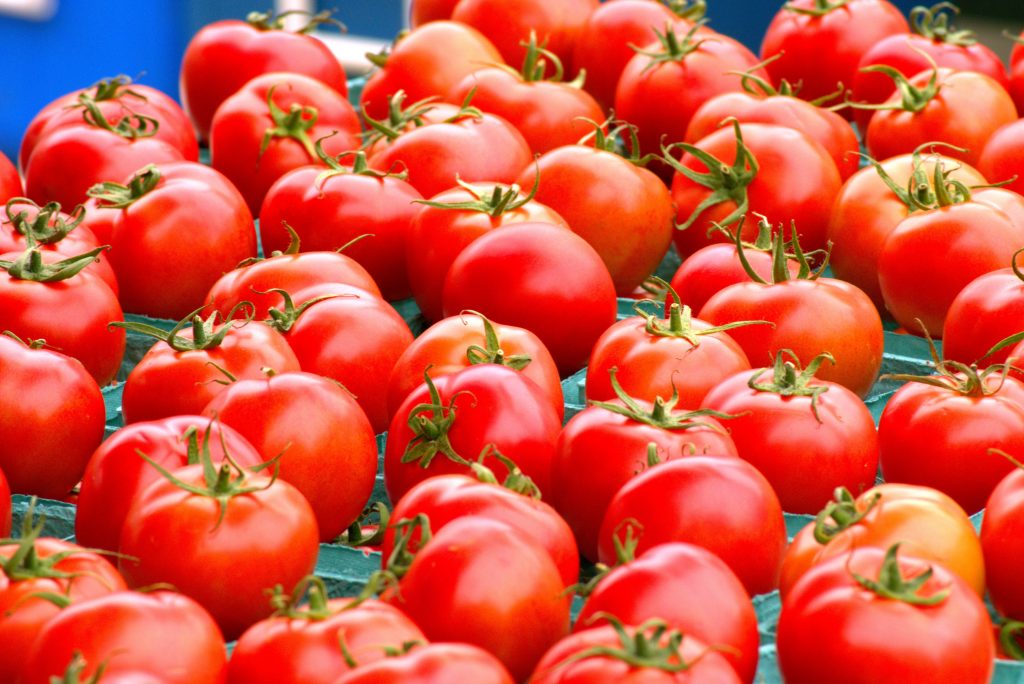
    The tomato market is currently strong for growers in the Southeast.

    By Clint Thompson

    Tomato growers across the Southeast are enjoying high prices right now, which marks a significant change from March when Florida producers had to leave many in the field amid the coronavirus pandemic. That is not the case anymore, however, says Michael Schadler, executive vice president at the Florida Tomato Exchange.

    “Market price has been high. Coming down a little bit the last couple of weeks, but overall, prices have been pretty good,” Schadler said. “That’s just a function of supply has been light out of Florida and supply has been light out of Mexico as well. We would have liked to have had a little bit better yields in Florida this spring. We’ve had yield issues that have limited supplies but the fact that market prices are high after what happened back in March and April, it’s real nice.”

    Schadler attributes Florida’s poor supply to pest and disease pressure.

    COVID-19 Impact

    Florida tomato growers have experienced an up and down season. This is especially true for South Florida production impacted by COVID-19 when it struck in mid-March.

    “It was a situation where we had never seen the markets turn off like that overnight. We’ve certainly gone through our share of bad markets over the decades, usually based on over-supplies coming in from Mexico and even over-supply in Florida. Having bad markets is nothing new,” Schadler said. “Having it come about in that way where everything shuts down, price didn’t matter at that point.”

    Growers could not give their crop away. Tens of millions of tomatoes were lost. But to see the market recover, which will benefit other states like Georgia and Alabama, is encouraging to see.

    “When we were looking at this thing in early April, when we were doing an assessment right around April 1 and going through two or three weeks in an unprecedented environment, we were thinking, ‘Man if this thing doesn’t turn around, we’ve got a big spring crop; the Florida spring crop is pretty big in April and May, we’re going to have devastating losses,’” Schadler said. “Right around April 5 or April 6, demand started to come back. I think what happened was, the buyers that sell into food service, when everything hit the fan in mid-March, they kind of shut down. I think they let the pipeline clear out a little bit. The pipeline was completely empty after the first week in April and they realized, obviously, there’s still demand for tomatoes.

    “That demand came back a little bit, coupled with the fact that Mexico was quite light and Florida volume was lighter than normal. We had lower yields through the spring. We actually were able to bounce back for a big part of April and so far in May as well.

    “As far as an industry as a whole, looking back over the six or seven months of the Florida tomato season, it’s going to average out to be a decent season for us.”

  • Watermelon Board Pivots Nutrition Education Strategy to Digital Model

    With growing season in and home schooling out, NWPB is meeting an essential need for parents working from home and teachers preventing the summer slide

    WINTER SPRINGS, FL — June 3, 2020 — The National Watermelon Promotion Board (NWPB) is realigning resources to adapt to a new climate while focusing on summer sales.

    Watermelons are very nutritious.

    Unlike years past when summer months meant in-person events, the socially-distanced approach adjusts marketing and promotional efforts to continue to position watermelon as the go-to choice for kids and families. NWPB has been partnered with the world’s only rock & roll nutrition show Jump with Jill for over eight years, with a national live tour partnership as the leading line item. With stay-at-home orders in place, Jump with Jill and NWPB are teaming up to bring consumers a digital version of the program called the Jump with Jill Digital Tour with unplugged songs, dances, workouts, activities, and tutorials.

    “Jump with Jill is our longtime partner for kids content and in-school outreach and their primary delivery mechanism was through a powerful live musical show,” says Stephanie Barlow, Senior Director of Communications. They have realigned so that songs about eating fruit like Nature’s Candy and The Sweet Beat can still reach kids even when they are distance learning.”

    Just as the watermelon domestic growing season hits its peak, these free resources and tools serve an important need useful while families are at home. Parents are craving content that can hold their kids’ attention while they work from home and teachers need summer study materials they can use to prevent the summer slide, or the slide backwards that many children make in reading and math skills over the summer.

    “From our homes to families everywhere, we are thrilled to be able to perform and teach,” says Jump with Jill creator, Jill Jayne, who brings her credentials as a Registered Dietitian and singer into everything she touches. “When they announced school closures, we were forced to accept that a screen would be a mandatory feature in our relationship with our audience. So we wanted to use it to communicate to kids in a powerful way letting them know that – we are still here, we are still singing, and we still love you.”

    For more information and to explore the resources available from NWPB and Jump with Jill, check out Facebook, YouTube, visit Watermelon.org or JumpwithJill.com.

  • 2020 Caneberry Survey on Pricing, COVID-19 Impacts

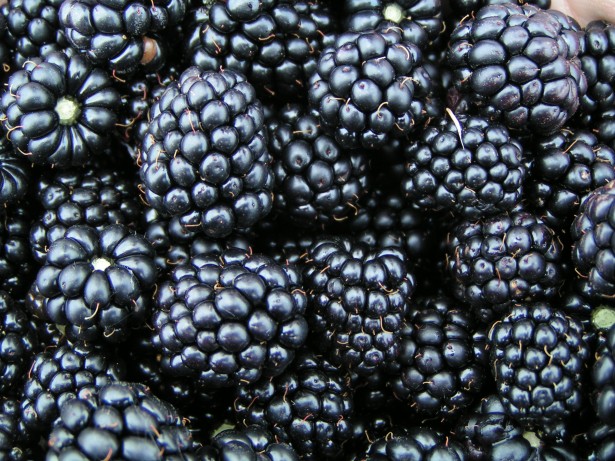
    Blackberries are included in the survey that the North American Raspberry and Blackberry Association, along with NC State and the University of Arkansas, are asking growers to fill out.

    — Written By Daniel Tregeagle

    The North American Raspberry and Blackberry Association (NARBA), in collaboration with NC State University and the University of Arkansas, is conducting its biennial pricing survey. Growers of caneberries (raspberries, blackberries, and hybrids) in Canada and the U.S. will be asked about prices they received across all distribution methods.

    This year, additional questions have been added to capture the impact of COVID-19 on caneberry prices and caneberry operations. All growers who had any caneberry acreage in 2019 or 2020 are invited to participate:

    TAKE THE SURVEY The results of the survey will help caneberry growers, and anyone considering growing caneberries, better plan their pricing and production decisions in future years. In addition, this data is useful to researchers and policymakers who need accurate data about caneberry pricing trends in the North American caneberry industry. Caneberry growers can participate in the online survey by following this link.

    Survey results will be reported in the NARBA newsletter. For more information about the survey, contact Daniel Tregeagle (tregeagle@ncsu.edu or 919-515-6091). For more information about the North American caneberry industry, contact NARBA Executive Secretary Debby Wechsler (raspberryblackberry@gmail.com or 919-542-4037).

    For story, see caneberry survey.

  • Hemp interest still strong in the Southeast

    By Clint Thompson

    The Southeast is primed to ramp up its hemp production. Alabama is ready for its second year of production, while Georgia and Florida are just getting started.

    If the number of grower applications is any indication, interest in hemp is extremely high in all three states.

    Hemp drew 166 grower applicants and eight applications for processor permits in Georgia, according to Mike Evans, director of plant industries at the Georgia Department of Agriculture, who oversees the hemp program.

    “There’s just so much interest in hemp, not only in the state but nationwide. You have this interest, but if you followed the news last year, you saw in Tennessee and some of the other states where growers were having trouble, once the crop was harvested, to try to find a producer. There’s been some change in prices,” says Evans. “I was expecting to get a couple of hundred applications. We’re well on our way to getting to that number.”

    He says any permits or licenses issued will expire at the end of the year and must be renewed.

    The number of Florida farmers interested in producing hemp exceeded Georgia’s.

    According to Jeff Greene, director of business development for the Florida Hemp Council, over 1,500 farmers submitted their names and email addresses to the Florida Department of Agriculture to express their interest in growing the crop. “I know that we’ve got in the Florida Hemp Council over 800 that have expressed interest,” says Greene.

    And it’s not just a single sector that has expressed interest in the Sunshine State.

    “I think we’re looking at it from all different levels. We’ve got tomato farmers in Homestead, Florida. The sugar industry is looking at it. The citrus industry is looking at it. The tree farmers up in the Panhandle are looking at it. Everybody’s looking at it,” Greene says.

    CORONAVIRUS IMPACTS

    In Alabama, Extension specialist Katelyn Kesheimer says there were 150 licensed growers with 10,000 acres approved last year, though only about half were farmed.

    She estimates that there are approximately 500 official licensed growers in the state this year. However, because the economy has crashed amidst rising unemployment due to the ongoing coronavirus pandemic, the market may not be as enticing as it once was.

    “My prediction is a lot of people who maybe were going to grow it, might just eat the license fee and not grow it,” says Kesheimer. “There’s so much uncertainty in the economy right now. Folks that aren’t making money and don’t have jobs aren’t going to spend money on CBD oil products. They’re going to spend it on actual necessities.”

    Many potential hemp farmers filled out applications long before COVID-19 became a global problem. Greene believes the current crisis will impact hemp production in the Southeast.

    “I think it’ll do more damage to the folks that may be in the business for six months to a year, people that may have invested a large amount of money and were looking to recoup their investment over the next six months. I think those that are just putting their money for the first time over the next six months will potentially hit the right timeline,” Greene says. “I think that’s one of the benefits potentially of COVID-19 is if this stimulus package is rolled down to the hemp industry, it could be a boon to kick an industry off. A tremendous amount of shovel-ready projects could be boosted by the stimulus package.”

    RULES AND FEES

    Each state has specific rules and regulations for producing hemp.

    Evans says the Georgia Hemp Farming Act mandates that a Georgia producer can only sell to a Georgia processor. Out-of-state sales are not permitted.

    “Growers are only allowed to sell to processors,” says Evans. “There’s no grower-to-grower sales.”

    The license fee for growers is $50 per acre and is capped at $5,000. The cost is $25,000 for a processor’s permit.

    Unlike in Georgia, the Florida Department of Agriculture does not require a licensing fee for farmers in Florida to produce hemp. However, a background check is required.

    “As long as you have not been convicted of a drug-related crime in the last 10 years, you are approved to grow hemp in Florida,” Greene says.

    In Alabama, it costs $1,000 to grow hemp and $2,000 to process it. Kesheimer emphasizes the fees are for each hemp site.

    “If you have multiple farms that are separated by a substantial distance, you have to submit multiple applications and pay $1,000 per site,” Kesheimer says. “If you’re a processor and you have multiple processing handling sites, then you have to pay that fee multiple times.”

    Background checks are required, as well as GPS coordinates for where the hemp will be produced.

  • Economist Fearful CFAP Funds Won’t Be Enough

    blueberry
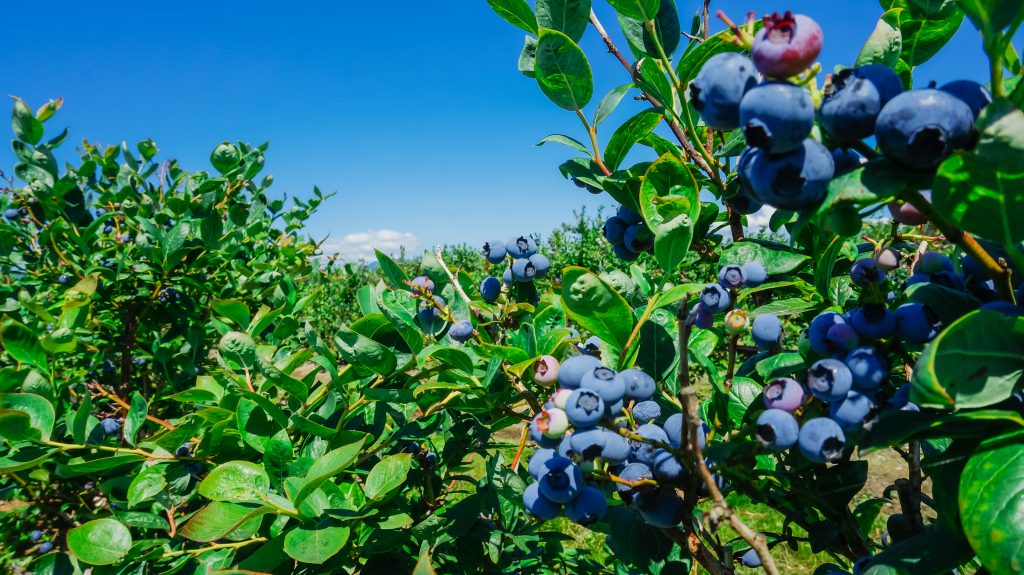
    Blueberries are one of the many commodities covered by CFAP.
    File photo of blueberry production.

    By Clint Thompson

    One agricultural economist fears there might be insufficient funds to cover farmers who apply for the Coronavirus Food Assistance Program.

    Max Runge

    Max Runge, Extension specialist in agricultural economics and rural sociology at Auburn University, believes the 80% of maximum total payment allotted for applicants will not be enough considering the number of producers impacted by the coronavirus pandemic.

    “I don’t think that will be enough. I think it’ll be short. Agriculture’s big across the U.S. The program covered a lot of it,” Runge said. “I hadn’t sat down and tried to put any kind of numbers to it. But I would be surprised if there’s enough money there to cover it.”

    CFAP Background

    According to www.farmers.gov, CFAP will provide $16 billion in direct support for agricultural producers where prices and market supply chains have been impacted and will assist producers with additional adjustment and marketing costs resulting from lost demand and short-term disruptions for the 2020 marketing year caused by COVID-19.

    To ensure funds will be available throughout the application period, producers will receive 80% of their maximum total payment upon approval of the application. The remaining portion of each payment, not to exceed the payment limit, will be paid at a later date as funds remain available.

    “I know that it was a daunting task to try to come up with something to cover everything. I thought it was a good effort. It’s like everything else, you can always look back and say, ‘They should have done this.’ Or ‘This should have been done differently,’” Runge said. “It’s not perfect, but it is something.”

    While the program will largely aid vegetable and specialty crop producers in Florida, Georgia and Alabama farmers are hurt by the timeframe. Charles Hall, executive director of the Georgia Fruit and Vegetable Association, says the program’s end date of April 15 doesn’t help his farmers much. Not much is on the market then. The same is true for Alabama farmers.

    “We don’t have that much produce maturing at that time and ready for market during that time frame,” Runge said.

  • Optimizing Nitrogen in Cabbage Production

    File photo shows a field of cabbage.

    By Ashley Robinson

    A shortage of nitrogen is the most common reason for a cabbage crop not reaching its full yield potential. However, applying too much nitrogen may cause more harm than good. It’s important to determine the optimal rate for production.

    Researchers at the University of Georgia (UGA) and the University of Florida are working in collaboration to conduct trials investigating the optimal rates of nitrogen fertilizer to produce cabbage. According to Andre da Silva, UGA Cooperative Extension vegetable specialist, the recommendations for fertility programs in Florida and Georgia were developed in the 1980s.

    “We were really in need of an update,” says da Silva. “Especially since new varieties have been introduced.”

    Research Trials

    According to da Silva, the study has taken place over the last four years and was tested in six different cabbage varieties. 

    “Two years of the project were conducted in Florida’s sandy soils, then we repeated the trials for another two years in Georgia’s loam sandy soil to compare,” da Silva said.

    During the study, researchers looked at the effects of applying a total nitrogen fertilizer rate of 107, 225 and 280 pounds per acre. Current recommendations suggest applying between 150-200 pounds of nitrogen per acre. But after harvest, researchers found that applying 225 pounds of nitrogen per acre produced optimal yields.

    According to da Silva, the results were the same for Florida and Georgia and in all six cabbage varieties. He also mentioned that there was no significant impact on yield between applying 225 pounds of nitrogen per acre and 280 pounds. However, he recommends growers apply 225 pounds per acre to maintain yields and increase profits.

    Although 225 pounds of nitrogen per acre seems to be the magic number, applications may need to be adjusted depending on weather conditions.

    “We found that in rainy years, we experienced a significant loss of nitrogen due to leaching. In this case, growers may need to bump up their fertility program,” da Silva said.

  • United Fresh Says Produce Buying Climbed During COVID-19

    Fresh market produce for sale.

    United Fresh Produce released its first quarter of 2020 issue of Fresh Facts on Retail report that details the rising number of fresh produce purchases in 2020. The unprecedented rise in food and beverage consumption at home was brought about by shelter-in-place orders issued to slow the spread of the coronavirus.

    “Those closures have led to consumers drastically restructuring their eating habits, especially increasing their consumption of meals and snacks at home,” says Miriam Wolk, Vice President of Member Services with United Fresh. “Our current and future Fresh Facts reports will help the produce industry in leveraging current consumer behaviors and fresh produce purchasing trends.”

    First-quarter data highlights show that with health as a top concern, consumers continued to buy fresh food with immune-boosting properties, while also supplementing with shelf-stable and frozen food options. Strawberries and raspberries benefited by extending their reach into more U.S. households. Among vegetables, potatoes, tomatoes, and cucumbers were purchased in higher amounts by U.S. consumers. The report also shows a variety of fruits and vegetables continue to influence overall organic growth, presenting many opportunities to innovate and attract health-conscious consumers.

    (From the National Association of Farm Broadcasters)