Category: Alabama

  • UGA Pecan Team Emphasizes Scab Disease Management

    By Clint Thompson

    The University of Georgia (UGA) pecan team is emphasizing scab disease management, since June and July are critical times for disease control.
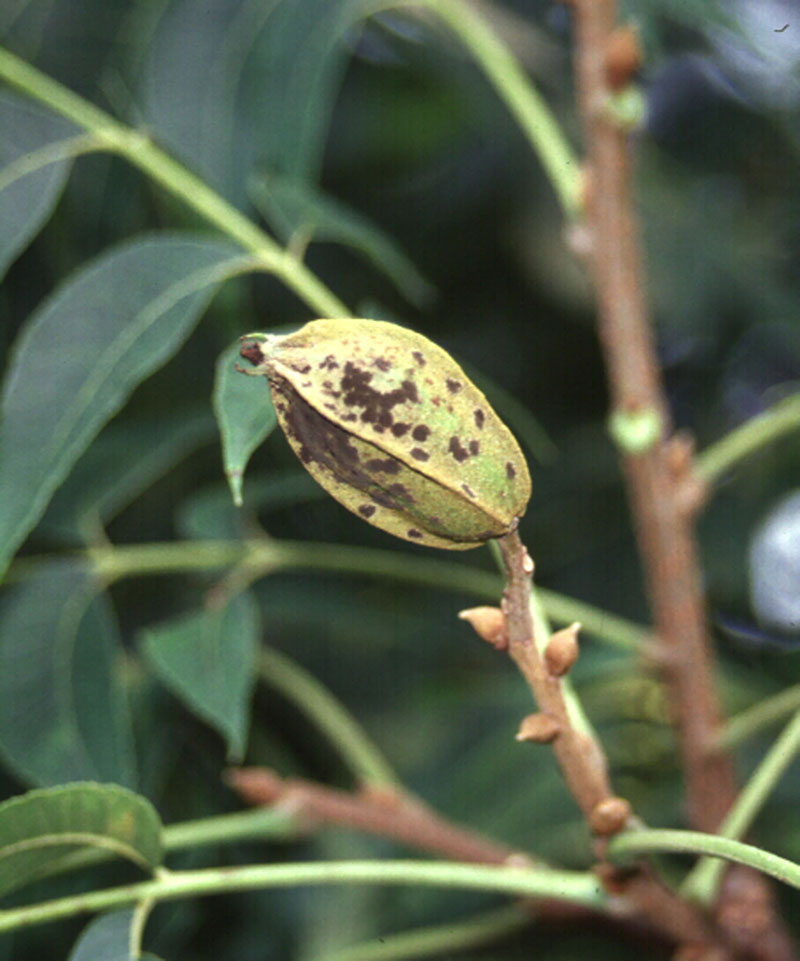
    UGA picture/Scab disease does not usually kill trees, but it can greatly reduce yields. The fungal pathogen that causes scab overwinters in the tree as lesions on stems and old nut shucks that remain in the tree after harvest. When temperatures begin to warm in the spring, the fungus becomes active and starts to produce new spores that are spread by rain and wind.

    According to UGA Extension pecan blog, plant pathologist Jason Brock’s recommendations are based on Extension plant pathologist Tim Brenneman’s research regarding scab disease:

    With Desirable or any variety with similar scab susceptibility, a rotation of Elast/Tin with Miravis Top is the strongest option. You could use consecutive applications of either, but keep in mind Miravis Top use restrictions include a 14-day minimum application interval and a maximum of 4 applications per year. In most cases, half rates for Elast/Tin are suitable. Research trials have shown that increasing the rate of Elast to 37 fl. oz. while mixed with Tin can provide better scab control, but only when disease pressure is high. Unless we get into a rainy summer, the half rates are the better option.

    Cultivars with relatively low scab susceptibility provide more options for fungicide selection. In addition to Miravis Top, Elast and Tin (either in a mix or used stand-alone), other fungicides are suitable for these cultivars. Another tank mix combination that has provided good nut scab control is a Group 3 (DMI) + Group 11 (strobilurin). This combination is available in a number of premixed products. A newer option that we have recommended is a 3-quart rate of a phosphite. While the phosphites’ strength is in foliar disease control, a high rate application is suitable for nut scab control of certain cultivars with low scab susceptibility.

    Aside from fungicide selection, important factors in scab control will be timely applications and good coverage. Pay close to attention to rain forecast and try to stay ahead of scab development; however, do not sacrifice good coverage by traveling too fast or trying to spray when weather conditions are detrimental to good coverage. Always remember to rotate chemistries regularly to manage fungicide resistance.

    Light Scab Disease

    In a previous VSCNews story, UGA Extension pecan specialist Lenny Wells said scab disease is currently light, but there has been “scabby weather” recently. The rainy weather because of Tropical Storm Cristobal last week could be a reason scab disease incidences begin to spike.  Wells said it usually takes a couple of weeks before growers start seeing scab because of excess rainfall.

    Scab is a fungal disease that infects the leaves or nuts of pecan trees. If it hits the nut early enough, scab can cause the pecan to blacken and fall from the tree. Some growers spray between 10 and 12 times during an average year to fight scab, Wells said. Scab thrives on trees that have received moisture. That is why a quick rain event is important and not prolonged rainy weather of several days in a row.


  • Blueberry Farmer: It Was Really Like Salt in the Wound

    Florida Producer Sounds Off on Lack of Category 1 Status in CFAP

    By Clint Thompson

    Blueberries were left out of Category 1 status in CFAP.

    While the blueberry industry was surprised as to how it was not eligible for Category 1 status in the Coronavirus Food Assistance Program (CFAP), one Florida grower remains equally as dumbfounded.

    “I was shocked when it came out. I was literally like, jaw on the ground, going how did we get left out of this deal?” said Ryan Atwood, who lives in Mount Dora, Florida and is one of the state’s blueberry leaders. “It wasn’t a great year for us. And then to get left out of Category 1, it was really like salt in the wound.”

    According to https://www.farmers.gov/cfap/specialty, eligible specialty crops in CFAP are broken down into three categories:

    1. Had crops that suffered a five percent-or-greater price decline between mid-January and mid-April as a result of the COVID-19 pandemic,
    2. Had produce shipped but subsequently spoiled due to loss of marketing channel, and
    3. Had shipments that did not leave the farm or mature crops that remained unharvested.

    Blueberries Not Included

    However, blueberry farmers were not included in Category 1 status, like many other specialty crop commodities, such as almonds, beans, broccoli and cabbage for example. Atwood insists that Category 1 is where most of the farmers were impacted when the coronavirus pandemic hit in mid-March.

    “For Florida blueberry growers, we got screwed man. We got left out of Category 1. What that was, they compared the average price of blueberry sales. But the problem is, the government, not knowing what they were doing, compared April 6 to the 10, to January 6 to the 10. Well, January 6 to 10 is the peak of the Chilean imports season. The whole United States is flooded with blueberries at that time. The Florida season, historically, we’re on the fringe edge of when North America starts. We’re in a good spot, usually,” Atwood said. “If you look at historically, we were off as much as 50% on the average price of our sales during a good part of our season. They blew it man, I don’t know how else to say it. We’re hoping that we get put back in it on Category 1.”

    Comment Period

    When the USDA issued CFAP on May 21, it allowed for a comment period. This could lead to amendments being made to the guidelines set forth for blueberry producers. That is what industry leaders are hoping for.

    Atwood farms 56 acres of blueberries, manages another 350 acres and is part-owner of the largest packing house in the Southeast United States. He said the market impact from the pandemic was where he suffered the most.

    “For me personally, I can’t speak for everyone in the industry, I picked all of my fruit, it was just that price was not good,” Atwood said. “It all stacked up in the coolers for 7 to 10 days until people started to figure out that life wasn’t ending, and they could go to work. By the time the world went back to normal, there was a surplus of everything out of there. Unfortunately, when that happens, that’s the only way to move that surplus from the marketer side of it, they just lower the price.”

    USDA is accepting applications through August 28, 2020. Learn more at farmers.gov/cfap.

  • Was Your Crop Not Eligible for the Coronavirus Food Assistance Program?

    United States Department of Agriculture

    town hall

    Was your crop not eligible for the Coronavirus Food Assistance Program (CFAP), or COVID-19? There is still a chance to try to get that crop on the list of eligible commodities. (Stephanie Ho and Latrice Hill, FSA Director of Outreach)

  • Farmers Need CFAP Funds as Quickly as Possible

    By Clint Thompson

    Perdue

    U.S. Secretary of Ag Sonny Perdue understands the quick turnaround needed for farmers looking to benefit from the Coronavirus Food Assistance Program (CFAP). Especially for those producers in Florida. Some are already thinking about next season and need CFAP funds in place to proceed accordingly.

    “Cash flow’s critical. When this food service industry stopped, it just stopped. It put a real dent in a lot of people’s revenue stream. They had produce packed and ready to go. Orders were cancelled. It was a problem,” Perdue said. “But again, I think (CFAP) will help. It’s very important that people come on in and apply so we can get the money to them as quickly as possible.”

    CFAP payments are already being issued. The USDA Farm Service Agency (FSA) began taking applications May 26. The agency has received over 86,000 applications for this important relief program.

    According to farmers.gov, FSA will accept applications through August 28, 2020. Through CFAP, USDA is making available $16 billion in financial assistance to producers of agricultural commodities who have suffered a 5%-or-greater price decline due to COVID-19 and face additional significant marketing costs as a result of lower demand, surplus production, and disruptions to shipping patterns and the orderly marketing of commodities.

    In a previous VSCNews story, Florida farmer Paul Allen talked about leaving 2 million pounds of green beans and about 5 million pounds of cabbage int he field. All because of limited marketing opportunities. The coronavirus also impacted commodity markets, as Florida blueberry farmer Ryan Atwood attests.

  • Florida Orange Production and Latest U.S. Estimates

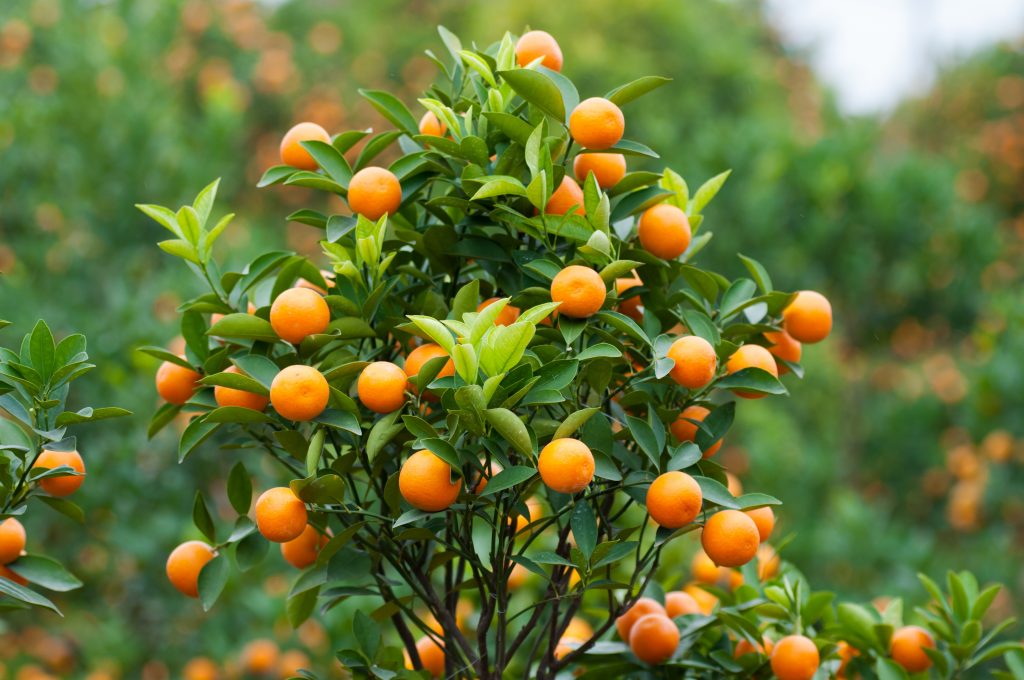
    Pictured are satsuma oranges.

    The nation’s orange production season is winding down and Florida’s production is almost finished. Thursday, the U.S. Department of Agriculture’s National Agricultural Statistics Service (NASS) issued its June forecast, which showed a decrease in the Florida citrus crop. Rod Bain has a story looking at the production estimates for the crop nearing the final totals for the marketing year.

    Click here to get more numbers form the latest citrus crop forecast.

  • Recent Rains Could Lead to Spike in Pecan Scab Disease

    Pecan scab disease has been light this year but could change with the recent rains.

    By Clint Thompson

    Scab disease of pecans has been light so far this year. But could soon change with the recent rain events in the Southeast, says Lenny Wells, University of Georgia Cooperative Extension pecan specialist.

    “Scab so far has been light, but we’ve had some pretty scabby weather the last week or so. We’ll see, but I think everybody has been staying on top of it pretty well,” Wells said.

    The rainy weather as a result of Tropical Storm Cristobal this week could be a big reason scab disease incidences begin to spike. Wells said it usually takes a couple of weeks before growers start seeing scab as a result of excess rainfall.

    “If people were set to spray this week and it’s been raining like it is and they can’t get out there to spray everything like they need to because of the weather, then there may be some that get caught. (But) things are looking pretty good, and everybody’s staying on a good schedule,” Wells said.

    What Is Scab?

    Scab is a fungal disease that infects the leaves or nuts of pecan trees. If it hits the nut early enough, scab can cause the pecan to blacken and fall from the tree. Some growers spray between 10 and 12 times during an average year to fight scab, Wells said. Scab thrives on trees that have received moisture. That is why a quick rain event is important and not prolonged rainy weather of several days in a row.

    One reason Wells is optimistic this year is the new fungicide that is now in growers’ arsenal.

    “We’ve got a new fungicide we’ve got in the mix this year that I think is going to be a big help. A part of it is a chemistry that has two different classes of chemistry in it, and part of it is something we haven’t had before in pecans or been used before. Based on Tim Brenneman’s work it looks like it’ll be a big help for us,” Wells said.

    For other pecan-related stories, see pecan crop offers hope.

  • Exposure Risk Among Agriculture Workers and Employers

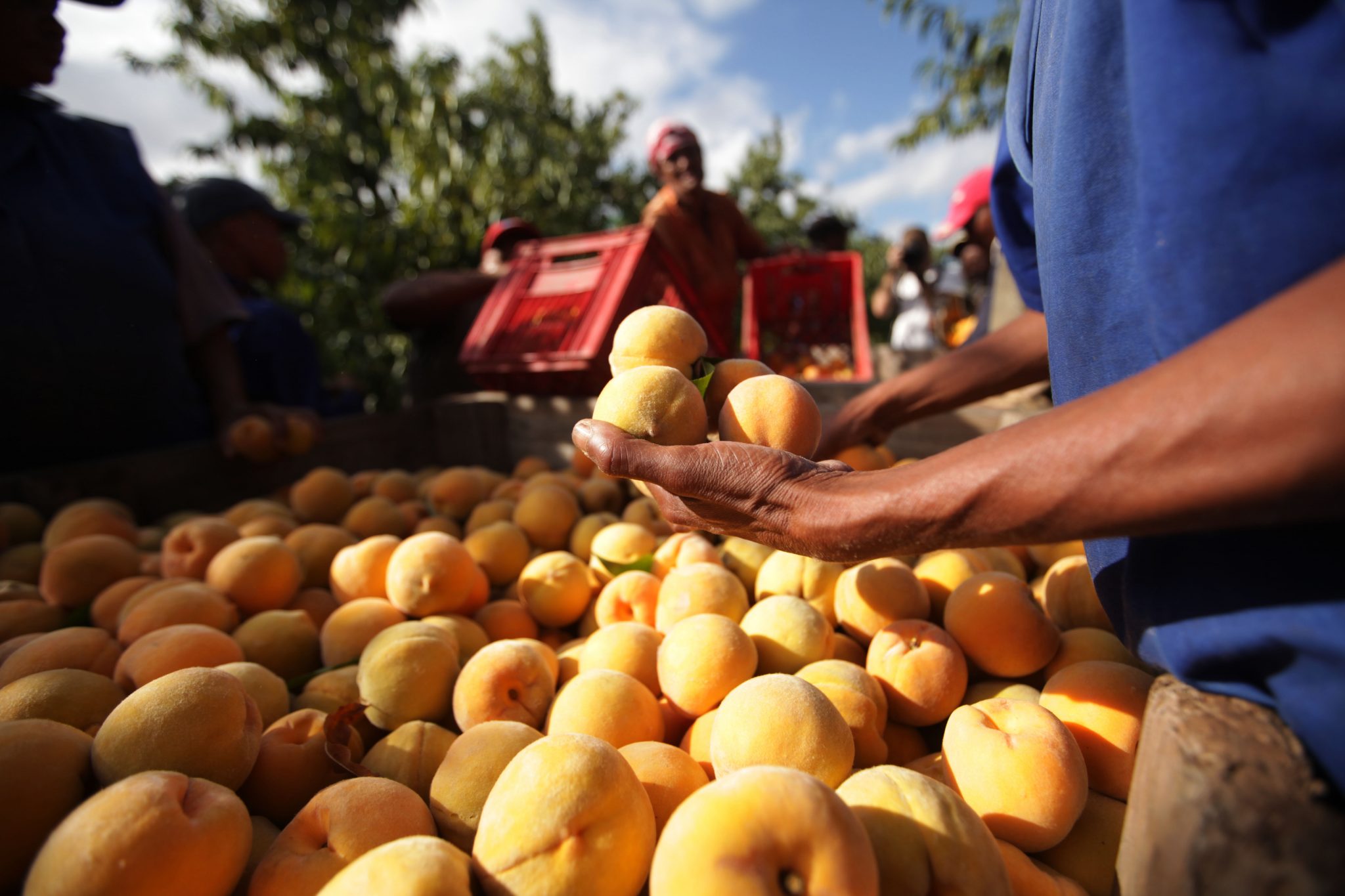
    Picture by Alabama Extension News/Shows workers harvesting produce.

    No evidence indicates that livestock, crops, or products handled by workers involved in production agriculture are sources of COVID-19 infection. However, close contact with coworkers may contribute to spreading the virus.

    The Centers for Disease Control and Prevention (CDC) and the US Department of Labor have provided guidance and recommendations for agriculture owners and operators. Agriculture employers can adapt these same guidelines and recommendations to protect workers at their work sites or in specific work operations.

    Distinctive factors that affect farmworkers’ risk for COVID-19 in production agriculture workplaces include the following:

    • Distance between workers. Farmworkers often have close contact with one another both in fields and indoors. Workers may also be in close contact at other times, such as when clocking in or out, during breaks, when sharing transportation or in shared housing.
    • Duration of contact. Farmworkers often have prolonged close contact with coworkers on the work site, during transportation, and in some housing. Continued contact with potentially infectious people increases the risk of COVID-19 transmission.
    • Type of contact. Farmworkers may be exposed to COVID-19 through respiratory droplets in the air, such as when workers who have the virus cough, sneeze, or talk. Exposure could also occur when workers have contact with contaminated surfaces or objects, such as tools, equipment, tractors, workstations, toilet facilities, or break room tables, and then touch their mouth, nose, or possibly their eyes. Touching your eyes is not considered to be the main way the virus spreads, but more continues to be learned about how this virus spreads.

    Other factors that may increase risk among some workers include the following:

    • Sharing transportation such as ride-share vans or shuttle vehicles, carpools, and public transportation.
    • Living in employer-furnished housing and sharing living quarters, cooking and eating areas, bathrooms, and laundry facilities with fellow workers.
    • Living in crowded and multigenerational housing.
    • Contact within households and families and with fellow workers in community settings in areas with ongoing community transmissions.
    • Mobility of the workforce, including migrant workers, who, in moving from farm to farm, can potentially spread the virus among communities.
    • Poor access to clean water for hygiene purposes throughout the day.

    Farm owners and operators can prevent and slow the spread of COVID-19. Owners and operators should develop a COVID-19 assessment and control plan to protect themselves and farmworkers, in accordance with the CDC Interim Business Guidance for Businesses and Employees. The CDC also provides guidance on how to develop a plan, screen and monitor workers, manage sick workers, and address the return to work of an infected worker.

  • UGA Entomologist: Potential Is There for Whitefly Outbreak

    By Clint Thompson

    It is too early to say if this year’s whitefly impact on vegetables and cotton will rival 2017. But University of Georgia (UGA) Cooperative Extension vegetable entomologist Stormy Sparks insists the potential is there.

    Sparks estimates that the whitefly population is about the same as a month ago. There have been some reports of populations existing primarily in kale. But there’s also low populations in winter crops that are still out there; namely cabbage and collards.

    “The only reports I’ve had of anybody talking about any significant populations have been in kale,” Sparks said. “We haven’t heard of any populations in spring vegetables yet of any significance.”

    Growers should have a better idea of this year’s whitefly effect next month once all the cotton has been planted and starts to grow.

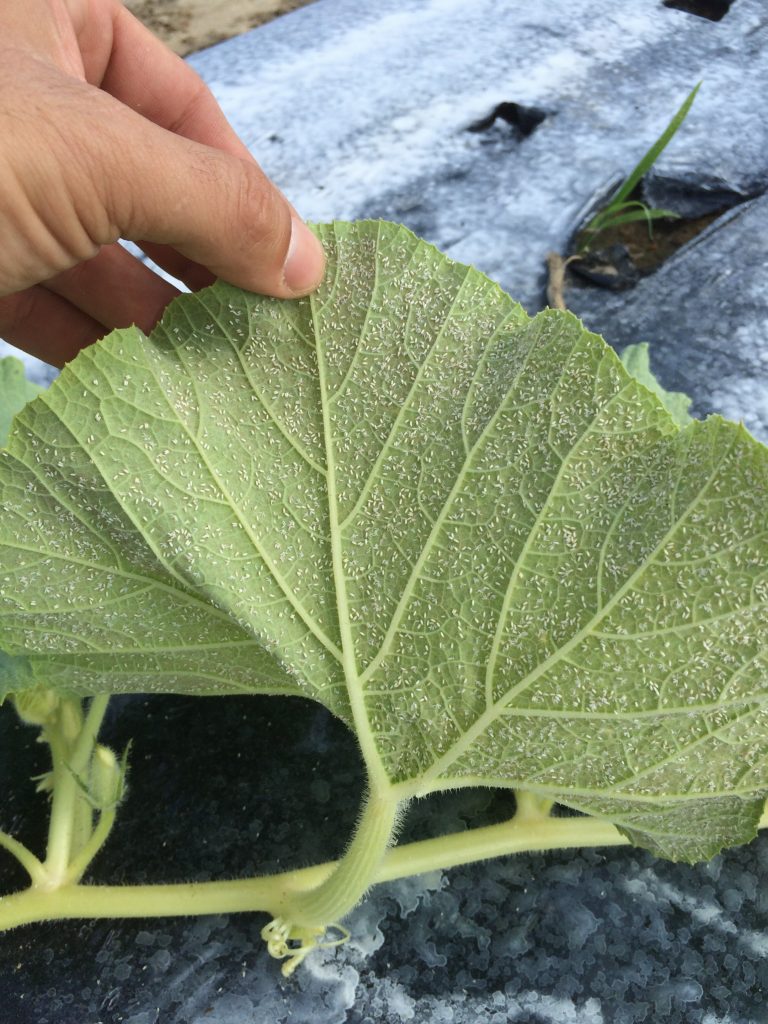
    File photo shows whiteflies on a cucurbit crop.

    “The potential is there. I was on the phone call (the other day) with everybody that does whitefly stuff. Everybody was talking about how it looks like 2017. The truth of the matter is the potential is there, but until you go through the weather conditions to see what happens with weather with management with those crops and management of those crops, you don’t really don’t know what happens,” Sparks said. “(UGA cotton entomologist) Phillip Roberts has for decades been telling me, if he sees whitefly populations in cotton in July, we’re in trouble. You’ll find whiteflies in cotton. But it’s really if you get into populations that are of concern in July, it’s going to be ugly.”

    In 2017, whitefly populations showed up as early as May and June.

    Whitefly Background

    While colder temperatures do not eliminate whiteflies, they do kill many of their wild hosts. They also slow population development in cultivated hosts. Warmer temperatures this winter allowed for larger whitefly populations to overwinter and become mobile earlier.

    Whiteflies cause feeding injury issues in vegetables and transmit two viruses: cucurbit leaf crumple virus and cucurbit yellow stunting disorder virus. Vegetables like squash, zucchini, cucumber, cantaloupe and snap beans are highly susceptible to these viruses. Commercial cultivars that have resistance or tolerance to these pathogens are not available.

    Sparks and other specialists continue to preach sanitation with whitefly management. He said farmers have done better in recent years in getting rid of winter vegetables once they are done harvesting. That needs to continue with the spring crops once they are done.

    “When you’re done with it, get rid of it. And that’s irrespective of what crop it is or the population level,” Sparks said.

  • Sunbelt Field Day Set For July 23

    By Clint Thompson

    UGA Extension weed scientist Stanley Culpepper speaks at a previous Sunbelt Field Day.

    The Sunbelt Ag Expo’s annual field day on July 23 will have a different look this year. Due to the coronavirus pandemic and the strict rules regarding social distancing, this year’s event will feature a drive-thru component for attendees, said Chip Blalock, executive director of the Sunbelt Ag Expo.

    “Our field day will go on as planned this year on July 23. It’s going to be a little different this year with all of the COVID-19 regulations and protocols in place. We just thought at this point it was best to do a drive-thru field day where the farmers can enjoy the tour from the comforts of their air-conditioned vehicle,” Blalock said. “We have about 30 stops and we’ll have about 30 videos of each of the presenters downloaded on our website, which you will also be able to access through the Sunbelt Ag Expo mobile app and our YouTube channel.”

    The tour will begin at 8 a.m. At each plot, visitors will stop and listen to watch a pre-recorded segment hosted on the Expo website, app and YouTube channel using their cell phone. Researchers and vendors can choose to be at their respective plots for question and answer opportunities from farmers and industry leaders. The tour is scheduled to end at 11:30 p.m.

    “Here we are almost in the middle of June and even though things are loosening up somewhat, we still weren’t sure what the protocols would be in July. We seem to think this was the best decision moving forward. This is no reflection on the Sunbelt Ag Expo in October. We are planning on moving forward with it,” Blalock said.

    Another important rule to consider this year is that breakfast and lunch will not be served at the field day this year.

    The Sunbelt Ag Expo is scheduled for Oct. 20-22.

  • Participation Encouraged in COVID-19 Ag Impact Survey

    Posted by Brittney Kimber

    AUBURN UNIVERSITY, Ala. – COVID-19 impacted the agricultural industry. However, the full extent of the impact is currently unknown. Professionals with the Alabama Cooperative Extension System and Auburn University’s College of Agriculture are working to better understand these impacts. A study is currently underway to assess the effects that COVID-19 is having on Alabama’s agricultural economy using an agriculture impact survey.

    “We have all been affected by the COVID-19 pandemic,” said Max Runge, an Alabama Extension economist. “However, for those involved in production agriculture, the production did not stop. Even with supply chain disruptions, animals had to be cared for and plantings had to move forward despite market prices falling below cost of production.”

    Through this agricultural impact survey, professionals are gathering information from all agriculture-related segments, spanning from row crops to livestock.

    Complete the Assessment of COVID-19 Impacts on Alabama Agriculture survey.

    Survey Participation

    The survey is voluntary and anonymous. Because of the broad-reaching impacts on all phases of agriculture, the survey may be longer than typical surveys. However, Runge says the gathering of as much accurate information as possible is crucial to making the best estimate.

    Those wishing to participate should use the following guidelines:

    • Complete the survey only one time.
    • If a farm has multiple operators involved, one complete survey is sufficient as long as it reports all the impacts.
    • Submit surveys by June 30.

    Professionals will share survey results with industry leaders, commodity groups and legislators in support of any policy and industry response that may be appropriate.

    “The impacts of the pandemic will be felt for a long time,” Runge said. “For now, we would like to assess the impact COVID-19 is having on Alabama’s agriculture and related industries with this survey.”

    More Information

    For more information on this survey contact Max Runge at rungemw@auburn.edu. People can also visit the Alabama Extension website, www.aces.edu, for information on the affects of COVID-19.