Category: Alabama

  • Potential Second Wave of Pandemic Could Impact Vegetable, Specialty Crop Producers

    By Clint Thompson

    The coronavirus pandemic struck in mid-March during harvest season for vegetable and specialty crop growers in the Southeast. Many fear a second wave of COVID-19 could strike again in October and November when temperatures start to drop. It is also when many producers have their fall crop in the ground.

    “The specialty crops would be where maybe we might see some shifts in market expectations and whether or not there’s concerns about continued disruptions in the supply chains,” said Adam Rabinowitz, University of Georgia Cooperative Extension agricultural economist.  “The big question mark there is going to be having an alternative supply chain for distribution that’s available if in fact they are reliant on institutional buyers, where if we see another round of restaurants closing and that type of disruption. That was I think the big surprise this first time; how impactful that was, and we really hadn’t seen anything like that in the past.”

    Silver Linings

    One of the silver linings in an otherwise dark time for growers was finding alternative ways to sell their product. Tifton, Georgia farmer Bill Brim thought Inside the Box when he decided to sell boxed produce straight to consumers for several weeks in April, May and June. Customers lined up the roads waiting to buy local and support a farmer who felt the pinch of a lack of a foodservice market.

    Florida vegetable farmer Sam Accursio also thought creatively in a way to provide produce to customers at a cheaper-than-normal rate in late March and early April.

    “One morning I woke up at 3 o’clock in the morning on a Monday after no sales all weekend with coolers full and I said, ‘What are we going to do?’ I talked to my nucleus about this. The upcoming weekend, we put it on social media that the prices we were going to sell produce for. The consumers were excited because they didn’t have money, I had a cooler full of produce that I already picked and packed. The companies that donate produce, they were filling up. We had nowhere to go with this stuff, so we just put a low price. Consumers came and ate it up,” Accursio said. “We worked our tails off; I think it was for about five hours just steady loading cars from 5:30 in the morning on. I think the first day it was 40,000 pounds, the whole trailer load of produce was sold; one box here, seven boxes there.

    “The first day, the line was two hours long. The consumers, what they told me when they finally got up there and I’m apologizing, they said, ‘Listen, we’re all at home. We have nothing better to do.’”

    Same Thing in the Fall

    Accursio said he sold about 60,000 pounds of produce the same way the following weekend. At 50 cents per pound, consumers received a great deal to support a local farmer.

    “I couldn’t let the consumers down because they helped us out of a super jam. We kept on doing it on a smaller basis with the strictly local people coming then. When we had the big sales going on, we had people driving two or three hours to come here. We had shipments, trailer loads going to Key West from here. It was an amazing thing to watch,” said Accursio, who says he will continue this type of marketing in the fall.

    “I never really thought about selling directly to consumers but now we are gearing up for October to continue this.”

    Rabinowitz added, “Having those type of distribution options available can be very significant as not just a fallback strategy but also just as a means to increase sales on a regular basis.”

  • NOFA Deadline for CFAP is Today

    By Clint Thompson

    Today, June 22, is the last day for growers and industry leaders to submit information and data to the USDA Farm Service Agency (FSA) about crops to be considered for inclusion in the Coronavirus Food Assistance Program (CFAP).

    There is a Notice of Funding Availability (NOFA) where stakeholders and producers of other commodities can submit information and data for consideration to be included in the program. These must be submitted by today. This is specifically for data on any commodity not currently eligible for CFAP.

    Not all commodities were covered under CFAP, which provides financial assistance to producers who have suffered a 5%-or-greater price decline or who had losses due to market supply chain disruptions due to COVID-19 and face additional significant market costs.

    CFAP applications will be accepted through Aug. 28. Producers should apply through the FSA at their local USDA Service Center.

    According to Charles Hall, executive director of the Georgia Fruit and Vegetable Association, Georgia farmers are looking to add several commodities to the list covered under CFAP. These include kale, mustard, collards, turnips and specialty lettuce.

  • Red Node Disease in Beans a Potential Problem

    File photo shows green beans.

    By Clint Thompson

    Red Node Disease, aka Tobacco Streak Virus, was discovered in beans in a Florida vegetable field this spring. It’s vectored by thrips and could potentially be a problem for farmers this fall, according to Prissy Fletcher, University of Florida/IFAS Agricultural Extension agent for St. Johns County, Florida.

    “I have been here 14 months and since I have been here, we had never seen this disease. Speaking with some of my predecessors, this has not been an issue that we have seen before. It’s a new situation for us,” Fletcher said. “Even though the virus was first identified in Homestead, Florida in 2014, we weren’t aware of this issue in beans up here. But after doing a literature review and knowing it had been in South Florida, looking back, it was just a matter of time before we found it here. This is definitely a new situation for us locally that we’re going to attack as a team and get a good IPM plan.”

    Thrips Need to be Contained

    Thrips vector the disease and are the key in farmers managing it successfully. They are tiny insects that can feed on various hosts while spreading different diseases. Thrips in peanuts can lead to tomato spotted wilt virus. Onion thrips or western flower thrips are the pests that vector Red Node Disease in beans. But they can also feed on squash, cotton and different weed species.

    “A lot of this is going to boil down to communication, communicating with your neighbors, other folks who are growing crops that can be affected by thrips, which is just about everything. A good IPM program for thrips is going to be pretty crucial,” Fletcher said. “Just the importance of communicating with your neighbors about disease spreading, pest management and working together as a system because if your neighbor has that problem, you’re likely to be impacted by that as well.”

    Fletcher said the impact on beans can be devastating. Symptoms include reddening of the stem, nodes and leaf veins. Infected pods show patterns of necrotic red patches. The spread of the disease can make the pods fall off, shrivel up or not even produce the beans themselves.

    “It could be pretty bad for that farmer if that disease spreads,” Fletcher said. “Prevention is going to be key.”

    Fletcher said farmers will begin planting their fall crop in September and early October.

    “The production of beans in this area is increasing, which is pretty exciting. Seeing more farmers diversifying and taking on more of these alternative crops. It’s pretty cool stuff. Then we find this disease and it’s like, ‘Oh my goodness. Okay, we’ve got to figure this out before next season.’ So prevention, prevention, prevention,” Fletcher said.

  • Cowpea Curculio Consistent Problem of Southern Peas

    Pictured is a cowpea curculio.

    According to Alabama Extension, southern peas are commonly grown crop in the Southeast. Peas have many different pests such as aphids, thrips, leaf-footed bugs, stink bugs, and various caterpillar species. However, the one pest that causes growers the most trouble is the cowpea curculio. There are control remedies for most of these other pests, but the cowpea curculio has become resistant to many pyrethroids.

    In this video, Neil Kelly, an Alabama Extension commercial horticulture regional agent, discusses the background and anatomy of this pest, as well as ways to stay on top of controlling them.

    For more information about cowpea curculio, see click here.

  • Pecan Tree Dieback Scary But Normal For Growers

    UGA Extension photo/Shows leaf scorching on a pecan tree.

    By Clint Thompson

    Leaf scorching and dieback on some young pecan trees is common this year with high temperatures, according to Lenny Wells, University of Georgia Cooperative Extension pecan specialist. But Wells assures growers the problem can be corrected.

    “We see that this time of year pretty much every year; young trees where they’re growing so fast that the root system can’t keep up with what the top is trying to produce. This time of year, it turns off hot and soil temperatures warm up some,” Wells said. “Water demand goes up and those young trees with the root system not fully developed yet have a hard time keeping up. They tend to grow out of it. It’s a scary thing for growers to see. But they do tend to grow out of it fine.

    “Anytime you have a tree like that, that’s struggling and you start seeing some shoots dying back and stuff like that, it’s a sign that’s something’s going on in the root system. If you prune back some of that top and bring the top of that tree back more in line with what the root system can support, that usually is a big help to it.”

    Wells cautions growers to maintain consistent soil moisture or apply water every other day. The longer irrigation is applied, the deeper the water runs. This allows the root system to develop deeper through the soil profile. This also prevents the soil from getting too hot. Soil temperatures that exceed 95 degrees F inhibit root growth.

    In the UGA Extension pecan blog, Wells also said that growers will get more vigor and healthy first-year growth if they plant before March.

  • Alabama: A session unlike any other

    Photo credit: © Rex Wholster / Adobe Stock

    Alabama: A session unlike any other

    By Ashley Robinson

    Alabama lawmakers have never seen a legislative session like the one that took place this year. The coronavirus (COVID-19) pandemic forced lawmakers to end Alabama’s 2020 legislative session early, causing several issues to fall by the wayside.

    Legislators took a nearly two-month break during the COVID-19 outbreak, returing to Montgomery on May 4to pass state budgets and a few other bills before the regular session concluded May 18. Wearing masks and sitting apart, lawmakers gathered without lobbyists in the hallways or members of the public filling the galleries.

    “Once lawmakers came back, the building was not open to the public … which was pretty unusual, especially taking on something as important as the budgets,” says Leigha Cauthen, Alabama Agribusiness Council executive director.

    FUNDING FOR AGRICULTURE
    Due to the shortened timeframe, Education Trust Fund and General Fund budgets and local legislation were lawmakers’ top priorities.

    The General Fund budget, at almost $2.4 billion, will greatly benefit the state’s agriculture industry. Under the proposed plan, the Alabama Department of Agriculture and Industries (ADAI) will receive almost $15 million, including $100,000 in new appropriations for the North Alabama Agriplex, $130,000 for the industrial hemp program and $120,000 allocated to the Farm to School program. In addition, the new Sweet Grown Alabama state agricultural brand received $250,000.

    Sweet Grown Alabama, which launched on March 13, is a non-profit organization that connects farmers in the state to retailers and consumers. Growers can market their produce anywhere in the state. The online database allows consumers to find farmers in their area. Farmers’ profiles include their location, products grown, social media links, website links and how consumers can buy their products.

    In addition, the Soil and Water Conservation Committee will receive $2.9 million, including more than $81,000 in matching funds for the Regional Conservation Partnership Program to increase on-farm irrigation.

    “I think the ADAI was pleased with this year’s funding. At the beginning of the session we were all optimistic about the budgets, but as COVID-19 unfolded, the budgets fell back to the same funding levels as last year,” Cauthen said. “But, some new money made its way to the ag department, so that’s great that those needs were met even as the budget was being scaled back.”

    BILLS LEFT HANGING IN THE BALANCE
    Unfortunately, none of the bills that were of particular interest to Alabama agriculture were passed by the Legislature during the session.

    “We lost a couple of good bills that were left hanging in the balance, but it also kept some bills from passing that could have been detrimental to the agriculture industry,” said Cauthen.

    She expects special sessions later this summer or into the fall to take up additional important issues of the state. But, for the most part, she expects to see the bills she was tracking reintroduced during next year’s session.

    For a complete list of the bills being tracked by the Alabama Agribusiness Council, visit www.alagribusiness.org.

  • Frustrated Florida Farmer Voices Mexican Imports Concerns

    By Clint Thompson

    COVID-19 was a challenge of pandemic proportions for farmers this spring. Adding insult to injury were the influx of Mexican produce that undercut American producers trying to sell their own product.

    Florida vegetable farmer Sam Accursio has a potential solution.

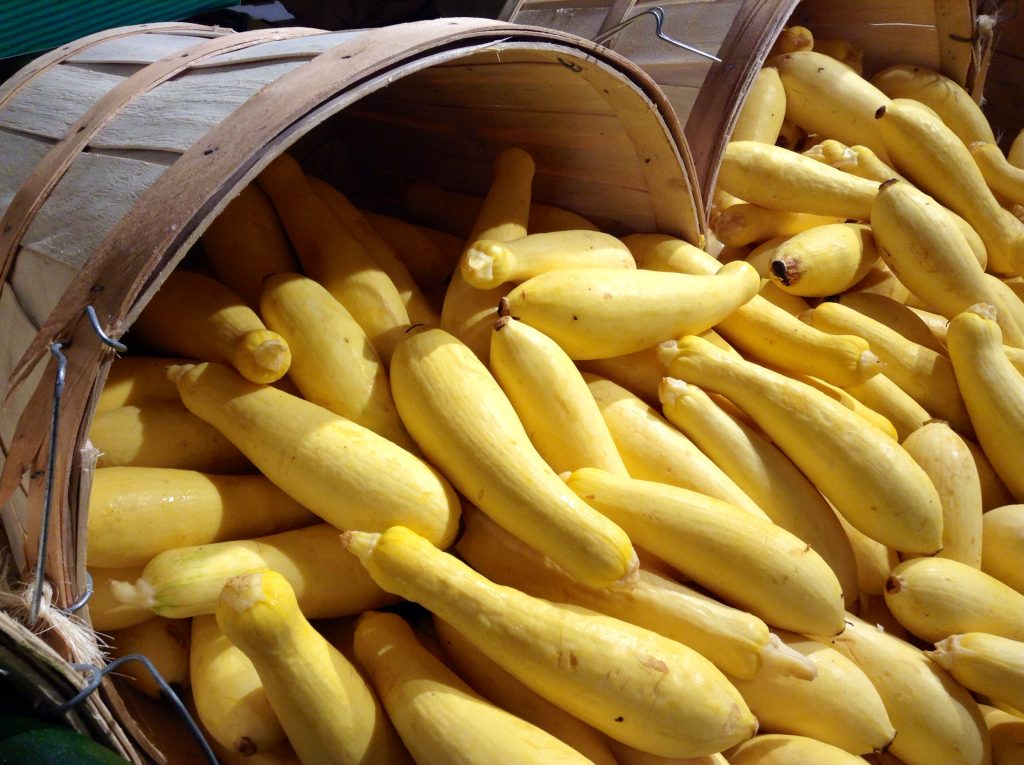
    Squash is a heavily imported commodity from Mexico.

    “The only solution I know is to vote, get the people that are like-minded and want to support our nation in office. That’s all we can do. I don’t have any other solution besides that at the moment. We have to keep lobbying,” Accursio said. “Growers, we’re very unique people. We work 100 hours per week, and that’s our problem. We’re working when all of these problems arise, and we don’t have time to go to Washington and sit down with these politicians. We have to talk to them one by one when they’re in our area coming around to us.”

    Tough Spring

    It was especially tough for Accursio this spring. Like other farmers in Florida, Accursio lost produce when the coronavirus pandemic struck in mid-March. In early April, he voiced frustrations about the impact of Mexican imports were having on American farms. He remains frustrated.

    “While we were dumping and stopping harvest, I was monitoring what they were shipping in the way of squash per day. It was 2 to 3 million pounds per day, closer to 2.7 to 3 million pounds per day coming across the Mexican-U.S. border of squashes, while I’m stopping harvest; harvesting and throwing on the ground; harvesting and sending to Farm Share,” Accursio said. “The cooler’s empty and we crank back up again. It was a trying time. Then to see Mexico still importing into our nation just seemed so wrong.”

    Things could potentially get worse as the United States-Mexico-Canada Agreement is set to enter into force on July 1.

    “While we are in season, we need some sort of protection. Right now they’re in the talking phases again. Hopefully, we’re going to have enough influence to make some changes,” Accursio said.

    According to the Florida Farm Bureau, Florida’s specialty crop producers will continue to experience loss of market share due to high volumes of dumped Mexican produce. Ag Commissioner Nikki Fried voiced her concerns, as did U.S. Secretary of Ag Sonny Perdue.

    Accursio encourages consumers to continue supporting American farmers. He can’t fathom the alternative.

    “If you take Florida and California away in the winter, what do you have? You have third-world countries feeding this great nation and I’m not going to eat it. I’m not going to do it,” Accursio said.

  • Pecan Industry Seeks to Establish a Research and Promotion Program

    georgia pecans
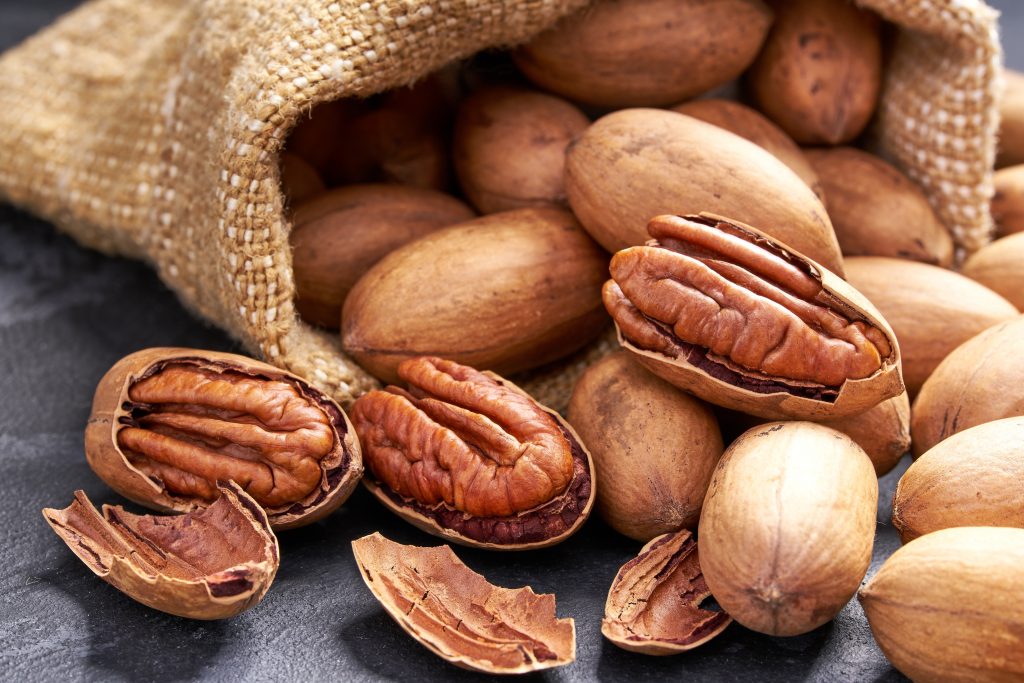
    File photo shows shelled pecans and those still in shells.

    USDA Agricultural Marketing Service

    The U.S. Department of Agriculture (USDA) received a proposal from the National Pecan Federation (NPF) requesting the establishment of a research and promotion program to strengthen the position of pecans in the marketplace, maintain and expand markets for pecans and develop new uses for pecans.

    USDA is currently analyzing the proposal. If USDA finds the request justified, the department will publish in the Federal Register a proposed rule with a public comment period seeking input from the industry and interested stakeholders. A copy of the NPF proposal can be found here.

    The proposed program would be established under the Commodity Promotion, Research and Information Act of 1996 and would be financed by an assessment on domestic producers and importers of pecans and administered by a board of industry members nominated by the industry and selected by the Secretary of Agriculture.

    The proposal by the NPF calls for an initial assessment rate of two cents per pound of inshell and four cents per pound of shelled domestic and imported pecans. Handlers would collect assessments from producers based on the pounds of pecans received and importers would pay assessments on pecans when they enter the U.S. for consumption. Domestic producers and importers of less than 50,000 pounds of inshell pecans (25,000 pounds of shelled pecans) on average for four fiscal periods would be exempt from paying assessments.

    NPF proposed that the board consist of 17 members to include producers representing different pecan-producing regions within the United States and importers of pecans.

  • Sweet Market for Melon Farmers

    UGA file photo/Shows watermelons being researched on the UGA Tifton Campus. 6–6-17

    By Clint Thompson

    Watermelon prices are holding strong for Southeast farmers, according to one South Georgia producer. Terrell Rutland believes extenuating circumstances could help extend the strong market, currently at 20 cents per pound, for growers an extra few weeks.

    “Anything north got frost bit about the first of May. Florida is through so that kind of puts us in the driver’s seat right now,” said Terrell Rutland, who grows 50 acres in Tift County, Georgia and Cook County, Georgia. “Every year, the very first people to pick in Georgia might get 20 cents, but generally, the majority of the crop is sold around 15 cents. It’s good in that respect.”

    It’s especially good for Southeast farmers since it appears their melons are the only game in town right now.

     “(The Carolinas and the Midwest) always plant three or four weeks behind us but this year they planted, go two or three weeks and the frost killed them, and they planted again. That threw them another three weeks behind. I really wouldn’t be surprised if we don’t get some imported melons to catch some slack up,” said Rutland.

    He began harvesting this year on June 4, the earliest he’s ever started.

    “When they put on, they grew. They made melons quick. It was kind of shocking, I’ve never had none to grow off that quick. About half of mine, I do put on bare ground and I put about half of them on plastic. The bare ground melons are not ready yet. The cold really affected them a lot worse than it did the ones that were on raised plastic,” Rutland said.

    Rutland expects to harvest three days per week through July 4.

    Decrease in Acreage

    Acreage is down in Georgia this year. According to Samantha Kilgore, executive director of the Georgia Watermelon Association, acreage is projected to decrease this year to 19,000 acres. It would mark a significant drop from previous years’ harvests.  According to the National Agricultural Statistics Service, from 2016-2018, Georgia averaged a harvest of just more than 23,000 acres.

    Rutland already projects additional acres next year, however.

    “It’ll probably be many folks who want to grow watermelons next year where you can’t sell them for a dime a pound. It’s the way that usually works,” Rutland said.

  • USDA Trade Mitigation Purchases to Feed People in Need and Aid American Farmers Surpass $2B

    WASHINGTON, D.C. – The U.S. Department of Agriculture (USDA) announced today that it has purchased more than $2.2 billion of meat, fruits, vegetables, specialty crops and dairy products in fiscal years 2019 and 2020 in its ongoing efforts to feed people in need and assist American farmers and ranchers suffering from damage due to unjustified trade retaliation by foreign nations.

    Perdue

    USDA is on target to reach its fiscal year goal of about $1.4 billion of trade mitigation purchases in the next phase of fiscal year purchasing, which ends Sept. 30. The purchases were made through the Food Purchase and Distribution Program (FDPD), one of USDA’s three programs in its Support Packages for Farmers. Most of the food purchased is provided to states for distribution to nutrition assistance programs such as The Emergency Food Assistance Program and child nutrition programs.

    “Over the past two years, USDA has issued more than $2 billion in payments to American farmers, ranchers and producers for U.S.-grown food that is used to help Americans in need,” said U.S. Secretary of Agriculture Sonny Perdue. “Early on, President Trump instructed USDA to make sure our farmers did not bear the brunt of unfair retailiatory tariffs. Our farmers work hard and the most productive in the world, and we crafted the FPDP to help protect them. The FPDP represents just one of the many ways USDA is working hard to fulfill its mission to do right and feed everyone.”