Category: Alabama

  • Chill Effect: Cold Temperatures Impact North Alabama Crops

    Cold temperatures provided a scare for vegetable and fruit producers in north Alabama last weekend. They were especially concerning for peach farmers, said Eric Schavey, Alabama Regional Extension agent in Northeast Alabama.

    File photo shows blooming peach trees.

    “We’re probably taking a little bit of a hit. But growers often leave more than they should at times. Maybe it’s just a little natural thinning, because we haven’t done our thinning yet,” Schavey said. “We like to thin them when they’re like grape size. Now it’ll be a little selective there on your thinning. In the past I’ve had these peach growers talk about these freezes and they think, ‘Man, I’m not going to have anything.’ It ends up being one of their best peach production years because it did thin a lot of peaches off their tree. It put all of that energy into the ones that are viable there.”

    Schavey is optimistic largely because the outcome could have been a lot worse. There was plenty of wind during last weekend’s cold snap. Schavey believes the wind held some of the frost back in various places.

    “Frost didn’t start laying until around 5 a.m. We only had a brief window of that frost being on there before we started getting that radiant heat from the sun melting it,” Schavey said.

    North Alabama Temperatures

    Schavey is based in northeast Alabama and is responsible for Blount County, Cherokee County, Cullman County, DeKalb County, Etowah County, Jackson County, Madison County and Marshall County. He said temperatures dropped as low as 26 degrees Fahrenheit in Valley Head, north of Fort Payne.

    Cold temperatures impacted some other crops in north Alabama as well.

    “Strawberries, not as bad, we still had row covers and everything on. Plums took a big hit. A lot of our plums were in full bloom. They’ve taken a big hit on that,” Schavey said. “Some of our high tunnel producers that had some tomatoes out already are seeing a little bit of cold damage. Mainly that’s due from their high tunnels not being as tight, air flow wise, as they did when they closed it down.”

  • Crop Progress: What’s Happening in Southeastern States?

    The United States Department of Agriculture released its crop progress reports for each state this week.

    Alabama: Temperatures in March were comparable with or up to 7.9 degrees Fahrenheit warmer than historical averages. Rainfall ranged from 2.6 inches to 14.6 inches, though heavy rain was recorded during the latter part of the month. It improved drought conditions but also halted field work.

    Photo by Clint Thompson/Shows Georgia peach tree in bloom.

    Producers impacted by Hurricane Sally last September continue to repair fields and damaged structures.

    Florida: March temperatures were on average 2.2 degrees warmer compared to historical averages. Rainfall was as high as 6.5 inches in Okaloosa County. But at the end of the month, the state was 49% abnormally dry and 1% in moderate drought conditions, according to the U.S. Drought Monitor.

    Various fruits and vegetables were planted and marketed. Whiteflies and pest pressure were noted on vegetable crops in South Florida. Citrus fruit harvested for the fresh market included white and red grapefruit, Valencia oranges, as well as Honey, Tango and Royal tangerines.

    Georgia: March temperatures were on average 3.4 degrees warmer than historical values. Total rainfall was as high as 13.5 inches in Rabun County. According to the U.S. Drought Monitor, 21% of the state was abnormally dry. Frequent rain showers in latter March saturated fields and reduced field activities.

    Producers in South Georgia noted fields started to dry out, which allowed them to continuing planting. Peaches and blueberries were in full bloom. Vegetable growers planted some fields. Onion harvesting will begin soon. Pecan trees are also budding in multiple counties.

  • Storage Options for Watermelons

    Watermelons being researched on the UGA Tifton Campus. By Clint Thompson 6–6-17

    From production to harvest, the battle is not yet over for watermelon farmers. There is the subject of post-harvest care, specifically, with storage options. Joe Kemble, Alabama Extension vegetable specialist, cautions growers that watermelons are not adapted to long-term storage.

    “They will last two to three weeks at most in storage,” Kemble said. “If you’re looking at long-term storage, say I’m harvesting today, tomorrow or the next day and I’m not going to market until Friday, short-term storage at 50 to 60 degrees and around 90% relative humidity is ideal,” Kemble said. “Can you store watermelons and cantaloupes together? Ideally, no. They have two different regimes of temperatures they require to really maintain their quality.”

    If watermelons are stored at low temperatures, they can be subject to chilling injury. This can cause pitting and off-flavors. They can also lose sweetness if they are stored outside in the environment, even in the shade.

    “For you as the seller or grower, you may not see the problem. It’s the end user, the person who gets it at the end and opens it. They’re the ones that’s going to see the problems if they have chilling injury or if they developed off flavors,” Kemble said.

    He also warns producers to never drop, throw or walk on watermelons. It can cause internal bruising and breakdown of the flesh.

  • Alabama Extension to Host Weed Management Webinar for Fruit Growers

    Li

    Alabama Extension will hold a virtual webinar on weed management in strawberry, peach and blueberry production systems on Tuesday, May 4 at 11 a.m. (EST). Alabama Extension specialist Steve Li will discuss weed management on blueberry, peach and strawberry farms.

    This meeting will be held via zoom. It is free but those interested must pre-register. Click here to pre-register: https://www.aces.edu/go/regionalfruitmeetings.

  • Still a Shock: Alabama Pecan Producers Moving Forward Following ’20 Storms

    Alabama Farmers Federation photo/Hurricane Sally damaged crops and structures along Alabama’s Gulf Coast when it hit Sept. 16. Cassebaum Farms in Lillian in Baldwin County sustained damage to its pecan crop.

    Not a day goes by that Alabama Extension Research Associate Bryan Wilkins doesn’t think about the impact two hurricanes had on his area’s pecan crop in 2020.

    “I think about it every day. Personally, cleaning up around my house, I’m still cleaning up dang mess around my house. I only had a few oak trees down around me. But then I go out to these farms where I’ve been doing research, the plots that I had research on, there ain’t nothing there now,” said Wilkins. “It’s a big wide-open spot in some of them. That’s going to alter how I’m doing things this year.”

    Huge Loss for Pecan Industry

    What was projected to be 3.5 million pounds in Baldwin and Mobile Counties was reduced to nothing following Hurricane Sally in September and Hurricane Zeta in October.

    Still, five months later, Alabama pecan producers continue to sift through the storms’ aftermath.

    “When you’re sitting there and you’ve got a block of 300 or 400 90-year-old trees gone down, and everybody and their brother’s trying to rent equipment, it just takes time to get to it,” Wilkins added. “It’s still a shock. You look here where I work on Auburn’s Gulf Coast Research and Extension Center, I’ve got one whole block of tree that’s just a big empty space right in the middle of it.

    “We’re learning new ways to do things. We’re adapting, these guys here, they’re resilient. They’ve been dealing with this, most of them their whole lives; Camille, Frederick, Danny, George, Ivan, Katrina, Opal and now this. These guys are resilient. It’s disheartening when it happens. Some of them are still a little bit disheartened.”

    Replanting Underway

    While some producers were adamant they were not going to replant, it appears that is not the case for all growers.

    “I’ve talked with some of them. At one time, a lot of them were like, ‘No, I’m done. I’m not doing this anymore.’ But now that, I’m not going to say the shock’s worn off, but they’ve kind of had time to sit back and regroup, I know there’s a lot of them that are replanting, at least going back and filling in the skips where they had blocks taken out or whatever,” Wilkins said.

    “I don’t know that they’re planting any new orchards or leased orchards. I know a lot of them are replanting land that they own or at least filling in the skips, planting trees that got downed. Some of them are still trying to decide what they’re going to do. Part of the problem is it took on into the winter to get cleaned up. Some of them aren’t even finished. Some of them are just now finishing.”

  • Breaking Ground: Pecan Trees More Effective in Planted Early

    Photo by Chris Tyson/UGA CAES: Shows pecan trees being planted.

    Pecan planting season has come and gone for most producers. University of Georgia Cooperative Extension pecan specialist Lenny Wells believes farmers who planted their trees in early February are more likely to succeed compared to producers who planted their trees later, or in mid-March.

    Data from 2020 research supports his belief.

    “It confirmed what I had been seeing. Those that were planted in February and even early March compared with middle of March, tended to be a little more vigorous and grow better than those planted later,” Wells said.

    According to Wells’ research, trees planted in early February yielded leaf area (size of the leaf) about 17mm, and even in mid-February, it was 20mm. But in early March, leaf area dropped to about 12mm and then to about 11mm in mid-March. Much higher leaf area on early planted trees is a sign of vigor in the tree.

    Supporting Evidence

    Other indicators like the trunk diameter growth, leaf length and average leaf width support the importance of planting early.

    “Anytime you pull a tree out of the nursery and plant it into the field, it’s going to undergo some transplant shock. We do recommend pruning the root system now as they plant. Even if they don’t, they’ve lost some of that root system that they had in the nursery in the digging process. When you put that tree planted out into an orchard, it’s got to develop some new roots and get going again before the top of that tree can start growing like it should,” Wells said. “Sometimes, just from the energy that’s stored in the buds and in the trunk of that tree, it’ll start pushing out new growth before it has the root system ready to support that new growth. That’s where you can get in trouble.”

    Unfortunately, most producers were unable to get in the orchard to plant trees this winter because of excessive rainfall.

    “This year, even if they wanted to plant in February, it was really tough to get those trees planted with all the rain we had during that time. A lot of them were forced this year to plant later. If they take care of them and manage them right and just don’t let those root systems get stressed for any reason, keep good water on them, they should be okay,” Wells said. “But it’s always better to get them in earlier so those roots get established before budbreak begins, which we’re at budbreak now.”

    Wells doesn’t recommend producers plant after budbreak which is the stage the trees are in now.

  • Resistant Varieties Key Against Anthracnose

    UGA Extension photo/Shows anthracnose disease in pepper.

    It is never too early to start thinking about cucurbit disease management in Alabama. In the case of anthracnose, producers who are planting their crops are best served by utilizing resistant varieties, according to Ed Sikora, professor and Extension plant pathologist in the Department of Entomology and Plant Pathology at Auburn University.

    “I was just looking through the Southeast Handbook for 2021 and we do have a lot of anthracnose-resistant varieties for a number of different crops; for watermelon, cantaloupe and cucumber. That’s the best control practice we have if you have a history of this disease in your field,” Sikora said.

    It’s important to avoid overhead irrigation if you are not using disease-resistant varieties. It just promotes the disease and provides conditions for its development.

    Follow a fungicide spray program when there are warm and wet conditions. These conditions will favor the disease’s development.

    Sikora said anthracnose is probably the most common cucurbit disease every year.

    “Cantaloupe, cucumber and watermelon are all sensitive to it, more susceptible. You’ll see these tan to brown spots on the leaves, fairly small and conspicuous. Often times, you’ll see shallow elongated tan spots on the stems as well,” Sikora said. “On the fruit, you might see sunken areas on the fruit with pink discoloration to them, which is the disease-producing fungal spores.”

  • Pecan Producers Be Wary of Phylloxera

    UGA CAES Photo/Phylloxera inside gall from a dissecting microscope.

    There’s beginning to be budbreak in pecan orchards throughout the Southeast. As trees start to break dormancy, producers need to begin protecting their crop from one pest who impacts trees this time of year, says Lenny Wells, University of Georgia Cooperative Extension pecan specialist.

    “We’re just starting to see it now. This is the time they need to (spray), if they’ve had problems with phylloxera, which is a little small insect that’ll cause those little warty bumps on the leaves and they can also deform the stems. Another species of them can deform the stems and really cause some serious problems there, because it’ll also deform the nuts and cause them to fall off really early,” Wells said. “The time to spray for them is right at budbreak. It’s getting about time to spray those. That’s the main thing they probably need to be looking for right now.”

    According to UGA Extension, pecan leaf phylloxera is an insect comparable to aphids. Their feedings can lead to abnormal growths of leaf tissues, and the tissue forms a gall that surrounds the insects. Once it forms, no insecticide can penetrate to the insect.

  • Site Selection Key for Blueberry Plants

    blueberry
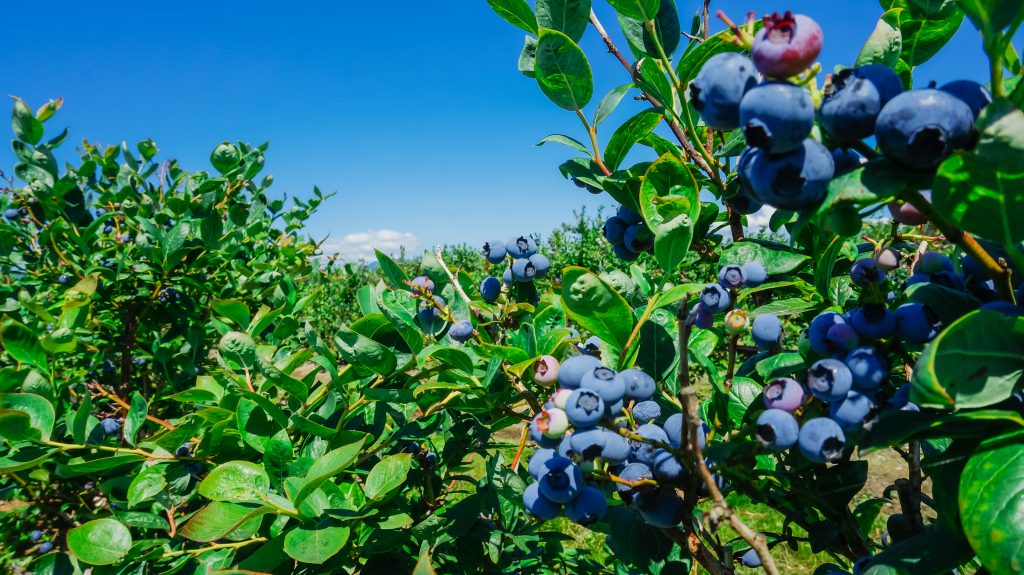
    File photo of blueberry production.

    Site selection remains a pivotal decision for all potential blueberry producers. Alabama Regional Extension agent David Koon discussed various site-selection factors that will impact whether a grower experiences success.

    “When we think about site selection of where you’re going to plant your blueberries, just like every other vegetable or fruit producing plant, full sun is a must. Partial shade, you can still grow them and get some fruit, just not near as much,” said Koon during a webinar on the Alabama Extension Commercial Horticulture Facebook page. “Full sun should be the No. 1 factor for any kind of production for a vegetable or fruit crop.”

    It is also important to remember that freeze damage may occur in low areas.

    “Think of low areas, just like water. Water flows downhill. If there’s a dam at the bottom of the hill, it’s going to pool. That cool air does the same thing,” Koon said. “If it’s in a low spot that’s got high ground all around, that cool air tends to settle in that hole. When you’re thinking two to three degrees difference between 32 and 29 degrees when you get damage, that low place can give you some problems.”

    Producers may need to consider planting on the south side of a slope.

    Water is Essential

    Water accessibility is also an important factor. Blueberries need moisture but won’t tolerate standing water. Raised beds may be required.

    “Blueberries do need water. They like to be watered, but they do not tolerate wet feet. If you’ve got some drainage problems or some areas that don’t drain well, you may want to look at some raised beds,” Koon said. “Anytime we talk vegetable production or fruit production, how are you going to get the water to it? Is there a water source readily available? Will it supply enough water for the number of plants that you’re considering?”

  • Challenging Crop: Alabama Hemp Faced Pests, Diseases in 2020

    hemp program

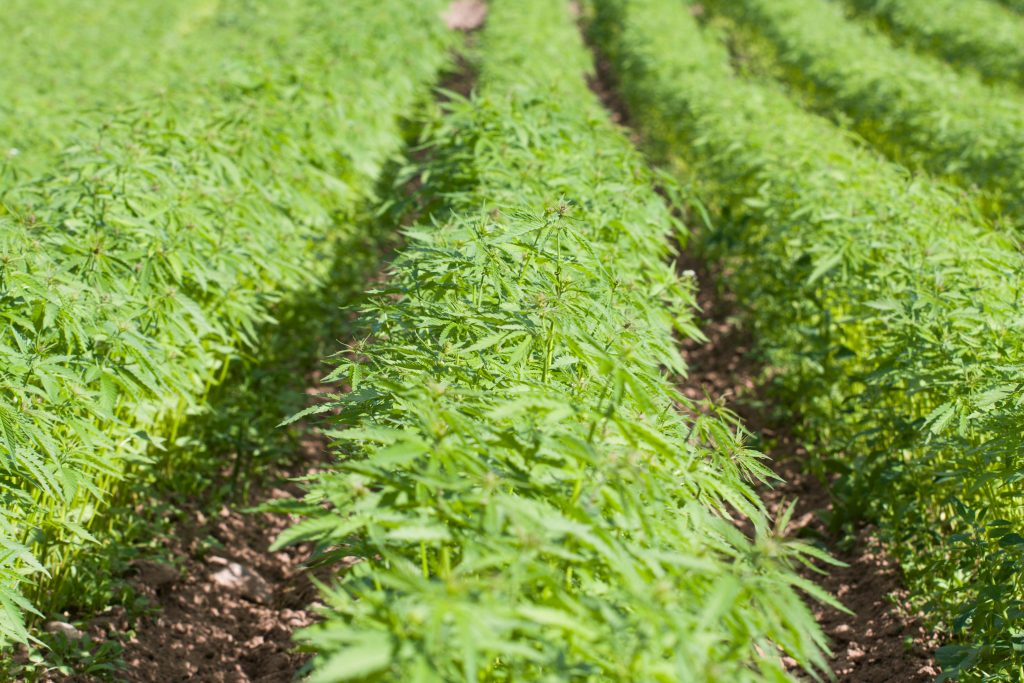
    Hemp production in Alabama had its challenges in 2020. From ant problems to plant diseases, hemp producers struggled to produce a crop.

    Kassie Conner, an Alabama Extension specialist II, discussed some of the obstacles farmers faced last year during an Alabama Extension Commercial Horticulture Facebook Live Q&A session on Friday.

    “I think probably the main disease we saw was southern blight, which is a soil-borne fungal disease. It really likes hemp, but it’s also real common in tomatoes,” Conner said. “I think a lot of growers switched over from growing tomatoes to growing hemp. The disease just switched over with them.”

    Insect pressure was also widespread throughout Alabama’s hemp crops. Some led to issues with additional diseases.

    “There was a lot of problems with fire ant damage. They stripped bark off the base of the plant to tunnel holes through the plants,” Conner said. “There was also a lot of corn earworms that feed on flower buds. After you get a lot of insect feeding damage on the buds, you get a secondary fusarium infection that comes in and causes bud rot. It was so rainy at the end of last season that we just saw bud rot everywhere.

    “It’s hard to be hemp in the south.”