MONTGOMERY, Ala. – The Alabama Cooperative Extension System is partnering with the Alabama Department of Agriculture and Industries (ADAI) to assist in collecting unsolicited seed packages being sent to Alabama residents from China. The packages often indicate that they contain jewelry rather than seeds. ADAI field inspectors are currently collecting these seed packages to test their contents for unknown compounds, noxious weed seed and invasive species.
Gary Lemme, Alabama Extension director, said each county Extension office will serve as a drop-off point for residents who may have received these mystery packages containing seeds.
“This partnership will allow inspectors at ADAI to process these seed samples more quickly,” Lemme said. “Alabama Extension is proud to take part in this process to continue serving Alabama residents.”
Commissioner of Agriculture and Industries Rick Pate said, “We appreciate Extension’s offer to assist our department by providing a designated drop off point in each county. We will continue to collect packages as along as we receive reports that they are being delivered to Alabama citizens.”
How to Drop Off Seeds
Those who have received unsolicited seed packages should not open the package containing the seeds or plant the seeds. Deliver these packages to the county Extension office nearest you. Find the address and contact information to county offices in the Alabama Extension directory at www.aces.edu/directory. When you deliver the package, professionals at that office will assist in filling out the ADAI Mysterious Seed Package Report. (www.agi.alabama.gov/reportseeds).
Posted by Greg Astill, Markets and Trade Economics Division, Economic Research Service and Suzanne Thornsbury, Senior Advisor for Agricultural Economics and Rural Communities, Office of the Chief Scientist in Research and Science
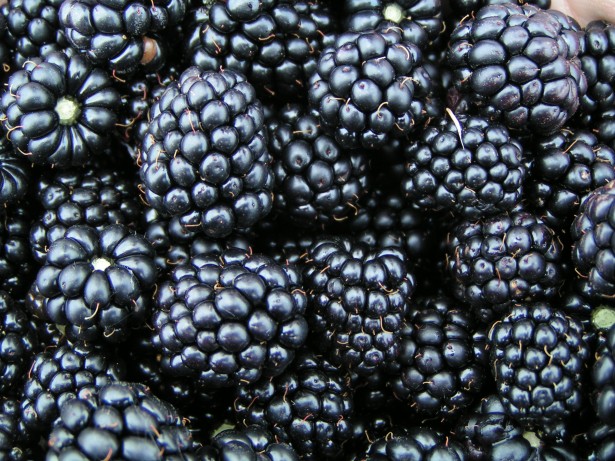
File photo shows blackberries.
Advances in technology, automation, and remote sensing is a cross-cutting, macro movement in science impacting agriculture outlined in the USDA Science Blueprint (PDF, 2.6 MB). The Science Blueprint guides USDA’s science priorities for the next 5 years, building from past success. Relative to other crops, many specialty crops are more dependent on agricultural labor for production, harvesting, and processing. This is part of a blog series that highlights research investments to advance automation and mechanization for specialty crops.
Each day we use technologies to solve problems and accomplish tasks that once would have taken much longer. Whether facial recognition software, a smart thermostat, or a robotic vacuum, technology has changed the way we live and work. Farmers are also using technology to make production of specialty crops, such as fruits, vegetables, and tree nuts, more efficient. These crops make up one third of U.S. crop production sales and one sixth of U.S. agricultural sales.
Between 2008 and 2018, USDA funded $287.7 million towards diverse research projects to develop and enhance the use of automation or mechanization in specialty crop production and processing. Most of these projects focused on precision agriculture, which includes a set of complex or “smart” technologies that tailor the needs of the plants to its specific environment or growing conditions, such as precise water, fertilizer, or pest or weed control. For example, a smart sprayer identifies individual trees in an orchard, their size, shape, and leaf density to adjust spray and reduce herbicide use. A smart irrigation system provides water only to the plants that need it, when they need it, continually adapting to crop conditions as the weather changes.
Some USDA projects focus on development of specific components that will eventually be combined into more complex technologies. Sensors generate high-quality data on crops, weather and soil. Remote sensing data, gathered by satellites, includes information like crop growth, soil moisture, or weather conditions while drones gather more localized data on weed, pest, or disease prevalence. Machine learning algorithms convert the data into useful forms of information to help manage the farm.
Other projects include development of job aids or automated machinery to help farm workers work more efficiently, such as an adjustable trellis system to make harvesting blackberries easier or mechanical thinners and pruners for vineyards and orchards. And some automation or mechanization technology helps with harvesting and processing, such as a flash freezing system or a mobile, in-field computerized apple sorter.
USDA funded $287.7 million toward a diversity of research projects to develop or enhance the use of automation or mechanization in specialty crops between 2008 and 2018
Source: USDA, Economic Research Service, based on data provided by USDA’s Agricultural Marketing Service, Agricultural Research Service, and National Institute of Food and Agriculture.
According to an Alabama Extension blog, new pesticides have been approved for use on hemp production in Alabama.
The Alabama Cooperative Extension Service worked with the Alabama Department of Agriculture and Industries (ADAI) to release an approved pesticide list for use on hemp in Alabama. Several more products have been recently approved for legal application to hemp. It is the sole responsibility of the grower to verify processor requirements for chemical applications on hemp.
A tiny insect continues to take a bite out of the southern pea crop in Alabama.
Ayanava Majumdar, an Auburn Extension Professor in Entomology and Plant Pathology, believes insecticide resistance is a huge issue in why farmers in Alabama and Georgia cannot get a handle on cowpea curculio.
“I think many people just don’t believe that resistance is an issue or at least in their backyard, but it’s a pest you cannot kill with any traditional conventional insecticide. You have to think out of the box when you’re trying to manage this cowpea curculio. It’s been like that for many years,” Majumdar said.
Where It’s Located
Majumdar said the insect has been spotted in Alabama counties below the I-85 corridor, moving in a west-southwest direction.
“I have plots in Headland and also in Brewton. We started in both of these places, and very soon within a few years we had a population you cannot control,” Majumdar said.
According to UGA CAES story in 2018, cowpea curculios are small, dark weevils that originated in Mexico. They feed and lay eggs in the pods of Southern peas, making the peas unmarketable.
“It is an insect that’s limiting our bean area production. I’m telling farmers not to increase any other production unless you know how to manage this pest for cowpeas or southern peas. That’s a big limiting factor across south-southeast,” said Majumdar, who said there’s two generations of this pest. “It’s the second generation that completely ruins the crop for us. It increases the pressure so much you can’t even manage it.”
Majumdar implores farmers to be timely with their early plantings and then with their harvests.
“Often times the later plantings will be the worst hit. Timing is very critical,” Majumdar said. “Crop rotation is critical, but crop rotation may be difficult for a small farmer.
“If you are using insecticides, there are a few choices but none of them will give you 100% control. The point is, the cultural practices; timing, crop rotation, these things are more important to manage it right now.”
File photo shows strawberries after harvest. Howler fungicide works well in strawberries.
Howler fungicide from AgBiome Innovations is a product that harnesses the power of the plant microbiome to create a fungicide with multiple modes of action. It provides preventive, long-lasting activity on a broad spectrum of soilborne and foliar diseases and does the job for a number of specialty crops. For Florida and South Georgia growers specifically, it’s great for strawberries, onions, cucurbits and leafy greens. AgBiome Technical Service Manager Bond McInnes outlines some of the key diseases Howler works well on.
From the greenhouse through harvest, Howler fungicide can be used effectively at every phase of production. Learn more at agbiome.com.
According to the UGA Extension Viticulture Blog, North Carolina State small fruits Extension specialist Mark Hoffmann provided a webinar on the 2020 grape harvest. Click here for a link to the webinar.
Southeast watermelon growers delivered a flavorful crop this year that yielded a sweet price at the market, said Mark Arney, executive director of the National Watermelon Promotion Board.
Photo taken by Clint Thompson/Shows watermelons for sale at the Farmers Market in Cordele, Georgia.
“We’re happy, we’re happy for the guys. Obviously, the guys that didn’t have a crop, it doesn’t matter how hot the market is, they’re not going to make money. We feel terrible for those guys,” Arney said. “The crop has been excellent quality, that’s helped.”
High Prices
Carr Hussey, a watermelon farmer in Florida and Alabama and chairman of the board of the Florida Watermelon Association, said in early July that prices were averaging 22 cents per pound. It was a huge increase from the 14 cents growers had grown accustomed to in previous seasons.
Watermelons were in high demand due in large part to the short supply. Georgia acreage decreased almost 4,000 acres this year. Imports from Mexico were down 10% overall for the season, according to Arney. Because of weather-related issues, Georgia’s crop did not start until 7 to 10 days later than normal.
Typically, Georgia and North Florida harvest watermelons at about the same time, which could lead to a surplus on Memorial Day weekend. That did not happen this year, however.
There were even fears of a shortage at various times during the growing season.
“You had a combination of the lateness of Georgia, of the Mexican crop being down around 10% overall for the season and the flavor being exceptional. All of those things brought a situation where you did have a shortage,” said Arney, who’s concerned about the current impact that Hurricane Isaias will have on watermelon production along the Atlantic Coast. “Who knows, there may even be more of a shortage (now) with the weather. Watermelons like rain, but too much rain means the guys can’t get into the fields if they’re using these school buses to harvest. They have to wait until things dry out. That could delay as well.”
Little Impact From COVID-19
While COVID-19 impacted the food service industry, as restaurants closed in response to the pandemic, watermelons were not one of commodities that felt the brunt of the impact.
“The first couple of weeks it was panic time. We saw some pretty big slumps. Then all of a sudden, things started taking off. It was like, wow, what’s going on. Well, No. 1, flavor has been really good. I had one grower describe it as a vintage year. He’s been in the watermelon business forever and said, ‘I can’t remember a crop with this good of a flavor.’ That certainly helped,” Arney said. “I think produce in general is up because so many people are sheltered and can’t go to restaurants even though there’s been a little bit of openings. But because so many people are not eating in restaurants; they’ve got to eat, so they’re going to either order online or go to the grocery store. Watermelon’s a great bargain. It’s healthy.
“Watermelon’s an excellent source of Vitamin C and it’s also probably one of the better bargains, if not the best bargain for fruits at costs per serving, which is around 17 cents.”
Jacob Barney, invasive plant expert at Virginia Tech University, giving one of several reasons why we should not plant seeds that show up at our door unsolicited from unknown sources.
UGA Extension photo/Stubby root-knot nematode on onion plants in 2017.
The time is now to soil sample for nematodes, says Pablo Navia, Adama Technical Development Leader for East Region.
“This is the best time since populations of nematodes are really high right now in the soil. There’s still some roots that they are feeding on. This is the best time to sample,” Navia said. “It’s a good way to know what enemy you’re dealing with next season.”
Navia said growers need to coordinate with the Extension agents in their county to take samples and arrange to take their samples to the appropriate lab.
“Each state’s Extension agent will know where to send the sample. Each university will have their lab and you can send the sample to their lab,” Navia said.
Navia recommends that producers take between 4 and 8 samples in a field, which will provide growers a good representation of the entire field.
There are different types of nematodes that impact vegetables, with root-knot nematodes being the most widespread and can cause the most damage. Nematodes are especially troubling because of the wide range of potential hosts. In addition to vegetables, nematodes cause problems in cotton, peanut and tobacco plants.
“It’s one of the most damaging pests out there,” Navia said. “It’s as important as a soil-borne disease or a foliar disease. There are many diseases that can affect a particular crop. But nematodes will make everything worse. If you have nematodes, then you have high chances of losing your crop.”
Soil sampling better prepares growers for the following season and will help them know if numbers are beyond threshold and if further action is warranted.
“If you have root-knot nematode and you find one nematode in your sample, that means you may be in trouble next season. Nematodes, like stubby root for example, the threshold is 200. Depending on the crop, like the citrus nematode, the threshold is 1,000,” Navia said. “It really depends on the species.”
Due to the cancellation of the 2020 Sunbelt Ag Expo show, plans for the selection of the 2020 Swisher Sweets/Sunbelt Ag Expo Southeastern Farmer of the Year Winner have been amended. Originally, this year’s judging tour was planned for August 10-14. Due to current health concerns, the tour has been postponed indefinitely. 2020 State Winners will be recognized, and an overall winner will be announced at the 2021 Sunbelt Ag Expo. A new class of state winners will not be selected in 2021.
“We have considered virtual options for the judging tour and the awards ceremony, but the Farmer of the Year program is not a virtual event. The program is about so much more – the interaction amongst our 10 state winners, and the 265 winners that have been awarded over the last 30 years cannot be replaced. To have a Farmer of the Year class not be able to experience the in-person judging tour, the trip to South Georgia and the Sunbelt Ag Expo is not an option in our book,” said Chip Blalock, Sunbelt Ag Expo Executive Director.
The Sunbelt Ag Expo looks forward to welcoming visitors and the 2020 Farmer of the year class in 2021 as it showcases the latest in farming technology, October 19-21. Visit www.sunbeltexpo.com for more information.