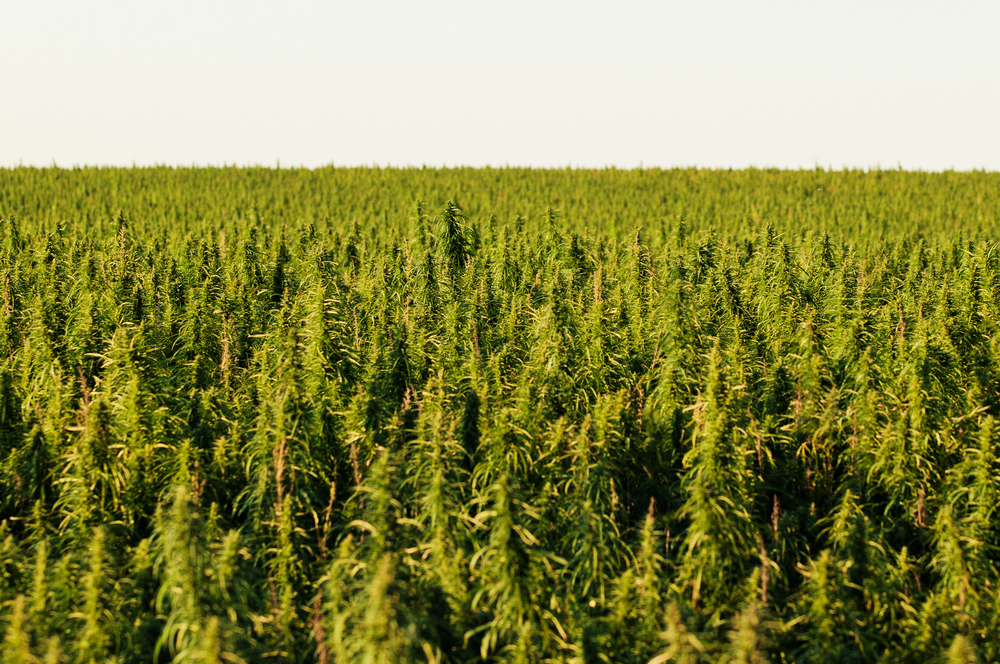
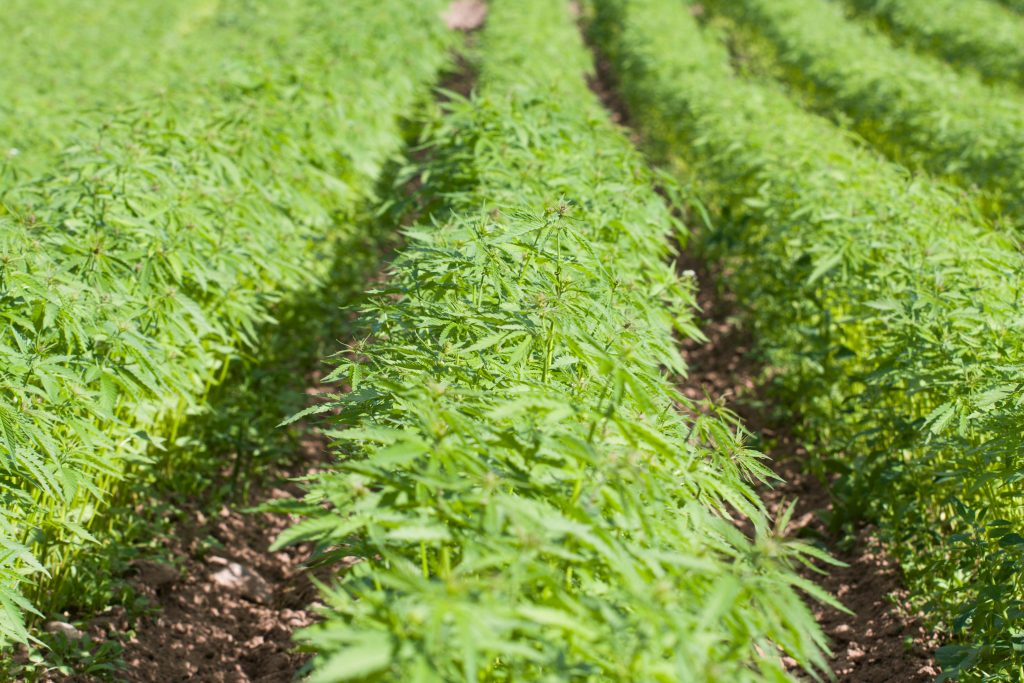
Fire ants continue to be a problem for Alabama hemp producers. It started early in the season and has not let up with more young plants being put in the ground at the end of July.
“We have a real staggered kind of planting date going on because hemp’s a new crop and everyone’s getting their land prepped and seeds approved. There were still fields going in as late as a couple of weeks ago at the end of July,” said Katelyn Kesheimer, Alabama Extension entomologist. “The plants are especially susceptible when they’re really young, short seedlings. With all of the rain we’ve had, there’s been a lot of mating flights of fire ants. You look the morning after a rain, there’s brand new mounds everywhere. That was our first major pest in hemp earlier in the season and it’s continued through.”
So how can farmers avoid a similar fate next season? Kesheimer implores farmers to act this fall.
“If you plan on growing hemp next year, I would highly recommend you take care of your fire ant problem by putting out a bait this fall and maybe again in the spring before you plant. (Otherwise) by the time your plants are in the ground and if you have fire ants nearby, they will find it and you will most likely lose substantial yield to them,” Kesheimer said.
Kesheimer recommends that growers apply bait in October when the weather has cooled and then in April or May.
“I think a lot of people got caught off guard with how bad the ants are. I’ve been getting calls from all different states across the Southeast that have fire ants issues,” Kesheimer said. “With fire ants, I just think they never really stopped. We’ve had some rains and these big mating swarms. They’ll just move around and around so there’s more plants that they’re destroying.”
The hint of fall in the air and the calendar turning to September means pumpkins are growing across Alabama. But producers need to be wary of certain diseases that can be detrimental to the pumpkin growing season, says Joe Kemble, Alabama Extension vegetable specialist.
“We do have a lot of pumpkins coming in. I was walking around a large patch (the other day). I would say, if you’re a pumpkin grower, with these frequent rain showers we’re getting, make sure you scout for downy mildew as well as anthracnose,” Kemble said. “Downy mildew can be devastating on pumpkins. It requires conventional fungicides, and the fungicides have to be out there to protect the crop before the disease develops. There really aren’t any fungicides that are curative.”
Cucurbit crops — like cucumbers, melons, squashes and pumpkins — are susceptible to downy mildew. The disease can destroy plant foliage and cause the leaves to curl and die. Without healthy leaves and vines, a plant is vulnerable to blisters and sunscald during hot days.
Growers need to be aware of what downy mildew symptoms look like and the damage it can inflict on vegetable crops. The pathogen thrives in wet, humid conditions and needs moisture on the surface of the plant for successful spore germination and further infection.
“Downy mildew, I believe has been found in every county in Alabama. It’s devastating on cucurbits in general,” Kemble said. “It is a specific species on pumpkins. Just because you have it on your pumpkins doesn’t necessarily mean you’re going to have it on your cucumbers next to it. However, that’s a pretty good indicator that conditions are right for development of those diseases.”
The deadline is this week for farmers and ranchers to apply for the Coronavirus Food Assistance Program (CFAP). Producers who faced price declines and additional marketing costs due to the coronavirus pandemic and are interested in applying to receive direct payment relief need to do so by Friday, Sept. 11.
According to VSCNews, more than 160 commodities are eligible for CFAP. These include certain non-specialty crops, livestock, dairy, wool, specialty crops, eggs, aquaculture and nursery crops and cut flowers.
According to https://www.farmers.gov/cfap, CFAP provides vital financial assistance to producers of agricultural commodities who have suffered a 5%-or-greater price decline or who had losses due to market supply chain disruptions due to COVID-19 and face additional significant market costs. Many of the fruits and vegetables, including tomatoes, watermelons and strawberries are covered under CFAP and were in production, especially in Florida, when the coronavirus struck in mid-March.
Just a couple of weeks ago, Secretary of Agriculture Sonny Perdue announced additional commodities would be covered under CFAP and the deadline to apply was extended to Sept. 11. It was also announced that producers with approved applications will receive their final payment.
Customers seeking one-on-one support with the CFAP application process can call 877-508-8364 to speak directly with a USDA employee ready to offer general assistance. This is a recommended first step before a producer engages the team at the Farmer Service Agency (FSA) county office at their local USDA Service Center.
The number of Alabama hemp producers has tripled this year. However, that does not necessarily mean acreage has increased as well, says Katelyn Kesheimer, Auburn University Assistant Professor and Extension Specialist.
“Last year we had, just for comparison, about 150 licensed growers approved for 10,000 total acres. According to the (Alabama) Department of Ag, they think about 7,000 of those acres got planted. This year we have closer to 500. I think it’s 450 approved growers,” Kesheimer said. “I don’t have an estimate on approved acres. I’m sure I’ll get those numbers from the Department of Ag soon but a lot of people, from last year, they downsized.
“Also, I think with the uncertainty with getting your seeds and you’re planting right when COVID started; some people were approved and got the license but decided not to move forward with any plantings. Even though we had triple the number of growers, I’d be surprised if there was the same increase in acreage.”
Starting to Flower
Some of the hemp acreage in Alabama has plants that are starting to flower, which means harvest time will not be too far behind.
“There’s quite a bit out there flowering. We did have some auto-flower varieties go in so those are much quicker to flower than the standard day-length dependent. But yeah, we certainly have some crops where the plants are 6 or 7 feet tall; they’re in full flower,” Kesheimer said. “I imagine we’ll start to see some harvests not too long from now depending on how early people got their plants in. There are certainly some good-looking flowering hemp out there.
“I know some growers that are quite far along, they planted in May and are getting ready to harvest probably at the end of September/October.”
According to a recent interview with VSCNews, Kesheimer indicated that corn earworms remain a problem for all hemp producers. The caterpillars can feed on the buds and cause significant yield loss if not managed correctly. Since hemp is flowering across the state, that makes the crop more susceptible to infestations.
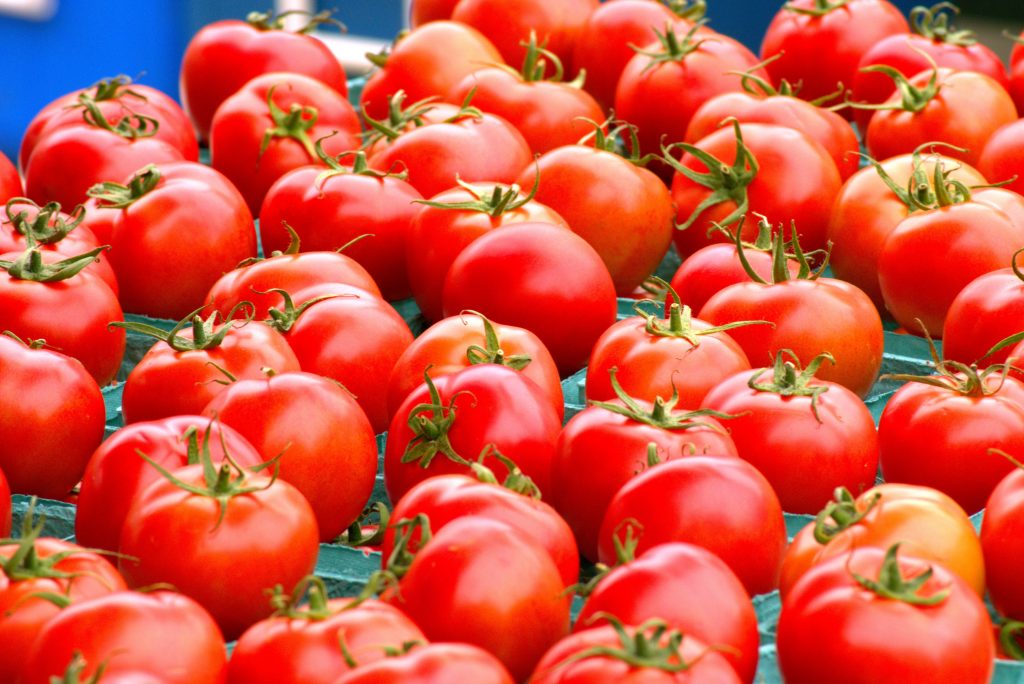
Tomato planting is currently underway across the Southeast. It is never too early to start thinking about insect pests that could hinder fall production in Alabama.
According to the Tomato Insect Pests 101 video, Ayanava Majumdar, Auburn Extension Professor in Entomology and Plant Pathology, cautions growers to scout their tomato fields every week for pests and look for insects over and under the leaves and also at the plant base.
Tomato plants have five growth stages during the production season: seedling, vegetative, flowering, fruit formation and mature fruiting.
“Seedling and fruiting stages are most vulnerable to insect attack,” Majumdar said. “They must be protected.”
What to Watch for?
Early season insect pests include flea beetles, thrips and aphids. Flea beetles’ ability to chew small round holes across the leaves can lead to death for small tomato plants. Thrips have piercing-sucking mouthparts and can transmit viruses when feeding. Aphids suck plant sap and produce honeydew resulting in sooty-mold fungus.
Specific insects, such as the brown stink bug and leaffooted bug, can cause quality losses. Stink bugs have piercing-sucking mouth parts. Its feeding causes extensive fruit discoloration. These are often unmarketable and can rot fast in storage. Leaffooted bugs have leaf-like expansion on their hind legs. They aggregate in large numbers on fruits.
Caterpillars can cause holes on tomatoes. Beet armyworms, fall armyworms, yellowstriped armyworms, southern armyworms, fruitworms, hornworms and loopers are pests to watch out for. Fruitworms make round holes with the head tucked inside the fruit. Hornworms feed on the leaves, stems or entire fruit. Loopers are often late-season pests in Alabama.
Majumdar implores farmers to apply pest management tactics. This includes: plant and harvest your crop in a timely fashion; use pest exclusion fabric or netting early to stop moths and stink bugs; and use conventional or organic insecticides if needed.
Alabama hemp producers are tackling one pest after another this growing season. They started with fire ants not long after the crop was planted. Now, according to Katelyn Kesheimer, Auburn University Assistant Professor and Extension Specialist, the key insect is corn earworm.
Photo shows corn earworm adult.
“They’re really hard to control because they start small. Then they’ll be eating and eating and eating and you don’t see them until you see the damaged buds, or you really do some destructive sampling to get at those tiny first n-stars. Instead of having one big egg lay, it’s kind of like a sustained egg lay that we’ve seen in the last couple of weeks,” Kesheimer said.
The caterpillars feed on the buds and can cause significant yield loss, because they eat so much as they grow. As they chew, they also open that plant and some pathogens can get it and farmers could end up with bud rot.
Hemp is flowering throughout the state, which makes it most susceptible to infestations. It is the perfect time of year for corn earworms to be a problem as well. They move from crop to crop.
“Corn is being harvested, cotton is drying down and it’s the same flights that started a few months ago. They start in corn and they move to cotton and now they’re going to hemp,” Kesheimer said. “It’s a nice, lush green crop for them to lay eggs in. I think it’s just the timing and we have just a lot of insects in the system. It was kind of slow for a little bit but the last couple of weeks have really picked up.”
Kesheimer noted that producers have a plethora of products to utilize but spray coverage remains the key factor in managing the worms.
“Here in Alabama we have probably almost 100 products labeled for hemp. But the most important thing for the worms is getting really good coverage. You have to get really high volumes to get into those dense canopies where the buds are where the worms are hiding,” Kesheimer said.
Avoid planting potatoes in the fall in Alabama, says Alabama Extension vegetable specialist Joe Kemble.
Alabama farmers and gardeners have planted or are currently planting their fall vegetable crops. One crop that Joe Kemble, Alabama Extension vegetable specialist, says producers need to avoid are fall potatoes. They simply don’t do well in any part of the state, due to the high soil temperatures.
“Fall potatoes in Alabama do not do well at all. The reason is potatoes are really sensitive to temperatures again,” Kemble said. “They get a condition called heat necrosis where the vascular tissue in the tubers will get an off color. They’ll actually almost look like they’ve been cooked inside. Usually the stands are pretty bad. You will get some production. But they are cool season plants, they do not like hot weather.
“We only grow varieties that mature by early seasons. They all tend to be early season varieties like Atlantic or Potomac or any of the red potatoes or Yukon Golds. They all tend to be early maturing varieties. Varieties like the Fingerling varieties, those tend to be mid-season to late-season varieties; those tend to be a little bit hit and miss because they may take too long to mature and then you end up with all kinds of weird problems on the tubers because the soil temperatures got too warm. Fall potatoes don’t work well in Alabama.”
Kemble said producers grow a lot of Irish potatoes in Alabama. But normally in the southern part of the state, the growers will sew them around Christmas time. Farmers in northern Alabama will plant them a little bit later. A little light frost does not hurt.
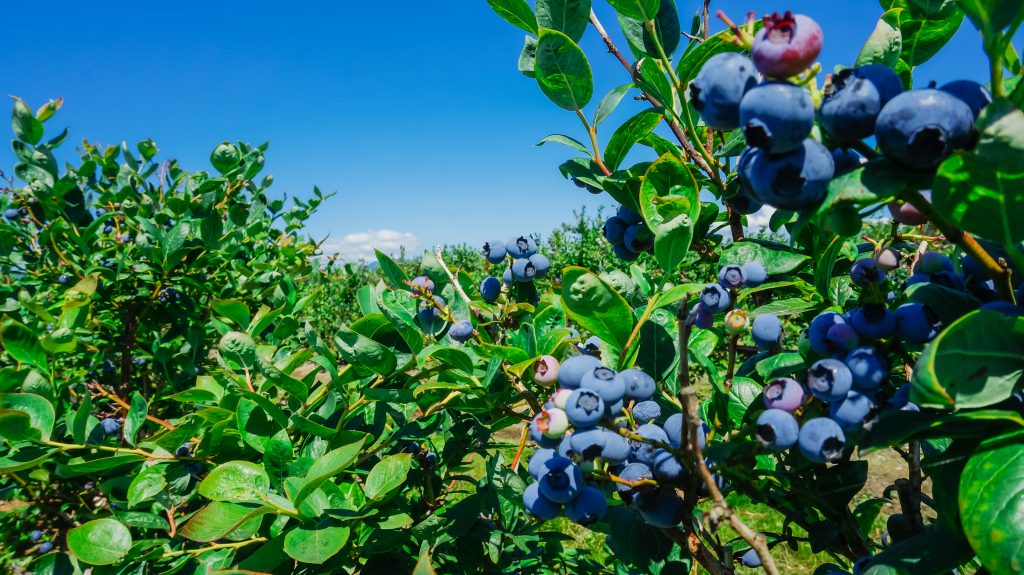
AUBURN UNIVERSITY, Ala. – As blueberries and other summer fruits begin to grow out of season, gardeners may be looking for ways to extend the growing season. While there are many factors that affect the output of fruit crops, there are several things people can do to put their plants in the best situation possible for a long, bountiful growing season.
Proper Growing Conditions
Chip East, an Alabama Extension commercial horticulture regional agent, said a key component that can potentially extend the growing season is making sure the plant is subjected to the proper growing conditions.
“For the success of the plant, ensure that proper planting, weed management, disease management, insect management as well as adequate irrigation is in place,” East said.
The first step to extending the growing season happens before the season even starts. Planting blueberries and other fruits in the proper environments is crucial to overall success. While it is too late to perform this now, East said people can always plan ahead for next year’s fruit crops.
“The best way to help extend the season is by first choosing a planting location that is in full sun and where the soil is well drained,” he said.
During the growing season, management practices, such as proper irrigation and insect and disease management, comes into play. For proper irrigation, most crops require 1 to 1.5 inches of rain per week during the growing season. Drip irrigation is recommended for summer blueberries and many other crops. This method is affordable and can make a huge difference in production for the plant.
When it comes to managing insects, one of the first steps is scouting the crop. Knowing and identifying which insects are common on the particular fruiting plant helps to know how to manage the insects.
“It is much easier to manage insects earlier before they do damage to the plant or fruit,” East said. “This same concept applies to diseases and weeds as well.”
Knowing when to harvest a particular fruit is also an important factor in extending the growing season. Picking a fruit too early can not only affect the taste, but will affect the timeline of the growing season. The longer the fruit hangs on the plant, the sweeter the taste. However, the shelf life of the fruit will be shortened.
Different blueberries ripen at different times, depending on the species. This is the case for peaches, apples, blackberries and other fruits as well. In order to measure the ripeness of the fruit and know when they’re ready to harvest, some farmers invest in a refractometer. This instrument measures the sugar content of the fruit. East said another way to determine if the fruit is ready to harvest is by looking at the color of the fruit as well as eating the fruit to see how it tastes.
Mix it Up
East said by planning ahead, people can make it where as one fruit is going out of season, they have another one coming in season.
“I like the idea of extending the picking season by adding different crops,” East said. “If one fruiting season is about to end, I can look forward to another fruit about to begin.”
As the blueberry season comes to an end, people can begin to transition to harvesting muscadines. Some of the other common fall fruit crops include apples, pears, figs and persimmons. Kiwi and citrus fruits are less common but can also be grown during the fall season.
Insect pressure is high right now throughout Alabama. Ayanava Majumdar, an Auburn Extension Professor in Entomology and Plant Pathology, wants producers to be aware of the difference between squash vine borer larvae and pickleworm larvae. Complaints have increased significantly for both insects.
Squash vine borer larvae are found inside hollow stems at the soil surface. Eventually, they pupate in the ground. Squash vine borer larvae are creamish in color and plump. They spend their entire time in the stem tunnels filling them up with a profuse amount of excreta. Vines that are infested with the squash vine borers will suddenly droop in dry weather conditions, which leads to yield loss.
Pickleworm larvae are found in flowers, fruits and upper stems. Larvae have spots when they are small, and the large ones eventually pupate in leaf fold.
Other IPM observations:
Insects on the rapid rise: Fall Armyworm, Corn earworm, and Soybean Looper, Squash Vine Borer (cucurbit vegetables). Moth numbers have increase 1.5 to 2 times for these species.
This is one of the lightest years for tobacco budworm on row crops in recent years, whereas we have experienced very high levels of corn earworm moth activity and larval numbers in vegetable crops in Alabama.
Auburn University Assistant Professor and Extension economist Adam Rabinowitz wants Alabama non-specialty crop and specialty crop producers to be aware of the deadline being extended for the Coronavirus Food Assistance Program (CFAP) and what crops in the state are most impacted.
In the Alabama Extension blog, Rabinowitz reminded producers that CFAP provides financial assistance to growers of selected agricultural products. Initial payments of 80% of eligibility were made to producers who filed claims by the initial sign-up deadline. The USDA has since announced an extension of the deadline to Sept. 11.
The USDA also announced that payments for the additional 20% of eligibility will be processed automatically for those who have already enrolled. Farmers producing eligible crops should visit their FSA office to enroll in this program. More information is available on the USDA website.
Adam Rabinowitz
Alabama Impact
CFAP assistance is available to specialty crop producers, including selected fruits, vegetables, nursery crops, and cut flowers. Those crops that are most relevant to Alabama producers that are harvested before April 15 include but are not limited to:
Broccoli
Cabbage
Greens, collard, kale, mustard, and turnip
Lettuce
Peas
Potatoes, fresh and other
Squash, including zucchini
Strawberries
As of Aug. 17, 33 specialty crop applications in Alabama were approved by the USDA Farm Service Agency, resulting in payments of just over $800,000 to Alabama producers.