Zeta, a tropical system and an expected hurricane once it reaches the U.S. by Wednesday, is churning in the Gulf of Mexico and is expected to move across the Southeast later this week. According to the UGA Extension Viticulture Blog, Pam Knox, University of Georgia Cooperative Extension Agricultural Climatologist, said there will be some rain and gusty winds from that system as it moves through the area after making landfall in Louisiana.
Knox
At the same time, a low-pressure center is expected to move through the Southeast region. This would bring more rain to the Ohio and Tennessee River valleys. It could include up to several inches of rain in the more mountainous regions of the region.
“Cooler temperatures are expected this week due to the cold fronts that are now starting to move through the region. However, the coldest air, which is bringing snow and single-digit temperatures to the northern Plains, is not expected to get to the Southeast. I don’t see any signs of frost in the next couple of weeks,” Knox said.
This would be welcomed news for vegetable growers, like Sam Watson in Moultrie, Georgia, who are still harvesting their fall crops.
Agricultural acres have dropped dramatically over the last 100 years throughout the Southeast. According to stacker.com, Georgia and Alabama were two of the top four states to see their farm land decrease the most.
In Georgia, ranked No. 3, the number of farms was 310,732 in 1920 with 25.4 million total acres. The number of farms dropped to 41,500 in 2019 with 10.2 million total farming acres.
In Florida, acres actually increased over the past 100 years. It had 54,005 farms in 1920 with 6 million total acres. In 2019, the number of farms dropped to 47,400 with 9.7 million total acres.
Extension Economist Not Surprised
Adam Rabinowitz, Auburn University Assistant Professor and Extension economist, is not surprised about the significant drop in agricultural acres but believes yields have improved with increased productivity and efficiency.
“A combination of things have happened. Certainly, land has been taken out of agriculture and moved into housing developments or built up in terms of other commercial uses,” Rabinowitz said. “The fact that we’ve become more productive in the land that we do use, though, yields have increased considerably over that period of time. So while we may be farming less acres, the output has increased substantially on those areas that we are farming.
“It would not surprise me to say that considerable amount of acres have been lost.”
Buy American Grown
Additional acres could be lost soon if consumers don’t respond to the American Grown initiative.
Farmers like Bill Brim in Georgia contend that if consumers don’t realize the importance of buying Georgia Grown and American Grown, the constant imports from Mexico, for example, are going to put a lot of farmers out of business. That’s why trade hearings were held so farmers and industry leaders could voice their concerns about the urgent need for federal action regarding unfair trade.
Rising Average Farmer Age
The lack of farming land available throughout the Southeast may only be amplified when more farmers retire and no successor in line to take their place. According to USDA NASS, the average age of a farmer in 2017 was 57.5 years old, up 1.2 years from 2012.
“Farm age continues to increase, the average age of the farmer. Succession planning is an issue in terms of transitioning to younger generations who now have more options than just staying on the farm. As a result, you do have a lot of folks who are leaving the farm for college, for other careers, going other places,” Rabinowitz said. “You have that shift there and there is a big concern of what’s going to happen when this older generation right now gets ready to move on. Is that going to further contract the number of acres that are in agriculture?”
Challenging for Beginning Farmers
According to USDA NASS, producers also tend to be experienced, having been on their farm an average of 21.3 years. Beginning farmers is extremely rare, considering how expensive it is to acquire land to farm on and equipment to use throughout the growing season
“There are a lot of barriers to new farmers coming into agriculture. Acquiring land, whether it be ownership of land, buying the land or even renting the land can be very challenging for a new or beginning farmer. Even beyond land, when we talk about machinery, especially in southern Alabama and southern Georgia with cotton and peanuts as being one of the primary crops in this area, the machinery equipment needs are unique to those crops,” Rabinowitz said. “You need some stuff for your corn that you’re going to put into rotation with your other crops and you need for your cotton and peanuts, you have special pickers and planters and such. It provides again a significant barrier to new entry.
“That said there are programs that do exist to help beginning farmers and new farmers. There are loans through FSA. There are farm credit programs that exist to help provide special terms and assistance. Certainly through the land grant institutions and Extension, there a number of beginning farmer programs in every state to help provide those resources and assistance from a technical standpoint of getting started in agriculture.”
AUBURN UNIVERSITY, Ala.— Alabama hemp grower applications and processor/handler applications are available for the 2021 growing season through Nov. 30. Applications can be found on the Alabama Department of Agriculture and Industries (ADAI) website.
Applications
Full applications, including supporting documents, must be complete before the Nov. 30 deadline to receive approval consideration. Seasoned and new growers alike must complete annual applications.
Katelyn Kesheimer, an Alabama Cooperative Extension System entomologist and member of the hemp action team, anticipates the number of growers in Alabama will hold steady.
“In 2018-2019 there was a huge increase in the number of growers, both in Alabama and the U.S.,” Kesheimer said. “In 2019-2020 there was still an increase, but it wasn’t as drastic.”
She anticipates approximately 500 applications, which is similar to the application numbers for the 2020 season.
Kesheimer said Extension professionals are offering three in-person sessions for those who need assistance with application completion.
“The sessions will be hybrid sessions with a limited number of people allowed to attend in person,” she said. “Others will be able to join on Zoom. Registration is free, but attendees must complete registration so attendees can choose to attend in-person or on Zoom.”
A representative from ADAI will also be present to answer questions regarding grower applications.
Thursday, Nov. 5 North Alabama Hemp Roundtable – Register. 9 – 11 a.m. Camp Meadowbrook 2344 County Road 747 Cullman, Alabama 35058 Max attendees:30
Friday, Nov. 13 Central Alabama Hemp Roundtable – Register. 9 – 11 a.m. Richard Beard Building 1445 Federal Drive Montgomery, Alabama 36107 Max attendees: 30
Friday Nov. 20 South Alabama Hemp Roundtable – Register. 9 – 11 a.m. Wiregrass Research and Extension Center 167 AL-134 Headland, Alabama 36345 Max attendees: 33
Background Check
Applicants and any key participants of a partnership seeking a hemp license are still required to submit a current background check within 60 days of application. Checks are completed through the Alabama Law Enforcement Agency (334-353-4340). The background check application can be found online. Growers must submit these reports no later than 14 days after the Nov. 30 deadline.
Requirement Changes
Kesheimer said there are several changes for the 2021 growing season, including requiring a farm number for the farm growing hemp. Growers can obtain a farm number from the local FSA office. Other changes slated for implementation in 2021 can be found on the ADAI website.
Hemp Grower Applications
Prior to completing the application, growers should read all rules and regulations regarding hemp production and handling. ADAI does not offer assistance with completing hemp grower applications and cannot offer guidance to individuals on production aspects of hemp.
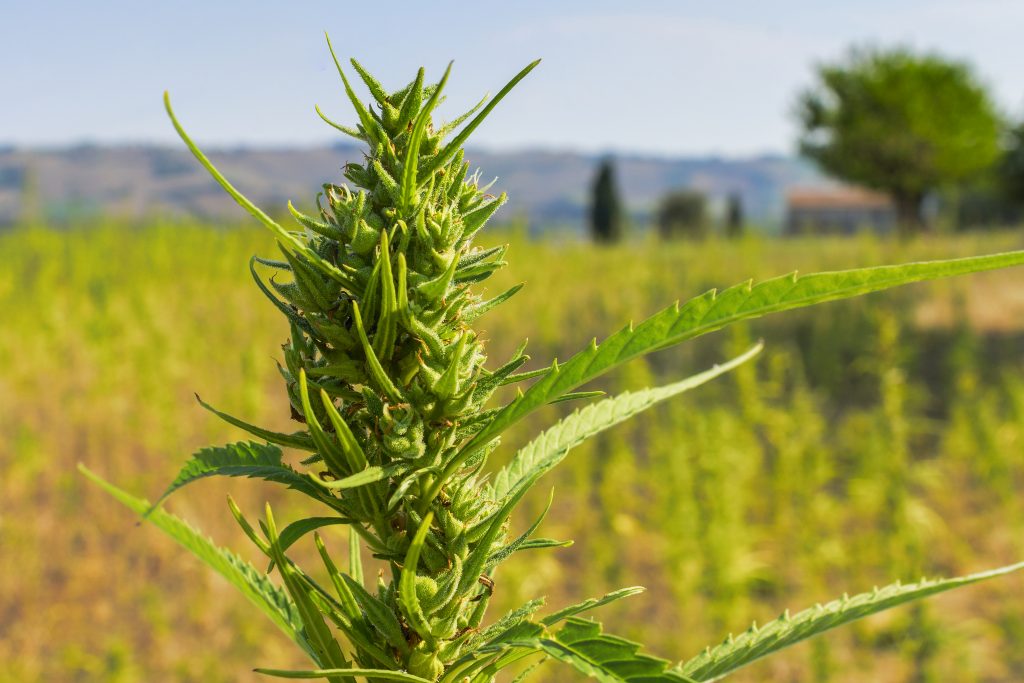
A misconception between hemp and marijuana has Adam Rabinowitz concerned about how consumers view an up-and-coming agricultural commodity in the Southeast.
Rabinowitz
Rabinowitz worked as an Extension economist at the University of Georgia before he moved to Alabama this summer to become an Auburn University Assistant Professor and Extension economist. At UGA, Rabinowitz helped conduct a survey to gauge consumer knowledge of hemp. The results were staggering.
“I feel like there really hasn’t been any education to really make that distinction. Hemp has gotten that stigma of being the same as marijuana because we haven’t had the production. We haven’t had the products that really have taken hold in our society. It’s resulted in a lack of knowledge of what the crop really is,” Rabinowitz said.
Hemp Production Across the Southeast
However, farmers in Alabama, Florida and Georgia farmers understand the significance of the hemp crop.
The USDA approved Florida’s state hemp program in April, which paved the way for growers to cultivate hemp this year. According to the University of Florida/IFAS, the UF/IFAS Industrial Hemp Pilot Project is under way across the state at three production locations in Quincy, Hague and Homestead to examine variety selection, cropping system development, production economics and invasion risk assessment.
What distinguishes hemp from marijuana is the amount of THC or tetrahydrocannabinol present in the plant. It is the main compound in cannabis that produces the “high” sensation. Legal hemp must contain no more than 0.3 percent of THC. Otherwise, the THC is at an unacceptable level. When hemp contains more than 0.3 percent THC, the crop must be destroyed. THC levels must be tested within 15 days of anticipated harvest.
According to healthline.com, marijuana refers to cannabis that has more than 0.3 percent THC by dry weight.
Rabinowitz believes initially, the hemp awareness and education he’s trying to spread will not necessarily lead to more acreage in the future. In fact, he doesn’t expect hemp acres to increase in 2021.
“The hope is that it leads to better informed consumers about what is actually happening. I think what’s going to really drive the acres discussion is the market for the product. If we talk about like fiber products and some of the other uses, the price of hemp to be produced for those products is very, very low,” Rabinowitz said. “It was really the CBD market that got the attention of some farmers but a lot of folks that are not even in agriculture to think about, ‘Hey, is it possible I could make tens of thousands of dollars per acre on this crop?
“I think now we’re starting to get more towards the core of these are the farmers that are going to be engaged in the actual production. But we still need to see what the consumer side looks like.”
Rabinowitz also said he is part of a recently funded USDA grant that will look at the marketing aspect for hemp-based products which will continue to focus on the consumer side.
AUBURN UNIVERSITY, Ala. – According to Alabama Extension, as leaves begin to darken and pumpkins decorate every doorstep, pecans are ripe and ready for harvest as fall settles in in the Southeast.
These nutritious nuts are members of the hickory family and grow on towering shade trees commonly found in yards, orchards and pastures throughout Alabama. Though pecan harvest typically occurs from October to December, enjoying the bounty year-round is possible with proper harvesting and storing methods.
Harvesting Pecans
“Pecans are mature and ready to harvest any time after the shuck begins to open,” said Angela Treadaway, an Alabama Extension regional food safety and quality agent.
When these shucks are open, shaking or thrashing branches becomes an easy way to harvest nuts directly from the tree. Doug Chapman, an Alabama Extension regional commercial horticulture agent, offers another option for removal of pecans from tree limbs.
“While commercial growers use tree shakers, homeowners mostly can and do rely on natural drop from the tree,” Chapman said.
Beware of leaving nuts on the tree too long, however, as predators often want to harvest them for themselves.
If harvesting occurs early in the season, nuts will have a high moisture content, which would require drying before storage.
“Dry them in the shell in thin layers on elevated screens, or hang them in small mesh bags in a well-ventilated area at room temperature out of direct sunlight,” Treadaway said.
After approximately two weeks of drying, shell one or two and if the nuts are dry enough, they should snap when bent. This indicates that they are ready for immediate use or for storage.
Storage
Because of their high oil content, pecans are perishable nuts. Proper storage is the best way to ensure good quality year-round.
“At home, unshelled pecans can be stored in a cool, dry place,” Treadaway said. “Shelled pecans should either be refrigerated or frozen.”
Storing pecans away from air and light is crucial. Vacuum sealed bags or jars allow for the best storage. After properly storing nuts frozen, thawing and refreezing can occur repeatedly for a period of two years without loss of texture or flavor.
Test stored nuts before using them in recipes. Rancid pecans have a bitter and oily taste. A dark color may also be a characterizing factor of rancid pecans. Make sure to discard any rancid nuts, as rancidity is not reversible.
Hemp harvest is under way in Alabama, but quality may not be what farmers had hoped for in their second year of production.
It’s understandable, though, considering the challenges that producers dealt with during the growing season, says Katelyn Kesheimer, Auburn University Assistant Professor and Extension Specialist.
“It’s not fantastic. I wouldn’t say there’s a lot of good quality hemp out there, just between disease, insects and rain and late plantings. I fear that we’re not going to have the quality that a lot had hoped for,” Kesheimer said. “I’ve gotten calls from buyers that are looking for smokable flower grade hemp and they can’t find enough. Folks from Georgia are looking in Alabama and I was like ‘eh’; a lot of it is going to be harvested and extracted but the flower, and quality just isn’t there that I think a lot of the buyers are looking for.”
Kesheimer said the price of CBD oil has dropped significantly, which doesn’t make it economically feasible to extract the oil and then sell. This has forced buyers to consider other options.
Tough Growing Season
Hot and dry conditions highlighted last year’s production season. But it’s been much different this year with the wet environment the hemp has grown in. It’s led to countless battles with plant diseases. Ant swarms were also problematic throughout the season.
“The price of CBD oil has gone down so much and it’s going to cost you to extract that oil and it’s not always economically feasible to pay someone to get the oil out of that plant and then sell it. You can’t afford it. You’re not going to make a profit,” Kesheimer said. “The other option is large quantities of high grade smokable flower, but it can’t be full of bud rot or have caterpillar damage or any other disease. I think some of the large groves didn’t end up with the great quality that some buyers are looking for, and then there are some people that will process it but they won’t buy your end product. We’ve been talking about this for a year but the supply chain, it’s not there yet.”
With hemp harvest beginning across the Southeast, predictions are already being made about what next year’s crop might look like. One Extension economist believes there will not be an acreage increase in 2021.
Auburn University Assistant Professor and Extension economist Adam Rabinowitz does not expect acres in the Southeast to increase until the market shows significant recovery.
Rabinowitz
“I don’t think we’ll see more acres in the Southeast. We’re not seeing the price rebound back up to the point to where there was this huge interest of getting into that production,” Rabinowitz said. “I think we’re going to have to see a little bit more of the market really play out in terms of what the real consumer demand is and get a better understanding of that, and then potentially, try to find some efficiencies in the production practice before we’ll see an acreage increase.”
Alabama Hemp Applications
Hemp applications for the 2021 season are already being accepted in Alabama. They are available at agi.alabama.gov/hempapp. The final day to apply for a hemp license is Nov. 30, 2020 by 5:00 pm (CST).
It will be the third year that the Alabama Department of Agriculture and Industries has administered the program.
Georgia Hemp
According to Tim Coolong, University of Georgia Cooperative Extension specialist, he estimates that between 300 and 400 acres were planted this year with 108 licenses issued by the Georgia Department of Agriculture. Some of those, though, may be processors and others may be farmers who decided not to plant.
Florida Hemp
According to Holly Bell, director of cannabis for the Florida Department of Agriculture and Consumer Services (FDACS), “Florida is becoming the leader in the country – if not the world – on how we’re getting our hemp rolled out and the standards we’re setting.” On April 27, FDACS began issuing hemp cultivation permits for the 2020 growing season. As of mid-August, 550 permits were issued and another 400 were being processed. The 550 permits encompass 18,000 acres of indoor- and outdoor-grown hemp.
According to Pam Knox, University of Georgia agricultural climatologist, in her UGA Extension blog, the forecasts are starting to show a strong cold front passing through the Southeast at the end of October.
This will usher in a period of much colder air which could include frost across northern Alabama and Georgia as well as western parts of the Carolinas and Virginia.
Some of the mountainous areas have already experienced frost conditions, but this looks like it could be a much more widespread event. The latest models put the front through the region on Wednesday, Oct. 28, with lingering cold conditions in the mornings for the next few days after the front passes.
It is important to be mindful that this is still 10 days out. Changes in the timing and strength of the cold air are likely, but it is something to watch out for, especially if you have plants that are sensitive to freezing conditions.
University of Georgia photo compares Pawnee varieties to Desirables and Stuarts.
Pecan producers will soon be planting trees throughout the Southeast. But first, growers must decide what variety they’re going to plant.
Scab susceptibility is the No. 1 factor that should influence what variety producers plant this year, according to Shane Curry, University of Georgia Appling County Extension Agriculture and Natural Resources agent.
If growers are going to plant a variety like Cape Fear, it is going to require a high input of spray applications to protect against scab disease. If producers want low input varieties, they can choose Avalon, Excel or Lakota. Those varieties don’t require as much spray applications.
Producer’s Preference
It’s just a matter of how much time a grower wants to devote to taking care of their trees and whether they possess the spray equipment to make the necessary applications.
“They definitely have a lot they have to consider. Or I guess really, one thing in particular, and that’s are they going to be able to spray as far as what we would say a high input of sprays from a fungicide standpoint or are they not going to be able to do that?” Curry said.
“Obviously, if somebody is planting 50 trees, they’re probably not going to go buy a $20,000 or $30,000 sprayer, and some of those even cost more than that. Money’s just not going to work out on the end in small acres. A lower input variety would be more of the way to go. If someone is set up to spray, meaning they already have them or they’re going to put in enough to justify the equipment, they’ve got a few more options.”
Early Varieties
Lakota and Pawnee are the two varieties that produce a crop the earliest, which might generate a higher market price. However, Pawnee is very susceptible to scab disease, so it will require a high input spray program.
“If pecan prices are high and quality is great, we can offset those costs. Every year (though) that’s not the case,” Curry said.
Curry said planting is normally done during December and January when the trees are dormant.
Alabama farmers interested in producing blueberries or any other containerized plant are encouraged to plant now, says Gary Gray. The Alabama Regional Extension Agent emphasizes the importance of keeping them watered, however.
Gray
“I do prefer now. If you’ve got containerized plants, plant them now and they’ll have a head start on spring. They’ll be ahead of the game, as opposed to, lets say you’re planting them in February or March,” said Gray, who also emphasizes the importance of plants being watered consistently, especially if there are prolonged dry conditions.
“In October, if we’re dry and we are right now, you’re going to need to keep them watered because we’re still hot and dry. Hopefully, it won’t be long and that’ll be a different situation.”
Current Weather Situation
According to the US Drought Monitor, parts of Alabama are classified as “D0” or abnormally dry, including Choctaw County, Sumter County and Pickens County in the western part of the state; and Tuscaloosa County, Jefferson County and Walker County in the central part.
Gray said if growers wait until the spring to plant, they risk the plant succumbing to the hot temperatures when the young plants are in the early stage of production. He estimates that growers have a little more than a month left to plant this fall.
“Our soil temperatures are still warm. We’re not in the heat of summer, although we’ve got some pretty warm days right now. But getting into November for example, we’re usually past all that heat, but we still have warm soil temperatures,” Gray said.
“So, over the next six weeks, we will have some good planting time. Now, if I was planting blueberries, whether you plant them in the fall or spring for example, you definitely want to irrigate those especially in the first year, because they will die on you. A blueberry plant will dry out and die pretty quick. It’s very important to make sure you’ve got those irrigated, especially in that year of establishment.”