Category: Alabama

  • How Low Are Pecan Prices Compared to Previous Years?

    Alabama Extension Photo shows pecan emerging out of its shell.

    Pecan prices are devastatingly low for Georgia producers. But how low are they compared to what farmers are used to this time of year? South Georgia pecan farmer Randy Hudson puts it in perspective.

    “We’re seeing prices anywhere from 30% to 50% less than what they’ve been the last three years,” Hudson said. “It makes a big difference. Of course, the expense of growing pecans is a very critical issue here. The expense of growing pecans has not been any cheaper, although, we have seen prices on the fuel side and there have been some prices that have gone down in other areas.

    “The production costs are still pretty high. Fixed and variable costs are running over $2,000 an acre. You’ve got a lot of expense in pecans. These low prices make it very difficult to be able to pay your bills.”

    USDA Pecan Report

    Following the release of the USDA Pecan Report that was released last Tuesday, prices ranged anywhere from 70 cents to 75 cents per pound for Stuart varieties to Sumners that were selling for $1.30 to $1.41 per pound (nut count 50-60) with meat yield 52% to 54%. Even Desirable varieties that did not have to overcome heavy scab disease pressure this season were selling for just $1.35 to $1.40 per pound.

    The next USDA Pecan Report will be released this Tuesday. Growers will be able to see if prices are stabilizing or continuing to freefall, which is a fear of University of Georgia Extension pecan specialist Lenny Wells. It’s especially disheartening since this is one of Georgia’s best pecan crops in recent memory. 

    Big Crop for Georgia

    “The reality is Georgia has a really big crop. The demand over the last few years has been reduced by the fact that the China tariffs increased to a point that China consumption has gone well down on pecans. We’re in a cycle where we may see reduced prices until we get consumption back up to a point that it would support higher prices,” Hudson said.

    “I personally think that after this election settles out, we may see a little firmness move into the market, I hope so. I think a lot of the bigger growers are counting on it. For the most part, there’s not a lot of nuts moving right now other than yard crop and maybe some small growers that don’t have the input costs of the bigger growers. There’s not a large volume of pecans that’s actually being traded right now. There’s a lot of pecans being held.”
  • Hemp Research Key to Industry’s Growth in Alabama

    hemp program
    File photo shows hemp.

    Hemp research is still in its infancy across the Southeast. But as more data is developed and information is processed, an already growing market could continue to explode in popularity.

    “If you look around the country, there’s now a Professor of Cannabis position open in Illinois. There’s one in Tennessee. There is money and energy going to research,” said Katelyn Kesheimer, Auburn University Assistant Professor and Extension Specialist.

    More Years of Research Needed

    More years of data are needed to provide growers the information they need to be successful long term.

    “In Alabama, we’ve had one year. It’s going to be a long road,” Kesheimer said. “Once we start working with fiber or grain, I think that’s going to be a whole another set of questions and information we can get out.”

    Kesheimer’s Research Focus

    Kesheimer said some of the research studies she has been a part of this year include a focus on fertility, plant spacing trials, phytotoxicity and insecticide efficacy research in the greenhouse; and weed control and ant control.

    It’s been a difficult growing season for Alabama hemp farmers. Fire ant swarms were a problem throughout the summer and into early fall. Low hemp quality has also been a concern with farmers, who just concluded harvesting their crop.

    Kesheimer said between disease, insects and late plantings, they contributed to the crop being less-than-stellar quality.

    She expects producers to be more aware and cautious moving forward. 

    “I think instead of just diving in head first they’re just waiting through and seeing. We don’t have all the answers yet, but I think people realize there are resources and to be more cautiously optimistic than anything, which is good. I hate for people to lose money,” Kesheimer said.

  • Mild, Wet Weather Leads to Rise in Downy Mildew Disease in Alabama This Year

    File photo shows downy mildew disease on melon leaf.

    Weather conditions in Alabama this year were conducive to plant diseases impacting the state’s vegetable crops. One disease, downy mildew, has been especially prevalent in fields across the state, according Ed Sikora, Alabama Extension Specialist and Professor in Entomology and Plant Pathology at Auburn University.

    “I put out about eight cucurbit downy mildew sentinel plots around the state. Most of these are at research stations, but I will monitor commercial fields occasionally. We were seeing it all year, from June up until, I was just in a field in the Dothan area and downy mildew was just hammering those crops. That disease probably pushed back yield on unprotected crops quite a bit,” Sikora said.

    He added that the mild and wet year, starting in the spring and continuing through the summer, contributed to a rise in downy mildew, as well as other diseases.

    “We’ve had adequate amounts of rainfall right throughout. We’ve seen a lot of disease pressure on a number of different crops; if it’s soybeans or corn or diseases of vegetables. About 85% of all plant diseases are caused by fungi, and about 99% of those like it warm and like it wet,” Sikora said. “Downy has just been a problem all year.”

    What is Downy Mildew?

    Cucurbit crops — like cucumbers, melons, squashes and pumpkins — are susceptible to downy mildew disease. It can destroy plant foliage and cause the leaves to curl and die. Without healthy leaves and vines, a plant is vulnerable to blisters and sunscald during hot days.

    “In the fall, we saw it mainly on pumpkins, probably winter gourds like butternut squash, it was very effective on. That disease will defoliate the plants and cut down on the photosynthetic area that helps build up those fruit,” Sikora said. “You lose foliage, too. You get sunscald on those fruit as well, which doesn’t help the marketability.”

    Alabama growers need to be aware of what downy mildew symptoms look like and the damage it can inflict on vegetable crops. The pathogen thrives in wet, humid conditions. It needs moisture on the surface of the plant for successful spore germination and further infection.

  • Alabama Extension Research Associate: Pecan Producers Took a Good Kick in the Guts

    Hurricane Sally damaged crops and structures along Alabama’s Gulf Coast when it hit Sept. 16. Cassebaum Farms in Lillian in Baldwin County sustained damage to its pecan crop during Hurricane Sally.

    What was potentially Alabama’s best pecan crop in years has been drastically reduced by two hurricanes.

    Alabama Extension Research Associate Bryan Wilkins estimates after Hurricanes Sally (in mid-September) and Zeta (last week), the state’s crop has been reduced to about 25% or less for this year.

    “This was the best crop we’ve had in years. We were probably looking at a heavy alternate bearing year next year, too. They’re going to be down for two years,” Wilkins said.

    That’s not even counting the future losses that are a result of trees being uprooted from heavy winds.

    “Zeta came right up through along the edge of Mobile County and into Washington County, down around Grand Bay…I had one guy tell me, ‘I’m going to put my shaker up because I sure don’t need it the rest of the year, they’re all on the ground,’” Wilkins said.

    “The further up in the state you get, the further east you get, they haven’t lost as much crop wise, but the quality has gone down. Some of them couldn’t get in to harvest, they got beat up in the wind.”

    Total Loss to Baldwin County

    Hurricane Sally delivered a total loss to pecan producers in Baldwin County, the state’s top pecan-producing county.

     “Baldwin and Mobile are the two major areas (of production). We’ve got some areas coming on like back over in the Wiregrass that got hammered with Hurricane Opal back in 1995. They’re recovering over there but they still don’t have the trees that we had over here,” Wilkins said.

    “It’s going to knock Baldwin County out of being the major producing county in this state, I think. We’re still trying to get counts right now.”

    But the biggest concern remains the impact these storms will have on the state’s pecan industry long-term. It’s a “generational” impact.

    “I’ve got one guy who lost, in one orchard, he lost 120 of them 90-year-old Stuarts. It’s generational. These guys that had those big trees, those 90-year-old trees or even 40-year-old trees, they’ll never see that yield again,” Wilkins said.

    “Their grandkids might or their kids. I don’t know how many of them are going to replant. I had a couple of them tell me they’re going to tend to what they’ve got left, but they’re not going to replant just because, right now they’re in their 60s, and by the time (the pecans) come online, they’ll be in their 70s.

    “They took a good kick in the guts. This one hurt.”

  • Alabama Extension to Host Hemp Roundtable Meetings

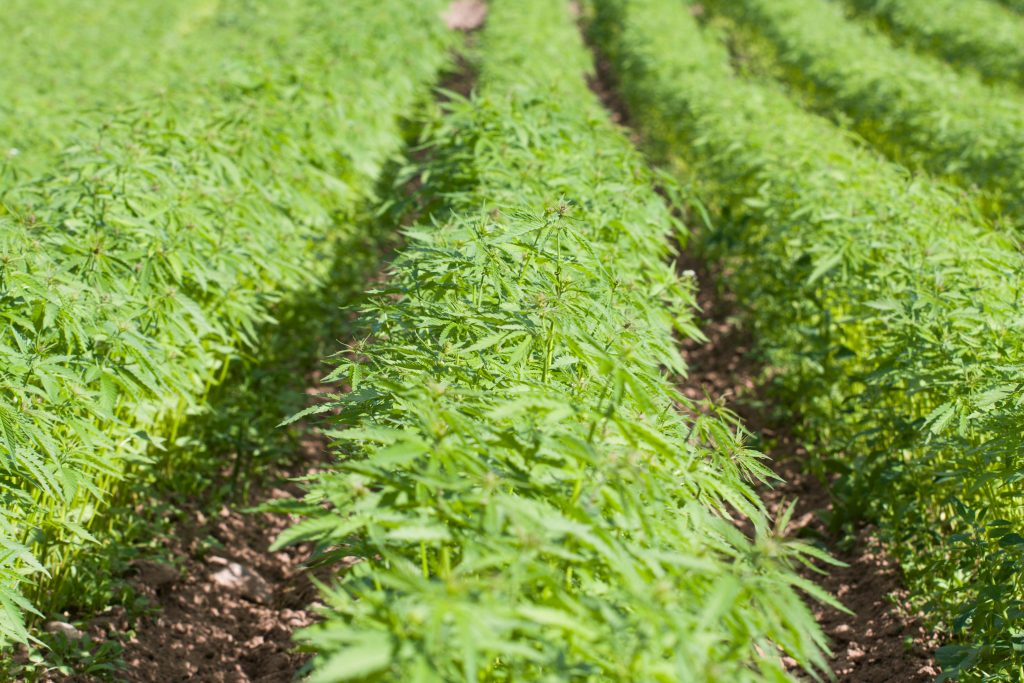
    File photo shows field of industrial hemp.

    Alabama hemp producers looking ahead to the 2021 season are invited to participate in roundtable discussions with Alabama Cooperative Extension agents and specialists.

    Alabama Extension is hosting three discussion events with producers over the next three weeks, beginning this Thursday at Camp Meadowbrook in Cullman, Ala. One will be held on Nov. 13 at the Richard Beard Building in Montgomery, Ala. The other will be held at the Wiregrass Research Center in East Headland, Ala.

    They will be held from 9 a.m. through 11 a.m.

    The sessions are designed for hemp farmers to discuss the challenges and potential opportunities in the industry. Anyone with an interest in hemp is welcome to come and share their experiences from this year’s growing season and ask questions.

    A representative from the Department of Agriculture and Industries will also be available to answer any specific questions regarding Alabama rules and regulations.

    A maximum of 30 people will be allowed at each event, though everyone else is welcome to attend via zoom.

    Click here to register for this week’s hemp discussion.

  • Alabama Producers Feeling Pressure from Low Quality Hemp, Decreased Prices

    File photo shows industrial hemp. Photo taken 06-12-19.

    Many Alabama hemp farmers are either sitting on their crop following harvest or have decided to plow their crop under, due to low quality and decreased prices, according to Katelyn Kesheimer, Auburn University Assistant Professor and Extension Specialist.

    “I spoke to a grower on Friday and he said he couldn’t find a processor that had the right price to make it worthwhile for his crop. So he’s going to sit on it a little bit, which I think a lot of people are going to do just because they’re not sure of the actual process of finding a buyer and what to do with it. They really didn’t think it through before they grew the crop,” Kesheimer said. “Honestly, I think a lot of people are going to be sitting on it or destroying their crop because it’s not even worth it to harvest.”

    Kesheimer reported on Oct. 21 that Alabama hemp was expected to be low quality due to disease, insects, rain and late plantings. She received calls from buyers looking for smokable flower grade hemp and couldn’t find enough. Not much has changed two weeks later. 

    “There’s not a lot of great quality flower out there for smokable hemp, so I think a lot of it will get extracted into oil. But the cost associated with it might be prohibitive for some growers. They’re trying to work through that right now,” Kesheimer said. “I imagine we’ll be sitting on a little bit of hemp for the next few months, if not longer.”

    2019 Hemp Still Being Held

    Producers holding on to their hemp crop is not uncommon in Alabama. Kesheimer believes farmers still have hemp from 2019 because the market price never rebounded.

    “It never got back up to where everyone thought it was to make it worthwhile to grow,” Kesheimer said.

    Kesheimer and Regional Extension agent Jessica Kelton plan to host listening sessions with hemp producers over the next three weeks to gauge opinions and hear about the potential challenges of the industry moving forward. The first one will be this week on Thursday in Cullman.

    “People tried to go big. We had a lot of new growers. There was a lack of information. There’s a lack of buyers, processors, markets. It was wet, so disease just ramped up. I don’t think people realized how quickly, whether it was southern blight or caterpillars, could take out a crop,” Kesheimer said.

  • Whiteflies Impacting Alabama Vegetables

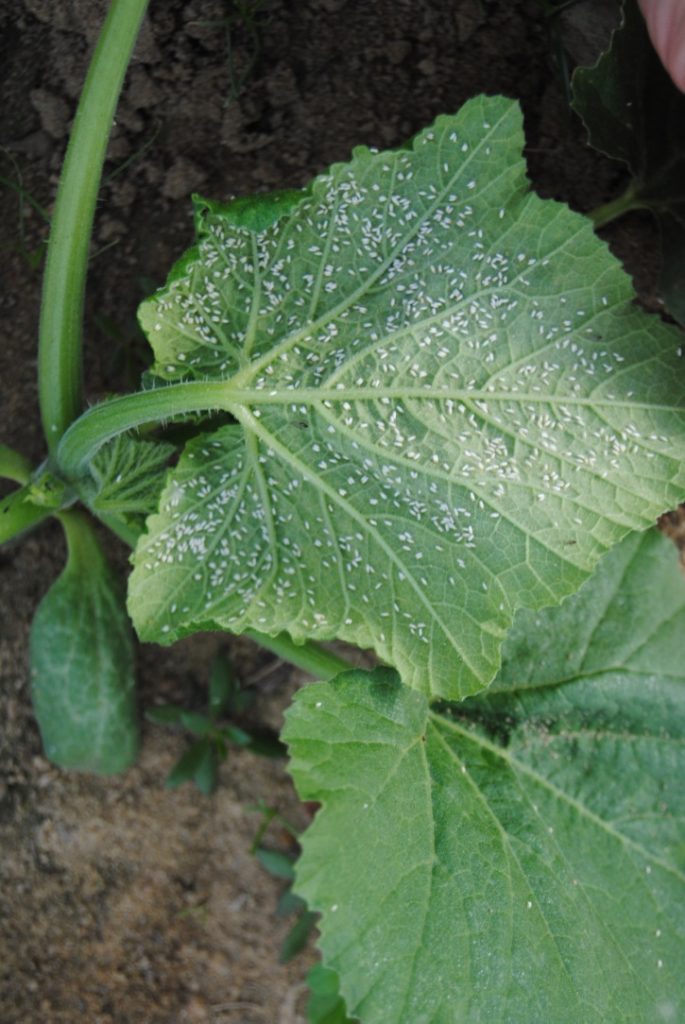
    File photo shows whitefly adults feed on a yellow squash seedling.

    This has been the year of the whitefly for vegetable producers in the Southeast. Even as they have been a problem for Georgia vegetable producers, they have also been a nuisance for Alabama farmers.  

    Ed Sikora, an Alabama Extension Specialist Professor in Entomology and Plant Pathology at Auburn University, said he’s seen quite a few whiteflies on some of the cucurbit crops like zucchini, yellow squash and pumpkin. The whitefly pressure has increased this year and is impacting locations not used to whitefly damage.

    “I don’t work with insects typically, but they seem more common on the cucurbit crops in some of our monitoring plots this year than in past years. Every so often I’ll see the silverleaf damage on squash and so forth,” Sikora said. “This year they seem to be more common than I’ve seen in the last five years on that crop. I saw some last year in the Brewton area. This year I’m seeing them up around, even Auburn. It was heavy down in the Dothan area and in Brewton again.”

    What’s most concerning for Alabama vegetable growers are the viruses whiteflies can transmit. They are responsible for transmitting multiple viruses, including cucurbit leaf crumple virus and cucurbit yellow stunting disorder virus. They’re also concerning for vegetable producers in Georgia where whiteflies are before coming to Alabama.

    According to the University of Georgia crop loss estimates for fall 2017, the last major infestation period prior to this year, these viruses caused between 30% and 50% crop loss in squash and cucumbers and nearly 80% crop loss in snap beans that year. Vegetables like squash, zucchini, cucumber, cantaloupe and snap beans are highly susceptible to these viruses.

    “We’re a little bit concerned because we know that they can transmit some plant viruses. These are occurring in Florida and we assume they are occurring in Alabama as well. We think with more whiteflies in the southern tier of the state that we’re probably seeing more whitefly-transmitted virus problems. That’s something we’re looking into, currently,” Sikora said.

  • Scab Disease Important Factor to Consider Before Planting Pecans

    File photo shows what pecan scab looks like.

    Doug Chapman, Alabama Extension agent for Commercial Horticulture in North Alabama, says the ramifications of having scab disease in your pecan orchards can’t be understated.

    “It’s the difference between having pecans and not having them,” Chapman said.

    Even as pecan harvest is under way across Alabama, soon it will be time to plant new pecan trees. Pecan planting is usually done during December and January when the trees are dormant.

    However, before commercial growers and homeowners begin putting trees in the ground, they must consider their fungicide spray options to manage scab disease. If they don’t have a management strategy, they shouldn’t expect pecans to start falling in 8 to 10 years.

    “Scab is My First Suspect”

    “Scab can wipe you out. I’ve seen it to where, even if you were to make a few nuts, if there was a scab problem, they tend not to fill out,” Chapman said. “We get a lot of questions like, okay I’ve got pecans and they’re not filling. Here again, scab is my first suspect and until you can eliminate that, there’s not much point in talking about the rest of it.”

    Unpredictable Weather

    Weather was unpredictable this year for pecan growers. Chapman said it was really wet in the spring, but then it turned off dry. He doesn’t think scab was nearly as bad as it has been in other years. But the dry weather has also affected the nut size. If you didn’t have irrigation, the nuts didn’t size up when they should have.

    Scab Disease

    Scab disease does not usually kill trees, but it can greatly reduce yields. The fungal pathogen that causes scab overwinters in the tree as lesions on stems and old nut shucks that remain in the tree after harvest. When temperatures begin to warm in the spring, the fungus becomes active and starts to produce new spores that are spread by rain and wind.

  • Temporary and Permanent Pest Exclusion Systems for Vegetable Production

    Alabama Extension photo shows a pest exclusion system at work.

    According to Alabama Extension, the demand for organic crop production has experienced an upward trajectory in recent years. This increasing demand means there is a need for more farmers to produce organic vegetables at a reasonable cost, while also being environmentally sustainable.

    For these producers, insect pest management is one of the aspects where they must watch their costs and consider the environmental impact of the management strategies they implement. Luckily, there are several integrated pest management (IPM) practices that can help producers do both.

    Pest Exclusion Systems

    Vegetable production in the Southeast already comes with risks, as insect pests threaten crops from seedling to harvest. According to surveys of specialty crop producers, potential crop losses from pest feeding average 55%. Crop contamination from insect excrement and other factors can also affect farm profits. These are referred to as the yield-limiting and yield-reducing factors, which all depend on how the crop is managed. 

    IPM practices, such as pest exclusion, can help with these factors.

    Pest exclusion is based on the practice of physically blocking insects from reaching their host plants and is often overlooked by producers. Moths and large pests, such as stink bugs or leaffooted bugs, can be good targets of a well-designed pest exclusion system, especially on small acres with intensive vegetable production. There are two types of pest exclusion systems; temporary and permanent.

    • Temporary, or time-limited, systems are suitable for early season pest management to protect seedlings.
    • Permanent pest exclusion systems are a more intense use of pest exclusion fabric that provides season-long crop protection in high tunnels. This is called the high tunnel pest exclusion (HTPE) system, which is being intensively evaluated at 14 farm locations across Alabama.

    There are numerous benefits that a pest exclusion system can offer in an organic vegetable production.

    • Short-term or season-long pest reduction.
    • Variable cost depending on material and design of the system.
    • Minimal training for implementation.
    • Growth and season extension from use of insect barrier fabric.
    • Overall reduction in the use of biorational insecticides with increase in natural enemy activity.

    It’s important to note that not all crops and varieties may lend themselves to pest exclusion systems. Contact the Alabama Extension commercial horticulture regional agent in your area before making a major purchase decision. It is recommended that pest exclusion systems be integrated with the use of insect monitoring systems or traps and natural enemies for practicing true IPM.

  • USDA Encourages Ag Producers, Residents to Prepare for Hurricane Zeta

    WASHINGTON, Oct. 28, 2020 – The U.S. Department of Agriculture (USDA) is reminding communities, farmers, ranchers and small businesses in the path of Hurricane Zeta that USDA has programs that provide assistance in the wake of disasters. USDA staff in the regional, state and county offices stand ready and are eager to help.

    Perdue

    “Our neighbors in the Gulf have endured a devastating Hurricane season this year, and I’ve been awed by their resilience,” said U.S. Secretary of Agriculture Sonny Perdue. “We ask everyone in the path of the storm to again prepare, and to rest assure that this Administration will stand by them to provide all the assistance we can, for as long as they need.”

    USDA has partnered with FEMA and other disaster-focused organizations to create the Disaster Resource Center, a searchable knowledgebase of disaster-related resources powered by subject matter experts. The Disaster Resource Center website and web tool now provide an easy access point to find USDA disaster information and assistance.

    Food Safety During an Emergency

    Power outages from severe weather could compromise the safety of stored food. USDA encourages those in the path of the storm to take the following precautions:

    Store food on shelves that will be safely out of the way of contaminated water in case of flooding.

    Place appliance thermometers in the refrigerator and the freezer to ensure temperatures remain food safe during a power outage. Safe temperatures are 40°F or below in the refrigerator, 0°F or below in the freezer.

    Freeze water in small plastic storage bags or containers prior to a storm. These containers are small enough to fit around the food in the refrigerator and freezer to help keep food cold.

    Freeze refrigerated items, such as leftovers, milk and fresh meat and poultry that you may not need immediately — this helps keep them at a safe temperature longer.

    Consider getting 50 pounds of dry or block ice if a lengthy power outage is possible. This amount of ice should keep a fully-stocked 18-cubic-feet freezer cold for two days Group foods together in the freezer – this ‘igloo’ effect helps the food stay cold longer.

    Keep a few days’ worth of ready-to-eat foods that do not require cooking or cooling.

    Protecting Livestock During a Disaster

    USDA’s Animal and Plant Health Inspection Service (APHIS) is urging everyone in the potential path of the hurricane to prepare now – not just for yourselves, but also for your pets and your livestock.

    • Plan for evacuation – know how you will evacuate and where you will go. If it is not feasible to evacuate your livestock, be sure to provide a strong shelter and adequate food and water that will last them until you can return.
    • If you are planning to move livestock out of state, make sure to contact the State Veterinarian’s Office in the receiving state before you move any animals. You may also contact the Animal and Plant Health Inspection Service (APHIS) Veterinary Services state offices for information and assistance about protecting and moving livestock.
    • Listen to emergency officials and evacuate if asked to do so.

    Helping Producers Weather Financial Impacts of Disasters

    Livestock owners and contract growers who experience above normal livestock deaths due to specific weather events, as well as to disease or animal attacks, may qualify for assistance under USDA’s Livestock Indemnity Program. Livestock, honeybee and farm-raised fish producers whose mechanically harvested or purchased livestock feed was physically damaged or destroyed; or who lost grazing acres or beehives due to an extreme weather event may qualify for assistance. Producers of non-insurable crops who suffer crop losses, lower yields or are prevented from planting agricultural commodities may be eligible for assistance under USDA’s Noninsured Crop Disaster Assistance Program if the losses were due to natural disasters.