Category: Alabama

  • Alabama Extension Offers Planting Tips for Fruit Trees

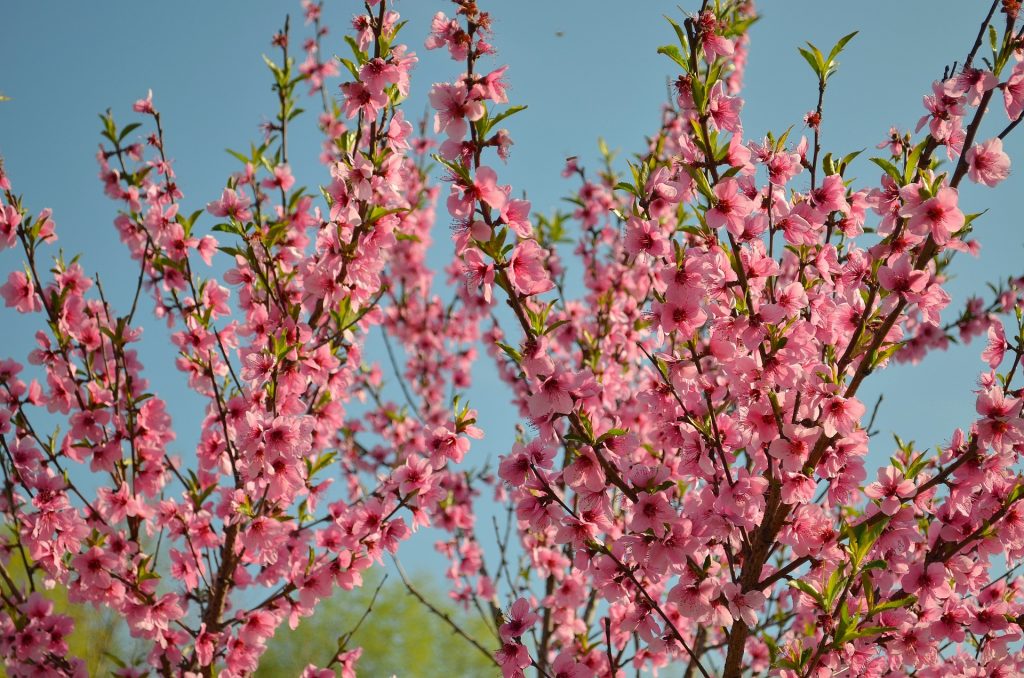
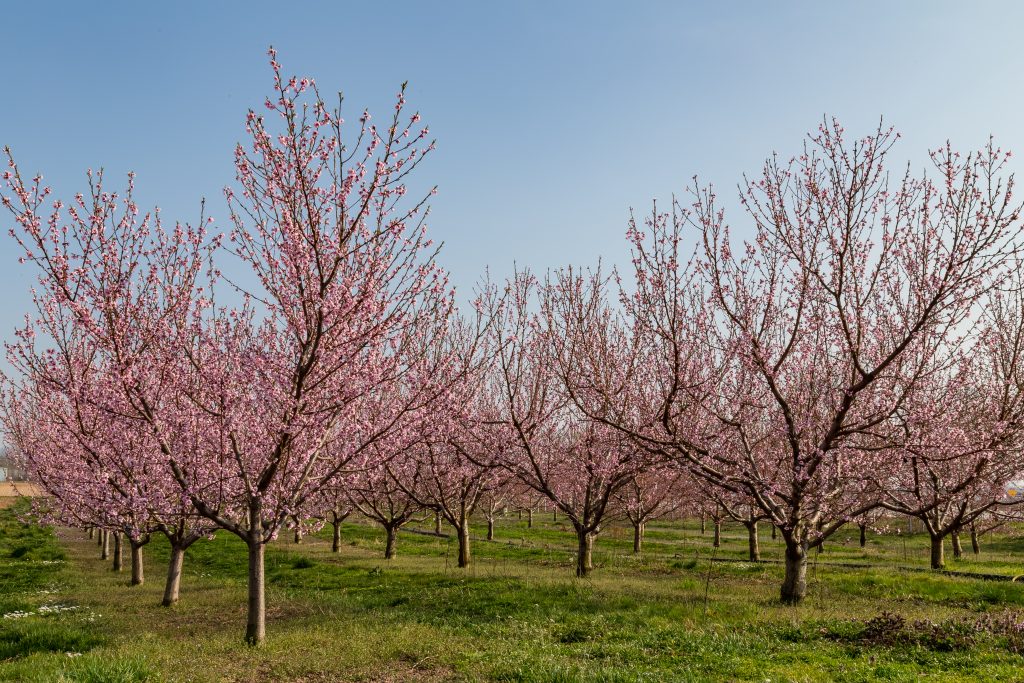
    File photo shows peach orchard.

    Soon it will be time to plant fruit trees in Alabama. Edgar Vinson, assistant research professor and Extension specialist in the Department of Horticulture at Auburn University, reminds growers about basic planting tips they need to be mindful of when planting trees this winter.

    Variety Selection

    Variety selection is the most important and practical way to manage diseases and other environmental constraints, no matter what crop you’re planting, according to Vinson.

    “(For example) If you’re planting in a region that’s really high in summertime temperatures and a region that’s prone to drought, you’ll want plant crops that can withstand those high temperatures, and you’ll also want crops that are drought tolerant if possible,” Vinson said.

    Full Sun

    It’s also important to remember that fruit crops require full sun to produce at maximum efficiency.

    “Once your shade starts to diminish then your productivity diminishes. It’s really important to get them as much sunlight as possible, maybe a minimum of 12 hours or so or around 12 hours of sunlight,” Vinson said. “Also, the placement of trees on a particular site, you want to avoid frost pockets. In cases of like fruit trees like peach or plum or apple, in low lying areas where cold areas tend to collect, it’s really important to avoid those.

    “Cold air flows downhill. It’s heavier than warm air and flows downhill. Often times it collects in frost pockets in low lying areas. You’ll also want to avoid any structures like a fence row that has vegetation on it. Something as simple as that could be enough to block the flow of air away from these crops and cause frost damage.”

    Chill Hour Requirements

    Chill hour requirements is also an important factor to consider. Vinson said that in order to alleviate dormancy in the spring, trees have to be exposed to a certain amount of cool temperatures during the winter.

    “If they don’t get the recommended requirements for their particular type or variety, they have long protracted flowering periods with small frequent harvests in the spring and summer and that really hits the farmer’s bottom line. The harvests are frequent but they’re small,” Vinson said. “They’re not really getting the return from the harvests that they otherwise would with the larger more concentrated harvests. Each time you harvest you have to send a crew out to the field and that costs money.”

    It’s important to remember that fruit trees need to be planted during the winter time when the trees are dormant. Vinson said you can plant an actively growing tree but it really adds a lot of stress to it.
  • Georgia Pecan Grower: Industry on Brink of Collapse

    georgia pecans
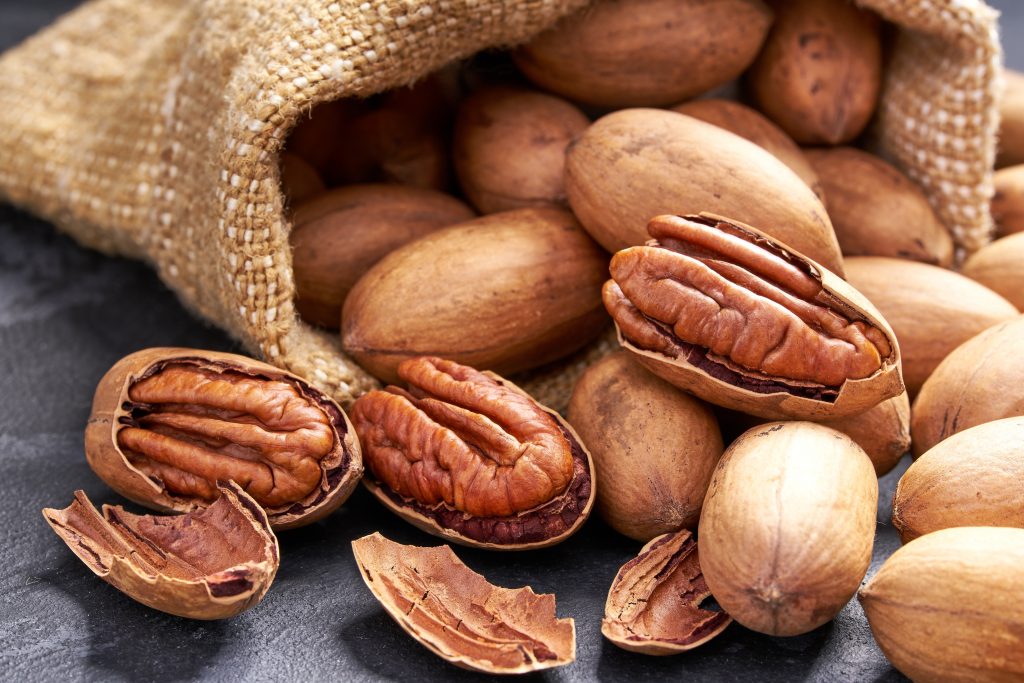
    File photo of pecans.

    One of the largest pecan producers in the Southeast believes the industry could be on the verge of collapse amid tariffs, a strong hurricane season and devastatingly low prices this year.

    Eric Cohen, who along with brother, Rob, operates Pecan Ridge Plantation in Bainbridge, Georgia, said they are still recovering from Hurricane Michael’s impact in 2018. It wiped out 800 acres and more than 20,000 trees. What he’s concerned with the most now are tariffs that prevent the largest buyer of U.S. pecans, China, from buying this year. It’s also allowed Mexico to become an even bigger player on the world’s pecan stage than it was before.

    A Pecan Producer’s Comments

    “I think our industry, honestly, is on the brink of collapse if something doesn’t actually change,” Cohen said. “We’ve got all these pecans coming in from Mexico. The tariff situation is absolutely killing us because they don’t have a tariff on their pecans. China can buy all of their pecans from them.

    “Mexico, their labor is so much different than ours. We’re getting drilled on everything; labor, their inputs are so much cheaper. We just can’t grow them as cheap as they can, and they’re just flooding our market. It’s an extremely dark time in the pecan industry in Georgia after Hurricane Michael. Now we have extremely low prices.”

    Low Prices Continue

    The USDA Pecan Report was released on Tuesday and continues to show prices dropping for all pecan varieties.

    The report states, “Growers are still putting pecans into cold storage while prices for export quality and retail gift shop purchases are low as many are purchasing pecans from other sources. Domestic shellers are busy this week and growers are sending in their B grade pecans to make room for their better quality nuts to be stored. Talk of export buyers coming in as they have in the past is still ongoing but they are not as active as was expected.”

    Prices for Desirable varieties remain between $0.80 and $1 per pound, while Sumner varieties are selling between $0.70 and $0.80 cents per pound. It’s depressing news as growers are storing pecans in hopes of prices rebounding in the future.

    “I never dreamed it would be this bad,” Cohen said. “If China would buy. If they would just come in the market and take some of this off, they would create some competition. China being out of our market is what’s going on.

    “If we could get the tariff situation settled, whatever administration is in there that would be an absolute benefit to growers. I firmly believe that China wants to buy American Georgia pecans. The economics are just not there the way they are now.”

    Alabama Farmers Suffer Through Storms

    While Georgia producers have dodged storms this season, their Alabama counterparts were not so lucky. Alabama producer Adam Bertolla lost three-quarters of this year’s crop and 250 trees, or one-third of his pecan operation after Hurricane Sally struck in mid-September.

    “We’re losing money. Growers out here, we’re absolutely losing money on the farm this year. You’ve got to make up your mind, ‘Are you willing to hang on and stick it out?’ If we were Louisiana, I know Alabama got destroyed this year. But look at Louisiana, I think they’ve had five storms. You take those five storms and run them through Georgia, we’re done.”

  • La Nina a Concern for Fruit, Vegetable Producers

    Graphic from UGA Extension Blog.

    A La Nina weather pattern is expected to last through early spring and bring warm and dry conditions to the Southeast.

    According to the Climate and Agriculture in the Southeast blog, Pam Knox, University of Georgia Extension Agricultural Climatologist, said that the NOAA’s Climate Prediction Center predicts a 100% chance of a La Nina through the winter and better than 90% chance through early spring.

    This scenario could be gloomy news for vegetable fruit farmers, especially peach growers in Alabama, Florida and Georgia who need chill hours to make a crop for the following year. It also means pests could linger longer than desired since the lack of cold temperatures will alive them to survive longer.

    Pam Knox Comments

    Knox

    “In La Nina years, they’re much less likely to get the chill hours that they need. That’s going to be a problem for fruit producers,” Knox said.

    “Another thing is when you have warm temperatures, it’s not cold enough to kill the bugs very effectively. So you have more overwintering of bugs like whiteflies and other things that will bring disease to the plants next year. They could get an earlier start, but they’re also going to be more numerous because they’ve been able to survive the winter because of the warmer temperatures.”

    The lack of sufficient chill hours does not mean there will be zero cold weather. That’s still expected but will be overshadowed by the warmer temperatures to follow.

    “Even in La Nina years, we have some outbreaks of cold weather. It’s still winter, so we’re still going to see some of those cold outbreaks. There’s a lot of variability over time. I would definitely expect to see some colder weather. We could have some pretty big outbreaks,” Knox said.

    “It’s just that over the course of the whole winter, we’re likely to see those outbreaks punctuated by warmer spells. That’s not at all surprising. Winter is like that any way. It’s just that the whole average is a little higher. Those outbreaks come less frequently because the storm track is pushed to the north. The storm track is what controls whether we’re in the warmer air, because the warmer air is usually south of the storm track and also whether or not we’re getting rainfall because the rainfall usually happens along the storm track.”

    Prolonged Dry Spell?

    Winter is also a time when the soil moisture gets recharged due to rainfall. That’s not expected to happen this year amid La Nina, but it does appear the Southeast is in decent shape to withstand prolonged dry conditions.

    “Temperatures are lower and evaporation is lower, and plants are dormant so they’re not using a lot of water. I think from a water standpoint, at least right now, it doesn’t look too bad,” Knox said.

    According to the US Drought Monitor, southeastern counties in Georgia, as far south as Pierce and Ware, stretching as far north as Burke and Jefferson are classified as abnormally dry. The rest of Georgia, Alabama and Florida have sufficient moisture.

  • Crop Rotation Key to Long-Term Vegetable Production Success

    File photo shows a tomato plant being planted.

    One of the most fundamental practices regarding vegetable production is the implementation of crop rotation.

    Joe Kemble, Alabama Extension vegetable specialist, said crop rotation is a basic practice that is beneficial for any crop that’s grown.

    “Unfortunately in the south, we rarely have a break in season; a hard freeze and things like that which can help lower pest pressure. Crop rotation really becomes key in terms of helping to at least reduce that load, putting a non-host crop out there to hopefully decrease whatever organism you’re concerned about,” Kemble said.

    “We have a lot of endemic soil-borne diseases in Alabama, as well as Georgia and Southeast; nematodes, they can really be a major factor. Anything you can do to potentially reduce that, it’s beneficial.”

    3 to 5 Years In Between Same Vegetable Groups

    Kemble said to avoid planting the same vegetable or its relative in the same spot for at least 3 to 5 years. Vegetables that belong to the same plant family share many of the same pests and diseases. He insists the more time in between vegetables in a given field the better.

    “There’s actually some pretty good evidence out there in terms of research basically showing that longer the rotation to a non-host crop the better. The evidence is pretty overwhelming saying any rotation is beneficial even if it’s a short period,” Kemble said.

    Crop rotation helps replenish soil fertility and add organic matter. It provides complementary fertilization to crops in sequence with each other; such as a legume crop preceding sweet corn or tomatoes.

    It also is a good practice for those who rent fields to investigate what crops have been produced in a field in previous years before planting.

    Kemble Comments

    “Where I see the biggest problem typically, is not always the grower’s fault, but a lot of times you may be renting land to use this year and you may not know what the history of the land was,” Kemble said.

    “Honestly, most growers use rotation. Depending on the particular situation they’ve got, they recognize it as a tried and true method to help reduce some of the issues that they typically have to deal with.”

    For more information, click here to view Kemble’s Facebook Live webinar on the Alabama Vegetable IPM Facebook page

  • Plethora of Plant Diseases Following Rainy Season for Alabama Producers

    University of Georgia photo shows effect of downy mildew disease.

    A wet 2020 has had Alabama vegetable and specialty crop producers fending off plant diseases. Even before the state encountered a couple of hurricanes, including Sally in mid-September and Zeta in late October, it had already received its share of rainfall

    Not surprisingly, the excess moisture led to numerous plant diseases, according to Ed Sikora, professor and Extension plant pathologist in the Department of Entomology and Plant Pathology at Auburn University.

    Sikora Comments

    “We saw quite a bit of gummy stem blight on watermelons. We also saw downy (mildew) and anthracnose on things like cucumbers as well as pumpkins,” Sikora said.

    “I think most of the established growers realize that when it’s wet conditions like we had this summer, that they’re going to see more disease problems. Or they see the disease problems and realize it’s so wet, and sometimes they can’t get out to spray. Sometimes it’s too wet to spray after a storm and they can’t into the fields.”

    It can be challenging for farmers to get back in the field to apply much-needed fungicides to manage any potential plant diseases following a storm.

    Be Prepared

    Sikora encourages producers to monitor upcoming weather conditions and apply fungicide sprays. Do this before a storm hits or before conditions become favorable for disease development.

    “Don’t wait until the third of the canopy is gone due to disease before you start spraying because it’s usually a lost cause by then. Growers need to anticipate the weather conditions and what diseases they’ve historically had in their fields,” Sikora said.

    “Newer growers, though, are sideswiped by these diseases because they just haven’t seen them. They get a year like this year where they’ve had adequate moisture and they’re happy. Suddenly some of these plant diseases take off on them. They don’t know what it is before they even think about spraying for them.”

  • NIHC Receives USDA Market Access Program Funding for International Research and Promotion of Hemp

    NIHC Becomes First Hemp Organization Officially Recognized by USDA Foreign Agricultural Service as Market Access Program (MAP) Partner

    File photo shows hemp field.

    WASHINGTON – The National Industrial Hemp Council announced it received $200,000 in U.S. Department of Agricultural (USDA) Market Access Program (MAP) funding to support export market development of industrial hemp.  

    “We are grateful for USDA confidence and the recognition of NIHC as the industry leader in industrial hemp trade and marketing,” said Kevin Latner, NIHC’s Senior Vice President for Trade and Marketing who will be responsible for implementing the program.  “Today’s announcement makes NIHC a trusted partner to USDA for hemp fiber, feed, food and CBD companies looking to break down trade barriers in markets overseas.”

    MAP funds are administered through USDA’s Foreign Agricultural Service (FAS). Through the MAP program, FAS partners with U.S. agricultural trade associations, cooperatives, state regional trade groups and small businesses to share the costs of overseas marketing and promotional activities that help build commercial export markets for U.S. agricultural products and commodities. These funds can be used for facilitating trade missions and meeting with industry stakeholders and government regulators overseas. 

    NIHC programs will focus on Europe and China and include market research, trade policy and trade facilitation. The global industrial hemp and products market was estimated at $11.1 billion in retail sales in 2019.  With an annual growth rate of 52%, driven by continued strength in textiles, food and industrial uses and hemp-derived cannabidiol (CBD), the global market is forecast to be worth $89 billion by 2025.   

    Hemp for industrial use, textile and CBD market is expected to quickly expand and be the primary driver of global industry growth. By 2021, the global trade of hemp is forecast $8.1 billion across all markets, representing a three-year compound annual growth rate (CAGR) of 83%. Europe, China, and Canada are currently the primary sources of industrial hemp. With the passage of the 2018 Farm Bill, the U.S. has become the world’s third largest producer of industrial hemp.  

    Europe has rapidly developed a robust hemp and CBD market.  Europe is also a strong producer of industrial use hemp products with $424 million in industrial product sales. China has led global markets in textiles with almost 80% of the $1.7 billion hemp textile market in 2019.   

    In addition, National Industrial Hemp Council members will now have unprecedented access to United States trade negotiators; foreign government counterparts; and a network of international hemp industry association counterparts. Foreign governments understand that NIHC is now supported by the U.S. government and represents U.S. industry interests. 

    Market Access Program funds can be used by NIHC throughout the world to support market access and trade policy work, international trade promotion including supporting business-to-business facilitation and consumer and brand marketing.

    MAP funds for 2021 will be administered to NIHC through the Food Export Association of the Midwest USA.   

    “We’re extremely confident and trust that NIHC will represent the best interests of U.S. industrial hemp abroad. We’re excited to be working with them as part of the USDA cooperator community,” said Tim Hamilton, Executive Director of Food Export Association of the Midwest USA.

    About the National Industrial Hemp Council: The National Industrial Hemp Council provides high-quality networking and resources for its members, from farm to consumer. Its leadership is composed of leading international, federal, state, private industry, and government professionals throughout the sector. The organization is dedicated to furthering market development, assisting members in entering the industry, and educating consumers on industrial hemp and its applications. For more information please go to www.hempindustrial.com.

  • Alabama Pecan Producer Still Picking up Pieces Following Hurricane Sally

    Picture from Adam Bertolla/Shows massive pecan tree uprooted by Hurricane Sally.

    Hurricanes wreaked havoc on agricultural production this summer and fall. Unfortunately, pecan producers were not immune to nature’s fury.

    Just ask Alabama farmer Adam Bertolla. He lost ¾ of this year’s crop as a result of Hurricane Sally in mid-September. He also lost 250 trees or a third of his pecan operation.

    “It killed me, because I lost over a third of my trees and these trees are over 90-year-old trees. People say, ‘You going to replant.’ I say, ‘Hell no, I’m not going to replant,’” said Bertolla, referring to Hurricane Sally that made landfall in Alabama on Sept. 16. “No. 1, there’s going to be some more storms come; No. 2, I’m too old, even though I’m in my early 50s. There’s just not any use in doing it. That’s what hurt me the worst is losing my trees.”

    What’s Left for This Year?

    “You talk about a 90-year-old tree, he’s a man now. Then you’ve got all of that stuff to clean up. We cleaned up the orchard without running over no more than we could. It looks like a guestimate of what I saved was probably a little less than a fourth. We probably lost three-fourths of my crop due to that much rain. In one orchard, they floated off and went down the river. They’ll float.”

    Bertolla estimates that he lost 250 trees. It can’t be understated how massive a loss it is considering the age of these trees and the yields they can potentially produce every year.

    “That’s a third of what I’m never going to have again. The other trees can’t make up for it,” Bertolla said. “My grandpa was a pretty young man when he planted those trees. It just makes you sick when see all of that. We’ve had storms and we’ve lost 50 and 100 here and yonder through the years but the (orchard) is really open now. There’s a lot of big gaps out there.”

    Eye of the Storm

    Bertolla’s pecan trees are located about 30 miles north of Gulf Shores, Alabama, which was in Sally’s direct path when she finally made landfall as a Category 2 Hurricane. The slow-moving storm that featured winds over 100 mph and torrential flooding overpowered massive pecan trees. It was a sight to see and left destruction that Bertolla was still picking up the pieces from this week.

    “If you’ve never seen a big pecan tree uprooted it’s something to see how big the roots are and how it was trying to do everything it could to hold onto the dirt but it just couldn’t. It was just too saturated that it couldn’t hold on any longer,” he added.

  • Remember to Plant Fruit Trees During Dormancy

    developing
    File photo shows peach tree in bloom.

    Soon it will be time for homeowners and commercial growers to plant their fruit trees in Alabama.

    Edgar Vinson, assistant research professor and Extension specialist in the Department of Horticulture at Auburn University, reminds producers, whether they’re planting peach trees or apple trees, the time to do so is during the late fall or winter when the plants are dormant.

    “You can plant an actively growing tree but it really puts a lot of stress on it. The idea is you want to keep as much moisture in the plant. If you’ve got a plant that’s got leaves, it’s transpiring and losing water. The roots aren’t really developed to the point that it’s extracting enough water and nutrients to keep up with the water that’s being lost,” Vinson said.

    Soil Factor

    Vinson

    One of the most important factors to consider, whether you’re planting peach trees, apple trees, blueberries or figs, is the soil. Soil testing is crucial and needs to be done well in advance.

    “You definitely want to be mindful of your soil. Soil tests are really important. You want to know how much nutrients are in the soil,” Vinson said. “If there’s any deficiencies, you want to be able to correct those especially with a perennial crop like fruit tree crops.

    “It’s very difficult to course correct once you get those in the ground. Having a soil test is important. If there’s anything that has to be changed, like if the pH is off, it’s really good to know so you can apply lime.”

  • Slug Damage a Concern for Growers Amid Rain, Heavy Soil Moisture

    Alabama Extension photo/Ayanava Majumdar

    Rainfall this week combined with soil moisture can bring some unwanted problems for vegetable farmers and gardeners in Alabama, including slugs, according to Alabama Extension.

    Ayanava Majumdar, Alabama Extension Professor in the Department of Entomology and Plant Pathology at Auburn University, said attacks from slugs can occur at various stages of vegetable crops with high intensity noticed in the late stages of crops that can lead to direct feeding damage and even crop contamination. Slugs are very common on brassica crops grown during cooler weather in Alabama, and several slugs may high inside the maturing crop.

    Many crops have zero tolerance for slug contamination which can lead to crop disaster. In previous years, farmers have experienced slug activity in cabbage fields along with yellowmargined leaf beetles.

    Slug management includes various cultural tactics. Manage surface residues and till the soil when necessary to prevent slug buildup. Drain waterlogged areas in and around crop fields when possible, or use abrasive materials such as sand in wet areas not under crop production. Limit irrigation or overhead watering during weather with frequent rainfall – use a soil moisture meter or other devices to accurately determine crop irrigation needs. Since slugs seem to like certain crops (e.g., soft-leaf brassicas), crop rotation, early planting and timely harvest may help reduce the overall population levels.

    According to weather.com, there is an 80% chance of thunderstorms today in Auburn, Alabama where Majumdar is located.

  • ADAI Offers Reimbursement Program for Organic Certified Growers

    Alabama producers who get certified organic between Oct. 1 and Dec. 15 are eligible for reimbursement from the Alabama Department of Agriculture and Industries.

    Farmers would be eligible to receive 50% of certification costs, up to $500. Those growers interested in recouping some of those expenses need to apply by Dec. 31.

    “That’s what makes it a little different than other cost-sharing programs is instead of them giving you the money beforehand, the farmer goes through basically the whole process; they have to go get certified and have people come look at their area and get certified organic, pay that fee. Then they reimburse you up to $500 on that fee,” said Jessie Boswell, Alabama Regional Extension agent, who specializes in commercial horticulture and farm and agribusiness management.

    Alabama Department of Agriculture and Industries

    According to the Alabama Department of Agriculture and Industries, application forms and additional details can be obtained by calling Johnny Blackmon with the ADAI at 334/240-7257 or by email at Johnny.Blackmon@agi.alabama.gov. Applicants may also apply at local USDA Farm Service Agency offices. To locate the office nearest you search https://offices.usda.gov/.

    “I do think (organic production has) become more popular. I know a lot of farmers that grow organic, they’re just not certified organic. It does cost so much to get certified organic. I think this program is just to make it easier to become certified. It’s kind of taken away that little bit of a barrier for the producer,” Boswell said.

    “They want people to become certified because that’s better branding for everyone and helps keep track of it. People have a little bit more faith, I believe, in certified organic, something that’s done through an organization that’s officially federally checked.”