Category: Alabama

  • Control Insects Now; Don’t Wait Until Spring

    File photo shows a cabbage field. The cabbage butterfly is a major nuissance for farmers.

    The time is now to control insects in brassica crops like cabbage, broccoli, collard greens, kale and turnips. According to Ayanava Majumdar, Extension Professor in Entomology and Plant Pathology at Auburn University, they are still going to be a problem in the spring.

    “The emphasis should be on preventing buildup of these insects on your farm because it only gets worse in the spring. It’s not going to go away,” Majumdar said.

    One insect Alabama vegetable producers need to be wary of is the imported cabbage worm, also known as the cabbage butterfly.

    “The cabbage butterfly, its caterpillar is like a sluggish, velvety caterpillar. It’s a very smooth looking caterpillar. It doesn’t move much, but it devastates a crop by direct feeding and also a lot of contamination happens from the feces of the caterpillar,” Majumdar said. “It may feed alongside with diamondback moth and loopers. But in my test plots the imported cabbage worm or cabbage butterfly is the predominant caterpillar that I see.

    “That will be one insect to watch out for.”

    Majumdar also cautions producers about the potential consequences of applying too much pesticides on your crops.

    “Don’t overspray because then you are pushing insecticide resistance issues, especially if you have diamondback moth. It’s very notorious for resistance to pesticides,” Majumdar said.

  • CFAP 2 Deadline is Dec. 11

    The U.S. Department of Agriculture reminds vegetable and specialty crop producers who wish to apply to the Coronavirus Food Assistance Program (CFAP) 2 that the deadline is Friday, Dec. 11.

    This program provides relief to farmers facing market disruptions and associated costs due to COVID-19.

    Rabinowitz

    It is a program that Adam Rabinowitz, Assistant Professor and Extension Economist at Auburn University, encourages all eligible farmers to take advantage of.

    “CFAP 2 covers a wide range of fruit and vegetables and specialty crops. It’s much broader coverage that’s typical from other government programs. For those that have experienced any type of marketing and production effects as a result of COVID-19, this is an excellent opportunity based on sales, just comparison sales. It’s a self-certification process, so there’s very little paperwork. It’s very easy access to be able to get these funds to assist with covering those losses,” Rabinowitz said.

    “It covers such a broad range of specialty crops, well over 200 different specialty crops. I think all fruit and vegetable producers really need to look at this and make sure they get to their FSA office and sign up for this program.”

    For More Information

    Producers can find eligible commodities, payment rates, calculations and options to apply on farmers.gov/cfap.

    CFAP 2 is a separate program from the first iteration of CFAP, now referred to as CFAP 1. Participating in CFAP 1 is not a prerequisite for participating in CFAP 2. Additionally, producers who applied for CFAP 1 will not be automatically enrolled in CFAP 2. They must complete a new application to be eligible for assistance.

  • December 2020 Final Outlook Shows No Strong Trend

    Graphic shows a drought outlook for the country for December.

    According to the UGA Extension Climate and Agriculture blog, the NOAA’s Climate Prediction Center released the latest 30-day climate outlook on Monday. It shows that there is no strong trend towards warmer or colder conditions in December except in southern Florida.

    Early December will be colder than normal. It is still expected to be warmer than normal in late December. Pam Knox, University of Georgia Extension Agricultural Climatologist, said the combination for the month as a whole could go either way, leading to a forecast of equal chances.

    The precipitation is also for equal chances of near, above or below normal except for a slight tilt towards dry conditions in Alabama. The latest drought outlook shows a large part of eastern Georgia and adjacent areas of South Carolina and Florida with likely development of drought.

  • Alabama Christmas Tree Farmers to Experience Joyous Holiday Sales?

    Photo by UGA CAES News. Shows Christmas trees for sale.

    Alabama Christmas tree farms started with record-breaking sales during the Thanksgiving holidays, according to Jeremy Pickens, Alabama Assistant Extension Professor in Horticulture at Auburn University.

    While bad weather on Sunday reduced some foot traffic, Pickens expects sales to pick back up.

    “I think with the (coronavirus) pandemic, unfortunately, people are ready to get outside. What a great thing to go do,” Pickens said. “You can’t go to the movies or maybe you don’t want to be out in public. If you go out to a Christmas tree farm, everybody is spaced out pretty well. It’s a great time to be outside.”

    Industry Trending Up?

    Pickens estimates there are between 20 and 30 growers in Alabama. It is a far cry from decades earlier when there were an estimated two per county or more than 100 in the state. But with the advent of artificial trees, more families started to go that route.

    However, Pickens believes that trend is changing.

    “I’d say that consumers are moving more and more towards live trees, especially with the younger generations that are having kids now. They want to have those kind of memories, especially when going out to choosing and cutting your own tree,” Pickens said. “

    Social media has really just blown up the industry. It’s really been a great marketing tool for these guys. People want to be out there at the farm with the kids and want to take pictures of them choosing trees and make those memories. I see it coming back strong.”

    Pickens said this year has been a good season for growing Christmas trees.

    “In the southeast, we primarily grow a different species. We don’t really grow the firs. We grow Leyland Cypress, Virginia Pine, Eastern Ridge Cedars; these are more adaptive to warm temperatures. It’s been a good year for growing this year,” Pickens said.

  • Pecan Prices Stay Low

    It is getting late in the pecan harvest season. Prices remain low for farmers across the Southeast.

    According to the USDA Pecan Report, some producers are storing pecans they would normally export in hopes of getting a better price after the new year. Farmers and homeowners who are trying to sell now are still encountering decreased prices.

    Photo by Clint Thompson/Shows pecans being cleaned after harvested.

    “Export and retail gift quality pecans are still being pursued by buyers for holiday sales, but the Asian markets have not been wide open as in past years. Growers are hoping for a change in that area soon,” according to the press release.

    Growers are busy finishing up going over the orchards for a second or third time if needed. They are taking samples and having them graded for sale.

    Prices for Georgia Pecans

    Prices paid to Georgia growers (late afternoon Tuesday, November 24, 2020 through late afternoon Tuesday, December 1, 2020). These were at buyers delivery point or F.O.B.; also, the orchard including direct sales to end users, cents per pound in-shell of generally good quality. These prices are for lots of 20,000 pounds or less unless otherwise stated.

    Cape Fear (deliveries light) meat yield 49-52% 113-136

    Curtiss (deliveries insufficient to establish market)

    Desirables (deliveries light) meat yield 48-52% 113-136,yard tree lots 80-100

    Elliott (deliveries very light) yard tree lots 90-100

    Farley (deliveries very light) yard tree lots70-80

    Moneymakers (deliveries very light) yard tree lots 40

    Native/Seedlings (deliveries light) yard tree lots 40-50 occasional lower

    Schley (deliverieslight) yard tree lots 70-85

    Stuarts (deliveries light) meat yield 46-52% 104-125, yard tree lots 50-75 mostly 70-75 few high as 90

    Sumner (deliverieslight) meat yield 51-53% 118-138, yard tree lots 70-80

    Lots over 20,000 pounds including truckloads

    Cape Fear (deliveries light) (nut count 50-55) meat yield 49-52% 120-133

    Desirables (deliveries light) (nut count 45-50) meat yield 50-52% 123-136

    Stuarts (deliveries light)meat yield 46-52% 111-130

  • Alabama Extension Specialist Regarding Hemp: You Need a Plan From Day One

    Industrial hemp. Photo taken 06-12-19.

    Alabama Extension’s message to potential hemp producers back in March was, “Know what you’re getting into.”

    Nothing has changed nine months and one harvest season later. Following the state’s second commercial production season, the take-home message remains the same for hemp growers already planning for next year’s crop.

    “It sounds like some people got burned. They planted a lot of plants and someone said, ‘Yeah I’ll buy that at the end of the year.’ Then they reneged and didn’t,” said Auburn University Assistant Professor and Extension Specialist Katelyn Kesheimer.

    “I’m surprised that people are still getting into this without thinking it through. You need a plan from day one and day one is going to be filling out that application, all the way to (knowing) how will that product be harvested from your field and where is it going to go and what money are you going to recoup from that? I think the long-term thought process, or lack thereof, still surprises me.”

    Know Who You’re Dealing With

    Kesheimer met with hemp growers over the past month to discuss challenges that producers are facing and will encounter moving forward into 2021. With the industry still in its infancy, Kesheimer cautions growers about doing business with the wrong people, which unfortunately happened this year.

    “There’s also some folks that are problem children in the industry. They’re selling seed without a dealer license. They’re putting plants that are not good out there. They don’t come from reputable sources,” Kesheimer said.

    “I think a lot of it is, it’s such a new industry and there’s all this dollar signs attached to it, so shady players got involved. I had one grower tell me they bought some seed, had poor germination and they called the seed dealer back, and I say seed dealer in quotes, and the phone was disconnected.”

  • Alabama Pecan Producer Following Hurricane Sally: That’s Just Life

    Hurricane Sally’s impact on Alabama pecan producers is still being felt more than two months later. Unfortunately, it will last much longer as growers like Gary Underwood ponder the future of the industry in the state.

    Underwood, who is based between Mobile, Ala. and Pensacola, Fla., was hammered by the Category 2 storm on Sept. 16. He lost a substantial amount of his pecan operation.

    “I’d say it was about like what (Hurricane) Michael did three years ago. Hurricane Ivan was a Cat 4. This did more damage than Ivan. I lost 440 trees in Ivan with the same acres, and this one I lost, probably 600,” said Underwood, who has two orchards in Summerdale, Alabama and one in Foley, Alabama.

    To Replant or Not To Replant

    Underwood has even questioned whether he will replant in certain orchards that were nearly devastated. Some of his land is too valuable to plant pecan trees, a crop that could take another 8 to 10 years before he sees a harvest again.

     “I’ll be 60-years-old in December. The only reason I’m going to replant one orchard is because that’s where I live. If my wife and I decide to sell out later on in life, someone would have a complete orchard,” Underwood said. “The other two places are really too valuable to farm. Right across the corner of my dad’s property here they sold a Dollar General. They paid $400,000 for like an acre and a half. This is on U.S. 98 which runs from one coast to another.”

    Low Pecan Prices

    It’s definitely not worth it considering pecan prices have dropped considerably this year and show no signs of rebounding anytime soon, according to Lenny Wells, University of Georgia Extension pecan specialist.  

    What is especially disappointing for Underwood and other farmers is the caliber of the pecan crop they were going to have this year.

    “It was the biggest crop we’ve had in years. I had the best crop I ever had,” Underwood said. “We got some of that new Miravis Top chemistry out, used it twice and even Desirables were as clean as they could be.”

    It was a quality crop reduced to almost nothing with one hurricane. Underwood tries to remain positive as he moves forward during this harvest season.

    “It was supposed to be a weak Category 1, if it remained a 1 and it was almost a 3 with 30 inches of rain which made it catastrophic. It blew up instead of falling apart,” Underwood said. “It doesn’t matter if they missed the prediction or what. The storm was what it was. That’s just life. You just live with it.”

  • Uncertainties for 2021 Growing Season

    While 2020 is nearly in the books, farmers are looking ahead to 2021 with the same outlook of uncertainty they had this year following the coronavirus outbreak in March.

    There’s uncertainty regarding COVID-19 and a risk of not knowing if there will be another nationwide shutdown that could lead to more market disruptions like the ones that impacted Florida farmer Sam Accursio this year.  

    There’s uncertainty regarding trade with China and the tariffs that are currently imposed on Chinese products that have prevented the country from purchasing U.S. pecans. This has led to extreme low prices this year for Southeast farmers.

    Various Risks

    There are various risks producers have to consider when planning for next year, says Adam Rabinowitz, Assistant Professor and Extension Economist at Auburn University.

    “There clearly are a lot of uncertainties as we move forward into 2021. 2020 was a very challenging year as everybody knows from a lot of different standpoints with things that we have experienced that we have not felt before in agriculture as well. That just adds to the uncertainty moving forward,” Rabinowitz said.

    “We still have a pandemic, as we see now cases rising and what impact that will have. We saw supply chain disruptions that occurred at the beginning of the year.

    “We’ve seen net farm income continue to drop with the exception of government payments that have helped really to sustain it. There have been two rounds of the Coronavirus Food Assistance Program (CFAP) that have helped really alleviate some of the market issues.”

    CFAP 2 Deadline

    Producers have until Dec. 11 to submit their CFAP 2 applications. The program is open to growers of specialty crops, including fruits, vegetables, tree nuts, honey, horticulture and maple sap.

    Administration Change

    The uncertainty is magnified in 2021 because the country will transition from the Trump Administration to the Biden administration. What is the future of trade negotiations and the tariffs that are currently on Chinese goods?

    “We do know that we have the trade negotiations that are still ongoing, regardless of who is in the White House. That’s still going to be an ongoing process,” Rabinowitz said.

    “There are still the tariffs that the U.S. has put on Chinese products and other products with other countries in retaliation that has occurred likewise for U.S. exports going overseas. What happens to that is still an unknown. We’ve certainly seen China increase their purchasing of U.S. agricultural products this year, including getting into markets they have not been in before. That’s certainly promising.

    “This Phase One agreement that we’re under right now with China where we essentially laid out a two-year plan, so what is the future beyond that and will they still be able to meet the first year goals plus an increase in second year goals? It’s still up in the air.”

  • Plan Ahead Before Planting This Fall

    peach
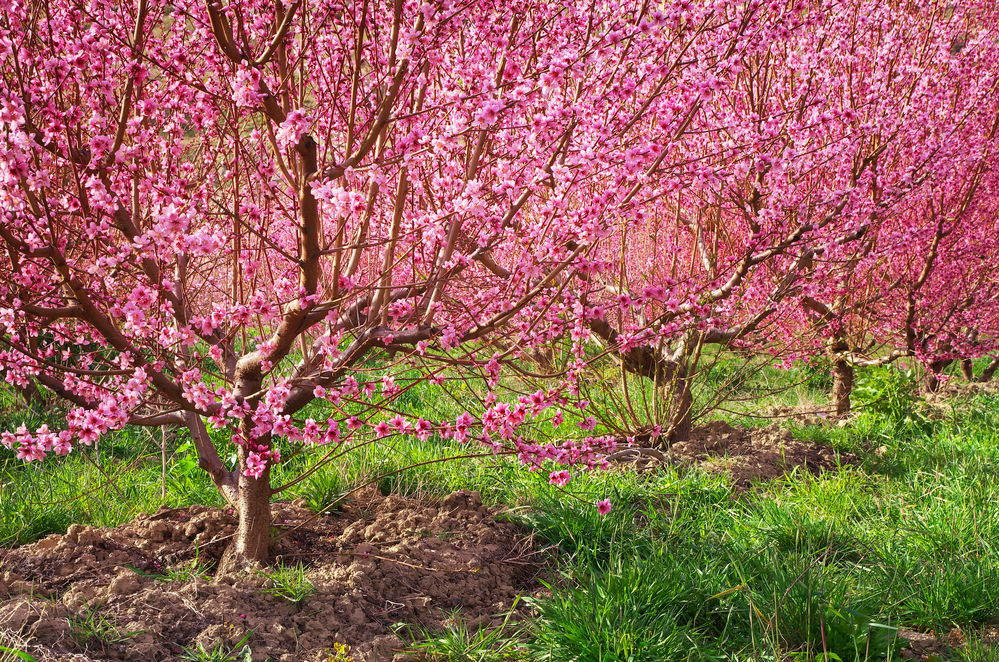
    File photo shows peach trees in the spring.

    Planting fruit trees can be rewarding but only if you plan ahead. If growers don’t research their crops extensively and determine what varieties will grow best in their region, the potential rewarding experience can lead to a letdown.

    Edgar Vinson, assistant research professor and Extension specialist in the Department of Horticulture at Auburn University, reminds commercial growers and homeowners the importance of doing your homework before planting this winter.

    “It’s a lot of information if you want to do it right and be successful. If you’re a commercial grower or growing a few plants in your yard, you’ll want to do your homework so you can be successful and the whole process be as fulfilling as possible. If that’s done, it’s really a fulfilling venture,” Vinson said.

    Plant During Winter

    It’s important to remember that fruit trees need to be planted during the winter time when the trees are dormant. Vinson said you can plant an actively growing tree but it really adds a lot of stress to it.

    Alabama is a unique state. It has potential extremes with regards to climate and the surrounding environment that what’s grown in the southern portion of the state may not fare the same way in northern Alabama.

    “Some types of crops don’t do well. Even within a crop, you can have varieties, like peach for instance. You can grow peaches from the Gulf all the way to the northern counties of Alabama. Certain varieties do best in particular regions of the state, especially those varieties that have high chill hour requirements,” Vinson said.

    “You don’t want to plant a variety with a high chill hour requirement in south Alabama where temperatures are historically higher. There’s not a lot of accumulation of chill hours. It’s just a recipe for disaster if you plant. You may have a desirable variety of peach but it has a chill hour requirement that well exceeds what can be obtained in south Alabama. Then it’s all for naught.”

  • Poarch Band of Creek Indians Partner with Sweet Grown Alabama

    MONTGOMERY, Ala.— Sweet Grown Alabama, the state’s agricultural branding program, is pleased to welcome the Poarch Band of Creek Indians as a founding member of the non-profit organization.

     “I am excited to announce our support of Sweet Grown Alabama,” said Stephanie A. Bryan, Tribal Chair and CEO. “We are always looking for ways to support Alabama’s economy and this important initiative will educate Alabamians about products that are grown and bred in our own backyards.”

    The Tribe’s financial support will help Sweet Grown Alabama connect Alabama farmers and families. Funds will be utilized to encourage purchasing of locally grown products through traditional and digital marketing. Consumers can search for a variety of locally grown products at sweetgrownalabama.org.

    “This financial support from the Poarch Creek Indians will have a positive ripple effect on Alabama’s economy,” said Ellie Watson, Sweet Grown Alabama Director. “The Tribe has a strong reputation of community support and economic development, and we are incredibly grateful for their sponsorship of Sweet Grown Alabama at the highest level.”    

    The Poarch Creek Indians also have deep roots in agriculture.  The Tribe’s Perdido River Farms is one of the largest cattle operations in the state of Alabama. In addition to operating this commercial cattle herd, Perdido River Farms supports youth agricultural programming through 4-H and sells Sweet Grown Alabama beef direct from the farm in Atmore.

    The Poarch Creek Indians join eight other organizations as founding member supporters of Sweet Grown Alabama.

    For more information on Sweet Grown Alabama, visit www.SweetGrownAlabama.org. To learn more about the Poarch Creek Indians, visit http://pci-nsn.gov/wordpress/.

    About Sweet Grown Alabama:

    Sweet Grown Alabama is a non-profit foundation that enhances marketing opportunities for Alabama farmers by connecting retailers and consumers to Alabama-grown foods and other agricultural products. Farmers, product makers, restaurants, retailers and others are encouraged to join the branding program and use the Sweet Grown Alabama logo on their locally-grown products. To learn more visit www.SweetGrownAlabama.org.

    About the Poarch Creek Indians

    The Poarch Creek Indians are descendants of a segment of the original Creek Nation, which once covered almost all of Alabama and Georgia. With the growth and development of the Poarch Band of Creek Indians, the relationship between Alabama and its only federally recognized Tribe has deepened into a mutually beneficial partnership. From hospitality to aerospace, PCI operates in a variety of industries across the world. Read more about PCI at http://pci-nsn.gov/wordpress/