Category: Alabama

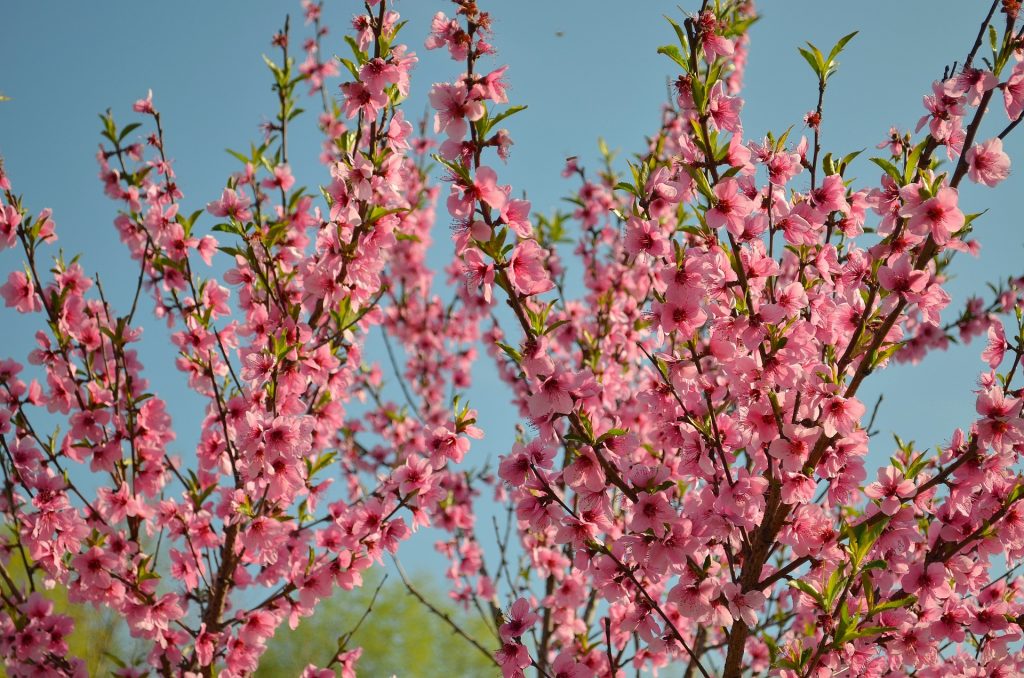
  • Twig Dieback: What to Look for and How to Protect Peaches

    Photo by Alabama Extension

    While peaches can be a sweet summertime treat, if trees are impacted by twig dieback, that can leave a sour taste in producers’ mouths.

    Plant diseases cause the twigs, branches and shoots of a peach tree to die. Alabama Cooperative Extension System Plant Pathologist Ed Sikora offers tips about what causes twig dieback, its symptoms and how to manage the disorder in peach trees.

    Why Does it Happen?

    Either bacterial blight disease or blossom blight disease lead to twig dieback. They are not uncommon to producers who contend with these diseases every spring. Bacterial blight is a bacterial disease that can cause dieback of twigs. Also known as brown rot, blossom blight – caused by a fungal pathogen – is a fruit tree disease that can also cause twig dieback in the spring, as well as fruit rot later in the production season.

    Symptoms

    Infected leaves can dry up and cling to their sticky branches. Cankers can also form at the base of the leaf buds and flowers. Especially in the spring, gummy sap can often be found exuding from these cankers.

    During wet weather, brown-to gray spores of blossom blight can appear on dead flowers, indicating the fungal disease is the cause and not bacterial blight. If these spores are lacking, however, the Auburn University plant diagnostic lab can confirm which disease is the culprit.

    According to Sikora, trees that are growing under stressful conditions are more susceptible to both diseases.

    If weather is cool and wet, bacterial blight thrives. Blossom blight is associated more with warm, moist weather.

    Management

    The first step in management of twig dieback is removing infected twigs from infected trees. Sikora advises pruning out affected tissue during dry weather to avoid the spread of bacterial blight, blossom blight or other pathogens.

    It’s also important to disinfect pruners between trees. Soak the pruners in a 70% alcohol solution or a 10% bleach solution.

    Later in the season, untreated blossom blight can lead to fruit rot, also known as brown rot. Once this occurs, it is crucial to remove and destroy all the affected fruit from the ground. This will reduce the spread of the pathogen.

    “If affected fruit remains on the ground, fungal spores produced on the fruit surface can spread to healthy fruit in the tree,” Sikora said.

    More Information

    For more information, see the Alabama Extension content piece Causes of Twig Dieback in Peach Trees at www.aces.edu. People can also contact the Extension commercial horticulture agent that serves their area.

    Source: Alabama Extension

  • Be on Alert: Gray Mold in Strawberries Can be Devastating

    Alabama Extension photo shows gray mold in strawberries.

    One of the most common diseases of strawberries has already been observed this year in Alabama. Gray mold, also known as Botrytis blight or Botrytis fruit rot, can devastate a crop and cause millions in lost revenue if not managed, according to Alabama Extension.

    No part of the strawberry plant is immune from the disease. Gray mold can affect the leaves, stems, flowers and crowns of the plant. Its wide host range and ability to over-winter in an infested field makes gray mold a challenge to manage.

    The main symptom to look for is fruit rot. A light gray or brownish lesion will develop near the fruit stem. Over time, a grayish, fuzzy mass of spores will spread and cover the entire fruit. Gray mold can also cause post-harvest rot, developing after harvest while still in storage.

    The best management practices include:

    1. Start with healthy transplants. Obtain plants from a reputable nursery.
    2. Use sanitation. Remove dead and infected plant material to reduce the pathogen population.
    3. Allow sufficient spacing between plants. This allows good airflow through the canopy and dries the foliage and fruit quicker.
    4. Avoid over-fertilization. Too much nitrogen can increase fruit rot amid favorable weather conditions.
    5. Early and regular spray. Start fungicide sprays early.
    6. Crop rotation. Rotating strawberries with other crops for two to three years reduces the disease in a field.

    Source: Alabama Extension    

  • Rookie Success: Alabama Strawberry Producer Says First Crop ‘Looks Good’

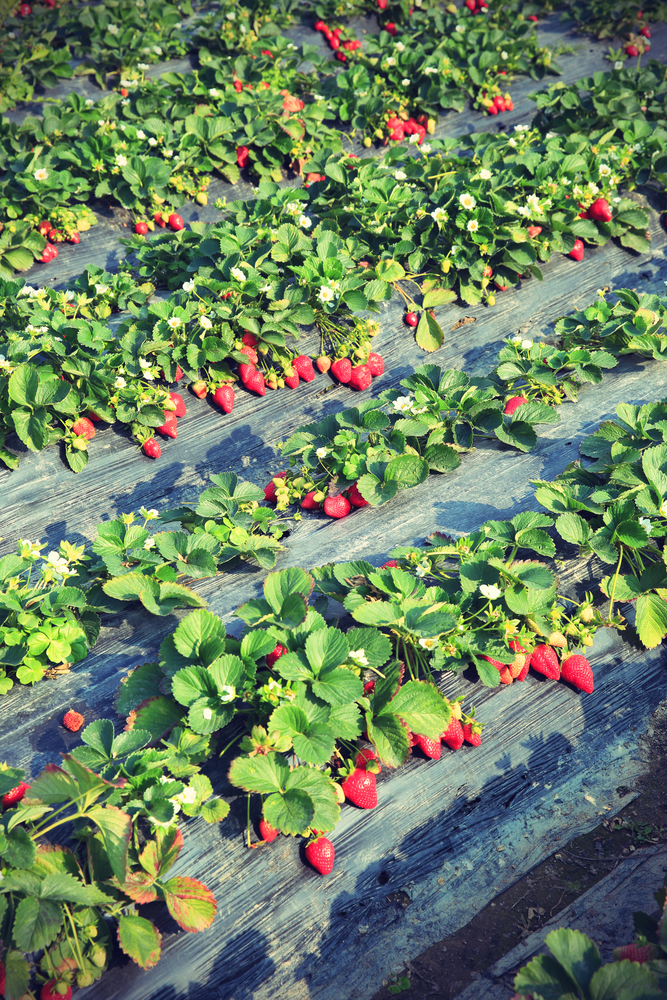
    File photo shows a strawberry patch.

    By Clint Thompson

    A couple of weeks into Jim Bennett’s first season and the Alabama strawberry producer already regrets not planting more acres than he did.

    “We’ve talked about planting strawberries since we opened. This year it kind of worked out and decided we’d go for it,” said Bennett, owner of Bennett Farms in Heflin, Alabama. “It’s right at two acres of strawberries. The first year I didn’t want to bite off more than I can chew. But I wished I had planted five more acres of them. We get picked out pretty quick with the amount of strawberries we’ve got right now.”

    Bennett’s strawberry patch is in its second week of production, allowing U-pick the past few days.

    “It’s great to see these kids. They love it. We have a lot of other activities, other than the U-pick. They can come out and pick and spend the rest of the day with the food and activities and all that we offer,” Bennett said. “It’s fun to watch the kids and how they react and enjoy the farm. It makes it worthwhile.”

    While other producers in the Southeast have experienced diseases with their strawberry crops, namely Neopestalotiopsis Fruit Rot  in Florida and Georgia, Bennett hasn’t observed any fungal diseases in his  crop.

    “The one thing I did learn, I did not build a fence around my crop when we laid the plastic. We were covered with deer, and the deer did some damage to the plastic and ate some crowns off some of the plants. But they’ve recovered and look good now,” Bennett said.

    The biggest challenge so far for this Alabama strawberry producer has been the weather. Persistent rains and cold winter temperatures stalled the growth of the strawberry plants.

    “I really anticipated picking probably two weeks earlier than we were. The cool weather and cool nights and rain has slowed us down a little bit. They’re coming into full production. They look pretty good right now,” Bennett said.

    Hopefully, the cold temperatures on Thursday morning will not impact the crop moving forward the rest of the season.

  • Beware: Fungal Foliar Diseases Alive and Well in Alabama

    Figure 1. Anthracnose fruit rot of strawberry © Catherine Eckert / shutterstock.com

    Weather conditions are conducive to certain plant diseases being a problem this year. Joe Kemble, Alabama Extension vegetable specialist, cautions Alabama producers about certain fungal diseases that could become problematic.

    “One of the things that’s important this time of the year is there are a lot of foliar fungal diseases. They cause problems in strawberries, but they also cause problems in vegetable crops,” Kemble said. “I’ve seen quite a bit of scattered anthracnose around the state. It’s a common fungal disease. It also goes to strawberries, different species of the disease. Basically, if the weather conditions are favorable for one, they’re favorable for all the different versions of that disease.”

    While diagnosing the disease is not an issue, managing it can be a problem if you’re an organic producer. They don’t have the same options to control diseases as a conventional grower would.

    “If you’re a conventional grower, there’s herbicides that work quite well to manage these. But if you’re growing organically, you’ve got a bit of a mixed bag in terms of what you need to do. There aren’t any products out there that are curative. It’s really a preventative measure,” Kemble said. “If I’m an organic grower, this time of the year, I think it’s safe to assume that you’re going to have these diseases. It’s a good idea to put on any type of protectant sprays that you’d like to use. If the spray’s not there, you’re not going to get any type of control. It’s very hard after the fact once you see the disease.”

  • February Freeze: Event Left Mark on Alabama Peach Crop

    developing
    File photo shows peach trees blooming.

    An Alabama freeze event has left its mark on the state’s peach crop. But it’s not the Alabama freeze event you might be thinking of.

    Edgar Vinson, assistant research professor and Extension specialist in the Department of Horticulture at Auburn University, believes the freezing temperatures experienced in February when the trees were dormant did more damage than the late-season freeze during Easter weekend when the trees were blooming.

    “It’s not the crop they were expecting initially. We did get sufficient chill for most varieties. But the February freeze did do some damage. It did do some fairly significant damage, but we’re expecting a pretty decent crop,” Vinson said. “It didn’t get as cold (Easter weekend) as we had thought initially. I think it got just above freezing. The ambient temperatures got just above freezing. It did do some damage, but I don’t think it did the damage that it did back in February; the freeze that we had in February.

    “If some growers had some wind machines to help protect, they would use them. The wind machines would help in those situations, whereas during the last freeze that occurred in February, it was windy, really cold temperatures; wind machines are not very useful in those cases. A lot of growers would not have even thought to use them because the crop was still so dormant. It was just unexpected that it would do the damage that it did.”

    Vinson expects peach growers to begin harvesting this year’s crop at the end of May, first part of June.

  • Drought Monitor: South Florida Remains Abnormally Dry

    South Florida received a substantial amount of rainfall last weekend, but it still remains dry across the region. According to the Thursday’s release of the US Drought Monitor the majority of south Florida and parts of central Florida are abnormally dry. Even counties like Monroe, Collier and Palm Beach are classified ‘D1’ or in a moderate drought.

    The abnormally dry conditions extend as far north as Citrus County, Marion County, Putnam County and Flagler County.

    South Georgia still has enough moisture from the excessive rains it received in February. There are about 20 counties in north Georgia that are abnormally dry. They start in Henry County and Clayton County and extend as far east as Elbert County and Hart County.

    There is also a few counties that abnormally dry along the Georgia-Alabama line. They include Haralson County, Carroll County and Heard County.

    In Alabama, the abnormally dry counties are Cleburne County, Randolph County and Chambers County along the Georgia-Alabama state line. There is a small portion that is abnormally dry in Monrore County and Wilcox County.

  • Scab Disease: To Spray or Not to Spray?

    Picture shows scab disease on pecans.

    The calendar may say it’s time for pecan producers to spray for scab but the weather conditions, combined with the current market season, say otherwise.

    Lenny Wells, University of Georgia Cooperative Extension pecan specialist, says it still early to start spraying for scab disease this week. Next week should present a more optimal timeframe. It would also coincide with growers’ plans of reducing input costs.

    “One of the goals that most growers had going into this season was to try to save some money because they saw what the prices were this year. They know that with the kind of crop we had last year, we’re not likely to have a heavy crop this year, overall,” Wells said. “With the potential for low prices out there, saving money is on everybody’s mind. Fungicide sprays make up 12% of the budget of growing pecans; 12% of the variable costs of production. That’s one big area you could potentially save some money in.”

    Slower Progression

    Pecan trees are also progressing later than normal; about a week to 10 days later. The up-and-down weather conditions that consist of cold temperatures during Easter weekend and the current warmer temperatures have slowed the progression of the trees’ foliage. Some varieties like Elliott and Cape Fear have budded out. Others like Stuarts and Desirables are just now starting to come out.

    “By the calendar, growers are used to spraying by this time. There are some areas where there are some varieties where we’ve had heavy scab pressure or the site has heavy scab pressure because of the lay of the land; and you’ve got varieties that scab. Those situations, I can see an argument being made for going ahead and starting,” Wells said. “For the most part, I think it would be a little premature to start this week. Maybe next week, I think would be more like it.”

    Spraying too early will also have repercussions later in the growing season.

    “If you go ahead and jump out there and start spraying now when you don’t really have that much foliage to cover and the foliage development is later, that means that the crop development is going to be later and then our crop maturity and harvest is going to be later. If you start now and there’s not a whole lot out there to spray, that’s just extra spraying you’re going to have to do,” Wells said. “There’s soon going to be a point in the season where you’re going to have to spray. If you start now, you’re just extending that period of time out to where you’re going to have to keep spraying possibly more than you normally do.”

  • Weather a Key Factor in IPM Plans

    A farmer may have a certain Integrated Pest Management (IPM) plan to utilize during this year’s growing season. Mother Nature may have other ideas, however.

    Ayanava Majumdar

    Ayanava Majumdar, Extension Professor in Entomology and Plant Pathology at Auburn University, stresses that weather can challenge IPM plans.

    “The local weather patterns are really challenging agriculture. Not just now, it’s been happening for a long time,” Majumdar said. “What I want to show you is how we’ve cycled between drought, a prolonged drought and then we had a very wet year and then we had a flash drought. These weather patterns are really impacting how insect populations are growing, how they’re behaving and then our effectiveness with insecticides, whether it be organic or conventional.”

    Insect Impact

    In the summer of 2016, a prolonged drought led to an increase in moth activity for fall armyworms, beet armyworms, squash vine borers and cabbage loopers. The following summer was a wet year, which led to major decreases for moth activity.

    In the summer, 2019, a flash drought occurred. It led to a sudden increase in moth activity for soybean loopers, corn earworms, fall armyworms, lesser cornstalk borers, cabbage loopers, tobacco budworms, beet armyworms and squash vine borers.

    “To me, I think that flash drought is very dangerous. In 2019, I saw two acres of tomato plots for research, that flash drought increased insect pressure so suddenly that we were just unaware of the high population that suddenly the crop was looking really bad with insect outbreaks. I think we are better situated for handling a prolonged drought. We have drip irrigation systems most of the time. But if you have a flash drought, you just don’t know, it comes suddenly, affects the crop and increases the insects,” Majumdar said.

    He added that a flash drought can cause more than 70% crop loss in late-season tomatoes.

  • Feral Swine Control: USDA Launches Program

    AUBURN UNIVERSITY, Ala. — One of the most destructive pests of crops in Alabama roam 365 days per year. Feral hogs will damage food plots and a myriad of other natural resources.

    Alabama Feral Swine Control Program

    The Alabama Soil and Water Conservation Committee recently launched a three-year program to help farmers remove wild pigs from their property. The Alabama Feral Swine Control Program originated in the 2018 Farm Bill. It is funded by the USDA Natural Resources Conservation Service. The Feral Swine Control Program is available in select portions of Alabama.

    Mark Smith, an Alabama Cooperative Extension System wildlife specialist, said although wild pigs allow hunters an opportunity to harvest wild pork throughout the year, wild pigs cause tremendous damage.

    “Wild pigs cause more than $55 million a year in agriculture damage in Alabama,” Smith said. “Other states such as Georgia, Tennessee and Louisiana report similar damage nearing about $100 million each year.”

    The USDA program offers landowners two options: Landowners can receive assistance from USDA Wildlife Services to conduct wild pig removal operations and/or substantial rebates. Program participants can receive up to 70% off on purchases of high-tech trapping equipment. This equipment allows farmers to catch the pigs easier and remove them.

    “Help is on the way for farmers whose land falls within the Feral Swine Control Program area,” Smith said. “Assistance like this doesn’t happen often. All eyes are on this program for the next couple of years to measure its success.”

    More Information

    To learn more about the Alabama Feral Swine Control Program, and if you qualify for assistance, visit the Alabama Soil and Water Conservation website. Contact Bence Carter or Mark Smith for more information and to find out how Extension can assist your operation.

    Source: Alabama Extension

  • Managing Cowpea Curculio

    Another southern pea season means one thing for Alabama producers; cowpea curculio will be a factor.

    “If you’re a southern pea grower, odds are you have seen this insect or will see this insect at some point in the production cycle,” said Neil Kelly, Alabama Extension Regional agent in Southeast Alabama. “Over the last several years, it has become devastating to southern pea crops in the Southeast for sure.”

    As devastating as cowpea curculios can be, it’s important that growers utilize every tool in the toolbox.

    Crop rotation helps prevent pest buildup. Spray frequently in 3-to-5-day intervals when label permits. Alternative insecticides applied to the soil and foliar application need high moisture.

    Kelly recommends that growers start insecticidal treatments two to three weeks before flowering. Second generation curculios can overwhelm the crop if not controlled.

    Mix PBO with synthetic pyrethroids, but it’s important to rotate chemicals to prevent resistance.

    Another important management tactic is also something that should be done every year – scouting. Get ahead of the problem before it worsens throughout the season.

    “Obviously, you’ve got to get out there and do your scouting. You’ve got to be diligent,” Kelly said. “You need to scout early in the morning. These insects have a tendency to go down and hide when the sun is bright. Usually, peak activity is sometime around 9:30, 10 o’clock in the morning. Much after that, it starts to get hot, and you’ll see them move further down in the canopy.”

    What makes curculios difficult to spot is they’ll drop down and play possum at the base of the plants. It’s also important to check the weeds around the field, specifically broomsedge, narrow-leaved vetch and purple cudweed. Growers need to intensify scouting when flowering begins.