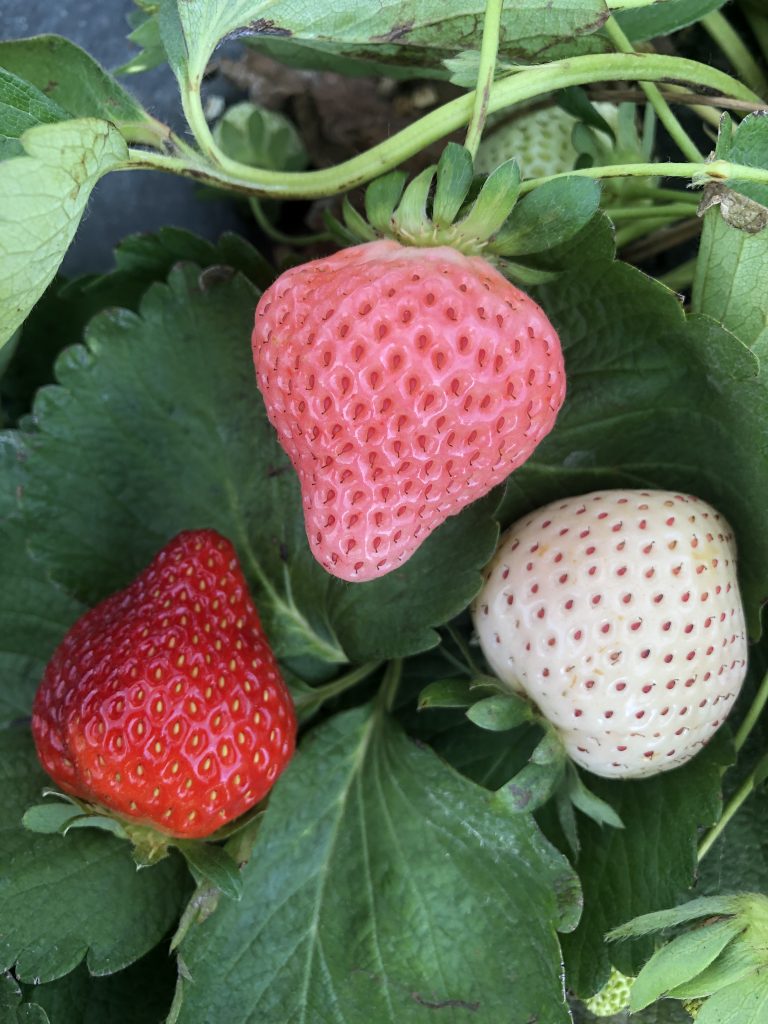
A new University of Florida Institute of Food and Agricultural Sciences strawberry release has excellent shape and flavor.
By Vance M. Whitaker
Two new strawberry selections have been approved for release by the University of Florida Institute of Food and Agricultural Sciences (UF/IFAS) and are in the commercialization process. Trade names have not yet been finalized but should be chosen in the next six months. For both, larger-scale testing will be conducted this fall, and commercial quantities will be available to Florida growers for the 2021–22 season.
The first release is an early short-day variety with excellent fruit shape and quality. It has slightly lower November and December yields than Florida Brilliance but has had high January yields. It has excellent flavor, with taste panels ranking it equal to or even better than Sweet Sensation® Florida127, depending on the harvest date. It also has high Brix through the season, similar to Sweet Sensation® Florida127. The push for better flavor is an important pursuit for the UF/IFAS strawberry breeding program, so the team is very excited about the sensory qualities of this new release.
A new white-fruited release from the University of Florida Institute of Food and Agricultural Sciences has a unique appearance and flavor.
Photo by Cristina Carrizosa, UF/IFAS Communications
The second release is a white-fruited strawberry. White-fruited varieties have been popular in Japan for some time, but this is expected to be the first such variety on the market in the United States. It has white internal and external color, with a pink blush on the sun-side and red achenes. The appearance of the pink blush and the achenes turning from green to red are the visual cues signaling that the fruit is ripe and ready to eat. The fruit are a little bit smaller than the other current varieties and are more similar in size to the fruit of Festival. The yield of this variety is about 75 percent of the current varieties grown in Florida, which are primarily Florida Brilliance and Sweet Sensation® Florida127.
It is important to mention that new strawberry variety releases from UF/IFAS are exclusive to Florida growers for the first three years, but trialing can be conducted during this period with permission from the Florida Strawberry Growers Association.
Regarding current varieties, Sweet Sensation® Florida127 (released in 2013) is fully available throughout the United States, while Florida Brilliance (released in 2017) is still exclusive to Florida for one more season. However, with permission, Florida Brilliance can be trialed outside of Florida in 2020 and will be fully available in 2021.
Stunted young trifoliates in the plant center (compact leaf mass). (Photos by Sriyanka Lahiri, UF/IFAS)
By Sriyanka Lahiri
Several arthropod pests occur in strawberries in Florida during the various stages of the crop cycle.
Cyclamen mites (Phytonemus pallidus), if present, originate from strawberry nurseries as hitchhikers on transplants. Thankfully, a very small percentage of growers reported a cyclamen mite infestation during the strawberry season of 2019–2020.
Soon after planting, armyworms (Spodoptera spp.), twospotted spider mites (TSSM, Tetranychus urticae) and the invasive polyphagous chilli thrips (Scirtothrips dorsalis) are typically found infesting plants.
TSSM can also arrive as hitchhikers on transplants, occasionally. The presence of armyworms on young foliage becomes immediately evident due to feeding holes left by their biting-chewing mouthparts. Both TSSM and chilli thrips feed on foliage using their piercing-sucking mouthparts. TSSM produce webbing on the surface of the foliage and lay eggs on these webs. However, chilli thrips differ in their oviposition practices.
The more devastating chilli thrips prefer feeding on the youngest open leaflets. Eggs are laid by the chilli thrips female into the leaf tissue using a saw-like ovipositor. This protects eggs from insecticides and predators. Both chilli thrips adults and larvae find refuge in concealed areas of the foliage, which makes them a very effective cryptic pest.
As plants progress toward flowering and fruiting, more thrips species appear, such as western flower thrips (WFT, Frankliniella occidentalis), common blossom thrips (F. schultzei) and Florida flower thrips (F. bispinosa) in addition to chilli thrips. Of these thrips species, both chilli thrips and WFT cause significant economic damage and develop resistance to insecticides easily.
DAMAGE
A cyclamen mite infestation can lead to severely stunted and crinkled leaves, aborted flowers, and bronzed and cracked fruits.
Chilli thrips larvae and adult. (Photo by Joseph D. Montemayor, UF/IFAS)
Chilli thrips cause necrosis at the site of feeding, which leads to darkening along the leaf mid-rib, followed by the spread of the dark coloration to lateral veins and petioles. Leaf bronzing, crinkling and deformation occurs during severe chilli thrips infestation.
Severe thrips and cyclamen mite infestations lead to bronzed and cracked fruits that are unmarketable.
An infestation of TSSM will lead to stippling of leaves initially. Uncontrolled TSSM populations become evident by the appearance of webbing.
MANAGEMENT
Management of cyclamen mites is best done with a preventive approach. Therefore, obtaining clean transplants is of utmost importance. Since all life stages of cyclamen mites show high mortality when exposed to hot water, a dip of frozen transplants into hot water at 111 °F for 10 minutes before planting may help. Alternatively, infested plants should be removed from the field.
The most significant early-season strawberry pest that is currently posing a management challenge in Florida is the invasive chilli thrips. Conventional insecticides are being used to manage thrips pests, but there are several naturally occurring beneficial insects that could be used. These include predators such as the big-eyed bug (Geocoris spp.) and the minute pirate bug (Orius insidiosus). Additionally, University of Florida Institute of Food and Agricultural Sciences (UF/IFAS) greenhouse experiments using potted strawberry plants have confirmed the efficacy of the WFT predator Amblyseius swirskii as effective for suppression of chilli thrips larvae.
An infestation of TSSM in open-field strawberries is best controlled by releasing the specialized predatory mite Phytoseiulus persimilis.
Armyworms are effectively managed by early-season application of biological insecticide formulations of Bacillus thuringiensis, subsp. kurstaki.
Pesticides registered for various strawberry pests are listed in the UF/IFAS Vegetable Production Handbook of Florida (https://edis.ifas.ufl.edu/pdffiles/CV/CV13400.pdf). It is important to select pesticides that are least harmful to beneficial arthropods, rotate modes of action and follow the label.
Hops are grown on various sized trellises at the Gulf Coast Research and Education Center in Wimauma, Florida. Photo by Shinsuke Agehara
Craft beer brewed with Florida hops sounds very attractive. But can hops be grown in Florida? Will the crop produce high yields? The most important question is: Will it be profitable?
There are lots of rumors, myths and hype about growing hops in the Sunshine State. That’s probably because hops have never been grown commercially in Florida and other subtropical regions — at least not on a large scale. There simply was not enough information. The profitability of Florida hops is still unknown, but a lot of information is now available from ongoing research conducted at the University of Florida Institute of Food and Agricultural Sciences (UF/IFAS) Gulf Coast Research and Education Center (GCREC).
In 2016, a 1-acre hop yard with a trellis 19 feet high was built. In the first two years, yields were very low. The main reason was premature flowering that limited the vegetative growth. At that time, many plants grew only halfway up the trellis. This happened because the daylength in Florida is not long enough for hops. In general, the critical daylength for hops is 15 to 16 hours. Hops promote vegetative growth when daylength is above this threshold, and plants start flowering when daylength drops below this threshold. The optimal shift from vegetative to reproductive development is key to maximizing hop yields.
UF/IFAS researchers experienced lots of trial and error. In 2018, LED lights were installed in the hop yard. The daylight extension with LED lights was effective in controlling the timing of flowering. In other words, it can trick hop plants into thinking they are in the Pacific Northwest.
All trials were reestablished using tissue-cultured seedlings. Researchers have tested more than 20 varieties and various crop management practices, including fertilization, irrigation, plant spacing and pruning. The hop yard is also being monitored to identify pest issues, including diseases, insects and nematodes.
TRELLIS TRIALS AND HIGH YIELDS
Research continued in 2019, with another 1-acre hop yard built to test different trellis designs and heights. The straight trellis has only one cable per row, which is for installing both LED lights and twines. By contrast, the V-trellis has three cables per row: the middle cable is used to hang LED lights, and the other two are used to install twines. The most notable difference is that the straight trellis can have only two twines per hill, whereas the V-trellis can have four twines per hill.
Supplemental lighting is used to extend daylength hours.
Photo by Shinsuke Agehara
In the spring of 2020, researchers started a new trial to evaluate the two trellis designs with three different heights: 12, 15 and 18 feet. A record high yield was achieved. Cascade hops grown on the 18-foot V-trellis produced 1,130 pounds of dry hops per acre, which is more than 60 percent of the commercial average yield of this variety. Alpha acid of these hops, which is an important quality attribute for bitterness of beer, was at the commercial level or even slightly higher.
It’s important to note that 1,130 pounds per acre is just the first season yield. It normally takes a few years before hop plants can reach the full yield potential, so the yield is expected to go up over time. Furthermore, Florida can produce two crops a year because of the warm climate, whereas other production regions, including the Pacific Northwest, can harvest hops only once a year. Within the next few years, researchers will know if Florida can achieve above-average yields!
In the meantime, the economics of this new crop need to be investigated. The total material cost for the GCREC hop yard establishment was $15,780 per acre for the straight trellis and $18,687 per acre for the V-trellis. Labor and crop management cost information is now being collected. Budget analysis is expected soon and will determine the breakeven price and yield for each trellis design.
DEVELOPING A VIABLE INDUSTRY
In 2019, Florida ranked fourth in the nation for craft beer production, with 329 breweries producing 42.6 million gallons of beer and generating an economic impact of more than $3 billion. The UF/IFAS hops research goal is to develop a viable industry for Florida growers and brewers.
Florida’s hop industry is just forming. There are several growers producing and selling hops to local craft brewers, and the production is expanding. More than 15 craft breweries in Florida have brewed beer using Florida hops.
The viability of this new crop in Florida is still unknown. The hope is that research information can support the development of the new industry and help local brewers make more beer with locally grown hops. The latest hops research updates are available at www.facebook.com/GCREC.Hops.
A cover crop mix of sorghum and sunn hemp produces positive results for Honeyside Farms.
By Tiffany Bailey and Ida Vandamme
It was about 18 months ago when we began planning our first crop to be planted on our newly certified organic field at Honeyside Farms in Parrish, Florida. The field was previously used for pastureland. It was easy to see that we would be starting from a soil structure that is common in our area: very sandy with low amounts of existing organic matter. We quickly learned that building these soils would need to become a priority.
It can be common for issues to surface during the first few months of converting from perennial pastureland to vegetable production, and that is exactly what we experienced. Our first major problem was due to the microbe populations living in the soil. We were tilling the land for the first time in possibly decades, and we believe that practice turned the existing microbial ecosystem on its head.
Without the introduction of good bacteria and fungi suited for vegetable farming, our organic crops were especially vulnerable to disease pathogens coming from infected seeds, neighboring farms and even on our equipment and shoes. It was a huge challenge! But, over time, we began to build up the proper microbe population for our farm. Planting cover crops proved to be an important part of building healthy soil.
COVER CROPS OFFER BIG BENEFITS
Cover crops are a very helpful tool in aiding and maintaining this transition. Unlike perennial pastureland, cover crops for vegetable farming are annual, covering the ground for a few months at a time (very convenient for your off season when it’s not practical to grow your main crop). Cover crops grow very fast, covering and protecting the soil from erosion.
Root mass grows down, infiltrating, breaking up compaction, improving structure and excreting exudates that condition the soil and attract good bacteria. Above ground, leaf matter adds literally tons of biomass that contributes to organic matter when broken down and attracts all kinds of beneficial insects and wildlife. There are so many more benefits to cover crops; these are just the main ones.
COVER CROP OPTIONS
Honeyside Farms has grown sorghum-sudangrass, sunn hemp, buckwheat and cowpeas for cover crops. As an organic farm, we preferably use organic seed. However, organic cover crop seed is not always widely available. Most certifying agencies will make exceptions when certified organic seed is not available.
Sunn hemp is probably our favorite cover crop. According to a Sustainable Agriculture Research and Education publication, sunn hemp can produce 5,000 pounds of dry matter per acre and 120 pounds of nitrogen per acre. That’s enough slowly available nitrogen to feed some crops from start to finish without needing to add any extra nitrogen.
Sorghum is also very beneficial. The sorghum-sundangrass hybrid is more productive in biomass and leaf matter, which is more beneficial as a cover crop than grain sorghum. Sorghum-sudangrass has been recorded to produce up to 18,000 pounds of dry matter per acre. The roots are perfect for scavenging any leached nutrients from the previous crop and putting them within reach of the next crop, thus minimizing pollution and making effective use of nutrition. Sorghum is also known to suppress diseases and nematodes by breaking up their life cycle and producing compounds toxic to them.
Cowpea is a legume. As a climber, it can be a nice addition to any tall cover crop mix like sunn hemp and sorghum. We have seen that cowpeas and buckwheat can provide significant sources of nectar and food for beneficial insects that we want to attract to the farm. Buckwheat acts as a great short-term cover and easily breaks down. It’s perfect for the 40- to 50-day gap between crops when other covers would take too long.
COVER CROP MANAGEMENT
When planting, it’s important to broadcast the proper amount of seed per acre. If the seed is planted too thin, one can miss out on biomass production. But there is no need to waste seed and money planting too thick. Before applying any fertilizer to the cover crops, we take samples and follow what the soil report recommends at planting.
The best time to knock down the cover crop is when the biomass is optimized, but before the carbon-to-nitrogen ratio gets too high and before seed set to prevent weeds. We allow a few weeks to let the cover crop break down enough so that it is not tying up nitrogen that should be available for our main crop. Sometimes before planting a cover crop, we can tell that this timing will not match when we need the field ready to grow a crop. But we find it better to still plant cover crops and gain some of the benefits rather than let the land sit bare and gain nothing or possibly even lose valuable soil due to erosion. Allow a few weeks to let the cover crop break down enough that it is not tying up nitrogen that should be for your main crop.
Most challenges come from what is limited by resources, time and practicality. Nothing will be gained if no time is taken to plan for cover crop management. But with proper intention and planning, planting cover crops will provide long-term benefits for many seasons to come.
Early results on low-chill varieties are expected next year from an olive research grove in Hardee County.
By Michael O’Hara Garcia
With weather and soils similar to the Mediterranean Basin, olives grow in Florida and throughout much of the southeastern United States.
Currently, Florida has approximately 800 acres of olives under active cultivation by 60 to 80 individual farmers in 20 counties. The groves range from backyard hobby plots with several trees to high-density commercial operations of 100 or more acres.
There are two modern olive mills, and several Florida nurseries propagate olive trees for fruit and ornamental purposes. A few miles over the Florida line, the Swiss agricultural management firm, Agrigrada, operates a 4,000-acre olive grove near Colquitt, Georgia, and a 300-acre olive grove and a modern olive mill serving growers near Valdosta, Georgia.
PRODUCTION AND VALUE
Thought to originate in the Fertile Crescent (Syria, Iraq and Iran), olive is the world’s oldest known continuously cultivated crop. For thousands of years, olives were gathered in the wild. The oil was crudely extracted by crushing fruit between stones and sieving or straining the pulp. Today, olive oil is a major commodity traded throughout the world and prized for its gastronomic and heart-healthy characteristics.
Michael O’Hara Garcia (left) and Don Mueller show off freshly harvested olives at Greengate Olive Grove in the Florida Panhandle.
Spain is by far the largest producer of olive oil, followed by Italy and Greece. In the United States, olives are commercially grown in California, Oregon, Washington, Texas, Arizona, Georgia and Florida. There are hobby and experimental olive plantings in Louisiana and Alabama.
The United States consumes 80 to 90 million gallons of olive oil per year or about 1 liter per person. Domestic farmers, going at full throttle, produced less than 5 percent of total annual consumption.
European Union market data from 2019 reveal 1 liter of olive oil sells for $5.56 or $21 per gallon. California Olive Ranch, the largest U.S. producer, retails 1 gallon of extra virgin olive oil (EVOO) for $67.36.
Organic certification brings even higher prices. Braggs organic EVOO (imported from Greece), sells for $70 per gallon. Apollo, a top California producer, retails its Mistral and Sierra organic blends for the equivalent of around $200 per gallon. Mistral oil is based on the Ascolana, an olive variety currently producing at Greengate Olive Grove near Marianna in the Florida Panhandle.
NEED FOR RESEARCH
Although the olive grows in Florida, it has been considered more of a curiosity than a commercial crop. While the University of Florida/Institute of Food and Agricultural Sciences (UF/IFAS) and Florida A&M University have olive observation plots, and agribusiness giants like Mosaic and Lykes Brothers have small experimental groves, little formal research on Florida olive cultivation is available to support industry development.
Bill Lambert shows an olive graft in a Hardee County research plot that includes 45 olive varieties under trial.
With the notable exception of work by the UF/IFAS Department of Entomology and Nematology, most information on the UF/IFAS Extension website dates from 2012 and is focused on California olive research and production. The Texas A&M University website provides significantly more information on growing olives in the Southeast.
The Florida Olive Council, a non-profit grower organization, conducts some research, and the Hardee County Industrial Development Authority has several thousand olive trees at its research facility near Wauchula, Florida.
Erroneously, some fear Florida’s humidity harms olive pollination, summer storms damage the olive crop, or disease prohibits profitable cultivation. While extreme weather impacts all crops, UF/IFAS researchers determined principal pests and diseases like olive fly, olive knot and peacock spot are not found in Florida.
The main problem cultivating olives for commercial purposes in Florida is the availability of varieties adapted to lower latitudes where there is less winter chill. Olive varieties (Arbequina, Koroneiki, Manzanilla, etc.) commonly used in commercial operations are native to northern Mediterranean countries like Spain, Italy and Greece (38° to 41° north latitude), where 300 to 400 hours of winter chilling are common. Olives must accumulate enough chill hours between November and March to bloom. A chill hour is one hour between 32 and 45° F.
While northern Mediterranean varieties grow throughout Florida and reliably produce in the Panhandle, they rarely bloom and fruit south of Interstate 4 (27° north latitude).
As Florida searches for a solution to citrus greening, many acres below Interstate 4 are fallow, and farmers need an alternative crop to augment citrus. New crop ideas like industrial hemp are popular, but the U.S. Department of Agriculture (USDA) suggests returns on industrial hemp are between $116 to $475 per acre compared with Florida citrus at $2,800 per acre and California olives at $2,688 per acre.
Responding to the need for olive research, the Hardee County Industrial Development Authority enlisted the support of the Florida Olive Council and UF/IFAS to begin research developing a market-viable, “low-chill” olive for southern Florida.
After installing several thousand mature olive trees on an old citrus grove, the Hardee County researchers secured 45 olive varieties from the USDA olive germplasm in California. Varieties were selected based on geographic origin. The researchers wanted olives adapted to areas around 27° north latitude.
100-year-old olive trees are growing in Ruskin, Florida.
In June 2018, the Hardee research team grafted 45 varieties from Morocco, Tunisia, Algeria, Syria, Pakistan, Egypt, Israel and several countries in the southern hemisphere (Chile, Peru, Argentina and southern Australia) onto mature olive trees at the 20-acre Hardee County research farm near Wauchula, Florida.
Bill Lambert, executive director of the Hardee County Economic Development Council, hopes to see some early results next year. “It takes at least three years for the grafts to mature enough to bloom, so we expect to start looking for our low-chill candidates next year,” Lambert said.
In addition to the grafting experiment, Lambert is in discussions with UF/IFAS to explore developing a low-chill variety using a new gene-editing process called CRISPR-Cas9.
Kevin Folta, a noted UF/IFAS genetic scientist, has begun basic research. He hopes to get the program fully funded soon. “The science is there, we just need to get to work,” he said.
Figure 1. Shallow subsurface drip irrigation is laid with a drip tape layer to a depth of 4 to 5 inches in organically grown lettuce.
By Tim Coolong
Subsurface drip irrigation (SDI) has been around for many years in a variety of different iterations. Most typically, SDI refers to a permanent drip system installed fairly deep (18 inches) and is used for irrigating agronomic crops such as corn or cotton.
In many cases, vegetable crops are too shallowly rooted for a traditional SDI system, but some processing tomatoes are grown using SDI. However, a shallow SDI system, where drip tubing is buried at a depth of 4 to 6 inches (Figure 1), may be a tool that both conventional and organic vegetable growers can use.
ADVANTAGES
For organic growers, the ability to use shallow SDI offers two main advantages. The first is that crops can still be shallowly cultivated during the season without worrying about cutting drip tape. Second, having drip irrigation buried can allow for wetting of the root zone without excessive wetting of the soil surface. During dry seasons, this can reduce weed pressure (Figure 2).
Figure 2. Acorn squash is grown with shallow subsurface drip irrigation (left) and surface drip (right). While this crop was grown conventionally with herbicide, notice the lack of grass weeds in the shallow subsurface drip irrigation plot compared to the surface drip. Earlier in the season, when this picture was taken, the surface drip-grown plants were slightly larger, but that difference subsided later in the season.
Studies have also reported an increase in rooting depth and fertilizer use efficiency with shallow SDI. Many companies make drip tubing layers. University of Georgia (UGA) research has even used bed shapers/plastic layers to form beds and lay buried drip tube without using plastic mulch. In studies conducted with shallow SDI during a single season, no difference was seen in flow rate or clogging due to roots growing into the emitters. To keep costs low, 10-mil thick drip tubing was used since researchers only planned to use it for a single season. More permanent SDI systems use much thicker walled tubing.
LIMITATIONS
While shallow SDI can be a good tool for helping organic growers reduce weed pressure and improve cultivation, there are some potential limitations. UGA studies found that when comparing shallow SDI to surface drip, transplants with smaller (i.e., shallower) root balls initially grew quicker when planted into surface drip plots — particularly when weather conditions were dry and hot — promoting stress.
Many of the studies were conducted on loamy soils. It is likely that the lack of capillary movement of moisture on sandy soils may limit the use of shallow SDI in those situations. Further, the shallow SDI system did not wet the surface adequately to germinate seeded crops.
Lastly, although leaks were not common, rodents did chew into the buried drip tubing on occasion. Nonetheless, based on experience working with shallow SDI, it is a useful tool for organic vegetable farms.
University of Georgia breeders developed the Orange Bulldog pumpkin.
By Cecilia McGregor and George Boyhan
Cucurbit crops are some of the most widely grown vegetable crops in the Southeast. However, the hot and humid climate is conducive to pest and disease development, which presents a challenge to growers. Cucurbit breeding at the University of Georgia (UGA) is focused on breeding pumpkin, watermelon and squash with excellent fruit quality and enhanced disease resistance.
PUMPKINS
Pumpkins are an important crop in the United States, particularly as decorations during the fall. Unfortunately, pumpkins are difficult to grow in the Southeast because of diseases. There are several diseases (particularly viruses) that affect traditional pumpkins. These diseases are transmitted by aphids in a non-persistent way. This means that as soon as the insect probes the tissue, the virus is transmitted. Control is difficult, because even with 90 to 95 percent insect control, the remaining 5 to 10 percent can effectively infect the crop.
UGA began a breeding program in 1996 with a collection of pumpkin seeds from Brazil. Seed from both elongated and flattened fruit of Cucurbita maxima were obtained and interplanted. Putative hybrids were collected. This began several years of selection for fruit with a round shape, pleasing color and open cavity. These pumpkins have a greater degree of virus resistance compared to traditional pumpkins (C. pepo), so they produce more consistently.
The resulting variety, Orange Bulldog, was released in 2006. Since there was no interest among seed companies, UGA has been handling sales. The primary audience for this variety is pick-your-own and roadside marketers. The vines hold up particularly well into the fall for direct marketers that “reseed” their pumpkin patch with new fruit each day.
Pumpkin research concentrated on developing disease resistance into commercially acceptable pumpkin lines has continued at UGA.
WATERMELON
UGA is also actively breeding for gummy stem blight and fusarium wilt resistance in watermelon. Resistance to gummy stem blight was first described in 1962 when it was discovered in a wild relative of watermelon, Citrullus amarus. This is the same species that was used to breed the fusarium-resistant, non-harvested SP pollinizer cultivars.
Breeding disease resistance into commercial, edible cultivars from this wild germplasm has proven difficult since the wild relative has hard, inedible flesh. This is further complicated by the fact that there are different species of the Stagonosporopsis pathogen that cause gummy stem blight and different races of Fusarium oxysporum var. niveum that cause fusarium wilt. The resistances to these diseases are quantitative, meaning that a single resistance gene does not give field-level resistance to the diseases. All these factors have delayed the development of cultivars resistant to these diseases.
Susceptible (left) and resistant (right) watermelon seedlings infected with gummy stem blight.
The breeding effort at UGA focuses on using modern selection methods to accelerate selection for resistance genes to speed up breeding efforts. Currently, selection is in progress for fusarium race 2 resistance and gummy stem blight resistance.
In addition to these disease-resistance breeding efforts, UGA breeds cultivars specifically for homeowners and farmers’ markets. The focus here is on novel traits like a variety of flesh colors and rind patterns and the egusi seed trait.
Egusi watermelon is very popular as an oilseed crop in many parts of Africa. The seeds are very high in oil (40 to 50 percent) and protein (25 percent) and are eaten as snacks or as a thickener in soups and stews. Egusi seed is large and flat with a unique fleshy outer layer that dries into a very thin seed coat that can easily be shelled. Traditional egusi watermelon has hard inedible flesh, which goes to waste. UGA is breeding egusi watermelon with edible flesh. These plants will produce fruit that pack the health benefits associated with the antioxidants in red- and orange-fleshed watermelon while also being a source of high oil and protein seed.
SUMMER SQUASH
In 2019, UGA started a squash breeding program. This program was launched in response to the severe yield losses experienced by Georgia growers in recent years due to whiteflies and whitefly-transmitted viruses.
The sweetpotato whitefly (Bemisia tabaci) can directly cause yield losses in many different crops due to feeding, but an even bigger cause of yield losses are the viruses it transmits. Sweetpotato whiteflies can transmit more than a hundred different viruses. Cucurbit leaf crumple virus (CuLCrV) and Cucurbit yellow stunting disorder virus (CYSDV) are some of the most important to squash growers.
Commercial squash cultivars have proven to be very susceptible to these viruses, and sources of resistance have not been identified. UGA, in collaboration with the University of Florida, has started large-scale evaluations of squash germplasm from all over the world in search of resistance. Several genotypes with resistance to CuLCrV and CYSDV were identified in 2019 and are now being evaluated further for use in the breeding program.
The UGA cucurbit breeding programs are committed to developing cultivars well adapted to the Southeast, with high disease resistance and exceptional fruit quality for both large- and small-scale growers in the region.
Colossus has a later blooming time and very large fruit.
By Patricio Munoz and Doug Phillips
The University of Florida (UF) blueberry breeding program has a long history of developing superior southern highbush cultivars for the commercial blueberry industry. Beginning in 1949, the program has produced more than 40 cultivars, all of which exhibit a lower chilling hour requirement and adaptation to the higher temperatures and disease pressure experienced in Florida’s climate.
There are several desirable traits that are the focus of blueberry breeding efforts, including fruit quality (firmness, flavor, size, color, scar size, etc.), plant vigor, disease resistance and machine harvestability (fruit firmness, detachment force, plant architecture, concentrated ripening, etc.).
ADVANCEMENTS ACHIEVED
Blueberry breeding programs have historically used the recurrent phenotypic selection method, which is still used today. Selection of superior candidates is based on the cross-pollination of plants with favorable traits, the progeny of which are grown out and go through a series of successive selection, with favorable plants both advancing to the next stage and being used as parents for the next breeding cycle.
From an initial planting of 20,000 seedlings, each cycle’s population is narrowed to 10 to 15 percent, of which only a few may ultimately be released. With this method, the development of a new cultivar from cross-pollination to release can take between 10 and 12 years.
However, since the original selections from the wild at the beginning of the program until today, significant improvement has been achieved. In 2018 the UF blueberry breeding lab demonstrated by an extensive review of the literature (Cappai et al., 2018) that firmness has been steadily improved, reaching levels that make almost all new cultivars acceptable for machine harvest, and that, in general, southern highbush cultivars are firmer than northern highbush.
More recently, advanced methods including quantitative genetics and molecular information have been introduced, which have the potential to shorten the breeding cycle. These methods include using statistical methods to model molecular markers linked to genes associated with favorable traits. This can be done much earlier in the breeding cycle, instead of waiting until a plant becomes mature to observe whether certain traits will be present.
Optimus is an excellent choice for machine harvesting and exhibits good production in both deciduous and evergreen systems.
In 2019, the UF blueberry breeding lab performed a proof of concept experiment of these methods and demonstrated their feasibility (Oliveira et al., 2019). The focus during 2020 has been on optimizing these methods, which will be reported in studies to be published in the near future.
Other areas of research in the UF breeding program include flavor perception, container production and alternative season production.
FLAVOR PERCEPTION
The UF breeding program recently finished performing studies to demonstrate that consumer “liking” perception can be predicted when using the unique chemical makeup of each new cultivar. The idea is to avoid bias in the selection process associated with the breeder in charge of creating and releasing new cultivars.
In this area, discoveries have been made regarding which chemicals are favorable to the flavor perception and which ones are detrimental. This work started many years ago, and now with more information some of the findings can be validated.
CONTAINER PRODUCTION
Production in containers has become a global trend, primarily to produce high yields on marginal land because these soilless systems do not depend on native soil. The UF breeding program has been performing experiments as a proof of concept of this system for conditions in Florida. Results of second-year experiments show that, while these systems require high investment, they could become an attractive alternative for some Florida growers. The lab is in the process of refining the results to deliver some recommendations to growers.
In addition, the breeding program supports and collaborates in blueberry-related research in pathology, entomology, management and pollination.
RECENTLY RELEASED CULTIVARS
As always, the UF breeding program is closely watching elite selections to release new cultivars. A major focus has been placed on consistency across locations and years, as well as on precociousness (the capacity to produce harvestable fruit the first year after planting).
The most recently released cultivars from the UF program, Colossus and Optimus, have started to gain traction with growers.
Colossus was released in 2019. It has exhibited a later blooming time with a short bloom to ripening period, and has better performance with low doses of hydrogen cyanamide. The fruit is very large to jumbo sized, is very firm, has good color and bloom and a small picking scar. Colossus has performed well in both North Central and Central Florida trial sites. The best fruit is obtained by allowing it to hang on the bush until the preferred sweet and acid balance is achieved. In 2019, the yield in North Central Florida was approximately 12 pounds per bush. Colossus can be machine harvested if needed.
Optimus was released in 2018 as an excellent choice for machine harvesting. It has good timing for the Florida market window, with high yields and natural early leafing. Optimus has firm, medium-sized, high-quality berries. It has performed well in machine-harvesting trials and exhibited good production across Florida in both deciduous and evergreen systems. Optimus yielded 14 pounds of fruit per bush in 2019 in North Central Florida.
Other recent releases, heavily used in the evergreen system, include Arcadia and Avanti, which were released in 2015.
Arcadia has high yield and vigor, very low chilling requirements and disease-tolerant foliage. Several growers have reported good fruit production in the first year after planting. Arcadia has shown susceptibility to bacterial wilt (Ralstonia solanacearum), with severity varying significantly from farm to farm.
Avanti has potential for above-average yields, with early fruit maturity, very low chilling requirements and very sweet fruit. It has shown some susceptibility to mite damage and algal stem blotch, which require good management programs.
Figure 1. A new University of Florida strawberry variety is white with a slight pink blush and red seeds when fully ripe.
Photo credit: Cristina Carrizosa, UF/IFAS Communications
The University of Florida will soon commercialize a new strawberry variety. It doesn’t have a name yet, but it is already drawing attention for a very unusual characteristic. When it is ripe and ready to eat, it is white inside and out, with a slight pink blush on the exterior and red seeds. The flavor is very different from a typical strawberry, sweet but with a pineapple-like aroma. White strawberries have been popular for some time in Japan, but this is expected to be the first white strawberry on the market in the United States.
These unusual strawberries were not made in a lab. White strawberries are actually found in nature. Breeders have harnessed this naturally occurring trait, crossing white strawberries from the wild with modern strawberries to create something different in both appearance and taste.
WHY IT’S WHITE
The red color of the typical strawberry comes from pigments called anthocyanins. White strawberries produce much lower amounts of these compounds in their flesh than red strawberries. Recent research has shown that white strawberries of various types all have DNA sequence changes in a single gene called MYB10, which is involved in the synthesis of anthocyanins. These changes keep the gene from carrying out its normal function, essentially halting the chemical process in the fruit that produces red pigments.
HOW IT WAS DEVELOPED
In 2012, some strawberry seeds from fruit purchased in Japan were brought to the University of Florida. The seeds were sown, and a few small plants were recovered. The pollen from these plants were crossed with a Florida variety. The seedlings from this cross produced fruit that ranged from white to pink to red.
Further crosses with Florida varieties were made, ultimately resulting in a strawberry with similar hardiness and fruit characteristics to modern varieties but with white color. Commercial trials have been promising so far. Pickers can tell when the fruit is ripe when a slight pink blush develops on the sun-side of the fruit, and when most of the seeds turn red. By 2022, these new white strawberries should be available in U.S. grocery stores.
Figure 2. Florida strawberry varieties can be red, pink or white. Photo credit: Seonghee Lee
STRAWBERRY SPECIES
There are many different species of strawberry throughout the world, and white strawberries are naturally found within several of them.
Alpine Strawberry (Fragariavesca) Alpine strawberries are in the species F. vesca, which is an ancient ancestor of the modern strawberry. In Europe, this strawberry is referred to as “fraises des bois” and is prized among food connoisseurs for its aroma. While most members of the species have red fruits about the size of a fingernail, the fruits of some Alpine strawberries are yellow to white in color. More information is available from the University of Florida at edis.ifas.ufl.edu/hs1326 on how to grow Alpine strawberries.
Beach Strawberry (F. chiloensis) The beach strawberry is found in the wild along the Pacific coasts of North and South America. F. chiloensis is one of the most recent ancestors of the modern strawberry. Some of the beach strawberries found in South America are naturally white or pink. The fruit only grow about as large as a thumbnail and are very soft compared to modern strawberries. Some varieties of this species that are crossed between F. chiloensis and the modern strawberry (F. × ananassa) have been called “pineberries.” Some varieties of pineberries are available for home gardeners, but they are not large enough or firm enough to be produced and sold on a large scale.
Cultivated Strawberry (F. × ananassa) A white beach strawberry from Chile and another wild species from North America called F. virginiana with bright red fruits were collected by explorers and brought to Europe about 300 years ago. There they accidentally hybridized to produce the cultivated strawberry or “modern” strawberry, F. × ananassa, that we know today. Almost all the strawberries currently grown and produced in the United States are F. × ananassa. White cultivated strawberries have been bred for some time in Japan and sold at high prices as novelty items. However, white strawberries have not yet caught on as much in other areas of the world.
See programs.ifas.ufl.edu/plant-breeding/strawberry for more information on University of Florida strawberry breeding and genetics.
Blackberries are grown as a commercial crop in North Carolina.
By Zhanao Deng
Blackberry has emerged as an alternative crop in Florida. More and more Florida growers are growing or trialing blackberries for commercial production. They have indicated a dire need for suitable blackberry cultivars that can yield well and produce berries of good quality.
PAST CULTIVARS AND RESEARCH
In the 1950s, University of Florida (UF) released two blackberry cultivars, Flordagrand and Oklawaha. Both produced high yields of large, attractive berries, but their trailing growth habit and thorny canes made them unsuitable for commercial production.
The University of Arkansas has maintained an active blackberry breeding program for more than five decades and has released dozens of new cultivars. Essentially all the blackberry cultivars currently grown in Florida and other Southeast states are from this breeding program.
Some of the popular floricane-fruiting cultivars include Apache, Navaho, Natchez, Osage and Ouachita. They produce berries on second-year canes (floricanes). In 2005, the program released the first primocane-fruiting cultivars that can produce berries on the current-year canes (primocanes) as well as floricanes. Prime-Ark® 45, Prime-Ark® Freedom and Prime-Ark® Traveler have this new type of fruiting habit.
Flowers are pollinated for blackberry breeding.
With funding from the Florida Department of Agriculture and Consumer Services Specialty Crop Block Grant program, UF researchers began trialing these cultivars in 2017 in a blackberry orchard at the Gulf Coast Research and Education Center (GCREC). Prior to this, Shinsuke Agehara trialed Navaho, Natchez and Ouachita in wooden boxes and large containers. In his trials, Natchez outperformed Ouachita and Navaho. In the orchard trial, Osage had the highest yield among the five floricane-fruiting cultivars, with an average of 3.9 pounds of berries per plant. Among the three primocane-fruiting cultivars, Prime-Ark® Freedom had the highest yield, producing an average of 6.3 pounds of berries per plant.
Researchers used in-row spacing of 3 feet and between-row spacing of 10 feet in the trials. With this spacing, 1,452 plants could be grown per acre. The estimated per-acre yield would be 5,663 pounds for Osage and 9,148 pounds for PrimeArk® Freedom. Natchez showed significant variability in berry yield from year to year or site to site.
CURRENT CULTIVARS
In recent years, the University of Arkansas blackberry breeding program has released two new floricane-fruiting cultivars, Caddo and Ponca. Based on release documents, both cultivars are high yielding, thornless, erect and produce medium to large fruit. Ponca is the sweetest cultivar released to date and has good shipping and handling traits. Both cultivars have been introduced to Florida, and a new trial is being set at GCREC to test their performance. Stay tuned for trial data in the next two years.
In small trials conducted in Arkansas, these cultivars had the potential to produce 10,000 to more than 20,000 pounds of berries an acre. Why do these cultivars yield much less in Florida? Researchers think the primary reason is that chilling requirements were not met in Florida, especially in Central Florida. Very much like blueberries, blackberries need a period of chilling (temperature below 45° F) to break sufficient numbers of buds and develop enough flowers so that growers can have a decent crop.
The current blackberry cultivars grown in Florida were bred and initially selected in Arkansas, and they need 300 to 900 hours of chilling. On average, Central Florida only has about 100 to 300 hours of chilling. Without enough chilling, blackberry plants break much fewer buds, have much fewer fruiting laterals and flowers, and yield poorly with berries ripening over an extended period.
BUILDING A BREEDING PROGRAM
UF trials and growers’ experiences indicate a strong need for new blackberry cultivars that are better adapted to a low-chill environment. This need prompted UF researchers to breed blackberries. The breeding program received private funding and technical support from Coastal Varieties Management. The GCREC and the UF Institute of Food and Agricultural Sciences (IFAS) Dean for Research Office provided funding to cover expenses associated with facilities.
In spring 2015, UF researchers made the first batch of crosses to produce blackberry seeds. Newly produced seeds were treated with a strong acid to burn part of the seed coat and then they were kept cold for several months before they were germinated. The seedlings were then grown and selected in Florida. Researchers repeated this process each year since then.
So far, more than 10,000 blackberry seedlings or young plants have been screened in Florida. Dozens of plants were selected for further trials. Shoot tips have been collected from some of the most promising plants and cultured in test tubes for rapid propagation. The first batch of tissue culture-propagated blackberry young plants from one of the selected lines was sent to growers this past June for trialing.
Blackberry cultivar trials are underway at the Gulf Coast Research and Education Center in Wimauma, Florida.
In the meantime, researchers have set up the first replicated trials to test the new line’s berry yield and quality. Effort is being made to expand the blackberry orchard and produce additional liners for more field trials, which is warranted to select the best adapted cultivars for Florida growers.
As more Florida growers begin growing blackberries, they have more questions needing practical solutions. To better address growers’ needs, a UF/IFAS research and Extension team has been formed. It consists of six specialists from the GCREC and the Horticultural Sciences Department and two Extension faculty from Orange, Marion and Hillsborough counties. Team members are well experienced with berry breeding; variety selection and trials; plant management and manipulation; fertilization; disease, insect pest, nematode and weed identification and control, etc. The team has received great support from Florida growers and some seed funding from the UF/IFAS Support for Emerging Enterprise Development Integration Teams program and the GCREC.
UF plans to produce the first blackberry production and spray guide by early 2022 and provide growers and Extension agents with more training. The goal of the team and these efforts is to facilitate the development of the Florida blackberry industry and help growers produce profitable crops sustainably.