Photo by UGA CAES/Shows watermelons piled the side of a row at the UGA Tifton Campus in 2016.
By Clint Thompson
Georgia’s watermelon harvest will ramp up next week.
According to Samantha Kilgore, executive director of the Georgia Watermelon Association, acreage is projected to decrease this year to 19,000 acres. It would mark a significant drop from previous years’ harvests. According to the National Agricultural Statistics Service, from 2016-2018, Georgia averaged a harvest of just more than 23,000 acres.
“In 2019, we probably had upwards of 21,000 or 22,000 acres. If anything, it’s kind of evidence of the market leveling out a little bit from having a higher amount of watermelons harvested last year and then people pulling back to adjust to demand,” Kilgore said.
No Watermelon Shortage
There was concerns that there could be a watermelon shortage by Memorial Day. With South Florida’s crop ending a little early due to torrential rains, farmer Carr Hussey, chairman of the board of the Florida Watermelon Association, feared there might be a shortage. However, Kilgore reassures watermelon lovers that there is plenty of locally grown crop in stores.
“I picked up a Georgia grown watermelon at Kroger on Tuesday. We’re not hearing anything about a shortage,” Kilgore said. “The bulk of Georgia product will be ready the first week of June. There could be a little bit of a lag. But I don’t see that stores will be empty by any means.”
Kilgore is confident in how the Georgia crop has progressed this year. Good weather during the growing season has been a huge plus.
“Everything’s been really good. The past few years we’ve had some weather events that have made the harvest season difficult. We haven’t had that this year,” Kilgore said. “I was talking to one of our marketers last week and they expect watermelons shipping this week to get in stores next week.
“The quality of these Georgia watermelons is good. Because like I said the weather’s been pretty mild and not too wet. They’re not battling any major disease issues that could be caused by flooding or bad weather.”
There are many questions coming in this spring on how to fertilize floral hemp (hemp grown for CBD, CBG, CBN, etc.). Research to develop those recommendations is still ongoing in North Carolina, but Michelle McGinnis with the N.C. Department of Agriculture and Consumer Services, Agronomic Division, has prepared guidelines for us on leaf tissue sampling and soil fertility.
UGA photo/UGA Extension staff joined Georgia Grown staff to load boxes of produce into hundreds of waiting cars at the Gwinnett Georgia Grown to Go event on May 27.
By Maria M. Lameiras for UGA CAES News
Like the moments before a race begins, dozens of staff with Georgia Grown and University of Georgia Cooperative Extension prepared to load thousands of pounds of fresh fruit and vegetables into hundreds of waiting cars and trucks stretched out in long lines at the Gwinnett Georgia Grown To Go event in Lawrenceville, Georgia, on May 27, even before the 3 p.m. start time.
Held at Coolray Field, the event was the third in a series of events being held around metro Atlanta to give consumers a chance to purchase produce straight from the farm — and to give farmers the opportunity to sell crops that have seen the marketplace narrow due to the COVID-19 crisis.
“There is food that is growing in Georgia that is just going to rot in the fields if the farmers can’t find buyers, and we have hunger on the other end,” said Mary Black, county coordinator and Family and Consumer Sciences agent with the Gwinnett County UGA Extension office. “We hope this will help connect the farmers with the people who need the food.”
In addition to helping coordinate the event with county officials, Gwinnett County Extension provided each customer with information packets that included recipes, nutrition information, and tips on food preservation and food safety, as well as links to UGA Extension resources available at extension.uga.edu/topic-areas/food-health.
The event’s online presale orders totaled $82,733 for mixed vegetable boxes, flats of blueberries, cases of peaches, bags of Vidalia onions, as well as artisan cheeses and gourmet cooking sauces; all from Georgia producers, said Paul Thompson, deputy director of marketing and promotion with Georgia Grown. It’s a division of the Georgia Department of Agriculture focused on promoting agribusinesses. Day-of sales generated another $21,146.
Tina Fleming, director of community services with Gwinnett County, said that the event served as an opportunity to bring fresh produce to the county’s residents and to assist disadvantaged members of the community. Those who ordered online ahead of the event were given the option to pay to donate a box of produce to local service organizations, resulting in the donation of 118 boxes of produce. After the event, farmers donated another 1,004 boxes of vegetables, 218 flats of blueberries, 10 boxes of peaches and 120 pounds of onions for food-insecure Gwinnett citizens.
“This has been a multi-agency event and a great partnership for us,” said Fleming. “There was a lot of talk about the event on social media and it has been a benefit for our county residents, as well as generating donations for 11 community nonprofit agencies that serve the county.”
Coolray Field, where the event was held, is a Gwinnett County-owned venue that is the home of the minor league Georgia Stripers baseball team. The setting offered an ideal location, with nearby access to I-85 and the space to accommodate the trucks needed to deliver the produce as well as customer traffic.
“We hope to be able to do this again this year,” Fleming said.
Corbett Brothers Farms from Lake Park, Georgia, and Southern Valley Fruit and Vegetable from Norman Park, Georgia, worked together to bring 2,750 boxes of mixed vegetables to Gwinnett for the event.
Ken Corbett, founder of Corbett Brothers Farms, said the Georgia Grown to Go events have helped fill a void left when revenues from food service and restaurant customers dropped due to COVID-19 restrictions.
“I have been pleasantly surprised in the amount of interest we’ve seen and, just as important, is educating consumers on what Georgia farmers grow,” said Corbett, whose family farm started in 1987 with 1 acre of bell peppers and now primarily grows bell peppers, cucumbers, zucchini and yellow squash, along with about a half dozen smaller scale crops, on 3,000 acres. “As farmers, we help each other out all the time, and it has been good to have Georgia Grown on our side in this.”
Customers were encouraged to post about their experience on social media using #GeorgiaGrownToGo.
“Great event in Gwinnett yesterday! Well run and very organized, even with long lines and rain. My fridge is stocked with wonderful fresh veggies and fruits! So happy to support our Georgia farmers,” wrote Gwinnett County consumer Debbie Holmes Martin on Facebook.
Information on upcoming Georgia Grown to Go events is available at georgiagrowntogo.com and additional resources for producers and consumers are available at extension.uga.edu.
University of Georgia Cooperative Extension Ag economist Adam Rabinowitz encourages farmers to submit applications for the Coronavirus Food Assistance Program (CFAP) sooner rather than later.
Adam Rabinowitz
The application process for CFAP started this week. The program provides relief to American farmers and ranchers impacted by the coronavirus pandemic.
When details of CFAP were announced, the first guideline for eligibility requirements was a payment limitation of $250,000 per person or entity for all commodities combined. With so many producers projected to participate in the program that will provide up to $16 billion in direct payments, there is a chance of not having enough funds available.
“The USDA has estimated that there may be insufficient funds. As a result, they’re making payments in two phases. The initial payment is 80% of what the producer will be eligible for. Only if funds are available, (will) the remaining 20% will be paid,” Rabinowitz said. “There is that chance that additional funds will be allocated in the future. That certainly could help but it’s certainly not a guarantee.
“My recommendation is to get it in sooner than later. This way your paperwork is there.”
Specialty Crops Covered
For eligible specialty crops, the total payment will be based on the volume of production sold between January 15 and April 15, 2020; the volume of production shipped, but unpaid; and the number of acres for which harvested production did not leave the farm or mature product destroyed or not harvested during that same time period, and which have not and will not be sold. This has created some concern among farmers in Georgia and Alabama that their crops will not be covered based solely on the dates outlined in the program.
Specialty crops include, but are not limited to, almonds, beans, broccoli, sweet corn, lemons, iceberg lettuce, spinach, squash, strawberries and tomatoes. A full list of eligible crops can be found on farmers.gov/cfap. Additional crops may be deemed eligible at a later date.
COLUMBIA – The nonprofit South Carolina Advocates for Agriculture will buy food from South Carolina farmers and distribute it to local food banks as part of a new charitable effort to ease COVID-19 strains on the food system.
Certified South Carolina and South Carolina Advocates for Agriculture are partnering on Farmers to Food Banks, an initiative to support farmers and needy South Carolinians. They aim to raise $500,000, with several generous donors already having made commitments.
As schools, restaurants, and other businesses and institutions closed earlier this year in an attempt to curb the pandemic, many farmers scrambled to find markets for their products. And with unemployment soaring, many South Carolinians have had to seek food assistance.
“Farmers to Food Banks solves two problems with one charitable effort: helping the needy while supporting the South Carolina farmers who work hard to feed us all,” said Commissioner of Agriculture Hugh Weathers, who serves as an advisor to South Carolina Advocates for Agriculture. “People want to lend a hand during these difficult times, and this is one simple way they can do so.”
The South Carolina program will complement the federal Farmers to Families Food Box program, a COVID-19 response effort to use tax dollars to buy and distribute commodities. With a quick launch and brief fundraising period, South Carolina’s Farmers to Food Banks program aims to rapidly address local needs by buying food and distributing it to Feeding America food banks, potentially filling gaps in the federal effort. The program will accept applications from distributors, 15 of which have formally expressed their interest already.
Launched in 2006, Certified South Carolina is the South Carolina Department of Agriculture’s branding program to promote South Carolina-grown food to consumers.
South Carolina Advocates for Agriculture is a 501(c)3 created in 2005 to help promote agriculture in the Palmetto State. Previous successful partnerships between Certified and Advocates include the 2015 flood relief effort Plant It Forward SC and fundraising campaigns to provide scholarships for the South Carolina Commissioner’s School for Agriculture.
Those who wish to donate to or participate in Farmers to Food Banks can contact Cristina Key at ckey@scda.sc.gov or 803-734-2190 for more information.
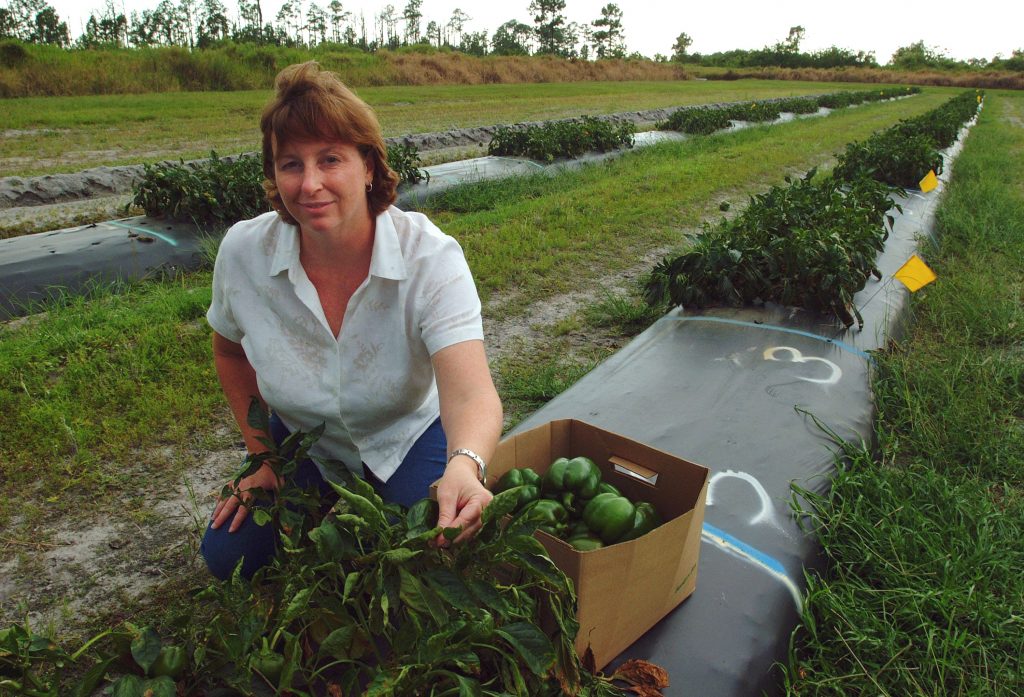
Pam Roberts checks pepper plants for bacterial leafspot at UF’s Southwest Florida Research and Education Center in Immokalee. (Photo by Eric Zamora UF/IFAS)
As Florida moved to “safer at home” measures, not all work could be put on pause.
When it came to University of Florida research, many UF/IFAS projects could not wait. There are living plants, animals and insects to feed and maintain; some projects have regular monitoring procedures for which postponement could have broader environmental consequences.
“We are very proud of our faculty, staff and students for continuing their essential research safely during the COVID-19 crisis,” said Robert Gilbert, dean for UF/IFAS Research and director of the Florida Agricultural Experiment Station. “We have approved many critical and time-sensitive research projects as this situation has evolved, and we continue to do so, with the number of approved projects well over 1,000 at this point. We expect other ongoing projects to ramp up in the near future.”
The UF/IFAS research portfolio includes thousands of projects totaling millions of dollars in funding.
“Our projects are continuing, but we have adapted to reflect COVID health and safety concerns to keep our research teams safe,” said Damian Adams, interim associate dean for UF/IFAS Research. “Some programs were able to transition very well to remote work and were largely uninterrupted or even accelerated.”
Below is just a sampling of the projects that have continued during the pandemic.
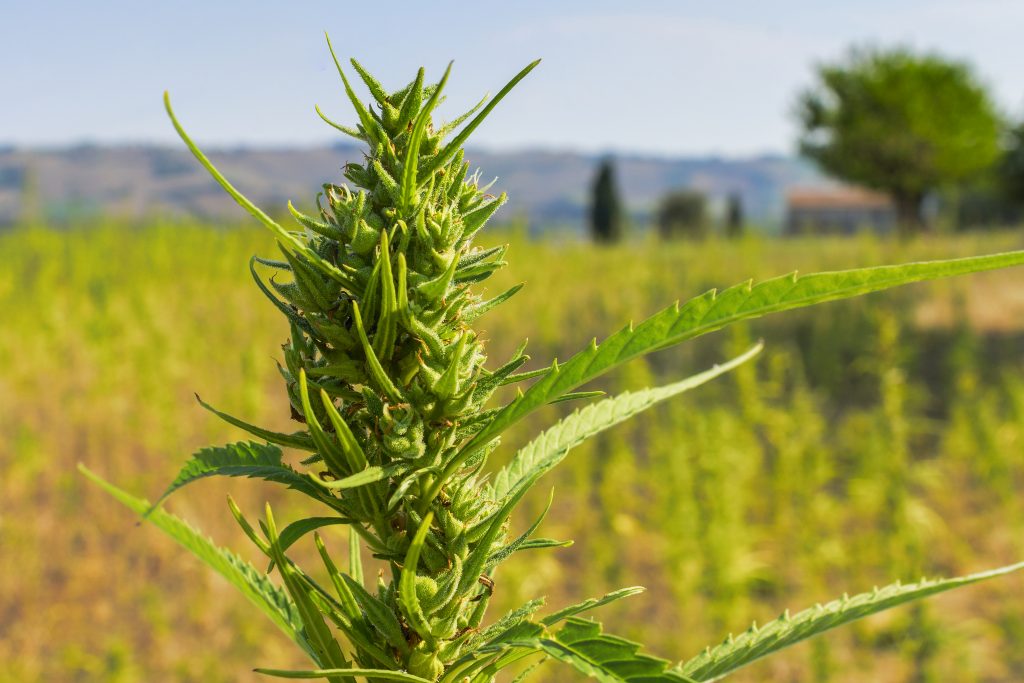
On-farm hemp trials around Florida are slated to begin soon.
Out of the Citrus Research and Education Center (CREC) in Lake Alfred, Florida, professor of nematology Larry Duncan leads a study for citrus grove nematode management. Florida citrus growers, whose success is already being challenged by widespread citrus greening, rely on UF/IFAS research to recommend best practices for a productive fruit yield. Disrupted continuity of Duncan’s project would have caused a two-year delay in recommendations as well as potential productivity losses in CREC’s citrus groves.
From the Fort Lauderdale REC in Davie, Florida, a team led by algae expert Dail Laughinghouse, an assistant professor, keeps tabs on the quality of several water bodies: Lake Okeechobee, Lake Tohopekaliga, St. Lucie Canal and St. Lucie Estuary. The project conducts monthly sampling to remain on the forefront of the fight against harmful algal blooms and their toxins, which present a constant threat to environmental and public health. During an active bloom, the consequences have proven to be far-reaching, with every Florida industry depending on our water resources in some direct or indirect way, from tourism to healthcare. Long-term data and continuous monitoring are necessary to support the understanding of triggers and dynamics of these toxic blooms.
At the Florida Medical Entomology Laboratory (FMEL) in Vero Beach, molecular biologist Chelsea Smartt, an associate professor, has a living Culex mosquito population that can salivate Zika virus. As one of few such populations in the world, continuous maintenance is required, as the loss of these insects would mean this critically important research is unable to continue. The work done at FMEL has implications for populations around the world, as mosquito-borne diseases are easily spread and kill many people each year.
The university’s main campus in Gainesville, Florida has greenhouses that are home to the blueberry breeding program, the basis of the state’s successful blueberry industry, which was valued at $82 million in 2015 (USDA-NASS, 2016). Patricio Munoz, horticultural sciences assistant professor, and his team must continue maintenance of the living plants, without which irrecoverable losses could occur.
Work at the Range Cattle REC in Ona proves the ability for some projects to continue virtually. Maria Silveira, soil and water sciences professor, is leading a project that investigates phosphorous (P) inputs and outputs for cow-calf operations in the state of Florida. As part of this effort, an online survey has been administered to beef cattle producers statewide. The project, developed in collaboration with the Florida Cattlemen’s Association and funded by the Florida Cattle Enhancement Board, is expected to provide a better understanding of role that beef cattle industry plays in the overall P inputs and outputs throughout the state.
With the UF/IFAS hemp program beginning its second year, a delay could affect future plantings and research. The program, led by Zachary Brym, agronomy assistant professor at the Tropical REC in Homestead, requires continuous maintenance of the fields to remain in a cultivatable status, which are now in the process of being planted with hemp. In addition, on-farm trials around the state are slated to begin soon. This critical work will help the fledgling industry by providing growers with guidance for success.
Robert Fletcher, a wildlife ecology and conservation professor based in Gainesville, leads an ongoing project to monitor the federally endangered snail kite for several Florida agencies. The species has broader legal implications, factoring into water management decisions in central and south Florida.
“This crisis has highlighted the importance of Florida agriculture more than ever,” Gilbert said. “The pandemic has presented difficult conditions for our researchers to adapt to professionally and at home, but working as a team has made us well-positioned to ramp up research quickly and safely to serve our stakeholders around the state. We value our partnerships with funding agencies and grower groups to perform this impactful research.”
Gilbert adds that UF/IFAS is investing in new research that will kick-start new interdisciplinary studies, as well as research into emerging opportunities for Florida agriculture.
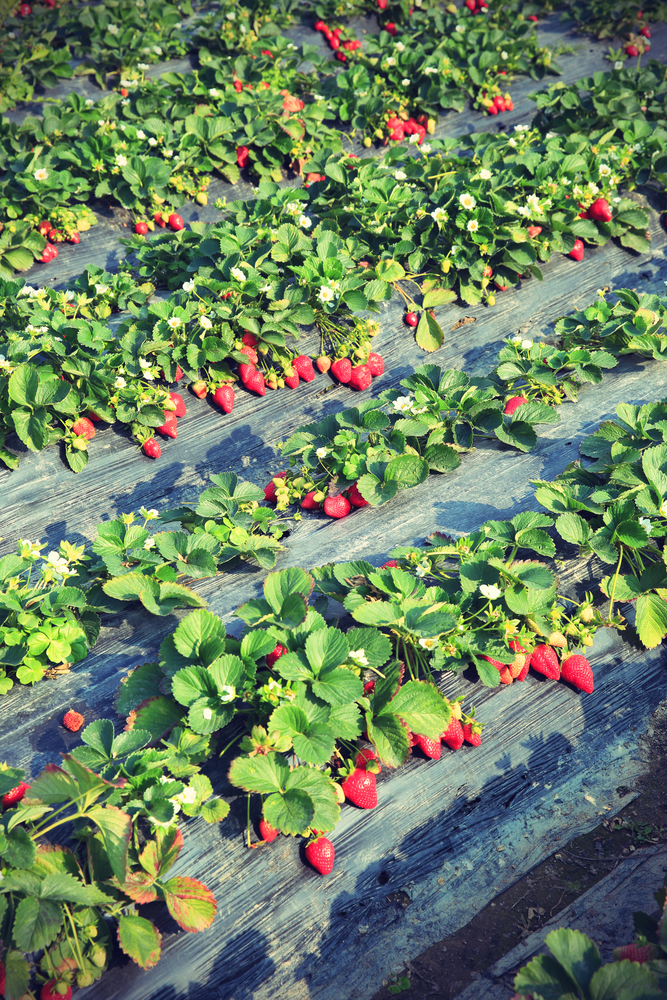
File photo shows a strawberry field. Strawberries in South Carolina have been impacted by excessive rainfall.
By Clint Thompson
Excessive rainfall in South Carolina has cut short strawberry season for parts of the state, says Bruce McLean, Clemson (S.C.) Extension area commercial horticulture agent for Dillon County, Horry County, Marion County and Malboro County in the Pee Dee Region.
“Last week, in certain spots was just torrential rains,” McLean said. “A lot of the fruit that I saw looked really good, but that rain, it wiped it out. There was just so much water damage on it. It really took out a lot of that late fruit that was coming on.
“There’s still some fruit coming on but it’s to the point now, everybody’s basically having conversations now as far as is it worthwhile and is it time to go ahead and terminate the crop and go ahead to try to plant something else?”
Rain is Everywhere
Rain has been persistent in other parts of South Carolina as well. According to the South Carolina Grower, Justin Ballew, Clemson Extension agent in the Midlands, reported that rainfall has slowed strawberry picking and there were plenty of fruit that experienced water damage.
“Botrytis is loving all the moisture. Most fields look like they will keep producing for a few more weeks. Just stay on top of fungicide programs. The moisture and warm temperatures have most other crops growing rapidly and looking good. Keep an eye out for disease,” Ballew said in the South Carolina Grower.
According to McLean, rain is becoming widespread.
“We’ve seen one place, even on some heavier ground, the grower was still able to go through and do a little plowing and run the cultivator a little bit and was having real good success trying to clean up some fields. But yet, you go a mile or two down the road and there would be water running out the ditches,” McLean said. “It’s one of those weird things that we’re having. It seems like the following day, the rain pattern shifts around a little bit and some of the areas that weren’t getting the heavy rains from the day before, all of a sudden they’re seeing heavier rains. It’s becoming more widespread.”
Posted by: Joseph Kemble, Edward Sikora, and Gary Gray/Alabama Extension
According to a recent post, over the past several weeks, lower than average temperatures have been common across Alabama. Cucurbit crops (squash, watermelons, cucumbers, cantaloupes, and other small melons) are warm season vegetable crops that can suffer damage when temperatures fall below 60 degrees F. Cold damage is cumulative and can be a challenge to evaluate as cucurbits range in their response to low temperatures. With cold damage, several days at 50 degrees F to 60 degrees F can be just as damaging as a few hours at 40 degrees F.
Damage is generally worse on newly transplanted or poorly established transplants.
Stem Splitting in Squash
Stem splitting in squash.
Stem splitting is a common symptom of cold damage on cucurbit crops and has manifested all around the state, especially in central and north Alabama. The stem of an affected plant splits at or near the soil line. The length of the split can vary but generally only appears on one side of a stem. Stem splitting is not a disease but can lead to infections.
These split areas usually heal over quickly, developing a corky appearance. Unfortunately, windy conditions have been common during this spring as well. Windy conditions combined with stem splitting can cause the plants to snap off or twist at the soil line. In addition to twisting damage, spring winds can pick up sand on lighter soils and cause a sand blasting effect on tender young plants.
Aside from cold temperatures, stem splitting can also be caused in transplants when there is a period of rapid growth resulting from high temperatures, increased irrigation or high fertility.
Growers should carefully evaluate their plants to determine the extent of any cold damage their crop might have suffered. Wilted, snapped, broken, or severely “wind burnt” plants may need to be replaced. Growers should also consider applying protectant fungicides/bactericides to reduce possible infections by opportunistic disease organisms on damaged tissues.
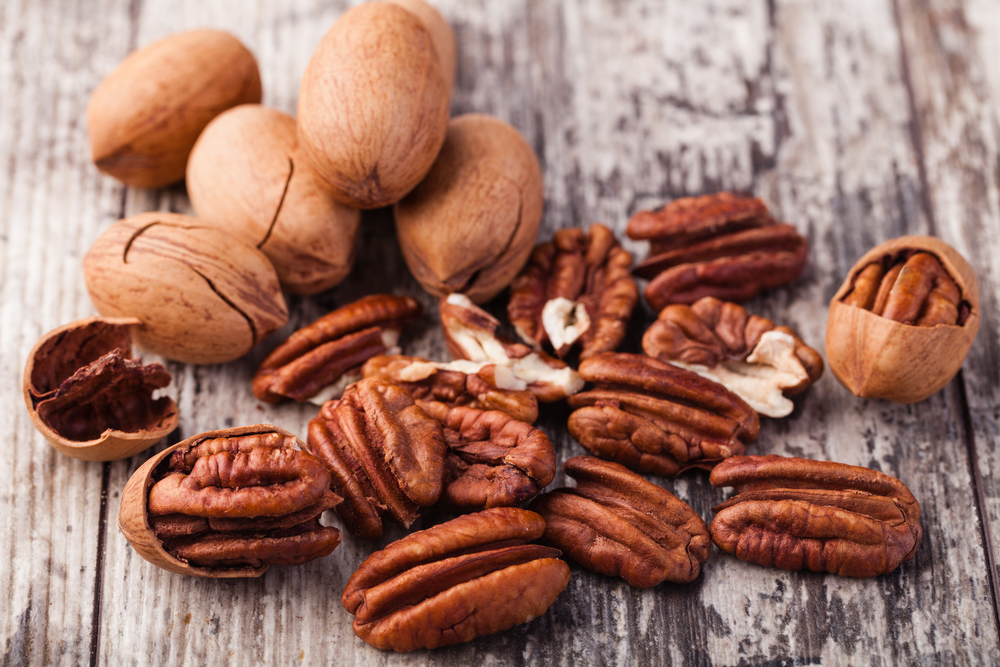
All Georgia pecan growers planning to vote on this month’s one-cent per pound assessment need to have their ballots postmarked by Saturday, May 30.
Georgia’s pecan farmers are voting this month to renew a one-cent per pound assessment on pecans for the Georgia Agriculture Commodity Commission for Pecans.
Ballots have been sent to Georgia growers who own at least 30 acres or more. The vote on the assessment is required under Georgia law. Producers are required to vote every three years to renew the assessment.
According to Andy Harrison, commodity commissions manager for the Georgia Department of Agriculture, of the returning votes, there needs to be a 2/3 voting affirmative for the assessment to pass. He estimates there have been about 700 or 800 ballots sent to pecan growers.
It’s one cent per pound on pecans marketed. That money can be used for research, education or promotion for Georgia pecans.
The back of the return envelope must be completed for the ballot to be valid. The commodity commission utilizes assessment funds for research, education, and promotion of Georgia pecans.
Harrison emphasized that the Georgia Department of Ag administers the funds. But it is the Georgia Pecan Commission who decides how the money is spent.
Growers of 30 or more acres who have not received a ballot should contact Andy Harrison, at andy.harrison@agr.georgia.gov.
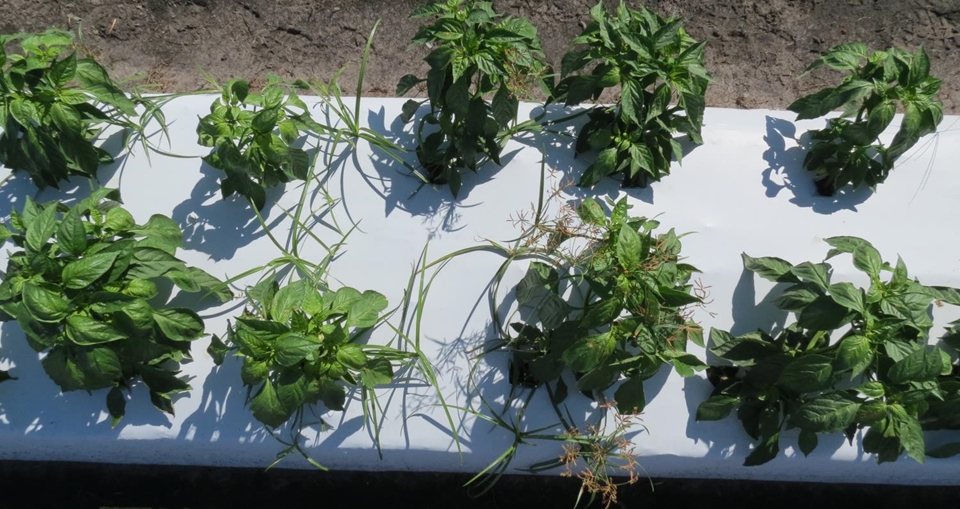
An overhead view of a plasticulture vegetable bed shows nutsedge weeds emerging through the plastic.
By Clint Thompson
University of Georgia Cooperative Extension weed specialist Stanley Culpepper encourages vegetable growers to diversify their management programs against nutsedge. This protects against potential resistance and provides adequate control.
“In general, I would say with our guys, I’m not overly concerned because our fields with our most nutsedge, they get fumigation, they get tillage and they get herbicides,” Culpepper said. “My guys are quite diverse. Will we have resistance one day? Sure, we will, but we are quite diversified in our management approach. We’re not selecting for resistance, say compared to an agronomic guy who goes out and sprays roundup or dicamba three times.”
According to Alabama Cooperative Extension, purple nutsedge and yellow nutsedge are prevalent in most areas where vegetables are grown. Both are perennial weeds that propagate mainly by the production of tubers. While growers maintain control of nutsedge, it comes at a cost, says Culpepper.
“That pest is still the most problematic. Doesn’t necessarily mean we’re not controlling it, but we’re spending a lot of money to control it that we wouldn’t have to spend if it wasn’t so problematic,” Culpepper said. “The one that’s causing us the most money without a doubt in the plasticulture system is nutsedge.”
Why Is It So Problematic?
Farmers who implement plasticulture still struggle with nutsedge because it can penetrate mulch.
“Even if you haven’t poked a hole in the mulch, nutsedge can penetrate it itself. It can damage the mulch and be there before you plant. It can come at any time even if your plant is shading out the plant hole. It’s very unique that way,” Culpepper said. “Is it killing us? Is it hurting our guys? No, I think we’re doing a pretty daggum good job. It’s a repetitive challenge and costing us a lot of money to try to manage.”
Diversification is key since there are very few herbicides that are effective regardless of the vegetable crop being grown. It is not like peanuts where farmers can apply Cadre or cotton where Roundup can be applied. Nutsedge control in vegetables is limited to a couple of products.
“It’s there and probably in every single field but they’re doing a really good job controlling it. It’s not like some disease that jumped on us last week and is going to wipe us out. That’s not it at all,” Culpepper said. “But that’s the one I still say is most challenging for our vegetable growers in plasticulture systems.”