Author: Clint

  • Market Looking Good for Tomato Growers

    itc
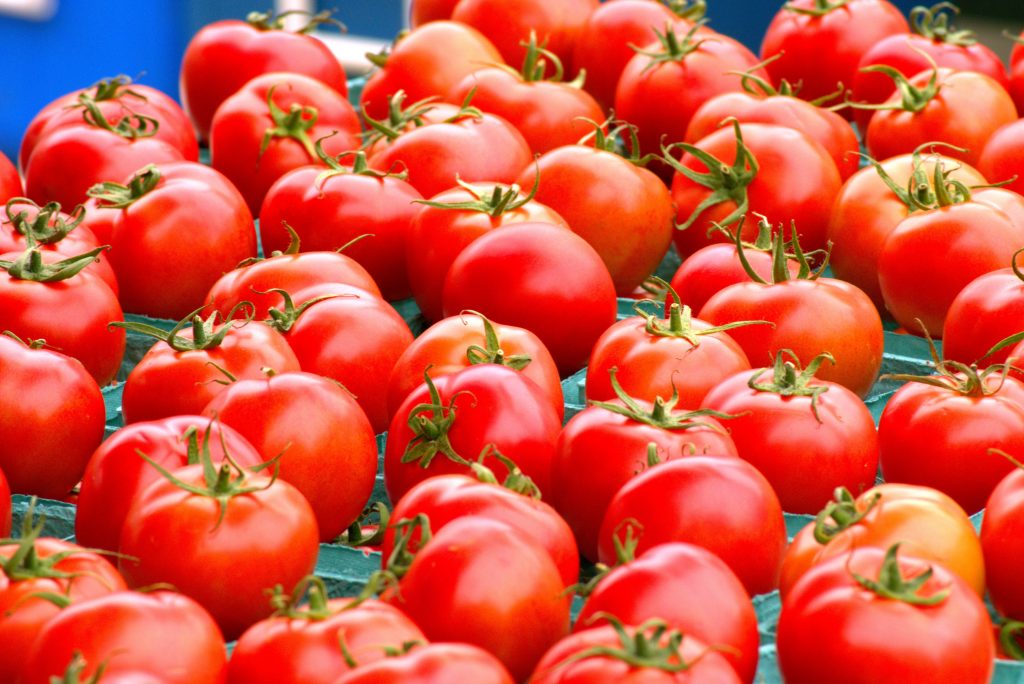
    The tomato market is currently strong for growers in the Southeast.

    By Clint Thompson

    Tomato growers across the Southeast are enjoying high prices right now, which marks a significant change from March when Florida producers had to leave many in the field amid the coronavirus pandemic. That is not the case anymore, however, says Michael Schadler, executive vice president at the Florida Tomato Exchange.

    “Market price has been high. Coming down a little bit the last couple of weeks, but overall, prices have been pretty good,” Schadler said. “That’s just a function of supply has been light out of Florida and supply has been light out of Mexico as well. We would have liked to have had a little bit better yields in Florida this spring. We’ve had yield issues that have limited supplies but the fact that market prices are high after what happened back in March and April, it’s real nice.”

    Schadler attributes Florida’s poor supply to pest and disease pressure.

    COVID-19 Impact

    Florida tomato growers have experienced an up and down season. This is especially true for South Florida production impacted by COVID-19 when it struck in mid-March.

    “It was a situation where we had never seen the markets turn off like that overnight. We’ve certainly gone through our share of bad markets over the decades, usually based on over-supplies coming in from Mexico and even over-supply in Florida. Having bad markets is nothing new,” Schadler said. “Having it come about in that way where everything shuts down, price didn’t matter at that point.”

    Growers could not give their crop away. Tens of millions of tomatoes were lost. But to see the market recover, which will benefit other states like Georgia and Alabama, is encouraging to see.

    “When we were looking at this thing in early April, when we were doing an assessment right around April 1 and going through two or three weeks in an unprecedented environment, we were thinking, ‘Man if this thing doesn’t turn around, we’ve got a big spring crop; the Florida spring crop is pretty big in April and May, we’re going to have devastating losses,’” Schadler said. “Right around April 5 or April 6, demand started to come back. I think what happened was, the buyers that sell into food service, when everything hit the fan in mid-March, they kind of shut down. I think they let the pipeline clear out a little bit. The pipeline was completely empty after the first week in April and they realized, obviously, there’s still demand for tomatoes.

    “That demand came back a little bit, coupled with the fact that Mexico was quite light and Florida volume was lighter than normal. We had lower yields through the spring. We actually were able to bounce back for a big part of April and so far in May as well.

    “As far as an industry as a whole, looking back over the six or seven months of the Florida tomato season, it’s going to average out to be a decent season for us.”
  • Watermelon Board Pivots Nutrition Education Strategy to Digital Model

    With growing season in and home schooling out, NWPB is meeting an essential need for parents working from home and teachers preventing the summer slide

    WINTER SPRINGS, FL — June 3, 2020 — The National Watermelon Promotion Board (NWPB) is realigning resources to adapt to a new climate while focusing on summer sales.

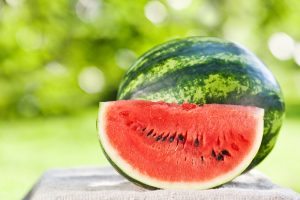
    Watermelons are very nutritious.

    Unlike years past when summer months meant in-person events, the socially-distanced approach adjusts marketing and promotional efforts to continue to position watermelon as the go-to choice for kids and families. NWPB has been partnered with the world’s only rock & roll nutrition show Jump with Jill for over eight years, with a national live tour partnership as the leading line item. With stay-at-home orders in place, Jump with Jill and NWPB are teaming up to bring consumers a digital version of the program called the Jump with Jill Digital Tour with unplugged songs, dances, workouts, activities, and tutorials.

    “Jump with Jill is our longtime partner for kids content and in-school outreach and their primary delivery mechanism was through a powerful live musical show,” says Stephanie Barlow, Senior Director of Communications. They have realigned so that songs about eating fruit like Nature’s Candy and The Sweet Beat can still reach kids even when they are distance learning.”

    Just as the watermelon domestic growing season hits its peak, these free resources and tools serve an important need useful while families are at home. Parents are craving content that can hold their kids’ attention while they work from home and teachers need summer study materials they can use to prevent the summer slide, or the slide backwards that many children make in reading and math skills over the summer.

    “From our homes to families everywhere, we are thrilled to be able to perform and teach,” says Jump with Jill creator, Jill Jayne, who brings her credentials as a Registered Dietitian and singer into everything she touches. “When they announced school closures, we were forced to accept that a screen would be a mandatory feature in our relationship with our audience. So we wanted to use it to communicate to kids in a powerful way letting them know that – we are still here, we are still singing, and we still love you.”

    For more information and to explore the resources available from NWPB and Jump with Jill, check out Facebook, YouTube, visit Watermelon.org or JumpwithJill.com.

  • 2020 Caneberry Survey on Pricing, COVID-19 Impacts

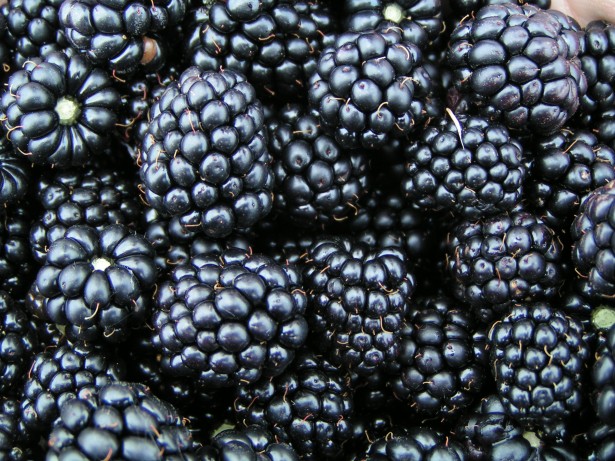
    Blackberries are included in the survey that the North American Raspberry and Blackberry Association, along with NC State and the University of Arkansas, are asking growers to fill out.

    — Written By Daniel Tregeagle

    The North American Raspberry and Blackberry Association (NARBA), in collaboration with NC State University and the University of Arkansas, is conducting its biennial pricing survey. Growers of caneberries (raspberries, blackberries, and hybrids) in Canada and the U.S. will be asked about prices they received across all distribution methods.

    This year, additional questions have been added to capture the impact of COVID-19 on caneberry prices and caneberry operations. All growers who had any caneberry acreage in 2019 or 2020 are invited to participate:

    TAKE THE SURVEY The results of the survey will help caneberry growers, and anyone considering growing caneberries, better plan their pricing and production decisions in future years. In addition, this data is useful to researchers and policymakers who need accurate data about caneberry pricing trends in the North American caneberry industry. Caneberry growers can participate in the online survey by following this link.

    Survey results will be reported in the NARBA newsletter. For more information about the survey, contact Daniel Tregeagle (tregeagle@ncsu.edu or 919-515-6091). For more information about the North American caneberry industry, contact NARBA Executive Secretary Debby Wechsler (raspberryblackberry@gmail.com or 919-542-4037).

    For story, see caneberry survey.

  • UF/IFAS Extension Agents Working Together to Better Serve Citrus Growers

    A new newsletter will help UF/IFAS Extension agents work better to serve citrus growers.

    By: Ruth Borger, 517-803-7631, rborger@ufl.edu

    LAKE ALFRED, FL — Florida’s citrus growers have long benefited from productive relationships with UF/IFAS Extension commercial citrus agents who work in central and Southwest Florida.

    And it’s about to get better.

    UF/IFAS Extension commercial citrus agents operating in Hillsborough, Polk, Highlands, DeSoto, Hardee, and Manatee counties are launching a new newsletter. They hope to use the platform to streamline important communications with growers, share critical information in a timely way, and enhance already strong working relationships.

    “Our goal is always to improve service to commercial growers, “said Chris Oswalt, commercial citrus Extension agent serving growers’ needs in Hillsborough and Polk Counties. “We will be delivering more relevant and timely citrus information without sending multiple emails containing the same or similar information.”

    Calling themselves Central Florida Citrus Extension, the group includes long-time Extension agent Chris Oswalt, Highlands County County Extension Director Laurie Hurner and the newest agent, Ajia Paolillo. Together they bring more than 60 years of citrus growing experience to the region.

    “We are still serving our local citrus growers; nothing changes on that front,” Hurner said.

    The team hopes to improve communication about programs that happen in neighboring counties that growers may be interested in.

    “Growers will travel across county lines for good programming,” Paolillo explained. “Now, we can actively promote those educational sessions that are happening in a neighboring county to a larger audience.” The newsletter rolled out its first issue on May 29 and will be published monthly except in July/August, typically lighter months for commercial citrus operations. If you already receive a newsletter from one of these agents, you automatically will receive the new newsletter. If you would like to subscribe to the newsletter, please email your UF/IFAS Extension citrus agent. You may find the agent for your  location at https://citrusagents.ifas.ufl.edu/locate/index.shtml .

  • Economist Fearful CFAP Funds Won’t Be Enough

    blueberry
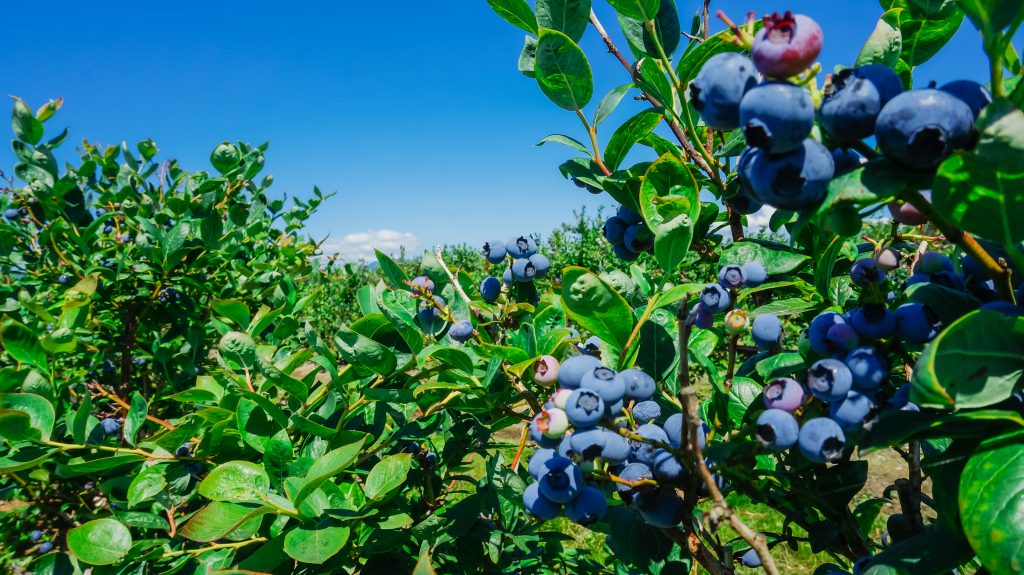
    Blueberries are one of the many commodities covered by CFAP.
    File photo of blueberry production.

    By Clint Thompson

    One agricultural economist fears there might be insufficient funds to cover farmers who apply for the Coronavirus Food Assistance Program.

    Max Runge

    Max Runge, Extension specialist in agricultural economics and rural sociology at Auburn University, believes the 80% of maximum total payment allotted for applicants will not be enough considering the number of producers impacted by the coronavirus pandemic.

    “I don’t think that will be enough. I think it’ll be short. Agriculture’s big across the U.S. The program covered a lot of it,” Runge said. “I hadn’t sat down and tried to put any kind of numbers to it. But I would be surprised if there’s enough money there to cover it.”

    CFAP Background

    According to www.farmers.gov, CFAP will provide $16 billion in direct support for agricultural producers where prices and market supply chains have been impacted and will assist producers with additional adjustment and marketing costs resulting from lost demand and short-term disruptions for the 2020 marketing year caused by COVID-19.

    To ensure funds will be available throughout the application period, producers will receive 80% of their maximum total payment upon approval of the application. The remaining portion of each payment, not to exceed the payment limit, will be paid at a later date as funds remain available.

    “I know that it was a daunting task to try to come up with something to cover everything. I thought it was a good effort. It’s like everything else, you can always look back and say, ‘They should have done this.’ Or ‘This should have been done differently,’” Runge said. “It’s not perfect, but it is something.”

    While the program will largely aid vegetable and specialty crop producers in Florida, Georgia and Alabama farmers are hurt by the timeframe. Charles Hall, executive director of the Georgia Fruit and Vegetable Association, says the program’s end date of April 15 doesn’t help his farmers much. Not much is on the market then. The same is true for Alabama farmers.

    “We don’t have that much produce maturing at that time and ready for market during that time frame,” Runge said.

  • Optimizing Nitrogen in Cabbage Production

    File photo shows a field of cabbage.

    By Ashley Robinson

    A shortage of nitrogen is the most common reason for a cabbage crop not reaching its full yield potential. However, applying too much nitrogen may cause more harm than good. It’s important to determine the optimal rate for production.

    Researchers at the University of Georgia (UGA) and the University of Florida are working in collaboration to conduct trials investigating the optimal rates of nitrogen fertilizer to produce cabbage. According to Andre da Silva, UGA Cooperative Extension vegetable specialist, the recommendations for fertility programs in Florida and Georgia were developed in the 1980s.

    “We were really in need of an update,” says da Silva. “Especially since new varieties have been introduced.”

    Research Trials

    According to da Silva, the study has taken place over the last four years and was tested in six different cabbage varieties. 

    “Two years of the project were conducted in Florida’s sandy soils, then we repeated the trials for another two years in Georgia’s loam sandy soil to compare,” da Silva said.

    During the study, researchers looked at the effects of applying a total nitrogen fertilizer rate of 107, 225 and 280 pounds per acre. Current recommendations suggest applying between 150-200 pounds of nitrogen per acre. But after harvest, researchers found that applying 225 pounds of nitrogen per acre produced optimal yields.

    According to da Silva, the results were the same for Florida and Georgia and in all six cabbage varieties. He also mentioned that there was no significant impact on yield between applying 225 pounds of nitrogen per acre and 280 pounds. However, he recommends growers apply 225 pounds per acre to maintain yields and increase profits.

    Although 225 pounds of nitrogen per acre seems to be the magic number, applications may need to be adjusted depending on weather conditions.

    “We found that in rainy years, we experienced a significant loss of nitrogen due to leaching. In this case, growers may need to bump up their fertility program,” da Silva said.

  • United Fresh Says Produce Buying Climbed During COVID-19

    Fresh market produce for sale.

    United Fresh Produce released its first quarter of 2020 issue of Fresh Facts on Retail report that details the rising number of fresh produce purchases in 2020. The unprecedented rise in food and beverage consumption at home was brought about by shelter-in-place orders issued to slow the spread of the coronavirus.

    “Those closures have led to consumers drastically restructuring their eating habits, especially increasing their consumption of meals and snacks at home,” says Miriam Wolk, Vice President of Member Services with United Fresh. “Our current and future Fresh Facts reports will help the produce industry in leveraging current consumer behaviors and fresh produce purchasing trends.”

    First-quarter data highlights show that with health as a top concern, consumers continued to buy fresh food with immune-boosting properties, while also supplementing with shelf-stable and frozen food options. Strawberries and raspberries benefited by extending their reach into more U.S. households. Among vegetables, potatoes, tomatoes, and cucumbers were purchased in higher amounts by U.S. consumers. The report also shows a variety of fruits and vegetables continue to influence overall organic growth, presenting many opportunities to innovate and attract health-conscious consumers.

    (From the National Association of Farm Broadcasters)

  • Potato Industry Feels Left Out of CFAP

    Like other commodities, the potato industry has been hurt by COVID-19.

    The National Potato Council and state grower organizations wrote Ag Secretary Sonny Perdue recently to talk about potatoes that have nowhere to go for processing.

    The Hagstrom Report says the council noted more than “1.5 billion pounds of fresh potatoes for processing and potato products are trapped in the supply chain with no likely customers.” Mountains of potatoes were being given away or left to cow feed as surplus crops are piling up despite government efforts to distribute the potatoes as part of food boxes being given to needy families.

    The potato industry feels like the USDA’s new Farmers to Families Food Box program, as well as other initiatives, aren’t enough to dent the losses in a sector that depends heavily on foodservice sales.

    Kam Quarles (Quarrels), CEO of the National Potato Council, says, “It was clear the people who were doing well in retail could probably take more advantage of this than the impaired side of the business, which is food service.” The NPC sent a letter to USDA saying, “This oversupply has impacted both the 2019 and 2020 crop for U.S. family farms that grow potatoes. Some of these farms will have no ability to sell their 2019 or 2020 crop.”

    The industry suggested several enhancements regarding eligibility and payment rate adjustments that will help USDA help the industry.

    (From the National Association of Farm Broadcasters)

  • Blueberry Industry Leaders Hoping for Category 1 Status

    By Clint Thompson

    Blueberry industry leaders were disappointed its farmers were not included in category 1 of the Coronavirus Food Assistance Program. They hope to rectify the situation during the 30-day comment period that the USDA has allowed for feedback.

    “Where we landed with the direct payment program, obviously we learned (two weeks ago), it was disappointing because the one category that would really capture the impact on the U.S. grower was category 1,” said Alicia Adler, vice president of the U.S. Highbush Blueberry Council (USHBC) and the North American Blueberry Council (NABC). “Obviously, categories 2 and 3, we were included with direct payment rates in those categories, but it was really category 1 that would capture the impact.”

    According to specialty crops in CFAP, producers of specialty crops are eligible for CFAP payments in three categories:

    1. Had crops that suffered a 5%-or-greater price decline between mid-January and mid-April as a result of the COVID-19 pandemic,
    2. Had produce shipped but subsequently spoiled due to loss of marketing channel, and
    3. Had shipments that did not leave the farm or mature crops that remained unharvested.

    Comment Period

    When the USDA issued CFAP on May 21, it allowed for a comment period. This could lead to amendments being made to the guidelines set forth for blueberry producers. That is what industry leaders are hoping for.

    “We submitted comments that still show decline in 2020 was steeper than in 2019 but also capture that daily price data which shows a 60% price decline between mid-March and mid-April. That was directly a result of the COVID crisis and literally the market closure,” Adler said. “We know that they are reviewing comments as they come, and we are anxious to learn if we’ll be included in category one and what the next steps are for that category.”

    Adler said the earliest blueberry production is from mid-March to mid-April which showed decline due to the coronavirus pandemic. Florida represents more than 85% of production during that timeframe.

    USDA is accepting applications through August 28, 2020. Learn more at farmers.gov/cfap.

  • Pest Alert: Mummy Berry Disease in Blueberries

    Mummyberry
    Mummy berry disease is caused by the fungus Monilinia vacciniicorymbosi and is an important fungal disease of blueberries.

    Posted by Elina Coneva and Ed Sikora (Alabama Extension)

    Current wet and cooler than normal conditions are conducive for mummy berry disease in blueberry, according to Alabama Extension. Mummy berry disease is caused by the fungus Monilinia vacciniicorymbosi and is an important fungal disease of blueberries that can cause yield losses of up to 50% when conditions are favorable for disease development.

    The pathogen can infect shoots, flowers and fruit. The fungus overwinters in the previous year’s berries that have fallen to the ground. In early spring, a mushroom-like spore cup emerges from the infected berries near the soil surface. Fungal spores are released from these structures when bud swell begins and green tissue is present. Spores are spread via wind and rain. Early detection and control is necessary to reduce the impact of this disease on a crop.

    Symptoms and Disease Development

    Early season infection of flower buds and stems is promoted by wet conditions and cooler than normal temperatures. The earliest symptoms of mummy berry include drooping of developing leaves and shoots in the spring followed shortly by browning of the upper side of bent shoots, midribs and lateral veins of leaves. The bend in twig tips can resemble a shepherd’s crook. Vegetative shoots, leaves, and infected flowers are killed within four days after discoloration begins.

    After initial infection, the pathogen produces conidial spores that appear as tan-gray tufts on blighted shoots. Conidia are then dispersed by wind, rain and insect pollinators to healthy flowers. Once the fungus has been introduced to the flower, it will germinate with the pollen and infect the developing fruit. Evidence of blossom infection does not appear until the fruit begins to ripen. As normal berries ripen, the infected berries begin to shrivel and turn a pinkish color. Shriveled berries drop to the ground.

    Control Strategies

    An integrated pest management program including both cultural and chemical control strategies is needed for best results. For new orchards, select resistant varieties or late blooming cultivars, if available. Also avoid wet sites and/or improve drainage to reduce conditions that favor mummy berry development. Remove wild blueberries or unwanted plants from the vicinity of the orchard to reduce overwintering inoculum.

    If mummy berry is detected in an orchard, try to remove or destroy infected fruit at the end of the harvest season. This could include covering mummies with at least 2 inches of soil or mulch.  Limit or delay overhead irrigation until petal fall during the growing season.  Follow a fungicide spray program that is effective for controlling mummy berry from green tip until petal fall.

    For additional information consult the Southeast Regional Blueberry Integrated Management Guide. Apply all pesticides according to label rates and instructions.

    For more information, see Alabama Extension.