Author: Clint

  • Participation Encouraged in COVID-19 Ag Impact Survey

    Posted by Brittney Kimber

    AUBURN UNIVERSITY, Ala. – COVID-19 impacted the agricultural industry. However, the full extent of the impact is currently unknown. Professionals with the Alabama Cooperative Extension System and Auburn University’s College of Agriculture are working to better understand these impacts. A study is currently underway to assess the effects that COVID-19 is having on Alabama’s agricultural economy using an agriculture impact survey.

    “We have all been affected by the COVID-19 pandemic,” said Max Runge, an Alabama Extension economist. “However, for those involved in production agriculture, the production did not stop. Even with supply chain disruptions, animals had to be cared for and plantings had to move forward despite market prices falling below cost of production.”

    Through this agricultural impact survey, professionals are gathering information from all agriculture-related segments, spanning from row crops to livestock.

    Complete the Assessment of COVID-19 Impacts on Alabama Agriculture survey.

    Survey Participation

    The survey is voluntary and anonymous. Because of the broad-reaching impacts on all phases of agriculture, the survey may be longer than typical surveys. However, Runge says the gathering of as much accurate information as possible is crucial to making the best estimate.

    Those wishing to participate should use the following guidelines:

    • Complete the survey only one time.
    • If a farm has multiple operators involved, one complete survey is sufficient as long as it reports all the impacts.
    • Submit surveys by June 30.

    Professionals will share survey results with industry leaders, commodity groups and legislators in support of any policy and industry response that may be appropriate.

    “The impacts of the pandemic will be felt for a long time,” Runge said. “For now, we would like to assess the impact COVID-19 is having on Alabama’s agriculture and related industries with this survey.”

    More Information

    For more information on this survey contact Max Runge at rungemw@auburn.edu. People can also visit the Alabama Extension website, www.aces.edu, for information on the affects of COVID-19.

  • Perdue Comments on Farmers Competing With Mexican Produce

    Secretary Perdue

    By Clint Thompson

    Today’s talk with U.S. Secretary of Ag Sonny Perdue focuses on imports of Mexican produce. It’s been a concern for farmers who are trying to compete against Mexico.

    It was especially concerning this year as growers, especially in the Southeast, also had to overcome challenges with the coronavirus pandemic.

    For other testimonials of unfair competition with Mexico, click here.

  • NC Industrial Hemp Commission Meeting Set for Friday, June 12

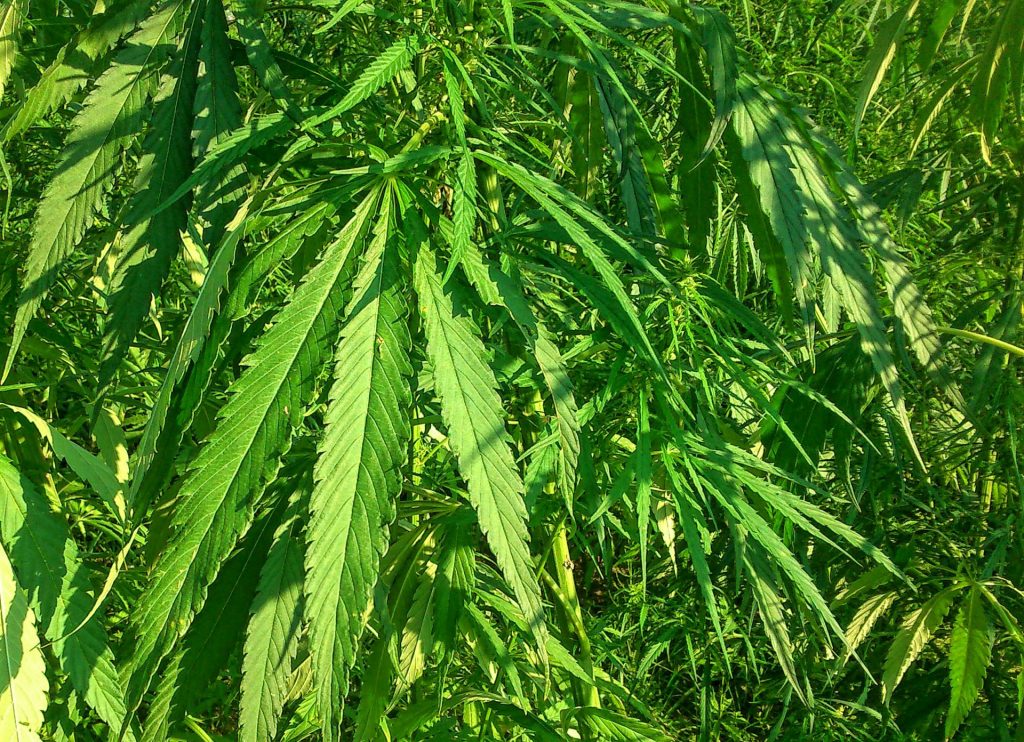
    File photo shows a field of hemp.

    The Industrial Hemp Commission will hold a public meeting via conference call so members can review and approve applications, and hear an update on the North Carolina Farm Act and State plan.

    The meeting will be held on Friday, June 12 at 10 a.m. Access to the conference call can be made at http://go.ncsu.edu/industrialhemp or by calling 1-929-205-6099 (U.S. toll) or 1-699-900-6833 (U.S. toll). The meeting ID is 997-8091-4021. Participants will be prompted to enter their name and email address to enter the meeting via the website or prompted for unique participant ID for the call. They should press # to access the call.

    Read more at: https://hemp.ces.ncsu.edu/2020/06/nc-industrial-hemp-commission-meeting-june-12-2020/?src=rss

    For N.C. Industrial Hemp Commission questions, contact Beth Farrell at 919-707-3014 or beth.farrell@ncagr.gov. For questions about the N.C. Industrial Hemp Program, go to Industrial Hemp Pilot Program in North Carolina.

  • CFAP Payments Already Being Issued

    U.S. Secretary of Agriculture Sonny Perdue speaks at the Citrus Expo in 2017. He spoke with Clint Thompson with AgNet Media about CFAP.

    By Clint Thompson

    Coronavirus Food Assistance Program (CFAP) payments are already starting to be issued across the country to farmers impacted by COVID-19.

    Some specialty crop growers in the Southeast have already started receiving funds.

    As of June 8, in Florida, 95 specialty crop applications have been submitted with $11.5 million in payments issued by the USDA. In Georgia, 91 specialty crop applications have been submitted with $340,938.92 in payments. In Alabama, six specialty crop applications have been submitted with $40,102.30 in payments.

    In North Carolina, 13 specialty crop applications have been submitted with $33,898.82 in payments. In South Carolina, nine specialty crop applications have been submitted with $27,780.48 in payments.

    Specialty crops include: Fruits-apples, avocados, blueberries, cantaloupe, grapefruit, kiwifruit, lemons, oranges, papaya, peaches, pears, raspberries, strawberries, tangerines, tomatoes and watermelons; Vegetables-artichokes, asparagus, broccoli, cabbage, carrots, cauliflower, celery, sweet corn, cucumbers, eggplant, garlic, iceberg lettuce, romaine lettuce, dry onions, green onions, peppers, potatoes, rhubarb, spinach, squash, sweet potatoes, taro; Nuts-almonds, pecans, walnuts; Other-beans, mushrooms.

    The FSA has already processed $1.4 billion in payments to 80,261 producers.

    CFAP applications will be accepted until Aug. 28.

    U.S. Secretary of Ag Sonny Perdue talked about CFAP.

  • Powdery Mildew Alert!

    Photo by Phil Brannen-UGA/Shows powdery mildew disease.

    According to UGA Extension Viticulture blog, University of Georgia Cooperative Extension Fruit Disease Specialist Phil Brannen says powdery mildew is just starting to show up on untreated plants in the research grape vineyard at Blairsville, Georgia.

    “I hope you will not see it yet in well managed vineyards, but recent rains and other difficulties may have hampered spray programs,” Brannen said.

    Spray programs need to be applied on a 7-to-10 day interval when rain events occur as often as they are. Growers also need to use the more efficacious materials at critical infection periods such as bloom and early cover sprays.

    It’s important to scout your vineyards and make sure to contact your local county agent should you have questions concerning this disease or others. The 2020 Southeast Regional Bunch Grape Integrated Management Guide can be found at small fruits. It contains valuable information related to the timing and efficacy of fungicides for powdery mildew.

  • Secretary Perdue Discusses CFAP

    Farmers are currently submitting applications for the Coronavirus Food Assistance Program (CFAP). In some instances, checks have already been issued to producers impacted by COVID-19.

    Sonny Perdue

    U.S. Secretary of Agriculture Sonny Perdue talked about CFAP with Clint Thompson, multimedia journalist with AgNet Media. In particular, he discussed the cap placed on the payments issued to each eligible grower.

    For more information about CFAP, see https://www.farmers.gov/cfap.

  • Alabama Hemp Planting Under Way, Just Not Fast Enough

    state
    Hemp planting is under way in Alabama.

    By Clint Thompson

    Less than half of hemp producers in Alabama have the go-ahead from the Alabama Department of Agriculture to plant this year’s crop, according to Auburn University Assistant Professor and Extension Specialist Katelyn Kesheimer.

    “A lot of people are still waiting on, can’t even get your seeds or your clones until you get approval from the Department of Ag. It seems to be weeks to get that. It’s not a quick turnaround time,” Kesheimer said. “I would have liked to have seen more plants in the ground now, just because it’s going to get real hot and the soil temperatures are going to jack up. But the Department of Ag is processing hundreds and hundreds of applications.”

    Kesheimer said producers must have their green plants up and out of the ground by July 31. She expects planting to pick up over the next month or so.

    “I think in the next four to six weeks, I’m hoping we’re going to get a lot more plants in the ground. We’re a little behind, just because waiting on paperwork and everything’s so new,” Kesheimer said. “It just takes forever to do stuff.”

    Planting conditions are currently ideal for hemp producers in Alabama.

    “We have enough moisture in the soil to give the plant a good start. People need to make sure they fertilize like they would any other plant. They don’t want to go in when it’s super hot. They’ll just burn up if it’s hot and they don’t have moisture; they’re just not going to last,” Kesheimer said. “We saw some plants go in, maybe July last year, and they didn’t last more than a couple of days. I think conditions are good right now while we still have some moisture and it’s not too hot.”

  • UF/IFAS to Host Produce Safety Alliance Grower Training

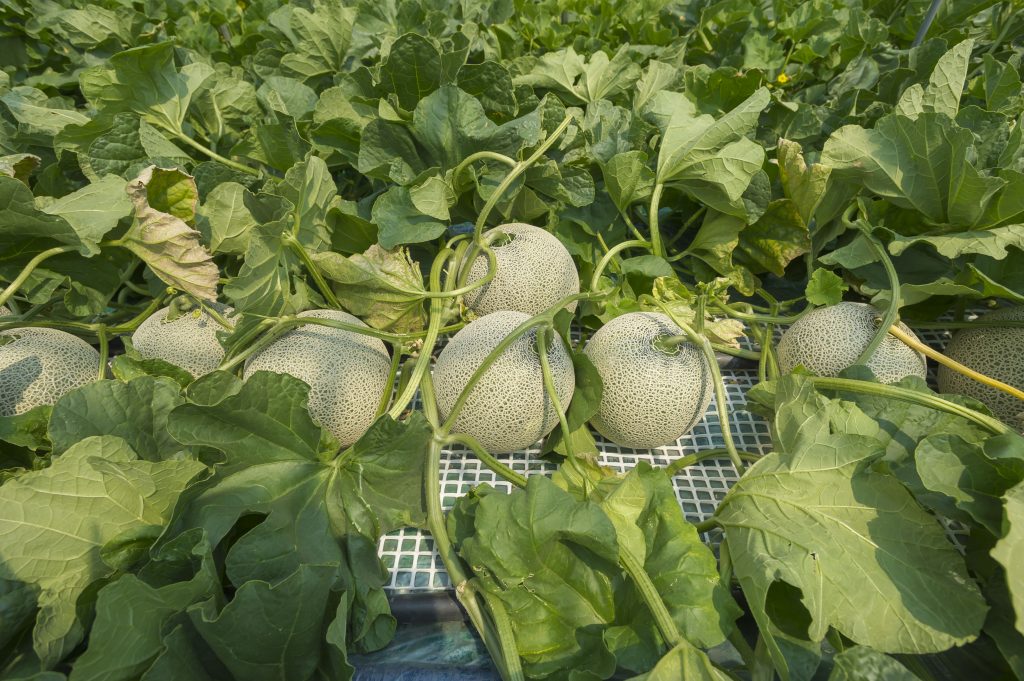
    File photo shows cantaloupes growing in a field.

    The University of Florida/IFAS will host a Produce Safety Alliance Grower Training on July 21 through July 23 via Zoom. The trainings will be held from 2:30 p.m. to 5:30 p.m. each day. The cost to attend is $25. Those interested can click here to register.

    Per the Food Service Modernization Act, every farm must have at least one Produce Safety Alliance Grower Training certified individual.

    Seats are limited. For general registration questions, email Sarah McCoy at sarahmccoy@ufl.edu.

    This training is being offered temporarily via remote delivery amid the coronavirus pandemic. In order to participate, individuals must have video and audio capabilities and will be required to have both operating during the entire training.

  • Secretary Perdue: Farmers to Families Food Box Program a Win For All Involved

    Perdue

    United States Secretary of Agriculture Sonny Perdue was in Lakeland, Fla. on Monday. He attended a farmers to families food box event. It’s a new program that the United States Department of Agriculture launched to purchase $3 billion in excess food from farmers and distribute to families in need.

    He talked about the program with Clint Thompson, multimedia journalist with AgNet Media.

    Secretary Perdue talks about the Farmers to Families Food Box Program.

    To learn more about the program, click here.

  • Japanese Beetles Active in Georgia Vineyards

    Photo by University of Georgia/Shows Japanese beetle.

    According to the UGA Extension Viticulture Blog, Japanese beetles are starting to become more widespread in west Georgia vineyards. University of Georgia entomologist Brett Blaauw says the pests are only beginning to emerge but expects the populations to increase exponentially over the next few weeks.

    “In large enough numbers, Japanese beetles can be a severe pest of grapes during the summer, feeding mainly on foliage and (thankfully) rarely on the berries,” Blaauw said. “More problematic is Japanese beetles feeding on new plantings. Older, established vines can withstand some feeding damage, but young vines can quickly become defoliated from these beetles. Special attention should be given to newly-planted vineyards.”

    As temperatures continue to heat up as we progress throughout the summer, this is ideal weather conditions for beetles to be active. They love warm, sunny days and congregate in groups on vines to feed and mate near the top of the canopy.

    There are no thresholds for Japanese beetle leaf damage. However, management is required when feeding damage is below the top trellis wire or about 15% of the leaves are damaged.

    “Growers should rely on their judgment and experience to determine whether beetle abundance and/or injury warrants chemical control,” Blaauw said.

    For more information, see UGA Extension Viticulture Blog.