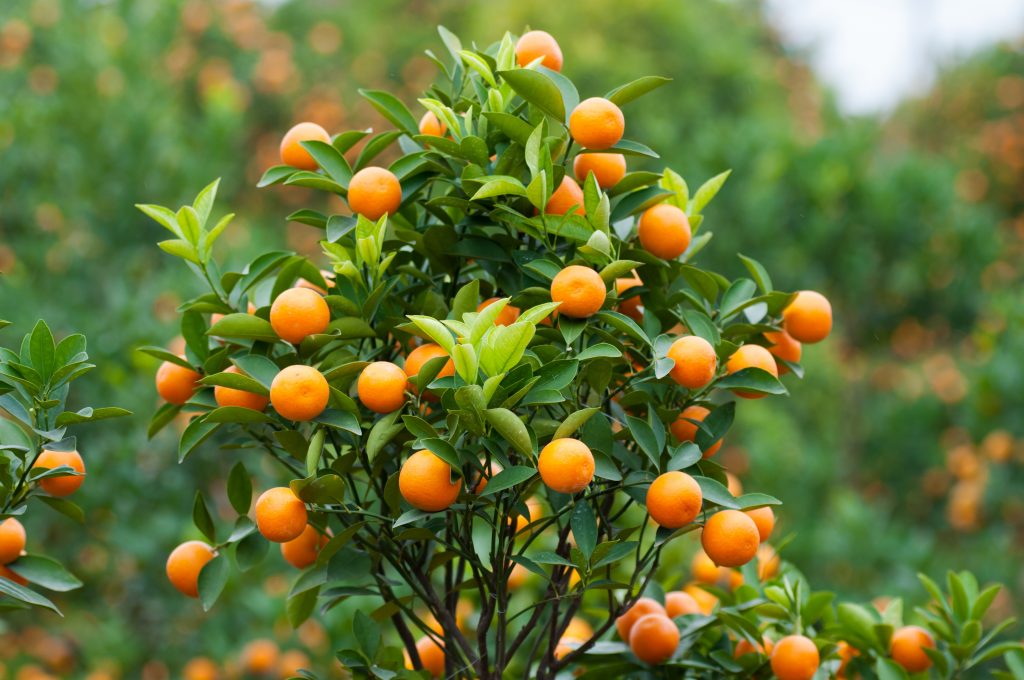
The nation’s orange production season is winding down and Florida’s production is almost finished. Thursday, the U.S. Department of Agriculture’s National Agricultural Statistics Service (NASS) issued its June forecast, which showed a decrease in the Florida citrus crop. Rod Bain has a story looking at the production estimates for the crop nearing the final totals for the marketing year.
Click here to get more numbers form the latest citrus crop forecast.
With limited to no in-person contact with customers during the COVID-19 pandemic, for many growers, expanding online capabilities is crucial to business continuity. Join Georgia Grown and UGA Extension on June 17 for an e-commerce workshop featuring experts from the UGA Small Business Development Center.
By Kelly Simmons for UGA CAES News
The University of Georgia is partnering with the Georgia Department of Agriculture to present a free digital marketing webinar for agribusiness owners looking for alternate ways to sell their products.
The webinar will be held on Wednesday June 17 at 10 a.m. by the UGA Small Business Development Center (SBDC), the Department of Agriculture’s Georgia Grown division and UGA Cooperative Extension.
Agriculture-related businesses from across the state have had trouble getting their fresh produce, meat and seafood to market during the COVID-19 pandemic.
The webinar will introduce participants to e-commerce, best practices for social and email marketing, and suggestions for packaging products for shipping.
“We’ll provide good takeaways on ways to market their business online,” said Bill Boone, SBDC entrepreneur outreach specialist. “If they need additional help or resources to implement the techniques covered in the class, the SBDC is available to assist.”
Additional webinars may be scheduled as needed, he said.
Georgia Grown helps agribusiness thrive by bringing producers, processors, suppliers, distributors, retailers and agritourism together to increase their exposure to customers suppliers and partners through an online searchable database. Find out more at georgiagrown.com/find-georgia-grown.
UGA Extension assists producers and consumers with information and resources through its network of county agents and specialists throughout the state. Visit the Extension website for more information at extension.uga.edu or call 1-800-ASK-UGA1.
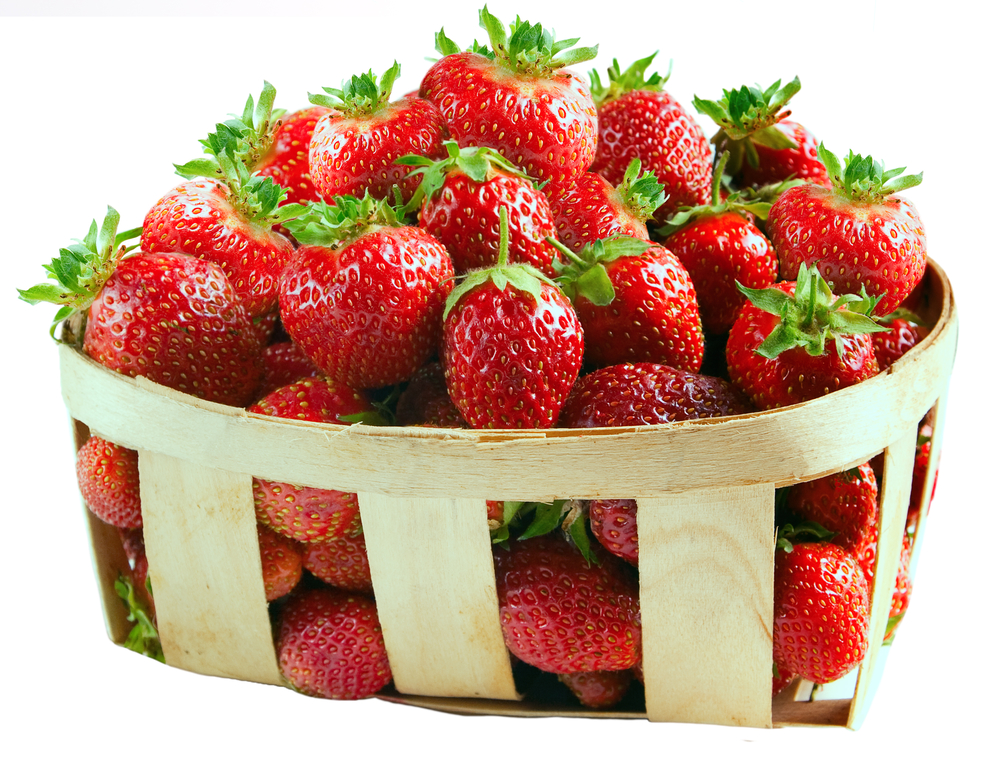
Basket with fresh strawberries isolated on white background.
By Ashley Robinson
A few weeks ago, a viral TikTok video took the internet by storm, showing what appeared to be little worm-like bugs crawling out of fresh strawberries soaked in salt water. Since that video surfaced, many consumers have recreated the video showing similar results. Now, some consumers are panicking. Is this safe? Have we unknowingly been enjoying bugs in our strawberries? Should we stop eating strawberries all together?
Should You Be Concerned?
The short answer is no. To put it simply, this can happen. However, it is very unlikely.
But here’s the million dollar question, what is really happening in the viral TikTok phenomenon?
According to Hannah Burrack, an entomologist at North Carolina State University, the consumer was actually performing a technique that growers use to test for spotted wing drosophila (SWD), an invasive small fruit fly.
“A consumer posted a video of what is actually a recommended test for growers to determine whether or not they have possible concern with SWD infestation. This consumer did this with fruit she bought from the grocery store and she observed small larvae coming out of the fruit,” Burrack says.
Burrack assures consumers that their fruit are safe to eat.
“It’s possible that consumers find small larvae emerging from their fruit when soaked in salt water. But it’s pretty unlikely given that all of our farmers are aware of the potential issues associated with SWD, they are actively managing them and they are sampling their fruit before they sell to consumers or wholesalers,” Burrack said.
If growers are monitoring for SWD, then why are consumers seeing larvae emerging from their fruit after being soaked in salt water?
Drosophila larvae look alike. But since growers and wholesalers inspect for SWD regularly and do their best to keep SWD out of our food supply, the larvae that consumers are seeing are most likely fruit flies that could have been buzzing around the grocery store or inside the consumer’s home.
“It’s very likely that the larvae they are seeing originated post-harvest, after the fruit left the farm, especially if they are tiny larvae.” Burrack says. “There are a whole bunch of drosophila flies that are naturally occurring in the US that can attack the fruit once it’s been harvested, unlike SWD which is invasive.”
Is it Harmful To Eat These Bugs?
No. The idea of eating bugs may be unappealing, but if you’ve ever eaten fruit before you’ve more than likely eaten a bug at some point.
In addition, experts don’t recommend soaking your fruit in salt water. A regular rinse will do just fine.
Burrack also mentions that you should keep your berries in the fridge. Refrigerating your berries will allow them to last longer and will keep the berries protected from the fruit flies that are buzzing around your counter.
Emran Ali, Owen Hudson, Justin Hand, and Sumyya Waliullah
Georgia ranks among the top three states in the nation in vegetable production. One of the most serious diseases in vegetable production in Georgia is Phytophthora blight, caused by the oomycete pathogen Phytophthora capsici. It is a water mold that attacks the roots, foliage, and fruit, causing root rot, crown rot, leaf lesions, fruit rot, and plant wilt (Fig.1). The disease affects peppers, squash, watermelon, cucumber, cantaloupe, and other vegetable crops.
Fig. 1 Example of watermelon fruit rot caused by Phytophthora capsici (Photo credit: Dr. Pingsheng Ji)
The continuous rainfall in Georgia makes Phytophthora blight a widespread problem on vegetables. Because this pathogen produces spores (sporangia and zoospores) on the surface of diseased plant tissues, the spores can be easily washed out by splashing rain and can contaminate nearby irrigation sources like irrigation ponds or lakes.
Previous studies indicated that this pathogen can survive in irrigation water that may serve as an inoculum source. Due to a lack of efficient diagnosis systems, the production of vegetables is severely impacted by contaminated irrigation water.
Detection of P. capsici in irrigation water is difficult using traditional culture-based methods because of other microorganisms present in the environment, such as Pythium spp., which usually overgrow on culture media making P. capsici undetectable. To detect the presence of P. capsici spores in water sources (irrigation ponds, runoff, etc.), we developed a hand pump-based filter paper (8-10 µm) method that captured zoospores and was used to amplify DNA of the pathogen through a novel loop-mediated isothermal amplification (LAMP) assay designed for specific amplification of P. capsici (Fig. 2).
This method amplified and detected DNA from a concentration as low as 1.2 x zoospores/ml, which was 40 times more sensitive than conventional PCR. No cross-amplification was obtained when closely related species were tested.
Fig. 2: Pictures showing the sampling and processing of recycled water for the detection of Phytophthora capsici in the field.
To validate our detection protocol, water samples from the field where P. capsici was suspected to be present was taken to test the designed method with a practical scenario. Out of the seven farms tested, three were positive for the presence of P. capsici using our hand pump filter paper-based LAMP assay. Only one farm was positive when using the conventional PCR assay (Table 1), showing LAMP to be a more sensitive assay for this method of testing irrigation water.
Table 1. Detection of irrigation water from Southern GA
Pond name
County, State
Target crops
Filter paper-based LAMP detection
PCR Detection
History of Disease (Y/N)
P1
Tift, GA
Vegetables
+
-
N
P2
Tift, GA
Vegetables
–
–
N
P3
Tift, GA
Vegetables
–
–
N
P4
Tift, GA
Vegetables
+
+
N
P5
Tift, GA
Vegetables
–
–
N
P6
Tift, GA
Vegetables
+
–
N
P7
Tift, GA
Vegetables
–
–
N
This improved detection method will enable researchers and extension agents to directly utilize the protocol described here to detect P. capsici. spores from a water source in less than two hours. We hope that this will lead to an increase in awareness of using pond water as an irrigation source which will eventually improve disease management of P. capsici, reduce production cost and increase crop yield. This protocol could be adapted to other pathogens that reside, accumulate, or are dispersed in contaminated irrigation systems.
Moving forward, growers should have their irrigation sources like ponds tested for the presence of P. capsici. The Plant Molecular Diagnostic Laboratory, a lab service of the University of Georgia Department of Plant Pathology, is now providing P. capsici testing support for vegetable growers in Georgia. The clinic can accept water samples (generally 2 L water samples per site) to test for the presence of P. capsici. The tests currently available, their pricing, a submission form, and submission information are available at the MDL web page at https://site.caes.uga.edu/alimdl/
Again, we would highly encourage you to take advantage of this service. If you have questions or need help, please contact your local county extension agent for additional information. It would be good to communicate with the lab so that they can expect the samples on the day of arrival.
Pecan scab disease has been light this year but could change with the recent rains.
By Clint Thompson
Scab disease of pecans has been light so far this year. But could soon change with the recent rain events in the Southeast, says Lenny Wells, University of Georgia Cooperative Extension pecan specialist.
“Scab so far has been light, but we’ve had some pretty scabby weather the last week or so. We’ll see, but I think everybody has been staying on top of it pretty well,” Wells said.
The rainy weather as a result of Tropical Storm Cristobal this week could be a big reason scab disease incidences begin to spike. Wells said it usually takes a couple of weeks before growers start seeing scab as a result of excess rainfall.
“If people were set to spray this week and it’s been raining like it is and they can’t get out there to spray everything like they need to because of the weather, then there may be some that get caught. (But) things are looking pretty good, and everybody’s staying on a good schedule,” Wells said.
What Is Scab?
Scab is a fungal disease that infects the leaves or nuts of pecan trees. If it hits the nut early enough, scab can cause the pecan to blacken and fall from the tree. Some growers spray between 10 and 12 times during an average year to fight scab, Wells said. Scab thrives on trees that have received moisture. That is why a quick rain event is important and not prolonged rainy weather of several days in a row.
One reason Wells is optimistic this year is the new fungicide that is now in growers’ arsenal.
“We’ve got a new fungicide we’ve got in the mix this year that I think is going to be a big help. A part of it is a chemistry that has two different classes of chemistry in it, and part of it is something we haven’t had before in pecans or been used before. Based on Tim Brenneman’s work it looks like it’ll be a big help for us,” Wells said.
No evidence indicates that livestock, crops, or products handled by workers involved in production agriculture are sources of COVID-19 infection. However, close contact with coworkers may contribute to spreading the virus.
The Centers for Disease Control and Prevention (CDC) and the US Department of Labor have provided guidance and recommendations for agriculture owners and operators. Agriculture employers can adapt these same guidelines and recommendations to protect workers at their work sites or in specific work operations.
Distinctive factors that affect farmworkers’ risk for COVID-19 in production agriculture workplaces include the following:
Distance between workers. Farmworkers often have close contact with one another both in fields and indoors. Workers may also be in close contact at other times, such as when clocking in or out, during breaks, when sharing transportation or in shared housing.
Duration of contact. Farmworkers often have prolonged close contact with coworkers on the work site, during transportation, and in some housing. Continued contact with potentially infectious people increases the risk of COVID-19 transmission.
Type of contact. Farmworkers may be exposed to COVID-19 through respiratory droplets in the air, such as when workers who have the virus cough, sneeze, or talk. Exposure could also occur when workers have contact with contaminated surfaces or objects, such as tools, equipment, tractors, workstations, toilet facilities, or break room tables, and then touch their mouth, nose, or possibly their eyes. Touching your eyes is not considered to be the main way the virus spreads, but more continues to be learned about how this virus spreads.
Other factors that may increase risk among some workers include the following:
Sharing transportation such as ride-share vans or shuttle vehicles, carpools, and public transportation.
Living in employer-furnished housing and sharing living quarters, cooking and eating areas, bathrooms, and laundry facilities with fellow workers.
Living in crowded and multigenerational housing.
Contact within households and families and with fellow workers in community settings in areas with ongoing community transmissions.
Mobility of the workforce, including migrant workers, who, in moving from farm to farm, can potentially spread the virus among communities.
Poor access to clean water for hygiene purposes throughout the day.
It is too early to say if this year’s whitefly impact on vegetables and cotton will rival 2017. But University of Georgia (UGA) Cooperative Extension vegetable entomologist Stormy Sparks insists the potential is there.
Sparks estimates that the whitefly population is about the same as a month ago. There have been some reports of populations existing primarily in kale. But there’s also low populations in winter crops that are still out there; namely cabbage and collards.
“The only reports I’ve had of anybody talking about any significant populations have been in kale,” Sparks said. “We haven’t heard of any populations in spring vegetables yet of any significance.”
Growers should have a better idea of this year’s whitefly effect next month once all the cotton has been planted and starts to grow.
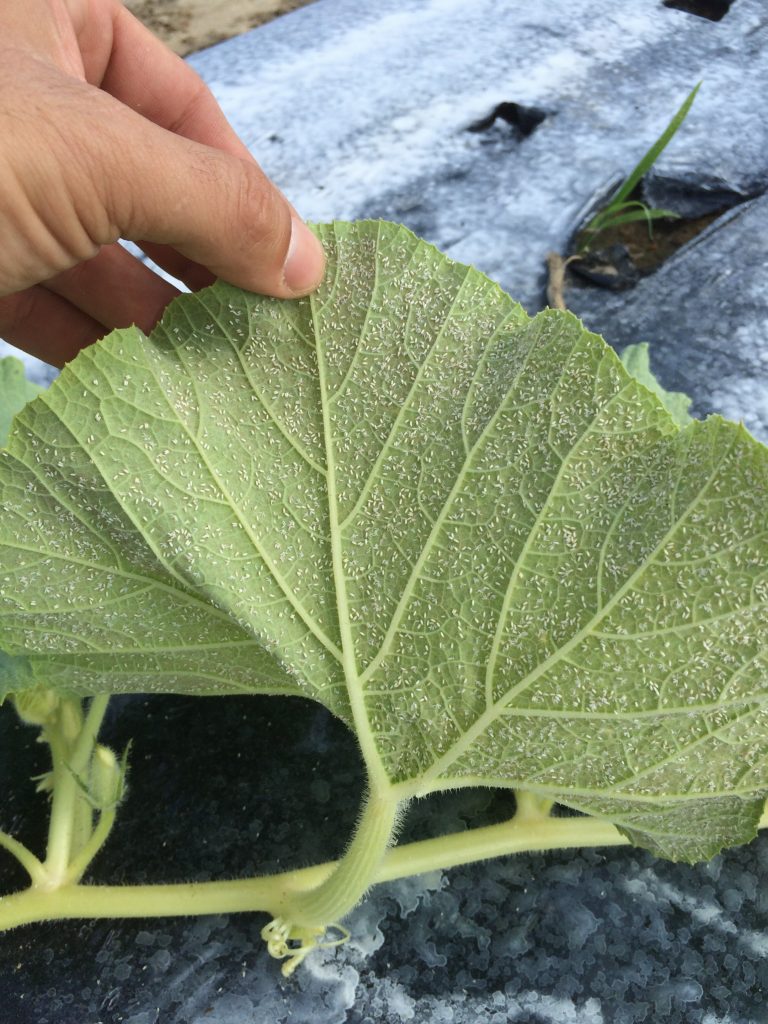
File photo shows whiteflies on a cucurbit crop.
“The potential is there. I was on the phone call (the other day) with everybody that does whitefly stuff. Everybody was talking about how it looks like 2017. The truth of the matter is the potential is there, but until you go through the weather conditions to see what happens with weather with management with those crops and management of those crops, you don’t really don’t know what happens,” Sparks said. “(UGA cotton entomologist) Phillip Roberts has for decades been telling me, if he sees whitefly populations in cotton in July, we’re in trouble. You’ll find whiteflies in cotton. But it’s really if you get into populations that are of concern in July, it’s going to be ugly.”
In 2017, whitefly populations showed up as early as May and June.
Whitefly Background
While colder temperatures do not eliminate whiteflies, they do kill many of their wild hosts. They also slow population development in cultivated hosts. Warmer temperatures this winter allowed for larger whitefly populations to overwinter and become mobile earlier.
Whiteflies cause feeding injury issues in vegetables and transmit two viruses: cucurbit leaf crumple virus and cucurbit yellow stunting disorder virus. Vegetables like squash, zucchini, cucumber, cantaloupe and snap beans are highly susceptible to these viruses. Commercial cultivars that have resistance or tolerance to these pathogens are not available.
Sparks and other specialists continue to preach sanitation with whitefly management. He said farmers have done better in recent years in getting rid of winter vegetables once they are done harvesting. That needs to continue with the spring crops once they are done.
“When you’re done with it, get rid of it. And that’s irrespective of what crop it is or the population level,” Sparks said.
A May frost appears to have soured North Carolina’s grape production this year, says Mark Hoffmann, N.C. State small fruits Extension specialist.
Hoffmann
“The western part of the Piedmont region, they got hit pretty bad. We have some areas where we have 100% loss,” Hoffmann said. “The Yadkin Valley got hit pretty bad, and everything west of that, really.”
The devastating impact to the state’s grape production is isolated to vonifera grapes. The area where the frost did the most damage produces about 80% of the state’s production. Fortunately, the state produced a bumper crop last year.
“We had a very good year last year and the tanks are full. It’s not going to be like as traumatic as it would be if we would have two or three bad years in a row,” Hoffmann said.
Hoffmann confirmed in an earlier interview this was the third frost event for the state’s grape crop. It was especially vulnerable this time since it happened late in the season.
Fortunately, he said muscadines that are grown in the Southeast area were spared.
UGA Extension weed scientist Stanley Culpepper speaks at a previous Sunbelt Field Day.
The Sunbelt Ag Expo’s annual field day on July 23 will have a different look this year. Due to the coronavirus pandemic and the strict rules regarding social distancing, this year’s event will feature a drive-thru component for attendees, said Chip Blalock, executive director of the Sunbelt Ag Expo.
“Our field day will go on as planned this year on July 23. It’s going to be a little different this year with all of the COVID-19 regulations and protocols in place. We just thought at this point it was best to do a drive-thru field day where the farmers can enjoy the tour from the comforts of their air-conditioned vehicle,” Blalock said. “We have about 30 stops and we’ll have about 30 videos of each of the presenters downloaded on our website, which you will also be able to access through the Sunbelt Ag Expo mobile app and our YouTube channel.”
The tour will begin at 8 a.m. At each plot, visitors will stop and listen to watch a pre-recorded segment hosted on the Expo website, app and YouTube channel using their cell phone. Researchers and vendors can choose to be at their respective plots for question and answer opportunities from farmers and industry leaders. The tour is scheduled to end at 11:30 p.m.
“Here we are almost in the middle of June and even though things are loosening up somewhat, we still weren’t sure what the protocols would be in July. We seem to think this was the best decision moving forward. This is no reflection on the Sunbelt Ag Expo in October. We are planning on moving forward with it,” Blalock said.
Another important rule to consider this year is that breakfast and lunch will not be served at the field day this year.
During the webinar, Nick Place, UF/IFAS Extension dean and director, highlighted Extension’s efforts to address the COVID-19 challenges.
“This has been a very unprecedented time for all of us,” said Place. “I’ve been really impressed to see the pivot that our people have done in relation to the work with their research, their teaching and their Extension programs. It’s been incredible to see what has happened here over the last couple of months.”
Starting March 23, UF/IFAS moved most of its staff off-site to comply with state orders. However, employees were able to find ways to adapt and overcome restrictions to ensure information was still getting to the public.
UF/IFAS Extension and Research personnel across the state have rallied with producers, industry groups and the Florida Department of Agriculture and Consumer Services to compile farm-to-consumer resources. Meanwhile, Extension personnel are bringing information to youth and families virtually. Florida 4-H Adventures is offering more than 45 virtual summer programs, with 1,200 youth registered to date.
In addition, UF/IFAS researchers are adapting to safely maintain research programs and preserve years of current and future work. Critical projects continue to move forward, including citrus, endangered species and disease research. Learn more about how work at the UF/IFAS Citrus Research and Education Center is progressing.
COVID-19 IMPACTS ANALYSIS In the midst of COVID-19, UF/IFAS researchers have also completed a wide-range study examining the impacts of the virus on the state’s agriculture and marine industries.
The Assessment of COVID-19 Impacts on Florida, conducted April 16–May 15, was developed to gauge industry impacts. The surveys covered agriculture/aquaculture production; processing and transportation; commercial fishing; for-hire/charter fishing operations; seafood wholesale dealers; and marine recreation support businesses. Results show agricultural and marine industries have taken a huge hit from the coronavirus pandemic.
According to John Lai, UF/IFAS agribusiness assistant professor, seasonality affected the responses within certain agricultural commodities.
For some of the operations impacted by COVID-19, the pandemic hit exactly when crops came into season. The spring months are particularly busy for South Florida growers as crops are ready to be harvested, so they took a big hit. However, Lai expects that when another round of surveys are sent out, other commodity growers will have been impacted as they enter the peak of their harvest time.
According to Lai, horticultural crops recorded the biggest impact to sales revenue, with an average sales decrease of 46 percent. The livestock and aquaculture group reported average sales revenue declines of 40 percent. However, there were wide ranges of sales revenues changes reported within each commodity group, with some groups reporting positive results.
Based on the survey estimates, Florida agriculture is expected to have a total loss of approximately $894 million.
CONTINUING EFFORTS Christa Court, director of the Economic Impact Analysis Program, plans to conduct another survey this summer to capture new and continued impacts from the virus.
UF/IFAS will also be leading a collaboration with Florida Gulf Coast University and Florida Agricultural and Mechanical University to collect stories from the growers and industries that have been impacted by COVID-19.
Court’s hope is that Florida agriculture comes out of the pandemic stronger and more knowledgeable so that it can create a food system that is more resilient than ever before.
This article was written by Ashley Robinson, AgNet Media communications intern.