Author: Clint

  • Blueberry Farmer Adjusts During COVID-19, Finds Success

    File photo shows blueberries piled up.

    By Clint Thompson

    COVID-19 struck in the middle of Denton Chapman’s U-pick blueberry season in Osceola County, Florida. Chapman had to pivot his business’ strategy on the fly and move strictly to a pre-pick operation.

    The customers responded favorably.

    “The pandemic started right when we were in the middle of our U-pick so we had to adjust,” said Chapman, with Double C Bar Ranch. “We chose to stop our U-pick. A lot of customers, they wanted to be out here, they wanted to get out. The best part about what we did, we went to a pre-pick operation where we pre-packaged and we did a drive-thru.

    “It took us by surprise how many people wanted to get out and enjoy just getting some fresh air. They stayed in their cars and we did the pre-picking and delivered fruit right to their window. People they loved it.”

    Chapman’s willingness to adjust during a time of uncertainty paid dividends for his business and possibly provided a blueprint for success next growing season.

    “That was memorable for us. The joy of people when they came out, just to get some fresh berries picked that morning delivered right to their window was priceless for us,” Chapman said. “Anyone who’s about to start their U-pick operation, just plan well, plan your flow and your social distancing. People will get out. People want to get out and get to the farm, so you’ll be successful.”

    Tips For U-Pick

    Chapman offers tips to those blueberry producers who want to implement a U-pick element in their farming operation next year.

    Marketing and advertising are key. The power of social media is the easiest, cheapest and quickest form of advertising.

    Focus on the atmosphere of the farm. There needs to be plenty of shade and seating and entertainment for the kids.

    Be willing to sell additional products. While the customers may be there primarily to pick blueberries, they may want to purchase additional products as well. Blueberry jam/jelly, drinks, snacks are easy things to have on sale in your gift shop.

  • Florida Blueberry Farmer: USMCA Not a Good Deal For Vegetable, Specialty Crop Producers

    By Clint Thompson

    One of the most vocal critics of Mexican imports into the U.S. is adamant that the United States-Mexico-Canada Agreement will not help or protect vegetable or specialty crop producers.

    Blueberries are a popular commodity in the U.S. but also as an import from Mexico.

    “No, that’s not a good deal for specialty crops. They didn’t really address our issues at all. That was not a good deal for us,” said Ryan Atwood, blueberry farmer, who lives in Mount Dora, Florida, and is one of the state’s blueberry leaders. He farms 56 acres of blueberries, manages another 350 acres and is part-owner of the largest packing house in the Southeast United States.

    USMCA Background

    According to the USMCA, the agreement, once it enters into force on July 1, will support mutually beneficial trade leading to freer markets, fairer trade and robust economic growth in North America. But critics of the agreement will point to lack of protection for specialty crop farmers who already have to compete against imports of Mexican produce. U.S. Secretary of Agriculture Sonny Perdue even acknowledged concerns by specialty crop growers.

    The idea of fair trade seems more like a fantasy than reality for growers in the Southeast who, not only had to overcome the coronavirus pandemic this year but had to compete against the constant influx of Mexican imports.  

    “They don’t have the regulations we have. They don’t have to abide by the same rules. Their labor is definitely cheaper. They pay somebody $12 per day. I’ve got to pay them $12 an hour to get labor. It’s hard to compete with that. It’s real hard to compete with that,” Atwood said.

    Domestic Supply of Food

    Atwood commented in late April that he was “a fan of having our own domestic supply of food.” Agricultural imports from Mexico may be cheaper, but they’re not American grown. Atwood and Florida vegetable farmer Sam Accursio continue to preach the importance of supporting the American farmer.

    “I think it’s a security issue for our country,” Atwood said in late April. “We’ve got to grow our own food. You saw what happened 10 or 12 years ago when we used to import all that oil and then we got our own domestic supply going again. Other countries are going to be able to control you if they control your food supply.”

    Accursio added, “If you take Florida and California away in the winter, what do you have? You have third-world countries feeding this great nation, and I’m not going to eat it. I’m not going to do it.”

  • Clemson Extension Agents Provide Crop Updates

    According to The South Carolina Grower, Clemson Extension agents provided updates on the status of fruits and vegetables throughout the state.

    In the Coastal area, Zack Snipes reports: “A week of unseasonably mild temperatures and damp conditions slowed things down a bit. The warmer weather this past weekend and this week should put things in gear again. Tomato spotted wilt virus has been showing up on tomato fruit in the Lowcountry. The disease is vectored by thrips. Early and mid-season symptoms include stunted plants that will never make fruit and brown/purple mottling on the leaves. I have been finding plants that are asymptomatic until they fruit and then symptoms appear on the fruit. Using tomato varieties that are resistant to the disease is the best management technique.”

    File photo shows powdery mildew disease in cucurbit.

    In the Midland area, Justin Ballew reports: “Last week was very cool and cloudy. Though there was a decent chance of rain most days, we got very little and it remains dry in the midlands. The cool, cloudy weather really slowed things down and growers weren’t able to harvest crops as often as usual. Since there was little sunlight to dry up the dew each morning, powdery mildew really started showing up in cucurbits. Downy mildew still has not shown up here. Keep scouting and applying protective fungicides.”

    Lalo Toledo reports: “Squash bugs are active and laying eggs. Please scout for eggs on the underside of leaves and spray as soon as signs are visible. Squash bug nymphs are gray and have black eggs.”

    In the Pee Dee area, Tony Melton reports: “Cool temperatures making everything late especially peas and okra. Most sweet potatoes are planted. Things are drying out quickly with the heat.”

  • Potential Second Wave of Pandemic Could Impact Vegetable, Specialty Crop Producers

    By Clint Thompson

    The coronavirus pandemic struck in mid-March during harvest season for vegetable and specialty crop growers in the Southeast. Many fear a second wave of COVID-19 could strike again in October and November when temperatures start to drop. It is also when many producers have their fall crop in the ground.

    “The specialty crops would be where maybe we might see some shifts in market expectations and whether or not there’s concerns about continued disruptions in the supply chains,” said Adam Rabinowitz, University of Georgia Cooperative Extension agricultural economist.  “The big question mark there is going to be having an alternative supply chain for distribution that’s available if in fact they are reliant on institutional buyers, where if we see another round of restaurants closing and that type of disruption. That was I think the big surprise this first time; how impactful that was, and we really hadn’t seen anything like that in the past.”

    Silver Linings

    One of the silver linings in an otherwise dark time for growers was finding alternative ways to sell their product. Tifton, Georgia farmer Bill Brim thought Inside the Box when he decided to sell boxed produce straight to consumers for several weeks in April, May and June. Customers lined up the roads waiting to buy local and support a farmer who felt the pinch of a lack of a foodservice market.

    Florida vegetable farmer Sam Accursio also thought creatively in a way to provide produce to customers at a cheaper-than-normal rate in late March and early April.

    “One morning I woke up at 3 o’clock in the morning on a Monday after no sales all weekend with coolers full and I said, ‘What are we going to do?’ I talked to my nucleus about this. The upcoming weekend, we put it on social media that the prices we were going to sell produce for. The consumers were excited because they didn’t have money, I had a cooler full of produce that I already picked and packed. The companies that donate produce, they were filling up. We had nowhere to go with this stuff, so we just put a low price. Consumers came and ate it up,” Accursio said. “We worked our tails off; I think it was for about five hours just steady loading cars from 5:30 in the morning on. I think the first day it was 40,000 pounds, the whole trailer load of produce was sold; one box here, seven boxes there.

    “The first day, the line was two hours long. The consumers, what they told me when they finally got up there and I’m apologizing, they said, ‘Listen, we’re all at home. We have nothing better to do.’”

    Same Thing in the Fall

    Accursio said he sold about 60,000 pounds of produce the same way the following weekend. At 50 cents per pound, consumers received a great deal to support a local farmer.

    “I couldn’t let the consumers down because they helped us out of a super jam. We kept on doing it on a smaller basis with the strictly local people coming then. When we had the big sales going on, we had people driving two or three hours to come here. We had shipments, trailer loads going to Key West from here. It was an amazing thing to watch,” said Accursio, who says he will continue this type of marketing in the fall.

    “I never really thought about selling directly to consumers but now we are gearing up for October to continue this.”

    Rabinowitz added, “Having those type of distribution options available can be very significant as not just a fallback strategy but also just as a means to increase sales on a regular basis.”

  • NOFA Deadline for CFAP is Today

    By Clint Thompson

    Today, June 22, is the last day for growers and industry leaders to submit information and data to the USDA Farm Service Agency (FSA) about crops to be considered for inclusion in the Coronavirus Food Assistance Program (CFAP).

    There is a Notice of Funding Availability (NOFA) where stakeholders and producers of other commodities can submit information and data for consideration to be included in the program. These must be submitted by today. This is specifically for data on any commodity not currently eligible for CFAP.

    Not all commodities were covered under CFAP, which provides financial assistance to producers who have suffered a 5%-or-greater price decline or who had losses due to market supply chain disruptions due to COVID-19 and face additional significant market costs.

    CFAP applications will be accepted through Aug. 28. Producers should apply through the FSA at their local USDA Service Center.

    According to Charles Hall, executive director of the Georgia Fruit and Vegetable Association, Georgia farmers are looking to add several commodities to the list covered under CFAP. These include kale, mustard, collards, turnips and specialty lettuce.

  • Asian Longhorned Beetle Found in South Carolina

    According to The South Carolina Grower, the Asian longhorned beetle (ALB) has been found near Hollywood, South Carolina. The beetle is an invasive tree pest and mainly attacks maples, elms, willows and birches.

    Donald Duerr, USDA Forest Service, Bugwood.org/Shows an Asian longhorned beetle.

    Clemson Extension, Clemson Regulatory Services and USDA APHIS need help in detecting the beetle’s presence in the Lowcountry.

    The are native beetles that look similar to ALB, so it’s important to know what they look like specifically. They are large black beetles with white spots, black and white striped antennae and bluish feet.

    To report the beetle’s presence, please contact the Clemson Department of Plant Industry at invasives@clemson.edu or by calling 864-646-2140.

  • Red Node Disease in Beans a Potential Problem

    File photo shows green beans.

    By Clint Thompson

    Red Node Disease, aka Tobacco Streak Virus, was discovered in beans in a Florida vegetable field this spring. It’s vectored by thrips and could potentially be a problem for farmers this fall, according to Prissy Fletcher, University of Florida/IFAS Agricultural Extension agent for St. Johns County, Florida.

    “I have been here 14 months and since I have been here, we had never seen this disease. Speaking with some of my predecessors, this has not been an issue that we have seen before. It’s a new situation for us,” Fletcher said. “Even though the virus was first identified in Homestead, Florida in 2014, we weren’t aware of this issue in beans up here. But after doing a literature review and knowing it had been in South Florida, looking back, it was just a matter of time before we found it here. This is definitely a new situation for us locally that we’re going to attack as a team and get a good IPM plan.”

    Thrips Need to be Contained

    Thrips vector the disease and are the key in farmers managing it successfully. They are tiny insects that can feed on various hosts while spreading different diseases. Thrips in peanuts can lead to tomato spotted wilt virus. Onion thrips or western flower thrips are the pests that vector Red Node Disease in beans. But they can also feed on squash, cotton and different weed species.

    “A lot of this is going to boil down to communication, communicating with your neighbors, other folks who are growing crops that can be affected by thrips, which is just about everything. A good IPM program for thrips is going to be pretty crucial,” Fletcher said. “Just the importance of communicating with your neighbors about disease spreading, pest management and working together as a system because if your neighbor has that problem, you’re likely to be impacted by that as well.”

    Fletcher said the impact on beans can be devastating. Symptoms include reddening of the stem, nodes and leaf veins. Infected pods show patterns of necrotic red patches. The spread of the disease can make the pods fall off, shrivel up or not even produce the beans themselves.

    “It could be pretty bad for that farmer if that disease spreads,” Fletcher said. “Prevention is going to be key.”

    Fletcher said farmers will begin planting their fall crop in September and early October.

    “The production of beans in this area is increasing, which is pretty exciting. Seeing more farmers diversifying and taking on more of these alternative crops. It’s pretty cool stuff. Then we find this disease and it’s like, ‘Oh my goodness. Okay, we’ve got to figure this out before next season.’ So prevention, prevention, prevention,” Fletcher said.

  • Cowpea Curculio Consistent Problem of Southern Peas

    Pictured is a cowpea curculio.

    According to Alabama Extension, southern peas are commonly grown crop in the Southeast. Peas have many different pests such as aphids, thrips, leaf-footed bugs, stink bugs, and various caterpillar species. However, the one pest that causes growers the most trouble is the cowpea curculio. There are control remedies for most of these other pests, but the cowpea curculio has become resistant to many pyrethroids.

    In this video, Neil Kelly, an Alabama Extension commercial horticulture regional agent, discusses the background and anatomy of this pest, as well as ways to stay on top of controlling them.

    For more information about cowpea curculio, see click here.

  • Start Work Now on Worker Protection for Next Season

    state department
    Worker safety is important for all farms to keep in mind.

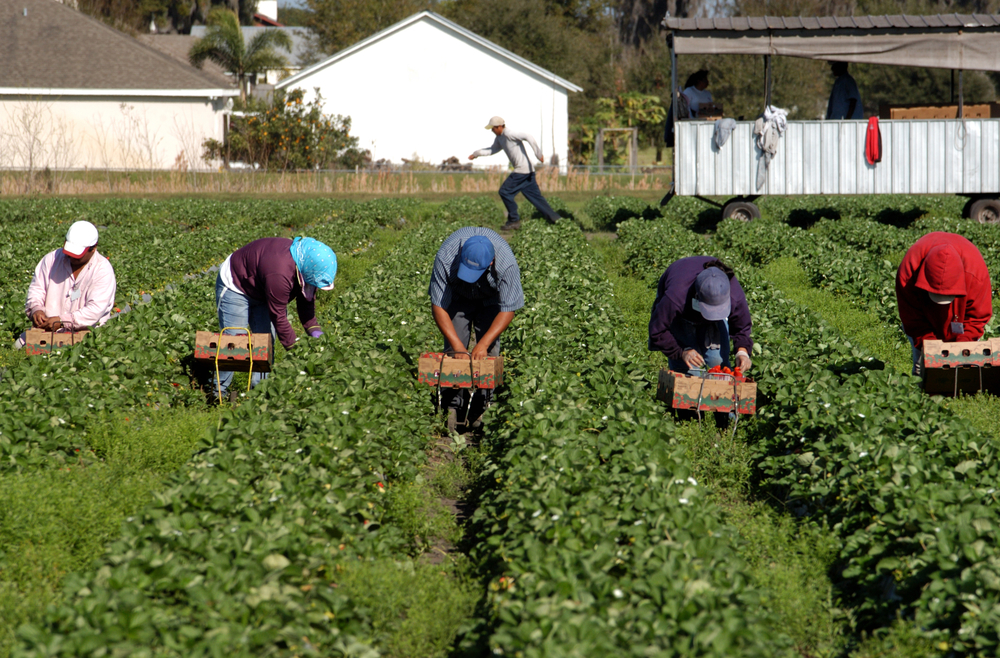
    Paul Allen, chairman of the Florida Fruit and Vegetable Association, encourages farmers to prepare now for next growing season with respect to worker safety.

    FFVA strongly urges every grower and farm labor contractor to implement these measures to the utmost of your ability. Download the checklist, review it, print it out and begin working now to designate a workplace coordinator responsible for COVID-19 assessment and control. Growers who work with a farm labor contractor should require that these measures are followed. I plan to make this a priority for my operations and you should, too.

    In addition, your county health departments and emergency management offices are prepared to help with testing, sanitizing supplies and PPE. We’ve included a list of each county’s health department contact information in the packet for your convenience.

    FFVA also is discussing the development of training videos and materials with some industry partners to serve as additional tools and resources. The association continues to be in almost daily contact with state agriculture and public health officials and stands ready to help you in any way it can.

    This is not optional. If we can’t reduce the spread of COVID-19, we may not have a workforce to harvest our crops next season. Our grower/shipper community must be united on the importance of worker safety during COVID-19. If even one employer or farm labor contractor fails to meet his or her responsibility, the entire industry feels the impact.

    Thank you in advance for doing your part.

    Sincerely,

    Paul Allen
    FFVA Chair

  • Georgia Vegetable Growers Should Prepare Now for Harvesting

    By Andre Luiz Biscaia Ribeiro da Silva for UGA CAES News

    Watermelons being researched on the UGA Tifton Campus. By Clint Thompson 6–6-17

    As we approach the harvest season for watermelon, bell pepper, tomato, yellow squash, zucchini, cucumber, sweet corn and other crops, Georgia vegetable growers can move ahead and prepare seasonal workers to mitigate the spread of COVID-19 during harvest time.

    According to the National Watermelon Association, there was an increase in the incidence of COVID-19 among seasonal workers in the watermelon industry of north Florida during harvest, and positive coronavirus tests were reported in 75% of seasonal workers. That means that 3 of every 4 workers tested were positive for COVID-19.

    Florida is a few weeks ahead of the Georgia watermelon industry for harvesting, and similar numbers can be expected in our state if agricultural operations don’t take action. Prepare for the possible transmission of coronavirus on your farm, packinghouse or other agricultural operation by stocking proper personal protective gear, instituting social distancing measures, and protecting the health of your employees, workers and customers.

    Regardless of the crop and how long or short the season may be, growers can do their part and University of Georgia Cooperative Extension is here to help. Below is a list of actions recommended by the National Watermelon Association:

    • Require all workers and employees to wear masks. There can be no exceptions outside of ADA restrictions.
    • Explain to workers that it’s in their best interest to take precautionary steps.
    • Put social distancing practices in place on the farm, in the sheds and in H-2A housing as much as possible.
    • Require workers and employees to regularly wash their hands and use hand sanitizers, if available.
    • Limit ridership on buses to allow for social distancing, and keep teams of workers together.
    • Sanitize buses and living spaces (H-2A housing) regularly. 
    • Pre-screen workers with temperature checks daily before work begins.
    • Ask workers to help with reporting. Encourage them to speak up if they see that others have symptoms.
    • Provide separate housing to quarantine workers who test positive. 

    For more resources on COVID-19 from UGA Extension, visit extension.uga.edu/emergencies. Contact your local Extension office by calling 1-800-ASK-UGA1.