Author: Clint

  • SWD Management Key for Grape Producers

    By Clint Thompson

    In his UGA Extension blog, Brett Blaauw, Assistant Professor in the University of Georgia Department of Entomology, alerted grape farmers that management for spotted wing drosophila (SWD) is approaching soon.

    Brett Blaauw

    SWD flies are active year-round but near veraison, as the brix levels in wine grapes reach 15 degrees Brix, the grapes become attractive and susceptible to SWD. SWD and other drosophila flies can spread and exacerbate sour rot.

    Management is key. Proper sanitation of the vineyard can reduce populations. If farmers harvest grapes frequently and remove fallen or unmarketable fruit, it will prevent the buildup of ripe or rotting fruit. This reduces sour rot inoculum and potential breeding areas for the flies.

    Insecticides are effective at killing adult flies and are recommended if you have a history of SWD in your vineyard or have prior issues with sour rot. Insecticide treatments should begin when grapes are near 15 degrees brix. Treatments should be applied at least every seven to 10 days. Rotating insecticides with different modes of action is very important.

    Make sure to read the label and check the pre-harvest intervals before applying any chemical.

    Note that the combination of an insecticide and Oxidate 2.0 significantly reduced SWD and sour rot prevalence in treated plots.

    If you are unsure whether SWD is a problem at your vineyard, it is easy to monitor for the flies. Traps can be made from plastic cups with lids.

    As always, management recommendations can be found at: https://smallfruits.org/files/2019/06/BunchGrapeSprayGuide.pdf.
  • GFVGA Executive Director: Grateful For CFAP Revisions

    By Clint Thompson

    The first round of revisions made by the United States Department of Agriculture (USDA) to the commodities covered under the Coronavirus Food Assistance Program (CFAP) benefited Georgia’s vegetable producers.

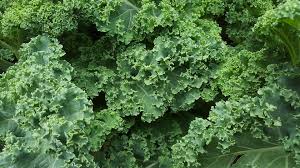
    Kale was one of the commodities added to CFAP.

    Georgia Fruit and Vegetable Growers Association (GFVGA) Executive Director Charles Hall was appreciative of the consideration given to the crops his organization petitioned for.

    “Some of our January to April crops, GFGVA petitioned for the mustard, kale, collards and turnip greens to be added to that. We provided the documentation,” Hall said. “We’re very grateful that along with several other states that were in the same situation as we were to be able to show that there was a 5% drop in the pricing during that time. We’re glad of that.”

    In a press release, U.S. Secretary of Agriculture Sonny Perdue announced an initial list of additional commodities that were added to CFAP on Thursday, and that the USDA made other adjustments to the program based on comments received from agricultural producers and organizations and review of market data. Producers can submit applications that include these commodities today, July 13, 2020. 

    USDA’s Farm Service Agency (FSA) is accepting through Aug. 28, 2020, applications for CFAP, which helps offset price declines and additional marketing costs because of the coronavirus pandemic. USDA expects additional eligible commodities to be announced in the coming weeks.

    “There’s still a problem with watermelons, primarily the Florida watermelons. Florida Fruit and Vegetable and the National Watermelon Association filed comments on the watermelon. Georgia Fruit and Vegetable didn’t because we did not have crop there at that time,” Hall said.

    One crop that benefited from last week’s decision was blueberries. Based on the USDA’s original assessment of the impact of coronavirus on the industry, blueberries were eligible for Categories 2 and 3 for CFAP relief payments. The crop was one of seven currently eligible commodities to be added to Category 1 of CFAP.

    Hall said since Georgia blueberry farmers did not start harvesting until April 12, the impact will be felt more with Florida growers.

    “There was really only about three days that our blueberries were on the market before we got past the deadline of April 15. Florida had blueberries in that timeframe and did file the NOFA comments and definitely added to the benefit of blueberries,” Hall said.

    According to https://www.farmers.gov/cfap/specialty, eligible specialty crops in CFAP are broken down into three categories:

    1. Had crops that suffered a five percent-or-greater price decline between mid-January and mid-April as a result of the COVID-19 pandemic,
    2. Had produce shipped but subsequently spoiled due to loss of marketing channel, and
    3. Had shipments that did not leave the farm or mature crops that remained unharvested.
  • Clemson Extension Provides Crop Updates

    Clemson Extension agents provided updates in The South Carolina Grower this week about the status of various crops being produced throughout the state.

    Coastal

    Zack Snipes reports, “Summer crops are all but about done. The afternoon thunderstorms, humidity, and heat have just about finished off the tomato and watermelon crops. Growers are getting fields ready for the fall season now. Consider putting up deer fencing now before crops are planted.”

    Midlands

    Justin Ballew reports, “We got some more rain early in the week, and the sky was overcast most of the week. Downy mildew finally showed up here in cucumbers. Even though it’s been found all over the coast, it took a while to make it this far inland this year. The dry weather we had most of June may have had something to do with that. Anyone growing cucurbits from now through the fall definitely needs to be applying preventative fungicides. Lots of fields are transitioning from spring crops to fall crops right now. We’re still picking sweet corn, tomatoes, peppers, eggplant, squash, zucchini, cucumbers, etc.”

    File photo of hemp.

    Lalo Toledo reports, “Sweet potatoes are in the ground and thriving. Please be aware of any pest activity and disease activity. Weeds are becoming a problem, especially in organic operations. However, there are several options to suppress weeds. Please contact your extension agent for information on chemical and cultural practices. Hemp is having trouble taking off with so much heat, and weeds are gaining ground on it. Peppers are doing great with some minor bacterial lesions.”

    Pee Dee

    Tony Melton reports, “Poured rain every day last week – awful.  Processing peas are ready to harvest but cannot get a dry period to burn down to harvest. Need to get second crop processing peas planted before August if fields will ever dry out – don’t forget to control thrips early and do your best to keep deer out of fields. Processing tomatoes & peppers are being harvested. Pickling cucumbers are continually being harvested and replanted. Sweet potatoes are planted, most have been laid-by, many have vines covering beds, and some are starting to size potatoes. We may have some insect damage on roots since it is difficult to get bifenthrin applied and plowed-in. Hopefully, the Lorsban will control insects, and since it is too wet to plow until the rain can wash the bifenthrin into the soil to keep the sun from degrading it. Don’t forget the boron on sweet potatoes.”

    Upstate

    File photo of peaches.

    Kerrie Roach reports, “Peaches are the showstopper this week in the Upstate! Even with what appears to be late cold damage causing split pits and some varieties not to ripen, the peach crop is still booming. Apples are maturing on schedule and growers should begin harvesting early varieties over the next few weeks. With limited and spotty rain events over the last seven days, irrigation has been vital for vegetable producers…. but heat and humidity (despite the overall lack of rain) have increased the need for fungicide cover sprays, as we’ve seen various fungal activity picking up across the board.”

  • Additional Fruits, Vegetables Eligible for CFAP

    Washington, D.C., July 9, 2020 – U.S. Secretary of Agriculture Sonny Perdue announced an initial list of additional commodities that have been added to the Coronavirus Food Assistance Program (CFAP) on Thursday, and that the U.S. Department of Agriculture (USDA) made other adjustments to the program based on comments received from agricultural producers and organizations and review of market data. Producers will be able to submit applications that include these commodities on Monday, July 13, 2020. 

    USDA’s Farm Service Agency (FSA) is accepting through Aug. 28, 2020, applications for CFAP, which helps offset price declines and additional marketing costs because of the coronavirus pandemic. USDA expects additional eligible commodities to be announced in the coming weeks.

    “During this time of national crisis, President Trump and USDA have stood with our farmers, ranchers, and all citizens to make sure they are taken care of,” said Secretary Perdue. “When we announced this program earlier this year, we asked for public input and received a good response. After reviewing the comments received and analyzing our USDA Market News data, we are adding new commodities, as well as making updates to the program for existing eligible commodities. This is an example of government working for the people – we asked for input and we updated the program based on the comments we received.”

    Changes to CFAP include:

    Adding the following commodities: alfalfa sprouts, anise, arugula, basil, bean sprouts, beets, blackberries, Brussels sprouts, celeriac (celery root), chives, cilantro, coconuts, collard greens, dandelion greens, greens (others not listed separately), guava, kale greens, lettuce – including Boston, green leaf, Lolla Rossa, oak leaf green, oak leaf red and red leaf – marjoram, mint, mustard, okra, oregano, parsnips, passion fruit, peas (green), pineapple, pistachios, radicchio, rosemary, sage, savory, sorrel, fresh sugarcane, Swiss chard, thyme and turnip top greens.

    Kale is one of the commodities included in the CFAP revision.

    Expanding for seven currently eligible commodities – apples, blueberries, garlic, potatoes, raspberries, tangerines and taro – CARES Act funding for sales losses because USDA found these commodities had a 5% or greater price decline between mid-January and mid-April as a result of the COVID-19 pandemic. Originally, these commodities were only eligible for marketing adjustments.

    Determining that peaches and rhubarb no longer qualify for payment under the CARES Act sales loss category.

    Correcting payment rates for apples, artichokes, asparagus, blueberries, cantaloupes, cucumbers, garlic, kiwifruit, mushrooms, papaya, peaches, potatoes, raspberries, rhubarb, tangerines and taro.

  • USDA CFAP Revision “Big Deal” For Blueberry Growers

    Pictured are highbush blueberries.

    By Clint Thompson

    Thursday was a win for blueberry farmers, especially in Georgia. The crop was one of seven currently eligible commodities to be added to Category 1 of the Coronavirus Food Assistance Program by the United States Department of Agriculture.

    According to the USDA press release, the USDA found these commodities had a 5% or greater price decline between mid-January and mid-April as a result of the COVID-19 pandemic. Originally, these commodities were only eligible for marketing adjustments, which Florida blueberry farmer Ryan Atwood believes would not have helped growers like himself at all.

    “Not many individuals qualified for 2 or 3. But everyone in Florida is going to qualify, just about for Category 1. That’s why it is a big deal,” Atwood said.

    According to https://www.farmers.gov/cfap/specialty, eligible specialty crops in CFAP are broken down into three categories:

    1. Had crops that suffered a five percent-or-greater price decline between mid-January and mid-April as a result of the COVID-19 pandemic,
    2. Had produce shipped but subsequently spoiled due to loss of marketing channel, and
    3. Had shipments that did not leave the farm or mature crops that remained unharvested.

    Atwood, who lives in Mount Dora, Florida is one of the state’s blueberry leaders. He farms 56 acres of blueberries, manages another 350 acres and is part-owner of the largest packing house in the Southeast United States.

    Early Crop This Year

    Atwood’s and other farmers’ blueberry crops were early this year due to a mild winter, and high temperatures in January and February accelerated growth. However, when he started picking high volumes of blueberries, which was around March 18, that is when the pandemic shut down the country.

    Market prices reflected the pandemic’s impact. Atwood said in late April that the market was 50% of the historical average price, so half of the money of what you would typically get because of the coronavirus.

    That is why the USDA’s revision to include blueberries in Category 1 was a major win for the industry.

    “There’s a lot of people that are going to need that. It’s going to help them make it to next season. I know people that are getting loans and doing what they can and getting by, but every little bit helps get you there,” Atwood said.

    USDA is accepting CFAP applications through August 28, 2020. Learn more at farmers.gov/cfap.

  • Supplemental Fumigation Strategies for Soilborne Pests, Diseases

    By Ashley Robinson

    The phaseout of methyl bromide continues to stimulate research into the use of other soil fumigants for controlling soilborne pathogens, nematodes and weeds to an acceptable level for production.

    Gary Vallad

    Researchers at the University of Florida Institute of Food and Agricultural Sciences (UF/IFAS) are looking at ways to modify the current fumigation system to better reflect the distribution growers once saw with methyl bromide.

    “The phaseout from the loss of methyl bromide from where we are now, was not a short one. It’s been going on for decades and I think we’re still in that process,” says Gary Vallad, professor of plant pathology at UF/IFAS. “And of course, this has been kind of a costly process, it’s been a hard process for a number of growers throughout the state and throughout the southeast United States.”

    Improving Current Fumigation Systems

    In the absence of methyl bromide, tomato diseases have been on the rise, specifically fusarium wilt, caused by Fusarium oxysporum. Since then, growers have been looking to find alternatives to control the disease.

    According to Vallad, methyl bromide alternatives are limited in the way they move in the soil.

    The biggest weakness that researchers have found with the alternative fumigants is that the fumigant doesn’t reach the soil zones along the edge of the bed and under the tuck of the plastic.

    Researchers have developed strategies to improve current fumigation systems using Pic-Clor 60. With the additional of supplemental Pic, researchers saw a 77% decrease in fusarium wilt incidence and yield increase of approximately 21%.

    In addition to looking at how to control soilborne pathogens, they also wanted to evaluate strategies to control nematodes.

    “In a lot of cases where we run into pest problems, it’s not just one pathogen or nematode. Typically, it’s a mixture of the two,” Vallad says. “So really what we wanted to do is investigate what happens when we put both of these systems together.”

    After collecting results from research trials, it was discovered that deep shank Telone applications reduced nematode counts and gall ratings. Also, Pic-Clor 60 or 80 with supplemental Pic and deep shank Telone application was the most effective strategy to reduce fusarium wilt, which actually shocked researchers.

    Through further research, they found that Telone is fungicidal to fusarium oxysporum, and by combining both strategies researchers saw yield increases of 25% or more.

  • Blueberry Growers Qualify for CFAP Category 1 Payments

    The USDA announced today that blueberry growers are now eligible for Category 1 Coronavirus Food Assistance Program (CFAP) payments. 

    Based on the USDA’s original assessment of the impact of coronavirus on the industry, blueberries were eligible only for Categories  2 and 3 for CFAP relief payments. USDA’s original market analysis had determined that blueberries did not demonstrate a 5% decline in price between January 15 and April 15. However, in response, the North American Blueberry Council (NABC) worked collaboratively with industry leadership to advocate for inclusion and provided the USDA with the data and analysis necessary to reverse the original eligibility assessment. 

    As a result, blueberry growers that qualify are now eligible for Category 1 CFAP payments.

    Take Action

    Growers that believe they qualify for Category 1 are encouraged to contact their local FSA office immediately to begin the application process. 

    The program is based on self-certification; growers should retain documentation for future claim substantiation.

    To learn more about the CFAP program and Category 1 eligibility requirements, visit farmers.gov/cfap/specialty.

  • Pierce’s Disease Training

    UGA photo/Jordan Burbage, of the UGA Soil, Plant and Water Analysis Laboratory in Athens, Georgia, harvests grapes at Trillium Vineyards, part of the collaborative research project being conducted by UGA Extension and Westover Vineyard Consulting.

    By Clint Thompson

    In his latest UGA Extension Viticulture blog, University of Georgia Extension Fruit Disease Specialist Phil Brannen says grape producers will soon be seeing symptoms of Pierce’s disease in susceptible varieties; typically Vitis vinifera and some hybrids.

    Mild winter temperatures have contributed to an increase in Pierce’s disease at higher elevations in Georgia and throughout the Southeast. Symptoms normally start to appear in late July or August. Since symptoms are similar to drought or nutrient stress, it’s essential not to remove plants if they’re not suffering from Pierce’s Disease.

    N.C. State hosted an effective workshop about Pierce’s Disease that will be helpful for all farmers.   

    Brannen stresses it is particularly important that you identify and destroy infected vines to prevent further spread of this disease.

    The disease is caused by a bacterium that is transmitted by numerous sharpshooter insects, such as the glassy-winged sharpshooter. It clogs the grape xylem, cutting off nutrient and water flow. Once infected with Pierce’s disease, vines die within one to two years.

  • GFVA Executive Director: It Was a Pretty Good Season

    By Clint Thompson

    Photo by Clint Thompson/Watermelons on sale at the farmers market in Cordele, Georgia. Watermelon producers in Georgia had a good year with strong prices.

    Georgia’s fruit and vegetable growers had their share of obstacles this growing season but emerged mostly unscathed with a productive season, according to Charles Hall, executive director of the Georgia Fruit and Vegetable Association (GFVA).

    He credits alternative marketing outlets for helping products get sold in a timely fashion.

    “Because of the Food Box program that the USDA had and the Georgia Grown to Go, there was a lot of product that was taken off the market,” Hall said. “Mexico had problems weather wise and production wise, so we did not have as heavier imports as we normally have. There was Mexican product on the market. They did not have the quantity of product coming in as they normally do.

    “Prices stayed good most of the season, and demand stayed strong most of the season. Overall, it was a pretty good season.”

    Pleasant Surprise

    A good season was not always a guarantee, especially after Florida growers struggled during the early part of harvest season to sell their produce amid the coronavirus pandemic. And they also struggled with Mexican imports.

    “Somebody told me that it’s very, very unusual when your prices in June are better than your prices in April. That’s the trend we would like to see to continue,” Hall said. “This has just been a strange year. If you had told me in March that I would have made the statement I just made, that growers had a pretty good year, I would have said you were crazy. Things coming out of Florida in March and early April, it looked bad. It really did.”

    Prices stayed up and supply stayed strong for Georgia farmers, who needed a year like this season.

    “We needed to have a decent year. Our guys for the last, two, three years, they’ve been devastated. Having a better year in 2020 has certainly been good for folks,” Hall said.

  • Watermelon Shortage? One Farmer Thinks So

    Watermelons on sale at the farmers market in Cordele, Georgia.

    By Clint Thompson

    Watermelon producers continue to enjoy high prices, though, there may soon be a shortage. Carr Hussey, a watermelon farmer in Florida and Alabama and chairman of the board of the Florida Watermelon Association, said there may soon be a shortage as producers in the Southeast region finish harvesting their crop, while the northern states are still not close to begin picking their crop.

    “Georgia is finishing up. I’m here in Alabama and we’re finishing up. North of us, North Carolina and Delaware and Indiana where we normally go, won’t be ready until the end of the month,” Hussey said. “There’s not going to be a lot of fruit available for the next two weeks.”

    It is a shame, too for farmers. Hussey estimates prices are averaging 22 cents per pound, a huge improvement from the 14 cents average growers normally get this time in previous years.

    Hussey believes the cool, wet spring impacted the crop’s production and why there is less watermelons than normal.

    “The crop never set the way it should have. What you should have harvested in four weeks took six weeks to harvest,” Hussey said. “The fruit movements in Georgia are usually around 700 to 800 trailers a day. They’ve been 400, 450, once in a while maybe at 500. There just hasn’t been the fruit.”

    While producers have benefited this year, the strong prices could encourage more farmers to grow watermelons next year. At least, that is what Hussey is expecting.

    “Everybody’s looking back to see how much everybody made last year so they want to cash in on it so they’ll plant, plus the fact, Georgia in particular, cotton and peanuts haven’t been worth much, isn’t worth much. So, they’re looking for something that is worth something. For those two reasons, they’ll really bunch up on watermelons next year,” Hussey said.