Author: Clint

  • Clemson Extension Agents Provide Crop Updates

    Clemson Extension agents provided updates in The South Carolina Grower this week about the status of various crops being produced throughout the state.

    Statewide

    Dr. Matt Cutulle reports, “It is always good to control goosegrass even if it is past the critical period for competition with the crop. Lack of late-season control made hand-harvesting tomatoes difficult. Also, there will be a huge deposit of goosegrass seeds into the soil seed bank for next year unless the seeds are destroyed after the harvest.”

    Coastal

    Wilting of hemp is very common and often sporadic throughout fields. Photo from Zack Snipes

    Zack Snipes reports, “We experienced a nice hot week of weather in the Lowcountry.  Most crops are finishing up with the heat and recent rains.  On later season tomato I have seen bacterial leaf spot on the fruit which makes fruit unmarketable. I am seeing this on the second cluster of fruit set and not on the first or third clusters. Hemp seems to be off to the races and looking pretty good so far. There are within every hemp field occasional wilted, stunted and yellowed plants. These plants always have a weak root system and most of the time have girdling and interveinal discoloration.  Peppers and eggplants are loving this heat and are producing in high volumes.”

    Midlands

    Justin Ballew reports, “Last week was hot and mostly dry, though we did have some scattered thunderstorms come through over the weekend. Field prep for fall crops continues. We’ve had some fall tomatoes, peppers, and brassicas transplanted already and more to come this week. Everything is growing pretty fast right now and we’re still picking spring crops. Keep an eye out for spider mites, as they love the hot, dry weather we’ve had lately.”

    Sarah Scott reports, “We are still ahead of schedule on peach varieties being harvested. Early August Prince and August Prince are being picked now which is over a week earlier than usual. The fruit quality is still good with slightly smaller than ideal fruit. With the extreme heat and lack of rain in the past week, summer crops like tomatoes and cucumbers are looking rough. Bell peppers are doing well.”

    Pee Dee

    Bruce McLean reports, “Sweet potatoes are looking good. Establishment seems to be very good for the most part. Long green cucumbers, yellow squash, zucchini, cantaloupe, peas, okra, and sweet corn are harvesting well. Condition is good to very good. Sweet corn will be wrapping up shortly. Blueberries are pretty much finished, with only a few remaining fruit on Powderblue. Fruit condition is fair to good. Muscadines are coming along nicely and appear to have an excellent crop. Fresh muscadines should be beginning harvest soon, with wine/juice grapes still a few weeks from harvest. Be on the lookout for Grape root borer moths. They are starting to emerge. They were being caught in traps placed in vineyards in Marion and Horry counties.”

    Tony Melton reports, “Harvested first crop of processing peppers. Continuing to pick and plant pickles. Processing greens are over for the spring crop. Harvesting the first crop of processing and seed peas and planting fall crop. Getting processing tomatoes out of the field as quickly as the plant can take them.  Things are drying out, hope we don’t go into drought with the heat.”

    Upstate

    Kerrie Roach reports, “Spotty rain and high temperatures have left many small growers scrambling for irrigation options throughout the Upstate. Peaches and nectarines are still being harvested. Blueberries are just about finished, and farmers’ market produce is starting to wind down with the heat. Apples should begin next week with early varieties like ‘Ginger Gold’  and ‘Golden Supreme’.”

    Andy Rollins reports, “Plenty of early blight, bacterial spot/speck on tomatoes this season, but some of the more troublesome problems have been various tomato virus problems. When diagnosing virus problems it is important to get lab verification because herbicide injury can look very similar when just going by visual symptoms. If you suspect herbicide drift from a neighboring farm. Look for damage to other broadleaf plants in the area in between the suspected source and the damaged plants. Follow the wind direction.  You should have more severe damage on the leading edge. Also, herbicide residual from a previous crop like sunflowers can also give you herbicide damage that you did to yourself. Read and follow all pesticide label directions. There are plant back restrictions on some herbicides so be careful. If this is the case the damage should be fairly consistent/uniform throughout the area that was planted in the other crop.

    Unlike both of these other situations, virus problems may come from your seed source, the greenhouse where plants were grown or from weeds in the field. Pokeweed is commonly a source, as are many other broadleaf weeds. Thrips, aphids, and whiteflies are all known to vector viruses into plants. Symptoms are what you see below with “shoestring” looking leaves, leaves with distorted veins, and mosaic yellow and green coloration. There are many viruses that infect plants. Each of them can show different symptoms and also they can each look different on other plants as well. It’s even possible for a healthy-looking plant with no symptoms to be infected with several viruses.”


  • SE Regional Fruit and Vegetable Conference Still Scheduled for January

    It is never too early start thinking about next year’s Southeast Regional Fruit and Vegetable Conference. In the age of the coronavirus pandemic, industry leaders like Charles Hall, executive director of the Georgia Fruit and Vegetable Growers Association, must start thinking about an event still several months away.

    “We’re operating on the premise that we’re going to have a show in January in Savannah (Georgia). But we’re looking at, if the outbreak doesn’t calm down, if the requirements are such that we can’t hold the show, we’re looking at what the options are,” Hall said. “We’re just trying to do some preliminary, looking at different ways of doing that and whether we have virtual shows, live presentations. We’re just hoping that things calm down enough that we can have the show and get things going from there.”

    Scheduled for Jan. 7-10

    The conference is slated to be held in Savannah, Georgia on Jan. 7-10. It’s one of the largest events in the Southeast. It attracts 3,200 attendees and 280 companies that have booths to showcase their agricultural products.

    Hall believes a final decision will be made in the fall on whether the conference will be in-person or virtual. A lot will depend on the availability of companies being able to travel for meetings at that point.

    “If some of the national companies make the decision that their employees can’t travel in January, that will begin to affect our decision of whether we do with the conference,” Hall said. “We will have a conference. The real question is, hopefully, we’ll have an in-person conference and not a virtual conference.”

    The other dilemma is if the conference proceeds as normal, how will social distancing guidelines be followed with that many people expected to attend?

    “Right now, if we had that conference in Savannah, you would have to be at a 50-person maximum in a room. I think is what the requirements are, and then they have to be social distancing. Those classrooms have been wall-to-wall people and they’re standing along the sides, you can’t have that many people in a classroom right now,” Hall said.

  • Phase One Uncertainty

    Rift in Relations Between U.S. and China Leads to Unpredictability in Initial Agreement

    phase one

    The Phase One Trade Deal between the U.S. and China was supposed to bolster the agriculture industry. According to a prior Southeast AgNet story, China was to increase its purchases of agricultural products by $32 billion over the next two years.

    But according to Adam Rabinowitz, Assistant Professor and Extension Economist at Auburn University, it appears China will not reach those goals. Add in the current rift between the two countries because of the ongoing coronavirus pandemic, U.S. farmers are left with more uncertainty regarding a major player in the global export market.

    “There’s been some positive components from the Phase One Deal, just that it has opened the door for commodities to move back into China and even some new commodities that had not been moving in that direction before have started to. But it doesn’t appear that they’re going to meet the goals of Phase One from a dollar perspective. Without a Phase Two Deal, it does lead to a question I guess of what the long-term impacts will be,” Rabinowitz said. “From a grower’s perspective, it’s just more uncertainty. There’s difficult financial times to begin with, that we’ve seen over the last few years and then add on top of that, uncertainty in terms of markets; the impacts from natural events and health-related now; it adds that risk and adds to the questions of how do we ensure that we’re going to be able to survive for the next season.”

  • North Carolina Farmer of the Year is James Lamb

    According to the Sunbelt Expo website, this year’s North Carolina Farmer of the Year is James Lamb.

    Lamb is now eligible for the Swisher Sweets Farmer of the Year award and $15,000 cash prize given to the overall winner, who will be named at this year’s Sunbelt Ag Expo in Moultrie, Georgia on Oct. 20-22.

    Lamb was nominated as North Carolina Farmer of the Year by Jessica H. Tripp, District Field Representative for North Carolina Farm Bureau Federation.

    James Lamb

    “Lamb is the type of farmer who does everything in his power to help preserve the agricultural industry as a whole. He’s managed to maintain his farm operation while working full time for Prestage as an environmental specialist, a job that requires a huge commitment of time and energy,” Tripp said.

    Lamb built a pig nursery farm on the same 75–acre tract in Clinton where he grew up. He and his family manage the nursery operation and grow corn, soybeans, millet, and Bermuda grass and raise a few cattle. Over the years, Lamb has constructed two swine barns to house his animals and purchased three new tractors and attachments.

    He receives weaned pigs at 21 days of age from Prestage’s trucking staff and keeps them for seven weeks or until they are about 50 pounds, and then forwards them to finishing farms until they reach their market weight. At the nursery barn, pigs are provided with ample ventilation and supplemental heat of approximately 82 degrees.

    Lamb explained, “Here we have an eight-week cycle or turn that includes a week to clean the facility before the next turn begins. There are approximately 3,040 pigs here at any given time. Given our six-and-a-half cycles or turns per year, this amounts to around 20,000 pigs annually.”

    The yields on Lamb’s contract farm are as follows: 4.29 acres of irrigated Bermuda hay yields 6900 lbs.; 5 acres of millet are grazed by the farm’s cattle; 2 acres are planted with sunflowers as a wildlife habitat; and 22 acres of corn and soybeans yield 160 bushels per acre and 40 bushels per acre respectively. There is also an acre and a half of cultivated garden space. The farm has 7 brood cows and 1 bull. Seven calves per year are raised to approximately 400 pounds and then sold to market in Smithfield, North Carolina where they are sent on to a feed lot in the Midwest and grown to a finishing weight of 700 to 800 pounds.

    As the North Carolina winner of the Swisher Sweets/Sunbelt Expo award, Lamb will receive a $2,500 cash award, an expense-paid trip to the Sunbelt Expo from Swisher International of Jacksonville, Florida, and a $500 gift certificate from Southern States Cooperative.

    A Columbia vest from Ivey’s Outdoor and Farm Supply will be given to each state winner and nominator. Syngenta will donate $500 to the state winner’s charity of choice.

    Massey Ferguson North America will provide each state winner with a gift package and the overall winner with the use of a Massey Ferguson tractor for a year or 250 hours (whichever comes first). Southern States Cooperative will supply the overall winner with an additional $500 gift certificate. A Columbia jacket from Ivey’s Outdoor and Farm Supply will be given to the overall winner. Syngenta will provide a $500 donation to the charity of choice for the overall winner who will also receive a Hays LTI Smoker/Grill. In addition, the overall winner will receive a Henry Repeating Arms American Farmer Tribute Edition rifle from Reinke Irrigation.

    Sunbelt Expo

  • Watermelon Market Continues to Produce Sweet Results for Farmers

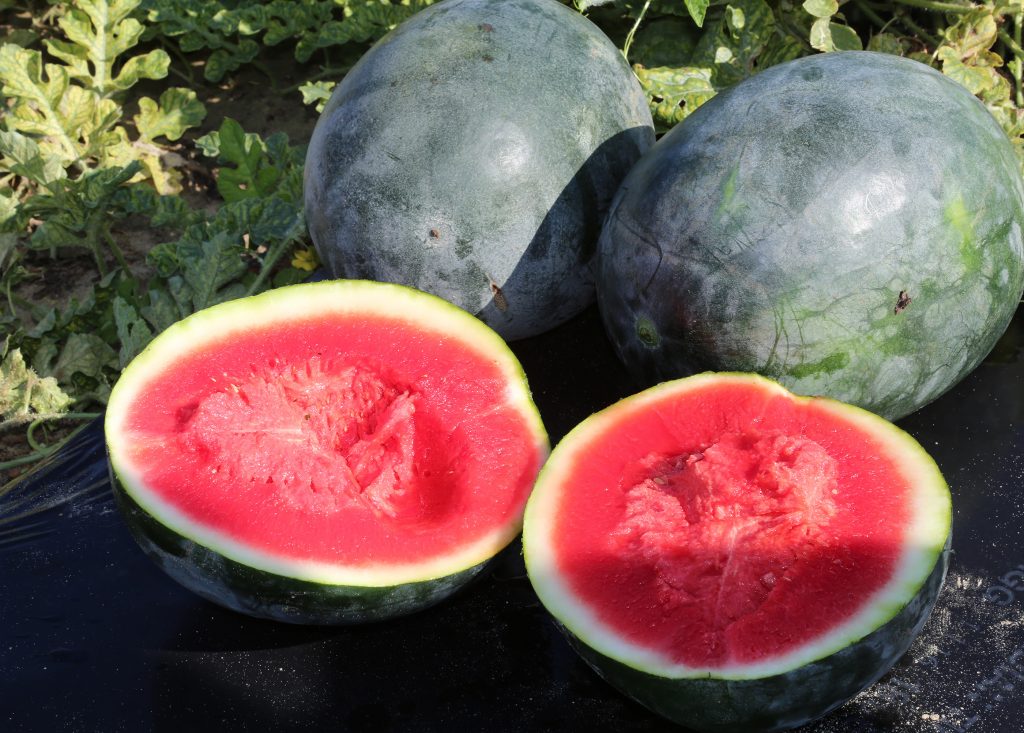
    The watermelon market continues to be a sweet success for producers in the Southeast. One South Georgia watermelon farmer attests to the strong season he and his colleagues have had this year.

    Watermelons for sale at the Farmers Market in Cordele, Georgia.

    Bill Brim, co-owner of Lewis Taylor Farms, said on July 10 that he is had an “excellent year” with his watermelon crop.

    “Prices dropped a little bit after (July) 4th. But I think they’ll pick back up after about another week. We’re still harvesting melons. We’ll probably still harvest for another 10 days any way before we’re done,” Brim said.

    Similar to a belief shared by farmer Carr Hussey, Brim believes there may soon be a shortage of watermelons available in the U.S.

    “There’s going to be a gap in there, probably about a two-week gap, I think. Talking with some guys up in Indiana, they’re already harvesting a few melons that they had on their hoops; but they didn’t’ have many acres on their hoops,” Brim said.

    Crop Shortage

    Hussey, a watermelon farmer in Florida and Alabama and chairman of the board of the Florida Watermelon Association, said there may soon be a shortage as producers in the Southeast region finish harvesting their crop, while the northern states are still not close to begin picking their crop.

    He believes the cool, wet spring impacted the crop’s production and why there is less watermelons than normal.

    Another South Georgia producer, Terrell Rutland, said farmers in the Carolinas and Midwest normally plant three or four weeks after he does but their plants were damaged by a late spring frost. They replanted, which delayed their harvest window another three weeks.

    Acreage is down in Georgia this year. According to Samantha Kilgore, executive director of the Georgia Watermelon Association, acreage is projected to decrease this year to 19,000 acres. It would mark a significant drop from previous years’ harvests. According to the National Agricultural Statistics Service, from 2016-2018, Georgia averaged a harvest of just more than 23,000 acres.

  • Do You Use Carbaryl on Citrus or Blueberries?

    The Environmental Protection Agency is re-evaluating the risks of Carbaryl for continued registration of this chemical. In order to protect Carbaryl for use, the Florida Fruit and Vegetable Association is surveying growers on its use. Your data is critically important. Even if you do not use Carbaryl, input is needed.

    The Cabaryl case study will be presented as part of a national workshop later this year or early next year. Be aware that some products use the name “Sevin” but do not contain Carbaryl. Please take the survey and send it to Mike.aerts@ffva.com.

  • UGA Researchers Discover Genes That Allow Bacteria to Resist Onion’s Natural Defenses

    UGA photo/Onion center rot is a financially devastating bacterial disease for Vidalia onion producers in south Georgia.

    By Maria M. Lameiras for CAES News

    After years of building and analyzing sample collections, plant pathologists at the University of Georgia have identified the genes that allow a type of bacteria that causes onion center rot to resist onions’ natural defenses in a “chemical arms race.”

    The pathogen Pantoea ananatis can enter onions through the leaves — usually as a result of thrips feeding on the onion neck — and induces necrotic symptoms and extensive cell death in onion tissue.

    When cellular damage occurs, onions and other members of the Allium genus, such as garlic, produce volatile antimicrobial compounds called thiosulfinates, the same compounds that make you cry when you cut onions and that give onions and garlic their characteristic smell and flavor.

    These compounds normally kill invading bacteria. However, an 11-gene cluster of the P. ananatis genome allows the bacteria to tolerate the thiosulfinate allicin and colonize dead onion tissue damaged in its initial attack, according to a paper published this month in the journal Current Biology.

    Center rot of onion, caused primarily by P. ananatis in the Southeast U.S., can be economically devastating to producers, leading to high crop losses both in the field and postharvest, said Brian Kvitko, an assistant professor in the Department of Plant Pathology at the UGA College of Agricultural and Environmental Sciences and lead author of the study.

    Kvitko’s research into this pathogen is important because the bacteria resist onion’s natural defenses.

    “Onions are a tricky host. Anyone who has ever cut onions knows they release a very potent irritant that can kill some bacteria, but these bacteria have a one-two punch,” Kvitko said. “The onion releases thiosulfinate, a potent reactive sulfur species that causes gross damage to cells by interfering with all kinds of cellular processes. The bacteria have picked up genes that allow it to take the hit from the thiosulfinate and then take over the dead onion tissue environment as a home to make more bacteria. Like little genetic gas masks. The onion itself already had built-in antibiotics and these bacteria found a way around it.”

    Kvitko said that these bacteria cause disease differently than most other bacteria, which either break down plant cells walls with enzymes or “reprogram” plant cells by injecting them with proteins.

    “So, bacteria can chew up the plant cells or reprogram them, but this is neither of those. These are not proteins that are being delivered, it is a chemically focused kind of disease. This is not the only example of this we have seen, but it is very rare,” he said.

    Through genome sequencing, Kvitko’s lab identified differences in the P. ananatis genome from similar bacteria.

    “These bacteria did not have any of the traits that were associated with a pathogen we knew. It was strange, but we didn’t know why. Now we have been able to find this different way of bacteria causing disease,” Kvitko said. “Knowing more about the pathogen and how it causes disease helps us find treatment and resistance strategies to manage this disease in the future.”

    Onion center rot was first identified in Georgia in 1997 and can cause latent infections that are activated postharvest even if there were no overt signs of disease in the field.

    “This is kind of an insidious disease in that the producer sometimes doesn’t know there is a problem until the crop is harvested, packed and shipped,” Kvitko said. “This disease is a big problem in onion-growing regions because bacterial diseases are hard to manage. There are a lot of diseases caused by fungi that we have fungicides to control, but we don’t have that kind of chemical strategy for bacteria.”

    Although there are currently no identified onion cultivars with resistance to P. ananatis, knowing how a pathogen causes disease is a good step toward knowing how to find good host resistance, he added.

    “To be able to fight something effectively, you have to know how it works. We know this thing is different. Knowing why and how it causes disease helps us to find a better way to fight it,” Kvitko said.

    A key part of the research is the work being done by Bhabesh Dutta, assistant professor of plant pathology and UGA Cooperative Extension vegetable disease specialist on the UGA Tifton campus, who has collaborated with growers by collecting extensive samples of diseased plants for analysis. He then works with Kvitko on research both in the lab and in the field, an example of basic and applied agricultural research partnerships, which is a hallmark of collaboration and discovery at land-grant universities like UGA.

    “We would not have made as much progress without Dr. Dutta’s long history with the systems and the good collection he’s been putting together for years,” Kvitko said. “The key thing that made this work wasn’t just collecting samples from diseased onions, but also from weeds in the fields and the thrips that are important in spreading the disease. That gave us a large panel of diversity to work from. We were able to look at all of the bacterial strains, even those that were very close to one another, to identify the genetic differences. We compared key regions of the genome that were only present in the strain that could infect onions. The genes that make specific regions of the genome different made the difference between which bacteria can and can’t cause diseases.”

    With Vidalia onions at the top of the vegetable commodities grown in Georgia — at an annual farm gate value of $150 million — identifying the genetic traits of the bacteria responsible for the No. 1 disease in the state’s onion crop is an important factor in preventing financial losses for producers, Dutta said.

    “There are 21 counties in Georgia with the marketing rights to grow and sell Vidalia onions, with nearly 65-70% of Vidalia onions being grown in Tattnall and Toombs counties,” said Dutta. “This is a high-value commodity for Georgia growers and this bacterial complex has become endemic in the Vidalia onion zone.”

    While not all bacteria cause disease, Dutta’s research team has identified eight bacterial pathogens that are endemic to Georgia and which cause economic losses. Among the eight, one of the most prominent bacteria is Pantoea sp., which causes center rot. Other than Pantoea sp., Burkholderia cepacia —  the causal agent of sour skin disease — is also prevalent in Georgia.

    Building on a collection started by his predecessor, Ron Gitaitis, in the 1980s at UGA-Tifton, Dutta has assembled a collection of nearly 250 Pantoea bacteria strains from a diverse variety of sources including onions, weeds and thrips in his research program.

    “Identifying the strain of bacteria that causes onion center rot allows us to survey producer fields and, if Pantoea sp. is prevalent in the environment, but it is not a disease-causing strain in onion, it gives us the ability to assess the risk that producer might have for center rot developing in onions during postharvest storage,” Dutta said.

    Now that they have identified the 11-gene cluster responsible for the allicin resistance, Kvitko’s lab can start studying those genes.

    “That’s where we are now. We know they have a cluster of 11 genes, but we don’t know exactly how it works. Is it specific to this type of bacteria? Or is there a way to keep bacteria from turning that resistance on?” Kvitko said. “Knowing more about the system, we have a nice list of potential weak points we can try to target, either through host resistance or some sort of novel chemical strategy. Bacteria are really tricky to manage; we have a limited tool set to work with and we want to have more.”

    Because it would be impossible to change all P. ananatis bacteria, Kvitko’s team will also use what they’ve learned to develop pathogen-resistant onions.

    “We are trying to see if there is any onion out there that the pathogen can’t kill. Finding onions that are resistant to the chemicals that are released by the bacteria and giving growers accurate information is important for mitigation,” he said.

    For more information on plant pathology research at CAES, visit plantpath.caes.uga.edu. To sign up for updates about Vidalia onion production from UGA faculty, go to site.extension.uga.edu/vidaliaonion.

  • Potential La Nina Weather Event Could Impact Pecans Later This Season

    An increasing likelihood of a La Nina weather event this fall could impact row crop farmers and specialty crop producers as well, said Pam Knox, University of Georgia Cooperative Extension Agricultural Climatologist.

    “When we do have a La Nina, we do tend to have a little bit drier than normal fall. Dryness in the fall isn’t necessarily bad. It’s helpful for the people that’s trying to harvest. It’s just that if you’re trying to fill in the last of the pecans or get a little more growth out of the peanuts then dry conditions are not necessarily good,” Knox said.

    According to the pecan production calendar, pecan’s water requirements are especially high in August and September. UGA pecan experts say water needs are 300 to 350 gallons per tree per day or 3,600 to 4,200 gallons per acre per day.

    Knox said we are in a La Nina watch right now and is unclear how strong of a La Nina it’s could be.

    “Typically, when we have a La Nina occurring, and right now we’re under a La Nina watch, the conditions in the Eastern Pacific Ocean are cooler than normal. They’re expected to stay that way. Usually it takes four months before they’ll declare an official La Nina,” Knox said. “The predictions are it might last until January or February and then go back to neutral conditions. It’s not necessarily one that’s going to be really long.”

  • FFVA Still Hoping for Celery, Watermelons to be Added in CFAP

    The Florida Fruit and Vegetable Association (FFVA) did not get all of its wishes granted with the recent revisions to the Coronavirus Food Assistance Program (CFAP) by the United States Department of Agriculture. FFVA President Mike Joyner confirmed that there are two commodities that his organization hopes the USDA will include in Category 1.

    Watermelons on display at a farm on the UGA Tifton campus. Watermelons are a commodity that the FFVA hope will be added to Category 1 of CFAP.

    “The two commodities that we also submitted for consideration also in column 1; we had blueberries, but we also had celery and watermelons. We’re hoping that in that second round, the USDA approves those two commodities for column 1,” said Joyner, who added that 13 of the 29 commodities that FFVA petitioned for were revised by the USDA. “We submitted information in the NOFA (Notice of Funding Availability) that clearly made the argument that the losses for watermelons for about a four-week period, the price just dropped off the table.

    “We appreciate the decision on the 13 of the 29. We hope that when the second round comes, they will approve the others.”

    According to https://www.farmers.gov/cfap/specialty, eligible specialty crops in CFAP are broken down into three categories:

    1. Had crops that suffered a five percent-or-greater price decline between mid-January and mid-April as a result of the COVID-19 pandemic,
    2. Had produce shipped but subsequently spoiled due to loss of marketing channel, and
    3. Had shipments that did not leave the farm or mature crops that remained unharvested.

    According to the USDA press release, additional commodities were added to CFAP and that the USDA made other adjustments to the program based on comments received from producers and organizations and review of market data.

    The USDA’s Farm Service Agency (FSA) is accepting applications for CFAP through Aug. 28.

  • UF/IFAS Experts Outline Hurricane Prep, Recovery for Citrus Growers

    UF/IFAS. It shows citrus damage and flooding from Hurricane Irma.

    By: Brad Buck, 813-757-2224 (office); 352-875-2641 (cell); bradbuck@ufl.edu

    Like all farmers, Florida’s citrus producers must prepare for the worst before a hurricane strikes. That’s why Fernando Alferez co-wrote a manual that gives growers tips on how to get their citrus farm ready for – and recover from — the potentially dangerous storms.

    It’s not just coastal counties, where the storms hit first, that are right in the path of destruction. Even inland areas, where much Florida citrus grows, are vulnerable.

    “Hurricanes are very big systems, and their impacts often extend hundreds of miles away from the eye,” said Alferez, an assistant professor of horticultural sciences at the UF/IFAS Southwest Florida Research and Education Center. “One would tend to think that Southwest Florida is most prone to hurricane damage and think about Irma in 2017 or Wilma in 2005. Those were devastating for the southwest part of Florida.”

    But commercial citrus operations throughout Florida can experience a hurricane’s wrath. Hurricanes Charley, Frances and Jeanne struck Florida in 2004. They impacted mostly the central Florida citrus region. Hurricane Michael in 2018 impacted the mandarin-producing areas in the Panhandle, not to mention strikes in the east coast damaging the grapefruit industry, said Alferez.

    To try to minimize damage to citrus farms, Alferez outlines the important aspects of preparing for a hurricane:

    • Initial site planning is important. In general, ensure good drainage. Then, maintain the drainage infrastructure because flood prevention is key for citrus trees to survive.
    • Know and take care of your farm. Have an inventory of everything in place and updated.
    • Know your employees and care about them, train them and make sure you have insurance for the farm.
    • Have an emergency plan that includes follow-up and recovery plans. Have a clear chain of command.

    After the storm strikes — before you do anything else — make sure it’s safe to get into the farm. If it is, document all damage. That includes taking photos. This will help with insurance claims. Then, start grove and tree recovery.

    Some citrus varieties seem to be able to withstand the storms better than others, Alferez said.

    “What we have seen so far is that Swingle rootstock and trifoliate rootstocks behave well and are not easily uprooted,” he said. “On the contrary, rootstocks such as Flying Dragon and Volkameriana did not perform well.”

    Alferez and Mongi Zekri, a multi-county specialized citrus agent for UF/IFAS Extension in Southwest Florida, co-authored the guide. They wrote the document after the U.S. Department of Agriculture Southeast Climate Hub asked Alferez to develop a technical manual for citrus producers to build resilience to and recover from hurricanes or tropical storms.

    The request came after Alferez spoke at a conference in Gainesville in November 2018. There, he talked about the effects of Hurricane Irma on citrus production in Southwest Florida. From there, the Climate Hub decided to develop a technical manual to help producers — farmers, foresters and livestock/grazing land managers — in the southeastern United States build resilience to and recover from hurricane events.

    “The end product would be a consolidation of the best available management practices on citrus into one uniformly designed manual that could be used by Extension agents to provide preparatory and recovery resource-specific guidance to citrus producers,” Alferez said.